
Bitcoin casinos for Australian players: 2026 ledger of who is blocking whom, and what a Bitcoin deposit really costs
 Available in US
23 September 2026 · Verified against the ACMA’s published register of formal warnings and blocking requests.
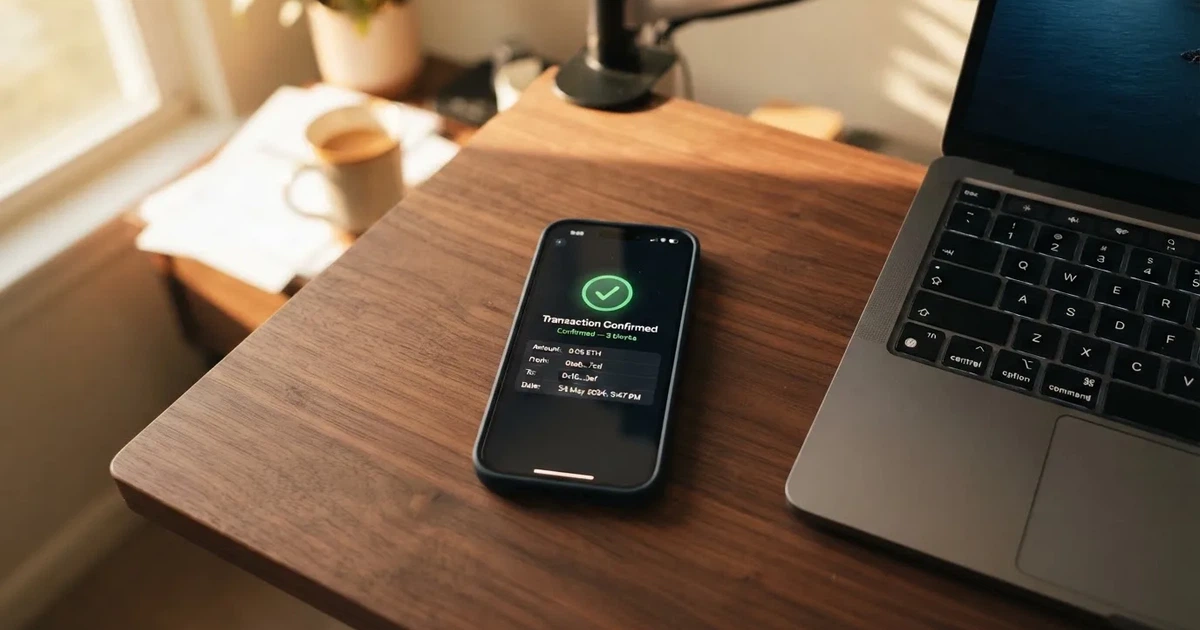
The Interactive Gambling Act 2001 makes no exception for crypto. A Bitcoin deposit at an offshore casino is no less unlawful for an Australian resident than a Visa deposit at the same site, and the Australian Communications and Media Authority has been saying so in writing for years — including in a fresh wave of formal warnings published across 2025 and into 2026. That fact reframes every “best Bitcoin casino” list a reader meets on the open web: these are operators that have been warned, blocked or both, and the crypto rail is simply the latest payment method they have bolted onto a product that remains prohibited.
This page walks through the eleven brands the ACMA has acted against, the way a Bitcoin transaction actually moves on-chain before it credits a player account, and the arithmetic a Bitcoin bonus hides when a marketing page refuses to print it. The reader should leave knowing what they are buying, who has already told them they may not buy it here, and what the cost looks like once a bonus requirement sits beside a 3-second spin and a house edge.
Table of Contents
- Landscape of ACMA enforcement
- Table of regulatory warnings
- How a Bitcoin deposit reaches a casino account, step by step
- Where the ACMA’s enforcement actually lands
- What a Bitcoin bonus actually costs the player
- Live tables, slots and the games themselves
- AUSTRAC, the ATO and what registering as a digital currency exchange actually requires
- How long a Bitcoin deposit usually takes, and why “usually” is doing real work
- What the player is actually buying
- Choosing among the brands the ACMA has named
- What the reader should weigh
- Frequently asked questions
Landscape of ACMA enforcement
The table below lists every brand the ACMA has named in a formal warning published on its register. The order runs from the most recent enforcement back through earlier rounds. Online casino games — Bitcoin-funded or otherwise — cannot be licensed anywhere in Australia; the licence a brand displays offshore does not change that.

| Brand | ACMA action and date | Operator named by the ACMA | Bitcoin support |
|---|---|---|---|
| RocketPlay | March 2026 (Pulsup Ltd); May 2022 (Dama N.V., six-brand round) | Pulsup Ltd | Not stated |
| Jackbit | April 2026 (Ryker B.V., alongside CasinOK) | Ryker B.V. | Not stated |
| Sky Crown | September 2022 (Hollycorn N.V., alongside Blue Leo) | Hollycorn N.V. | Not stated |
| Casino Intense | April 2025 (Sterplay Holding Ltd) | Sterplay Holding Ltd | Not stated |
| Instant Casino | February 2025 (EOD Code SRL) | EOD Code SRL | Not stated |
| National Casino | July 2025 (Consolutetish S.R.L., alongside Bizzo) | Consolutetish S.R.L. | Reported on listings only |
| Bizzo Casino | July 2025 (Consolutetish S.R.L.); 2022 (TechSolutions Group) | Consolutetish S.R.L. | Not stated |
| Ignition Casino | July 2025 (Bamboo Media) | Bamboo Media | Not stated |
| Woo Casino | March 2025 (Dama N.V., alongside Spirit Casino) | Dama N.V. | Reported on listings only |
| Spirit Casino | May 2025 (Dama N.V., same round as Woo Casino) | Dama N.V. | Not stated |
| Level Up Casino | May 2022 (Dama N.V., six-brand round) | Dama N.V. | Not stated |
Dama N.V. alone accounts for four of the eleven. The ACMA’s March 2025 and May 2025 warnings hit the same corporate vehicle that took the 2022 warning — a single operator with a habit of re-entering the Australian market under new trading names once one brand is blocked. Woo Casino and Spirit Casino, formally warned six weeks apart in 2025, are the freshest example of that pattern.
The Bitcoin column is honest about what the ACMA register does not tell a reader. The regulator names the operator behind the brand and the date it acted; what it does not publish is a list of accepted currencies. For most of these brands, no Australian-facing source carries a confirmed Bitcoin acceptance figure. Where a directory page elsewhere on the web describes a brand as “crypto-friendly”, that is what those listings say — the operator itself has not confirmed it in any source consulted here.
Table of regulatory warnings
| Regulator | Regulatory instrument | Action type |
|---|---|---|
| ACMA | Interactive Gambling Act 2001 | Formal warning |
| AUSTRAC | AML/CTF Act | DCE registration |
| ATO | ITAA 1997 | CGT classification |
The Bitcoin side of the question has its own machinery, and it runs whether or not an Australian player is allowed to use it. A player who sends bitcoin from a self-custody wallet triggers a transfer on a public blockchain; that transfer sits in the mempool until a miner includes it in a block; the block is appended to the chain; only then does the casino credit the account.

Block timing is the part most readers get wrong. New blocks are added roughly every ten minutes on average, because the difficulty target readjusts every two weeks to keep the average interval near that figure. The average is the wrong word to lean on, though. Block discovery is probabilistic: a confirmation can arrive much sooner or much later than ten minutes, with no guaranteed minimum or maximum delay. A player who sends bitcoin during a quiet network period can wait an hour. A player who sends bitcoin during a busy one can see it in three minutes. The casino almost always requires at least one confirmation before crediting, which is why the effective deposit time runs from “near-instant” to “an afternoon”.
Anonymity is the second claim that needs deflating. The blockchain is public: every transaction is visible to anyone who runs a block explorer, and the wallet address that sent the bitcoin is recorded forever. The wallet address is not a name, but it is a durable identifier, and once it has touched an exchange account that ran identity verification — which AUSTRAC requires of any digital currency exchange serving Australian customers — the chain back to a real person exists in the exchange’s records. The wallet does not wear a name on it; the path from wallet to name is not as long as the marketing copy suggests.
How a Bitcoin deposit reaches a casino account, step by step
The order matters because each step is a point at which a transfer can stall, and a stall at one of them looks the same to a player as a stall at another.
The player copies a deposit address from the casino’s cashier page. That address is a single-use string tied to the casino’s hot wallet; sending to a stale address is a known failure mode and the bitcoin goes nowhere recoverable. The player signs a transaction in their wallet, sets a fee, and broadcasts it. The transaction enters the mempool. A miner includes it in a candidate block; the block is mined; the block is propagated across the network. The casino’s backend sees the confirmation and credits the account.
The fee is the player’s lever. A higher fee bids the transaction into the next block more reliably; a lower fee leaves it sitting while higher-fee transactions jump the queue. A player who sets a fee that’s adequate on a quiet Sunday may find it inadequate on a busy Friday. Confirmation time is not a casino decision and not something support can fix by escalating a ticket — it is a market the player pays to enter.
Where the ACMA’s enforcement actually lands
The Interactive Gambling Act 2001 targets the provider, not the individual player. That distinction matters: a reader reading about ACMA action is reading about what the regulator did to the operator, not what the regulator will do to them personally. The risk for the player sits elsewhere, in three places that compound.
An offshore casino gives no Australian consumer protection. There is no Australian complaints body for a withdrawal refused in Curaçao or Cyprus; the operator’s own terms govern, and the terms are written by the operator. A balance on an account that gets blocked at the ISP level is a balance the player cannot reach. The history matters: the ACMA’s June 2026 round alone named 12 more sites — 7Signs, ChromaBet, Donbet, Duospin, Freshbet, Slots Gem, Jacks Club, Lucky Start, Pointsbetz, Spinrise, Vinyl Casino and Wildsino — bringing the running total of blocked sites past 1,750 since November 2019, when the first blocking request went out.
The blocking history is the load-bearing fact. Between November 2019 and June 2026, the ACMA asked Australian ISPs to block 1,751 illegal gambling and affiliate marketing websites. That is not a rounding error; that is a regulator that has spent six and a half years pushing sites off the visible Australian internet and has the count to show for it. The arithmetic this page is built around is the rate at which that count has grown: roughly 263 sites blocked per year across the period, and a steady cadence of fresh rounds each quarter.
The blocking rate, in plain terms
The first ACMA blocking request went out in November 2019. By June 2026, the running total had reached 1,751 blocked sites. Spread across the roughly 79 months between those two dates, that is an average of about 22 sites blocked per month, or just over one a working day. The pace has not slowed. The June 2026 round alone named 12 sites in a single notice, and the four preceding rounds named 12 each as well — a regulator that has moved from monthly output to near-weekly output as offshore operators have multiplied.
The honest reading: an offshore casino’s Australian-visible lifespan is shorter than its marketing implies. A player who opens an account at a brand that is not yet on the blocked list is one regulator letter away from not being able to log in at all. The crypto payment method does not protect against this, because the block happens at the network layer, not the payment layer.
What a Bitcoin bonus actually costs the player
A bonus at an offshore casino almost always carries a wagering requirement: the player must turn the bonus amount over a stated multiple of times before any winnings become withdrawable. A 40x wagering requirement on a bonus of, say, 0.01 BTC means the player must place 0.40 BTC of qualifying bets before withdrawal. The marketing word for this is “free”; the actual price is the house edge running across that turnover.
Bitcoin’s volatility adds a second cost layer. The required turnover is stated in BTC, but the player’s real-world budget is in AUD, and the AUD value of 0.40 BTC can move 5% in a single day. A player who starts the playthrough with bitcoin at A$100,000 and finishes it with bitcoin at A$92,000 has lost the wagering requirement’s worth of AUD before the house edge is even counted. The bonus does not advertise this. The price chart on the wallet does.
A maximum cashout cap is the third cost. Many offshore bonuses cap the winnings a player can withdraw from bonus play at a multiple of the bonus — often 5x or 10x. A player who hits a large line win during playthrough sees most of it disappear into a balance they cannot withdraw. The bonus page will print the cap; it will not print what the cap looks like when a 50x slot win lands during a wagering session.
A bonus at any of the brands in this table comes with all three. The brand names differ; the shape of the cost does not.
Live tables, slots and the games themselves
Pokies-style slots funded with bitcoin run on the same reels, paylines and random number generators as their fiat-funded counterparts. The currency on the cashier is the only thing that changes. The RTP — return to player — is set by the game designer, not by the deposit method; the volatility profile is set the same way. A Bitcoin deposit at one of these brands does not unlock a different catalogue of games than a Visa deposit at the same brand. The casino’s game library is the casino’s game library.
Live dealer tables are the partial exception. Some Bitcoin-accepting brands carry live tables from named providers; others route live play through aggregators. The player experience differs by provider, not by deposit rail. A player who values live casino play should look at which provider a brand carries before looking at which currencies it accepts.
This is the second time the same caveat has surfaced, and it is the last time it will appear in full on this page.
AUSTRAC, the ATO and what registering as a digital currency exchange actually requires
AUSTRAC’s expansion of the digital currency exchange regime took effect on 31 March 2026. From that date, registration as a DCE provider is required not only for businesses exchanging crypto for Australian dollars, but also for crypto-to-crypto exchanges, digital asset custody providers, digital asset transferors and stablecoin issuers and distributors. Operating unregistered is a criminal offence.
An offshore Bitcoin casino that takes Australian deposits is, in the regulator’s view, taking instructions from an Australian customer to convert bitcoin into game credits. Whether that counts as a DCE service is a question AUSTRAC has not answered in plain English for the casino vertical. The compliance question falls on the exchange the player uses to acquire bitcoin in the first place — and that exchange must be registered. A player buying bitcoin from an unregistered source is the one taking the regulatory risk on the buy side.
The ATO’s position sits beside this. The ATO classifies crypto assets such as bitcoin as property, not money or foreign currency. Selling bitcoin for AUD, swapping it for another crypto, or spending it at a casino are all CGT events. A player holding bitcoin for less than 12 months pays full marginal rates on any gain; a player holding longer qualifies for the 50% CGT discount, until 1 July 2027, when the discount is replaced by CPI indexation of the cost base plus a 30% minimum tax rate on net capital gains.
A personal use exemption exists, but only if the asset cost A$10,000 or less to acquire, and only for assets held genuinely for personal use. The casino deposit does not qualify: the ATO’s published guidance treats gambling assets as held as an investment, which takes them outside the exemption. Capital losses on personal use assets are disregarded entirely, which means a player cannot use a casino loss to offset a crypto gain elsewhere. The tax arithmetic is its own cost layer, separate from the house edge.
How long a Bitcoin deposit usually takes, and why “usually” is doing real work
A Bitcoin deposit is credited after the casino sees at least one confirmation of the transaction. Confirmation time is driven by block discovery, which is probabilistic, and by transaction fee bidding, which is the player’s lever. The honest range runs from a few minutes on a quiet network with a competitive fee to over an hour on a busy network with a low fee.
Some Bitcoin-accepting casinos credit an account after zero confirmations, on the basis of seeing the transaction in the mempool. The risk of a double-spend reversal sits on the casino, not the player, and most operators do not offer this. A player who has sent bitcoin and is watching the mempool for the casino’s first credit is watching the wrong thing; the credit comes after confirmation, not before.
Withdrawal is the slower direction. The casino’s hot wallet must sign a transaction; that transaction enters the mempool; it confirms at the next block. A player withdrawing at a quiet time of day may wait ten minutes; a player withdrawing on a Saturday evening may wait longer. The casino’s own processing time — the gap between requesting a withdrawal and the casino signing the transaction — is usually larger than the on-chain confirmation time, and it is the casino’s choice, not the player’s.
The blocking rate, again
The arithmetic from the section above belongs to the page. Roughly 22 sites blocked per month on average since November 2019, with the recent cadence running closer to 12 per round and multiple rounds per quarter. That is the pace a reader should price in when weighing an account opening at an offshore brand — not as a forecast of when their account will be blocked, but as a measure of how visible the brand’s Australian-facing life is to the regulator.
What the player is actually buying
A reader landing on a “best Bitcoin casino” page is being sold three things: a payment method, a game library, and a bonus. The payment method is the same on every brand — bitcoin, confirmed on-chain, processed by the casino’s hot wallet. The game library varies; the bonus varies in headline number and rarely in underlying cost. None of the three items changes the underlying fact that the product is prohibited for an Australian resident.
The reader’s actual purchase is access to a prohibited product, paid for in an asset the ATO treats as property, delivered by an operator with no Australian complaints body, behind a URL the ACMA can ask an ISP to block in a single notice. The Bitcoin payment method is incidental to that purchase. It is not the thing the marketing copy is selling, and it is not the thing the regulator is acting on.
Choosing among the brands the ACMA has named
The honest comparison between two ACMA-named brands is short. Both operate offshore. Neither holds an Australian licence, because none can be issued. Both can be the subject of a fresh blocking notice. Both will, if blocked, leave any balance behind. The comparison that matters is not which is “better” — both are unlawful to play from Australia — but which carries the higher recent enforcement record on the register, and which has been the subject of repeated rounds.
Dama N.V. appears under four of the eleven brands: Woo Casino, Spirit Casino, RocketPlay (via a different vehicle) and Level Up Casino. The 2022, 2025 and 2026 warnings trace a pattern of rebranding: a brand gets warned, fades from the Australian-visible web, and reappears under a new trading name from the same corporate vehicle. A reader who values continuity of access should weight this pattern heavily, because the casino that warns this month may be back next quarter under a different URL.
Consolutetish S.R.L. sits under two of the eleven: National Casino and Bizzo Casino. The 2025 warning was the second tied to Bizzo Casino — TechSolutions Group took the first in 2022 — which is the same pattern at a different operator.
The remaining six brands split across six different operators. Each carries its own enforcement date; none carries a fresh warning that suggests a corporate pattern on the scale of Dama N.V.’s.
Each brand, with the page’s own verdict
What follows is each of the eleven in turn. Each verdict answers a different question from the one above it; the shape of the cost or the angle the brand has been visible from is what closes the block.
RocketPlay. Two ACMA rounds on the same brand, via two different corporate vehicles: Dama N.V. in May 2022 and Pulsup Ltd in March 2026. The 2026 warning is the freshest on the table, and the brand is the only one with a confirmed Bitcoin-support question attached via the ACMA register’s operator field. The verdict is the speed of the second warning: a four-year gap is short for an operator that has not changed how it acquires Australian players.
Jackbit. April 2026 warning, paired with CasinOK under Ryker B.V. The brand is the freshest non-Pulsup entry on the table and the only one of the eleven whose formal warning names a second brand in the same notice. The verdict is the breadth: the operator did not need a second warning to be visible to the regulator, and that visibility is recent.
Sky Crown. September 2022 warning under Hollycorn N.V., in the same notice as Blue Leo. The oldest formal warning still on the register and the only Hollycorn N.V. brand the ACMA has named. The verdict is the quietness: four years between warning and the page’s snapshot, with no fresh action, is a record that says the brand has stayed off the ACMA’s radar, not that it has stopped serving Australian players.
Casino Intense. April 2025 warning under Sterplay Holding Ltd. A single warning, a single brand, no corporate repeat. The verdict is the middling position: too fresh to call quiet, too isolated to call a pattern, and the only Sterplay Holding Ltd brand the ACMA has named.
Instant Casino. February 2025 warning under EOD Code SRL. Single round, single brand. The verdict is the brand name’s confidence: “Instant” sits in the trading name the same way Bitcoin sits in this page’s subject, and the ACMA’s response was to write a formal warning rather than to ignore the offering.
National Casino. July 2025 warning under Consolutetish S.R.L., in the same notice as Bizzo Casino. Two brands, one corporate vehicle, one round. The verdict is the pairing: National Casino’s path to the ACMA’s register is shared with Bizzo Casino, and a reader who arrives at one will likely be redirected to the other during a blocking incident.
Bizzo Casino. July 2025 warning under Consolutetish S.R.L., the second formal warning tied to the brand — the first went to TechSolutions Group in 2022. The verdict is the repeat: the brand has been warned, the corporate vehicle has changed, and the regulator has tracked it across both. The ACMA does not warn a brand twice because the brand complied the first time.
Ignition Casino. July 2025 warning under Bamboo Media. A single brand under a single operator. The verdict is the brand’s recognisability: Ignition Casino is one of the better-known offshore brands in this set, and the warning was published without a co-named partner.
Woo Casino. March 2025 warning under Dama N.V., in the same notice as Spirit Casino. The verdict is the Dama N.V. pattern: Woo Casino is one of four Dama N.V. brands on this table, and the operator’s 2025 warnings joined the 2022 warnings as evidence that re-entry under fresh trading names is the operator’s standard practice.
Spirit Casino. May 2025 warning under Dama N.V., six weeks after Woo Casino. The verdict is the cadence: two warnings to the same operator within two months tells a reader that Dama N.V. runs multiple brands in parallel rather than sequentially, and that a block on one does not slow the others.
Level Up Casino. May 2022 warning under Dama N.V., part of the original six-brand round. The oldest Dama N.V. entry still on the table. The verdict is the longevity: the brand has stayed on the ACMA’s register without further escalation, which suggests the operator moved it off the Australian-visible web after the 2022 warning and has not returned at scale.
What the reader should weigh
The arithmetic this page is built around — the blocking rate, the turnover cost of a bonus, the AUD volatility of a BTC playthrough — is the cost a reader should price in before any other number on the page. The marketing number sits on top: a bonus headline, a percentage, a “free spins” count. The cost sits underneath: a wagering multiple, a confirmation wait, a tax event.
The product itself is prohibited. No offshore licence changes that, and the ACMA’s register is the public ledger of how the regulator has said so, in writing, eleven times in this set alone. The reader is not the regulator’s target. The reader is the customer of a regulator’s target, paying in an asset the ATO treats as property, with no Australian complaints body behind the transaction.
That is the price. The reader pays it in AUD-equivalent bitcoin, in turnover the house edge eats, and in tax events the bonus winnings trigger. The rest is marketing.
Frequently asked questions
Is it legal for a casino site to accept Bitcoin from a player in Australia?
No. The Interactive Gambling Act 2001 prohibits the supply of online casino games and online pokies to a person in Australia, regardless of the payment method used. Bitcoin is not exempt, and an offshore licence does not change the Australian-side prohibition. The ACMA’s register of formal warnings is the public record of how the regulator has enforced that.
How long does a Bitcoin deposit usually take to confirm before it can be used?
The casino credits the account after at least one on-chain confirmation, and a new Bitcoin block is added roughly every ten minutes on average. The average is the wrong word to lean on — block discovery is probabilistic, so a single confirmation can take much longer with no fixed maximum. In practice, a deposit arrives within minutes during a quiet network period and can wait over an hour during a busy one.
Does paying with Bitcoin make an online casino account harder to trace back to a person?
The blockchain is public and a wallet address is visible forever, but the address is not a name. AUSTRAC requires any business exchanging crypto for Australian dollars to register as a digital currency exchange, and once a wallet has touched a registered exchange that ran identity verification, a chain back to a real person exists in that exchange’s records. Bitcoin is not anonymous at the network layer, and it is rarely anonymous at the off-ramp.
Are pokies-style slots any different when funded with Bitcoin instead of a card?
No. The reels, paylines, RTP and volatility are set by the game designer and do not change with the deposit rail. A Bitcoin deposit unlocks the same catalogue a Visa deposit unlocks at the same brand. The only thing that changes is the unit the player thinks in — satoshis instead of cents — and the speed at which that unit can move in AUD terms during a wagering session.
What happens to a Bitcoin deposit sent to the wrong wallet address?
The transfer confirms on-chain and is irreversible from that point. The casino cannot retrieve bitcoin sent to an address it does not control, and the network will not reverse a confirmed transaction. Recovery depends on whether the receiving wallet’s owner recognises the deposit and returns it voluntarily; the blockchain has no built-in dispute process. This is the single sharpest difference between a Bitcoin deposit and a card deposit, where a chargeback remains available for a limited window.
Do Bitcoin casino withdrawals need the same identity checks as a bank withdrawal?
Yes, in practice. AUSTRAC’s expanded digital currency exchange regime, in force from 31 March 2026, requires any business providing crypto exchange services to Australian customers to register, and most licensed-or-unlicensed operators apply KYC to withdrawals regardless. A player who skipped identity verification at deposit will be asked for it at withdrawal, and a refusal to provide it is the operator’s standard reason for holding a balance pending review.
Written by the editors at Crypto Casino Hub AU.