
Bitcoin Pokies in Australia: What Crypto Payment Actually Changes (and What It Doesn’t)
 Available in US
A Bitcoin deposit at an online casino is just money crossing a border with extra steps. It does not legalise the site that takes it, does not register the player with any Australian authority, and does not put a complaint body between a refused withdrawal and the punter holding the receipt. Yet offshore brands keep marketing “Bitcoin pokies” to Australian visitors with the implied promise that cryptocurrency somehow slips past the Interactive Gambling Act 2001. It doesn’t. The IGA targets the provider, not the rail the money travels on, and the Australian Communications and Media Authority has spent the last several years making that distinction unmistakable.
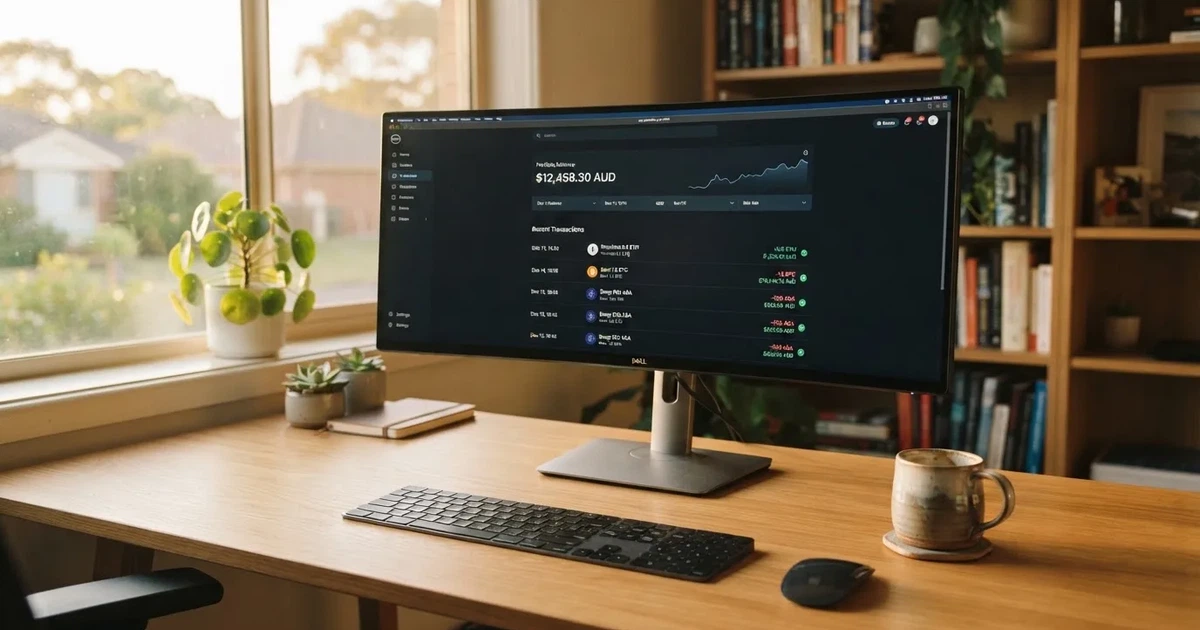
This page walks through the actual mechanics: what a Bitcoin pokie transaction looks like end to end, why offshore sites cannot lawfully serve Australian customers regardless of how they are paid, what the ACMA has done about it in the last twelve months, and what players who want to gamble with cryptocurrency in Australia can lawfully do instead. The framing throughout is the legal reality, not the marketing one, because the legal reality is the only one with consequences.
Current as of 23 September 2026 · verified against the ACMA’s published formal warnings register and the AUSTRAC Digital Currency Exchange register.
Table of Contents
- The Australian Landscape for Bitcoin-Funded Pokies
- What ACMA Enforcement Actually Looks Like
- What Bitcoin Payment Technically Is (and Isn’t)
- Crypto-Specific Rules: AUSTRAC, the ATO, and the Credit Card Ban
- What Bitcoin Confirmation Actually Means at a Casino
- The Responsible Gambling Frame
- The Blocking Rate: How Quickly Does the Market Move?
- The Brands the ACMA Has Acted Against
- Comparison: What Separates One Entry from Another
- Bitcoin-Specific Mechanics Worth Understanding
- Frequently Asked Questions
- Closing Position
The Australian Landscape for Bitcoin-Funded Pokies
Australia’s relationship with online gambling is one of the most restrictive in the developed world, and the restriction does not bend for cryptocurrency. The Interactive Gambling Act 2001, strengthened by the Interactive Gambling Amendment Act 2017, makes it an offence to provide online casino games, online pokies, or in-play betting to a person physically in Australia. The offence sits with the provider. No state or territory issues a licence for these products because the IGA does not permit one to exist. What can be licensed, and what the Northern Territory Racing and Wagering Commission regulates in practice, is wagering on races and sporting events placed before the event, lotteries, and keno. The NTRWC oversees 52 of Australia’s online bookmakers — Sportsbet, Bet365, Ladbrokes among them — licensed in the Territory for tax reasons. The commission has no full-time staff and meets once a month in Darwin.

That structure leaves an obvious gap. Australian players who want casino-style games, slot machines, or “pokies” in the colloquial sense have two lawful routes and one unlawful one. The lawful routes are licensed land-based venues (clubs, pubs, and casinos in states and territories that permit them) and licensed online wagering operators offering pre-event sports and race betting only. The unlawful route is offshore online casinos, which the IGA prohibits from serving Australian customers and which the ACMA has been actively blocking since 2017.
The estimated scale of the unlawful channel is large. H2 Gambling Capital’s 2025 report puts Australian losses to illegal gambling sites at roughly A$3.9 billion a year, and the share of gambling going through legal channels fell from 74% in 2021 to 64%. That is a meaningful shift in a market that already had one of the world’s highest per-capita gambling rates, and the slide has occurred against a backdrop of stepped-up ACMA enforcement rather than despite it. The reason is straightforward: when a market is geo-restricted at the licence level, demand does not disappear, it migrates to sites that ignore the restriction.
Bitcoin payment is the latest iteration of that migration. It does not change the legal status of the receiving site. It does, however, change the friction: deposits that were once declined by an Australian bank can now arrive at an offshore operator through a peer-to-peer network that does not run an Australian compliance check. That is the entire innovation. It is not a legal one.
What ACMA Enforcement Actually Looks Like
The ACMA’s tool of choice is not prosecution. It is blocking. Under amendments to the IGA that took effect in 2017, the ACMA can direct Australian internet service providers to block illegal gambling websites at the DNS level. As reported in June 2026, a total of 1,751 illegal gambling and affiliate marketing websites had been blocked since the first blocking request in November 2019, and more than 230 unlicensed gambling services had left the Australian market since enforcement was strengthened. The pace has not slowed: the round reported on 26 June 2026 alone added twelve more sites — 7Signs, ChromaBet, Donbet, Duospin, Freshbet, Slots Gem, Jacks Club, Lucky Start, Pointsbetz.com, Spinrise, Vinyl Casino and Wildsino.
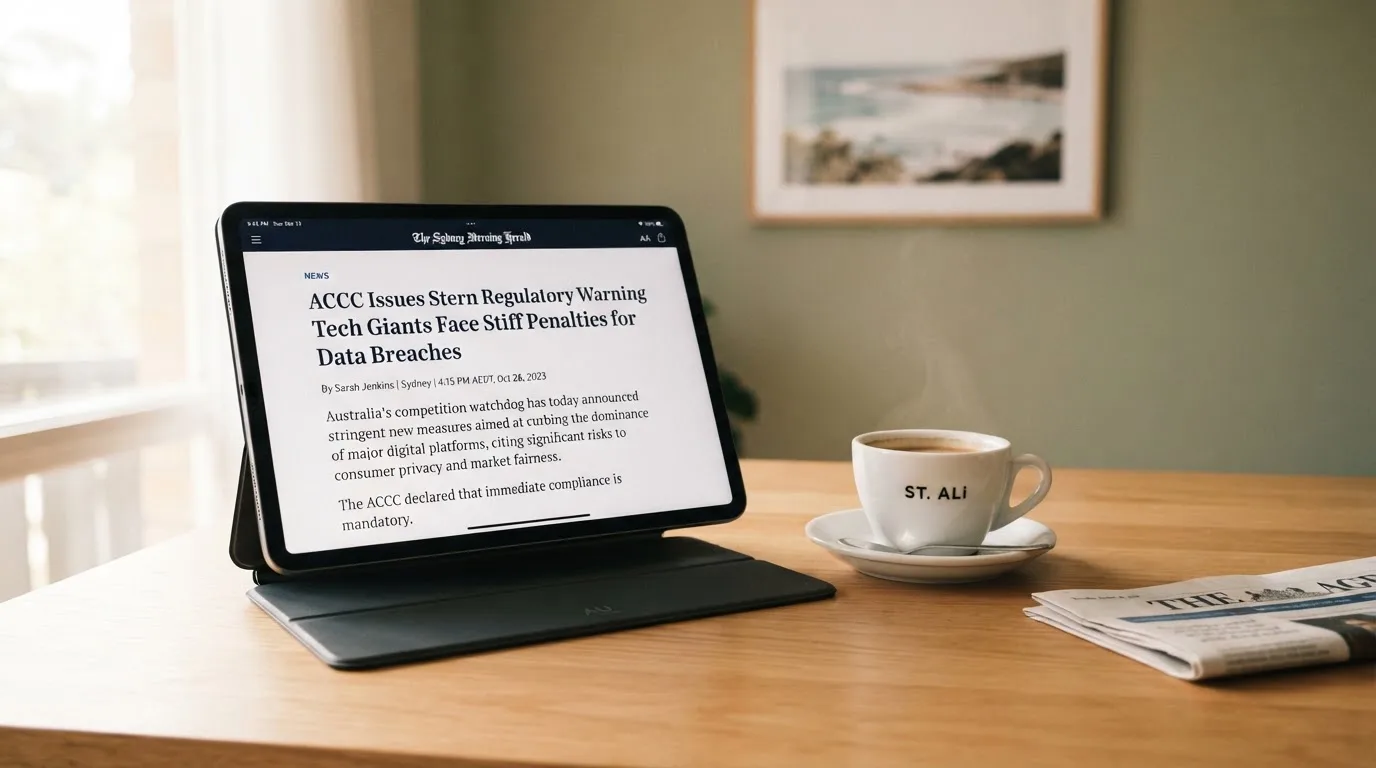
Blocking is reactive: it addresses sites already in operation, not sites that have not yet launched. It also does not reach offshore operators who never had an Australian-facing marketing presence to begin with. The ACMA pairs it with a second tool, formal warnings to the companies behind named brands. These warnings are published on the ACMA website, name the operator (often a Curaçao or other offshore-registered company), and put the recipient on notice that continuing to offer prohibited services to Australians will invite further action.
The rhythm of those warnings over the last three years tells its own story. In May 2022 the ACMA warned Dama N.V. covering six casino brands: Bambet, Dazard, Level Up, Rocketplay, Wild Tornado and Cobra Casinos. In March 2025 it returned to Dama N.V. over Woo Casino. In May 2025, over Spirit Casino. In July 2025 it warned Bamboo Media over Ignition Casino and Consolutetish S.R.L. over National Casino and Bizzo Casino — the latter already having been the subject of a 2022 warning to TechSolutions (CY) Group Limited and TechSolutions Group N.V. In February 2025 the ACMA warned EOD Code SRL over Instant Casino. In April 2025 it warned Sterplay Holding Ltd over Casino Intense. In March 2026 it warned Pulsup Ltd over Rocketplay.com.au. In April 2026 it warned Ryker B.V. over Jackbit and CasinOK. The pattern is unmistakable: the same corporate vehicles reappear under new brand names, and the ACMA names them each time.
The enforcement register is also the cleanest public source for the names of operators marketing to Australian players. Where affiliate sites list “best Bitcoin pokies” with glossy reviews and bonus codes, the ACMA register lists the same operators as the subject of formal warnings. The contrast is not subtle.
What Bitcoin Payment Technically Is (and Isn’t)
Bitcoin is a peer-to-peer digital currency running on a public blockchain. Its ledger is maintained by proof-of-work mining: miners search for a hash below a difficulty target that readjusts roughly every two weeks to keep the average block interval near ten minutes. A new block is added to the chain approximately every ten minutes on average, but the discovery is probabilistic — a confirmation can arrive much sooner or much later, with no guaranteed minimum or maximum delay. The network was created on 3 January 2009 when the pseudonymous Satoshi Nakamoto mined the genesis block, after posting the Bitcoin white paper to a cryptography mailing list on 31 October 2008.
The technical properties that matter for an offshore gambling transaction are these. First, the transaction is pseudonymous, not anonymous: every Bitcoin address and every transfer between addresses is recorded permanently on a public ledger, and chain-analysis firms routinely deanonymise flows for law enforcement, tax authorities, and exchanges subject to Know Your Customer rules. Second, the transaction is final once confirmed: there is no chargeback mechanism, no card issuer to appeal to, and no Australian bank to file a dispute through. Third, the price of Bitcoin in Australian dollars moves independently of the gambling transaction itself, which means the value of a deposit between the time it is sent and the time it is credited can shift by several percent.
Those properties are sold by offshore casinos as features. The marketing line is that Bitcoin lets an Australian player “play anonymously” without “lengthy verification” and “without restrictions”. What the marketing line skips is that the same properties create the same risks for the player: a refund is impossible if the operator disappears, an Australian bank cannot reverse a transaction that left through a crypto exchange, and the public ledger means a record of every deposit and withdrawal at an illegal site exists in a form the ATO and ACMA can subpoena. The “anonymity” claim collapses the moment the player tries to cash out to a regulated Australian exchange, which will demand identification before releasing fiat.
Crypto-Specific Rules: AUSTRAC, the ATO, and the Credit Card Ban
Bitcoin payment for online gambling in Australia sits inside three regulatory frames simultaneously, and each one applies regardless of the offshore status of the receiving site.
The first is AUSTRAC. Under Australia’s Anti-Money Laundering and Counter-Terrorism Financing Act, any business providing digital currency exchange services to Australian customers must register with AUSTRAC as a Digital Currency Exchange (DCE) provider, regardless of where the business is incorporated. Operating unregistered is a criminal offence. From 31 March 2026 the requirement was expanded beyond crypto-to-fiat exchange to also cover crypto-to-crypto exchange platforms, digital asset transferors, digital asset custody providers, and stablecoin issuers and distributors. An Australian player using a local exchange to convert AUD into Bitcoin is already inside this regime; the exchange has performed the identification work the offshore casino would not.
The second is the ATO. The Australian Taxation Office classifies crypto assets such as Bitcoin as property, not money or foreign currency. Most disposals — selling for AUD, swapping for another crypto, or spending Bitcoin at an offshore casino — are capital gains tax events. The ATO currently allows a 50% CGT discount on crypto assets held longer than 12 months, and from 1 July 2027 that flat discount is replaced by CPI indexation of the cost base plus a 30% minimum tax rate on net capital gains. There is also a narrow personal-use exemption: a capital gain on a crypto asset held as a personal use asset is disregarded for CGT purposes, but only if the asset cost A$10,000 or less to acquire; holding a crypto asset as an investment takes it outside this exemption. The ATO disregards all capital losses on personal-use crypto assets, so such a loss cannot offset other capital gains or be carried forward to a later income year. A deposit at an offshore casino is a disposal. The cost base is what the player paid for the Bitcoin; the proceeds are the AUD value at the time of the deposit. The difference is a CGT event.
The third frame is the credit card ban. Since 11 June 2024, credit cards, credit-related products and digital currency are banned as payment for licensed online wagering in Australia. Penalties for operators accepting them reach A$234,750 per breach. The ban applies to licensed wagering services: an Australian-licensed sports or race bookmaker cannot accept Bitcoin from an Australian customer. It does not reach offshore casinos, which is exactly why they are the only Bitcoin pokies venues still advertising to Australians. The ban’s existence is, however, an indicator of legislative intent — Parliament has decided that crypto payment is incompatible with licensed Australian wagering.
What Bitcoin Confirmation Actually Means at a Casino
The practical sequence at an offshore “Bitcoin pokies” site runs like this. The player purchases Bitcoin through a registered Australian exchange, or transfers Bitcoin they already hold from a self-custody wallet. They send the Bitcoin to the deposit address the casino provides. The casino waits for some number of confirmations — typically one to three, sometimes six — before crediting the balance. Because new Bitcoin blocks are added roughly every ten minutes on average, the credit usually lands within ten to thirty minutes. In periods of network congestion, it can take considerably longer; in busy periods, transaction fees rise because bidders outbid each other for block space, and the player either pays more or waits.
The casino’s credit is denominated in AUD or in USD at a fixed exchange rate the casino chooses; it is not denominated in Bitcoin. By the time the balance appears, the price of Bitcoin has already moved. If the player wins and withdraws, the same sequence runs in reverse: the casino sends Bitcoin from its hot wallet to the player’s address, and the player waits again for confirmations before the Bitcoin arrives. The whole loop is asymmetric in the casino’s favour. The casino never holds AUD for the player. It holds its own Bitcoin-denominated balance and credits the player’s account in its own chosen display currency, on its own terms, with no Australian recourse if the rate it used was unfavourable.
For the player, the same probabilistic timing that delays deposits also delays withdrawals. The casino’s stated “payout time” of “minutes” is real for the casino’s action — pressing send on a Bitcoin transaction — but not real for the player receiving usable funds. An Australian player who wants to convert the Bitcoin payout back to AUD must move it through a registered DCE, which performs the same identification work and applies the same fees whether the Bitcoin came from a casino or anywhere else.
The Responsible Gambling Frame
The Australian responsible-gambling infrastructure assumes the player is inside the licensed system. BetStop, the National Self-Exclusion Register, has been live since August 2023 and binds Australian-licensed online and phone wagering services. A player who registers with BetStop is blocked from opening new accounts with any Australian-licensed operator and from logging into existing ones. It is a real protection, with real teeth.
It does not reach offshore casinos. An operator in Curaçao or Cyprus is not connected to BetStop, has no obligation to honour an Australian self-exclusion, and routinely accepts self-excluded Australian players because doing so does not cost it its Australian licence — it has none. The National Gambling Helpline on 1800 858 858, free and 24/7, with chat at Gambling Help Online, is the correct first call for a player whose gambling is causing harm, but the help it connects the player to is calibrated for the licensed Australian market, where deposit limits, time-outs, and self-exclusion are mandated. An offshore site gives none of these protections as a matter of course, and many do not provide them at all.
This is the sharpest practical edge of the Bitcoin pokies proposition for an Australian player. The marketing pitch is frictionless: no verification, no delay, no limits. The actual product is also frictionless in the other direction: no complaint body, no dispute resolution, no deposit cap, no self-exclusion hook, and no Australian regulator to escalate to if the site refuses to pay out. A balance held at an offshore casino is, in the legal sense, an unsecured credit to an entity the player has no contractual relationship with under Australian law.
The Blocking Rate: How Quickly Does the Market Move?
The ACMA’s blocking register is the cleanest window into the rate at which offshore operators replace the sites the regulator has shut. Two figures anchor the arithmetic: the first blocking request was issued in November 2019, and by the reporting in June 2026 a total of 1,751 illegal gambling and affiliate marketing websites had been blocked. That is roughly 270 sites per year on average, or about 22 sites per month, over a period of roughly six and a half years. The recent pace has been higher than the early pace: the June 2026 round alone added twelve sites, and the register reports more than 230 unlicensed gambling services having left the Australian market entirely since 2017, on top of those that were merely blocked.
The blocking rate does not, however, equal the arrival rate. New offshore brands appear faster than the ACMA can act on each one, because launching a new domain under a familiar corporate parent costs the operator almost nothing. The same Dama N.V. entity that the ACMA warned over Bambet, Dazard, Level Up, Rocketplay, Wild Tornado and Cobra Casinos in May 2022 was warned again over Woo Casino in March 2025 and Spirit Casino in May 2025. Ryker B.V. surfaced as the operator behind Jackbit and CasinOK and drew a formal warning in April 2026. The cycle is that the ACMA names a brand, the brand is blocked, the corporate parent re-emerges with a new domain, the cycle repeats. The rate is a band — somewhere between roughly 250 and 350 blocked sites per year, depending on the year measured, with the absolute number of active sites at any moment higher than the cumulative count of those that have been blocked, because each block pulls one site offline while several others come up.
The point for a player is not the precise figure. The point is that the market the ACMA sees is moving, and the specific brand a player is looking at today may be the brand on tomorrow’s blocking list. The blocking-rate number is a background fact, not a forecast for any single operator.
The Brands the ACMA Has Acted Against
The list below is not a ranking. The brands appear in the order the ACMA itself has acted on them across its published formal warnings, and each entry records the operator the ACMA named and the date of the warning. No bonus terms are listed — the only sources for them were affiliate marketing pages, and the page’s own subject is the legal status of the offer rather than its headline number.
| Brand | ACMA action and date | Operator named by the ACMA | Subject support |
|---|---|---|---|
| RocketPlay | Formal warning under the Interactive Gambling Act 2001 | Pulsup Ltd (Rocketplay.com.au), March 2026; earlier Dama N.V., May 2022 | — |
| Level Up Casino | Formal warning under the Interactive Gambling Act 2001 | Dama N.V., May 2022 | — |
| Woo Casino | Formal warning under the Interactive Gambling Act 2001 | Dama N.V., March 2025 | Listings report a Bitcoin deposit option |
| Spirit Casino | Formal warning under the Interactive Gambling Act 2001 | Dama N.V., May 2025 | — |
| National Casino | Formal warning under the Interactive Gambling Act 2001 | Consolutetish S.R.L., July 2025 | Listings report a Bitcoin deposit option |
| Bizzo Casino | Formal warning under the Interactive Gambling Act 2001 | Consolutetish S.R.L., July 2025; earlier TechSolutions, 2022 | — |
| Ignition Casino | Formal warning under the Interactive Gambling Act 2001 | Bamboo Media, July 2025 | — |
| Instant Casino | Formal warning under the Interactive Gambling Act 2001 | EOD Code SRL, February 2025 | — |
| Jackbit | Formal warning under the Interactive Gambling Act 2001 | Ryker B.V., April 2026 | — |
| Casino Intense | Formal warning under the Interactive Gambling Act 2001 | Sterplay Holding Ltd, April 2025 | — |
| Sky Crown | Formal warning under the Interactive Gambling Act 2001 | Hollycorn N.V., September 2022 | — |
Each of these brands markets itself, or has marketed itself, to Australian visitors through affiliate networks that target Australian search terms. Several accept Bitcoin and other cryptocurrencies as deposit methods. Each one is the subject of an ACMA formal warning because, under the IGA, no online casino or online pokies product can be licensed in Australia regardless of the payment rail — and the ACMA has, on the public record, identified the operator behind the brand and put it on notice.
The Hollycorn N.V. entry above covers both Sky Crown and Blue Leo, which were the subject of the same formal warning published by the ACMA in September 2022. The warning is a single document with two brands named on it, and the table reflects that.
RocketPlay
The brand most recently drawn into the ACMA’s enforcement net in 2026. Pulsup Ltd drew a formal warning over Rocketplay.com.au in March 2026. The same brand was the subject of an earlier warning to Dama N.V. in May 2022, when six casino brands — including Rocketplay — were named in a single notice. Two warnings to the same brand under different corporate parents is the ACMA’s way of recording that the operator behind a familiar name has changed while the offer to Australian players has not. RocketPlay has marketed Bitcoin deposits to Australian players; the ACMA has confirmed in writing that the offering is prohibited.
The verdict for a player reading this entry is straightforward: the legal status of a Bitcoin deposit at RocketPlay is the same in 2026 as it was in 2022. The site’s licence, displayed in the footer, is issued by a jurisdiction whose authorisation does not reach Australian customers under Australian law. The ACMA has named the operator twice.
Level Up Casino
Named in the same May 2022 warning to Dama N.V. as five other brands, and one of the original six. Level Up Casino has appeared in Australian-facing affiliate marketing alongside the rest of that cohort. There is no subsequent ACMA action specific to Level Up Casino alone, but the 2022 warning remains in force and the prohibition it recorded is the same one any Bitcoin deposit would run into. The brand’s persistence in Australian-facing affiliate networks is the reason it stays on the ACMA’s radar.
A player considering Level Up Casino for Bitcoin pokies play should read the 2022 ACMA warning as the operating context, not as an outdated footnote.
Woo Casino
The Dama N.V. cluster returned to the ACMA’s register in March 2025 with Woo Casino named in its own formal warning. Woo Casino is one of the offshore brands Australian-facing affiliate pages have listed under “Bitcoin pokies” with crypto deposit instructions. The ACMA’s 2025 warning specifically addressed the brand, not just the corporate parent. The listings reporting a Bitcoin deposit option are what the ACMA’s enforcement record treats as evidence the prohibited service is being actively offered to Australian customers.
The match between the affiliate listings and the ACMA register is the point. Woo Casino is not an obscure brand the regulator stumbled across; it is a brand openly targeting Australian search traffic with a Bitcoin deposit flow, and the regulator has responded in writing.
Spirit Casino
The Dama N.V. cluster’s third appearance in the ACMA register, this time in May 2025. Spirit Casino follows the same pattern as Woo Casino: a brand name in Australian-facing affiliate marketing tied to the same corporate parent the regulator has previously warned. The May 2025 warning is the freshest ACMA action specific to this brand.
National Casino
Consolutetish S.R.L. drew the ACMA’s attention in July 2025 over National Casino and Bizzo Casino in a single warning. National Casino has appeared in Australian-facing affiliate listings with a Bitcoin deposit option. The July 2025 warning is the ACMA’s published record that the service is being offered to Australian customers. As with Woo Casino, the alignment between what the affiliate listings say about deposit methods and what the ACMA’s warning addresses is what gives the warning its force.
Bizzo Casino
Named alongside National Casino in the July 2025 warning to Consolutetish S.R.L., but also carrying an older history: Bizzo Casino had already been the subject of a 2022 formal warning to TechSolutions (CY) Group Limited and TechSolutions Group N.V. Two warnings, two different corporate parents, one brand. The repetition is the point — the ACMA has named Bizzo Casino twice because the operator behind it has changed while the brand has not, and the regulator’s record captures both.
Ignition Casino
Bamboo Media drew the ACMA’s attention in July 2025 with a formal warning over Ignition Casino. Ignition has been a long-standing brand in offshore online gambling, and the ACMA’s warning confirms that its offer to Australian players falls within the prohibition regardless of the offshore licence it displays.
Instant Casino
EOD Code SRL drew a formal warning in February 2025 over Instant Casino. The brand had been active in Australian-facing affiliate marketing before the warning; the warning itself is the ACMA’s record that the service is prohibited. Instant Casino is the cleanest illustration of how quickly an offshore brand can be drawn into the enforcement net — a February 2025 warning means the operator was offering prohibited services to Australian customers as recently as the early months of that year.
Jackbit
Ryker B.V. drew a formal warning in April 2026 over Jackbit and CasinOK. Jackbit is a Bitcoin-native casino brand — it was built around crypto deposits rather than adding them later — and the ACMA’s warning over it is the freshest in the register at the time of writing. A brand whose entire product proposition rests on Bitcoin payment is, in the ACMA’s view, no more lawful than one whose product rests on credit card payment.
Casino Intense
Sterplay Holding Ltd drew a formal warning in April 2025 over Casino Intense. The brand has appeared in Australian-facing affiliate marketing. The warning is the regulator’s record that the service is prohibited.
Sky Crown
Hollycorn N.V. drew a formal warning in September 2022 covering both Sky Crown and Blue Leo. The Hollycorn cluster has appeared repeatedly in offshore casino enforcement across multiple jurisdictions; the Australian record against Sky Crown and Blue Leo is one part of that pattern. The 2022 warning remains the ACMA’s most recent action specific to Sky Crown, and the prohibition it recorded is unchanged.
Comparison: What Separates One Entry from Another
The eleven brands above share three things. They all accept or have accepted Bitcoin deposits from Australian customers. They are all the subject of an ACMA formal warning under the Interactive Gambling Act 2001. And none of them can lawfully offer online pokies to a person in Australia regardless of the licence displayed in the footer or the corporate parent registered in Curaçao, Cyprus, or another offshore jurisdiction.
What separates one from another is administrative rather than substantive. Two warnings to the same brand under different corporate parents (Bizzo Casino, RocketPlay) record that the operator behind the brand has changed. Warnings separated by several years (Hollycorn in 2022, Dama N.V. for Woo Casino in 2025, Ryker B.V. for Jackbit in 2026) show the regulator’s continuous attention. Brands that are cryptocurrency-native (Jackbit) sit alongside brands that added crypto as one of several deposit methods (Woo Casino, National Casino), and the ACMA’s enforcement does not distinguish between them — the prohibition applies to the offer of online casino games to Australian customers, and the payment method is incidental.
The right comparison for an Australian player is not between these brands. It is between this category of offer and the category of offer the IGA actually permits: licensed Australian wagering on races and sport before the event, licensed lotteries, licensed keno, and licensed land-based pokies at venues in states and territories that permit them. Inside the prohibited category, no brand is safer than any other, and a fresh ACMA warning against a brand the player was considering is a stronger signal than any affiliate review.
Bitcoin-Specific Mechanics Worth Understanding
Three Bitcoin-specific facts shape the player experience regardless of which offshore brand is involved, and each one is technical rather than regulatory.
Probabilistic confirmation. A new Bitcoin block is created roughly every ten minutes on average, but discovery is probabilistic: a confirmation can arrive much sooner or much later, with no guaranteed minimum or maximum delay. Mining difficulty readjusts every two weeks to keep the average near ten minutes, but any individual confirmation can land in seconds or stretch into hours during congestion. The Bitcoin network has never guaranteed a confirmation time and never will, because the design is to make timing unpredictable. An offshore casino promising “instant Bitcoin deposits” is overpromising on the network’s actual behaviour.
Issuance cap. Bitcoin issuance halves over time — every 210,000 blocks — until it stops completely at a total of 21 million bitcoins. This cap is a defining feature of Bitcoin, but it has no bearing on whether a particular Bitcoin deposit at a particular offshore casino in 2026 is lawful. It is, however, the property that distinguishes Bitcoin from a casino-branded token, and an Australian player approached with a “Bitcoin pokie” offer denominated in the casino’s own token should note that the token is not Bitcoin and has none of Bitcoin’s issuance properties.
Settlement finality. A confirmed Bitcoin transaction is final. There is no chargeback, no card-issuer dispute, and no Australian bank that can reverse a transfer that has cleared. This is the property the offshore casino’s marketing leans on hardest (“no chargebacks, no delays, no limits”), and it is also the property that leaves the player with no recourse if the casino refuses to pay out. Finality cuts in both directions. The casino cannot reverse a player’s deposit, but neither can the player reverse a withdrawal the casino has sent that the player no longer wants.
Frequently Asked Questions
Does paying with Bitcoin make an offshore pokies site legal for Australians to use?
No. The Interactive Gambling Act 2001 prohibits the provision of online casino games and online pokies to people in Australia, and the prohibition sits with the operator, not the payment method. The ACMA has issued formal warnings to offshore operators accepting Bitcoin from Australian customers on the same legal basis as warnings to those accepting credit cards. The crypto rail does not change the legal status of the receiving site.
How long does a typical Bitcoin transaction take to confirm?
A new Bitcoin block is added roughly every ten minutes on average, so a deposit at an offshore casino usually credits within ten to thirty minutes once the casino’s required number of confirmations is reached. During periods of network congestion, fees rise and confirmation times stretch. The Bitcoin network does not guarantee a minimum or maximum delay because block discovery is probabilistic; the ten-minute figure is an average, not a contract.
Why is block confirmation time for Bitcoin described as probabilistic rather than fixed?
Mining difficulty adjusts every two weeks to keep the average block interval near ten minutes, but the discovery of any individual block follows a Poisson-like distribution: the next block could be found in seconds or could take much longer than ten minutes. The design intent is to make timing unpredictable so that no miner can reliably front-run the network. Any service promising a “guaranteed” Bitcoin confirmation time is overstating what the protocol delivers.
Can licensed Australian pokies venues accept cryptocurrency as payment?
No. Since 11 June 2024, credit cards, credit-related products and digital currency are banned as payment for licensed online wagering in Australia. The ban applies to Australian-licensed operators, which is exactly why offshore sites are the only venues still advertising Bitcoin deposit options to Australian customers. Licensed land-based venues operate under state and territory rules that do not contemplate cryptocurrency acceptance, and no major Australian venue chain currently accepts Bitcoin at the gaming machine.
What risk does price volatility add to holding Bitcoin before it’s used anywhere?
Bitcoin’s price in Australian dollars moves independently of any gambling transaction. The value of a Bitcoin deposit at an offshore casino can shift by several percent between the time the player sends it and the time the casino credits the balance. A winning streak denominated in Bitcoin can shrink in AUD terms if Bitcoin falls during the session, and a losing streak can cost less in AUD terms if Bitcoin rises. The volatility is the casino’s gain and the player’s exposure: the casino holds its balance in Bitcoin and is hedged; the player does not.
Closing Position
Bitcoin payment is a technical innovation, not a legal one. For an Australian player, the relevant facts are that the Interactive Gambling Act 2001 prohibits online casino games and online pokies for Australian customers regardless of how payment is made; that the ACMA has been actively enforcing this prohibition through site blocking and formal warnings since 2017; that the eleven brands on this page are the ones the ACMA has specifically named as offering prohibited services; and that the AUSTRAC, ATO, and credit-card-ban frameworks all apply to Bitcoin transactions in the Australian context whether or not the receiving operator is licensed here. The legitimate alternatives — licensed land-based venues, licensed Australian wagering on races and sport, licensed lotteries and keno — sit outside the offshore Bitcoin pokies market entirely. A player who chooses the offshore route is choosing it knowing the legal status, knowing the ACMA’s record, and knowing that the protections built into the Australian responsible-gambling infrastructure do not reach the offshore site. That is the choice the page describes, and the only honest framing of it.
| Framework | What it means for a Bitcoin payment |
|---|---|
| Interactive Gambling Act 2001 | online casino games and online pokies are prohibited for Australian customers, whatever the payment method |
| ACMA enforcement | site blocking and formal warnings against the operators |
| AUSTRAC, ATO and the credit-card ban | apply to Bitcoin transactions whether or not the operator is licensed here |
| Licensed alternatives | land-based venues, wagering on races and sport, lotteries and keno |
Created by the ”Crypto Casino Hub AU” editorial team.