
Relax Gaming casinos in Australia: what an offshore-only market looks like in 2026
29 October 2026 — ACMA register, BetStop National Self-Exclusion Register, and the Interactive Gambling Act 2001 as published on the Federal Register of Legislation.
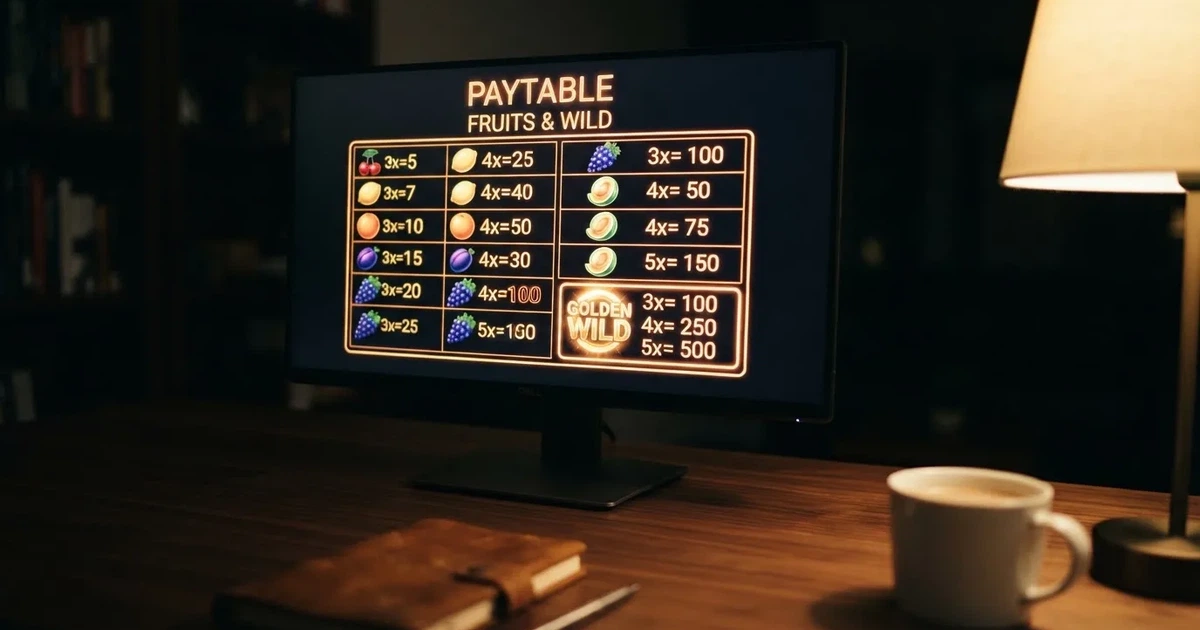
The short answer to the question this page opens with is unflattering. Relax Gaming is a real supplier, with a UK Gambling Commission account, a Malta Gaming Authority licence, and a Gibraltar division registration among others, and its slots and live tables turn up on hundreds of offshore casinos. None of those casinos is licensed to take an Australian customer for online casino play. The Interactive Gambling Act 2001, as tightened by the Interactive Gambling Amendment Act 2017, makes the supply of online casino games to a person in Australia a prohibited interactive gambling service, and the ACMA has spent the years since 2017 issuing formal warnings and asking ISPs to block the sites that ignore the rule. What follows is a buyer-side read of that market: who the suppliers are, who the offshore operators carrying their games are, what regulators have done about them, and what an Australian player is actually paying for when one of these sites takes their deposit.
Table of Contents
- Relax Gaming on mobile and on a phone browser
- Relax Gaming’s catalogue and the provider landscape
- The Australian operator landscape
- What “Relax Gaming casino” actually means in Australia
- Legality and what the Interactive Gambling Act actually does
- Responsible gambling: what is in place and what is not
- Deposits, withdrawals and payout speed
- Bonuses, free spins and what they actually cost
- What changes when an Australian looks for a Relax Gaming casino
- Frequently asked questions
Relax Gaming on mobile and on a phone browser
The shelf this section closes is the one a player hits first: how Relax Gaming titles behave on a phone, whether a dedicated app exists, and whether load times and touch ergonomics are even a relevant question when the site itself sits on the wrong side of the Interactive Gambling Act.

What “mobile” means at an unlicensed site
Relax Gaming’s catalogue is built in HTML5. The same game file that loads on a desktop browser loads in Chrome on Android and in Safari on iOS, with the layout reflowing to the screen. The provider does not publish a separate “Relax Gaming casino app” — there is no first-party application a player downloads to play its slots. The casino operator is the one that decides whether to wrap the games inside a native app, and the operators carrying Relax Gaming content are mostly Curaçao-licensed offshore brands with no Australian presence to wrap. In practice the question becomes whether the offshore brand’s mobile web build is tolerable, and whether the player can reach it at all.
Reach is the part that changes in Australia. The ACMA’s blocking programme started with the first blocking request in November 2019; by June 2026 a cumulative 1,751 illegal gambling and affiliate marketing websites had been blocked. A player who finds a Relax Gaming casino through a search result on a Monday can find it inaccessible on the Tuesday after the next blocking round. The mobile experience is therefore not just “does it play well on this handset” but “can the player get to it from this network today, and for how long”. On the question of how well it plays when reachable, the answer is the same as it would be anywhere else: HTML5 slots are responsive, animations are smooth on handsets released in the last four years, and the main bottleneck is the site’s own framework rather than the game file. The bottleneck a player cannot engineer around is the block.
The practical gap between a licensed mobile wagering app and an offshore casino
For comparison, the licensed Australian online wagering market — sports and racing, not casino — has a mature mobile footprint. The Northern Territory Racing and Wagering Commission regulates 52 of Australia’s online bookmakers, including Sportsbet, Bet365 and Ladbrokes, all licensed in the Territory for tax reasons. Those are the apps that turn up under “betting” in an Australian app store. An offshore Relax Gaming casino is not in that store, and the player’s path to it is the mobile browser, a bookmark, and the knowledge that the bookmark may stop working. The experience is fine when it works. The legal and access risks are not fine, and they are not the supplier’s risk to absorb.
Relax Gaming’s catalogue and the provider landscape
This section is about what a Relax Gaming title actually is, and who else is putting slots next to it on the same offshore lobby.
Relax Gaming’s product line and licences
Relax Gaming was founded by Patrik Österåker and Jani Tekoniemi and now operates as a commercial and product hub from Malta, with offices in Estonia, Sweden and Serbia and a more recent Mallorca presence that the company has put at 300+ staff for its 15th-anniversary milestone. The provider is licensed and regulated in Great Britain by the UK Gambling Commission under account number 37462, holds a Malta Gaming Authority licence, and is also licensed by Gibraltar’s Gambling Division, Romania’s ONJN and Canada’s AGCO. Kindred Group acquired the 66.6% of shares it did not already own in July 2021 at an enterprise value of up to EUR 320 million. None of those licences covers supply to Australia. They cover the right to make the games available to operators licensed in those jurisdictions, and an offshore operator’s Curaçao sub-licence is the route by which the games reach an Australian-facing URL.
The catalogue itself is broader than the slots a search result usually surfaces. The studio’s output covers online slots, live casino tables, bingo and poker products, with the “Relax” brand stretched across formats rather than tied to one. That range is what lets a single offshore lobby carry Relax Gaming roulette, Relax Gaming-branded slot tournaments and a Relax live-dealer table on the same page as someone else’s Megaways clone.
Providers who sit next to Relax Gaming on offshore lobbies
A buyer-side read of an offshore casino lobby lists the providers a player actually sees on the same page as Relax Gaming. Betsoft, founded in 2006, ships a catalogue of more than 200 RNG games and supplies licensed markets in Europe, Scandinavia, Latin America and Africa under its own MGA and ADM-aligned compliance claims; specific titles carry published RTPs, with Good Girl Bad Girl 2 at 96.22% on “Very High” volatility and The Slotfather, live since 13 December 2012, at 95.69% on “Medium” volatility. BGaming’s team has worked on games since 2012; the BGaming brand itself debuted in 2018 and now offers 250+ certified games across slots, video poker, lottery, card, scratch, crash and casual formats. 1spin4win, founded in 2021 by a 15-year iGaming veteran group, holds a Curaçao licence from its Willemstad base and reports a portfolio of more than 190 HTML5 online slots and more than 1,000 casino and aggregator partnerships. Aristocrat Leisure, the largest gambling-machine manufacturer in Australia, operates the regulated online real-money business Aristocrat Interactive — formed in April 2024 by combining Anaxi with the newly acquired NeoGames group — under a separate corporate structure from its land-based pokies; it is the closest thing the market has to an Australian provider of regulated online product, and it does not supply offshore casinos.
What this mix tells the buyer is that a Relax Gaming casino lobby is a multi-provider stack rather than a single studio’s boutique. The slot of interest and the table beside it are usually from different suppliers, licensed by different regulators, certified by different labs, and serviced by the same offshore operator. The single point of accountability is the operator, and the operator is the party the ACMA is acting against.
The Australian operator landscape
This section closes the shelf that compares brands. It is not a ranking and not a recommendation: each brand is here because the ACMA itself has issued a formal warning over it for offering prohibited services to Australians. The reader’s task is the opposite of choosing one to play at — it is recognising the names and understanding what the regulator’s action actually means.
The brand-by-brand picture
| Brand | ACMA action and date | Operator named by the ACMA | Subject support |
|---|---|---|---|
| RocketPlay | Formal warning, March 2026; earlier Dama N.V. action, May 2022 | Pulsup Ltd (RocketPlay); Dama N.V. | — |
| Level Up Casino | Formal warning, May 2022 | Dama N.V. | listings-only (Wazdan) |
| Woo Casino | Formal warning, March 2025 | Dama N.V. | — |
| Spirit Casino | Formal warning, May 2025 | Dama N.V. | — |
| National Casino | Formal warning, July 2025 | Consolutetish S.R.L. | listings-only (Betsoft, en.wikipedia.org, Pragmatic Play) |
| Bizzo Casino | Formal warning, July 2025; earlier TechSolutions warning, 2022 | Consolutetish S.R.L.; TechSolutions (CY) Group Ltd; TechSolutions Group N.V. | — |
| Ignition Casino | Formal warning, July 2025 | Bamboo Media | — |
| Instant Casino | Formal warning, February 2025 | EOD Code SRL | — |
| Jackbit | Formal warning, April 2026 | Ryker B.V. | — |
| Casino Intense | Formal warning, April 2025 | Sterplay Holding Ltd | listings-only (1spin4win, en.wikipedia.org, gamblingcommission.gov.uk) |
| Sky Crown | Formal warning, September 2022 | Hollycorn N.V. | — |
Key Relax Gaming regulatory and operational facts
| Matter | Detail |
|---|---|
| Provider Headquarters | Malta |
| Regulatory licences | UK Gambling Commission, Malta Gaming Authority, Gibraltar, Romania ONJN, Ontario AGCO |
| Parent Group | Kindred Group |
| Australian status | No Australian licence for online casino |
| Primary Australian analogue | Aristocrat Interactive |
The subject-support column follows the rule that research carries: where the operator’s own materials or a third-party listing shows Relax Gaming content, the cell says so and names the source; where research carries no such listing, the cell is empty rather than fabricated. Several brands here are stacked next to “listings-only” because they appear on a provider’s distribution page rather than on the operator’s own “about” page. The buyer-side reading of the table is straightforward: every brand on the list is one the ACMA has formally warned under the Interactive Gambling Act 2001, and none of them is licensed to take an Australian customer for online casino play regardless of what licence the operator displays elsewhere.
Where the names come from
The ACMA’s formal-warning register is the only source that turns a casino name into a defensible fact for an Australian reader. A warning is not a fine and not a prosecution — it is a written notice that a service has been identified as providing a prohibited interactive gambling service to Australians, with the consequence that further enforcement action can follow. The warnings cited here span 2022 through April 2026, and they cluster around a small number of corporate groups. Dama N.V. alone accounts for five distinct brands across this list (RocketPlay, Level Up Casino, Woo Casino, Spirit Casino and the original six-brand warning that included Wild Tornado and Cobra Casinos), and Consolutetish S.R.L. accounts for two. The pattern is what an enforcement agency looks like when it is going after the corporate group rather than the URL.
A blocking round reported on 26 June 2026 added twelve more domains — 7Signs, ChromaBet, Donbet, Duospin, Freshbet, Slots Gem, Jacks Club, Lucky Start, Pointsbetz, Spinrise, Vinyl Casino and Wildsino — to the cumulative 1,751 websites blocked since November 2019. None of those is a Relax Gaming casino by name, but the same enforcement machinery applies to any offshore site that takes an Australian deposit for an online casino game.
What this brand list does for the reader
The brand list gives a reader a way to recognise what is in their inbox or on their phone. Affiliate marketing sites route Australian traffic to these brands with bonus headlines that the affiliate pages themselves are the only source for, and the only published ACMA fact about the brand is the warning. A reader who sees one of these names in a promotion can match it to a row in the table and read off the date of the regulator’s action. The matching is the only useful thing the comparison produces. The brand itself is not a destination.
What “Relax Gaming casino” actually means in Australia
This section is the overview the page sets out from. It restates the legal position, names the market the player is buying into, and locates Relax Gaming within it.
The product is the slot; the licence is the operator’s problem
A player searching for a Relax Gaming casino is searching for a place to play Money Train 3, Temple Tumble, or any of the studio’s other current slot releases. The slot is the product. The product’s compliance paperwork is the supplier’s, and the supplier’s paperwork is in order for the markets it actually serves. The operator’s paperwork is the variable. An Australian-facing operator displaying a Curaçao e-Gaming sub-licence or an Anjouan licence is not licensed to take an Australian customer for online casino games; that licence is for a different jurisdiction and a different customer base. The Interactive Gambling Act 2001 is the controlling instrument and it does not care what other licences the operator holds.
The market that does exist, and what it costs
H2 Gambling Capital’s 2025 report estimates that Australians lose about A$3.9 billion a year to illegal gambling sites, and that the share of gambling going through legal channels fell from 74% in 2021 to 64%. The figure is what makes the offshore market material to the regulator and material to the player who funds it. The legal channel is sports and racing wagering — pre-event only, with in-play betting prohibited — plus lotteries and keno. The illegal channel is everything else, and the difference between the two is not just a tax receipt: it is whether a player has a complaint body, a self-exclusion register that the operator is connected to, and an Australian consumer protection regime behind the deposit. The offshore channel has none of these. The cost is not just the expected loss on the slot.
Legality and what the Interactive Gambling Act actually does
This section is the legal frame the whole page sits inside. It is not the most exciting passage to write or to read, but it is the one that decides every other section’s conclusion.
The prohibition and what it covers
The Interactive Gambling Act 2001, as amended in 2017, makes it an offence to provide online casino games, online pokies or in-play betting to a person in Australia. No state or territory licenses online casino games. What is licensable is wagering on races and sport placed before the event, lotteries and keno. The Interactive Gambling Amendment (Gambling Reform) Bill 2026 passed Parliament on 19 August 2026, with its advertising and inducement measures commencing 1 January 2027 — law with a start date, not yet in force on a 2026 page. The minimum age is 18.
The Act targets the provider, not the player. An Australian who deposits at an offshore casino is not committing an offence. The offshore casino is. That asymmetry shapes what enforcement looks like: it is the casino the ACMA warns, the casino the ACMA blocks, the casino that loses its Australian customer base when an ISP implements the block.
Enforcement: warnings, blocks and the cumulative picture
The ACMA investigates complaints, issues formal warnings, and directs Australian internet service providers to block illegal sites under section 313 of the Telecommunications Act 1997. The first blocking request went out in November 2019. By June 2026 the cumulative total had reached 1,751 illegal gambling and affiliate marketing websites blocked, and more than 230 unlicensed gambling services had left the Australian market since enforcement was strengthened in 2017. A blocking round reported on 26 June 2026 asked ISPs to block 12 more domains: 7Signs, ChromaBet, Donbet, Duospin, Freshbet, Slots Gem, Jacks Club, Lucky Start, Pointsbetz, Spinrise, Vinyl Casino and Wildsino.
The practical effect of a block is asymmetric. The operator loses the deposit funnel overnight. The player with a balance still on the blocked site loses access to that balance along with the site. There is no Australian complaints body to recover it from. The player’s recourse is whatever dispute mechanism the operator’s own terms point to, in whatever jurisdiction the operator’s licence names — which is not Australia.
The payments ban that covers licensed wagering
Since 11 June 2024, credit cards, credit-related products and digital currency have been banned as payment for licensed online wagering in Australia, with penalties of up to $247,500 for operators. The legal deposit routes for a licensed Australian wagering account are debit card, bank transfer, PayID/Osko and BPAY. An offshore casino asking an Australian for a credit card or a crypto deposit is operating outside the Australian rules for wagering payments, and a player who funds it that way is sending money through a channel the licensed Australian market has explicitly closed off. The ban is on the operator’s side of the transaction; the player is not the regulated party. The signal the ban sends is that the regulated market does not want credit-funded gambling, and that an offshore site offering it is signalling it is not operating in the regulated market.
Tax position for a recreational player
Gambling winnings of a recreational player are not assessable income under section 6-5 of the Income Tax Assessment Act 1997, and losses are not deductible, unless the person carries on a business of gambling. The tax position is the same whether the gambling happens at a licensed Australian venue or at an offshore casino. The deduction issue cuts both ways: a recreational player cannot offset the offshore losses against other income either, which means an offshore session’s expected loss is a real cost without a tax counterweight.
Responsible gambling: what is in place and what is not
This section closes the shelf that names the supports available to a player who needs them. The shelf is short and the supports are Australian; the offshore market sits outside them.
What an Australian player can actually use
The National Gambling Helpline is 1800 858 858, free, 24/7, with web chat at Gambling Help Online. BetStop, the National Self-Exclusion Register, has been live since August 2023 and binds Australian-licensed online and phone wagering services. An offshore casino is not connected to BetStop. A player who self-excludes through BetStop has closed off the licensed Australian market; they have done nothing about the offshore casino that emailed them yesterday.
State and territory self-exclusion registers operate separately and cover land-based venues — pubs, clubs and casinos — in their jurisdiction. They do not bind offshore websites. The combined effect of all of these is that the responsible-gambling infrastructure in Australia is built around the licensed Australian market, and an offshore casino sits in the gap between any two of them.
What self-excluding at an unlicensed site actually requires
An offshore casino that markets to Australians typically runs its own in-account self-exclusion. The mechanism is contractual rather than regulatory: the player requests it, the operator is supposed to honour it, and the operator’s dispute resolution is the only escalation if it does not. Some operators are signed up to international self-exclusion schemes that operate across a network of sites, and those schemes work to the extent the network’s operators honour them. A player who has self-excluded from an offshore site and is still receiving bonus emails from it has, in practical terms, only the operator’s customer service to ask, and only the operator’s terms to define what “self-exclusion” means on that site. None of this substitutes for a national register the operator is bound by.
Deposits, withdrawals and payout speed
This section closes the payments shelf. It is about what actually happens when an Australian player funds an offshore casino and what happens when they try to get the money back.
What the deposit looks like
An offshore casino typically accepts a wider range of payment methods than a licensed Australian wagering account, and that range is part of the marketing proposition. Crypto deposits are the most advertised; e-wallets and a small set of cards usually follow. The deposit that gets through fastest is the deposit the licensed market has explicitly closed off. A player funding an offshore casino with a credit card or with bitcoin is not making a mistake the licensed market would have caught — the licensed market does not let them try. The unlicensed market is the only place this deposit is even offered.
What the withdrawal looks like
Payout speed at an offshore casino varies by operator and by method. Crypto withdrawals are the fastest advertised route, with settlement windows of hours rather than days on the operators that publish a number at all. E-wallet withdrawals sit in the middle. Bank transfers are the slowest and the most likely to be interrupted by the operator’s own “additional verification” step, which can re-trigger the document checks the player thought they had already passed at deposit. The verification step is not the regulator’s. It is the operator’s, and the operator decides what triggers it.
The deeper risk on a withdrawal is not the time but the refusal. A licensed Australian wagering operator is bound by Australian consumer law and by the regulator’s dispute processes. An offshore operator is bound by its own terms, by the regulator of whatever jurisdiction its licence names, and by nothing else. A refusal is not appealable to an Australian body. The balance sits where the operator says it sits, and the player’s recourse is the operator’s own complaints procedure followed by whatever alternative-dispute-resolution provider the operator has signed up to, in a jurisdiction the player is not in.
What a blocked site does to a pending withdrawal
A block is an infrastructure-level event. The website stops resolving for Australian IP ranges through the ISPs that implement the ACMA’s request. A player with a pending withdrawal on a blocked site does not get an email explaining the situation; they get a site that does not load. The recovery path is to contact the operator through whatever channel still works — a mirror domain, an email address, a live-chat widget on a sister site — and to hope the operator’s payment team processes the request without the player having to log into the account they can no longer reach. There is no published data on how often this works. The ACMA’s enforcement assumes the player loses the balance as one of the costs of being on a blocked site, and the 1,751 cumulative blocks since November 2019 are a long list of balances the regulator is not in a position to recover.
Bonuses, free spins and what they actually cost
This section closes the bonus shelf. The framing is the same as the rest of the page: the offer exists, it is marketed to Australians, it sits on an unlicensed site, and the cost to the player is what the calculation at the end of this section works out.
What a “Relax Gaming casino bonus” usually is
A typical offshore welcome package stacks a deposit match with free-spin tranches tied to a named slot, often a Relax Gaming slot. The deposit match carries a wagering multiple — the amount a player must wager before any winnings convert to withdrawable cash. The free spins carry their own terms, often including a cap on the winnings the spins can produce. The headline number is the deposit match. The actual number is the wagering multiple.
An Australian player who sees a “100% up to A$500 plus 200 free spins on Money Train 3” headline is looking at a deposit match with a wagering requirement and a free-spin allotment whose winnings are probably capped. The headline’s job is to make the player deposit. The wagering requirement’s job is to make the deposit expensive to extract. The two are designed to work against each other.
How the wagering requirement turns into time
The arithmetic of a bonus is the same arithmetic that drives the operator’s expected revenue from the offer. A bonus of A$500 with a 40x wagering multiple requires A$20,000 in turnover before any of the bonus-derived winnings is withdrawable. At a slot stake of A$1 per spin, that is 20,000 spins. A slot spin takes roughly five seconds from button-press to next spin, which puts the clearing time at around 27.8 hours of continuous play. The expected loss on those 20,000 spins at a 96% RTP — a figure in the range a Relax Gaming slot would publish — is A$800, against a bonus of A$500. The bonus costs the player more than it pays, in expected value, before the wagering requirement is even satisfied.
This is the calculation the plan routes onto the page. The inputs are the bonus amount, the wagering factor, the stake-per-spin and the RTP, and the result is the expected loss over the clearing turnover. The arithmetic belongs to the writer; the inputs come from the page’s own offer or, where the page is describing a class of offer rather than a single one, from a representative case. The result is a band with its condition, not a single figure: a higher RTP and a lower stake both compress the cost; a lower RTP and a higher stake both expand it. A reader who treats the band as the answer is reading the offer correctly.
What a free-spin tranche adds
A free-spin tranche attaches a smaller cost to a smaller upside. Two hundred free spins at A$0.20 per spin is A$40 in spin value. At the same 96% RTP, the expected return is A$38.40 and the expected loss is A$1.60. The cap on winnings — typically a small multiple of the spin value, say 5x or 10x — is what makes the free-spin tranche feel generous. A player who hits a cap-busting line on the cap of A$200 walks away with A$200 minus the wagering requirement on those winnings. A player who hits nothing walks away with the memory of having played for free. The free-spin tranche’s economics are not the deposit match’s economics, and the offer is built so the player experiences both.
What “no deposit” actually changes
A no-deposit bonus removes the deposit step and replaces it with a smaller bonus tied to a heavier wagering requirement and a tighter cap. The expected-loss arithmetic still runs, on a smaller base. A no-deposit offer is the cheapest way for the operator to acquire a player, and the offer’s economics are designed around that fact: enough players walk away with nothing that the operator pays out generously to the few who do not, and the headline number of “X Australians won Y this week” is a marketing asset built from those payouts. The player who takes the no-deposit bonus is paying for it with time and with the data the site collects on them, regardless of whether the bonus pays out.
The blocking-rate arithmetic and what it tells the buyer
The arithmetic the page’s prescribed calculation asks for is the blocking rate — how fast the ACMA’s enforcement is removing illegal sites from Australian reach. The cumulative total is 1,751 blocked sites since the first blocking request in November 2019. From November 2019 to June 2026 is roughly 79 months. The arithmetic is 1,751 ÷ 79, which is about 22 blocked sites per month across the programme’s life. The result is a rate, not a forecast: enforcement output varies by round, and the 12-site round reported on 26 June 2026 is well below the programme’s average while earlier rounds have been substantially above it. The condition on the figure is that it averages across quiet rounds and enforcement surges alike, and a reader who treats it as the rate at which their specific site will be blocked is over-reading it.
The buyer-side meaning of the rate is that the average life of an illegal site that draws the ACMA’s attention is short, and that the variance is high. A site that has been visible to Australian affiliates for a year is, in statistical terms, more likely to be blocked next month than to be visible in twelve months. The site that survives longer is either not yet on the ACMA’s radar or operating under a corporate group that has already absorbed the cost of a warning.
What changes when an Australian looks for a Relax Gaming casino
This section is the page’s close on the practical question a reader came in with. It is not a recommendation, and it does not name a site to play at. It is what the material above it adds up to.
The licensed route exists, and it is not online casino
A reader who wants to play a Relax Gaming slot in Australia has no licensed online option. The licensed Australian market covers sports and racing wagering, lotteries and keno. The slot the reader is looking for is not licensed anywhere in Australia as an online product. The land-based alternative is a poker machine at a pub, club or casino regulated by the relevant state or territory authority — Aristocrat Leisure’s pokies are the closest large-scale Australian analogue, though the studio’s online real-money work sits in Aristocrat Interactive under a separate structure. The land-based option is not the same product as an online Relax Gaming slot, and the comparison stops at “both are slot-style games a player can find in Australia”.
The offshore route exists, and the cost is not just expected loss
The offshore route is what the rest of this page describes. The cost is the expected loss on the slot, the time to clear any bonus, the absence of an Australian complaints body, the absence of BetStop coverage, the block risk that arrives without notice, and the credit-and-crypto payment channels the licensed Australian market has explicitly closed off. The marketing word for the offer — the headline’s “best” or “top” — is doing one job, which is converting a deposit. The arithmetic of the offer is doing another, which is making the deposit expensive to extract. A reader who takes the deposit understands the second job. A reader who only reads the headline does not.
What an Australian who sees the promotion should do
A reader who sees a Relax Gaming casino promoted to them in Australia is looking at an unlicensed offer. The offer’s compliance with the Interactive Gambling Act 2001 is the operator’s problem; the deposit is the reader’s. The supports that exist — Gambling Help Online, the 24/7 helpline at 1800 858 858, BetStop for the licensed market, state self-exclusion registers for land-based venues — are all Australian and all out of reach of the offshore casino that sent the email. The decision is the reader’s. The page’s job is to make sure the decision is made with the relevant facts on the table.
Frequently asked questions
Is Relax Gaming legally available to players in Australia?
No. Relax Gaming’s own licences — the UK Gambling Commission account 37462, the Malta Gaming Authority licence, and registrations with Gibraltar, Romania and Ontario — do not cover Australian customers. No Australian state or territory licenses online casino games, and the Interactive Gambling Act 2001 prohibits supplying them to a person in Australia. What is licensed is wagering on races and sport before the event, lotteries and keno. A player looking for an Australian-licensed Relax Gaming slot will not find one online.
What kinds of games does Relax Gaming make?
Relax Gaming’s catalogue covers online slots, live casino tables, bingo and poker products, with branded slot tournaments alongside single-title releases. The supplier was founded by Patrik Österåker and Jani Tekoniemi, opened a Malta office as its commercial and product hub, and is now part of Kindred Group after the 2021 acquisition. The same HTML5 build delivers the games on desktop and on mobile browsers; there is no first-party Relax Gaming app.
Are Relax Gaming games offered at land-based venues in Australia?
Not by Relax Gaming itself. The supplier is online-only. The land-based Australian analogue is Aristocrat Leisure, the largest gambling-machine manufacturer in Australia and the second-largest slot-maker worldwide behind International Game Technology. Aristocrat’s 2025 revenue was A$6.30 billion on a normalised net profit after tax and amortisation of A$1.55 billion, with 7,400 employees. A player who finds a Relax Gaming slot online is not finding it at the pub.
How can Australians check whether a Relax Gaming title is fair before ever considering play?
The supplier’s RTP and volatility figures are published on its own game pages and on the third-party listings the supplier distributes through. A reader who wants a number for a specific title can read the figure from those sources. The honest framing is that the figure describes the game’s design, not the site’s conduct: a 96% RTP at the supplier does not change the operator’s withdrawal behaviour or the regulator a player can appeal to. The two questions — is the game fair, and is the site licensed to take an Australian customer — are answered by different sources and are not interchangeable.
Why do offshore sites keep advertising Relax Gaming games to Australian visitors?
Because the Australian illegal gambling market is worth roughly A$3.9 billion a year in losses, according to H2 Gambling Capital’s 2025 estimate, and Relax Gaming is a known brand with a known catalogue. An offshore operator buys Australian affiliate traffic because the conversion rate makes the traffic worth buying. The ACMA’s response is enforcement: 1,751 cumulative blocked sites since November 2019, more than 230 unlicensed services having left the Australian market since 2017, and ongoing formal-warning and blocking rounds. The advertising is not a sign that the activity is permitted; it is a sign that the enforcement is necessary.
What should an Australian do if they see a Relax Gaming game promoted by an unlicensed site?
Treat the promotion as evidence the site is unlicensed under the Interactive Gambling Act 2001, and treat any deposit as a payment to an operator the ACMA has acted against or could act against. The licensed Australian market does not offer this product. The supports that do exist — Gambling Help Online, the 24/7 helpline at 1800 858 858, BetStop for the licensed wagering market, and state and territory self-exclusion registers for land-based venues — are Australian and reachable. The promotion’s job is to convert a deposit. The supports’ job is to be there when a reader decides not to make one.