
Microgaming online casinos in Australia: what’s allowed, what’s blocked, and where the money goes
The honest answer to “best Microgaming online casinos Australia” is not a list of brands. The Interactive Gambling Act 2001 makes it an offence to provide online casino games — slots, table games, live dealer rooms, anything covered by the IGA — to a person physically in Australia. No state or territory issues a licence for online pokies or online casino product. The only Australian-licensed online wagering services are pre-event sports and racing bets, lotteries and keno, mostly handled through the Northern Territory Racing and Wagering Commission. Microgaming, the Isle of Man software house that helped build the first functional online gambling software in 1994, ships its catalogue to offshore operators who hold their own Curaçao or Malta licences and accept Australian customers from outside the country. That is the supply the search query actually asks about, and every brand on it sits squarely on the wrong side of the IGA.

So the useful version of this page is not a ranking. It is a map: what the ACMA has done about Microgaming-using brands, where the offer stops being available, and what is legal in Australia for someone who wants a similar product.
Data current as of 29 October 2026 and checked against the Australian Communications and Media Authority’s published formal-warning register and blocking notices.
Table of Contents
- Mobile and app play for Microgaming casinos
- Microgaming slots, providers and the wider catalogue
- A shortlist of Microgaming-using brands — and why it isn’t one
- What the ACMA actually does
- What Microgaming-powered play looks like when it’s legal
- The deposit and payout plumbing at an offshore Microgaming casino
- What the bonus really costs the punter
- The blocking rate: how fast the ACMA is closing the door
- The shortlist, written honestly
- What’s actually open to Australian players
- Frequently asked questions
Mobile and app play for Microgaming casinos
The phone-screen experience of Microgaming-powered casino games is, technically, just a website. Microgaming’s catalogue has run on HTML5 since the studio’s mobile transition, and the operators carrying it package the games inside a responsive browser tab rather than a downloadable app from a local store. A punter with an iPhone or Android handset reaches the lobby in two ways: a mobile browser pointed at the operator’s site, or — more commonly now — a web app the operator serves, which adds home-screen icon behaviour without going through Apple’s review or Google’s Play store gate. There is no Microgaming mobile app a player downloads directly; the brand has never been a consumer-facing name in that sense.

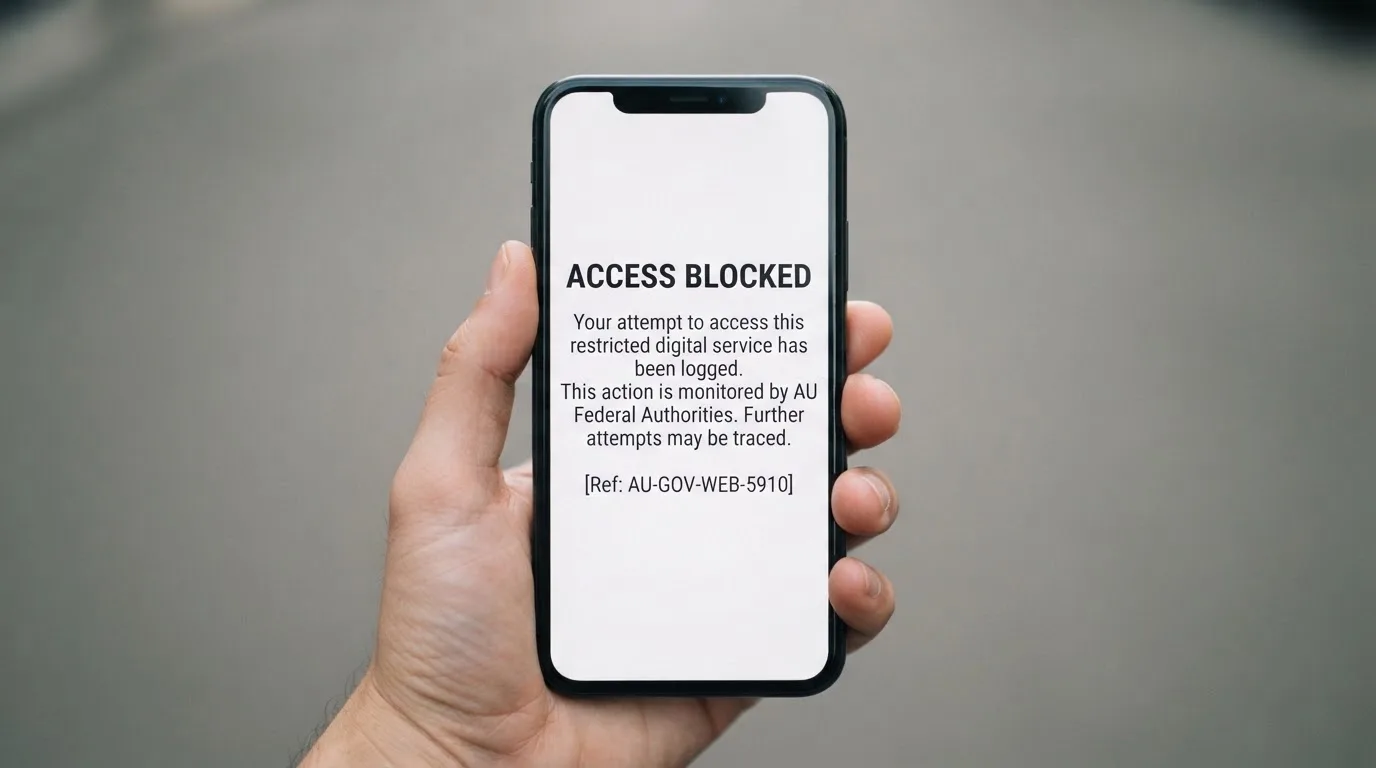
That distinction matters in Australia. A downloadable casino app sold to Australian customers would be a more flagrant breach of the Interactive Gambling Act 2001 than a responsive website, and the ACMA’s enforcement priority has tracked that line. App Store and Play Store restrictions on real-money gambling apps for Australian accounts are not a courtesy — they reflect the same prohibition the regulator enforces through ISP blocking orders. Microgaming-using brands that target Australians do so through the mobile browser, which is also the channel the ACMA can ask Australian internet service providers to block.
A second mobile question is data usage and connection quality. Microgaming’s HTML5 client is light on bandwidth by historical standards — it predates the heaviest of the current 3D slots, and the studio’s progressive-jackpot catalogue is older and simpler than what newer studios ship. For a player on a regional 4G connection or a metered plan, that is a meaningful gap: a 1.5 GB monthly cap stretches further across Microgaming titles than it does across some newer slots carrying constant animation and live-dealer video. None of that changes the legal position. The game is still prohibited to provide to a person in Australia; it just loads more cheaply when an offshore operator serves it.
The practical effect for an Australian resident is straightforward. There is no legitimate, ACMA-recognised way to play Microgaming mobile slots from inside the country, because the prohibition sits with the provider, not with the player. The mobile experience is a path the offshore operator offers to circumvent detection — and one the ACMA can block at the network layer regardless of whether the punter is on Wi-Fi, on 4G, or tethering from a laptop.
Microgaming slots, providers and the wider catalogue
Microgaming built the first fully functional online gambling software in 1994, secured with CryptoLogic’s encryption, and the Isle of Man company has been a fixture of offshore casino lobbies ever since. The studio launched Cash Splash in 1998 — credited as the world’s first online progressive jackpot — and its catalogue now spans more than a thousand titles, from low-volatility classic slots to branded movie tie-ins and the Mega Moolah jackpot network. Microgaming does not publish a current title count on a single canonical page, but the studio’s progressive-jackpot suite alone runs into the dozens and its branded-licence catalogue (slots tied to TV and film properties) is one of the larger libraries in the offshore market.
The Microgaming comparison is rarely about Microgaming alone. A punter browsing an offshore lobby will find Microgaming titles sitting next to studios that emerged as the Microgaming catalogue was unbundled: Games Global, the brand that took over much of the original Microgaming distribution catalogue in 2022, is the most direct heir, and current Microgaming-named releases are largely distributed through that pipeline. Independent studios now crowd the same space. Betsoft, founded in 2006, runs a catalogue of more than 200 RNG games and publishes RTPs and volatility ratings on individual game pages — Good Girl Bad Girl 2 carries a published RTP of 96.22% with “Very High” volatility and a 15.59% hit rate; The Slotfather, live since December 2012, runs at 95.69% RTP and “Medium” volatility. BGaming, debuted in 2018, holds an MGA Critical Gaming Supply Licence (MGA/B2B/785/2020, issued March 2021) and offers 250+ certified games. 1spin4win, a 2021 start-up in Curaçao with 190+ slots and more than a thousand casino and aggregator partnerships, targets low-bandwidth HTML5 builds — a different product position again.
The catalogue differences are not just marketing. A Megaways slot from a different studio, a cluster-pays format, a buy-bonus feature — these are mechanics that emerged as the Microgaming era ended, and they are what a current offshore lobby pushes to the home screen. Microgaming titles still load and still pay out according to their certified RTPs, but they read as a more conservative older generation. For an Australian reader, the catalogue question is mostly academic — none of these studios are licensed to take Australian customers — but it explains why the operators carrying Microgaming titles have layered newer providers on top rather than staying single-studio.
The Microgaming-distinctive products to know are: the progressive jackpot network (Mega Moolah and its variants, plus Cash Splash and Major Millions in the older set), the branded movie and TV slots, and the older classic three-reel and five-reel catalogue with stable RTPs in the 95%–96.5% band. These are the slots a Microgaming-named operator is most likely to surface first.
A shortlist of Microgaming-using brands — and why it isn’t one
Eleven offshore brands that carry Microgaming or Games Global content have been the subject of formal warnings from the ACMA. None of them holds an Australian licence — none can, because online casino product cannot be licensed anywhere in Australia — and the table below is a record of regulator action, not a recommendation.
| Brand | ACMA action and date | Operator named by the ACMA | Microgaming or other provider support |
|---|---|---|---|
| RocketPlay | Formal warning, March 2026; earlier Dama N.V. action May 2022 | Pulsup Ltd (Rocketplay.com.au) | — |
| Level Up Casino | Formal warning, May 2022 | Dama N.V. | Listed on a Wazdan studio page as a partner |
| Woo Casino | Formal warning, March 2025 | Dama N.V. | — |
| Spirit Casino | Formal warning, May 2025 | Dama N.V. | — |
| National Casino | Formal warning, July 2025 | Consolutetish S.R.L. | Listed on Betsoft, Pragmatic Play and Wikipedia game pages as a host |
| Bizzo Casino | Formal warning, July 2025; earlier 2022 warning to TechSolutions | Consolutetish S.R.L. | — |
| Ignition Casino | Formal warning, July 2025 | Bamboo Media | — |
| Instant Casino | Formal warning, February 2025 | EOD Code SRL | — |
| Jackbit | Formal warning, April 2026 | Ryker B.V. | — |
| Casino Intense | Formal warning, April 2025 | Sterplay Holding Ltd | Listed on 1spin4win, Wikipedia and the UK Gambling Commission register as a host |
| Sky Crown | Formal warning, September 2022 | Hollycorn N.V. | — |
Every brand in that table shares the same legal position under the Interactive Gambling Act 2001. The licence they display — Curaçao, Anjouan, occasionally Malta — does not authorise them to take Australian customers for casino product. The ACMA has asked Australian ISPs to block 1,751 illegal gambling and affiliate-marketing websites since the first blocking request in November 2019, and more than 230 unlicensed services have left the Australian market since enforcement was strengthened in 2017. The brands above are the ones the regulator has named in writing; many more have simply been blocked without a separate formal-warning publication.
What the ACMA actually does
The Australian Communications and Media Authority is the enforcement body for the Interactive Gambling Act 2001. Its job is not to chase individual punters — the IGA targets the provider, and an Australian resident playing at an offshore casino commits no offence under the Act. Its job is to make the supply side unprofitable.
The ACMA has three levers. It issues formal warnings, which are published on its website and identify the operator, the brand and the prohibited Australian-facing service. It refers matters to the Australian Federal Police for criminal investigation in serious cases, though most matters are resolved at the warning or civil-penalty stage. And it asks Australian internet service providers to geo-block and DNS-block identified illegal sites — Telstra, Optus, TPG and the rest are bound to comply with a valid ACMA direction.
The running totals are stark. As of the most recent published round, on 26 June 2026, the ACMA had asked ISPs to block 1,751 illegal gambling and affiliate-marketing websites since the first blocking request in November 2019. More than 230 unlicensed gambling services have left the Australian market since the 2017 strengthening of the IGA. The 26 June 2026 round alone added twelve sites: 7Signs, ChromaBet, Donbet, Duospin, Freshbet, Slots Gem, Jacks Club, Lucky Start, Pointsbetz.com, Spinrise, Vinyl Casino and Wildsino.
H2 Gambling Capital’s 2025 estimate puts Australians’ losses to illegal gambling sites at roughly A$3.9 billion a year, with the share of gambling going through legal Australian channels falling from 74% in 2021 to 64% in the 2025 reading. The shift is the metric the regulator points to when it asks for new powers; the Interactive Gambling Amendment (Gambling Reform) Bill 2026 passed Parliament on 19 August 2026, and its advertising and inducement measures commence on 1 January 2027. The bill is law with a deferred start date; on a page dated before 1 January 2027, the new advertising controls are not yet in force.
The blocking mechanism is not gentle. A balance sitting in an offshore account when the ISP-level block lands is not recoverable through any Australian complaints body, because no Australian regulator recognises the operator. A punter who has self-excluded through BetStop can still be served marketing by an offshore brand, because BetStop binds only Australian-licensed services. And the offshore operator’s own terms govern any dispute — typically in a jurisdiction the customer has no practical way to enforce in.
What Microgaming-powered play looks like when it’s legal
Microgaming itself is a software house. It does not run consumer-facing casinos and it has never operated one inside Australia. The consumer-facing options that the regulator recognises as legitimate are different products.
Pokies at licensed Australian venues are the closest mechanical cousin. Australia’s clubs and pubs run Aristocrat Leisure machines — Aristocrat is the largest gambling-machine manufacturer in Australia and the second-largest slot manufacturer worldwide behind International Game Technology, and the company is headquartered in the Sydney suburb of North Ryde. Aristocrat reported A$6.30 billion in 2025 revenue and 1.55 billion in normalised net profit after tax and amortisation. Its machines are the ones the local player has actually seen, in the local pub, on the local RSL. The game names are different from Microgaming’s — Aristocrat’s online arms (Product Madness for social play, Aristocrat Interactive for real-money online) run separate catalogues from the land-based machines — and the RTP and volatility profiles are tuned to the Australian venue market, not to offshore progressive networks.
Licensed online wagering is the only Australian-licensed online gambling product. The Northern Territory Racing and Wagering Commission licences fifty-two Australian-facing online bookmakers — Sportsbet, Bet365 and Ladbrokes among them — primarily for tax reasons; the commission has no full-time staff and meets once a month in Darwin. The product is pre-event sports and racing bets, lotteries and keno, not online casino. The Northern Territory arrangement is the practical reason no online pokies licence exists: the racing and wagering regime was set up for a different product, and the IGA closes the door on expanding it.
BetStop, the National Self-Exclusion Register, went live in August 2023 and is the player-protection tool the regulator points to. BetStop binds Australian-licensed online and phone wagering services, and an exclusion can be set for periods from three months to a lifetime. An offshore casino is not connected to BetStop, and that is the gap a self-excluding Australian needs to understand: BetStop will not stop marketing from a Curaçao-licensed brand, will not block deposits to one, and will not return balances that one is holding. The National Gambling Helpline (1800 858 858) is free and 24/7, with chat at Gambling Help Online.
The deposit and payout plumbing at an offshore Microgaming casino
An Australian customer at an offshore Microgaming-using brand runs into two payment asymmetries, one of which is a feature of Australian law and one of which is a feature of the offshore operator.
The legal one is straightforward. From 11 June 2024, credit cards, credit-related products and digital currency are banned as payment for licensed online wagering in Australia, with civil penalties of up to A$247,500 for operators who breach. The legal deposit routes for an Australian-licensed bookmaker are debit card, bank transfer, PayID/Osko and BPAY. An offshore Microgaming casino is not bound by that prohibition, which is why the same brand will happily take a Visa deposit from an Australian IP — the IGA covers the offer of prohibited services, not the credit-card ban’s deposit route. The legal bank-route prohibition applies to the licensed wagering market; an offshore brand accepting Australian customers for casino product is operating outside the Australian regime entirely, and any deposit the Australian punter makes is at the punter’s own risk.
The operational one is slower. Payout speed at an offshore brand depends on three layers: the operator’s own pending-time policy, the payment rail used, and the destination. A bank transfer back to an Australian account typically takes three to seven business days once the operator releases it; a withdrawal via cryptocurrency can settle in hours once the operator releases it, but introduces exchange-rate risk and a second custody step on the Australian end. The withdrawal is also where an offshore brand’s house rules bite. Maximum withdrawal caps, monthly limits, “verification re-runs” before a payout, and bonus-win caps that void winnings derived from promotional credit are all common. None of these are negotiable through an Australian complaints body — the regulator that issues the brand’s licence is in Curaçao or Anjouan, the terms-of-service venue is the same, and the customer has no domestic recourse.
This is the part the marketing rarely prints. The deposit rail works because the operator wants it to; the payout rail works only as far as the operator decides, and the Australian punter has no leverage if a withdrawal stalls or a bonus win is voided. The brand’s customer-service team is the only channel.
What the bonus really costs the punter
Microgaming-using offshore brands run the standard offshore welcome package: a percentage match on the first deposit, sometimes split across the first two or three, plus a free-spin bundle on a named slot. The headline figure is the percentage and the cap; the substance is the turnover multiple on the combined deposit-plus-bonus, the maximum cashout from bonus-derived winnings, and the time window.
A representative offshore welcome package on this market looks like a 100% match up to a stated cap, with the bonus subject to a roughly forty-times wagering requirement on the combined amount, a seven-day expiry, and a maximum-cashout ceiling on bonus-derived winnings. Without naming a specific brand, the shape is consistent across the operator set the ACMA has acted against. The arithmetic in plain prose: a player depositing the minimum qualifying amount and taking the maximum bonus carries a required turnover measured in tens of thousands of dollars of stake, which on a 96% RTP slot with average-sized bets translates into hundreds of thousands of spins, with the bonus-derived winnings capped at a multiple of the bonus. The cost is not the bonus amount — it is the time and the variance required to clear it, against a ceiling that may convert much of the cleared balance into a non-withdrawable balance if any bonus terms are tripped.
The honest framing for an Australian reader is that none of this is legally available in the first place. An offshore brand accepting Australian customers for casino product is operating against the IGA, and the bonus terms that brand publishes — wherever they are published — are enforced in the brand’s home jurisdiction. A maximum-cashout clause, a country-exclusion clause, or a “bonus abuse” clause that voids winnings are tools the operator applies in its own forum, not in Australia.
The blocking rate: how fast the ACMA is closing the door
The ACMA’s running total of blocked sites is the cleanest public measure of enforcement tempo. The first blocking request was issued in November 2019; by the round of 26 June 2026, the total stood at 1,751 blocked gambling and affiliate-marketing websites. That is an arithmetic the page can stand behind, with the result stated as a band and its condition: over the roughly six-and-a-half-year window from the first blocking request to the most recent reported total, the ACMA has directed blocks on somewhere between a little under one site per day and a little over one site per day, depending on whether the 1,751 figure counts pure casino sites, mixed-content sites, or affiliate pages. The mid-band reading sits at roughly one blocking direction every calendar day for the last eighty months, with bursts around specific enforcement rounds (the 26 June 2026 round added twelve in one direction).
The blocking tempo and the formal-warning tempo are separate measures. The ACMA issued formal warnings to Dama N.V. covering Bambet, Dazard, Level Up, Rocketplay, Wild Tornado and Cobra Casinos in May 2022; further formal warnings to Dama N.V. over Woo Casino in March 2025 and Spirit Casino in May 2025; and July 2025 warnings to Bamboo Media over Ignition Casino and Consolutetish S.R.L. over National Casino and Bizzo Casino. EOD Code SRL received a formal warning over Instant Casino in February 2025; Sterplay Holding Ltd over Casino Intense in April 2025; Hollycorn N.V. over Sky Crown and Blue Leo in September 2022; Pulsup Ltd over Rocketplay.com.au in March 2026; Ryker B.V. over Jackbit and CasinOK in April 2026.
The pattern is a quiet one. A formal warning is a written notice that names an operator and the prohibited service; a blocking direction is an instruction to ISPs. The ACMA does not always publish both for every brand, and the running totals are cumulative rather than cumulative-and-current — a previously blocked site can be unblocked and re-blocked, and a brand that changes corporate vehicle (Dama N.V. to Consolutetish S.R.L., for example) reappears under a new operator name with the same lobby underneath.
The shortlist, written honestly
The eleven brands the ACMA has formally warned are the closest thing to a working shortlist of Microgaming-using casinos an Australian searcher is likely to encounter. Read as a ranking, they are indistinguishable on the criterion that matters most: none is licensed in Australia, and the ACMA has told each one in writing that its offering is prohibited.
RocketPlay. Pulsup Ltd took a formal warning over Rocketplay.com.au in March 2026; the brand had already been caught up in the May 2022 Dama N.V. action. The corporate-vehicle hop is itself informative — a brand can change licensee in the space of a few years and reappear under a new warning.
Level Up Casino. A Dama N.V. property, warned in May 2022. A Wazdan partner page lists the brand as a host of Wazdan slots, which is a useful tell: the casino content is multi-studio and the Microgaming presence is one line in a larger catalogue.
Woo Casino. Dama N.V., warned March 2025. Part of the Dama cluster that includes Spirit Casino, Level Up, and the older 2022 set.
Spirit Casino. Dama N.V., warned May 2025. Two months after Woo Casino — the pattern is consistent operator-by-operator enforcement.
National Casino. Consolutetish S.R.L., warned July 2025. The brand surfaces on Betsoft, Pragmatic Play and Wikipedia game pages as a named host — a useful confirmation that the catalogue is multi-studio and that Microgaming or its successor Games Global is one of several providers.
Bizzo Casino. Consolutetish S.R.L., warned July 2025; the brand had earlier been the subject of a 2022 warning to TechSolutions (CY) Group Limited and TechSolutions Group N.V. Two corporate-vehicle changes, two warning rounds.
Ignition Casino. Bamboo Media, warned July 2025. The “Ignition” name is shared with several offshore brands — the ACMA’s named operator is the specific Bamboo Media entity.
Instant Casino. EOD Code SRL, warned February 2025. A relatively early warning in the recent enforcement cluster.
Jackbit. Ryker B.V., warned April 2026 along with sister brand CasinOK. A crypto-oriented operator; the ACMA action is the same shape as for any other prohibited casino.
Casino Intense. Sterplay Holding Ltd, warned April 2025. A 1spin4win partner page lists the brand as a host of 1spin4win slots, and the UK Gambling Commission register also carries the brand — a multi-jurisdictional footprint that does not include Australia.
Sky Crown. Hollycorn N.V., warned September 2022 along with Blue Leo. Hollycorn operates a cluster of similarly structured brands; the warning applies to the named operator entity.
Read against the question “which Microgaming casino should I use in Australia,” the answer in every case is the same one: none of them is licensed to take Australian customers, and the ACMA has said so on the record. The data that is genuinely useful is which operator entity is currently in the regulator’s published register — that is what tells the reader whether a brand is being actively pursued — and the warning date tells the reader how recently the regulator last took action. Rocketplay, Jackbit, Casino Intense and the National/Bizzo pair are the most recent entries on the published list.
What’s actually open to Australian players
The legal product set inside Australia is narrower than an offshore casino lobby but it is real.
Australian-licensed online wagering covers pre-event sports betting, racing, lotteries and keno. Sportsbet, Bet365, Ladbrokes, the TABs and the smaller NTRWC-licensed bookmakers operate under Australian rules — credit-card and crypto deposits are blocked, KYC is required at signup, withdrawals route through Australian payment rails, and any dispute goes through Australian consumer law and the relevant state tribunal. BetStop self-exclusion applies across all of them. This is not Microgaming software and it is not an online casino, but it is the product the regulator recognises and protects.
Land-based Australian casinos and clubs run Aristocrat Leisure machines, with the RTP and volatility profiles tuned to the Australian venue market. Crown Melbourne, The Star Sydney, the Brisbane and Perth casinos and the country’s pubs and clubs carry Aristocrat’s pokies and a small number of competing manufacturers’ products. The on-floor experience is different from an online slot — physical button presses, ticket-in ticket-out redemption, no progressive network shared with an offshore brand — but the underlying maths is comparable.
Lotteries and keno run through state-licensed operators — the Lott and its equivalents — and the lottery product is also outside the Microgaming catalogue. None of this offers the offshore casino experience the search query names. The query is asking for a product that is not available legally, and the honest page says so.
Frequently asked questions
What kind of games does Microgaming make?
Microgaming is best known for online slots, with a catalogue running into the thousands of titles including the Mega Moolah progressive-jackpot network. The studio also produces table games, video poker, and a small live-dealer suite, and its older classics (Cash Splash from 1998, Major Millions) remain in distribution. The current Microgaming release schedule is largely distributed through Games Global, which took over much of the original distribution catalogue.
Is Microgaming used by any casino licensed to operate in Australia?
No. The Interactive Gambling Act 2001 makes it an offence to provide online casino games to a person in Australia, and no Australian state or territory issues a licence for the product. Microgaming-powered casinos operate under Curaçao, Anjouan or Malta licences and accept Australian customers from outside the Australian regulatory perimeter — the ACMA treats that as offering a prohibited service.
Can Australians legally play Microgaming slots at an online casino?
The Interactive Gambling Act 2001 targets the provider, not the player, so an Australian resident playing at an offshore Microgaming casino commits no offence under the Act. The legal status of the activity is still that the supply is prohibited and the ACMA has the power to direct ISPs to block the site. If the site is blocked, the player’s balance is in the operator’s hands and there is no Australian complaints body with jurisdiction over the dispute.
Are Microgaming games available at land-based Australian casinos?
Not under the Microgaming brand. Land-based Australian venues run Aristocrat Leisure machines, with a smaller presence from International Game Technology and other manufacturers. Aristocrat’s online arms (Product Madness for social play, Aristocrat Interactive for regulated real-money online) run separate catalogues from the on-floor machines.
What should someone check before trusting a site that claims to offer Microgaming games?
The first check is the licence jurisdiction — a Curaçao or Anjouan licence is the standard wrapper for offshore brands that accept Australian customers, and it does not authorise casino service to Australians. The second is the ACMA’s formal-warning register and blocking notices — any brand on that register is operating against the regulator’s stated position. The third is the payment rail — a brand asking for a credit card or crypto deposit from an Australian IP is operating outside the Australian rules for licensed wagering. None of these checks is reassuring in the way an Australian-licensed bookmaker is.
Does Microgaming software run on mobile browsers?
Yes. Microgaming’s catalogue runs on HTML5 and is served through the operator’s mobile browser site or web app, without a downloadable app from a local app store. The offshore operators carrying Microgaming titles reach Australian mobile users through the same browser channel the ACMA can direct ISPs to block, regardless of whether the player is on Wi-Fi or mobile data.