
New PayID pokies for Australian players, 2026: what is on offer, what the law still bans, and which brands the ACMA has named
Updated 29 October 2026 · licence claims and operator identities checked against the ACMA register and Australian Payments Plus’ PayID reference pages
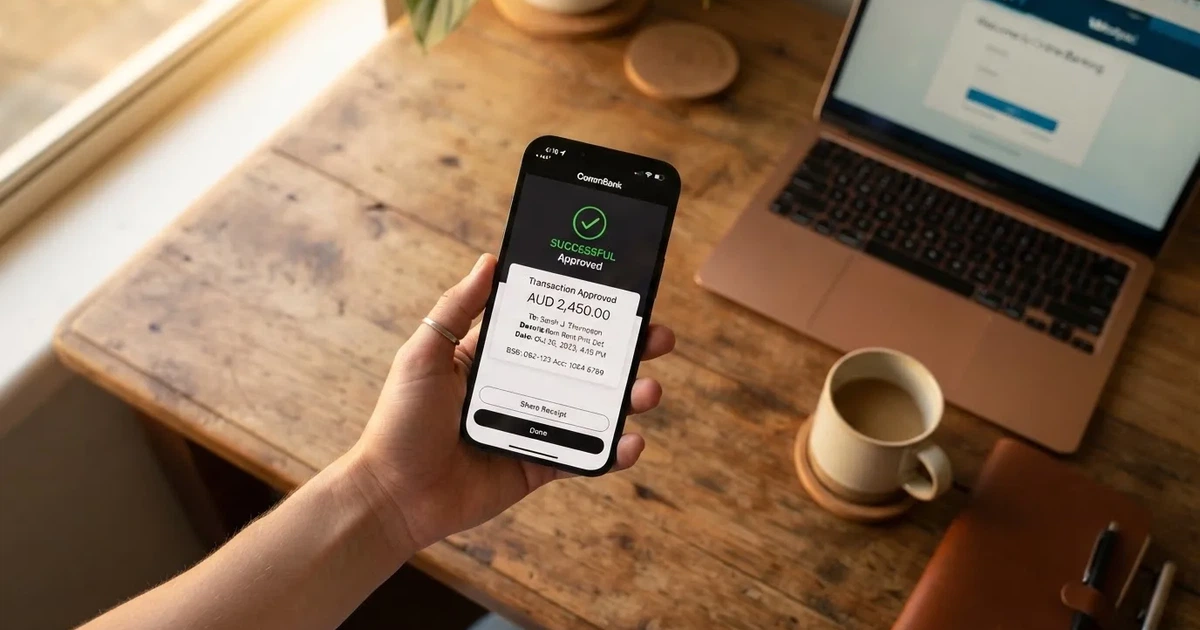
A new pokies site pitching to Australians usually leads with one promise: PayID in, fast out. The pitch lands because Australians already trust PayID — it sits inside the online banking app at more than a hundred local institutions and the funds arrive in seconds through Osko. Offshore operators have noticed. They advertise PayID as if it were a stamp of legitimacy, and they lean on the speed of the rail to bury the harder question underneath: whether the site itself is even allowed to take Australian money.
What follows closes that gap. PayID’s mechanics in the Australian context; what the Interactive Gambling Act 2001 still prohibits regardless of how a deposit is sent; the ACMA’s enforcement record since enforcement was strengthened; and which eleven brands sit on the regulator’s most recent warning list — each is set out in turn. The list is descriptive, not advisory. These are the brands the ACMA has named in formal warnings over the past four years, set out so a reader can see what they have in common and where they differ. None of them is offered as a place to play.
Table of Contents
- Fundamentals of the new-PayID-pokies market
- The prohibition, the regulator and what an offshore licence does not give you
- Help lines, self-exclusion and the limits of the safety net
- How PayID settlements reach an offshore pokies site, and what comes back
- The eleven brands the ACMA has formally warned
- Frequently asked questions
Fundamentals of the new-PayID-pokies market
A “new PayID pokies” site, as the term is used in affiliate marketing, is almost always an offshore casino that has added PayID to its cashier in the past year or two and is buying search traffic aimed at Australian players. Two forces pushed at once to grow the category. Australians moved their everyday banking onto the New Payments Platform and PayID in particular, and offshore operators watched the volume of instant transfers grow. By the end of 2025, mobile wallets (Apple Pay, Google Pay and Samsung Pay) accounted for around 45% of all card payments in Australia by number — a measure of how quickly the local rail has gone mainstream. PayID rides the same rail: by April 2025 more than 25 million PayIDs were registered in Australia. Anyone running a deposit page that targets Australians knows the rail is open.

That is the supply side. On the demand side, players who have used PayID to send money to a tradesperson, a friend or a small business want the same speed for a deposit. The marketing simply matches one to the other: “PayID deposit, Osko-fast, no card details”. The promise is partly true at the rail layer — a PayID transfer typically clears in under a minute, 24/7, including weekends, because Osko runs on the New Payments Platform and the Fast Settlement Service settles each transaction individually in close to real time. The part the marketing rarely dwells on is what happens on the other side of the PayID. A brand-new offshore site is not a registered Australian business. The PayID the player sends to is held by a person or a company the player cannot independently verify, and the recipient can move the funds offshore before any clearing dispute has a chance to attach.
The shape of the market, then, is a thin layer of offshore skins riding a public rail. The skins change constantly. The ACMA reported in June 2026 that it had directed Australian ISPs to block 1,751 illegal gambling and affiliate marketing websites since the first blocking request in November 2019, and the twelve most recent blocks in that round read as a churn rate:
- 7Signs
- ChromaBet
- Donbet
- Duospin
- Freshbet
- Slots Gem
- Jacks Club
- Lucky Start
- Pointsbetz
- Spinrise
- Vinyl Casino
- Wildsino
The same brands tend to reappear under different URLs, and the legal entity behind a brand can shift between two enforcement rounds. RocketPlay was the subject of a Dama N.V. formal warning in May 2022 and a Pulsup Ltd formal warning in March 2026 — the brand outlasted the operator name. Bizzo Casino was warned under TechSolutions in 2022 and again under Consolutetish S.R.L. in 2025. The same pattern shows up elsewhere. The marketing looks confident because the spend behind it is real.
Two terms used by these sites deserve a brief unpicking. “PayID pokies” is the marketing shorthand: real-money online slot games accessed through an account funded by a PayID transfer. “New” is a moving target — most “new” sites are either recently launched skins or rebadged brands re-emerging under a different operator. Neither term alters the legal position.
What does shift between sites is the offer. PayID is the headline payment method, but the same site will usually accept Visa, Mastercard and a handful of cryptocurrencies, with the credit-card option constrained by some Australian issuers rather than by the site. Welcome packages are pitched at “100% up to A$500 + 200 free spins” and the like; the exact value depends on the affiliate page the player lands on, and the affiliate’s terms often differ from the operator’s terms. There are no Australian-licensed real-money online slot operators to compare against, because the law does not allow one to exist. The closest reference points are the 52 online bookmakers the Northern Territory Racing and Wagering Commission licences — Sportsbet, Bet365, Ladbrokes — and those are licensed for wagering on racing and sport placed before the event, not for online casino games.
The single figure that frames the whole market is H2 Gambling Capital’s 2025 estimate: Australians lose about A$3.9 billion a year to illegal gambling sites, and the share of gambling going through legal channels fell from 74% in 2021 to 64% in the same window. That is the pool the new PayID pokies sites are fishing in.
The prohibition, the regulator and what an offshore licence does not give you
Online casino games, online pokies and in-play betting are prohibited interactive gambling services under the Interactive Gambling Act 2001, as tightened by the Interactive Gambling Amendment Act 2017. The Act makes it an offence for a service to provide these products to a person physically in Australia. Wagering on racing and sport placed before the event, lotteries and keno remain licensable — in practice, by the Northern Territory Racing and Wagering Commission, which licences 52 online bookmakers. The Commission’s structure has itself drawn recent attention: it has no full-time staff and meets once a month in Darwin, even though the brands it licences process the bulk of Australia’s legal online wagering handle.
Enforcement falls to the Australian Communications and Media Authority. The ACMA investigates complaints, issues formal warnings under the Interactive Gambling Act 2001, and asks Australian internet service providers to block illegal sites. The provider, not the player, is the target of the law. An Australian who plays at an offshore casino is not prosecuted; an offshore casino is the entity the regulator moves against. The practical consequence for the player is that there is no Australian complaints body, no Australian ombudsman, and no Australian legal recourse if a withdrawal stalls or the account is closed. The site can also be blocked while a balance remains on it.
The blocking record is the regulator’s bluntest instrument. In the round reported on 26 June 2026, the ACMA asked ISPs to block twelve more domains. The total reported in that round — 1,751 illegal gambling and affiliate marketing websites blocked since the first blocking request in November 2019 — is the running tally the regulator updates each time it acts. Spread across the 79 months from November 2019 to June 2026, the 1,751 blocks work out to between 21 and 23 sites per month, or roughly 250 to 275 per year. The exact figure depends on how the months are counted — the November 2019 first blocking request fell partway through that month — and the rate is not constant (some rounds block many sites in one go, others a handful), but the order of magnitude is clear: this is a regulator blocking more than twenty offshore domains every month, on average, for almost seven years.
Formal warnings are the second instrument, and they sit in front of the blocks. A formal warning is a written notice from the ACMA to the operator that specific conduct breaches the Interactive Gambling Act; if the conduct continues, the regulator can move to block. The warnings are published on the ACMA’s website and they name the legal entity behind the brand, not just the brand itself. The published set covers the following cases: Dama N.V. in May 2022 over six brands at once (Bambet, Dazard, Level Up, RocketPlay, Wild Tornado and Cobra Casinos); Hollycorn N.V. in September 2022 over Sky Crown and Blue Leo; Bamboo Media in July 2025 over Ignition Casino; Consolutetish S.R.L. in July 2025 over National Casino and Bizzo Casino, with Bizzo already warned in 2022 under TechSolutions; Dama N.V. again in March 2025 over Woo Casino and in May 2025 over Spirit Casino; EOD Code SRL in February 2025 over Instant Casino; Sterplay Holding Ltd in April 2025 over Casino Intense; Ryker B.V. in April 2026 over Jackbit and CasinOK; and Pulsup Ltd in March 2026 over RocketPlay, the second formal warning over that brand.
The pattern jumps out. The same operator names appear repeatedly — Dama N.V. is named in four of the published warnings, and Hollycorn N.V., Consolutetish S.R.L. and the TechSolutions entities in three more. That pattern is consistent with how Curaçao- and Cyprus-based operator groups operate: a single holding company can hold licences for multiple brands, and the same brand can move between operators between enforcement rounds. The RocketPlay history is the clearest example. The brand survived. The legal entity did not.
A 2026 reform is in train. The Interactive Gambling Amendment (Gambling Reform) Bill 2026 passed Parliament on 19 August 2026; its advertising and inducement measures commence 1 January 2027. As of 2026 the new advertising rules are not yet in force, so a 2026 page describes law on the books, not law that has started. The 2023 credit-card ban is in force: Australian-licensed online wagering services cannot accept payment by credit card or other credit-related products, and the same regime shapes how PayID-linked bank transfers can be used for wagering by an Australian resident.
Help lines, self-exclusion and the limits of the safety net
Australian player protection runs through three channels. BetStop, the National Self-Exclusion Register, has been live since August 2023. The National Gambling Helpline, 1800 858 858, runs 24/7 and is free, with chat at Gambling Help Online. State and territory problem-gambling services sit alongside them. All three are designed for Australians gambling on Australian-licensed products, and all three have a hard limit when the product itself is offshore.
BetStop’s terms bind Australian-licensed online and phone wagering services. An offshore casino is not connected to the register. A person who excludes themselves through BetStop is blocked from licensed Australian bookmakers and lotteries, not from an offshore site — the offshore site does not know the exclusion exists, has no obligation to honour it, and is under no Australian direction to enforce it. Self-exclusion is therefore a one-sided tool: useful for the legal half of a player’s activity and silent on the rest.
The helpline does not have the same gap. 1800 858 858 takes calls from anyone, and the counsellors there do not need the caller to be gambling with an Australian-licensed operator to help. The conversation is the same: how to stop, what tools exist, where to get financial counselling. Gambling Help Online extends that to chat and email. State and territory services handle face-to-face support and, where relevant, exclusion from physical venues.
What the safety net does not cover, and what a reader weighing an offshore site needs to know up front, is recourse. There is no Australian complaints body for an offshore operator. A bank dispute under the ePayments Code can sometimes retrieve a debit card payment to an unlicensed operator, but a PayID transfer is an Osko push payment and is not reversible in the same way. The funds clear in seconds. Once they have left the player’s account, they sit with the recipient’s bank — typically a corporate account held by an entity in Curaçao, Cyprus or another permissive jurisdiction — and the player’s Australian bank has no Australian-court order that reaches it without a complex international process.
Two practical steps follow. Anyone who has set up a gambling block at their bank should leave it on: Westpac’s card-level gambling block refuses transactions under the merchant category code ‘Betting/Casino Gambling’ on eligible personal cards, and ANZ’s in-app gambling block also covers digital wallet transactions on the same card, with a 48-hour wait to remove. Anyone who has concerns about their own or someone else’s gambling can call 1800 858 858 at any time. The conversation is confidential and free.
How PayID settlements reach an offshore pokies site, and what comes back
PayID itself is a thin layer on top of the New Payments Platform. A PayID is an easy-to-remember identifier — a mobile number, an email address, an ABN or an Organisation Identifier — linked to a bank account. It is operated by Australian Payments Plus, the domestic payments provider, and offered by over 100 Australian financial institutions, with the identifier already built into their online banking. The New Payments Platform went live in February 2018 specifically to allow simply-addressed, near real-time payments 24/7, and the Reserve Bank of Australia both regulates and oversees the platform and operates the Fast Settlement Service that settles NPP transactions individually in close to real time.
The rail is the same rail an Australian uses to pay a tradie. A player who sends money to a PayID goes through the standard flow: enter the PayID in the bank’s app or web banking, see the name of the account holder that AP+ resolves the PayID to, confirm the transfer. Osko delivers the funds in under a minute, around the clock. The recipient’s bank — wherever in the world it sits — sees the funds arrive in the same window. From the player’s side, the deposit looks instant.
Three details matter here. The first is the name display. AP+’s flow shows the name of the account holder before the transfer is sent, and that display is the primary defence against misdirected payments and scams. AP+ itself publishes a direct warning about gambling transfers: “If you are asked to transfer funds to a PayID on an illegal gambling site, it is almost certainly a scambling website” — the regulator’s own coinage for scam-driven illegal gambling. The second detail is speed: there is no chargeback step on a PayID transfer. Once the player confirms, the funds clear. The third detail is who holds the PayID on the receiving side. The site does not, in the ordinary case, hold a PayID in its own name — an Australian bank’s KYC processes would not let it. A receiving PayID for an offshore site is typically held by a payment processor or an individual, and the name the player sees before sending is the name on that account, not the brand name of the casino.
The marketing claims that flow from this layer vary in how honest they are. “PayID deposits in seconds” is true at the rail. “Instant withdrawals” is rarely true end-to-end: PayID can be used for an inbound transfer but the operator controls when it sends, and the operator side typically runs a manual approval queue. A reader who sees “PayID withdrawal in minutes” should read it as “PayID withdrawal, once the operator approves, in minutes” — the operator side is the bottleneck, not the rail.
A separate pressure on this rail comes from the Australian-licensed side. Under the Interactive Gambling Act 2001 as amended in 2023, Australian-licensed online wagering services cannot accept credit cards or other credit-related products, a restriction that also shapes how PayID-linked bank transfers can be used. Credit cards on the player’s side are an unreliable way to fund even an offshore deposit at this point, because the major banks operate gambling blocks at card level. Westpac’s block refuses transactions under the merchant category code ‘Betting/Casino Gambling’ on eligible personal credit and debit cards; ANZ’s block, activated in the ANZ app, also blocks digital wallet transactions on the same card (Apple Pay, Google Pay, Samsung Pay) and requires a 48-hour wait to remove once activated. The bank warns that not every gambling transaction will be blocked and some non-gambling transactions may be blocked in error.
The mobile-wallet side has its own rules. Apple does not charge consumers to use Apple Pay in stores, online or in apps; the issuer or the merchant sets transaction limits and PIN requirements, not Apple. The Reserve Bank’s July 2025 review proposes removing surcharges only on eftpos, Mastercard and Visa card transactions, explicitly leaving American Express outside the scope of the proposed surcharge ban — a reminder that American Express runs a three-party scheme rather than the four-party network Visa and Mastercard use, and sits outside parts of the card framework that apply to the bigger networks. Together, the credit-card ban and the bank gambling blocks constrain the legal deposit paths for wagering on Australian-licensed products to debit cards, bank transfers, PayID/Osko and BPAY. An offshore site asking for a credit card or a crypto deposit is operating outside the Australian rules regardless of its own licence display.
The Australian Payments Network and AP+ have issued their own warnings. PayID will never contact a customer directly; emails or text messages claiming to be from PayID are scams. PayID never asks anyone to send money in order to receive money, or to “upgrade” an account. The bank-level PayID experience is built around the customer’s own institution’s terms, and AP+ directs anyone who suspects a transfer was a scam to contact their financial institution first.
The net effect for a player weighing a new PayID pokies site is this: the rail is fast, free of chargebacks, and tied to a name the player sees before sending. That last point is the only one that gives the player any leverage at all. If the name on the receiving PayID does not match the brand on the casino’s homepage, the player should treat the gap as the most important data point on the page.
The eleven brands the ACMA has formally warned
The list below is built from formal warnings the ACMA has published since 2022. Each row shows the brand, the date of the most recent warning the regulator has named the brand in, any earlier warning the ACMA has issued against the same brand, the legal entity the regulator addressed the warning to, and the state of PayID support that the published record shows. None of these brands is licensed to offer online casino games to Australians. The list is descriptive: it shows who the regulator has acted against and what is publicly known about how each brand takes Australian money.
Where the brand’s own marketing or cashier makes a clear claim about PayID, the column says so. Where no such claim is available and the brand is only mentioned in third-party listings (a bank’s gambling block page, an AUSTRAC record, an industry directory) that mention PayID in passing, the column carries that qualifier. Where neither the brand nor any published listing establishes PayID support, the column carries an em dash.
| Brand | Latest ACMA warning | Earlier ACMA action | Operator named by the ACMA | PayID support |
|---|---|---|---|---|
| RocketPlay | March 2026 | Dama N.V., May 2022 | Pulsup Ltd | — |
| Level Up Casino | May 2022 | — | Dama N.V. | Westpac listing only |
| Woo Casino | March 2025 | — | Dama N.V. | — |
| Spirit Casino | May 2025 | — | Dama N.V. | — |
| National Casino | July 2025 | — | Consolutetish S.R.L. | AUSTRAC / Wikipedia listings only |
| Bizzo Casino | July 2025 | TechSolutions, 2022 | Consolutetish S.R.L. | — |
| Ignition Casino | July 2025 | — | Bamboo Media | — |
| Instant Casino | February 2025 | — | EOD Code SRL | ecoPayz / PayID listings only |
| Jackbit | April 2026 | — | Ryker B.V. | — |
| Casino Intense | April 2025 | — | Sterplay Holding Ltd | AUSTRAC / iTnews / NAB listings only |
| Sky Crown | September 2022 | — | Hollycorn N.V. | — |
The eleven brands fall into two rough groups by ACMA history. The first group has been warned once: Level Up, Woo, Spirit, National, Ignition, Instant, Jackbit, Casino Intense and Sky Crown. The second group has been warned more than once: RocketPlay and Bizzo. Bizzo’s history — TechSolutions in 2022, Consolutetish S.R.L. in 2025 — is the cleanest example of a brand moving between operator names between enforcement rounds. RocketPlay’s history — Dama N.V. in 2022, Pulsup Ltd in 2026 — is the same pattern from the other direction.
Dama N.V. accounts for four of the eleven warnings as the named operator: Level Up, Woo, Spirit and the 2022 RocketPlay warning. That is the heaviest single concentration of any operator group on the list, and the only way the same operator name surfaces across four of the eleven. Consolutetish S.R.L. accounts for two (National, Bizzo 2025). Hollycorn N.V., Bamboo Media, EOD Code SRL, Sterplay Holding Ltd, Ryker B.V. and Pulsup Ltd each account for one. Sky Crown is the oldest entry on the list at September 2022; Jackbit the most recent at April 2026.
RocketPlay
RocketPlay is the only brand on the list with two ACMA formal warnings to its name. The first was issued to Dama N.V. in May 2022 as part of a six-brand warning covering Bambet, Dazard, Level Up, RocketPlay, Wild Tornado and Cobra Casinos. The second was issued to Pulsup Ltd in March 2026 over the RocketPlay brand specifically. The brand survived the first round under a different legal entity and attracted a second formal warning when it resurfaced. The brand has outlasted the legal entity behind it.
Level Up Casino
Level Up Casino was named in the same Dama N.V. May 2022 warning that covered RocketPlay. No subsequent ACMA action against Level Up has been published. The brand appears in Westpac’s gambling-block documentation as a transaction category the bank’s card-level block is designed to refuse. That is the only public source in which the brand and PayID appear together — Westpac’s listing does not establish that the brand accepts PayID directly, only that its transactions trigger the bank’s gambling block. The longer-running regulatory record for the parent operator is what the ACMA’s own page carries: four of the eleven brands on this list sit under Dama N.V., and Level Up is the longest-running of them by ACMA date.
Woo Casino
Woo Casino was not on the Dama N.V. May 2022 warning. By March 2025 it was. The freshest ACMA action against Woo is the warning issued three months before the regulator’s June 2026 enforcement round — three months old at the time of writing. The marketing on the brand’s own site does not undo that. Woo is the brand that put Dama N.V. back on the ACMA’s published list three years after the 2022 round.
Spirit Casino
Spirit Casino was added to the Dama N.V. cluster two months after Woo Casino, in May 2025. The brand had not been on the Dama N.V. May 2022 warning either — it was a fresh addition to the ACMA’s published list. Spirit Casino is the second Dama N.V. brand to draw a fresh ACMA warning in 2025, and the operator name is not new. Spirit Casino sits inside the four-brand Dama N.V. cluster, the heaviest single concentration of any operator group on the list.
National Casino
National Casino is the first brand attributed to Consolutetish S.R.L. in the ACMA’s published record. The operator had not appeared in the regulator’s record before July 2025. PayID support appears in third-party listings — AUSTRAC records and a Wikipedia entry — but not in a clear claim by the brand itself. National Casino is the first brand on the list whose operator was new to the regulator in the same warning round, and the listings that mention PayID in connection with National Casino are listings, not the brand’s own statement.
Bizzo Casino
Bizzo Casino is the second brand in the Consolutetish S.R.L. July 2025 warning and the only brand on this list with two formal warnings under two different operators. The earlier warning was issued to TechSolutions (CY) Group Limited and TechSolutions Group N.V. in 2022, naming Bizzo Casino among other brands. The 2025 warning named the brand again, this time under Consolutetish S.R.L. Two warnings, two operators, one brand. The operator name changed; the regulator’s record did not.
Ignition Casino
Ignition Casino was named in the Bamboo Media July 2025 formal warning. The brand had not appeared in any earlier ACMA warning, and Bamboo Media had not appeared in the regulator’s published record before that round. Ignition is the brand with the shortest published history on this list: a single formal warning, with no prior record and no fresh claim of PayID support to weigh.
Instant Casino
Instant Casino is named in the EOD Code SRL February 2025 formal warning — the first of the 2025 cluster of ACMA warnings. PayID support is established through third-party listings — ecoPayz’s directory entry and a PayID page — but not through the brand’s own clear claim. The brand surfaces in those listings, not in its own cashier. Instant Casino is the front edge of the 2025 cluster of ACMA warnings, and the brand’s PayID support sits in third-party listings, not in the brand’s own deposit page.
Jackbit
Jackbit is the freshest entry on this list, named in the Ryker B.V. April 2026 formal warning that also covered CasinOK. The brand had not appeared in any earlier ACMA warning, and Ryker B.V. had not been named before either. The ACMA’s warning against this brand is still inside the same calendar year as the page.
Casino Intense
Casino Intense is named in the Sterplay Holding Ltd April 2025 formal warning. The brand had not appeared in any earlier ACMA warning; Sterplay Holding Ltd had not been named before either. PayID support surfaces in third-party listings — AUSTRAC records, an iTnews item and NAB documentation — but the brand’s own cashier does not advertise it. Casino Intense is on Australian banking records, but not on the brand’s own deposit page.
Sky Crown
Sky Crown is the oldest brand on this list by ACMA date, with the Hollycorn N.V. September 2022 warning covering both it and Blue Leo. No subsequent ACMA action against Sky Crown has been published. Sky Crown sits on the regulator’s record without a fresh 2025 or 2026 action to set against it, and PayID support is not established by any published listing. Sky Crown is the longest-published warning on the list, and the one that has not been refreshed.
Frequently asked questions
What is PayID, and why is it pitched so heavily by new offshore pokies sites?
PayID is a mobile number, email, ABN or Organisation Identifier linked to an Australian bank account. Australian Payments Plus runs it; more than a hundred banks offer it. Offshore sites pitch it because Australians use PayID for everyday transfers and Osko delivers in under a minute. The rail’s speed buries the legal question.
Does paying through PayID make an offshore casino any safer for an Australian player?
PayID is a rail, not a regulatory approval. Under the Interactive Gambling Act 2001, online casino games cannot lawfully be supplied to a person in Australia. A PayID transfer gives no Australian complaints body, no ombudsman, no chargeback. The receiving account sits outside Australian reach, and the pre-send name display is the only check.
How quickly does an Osko transfer through PayID actually settle, compared with a card deposit?
Osko delivers a PayID or BSB-and-account transfer between participating Australian banks in under a minute, 24/7. Card deposits through a major bank usually clear the same day. The bigger gap is on the way out: the offshore operator controls the withdrawal queue, so ‘PayID withdrawal in minutes’ usually means minutes once the operator approves.
Is it legal for an Australian resident to send money through PayID to an offshore pokies operator?
The Interactive Gambling Act 2001 targets the provider, not the player, so an Australian sending money to an offshore casino is not prosecuted. What the law removes is protection: no Australian complaints body, no ombudsman, and the ACMA can block the site while a balance remains. A PayID transfer is one-way once confirmed.
What should someone check on their bank’s own PayID setup before believing a new site’s payout claims?
The name AP+ resolves the receiving PayID to — if it does not match the casino’s brand, treat the gap as the most important data point. The bank’s PayID daily limit sits independently of any limit the offshore site claims. ANZ’s gambling block covers digital wallet transactions on the same card.