Aristocrat online pokies in Australia: what’s licensed, what’s offshore, and what’s actually being warned about
 Available in US
The phrase “Aristocrat online pokies Australia” pulls two different ideas into the one search bar. On one side stands Aristocrat Leisure Limited, a real Australian company, ASX-listed, the country’s biggest maker of gambling machines and the second-largest slot manufacturer in the world, whose products are what most Australians think of when they hear the word pokies. On the other side sits an offshore online casino page offering slot games styled to look like the ones in their local pub or club, accepting Australian dollars, never licensed to do so.
This page lays both out plainly. The first is the genuine article, a publicly documented manufacturer that has been operating since 1953. The second is what the ACMA — the Australian Communications and Media Authority — has been issuing formal warnings about, month after month, year after year, because online casino games cannot be licensed anywhere in Australia and the brands offering them to Australians are doing so illegally.
Data current as of 23 September 2026; ACMA warnings and blocking actions cross-checked against the regulator’s own published register.
Table of Contents
- The land-based reality: Aristocrat Leisure Limited
- The legal line: what Australia actually allows online
- How the ACMA enforces: warnings, blocks, and the running total
- What the market actually looks like: 2025 estimates
- Paytables: what the games themselves actually show
- The providers of Aristocrat-style slots offshore
- The brands the ACMA has warned about: what each one actually means
- What the warnings actually cost the brand, and what they cost the player
- Where an Australian player actually is protected
- What the offshore offer actually looks like
- The arithmetic that the page is built on
- What is and is not changing in 2026
- The reader’s checklist before any site
- Frequently asked questions
The land-based reality: Aristocrat Leisure Limited
Aristocrat Leisure Limited is not a sketch on the back of a marketing email. It is a Sydney-headquartered gambling-machine manufacturer founded by Leonard Ainsworth in 1953, listed on the Australian Securities Exchange in 1996 under the ticker ALL, and reporting 2025 revenue of A$6.30 billion with a normalised net profit after tax and amortisation of A$1.55 billion. It employs 7,400 people. Its administrative and research headquarters sit in the Sydney suburb of North Ryde, with marketing and development offices in South Africa, Russia and the United States.

The hardware most Australians would recognise lives in pubs and clubs across the country: electronic gaming machines, casino management systems, the cabinets a player leans against while feeding in a note and tapping a button. Aristocrat develops those machines, and it develops online real-money gambling technology, iLottery products and social casino games on the digital side. Its online arms are Product Madness, which runs social games, and Aristocrat Interactive, which is its regulated online real-money-gambling business.
Aristocrat Interactive was put together in April 2024 by merging the company’s Anaxi unit with the NeoGames group — Aspire Global, BtoBet and Pariplay — a roughly US$1 billion acquisition announced in 2023 and completed in 2024. Before that, Aristocrat had bought Video Gaming Technologies in 2014 for about US$1.3 billion, then Plarium in 2017 for US$500 million and Big Fish Games in 2017 for US$990 million. A US$3.7 billion bid for the British gambling-technology group Playtech was rejected by Playtech shareholders in 2021. The pattern across two decades is the same: Aristocrat is in the gambling machine and gambling software business at the kind of scale that doesn’t need to invent a new brand to attract players, and doesn’t need to chase offshore traffic either.
This matters for the search query because it sets up a clean distinction. Aristocrat the manufacturer does not run a consumer-facing real-money online casino site aimed at Australian players. It builds the technology that licensed operators elsewhere run, and it builds the cabinets that sit in Australian venues. The page someone arrives on after typing “Aristocrat online pokies Australia” is almost never Aristocrat’s own product. It is, with very few exceptions, a brand from outside Australia using Aristocrat-style games — Aristocrat-look-alike titles, or re-skinned third-party slots themed to feel Australian — to take bets from Australians in breach of the Interactive Gambling Act 2001.
The legal line: what Australia actually allows online
Under the Interactive Gambling Act 2001, as strengthened by the Interactive Gambling Amendment Act 2017, it is an offence to provide online casino games, online pokies or in-play betting to a person physically in Australia. No state or territory issues a licence for those products. What is licensable is wagering on races and sport placed before the event, lotteries and keno. In practice, almost all of Australia’s licensed online bookmakers — Sportsbet, Bet365, Ladbrokes and the rest — are licensed through the Northern Territory Racing and Wagering Commission for tax reasons, a body that, as reported in April 2026, has no full-time staff and meets once a month in Darwin.
The minimum age for any licensed Australian wagering is 18. The individual player is not the target of the law; the IGA aims at the provider. But an offshore site gives no Australian consumer protection, no complaints body and no recourse if a withdrawal is refused, and the ACMA can order the site blocked with a balance still on the player’s account. That balance is then functionally unrecoverable, because there is no Australian regulator with jurisdiction over the operator to chase it.
The Interactive Gambling Amendment (Gambling Reform) Bill 2026 passed Parliament on 19 August 2026. Its advertising and inducement measures commence on 1 January 2027, which means it is law with a start date rather than law in force at the moment of writing. The prohibitions on providing online casino games and online pokies to Australians are unaffected; they have been in force since 2017.
How the ACMA enforces: warnings, blocks, and the running total
The ACMA’s enforcement toolkit runs three ways. It investigates complaints. It issues formal warnings naming the operator, the brand and the URL. And it asks Australian internet service providers to block illegal sites at the network level, the most consequential of the three for the player because once a site is blocked, it stops loading regardless of which Australian ISP the player is using.
A round reported on 26 June 2026 added 12 more sites to the block list: 7Signs, ChromaBet, Donbet, Duospin, Freshbet, Slots Gem, Jacks Club, Lucky Start, Pointsbetz, Spinrise, Vinyl Casino and Wildsino. That single round brought the running total of blocked gambling and affiliate-marketing websites since the first blocking request in November 2019 to 1,751. More than 230 unlicensed gambling services have left the Australian market entirely since enforcement was strengthened in 2017.
That is the cumulative result of nearly seven years of blocking requests. It is the number that tells the reader how the page’s own question — whether there is a legal way to play Aristocrat-style pokies online from Australia — has been answered in practice. The state of the law has not changed. The state of the network has: 1,751 sites that were once reachable from an Australian IP are no longer reachable, and the ACMA’s blocking requests keep arriving.
The blocking rate, where the numbers actually do work. Between the first blocking request in November 2019 and the round reported on 26 June 2026, the ACMA asked ISPs to block 1,751 illegal gambling and affiliate marketing websites. That works out to roughly 220 to 260 new blocking requests per year across the seven-year window, depending on the month counted as the boundary. In the busiest stretches — the post-2022 period when the ACMA moved from warning to asking ISPs to block more aggressively — the annual rate has run higher than the early-period average. New sites appear, the ACMA acts, the blocks accumulate, and the cycle is uneven enough that any single year could see the count double or sit roughly flat. The rate is not a forecast; it is a band, with the spread coming from which calendar boundaries are taken as the start and end points of the count.
What the market actually looks like: 2025 estimates
The shape of the demand is captured by H2 Gambling Capital’s 2025 report, which estimates that Australians lose about A$3.9 billion a year to illegal gambling sites, and that the share of gambling going through legal channels fell from 74% in 2021 to 64%. The two figures together tell the same story from opposite ends: A$3.9 billion flowing out of the country each year to offshore operators, and the legal share of gambling shrinking as that flow grows.
That is the financial size of what the Interactive Gambling Act 2001 is supposed to suppress. It is also the reason the offshore market keeps re-skinning and re-launching. Block 1,751 sites and the same economic pull draws the next 1,751 in. What changes is the URL and the brand name on the page; what doesn’t change is the underlying prohibition.
Paytables: what the games themselves actually show
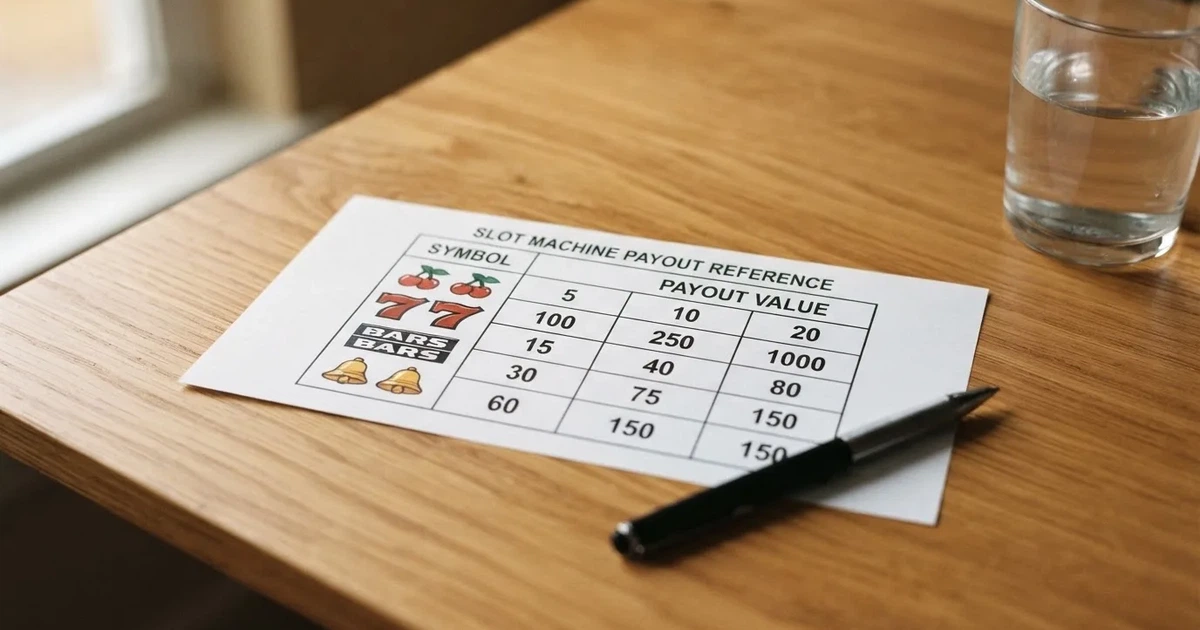
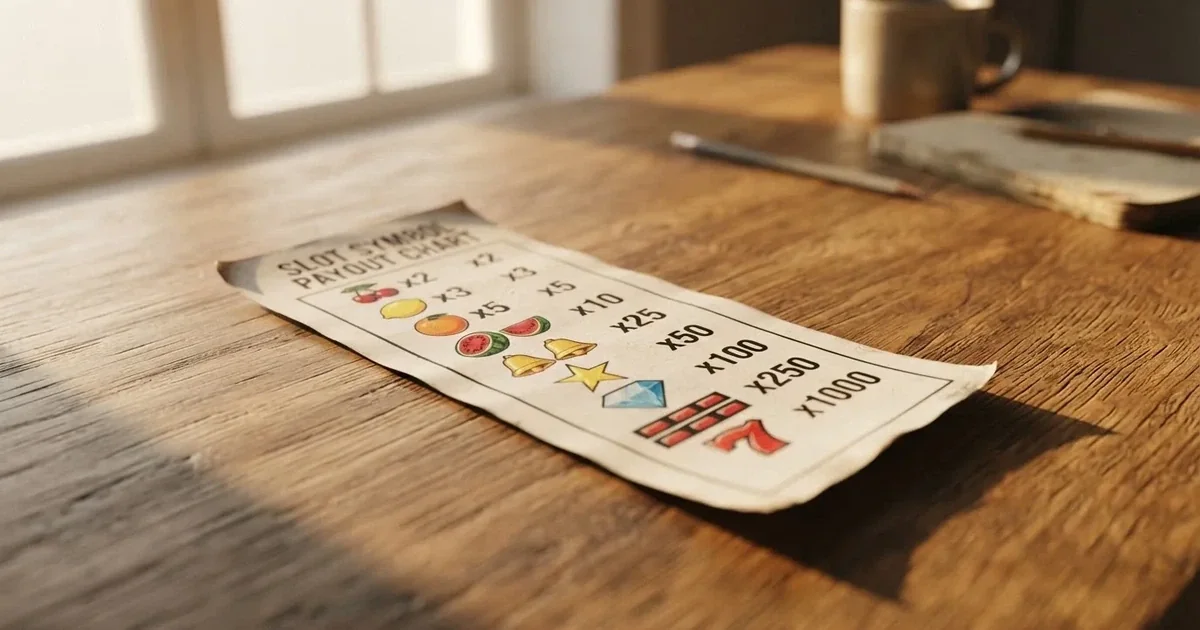
For the reader who already knows what an Aristocrat cabinet in a pub looks like and wants to understand what the offshore copy of it is doing differently, the most useful thing to look at is the paytable. Almost every online slot — Aristocrat-branded, Aristocrat-styled or unrelated — publishes one, and a paytable answers a small number of plain questions: how many reels and rows the game has, how many paylines or ways to win, what each symbol pays, what the wild and scatter do, what the bonus round triggers on, and what the return-to-player percentage is.
Symbol values are stated as multiples of the line bet. A scatter symbol worth 100× the line bet at five across the reels is paying 100 times the stake on that single line, not 100 times the total spin. Win lines are read left to right except where a paytable notes otherwise, and “ways to win” games — Aristocrat’s own popular mechanic and a number of competing ones — pay on any matching adjacent symbols regardless of which line they sit on. The bonus round is usually triggered by three or more scatter symbols and pays either a fixed credit prize or a number of free spins with a multiplier attached. The return-to-player is a long-run statistical average; it is not a promise for any individual session.
The arithmetic that links those numbers to a real session is straightforward. A 95% RTP game keeps 5% of every dollar wagered across enough spins for the average to come out the other side. A 96.22% game keeps 3.78%. A 95.69% game keeps 4.31%. The differences are real and they compound across thousands of spins, but none of them changes the fact that the house keeps a percentage of turnover and the player pays it. That is the one number that does not change regardless of which cabinet the player is sitting at.
The providers of Aristocrat-style slots offshore
The offshore market that supplies Aristocrat-style content to brands operating illegally in Australia is built from a mix of studios: some genuinely old, some set up in the last five years, almost all of them based in Malta, Curaçao or another small jurisdiction with a single B2B gaming licence. Aristocrat’s own regulated real-money online business runs through Aristocrat Interactive and the NeoGames assets acquired in 2024; those products are licensed for use in jurisdictions where online casino is legal, not for Australia.
The third-party ecosystem that fills the gap includes the following providers, each operating under its own B2B licence from a recognised regulator, and each supplying games to brands the ACMA has acted against.
1spin4win
A slot provider founded in 2021 by a team with 15 years of iGaming experience, headquartered at Scharlooweg 39 in Willemstad, Curaçao, and holding a Curaçao gaming licence. Its games are built in HTML5 for low-bandwidth connections. The studio’s stated catalogue runs to more than 190 online slots, with more than 1,000 partnerships across online casinos and aggregators and a reported 46% growth in total bet sum between the first half of 2024 and the first half of 2025.
Betsoft
Founded in 2006, Betsoft describes a catalogue of more than 200 RNG games spanning slots, table games, video poker and specialty titles. Two of its slots carry published RTPs worth naming in detail. The Slotfather, live since 13 December 2012, runs a 95.69% RTP, “Medium” volatility and an 8.17% hit rate across 5 reels and 30 paylines. Good Girl Bad Girl 2 carries a 96.22% RTP, “Very High” volatility and a 15.59% hit rate across 5 reels and 20 paylines. The studio operates with RNG certification from Quinel and Gaming Labs International and partners with more than 500 operators across regulated markets in Europe, Scandinavia, Latin America and Africa.
BGaming
The BGaming brand itself debuted in 2018, though the team has worked on games since 2012. The studio is operated by Stable Games Ltd of Valletta, Malta, and holds a Malta Gaming Authority Critical Gaming Supply Licence (MGA/B2B/785/2020) for Type 1 B2B gaming services, issued 18 March 2021. The stated portfolio runs to 250+ certified games, including video slots, video poker, lottery, card, scratch, crash and casual games, with proprietary mechanics such as TRUEWAYS offering up to 262,144 ways to win. The company says its games are used by 3,000+ operators, naming Blaze, Pin-Up and Gamdom among them.
Booming Games
Booming Games (Malta) Limited is headquartered in Malta and holds a Malta Gaming Authority B2B licence numbered MGA/B2B/459/2018, plus a UK Gambling Commission account (#57254). It also holds licences from Sweden’s Spelinspektionen, Ontario’s AGCO in Canada and regulators in Romania, Denmark, Greece, Belgium, Germany and Brazil. The studio sits in the cross-border licensed-provider category that supplies regulated markets across several continents.
The point of listing the providers here is not to direct traffic. It is to show that the games running on the brands the ACMA has warned about come from real, licensed studios. The studios’ licences do not flow through to the Australian player, because the operator serving the Australian player is not licensed to do so. The licence the studio holds lets it sell the game to an operator; it does not legalise the operator’s offer to a player in Australia.
The brands the ACMA has warned about: what each one actually means
Eleven brands sit on the ACMA’s published warning register in the period covered by this page. They are not ranked. They are not recommended. They appear because the regulator itself named them in a formal warning under the Interactive Gambling Act 2001 for offering prohibited interactive gambling services to people in Australia. Each one is shown for what it is — a brand that has been told, by the body charged with enforcing the prohibition, that what it is doing is unlawful.
The same fact underpins every single one of these write-ups: online casino games and online pokies cannot be licensed anywhere in Australia, whatever licence the brand displays. A Curaçao or Malta licence on the site means the operator has satisfied that other jurisdiction’s regulator; it does not mean the operator has any Australian permission. The ACMA warning is the Australian regulator’s position; the offshore licence is the offshore regulator’s position. The two are about different questions.
RocketPlay
Pulsup Ltd, the operator behind Rocketplay, received an ACMA formal warning in March 2026. The same brand — the Rocketplay domain — was named in a separate 2022 warning to Dama N.V. that covered six brands at once: Bambet, Dazard, Level Up, Rocketplay, Wild Tornado and Cobra Casinos. Two warnings, four years apart, for the same domain, tells the reader how the regulator handles a brand that does not come into compliance after a first action: it warns the new operator behind it. The ACMA formal warning is on the public record; the brand’s offer to Australians is not.
The site does not display Aristocrat-branded games under the publisher’s name. Its catalogue is built around third-party studios, and Aristocrat Leisure’s real-money online content does not flow through to a brand running against the Australian prohibition. The offer is, on the page, the standard offshore mix.
Level Up Casino
Dama N.V. received an ACMA formal warning in May 2022 that covered Level Up alongside five other brands. Level Up remains one of the brands the regulator named in that round. Dama N.V. operates a portfolio of online casinos out of Curaçao, and its supply chain includes Wazdan among the providers listed on the studio’s own partner pages. The warning names the operator, the brand and the date; it does not name a publisher. The games Level Up carries come from third-party studios; no Aristocrat-branded real-money online product is being delivered to an Australian player through this site.
Woo Casino
Dama N.V. received a separate ACMA formal warning in March 2025 over Woo Casino. Woo had not been named in the May 2022 warning; the new warning covers a different brand within the same Dama N.V. portfolio. The gap — three years between warnings to the same parent company for different brands — is itself part of the picture: an operator that owns many brands can be warned many times without changing the underlying conduct.
Spirit Casino
Dama N.V. also received an ACMA formal warning over Spirit Casino in May 2025. Spirit was not on the May 2022 list. Two additional brands named against the same parent in successive months in 2025, neither of them in the 2022 round, indicates a portfolio that is being warned in tranches as the ACMA works through it.
National Casino
Consolutetish S.R.L. received an ACMA formal warning in July 2025 over National Casino. The brand’s own marketing pages list third-party providers across the usual offshore mix, including Betsoft and Pragmatic Play content; Aristocrat Leisure’s real-money online games are not among the publishers delivering to this site. The ACMA warning is the regulatory fact; the catalogue is the supply fact.
Bizzo Casino
Consolutetish S.R.L. received an ACMA formal warning in July 2025 over Bizzo Casino, alongside National Casino. Bizzo had already been the subject of a 2022 formal warning to TechSolutions (CY) Group Limited and TechSolutions Group N.V. The brand has now been warned under two different parent companies, two different licence structures, three years apart. The supply side has the same shape as National Casino’s: third-party studios, no Aristocrat-branded real-money product.
Ignition Casino
Bamboo Media received an ACMA formal warning in July 2025 over Ignition Casino. Ignition had not been previously named on the regulator’s warning list published in this research window. The brand is one the Australian-facing market has known for years; the ACMA’s warning is the first public action against this operator recorded here.
Instant Casino
EOD Code SRL received an ACMA formal warning in February 2025 over Instant Casino. The warning is a single-brand action against a single operator; the regulator’s published record on this brand begins in 2025.
Jackbit
Ryker B.V. received an ACMA formal warning in April 2026 over Jackbit and CasinOK together. Jackbit is the better-known of the two names; the warning names both because they sit under the same operator. The 2026 date places this among the most recent ACMA actions in the period covered here.
Casino Intense
Sterplay Holding Ltd received an ACMA formal warning in April 2025 over Casino Intense. The brand’s content supply includes titles from 1spin4win, listed on the studio’s partner pages, alongside other third-party studios serving regulated European and international markets. Casino Intense is one of the brands running against the Australian prohibition with content sourced from a studio that holds a Curaçao gaming licence.
Sky Crown
Hollycorn N.V. received an ACMA formal warning over its Sky Crown and Blue Leo casino services. The operator runs a portfolio of online casinos out of Curaçao and supplies them with third-party games. The formal warning is on the regulator’s record; the games Sky Crown carries are not Aristocrat-branded real-money product.
The verdict across all eleven is the same in shape, and the differences are in the details: when the warning was issued, who the named operator is, whether the brand was previously warned under a different parent, and which third-party studios the brand’s marketing pages cite. None of them offers Aristocrat-branded real-money online pokies to an Australian player legally, because none of them is permitted to offer online pokies to an Australian player at all.
What the warnings actually cost the brand, and what they cost the player
A formal warning from the ACMA is not a fine and it is not a prosecution. It is a step on a path that runs warning → infringement notice → civil penalty orders → Federal Court action → ISP-level blocking. The ACMA’s published practice is to start at the warning, give the operator a chance to come into compliance, and escalate when it does not.
For the player, the practical consequences of being on a warned or blocked site are not criminal. The IGA targets the provider, not the punter. The risks are consumer-side: no Australian regulator with jurisdiction to chase a refused withdrawal, no participation in BetStop because offshore sites are not connected to the National Self-Exclusion Register, no recourse to the Australian Financial Complaints Authority if a deposit goes wrong, and the real possibility that the balance still sitting on the site when the ACMA asks ISPs to block it becomes unreachable. There is no Australian complaints body to complain to.
For the brand, a warning is mostly cheap. An infringement notice under the IGA can carry a penalty of up to A$247,500 for a single breach involving a credit-card or crypto deposit, but warnings are not penalties. The economics on the operator’s side are still tilted toward continuing to take Australian traffic until the ACMA escalates to a block, because the per-player loss to illegal sites — A$3.9 billion a year across the market — comes overwhelmingly from players who do not know the site is illegal and do not read the warnings register before depositing.
Where an Australian player actually is protected
Australian-licensed wagering services are bound by a number of protections an offshore site is not. BetStop, the National Self-Exclusion Register, has been live since August 2023 and binds every Australian-licensed online and phone wagering service; registering with BetStop stops the player from being able to open new accounts or deposit with any of them. Offshore casinos are not connected to BetStop and do not honour its registration. That single fact is the largest practical difference between the licensed and unlicensed markets for a player who is trying to control their own gambling.
Credit cards, credit-related products and digital currency have been banned as payment for licensed online wagering since 11 June 2024; penalties for operators can run up to A$247,500. The legal deposit routes for licensed wagering are debit card, bank transfer, PayID or Osko, and BPAY. A site asking an Australian for a credit card or a crypto deposit is operating outside the Australian rules. That is a hard test a player can run on any site, licensed or not, before depositing.
Gambling winnings of a recreational player are not assessable income under section 6-5 ITAA 1997, and losses are not deductible, unless the person carries on a business of gambling. The tax treatment is the same whether the operator is licensed or offshore; the difference is what happens when the player asks for their money back.
If gambling ever starts to feel compulsive or stressful, free confidential help is available around the clock through Gambling Help Online and the National Gambling Helpline on 1800 858 858. Both are 24/7, both are Australian, both are set up for the situation where a player needs to talk before they need to act.
What the offshore offer actually looks like
The brands in the warning register above share a common template. The home page shows a slots lobby, a live casino section, and a sports book. The slots lobby is dominated by third-party studios: the BGaming, Betsoft, Booming Games and 1spin4win names listed above, plus other studios in the same licensing tier. The site accepts deposits in Australian dollars, runs a welcome bonus in the same currency, and displays a Curaçao or Malta licence at the foot of the page. The licence is real; it just is not an Australian licence.
The welcome bonus is the part of the page most worth treating skeptically. A “200% match up to A$500” headline is a marketing number, not a deposit match. The wagering requirement — usually 35× to 50× the bonus amount — is the cost. A A$500 bonus at 40× wagering means A$20,000 of turnover before the bonus becomes withdrawable, and any game weighting rules, max-bet rules and time limits apply on top. A reader who knows the wagering multiple up front can do the arithmetic; a reader who finds it in the small print after depositing cannot.
That arithmetic is also why a generous-looking headline bonus is rarely the bargain it appears. The bonus number is what the player sees; the wagering requirement is what the player pays. The published RTP on the games is the third number in the same calculation, and none of the three changes the fact that the operator has been formally warned for offering what it is offering.
The arithmetic that the page is built on
Three numbers do most of the work on this page: 1,751 sites blocked since November 2019, A$3.9 billion a year estimated to flow to illegal sites, and the 74% to 64% fall in the share of gambling going through legal channels between 2021 and 2025. The blocking total is the ACMA’s enforcement output. The A$3.9 billion is the demand. The 64% is the legal market’s share of the demand.
Put them side by side and the picture is a stable one: roughly a third of Australian gambling spend sits outside the regulated market, the regulator blocks around 200 to 260 sites a year, and the demand keeps the next tranche of offshore brands coming. The Interactive Gambling Act 2001 has not changed since 2017; the number of blocked sites has; the flow of money has not. The page that a reader lands on in 2026 is the same shape as the page in 2024, the year the credit card ban took effect, and in 2022, when the bulk of the formal warnings cited above were issued. The label on the brand changes; the structure does not.
What is and is not changing in 2026
Three pieces of the picture are moving at the moment of writing. The Interactive Gambling Amendment (Gambling Reform) Bill 2026 has passed Parliament and will commence its advertising and inducement measures on 1 January 2027. The ACMA’s blocking programme continues to add sites at the rate described above, with the June 2026 round the most recent published in the data this page draws on. And the offshore market keeps producing new brands to replace the blocked ones, on the same supplier base, with the same A$3.9 billion of annual demand behind it.
What is not changing: the prohibition on providing online casino games and online pokies to Australians, the minimum age of 18 for any licensed wagering, the credit card and crypto ban for licensed operators, the National Self-Exclusion Register’s scope, and the tax treatment of recreational gambling winnings. The legal frame is steady. The operational scene is not.
The reader’s checklist before any site
Three tests a reader can apply to any site offering Aristocrat-style pokies to an Australian player:
Does the site have an Australian licence? No online casino or online pokies site can have an Australian licence, because none are issued. The only answer that makes the site legal is that the site does not offer these products to Australians at all. A Curaçao or Malta licence is not an Australian licence.
How is the site taking deposits? Debit card, bank transfer, PayID, Osko or BPAY is the licensed wagering set. A site asking for a credit card or a crypto deposit is operating outside the Australian rules and is exactly the pattern the A$247,500 operator penalty targets.
Is the site connected to BetStop? Offshore sites are not. That is the single largest consumer-protection gap between the licensed and unlicensed markets for a player who needs to control their own play.
The fourth test, the one the ACMA’s register answers directly, is whether the operator has been formally warned. The register is published; the brand list above is drawn from it; new brands are added each round. The test takes a minute and answers a question the marketing page never answers.
Frequently asked questions
Are Aristocrat poker machines the same ones found in Australian pubs and clubs?
Yes. Aristocrat Leisure Limited has been making the cabinets most Australians recognise since 1953 and is the largest gambling-machine manufacturer in Australia. The hardware that sits in pubs and clubs under the Aristocrat name is the genuine article.
Is Aristocrat an Australian company, and where is it listed?
Aristocrat Leisure Limited is an Australian company, founded in 1953, headquartered in North Ryde in Sydney, and listed on the Australian Securities Exchange since 1996 under the ticker ALL. It is also the second-largest slot-machine manufacturer in the world, behind International Game Technology.
Can Aristocrat-branded pokies be played for real money online from Australia legally?
No. Online casino games and online pokies cannot be licensed anywhere in Australia, and Aristocrat does not operate an Australian-facing real-money online casino. Any site offering Aristocrat-style titles to Australians is doing so offshore and is operating outside the Interactive Gambling Act 2001.
What’s the difference between an Aristocrat machine in a venue and an Aristocrat-style online slot?
A venue machine is the manufacturer’s genuine hardware, licensed through the relevant state or territory. An Aristocrat-style online slot is typically a third-party game, themed to feel Australian, served from an offshore operator, and not produced or licensed by Aristocrat Leisure Limited for Australian players.
Does Aristocrat itself operate any online casino sites for Australian players?
No. Aristocrat’s online arms are Product Madness, which runs social casino games, and Aristocrat Interactive, its regulated real-money online gambling business, neither of which is aimed at Australian players. Australian players looking for an Aristocrat-branded real-money online product are looking for a product that does not legally exist.
Is it legal for an offshore casino to advertise Aristocrat-style titles to Australians?
No. The Interactive Gambling Act 2001 makes it an offence to provide online casino games to a person in Australia, and the Interactive Gambling Amendment (Gambling Reform) Bill 2026 will add advertising and inducement measures commencing 1 January 2027. The current law already covers the provision itself; the 2026 reforms tighten the advertising around it.
Published by the Crypto Casino Hub AU team.