Live dealer play for an Australian reader in 2026: the legal shape, the games and the brands the ACMA has called out
 Available in US
Every operator on the shortlist a reader might expect from a “best live casino” page sits on the wrong side of Australian law. Online casino games — blackjack, roulette, live dealer baccarat streamed from a studio in Riga or Malta — are a prohibited interactive gambling service under the Interactive Gambling Act 2001, and the Australian Communications and Media Authority has spent the last three years issuing formal warnings, blocking domains and watching providers quietly withdraw. The page below walks through what live casino play actually is, why the offer a reader sees advertised is unlawful at the Australian end, what the regulator has done about it, and what a reader who genuinely wants to gamble in Australia is left with. The angle is the cost — to the player, to the operator, and to the rule of law that the marketing copy skips past.
A note on the data: the figures below are current as of 23 September 2026, checked against the ACMA’s published formal-warning register, the Interactive Gambling Act 2001 and the regulator’s most recent blocking round.
Table of Contents
- Paytable, shoe and optical recognition: what a live dealer game is, mechanically
- The Interactive Gambling Act and the ACMA’s enforcement record
- The market the prohibition has built
- What “responsible gambling” looks like when the offer is prohibited
- Bonuses, free spins and what a live casino welcome offer actually costs
- Mobile browser, native app and the phone-screen experience
- The brands the ACMA has acted against: a side-by-side picture
- The lawful Australian alternative: pokies venues, land-based casinos and licensed bookmakers
- Frequently asked questions
Paytable, shoe and optical recognition: what a live dealer game is, mechanically
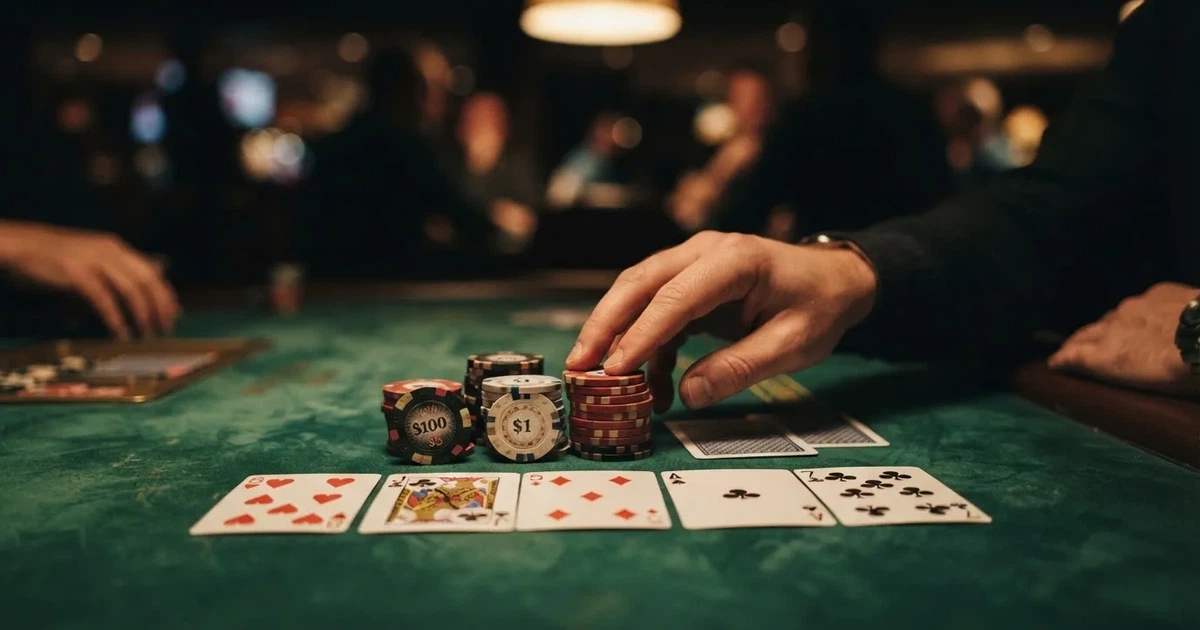
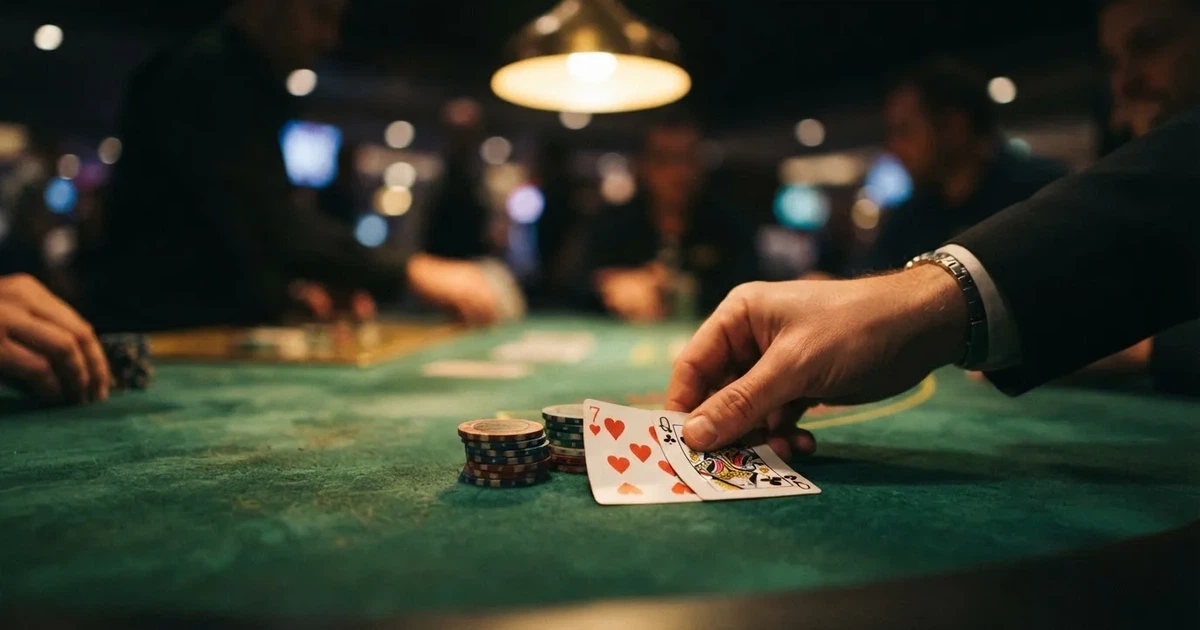
A live casino game is the simplest thing on an Australian-facing site that the law still treats as prohibited. A real human dealer sits at a real table somewhere in a studio, often in Riga or Malta, sometimes in a brick-and-mortar casino. The cards are physical cards, dealt from a real shoe. Several cameras record the action. Optical character recognition software reads the result — the value of the card, the pocket on the roulette wheel, the dealt baccarat hand — and writes it to the player’s screen as a data point. The player is watching a stream and betting against the house, exactly as they would in a casino, except the bet arrives through a website.

That last clause is what the Interactive Gambling Act turns on. The legal test is not whether the game feels real, or whether the dealer’s hands are real, or whether the stream is high-definition. The legal test is whether an interactive gambling service is being provided to a person in Australia. Live dealer play meets all three elements: it is interactive (a click places the bet), it is a gambling service (the bet pays out at a published house edge), and it is provided to a person in Australia (the stream and the cashier both run on the same website). The Australian-facing operator sits inside the prohibited category whether it knows it or not.
The common live dealer formats are baccarat, blackjack and roulette, with craps and game-show variants growing. Each carries its own house edge and its own set of rule variants, and each is the subject of a separate shelf below.
Baccarat and its variants
Baccarat runs on a stripped-down set of decisions: the player chooses Banker, Player or Tie, and the dealer plays both hands to fixed drawing rules. Cards two through nine count at face value, tens and face cards count zero, aces count one, and hand totals are taken modulo ten. The casino banks the game; the bettor does not bank against other players. In the form most commonly played online — punto banco, which was developed in Havana in the 1940s — the shoe holds six or eight decks and the rules for drawing a third card are fixed in advance.
The house edge figures are small and very uneven across the three bets. On Banker, the edge is 1.06 per cent. On Player, it is 1.24 per cent. On Tie, it is 14.36 per cent — and that gap is the page’s first lesson in cost. The marketing copy rarely distinguishes between the three options; the arithmetic does, and a reader who bets Tie every hand is paying roughly thirteen times the cost of a Banker bettor at the same table.
Australian land-based play offers its own approved variants. Crown Melbourne runs three baccarat games — Traditional Baccarat, Crown Baccarat and 2 to 1 Baccarat — each approved by the Victorian Gambling and Casino Control Commission, which took over from the Victorian Commission for Gambling and Liquor Regulation on 1 July 2022. New South Wales applies a parallel approval regime: under section 66 of the Casino Control Act 1992, no casino operator may run baccarat, or any other table game, until the regulator has approved the rules, and the operator must make the approved rules available on request. That approval requirement is the reason Australian bricks-and-mortar baccarat tables can be named, counted and audited; online, the equivalent audit does not exist.
Blackjack and its rule variants
Blackjack is the second live dealer staple. Number cards count at their number, face cards count ten, the ace counts one or eleven, and a starting two-card total of 21 is a “natural” or “blackjack” — the strongest hand. The dealer draws to a minimum of seventeen, with rule sets differing on whether the dealer also hits on a soft seventeen. The game descended from the French vingt-un and the Spanish veintiuno that Miguel de Cervantes described around 1601, and it took its modern name from a side bet added during the Klondike Gold Rush of 1896 to 1899.
The house edge in blackjack is small but extremely sensitive to rules. Under liberal Las Vegas Strip rules — dealer stands on soft seventeen, double on any two cards, double after split, resplit aces, late surrender — the edge is about 0.28 per cent. Under Atlantic City rules, it is about 0.43 per cent. A live dealer studio that removes surrender, or that forces the dealer to hit on a soft seventeen, hands the player back roughly a tenth of a per cent in edge; over hours of play, that gap is the difference between the game being a small-house proposition and the game being a routine one.
Variants on the basic game widen the catalogue. Spanish 21 drops the tens from the deck and adds player-favourable rules to compensate. Double Exposure deals both dealer cards face-up but pays even money on a natural. Blackjack Switch lets the player swap the top cards between two hands. Super Fun 21 allows up to four splits. Each is sold by a live dealer studio under a marketing name and a published rule card; the actual cost depends on the rules printed in the small type, not on the name above the table.
Roulette, craps and the rest of the live dealer floor
Roulette and craps round out the mainstream live dealer offering. Roulette’s house edge runs from about 2.7 per cent on a single-zero European wheel to 5.26 per cent on a double-zero American wheel; live dealer studios tend to run European wheels, but a reader who lands on an American variant is paying roughly twice the cost without being told. Craps’ main bets — Pass/Come at 1.41 per cent and Don’t Pass/Don’t Come at 1.36 per cent — are among the cheapest bets in any casino, while Any Craps at 11.11 per cent is the worst. Game-show variants — wheel-of-fortune-style formats branded under familiar TV-style names — sit closer to the craps end of that range than the blackjack end.
The point of listing these edges is not to teach a reader to count cards. It is to mark the cost surface before any of the brand pages below is read. Every bonus, every welcome package and every free-spin offer listed in the next several sections is paid for by these edges, and the reader’s job is to know what a 1.06 per cent and a 14.36 per cent look like when they sit beside a “200 per cent match” headline.
The Interactive Gambling Act and the ACMA’s enforcement record
Australian law on online gambling has been settled, in its broad shape, since 2001. The Interactive Gambling Act 2001 prohibits the provision of online casino games — including online blackjack, online roulette and live dealer games of the same general kind — to any person who is physically in Australia. The Interactive Gambling Amendment Act 2017 strengthened the regime, widened the prohibited service definition, and gave the Australian Communications and Media Authority the power to issue formal warnings, accept enforceable undertakings, and direct Australian internet service providers to block offending websites.
Two consequences follow, and they run through every page below.
First, no Australian state or territory issues a licence for online casino games. What is licensable is wagering on races and sport placed before the event, lotteries, and keno. The Northern Territory Racing and Wagering Commission regulates fifty-two of Australia’s online bookmakers — including Sportsbet, Bet365 and Ladbrokes — for tax reasons; the commission has no full-time staff and meets once a month in Darwin. A reader who lands on a casino site displaying a “Curacao licence” or a “Kahnawake licence” is being told nothing about Australian authorisation, because no such authorisation exists to be granted.
Second, the ACMA enforces the prohibition at the provider end, not the player end. The individual player is not prosecuted under the Interactive Gambling Act — the offence runs against the company providing the service. That asymmetry is the reason the regulator’s visible work is a list of formal warnings and a list of blocked domains, not a list of prosecuted players. It is also the reason an offshore site gives no Australian consumer protection, no complaints body, and no recourse if a withdrawal is refused: there is no Australian party to complain to.
The formal-warning register, 2022 to 2026
The ACMA’s formal-warning register is the regulator’s most public artefact. A formal warning is not a court order; it is a published statement that the regulator has found a service to be providing prohibited interactive gambling services to Australians, and that further enforcement action will follow if the service does not withdraw. The register records the operator named in the warning, the brand or brands covered, and the date.
The recent record, in order:
- May 2022 — Dama N.V., over Bambet, Dazard, Level Up, Rocketplay, Wild Tornado and Cobra Casinos.
- September 2022 — Hollycorn N.V., over Sky Crown and Blue Leo.
- April 2025 — Sterplay Holding Ltd, over Casino Intense.
- February 2025 — EOD Code SRL, over Instant Casino.
- March 2025 — Dama N.V., over Woo Casino.
- May 2025 — Dama N.V., over Spirit Casino.
- July 2025 — Bamboo Media, over Ignition Casino; Consolutetish S.R.L., over National Casino and Bizzo Casino. Bizzo Casino had already been the subject of a 2022 formal warning to TechSolutions (CY) Group Limited and TechSolutions Group N.V.
- March 2026 — Pulsup Ltd, over RocketPlay.
- April 2026 — Ryker B.V., over Jackbit and CasinOK.
Dama N.V. appears three times — 2022, 2025 and 2025 — across different brands. The repetition is the regulator’s clearest published evidence that some operators treat a single warning as the cost of doing business, and rebrand rather than withdraw.
The blocking round and what 1,751 sites amounts to
Blocking is the ACMA’s other visible tool. The regulator does not block sites directly; it asks Australian internet service providers to block them at the DNS level, and the ISPs comply. Each blocking round is a published event.
In a round reported on 26 June 2026, the ACMA asked ISPs to block twelve more illegal gambling websites: 7Signs, ChromaBet, Donbet, Duospin, Freshbet, Slots Gem, Jacks Club, Lucky Start, Pointsbetz, Spinrise, Vinyl Casino and Wildsino. The cumulative figure the ACMA reports, as of June 2026, is that 1,751 illegal gambling and affiliate marketing websites have been blocked since the first blocking request in November 2019, and that more than 230 unlicensed gambling services have left the Australian market since enforcement was strengthened in 2017.
The arithmetic the page is built around is what those two totals imply. From the first blocking request in November 2019 to the running total reported in June 2026 is roughly six years and seven months, or about seventy-nine months. 1,751 blocked sites divided across seventy-nine months works out to a long-run average of around twenty-two blocked sites per month — a band, not a single figure, because early months ran lower as the enforcement mechanism was being stood up, and recent months have run higher as the ACMA has issued multiple rounds in quick succession. The honest reading of the figure is a steady drumbeat of roughly two dozen sites per month taken out of the Australian market, with the rate climbing in 2025 and 2026 as the regulator widened its enforcement.
What that rate means in practice is that any list a reader sees of “currently operating offshore casinos accepting Australians” is, by definition, a list of services the regulator is in the process of either warning or blocking. The set is not stable; it is being pruned, and a reader’s view of it is dated by weeks rather than months.
The market the prohibition has built
The H2 Gambling Capital report for 2025 estimates that Australians lose about A$3.9 billion a year to illegal gambling sites, and that the share of gambling going through legal channels fell from 74 per cent in 2021 to 64 per cent. The second figure is the more interesting one. Legal-channel share fell ten percentage points in four years despite a regulator that is actively blocking sites and warning operators, which suggests that the prohibition holds the door closed without pulling Australians back through it.
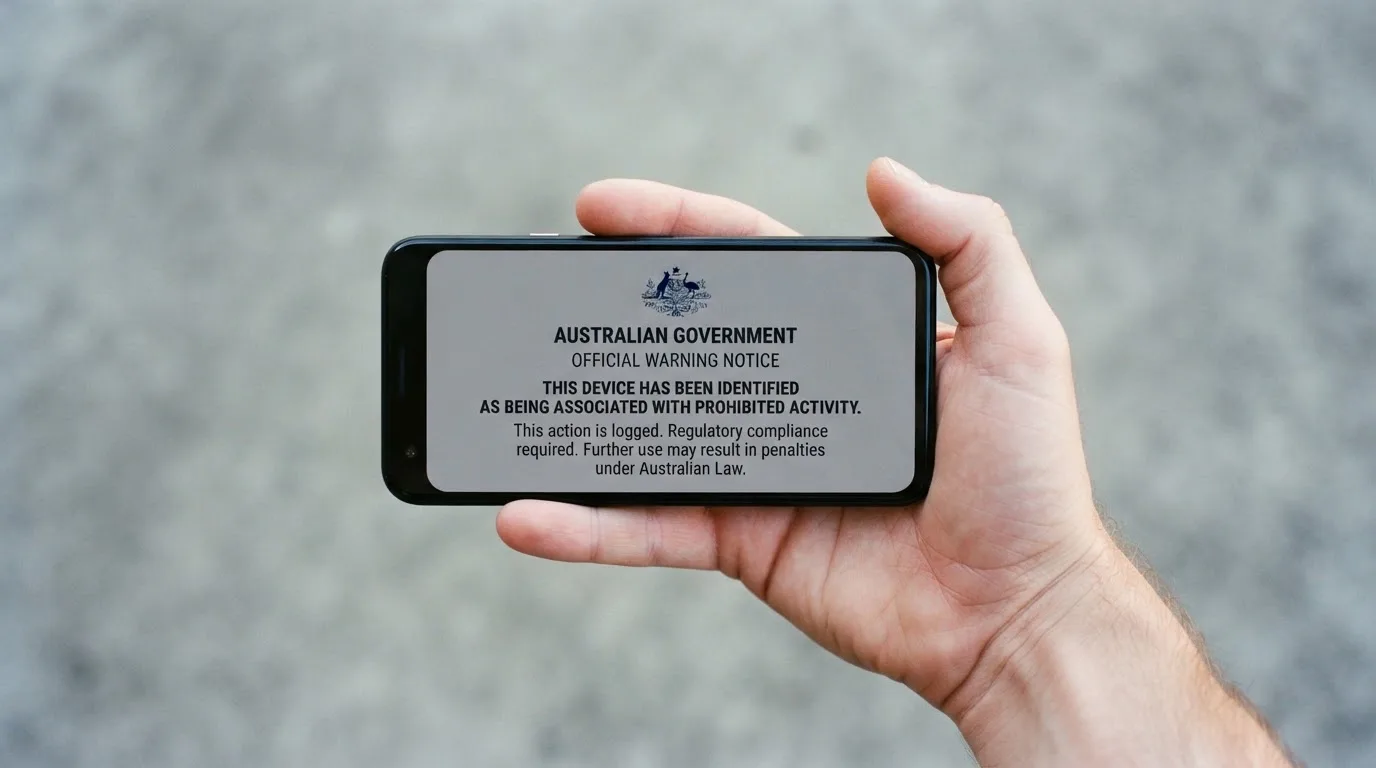
Three mechanisms explain the gap. First, the offer on the offshore side is wider than the legal offer: live dealer tables, online pokies, in-play betting — none of which the licensed Australian bookmaker is permitted to provide. Second, the marketing runs through channels the ACMA does not control: search results, social media, affiliate sites. Third, the payment stack still works for many readers: a debit card or a bank transfer goes through, even if credit cards and crypto are now blocked for licensed wagering. The cumulative effect is a market in which the legal alternative is narrower than the prohibited one and the prohibited one is, for now, still reachable.
The reform path the regulator is on is the Interactive Gambling Amendment (Gambling Reform) Bill 2026, which passed Parliament on 19 August 2026. Its advertising and inducement measures commence on 1 January 2027. A reader reading this page in late 2026 is reading it in the window between the Bill’s passage and the start date of the inducement rules; the prohibitions already in force are the Interactive Gambling Act 2001 and the 2017 amendment, not the 2026 reform.
What “responsible gambling” looks like when the offer is prohibited
A responsible-gambling section on a page about a prohibited product is not a contradiction; it is the section where the page tells the reader what tools they have.
BetStop, the National Self-Exclusion Register, has been live since August 2023. It binds Australian-licensed online and phone wagering services — the same licensed bookmakers the Northern Territory Racing and Wagering Commission regulates — to honour a registered player’s request to be excluded. It does not bind offshore casinos. A reader who registers with BetStop has done the responsible thing at the Australian end of the market; it does not exclude them from a Curacao-licensed live dealer site, because that site is not connected to the register.
The National Gambling Helpline, 1800 858 858, is free, twenty-four hours a day, and the same number routes to Gambling Help Online for chat and email support. Both are funded for Australian residents and Australian circumstances, regardless of where the gambling in question is happening. The line is the one tool whose scope covers the prohibited half of the market as well as the legal half.
The payment rules apply only to licensed wagering. Since 11 June 2024, credit cards, credit-related products and digital currency are banned as payment for licensed online wagering, with penalties of up to A$247,500 for operators who accept them. The legal deposit routes for licensed wagering are debit card, bank transfer, PayID and Osko, and BPAY. A site that asks an Australian reader for a credit card or a crypto deposit is, by definition, not a licensed Australian wagering service — it is operating outside the Australian rules, and the deposit routes it offers are a marker of that fact.
The tax side is worth one sentence. Gambling winnings of a recreational player are not assessable income under section 6-5 of the Income Tax Assessment Act 1997, and losses are not deductible, unless the person is carrying on a business of gambling. The last clause is the only one of those three a reader might want to ask the ATO about; the first two are the answer for almost everyone reading the page.
Bonuses, free spins and what a live casino welcome offer actually costs
The bonus shelf for live dealer play is the shelf where the marketing word and the arithmetic diverge hardest. A live casino welcome offer is typically framed as a percentage match on the first deposit, with a turnover multiplier attached and a list of “contribution rates” that say what fraction of each bet type counts toward clearing the bonus. The visible figure is the percentage match; the operative figure is the turnover requirement, which is what the offer actually costs the player in time and expected loss.
Three terms recur across the live casino bonus shelf and are worth naming precisely. First, the wagering or turnover multiple: the number of times the bonus amount must be bet before any winnings become withdrawable. A 35-times multiple on a A$100 bonus means A$3,500 of betting must clear before withdrawal. Second, the contribution rate: the fraction of each bet that counts toward the wagering requirement. Live dealer games are usually weighted lower than pokies — often 10 per cent or even zero — which means a reader clearing the bonus on live dealer tables needs to bet many multiples of what a pokies player would. Third, the maximum cashout cap: a ceiling on what a player can withdraw from bonus-derived winnings, which is the term that makes the headline match amount and the actual withdrawable amount diverge.
The expected loss attached to a bonus is the multiplication of the required turnover by one minus the return-to-player percentage. On a European roulette table at 97.3 per cent RTP, an expected loss of A$3,500 turnover is roughly A$94 of expected cost; on a blackjack variant at 99.5 per cent RTP under favourable rules, the same turnover costs about A$17.50. The marketing offer does not present that number, and a reader who knows it has done what the offer is designed to discourage.
The free-spins shelf is the second place the cost sits off-page. “Free spins” attached to a live casino welcome are almost always spins on pokies, not on live dealer tables; they are a way of routing the bonus to a higher-contribution game type, which clears faster and costs the operator less in expected value. A reader who came to a live casino page for live dealer play is, on most welcome offers, being paid in a different currency than the one they came to spend.
A reasonable test for any live casino welcome offer, regardless of jurisdiction, is the same one a reader would apply to any other financial product: read the wagering multiple, read the contribution table, read the cashout cap, and read the maximum bet per spin during the bonus period. If any of those four numbers is missing, the offer is not what its headline says it is.
Mobile browser, native app and the phone-screen experience
A live casino app, on a phone, is mostly a thin wrapper around a mobile browser session. The stream is the same stream; the cashier is the same cashier; the game logic is the same game logic. What the app adds is a launcher icon, push notifications, and in some cases a smaller interface tuned for one-handed use on a phone screen. What it does not add is a different house edge or a different legal status.
A mobile browser session against the same site, on the same device, is functionally equivalent for the reader who does not want to install a launcher. The argument for installing the app is convenience and the argument against is storage space and the occasional prompt for permissions the casino site has no business asking for. Neither argument changes what the page is about, which is that the underlying activity is a prohibited interactive gambling service regardless of how the reader reaches it.
The page does not recommend installing any specific app, and the reader who reaches this paragraph looking for a download link is reading the wrong paragraph; the lawful Australian wagering apps are the bookmaker apps regulated by the Northern Territory Racing and Wagering Commission, and they offer sports and racing, not live dealer tables.
The brands the ACMA has acted against: a side-by-side picture
The table below is not a ranking and is not a recommendation. Each brand is listed because the ACMA itself issued a formal warning over it for offering prohibited interactive gambling services to Australians. The columns are the matters a reader comparing the list needs to make sense of what is on it. Brands where research does not cover a given subject take an em dash; the gap is the point.
| Brand | ACMA action and date | Operator named by the ACMA | Subject support |
|---|---|---|---|
| RocketPlay | Formal warning, March 2026; earlier Dama N.V. warning, May 2022 | Pulsup Ltd; Dama N.V. | — |
| Level Up Casino | Formal warning, May 2022 | Dama N.V. | listings only (Bgaming) |
| Woo Casino | Formal warning, March 2025 | Dama N.V. | — |
| Spirit Casino | Formal warning, May 2025 | Dama N.V. | — |
| National Casino | Formal warning, July 2025 | Consolutetish S.R.L. | listings only (en.wikipedia.org) |
| Bizzo Casino | Formal warning, July 2025; earlier TechSolutions warning, 2022 | Consolutetish S.R.L.; TechSolutions | — |
| Ignition Casino | Formal warning, July 2025 | Bamboo Media | — |
| Instant Casino | Formal warning, February 2025 | EOD Code SRL | — |
| Jackbit | Formal warning, April 2026 | Ryker B.V. | — |
| Casino Intense | Formal warning, April 2025 | Sterplay Holding Ltd | listings only (ABC, ACMA, and Crown Melbourne) |
| Sky Crown | Formal warning, September 2022 | Hollycorn N.V. | — |
Two readings of the table are worth doing. The first is by date: the ACMA’s enforcement is not slowing down. Five of the eleven warnings listed are dated 2025 or 2026; the recent rounds cover more operators, more brands per operator, and shorter intervals between warnings. The second reading is by operator: Dama N.V. appears three times across three different brands, Consolutetish S.R.L. appears twice across two brands, and Hollycorn N.V. appears once for two brands in a single warning. A reader looking at the list as a “market” is looking at a market where a small number of operators run a large number of brands, and the regulator’s published record is the most reliable picture of that structure.
RocketPlay
RocketPlay sits on the ACMA’s most recent record: a formal warning over Rocketplay.com.au was issued to Pulsup Ltd in March 2026, and the brand was already covered by an earlier May 2022 warning to Dama N.V. across six casino brands. No subject support is on the public record, which means a reader who reaches the site has no third-party listing to cross-check the catalogue against. The reading is that the operator has rebranded at least once and is being warned for the same prohibited service under a different corporate name; the page’s reading of that pattern is the pattern, not the brand.
Level Up Casino
Level Up Casino is one of the six Dama N.V. brands covered by the May 2022 warning. Bgaming.com lists Level Up as a partner site in its own catalogue, which is the third-party reference the brand has on the public record. The verdict is that the brand’s catalogue is, on the third-party listings that exist, consistent with the broader Dama N.V. group; the warning is what makes the brand unavailable to an Australian reader regardless of the catalogue’s content.
Woo Casino
Woo Casino was the subject of a March 2025 formal warning to Dama N.V., the second Dama N.V. action in the register after the 2022 batch. Public records contain no third-party data for this brand. The verdict is the same as for any other brand in the Dama N.V. group: a current warning makes the site unavailable to an Australian reader, and the operator has been warned twice across different brands rather than once.
Spirit Casino
Spirit Casino was the subject of a May 2025 formal warning to Dama N.V., the third Dama N.V. action in the register. Third-party validation is unavailable in public listings. The pattern is the pattern that defines the group: a small number of operators under repeated regulatory contact, running a large number of consumer-facing brands.
National Casino
National Casino was the subject of a July 2025 formal warning to Consolutetish S.R.L., one of two brands covered by that warning. En.wikipedia.org lists the brand in its catalogue of online casino operators, which is the third-party reference on the public record. The verdict is that the brand has a Wikipedia-level presence and an active ACMA warning; the second fact is the one that governs what an Australian reader can do with the first.
Bizzo Casino
Bizzo Casino was the subject of a July 2025 formal warning to Consolutetish S.R.L. — same operator, same warning, different brand — and was already the subject of a 2022 formal warning to TechSolutions (CY) Group Limited and TechSolutions Group N.V. The brand has been warned under two different operators in three years, which is the clearest marker on this list of a brand that has migrated between corporate owners without changing its offering.
Ignition Casino
Ignition Casino was the subject of a July 2025 formal warning to Bamboo Media. Public records contain no third-party data for this brand. The verdict is that the brand is being warned for the same prohibited service that the rest of the table is being warned for, and the brand has no third-party listing on the public record to cross-check.
Instant Casino
Instant Casino was the subject of a February 2025 formal warning to EOD Code SRL. The earlier warning date in this list makes it one of the more recent round’s first targets. Third-party validation is unavailable in public listings. The reading is that the operator has fewer published signals than some of the larger groups on the table, which is itself a marker: a brand with no third-party catalogue is harder to verify before the reader commits a deposit.
Jackbit
Jackbit was the subject of an April 2026 formal warning to Ryker B.V., alongside CasinOK. Public records contain no third-party data for this brand. The brand is recent in the register and recent in the market; the verdict is that a fresh warning on a fresh brand is the ACMA’s most visible response to a market that continues to supply new names as fast as old ones are blocked.
Casino Intense
Casino Intense was the subject of an April 2025 formal warning to Sterplay Holding Ltd. The brand has the broadest third-party subject support on the list: references at Abc.net.au, at acma.gov.au and at Crownmelbourne.com.au, which together cover news coverage, the regulator’s own record and a land-based casino’s own domain. The breadth of the references is not a positive signal; it is a marker of how often the brand has been the subject of a published event. The verdict is that a brand with regulator, news and trade references is a brand that has been talked about for reasons a reader should know before depositing.
Sky Crown
Sky Crown was the subject of a September 2022 formal warning to Hollycorn N.V., alongside Blue Leo. The warning is the oldest on the table, and the brand has not been re-warned since. The reading is not that the brand is no longer a problem; it is that the warning has not been retracted. The Hollycorn N.V. group remains on the ACMA’s published record for the same prohibited service.
The lawful Australian alternative: pokies venues, land-based casinos and licensed bookmakers
For a reader who came to this page to find a place to play, the lawful answer is in three places.
The first is licensed pokies venues — clubs, hotels and pubs operating under state and territory gaming machine permits, with poker machines regulated locally. The second is land-based casinos: Crown Melbourne, regulated by the Victorian Gambling and Casino Control Commission; Crown Perth, regulated by the Western Australian Department of Local Government, Sport and Cultural Industries; The Star Sydney, regulated by Liquor and Gaming NSW; and The Star Gold Coast, regulated by the Queensland Office of Liquor and Gaming Regulation. Each offers live dealer table games — baccarat, blackjack, roulette — under the rule-approval regimes described above. The third is licensed online bookmakers, regulated by the Northern Territory Racing and Wagering Commission, which offer wagering on races and sport placed before the event. None of those three offers the live dealer online casino product the search term implies, because that product is the prohibited service.
The Interactive Gambling Amendment (Gambling Reform) Bill 2026, which passed Parliament on 19 August 2026 and whose advertising and inducement measures commence on 1 January 2027, is the next chapter in this picture. Its visible effects will be on licensed wagering’s advertising and inducement rules; it does not open the door to live dealer online casino games, which remain prohibited under the 2001 Act. A reader reading this page in late 2026 is reading it in the window between passage and commencement, and the prohibition the page describes is the prohibition that will still be in force on 1 January 2027.
Frequently asked questions
What makes a live casino game different from a standard online slot?
A live casino game is a real dealer at a real table, streamed by camera and read by optical recognition software, with the player’s bet placed through the same website they are watching. A standard online slot is a software-driven random number generator with no human or physical components. The house edge, the rules and the player interaction are different in each, and the law treats them differently: the Interactive Gambling Act 2001 prohibits the live dealer service to Australians, while a software-driven slot from an offshore site falls under the same prohibition.
Who is Evolution and why does its name come up around live casino games?
Evolution is the dominant live casino supplier; it was founded in 2006 by Jens von Bahr and Fredrik Österberg, reached 100 live tables at its Riga studios in 2013 — then the largest single-site casino operation in Europe — and opened a Malta studio in 2014. Evolution completed its acquisition of NetEnt on 1 December 2020, and the Evolution Group also owns NetEnt, Red Tiger, Big Time Gaming, Nolimit City and Ezugi. Evolution states that more than 700 gambling platforms worldwide offer its live casino games, which is why its name sits behind most of the live dealer catalogues a reader can see online — including, indirectly, the catalogues of brands on the ACMA’s warning register.
Is it legal for an online casino to stream live dealer games to players in Australia?
No. Under the Interactive Gambling Act 2001, providing an interactive casino-style gambling service — including online blackjack, online roulette and live dealer games of that general kind — to a person physically in Australia is a prohibited interactive gambling service. The offence runs against the provider, not the player; the ACMA’s enforcement is through formal warnings and through directing Australian internet service providers to block offending sites. A reader who reaches such a site is being offered a service the operator is not permitted to provide to Australians.
Can a live casino app be used on a mobile browser?
A mobile browser session against the same site, on the same device, is functionally equivalent to a dedicated app for the reader who does not want to install a launcher. The app adds a home-screen icon, push notifications and in some cases a smaller interface tuned for one-handed use; the underlying stream, cashier and game logic are the same. The lawful Australian wagering apps, for the reader who does want to install one, are the bookmaker apps regulated by the Northern Territory Racing and Wagering Commission, and they offer sports and racing — not live dealer tables.
What welcome offers are commonly advertised for live casino play?
Live casino welcome offers are typically framed as a percentage match on the first deposit, with a turnover multiplier attached and a list of contribution rates that say what fraction of each bet type counts toward clearing the bonus. The three terms a reader should read are the wagering multiple, the contribution table and the maximum cashout cap; on a European roulette table at 97.3 per cent return-to-player, a A$3,500 turnover carries roughly A$94 of expected loss, and on a blackjack variant at 99.5 per cent return-to-player under favourable rules the same turnover costs about A$17.50. The headline match amount is not the cost; the turnover is.
Are there licensed live table games at Australian land-based casinos?
Yes. Crown Melbourne offers three baccarat variants — Traditional Baccarat, Crown Baccarat and 2 to 1 Baccarat — approved by the Victorian Gambling and Casino Control Commission, which took over from the Victorian Commission for Gambling and Liquor Regulation on 1 July 2022. Crown Melbourne’s blackjack catalogue is also approved by the VGCCC, with rule changes logged publicly — including the renaming of the “Perfect Pairs” side bet to “Crown Pairs” on 23 December 2024 and the introduction of a “Free Bet” option with a new “Pot of Gold” side bet on 25 March 2024. In New South Wales, section 66 of the Casino Control Act 1992 requires that any table game be approved by the regulator before it is offered. The land-based live table product is real and regulated; the online equivalent is the prohibited service this page is built around.
Written by the editors at Crypto Casino Hub AU.