
Big jackpot pokies in Australia: the gap between the marketing and the law
Jackpot pokies are everywhere in Australian marketing. Search for the term and an Australian reader lands on offshore casino pages promising seven-figure Mega Moolah-style payouts, fixed jackpot networks, free demo modes that “preview” the real pool, and a long list of brands accepting credit cards and crypto deposits. The same reader, opening the Interactive Gambling Act 2001 and the ACMA’s enforcement log, lands on something quite different: the supply of online casino games to a person in Australia is prohibited, no state or territory issues the licence those offshore sites display, and the ACMA has issued formal warnings and asked internet providers to block thousands of these sites since 2017.
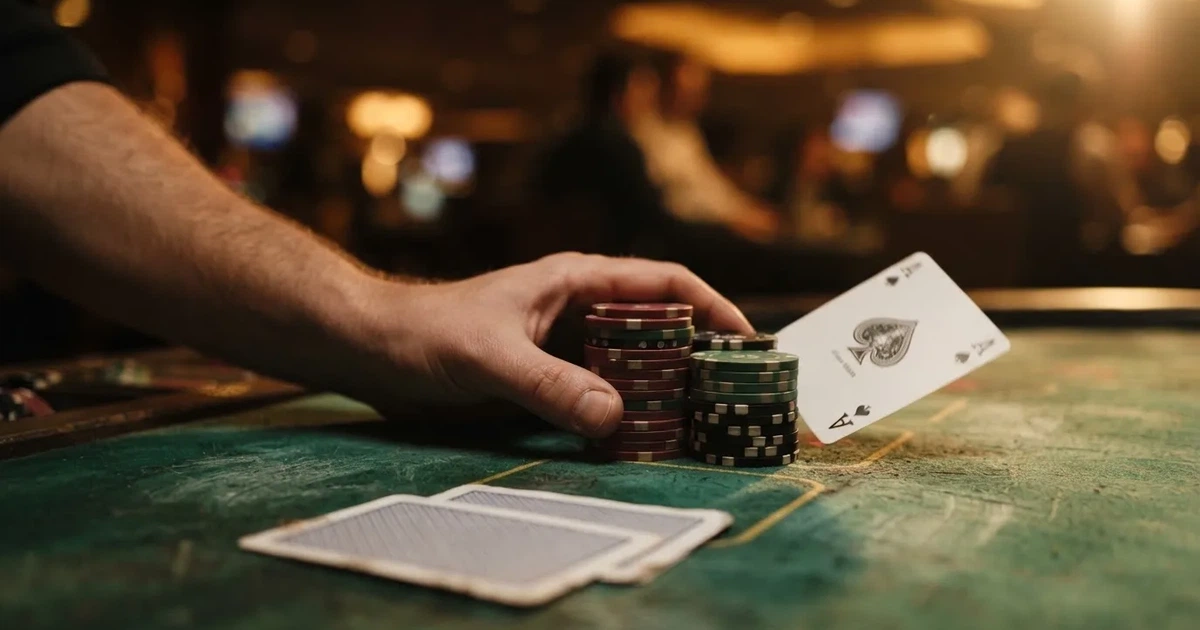
This page sets out that gap plainly. The legal landscape first, the way progressive jackpots actually work second, the player-protection tools third, and finally the brands the ACMA itself has acted against — not as a recommendation, but because the regulator’s own publication is the most reliable record of what is being offered to Australians and who is doing the offering.
The data on this page is current as of 29 October 2026, with ACMA enforcement and licence claims checked against the regulator’s published register.
Table of Contents
- The legal landscape for online jackpot pokies in Australia
- How the ACMA enforces it
- What the ACMA’s record looks like across the brands named in this guide
- How progressive jackpot pokies actually work
- What the catalogue looks like for an offshore casino offering jackpot pokies
- Other table games alongside jackpot pokies offshore
- The Australian venues that do offer jackpot pokies
- The self-exclusion and player-protection tools that apply
- Payment routes that separate the licensed from the prohibited
- The reform on the horizon
- Tax position for an Australian player
- What a reader weighing this material should hold onto
- The brands the ACMA has formally warned
- The picture the ACMA’s record draws
- What a reader comparing the brands should weigh
- Responsible gambling in the Australian frame
- Final word on the gap between the marketing and the law
- Frequently asked questions
The legal landscape for online jackpot pokies in Australia
The Interactive Gambling Act 2001 (IGA) makes it an offence to provide a prohibited interactive gambling service to a person physically in Australia. Casino games, online pokies and in-play betting sit on that prohibited list. The Interactive Gambling Amendment Act 2017 strengthened the regime, gave the ACMA the power to issue formal warnings, accept enforceable undertakings and direct Australian internet service providers to block offending sites, and extended the prohibition to overseas operators serving Australian customers. The prohibition targets the provider. An individual Australian player is not prosecuted for using an offshore casino, but the player has none of the protections a licensed venue must give.

What is licensable is wagering on racing and sport placed before the event, lotteries and keno. In practice, online bookmakers such as Sportsbet, Bet365 and Ladbrokes hold Northern Territory Racing and Wagering Commission (NTRWC) licences — 52 of Australia’s online bookmakers are regulated that way, and the NTRWC itself runs without full-time staff, meeting monthly in Darwin. Bookmaker licences cover racing and sports betting. They do not extend to casino games or pokies.
The IGA does not licence online jackpot pokies. Neither does any state or territory. A jackpot pokie hosted offshore, advertised to an Australian email address and accepting deposits in Australian dollars is operating outside the regime that would license it. Where the site displays a “Curacao” or other foreign licence on its footer, that licence is a foreign authority’s permission to operate in its own jurisdiction; it is not Australian recognition.
What this means in practice for an Australian reader: any brand named in the marketing as an “online casino for jackpot pokies” is offering a product no Australian regulator licenses, and the only enforceable oversight on that site is whatever its home regulator chooses to give. The protections Australians assume — dispute resolution, withdrawal guarantees, problem-gambling referrals to BetStop, payment routes limited to debit and bank transfer — are not in place.
How the ACMA enforces it
The Australian Communications and Media Authority (ACMA) carries the enforcement side of the IGA. Its tools, in increasing order of severity, are formal warnings, enforceable undertakings, infringement notices, and civil penalty proceedings. The most visible recent measure is internet-service-provider blocking, where the ACMA writes to Australian ISPs asking them to block named domains, and the ISPs comply. As of the most recent reporting in June 2026, 1,751 illegal gambling and affiliate marketing websites had been blocked since the first blocking request in November 2019, and more than 230 unlicensed gambling services had left the Australian market since enforcement was strengthened in 2017.

A single blocking round reported in June 2026 added 12 domains: 7Signs, ChromaBet, Donbet, Duospin, Freshbet, Slots Gem, Jacks Club, Lucky Start, Pointsbetz, Spinrise, Vinyl Casino and Wildsino. The ACMA’s blocking list is the closest thing Australia has to a public, dated registry of who has been offering what.
Alongside blocking, the ACMA publishes formal warnings naming the operator company behind a brand. The names that recur through these warnings are useful as a record of the offshore industry’s corporate structure — Dama N.V., Hollycorn N.V., TechSolutions, Pulsup Ltd, Bamboo Media, Consolutetish S.R.L., EOD Code SRL, Sterplay Holding Ltd and Ryker B.V. appear across multiple brands. The same operator company may run several brands in parallel; when the ACMA warns one, it is often naming a structure rather than a single site. The brands named in formal warnings below are not interchangeable with the legal entity behind them; in some cases the same brand has been warned twice under two different operating companies over its lifetime.
The enforcement record is worth a reader’s time precisely because it is the regulator’s own publication. Affiliate sites name “trusted” brands and offshore licences; the ACMA names the same brands and what it has done about them. The two records can be reconciled.
What the ACMA’s record looks like across the brands named in this guide
| Brand | ACMA action and date | Operator named by the ACMA |
|---|---|---|
| RocketPlay | Formal warning, March 2026 | Pulsup Ltd (Rocketplay) |
| Level Up Casino | Formal warning, May 2022 | Dama N.V. |
| Woo Casino | Formal warning, March 2025 | Dama N.V. |
| Spirit Casino | Formal warning, May 2025 | Dama N.V. |
| National Casino | Formal warning, July 2025 | Consolutetish S.R.L. |
| Bizzo Casino | Formal warning, July 2025 (earlier 2022) | Consolutetish S.R.L. / TechSolutions |
| Ignition Casino | Formal warning, July 2025 | Bamboo Media |
| Instant Casino | Formal warning, February 2025 | EOD Code SRL |
| Jackbit | Formal warning, April 2026 | Ryker B.V. |
| Casino Intense | Formal warning, April 2025 | Sterplay Holding Ltd |
| Sky Crown | Formal warning, September 2022 | Hollycorn N.V. |
The pattern the table shows is not a list of brands to avoid — that is the reader’s call — but a list of brands the regulator itself has named for offering prohibited services to Australians. Each row carries a date, and several brands sit behind the same operator company across years, which tells the reader that “the brand” is a marketing label over a corporate structure, not a single business with a single record.
The ACMA’s June 2026 blocking round, taken alongside this formal-warning record, makes a single blocking-rate measurable across the regulator’s enforcement: 1,751 blocked domains over roughly 79 months since the November 2019 starting line. That works out to an average of around 22 blocked domains per month across nearly seven years, and the rate has not been steady — earlier rounds were small, more recent rounds have been in double digits, and the operator-company names appearing in the warnings overlap with each other across the dataset. The rate is a band rather than a single figure because the ACMA’s enforcement has accelerated, and the average smooths the curve.
How progressive jackpot pokies actually work
A progressive jackpot pokie is a slot machine where the top prize grows with each wager placed and resets to a predetermined minimum once it is won. The mechanic is simple enough to state in one sentence; the implications for the player are not.
The prize pool grows because the machine diverts a portion of each wager — typically a fraction of one percent of stake — into the jackpot fund rather than the regular paytable. A standalone machine has its own pool; a “linked” progressive ties multiple machines, sometimes across multiple venues, sometimes across an entire software provider’s network. The wider the network, the faster the pool grows, because each contributing wager is one of thousands of contributing wagers. The Mega Moolah series, distributed by Games Global (the company that took over Microgaming’s distribution), operates a wide-area network that has produced the largest online slot jackpot on record: €19,430,723.60, won on 27 April 2021 by a Belgian player at Napoleon Sports & Casino on “Absolootly Mad: Mega Moolah”. Games Global has since reported later Mega Moolah wins of £11.5 million and £13.5 million.
The mechanical origin of the format is older than the online era. Progressive jackpots were first introduced in large casinos in 1986; the first Megabucks progressive slot, made by International Game Technology, paid out its inaugural jackpot of $4,988,842.17 on 1 February 1987. The shape of the modern wide-area progressive is recognisable in that 1987 machine: a single prize pool, a reset minimum, and a network of machines feeding it.
A separate variant — the “must-hit-by” progressive — does not require landing a specific symbol combination to win. The machine sets the exact payout amount within a preset range (a $1,000–$3,000 window, for example) the moment the previous jackpot is won; a random number generator triggers the hit before the upper bound is reached. The result is the same kind of growing pool, but the trigger is time-based rather than combination-based.
House edge in popular table games
| Game | Bet | House edge |
|---|---|---|
| Baccarat | Banker | 1.06% |
| Baccarat | Player | 1.24% |
| Baccarat | Tie | 14.36% |
| Craps | Pass/Come | 1.41% |
| Craps | Don’t Pass/Don’t Come | 1.36% |
| Craps | Any Craps | 11.11% |
House edge in popular table games (2)
| Game | Bet | House edge |
|---|---|---|
| Baccarat | Banker | 1.06% |
| Baccarat | Player | 1.24% |
| Baccarat | Tie | 14.36% |
| Craps | Pass/Come | 1.41% |
| Craps | Don’t Pass/Don’t Come | 1.36% |
| Craps | Any Craps | 11.11% |
One mechanical fact worth a reader’s attention: the house always has an edge. In progressive slot play the bulk of the wager goes into the regular paytable and the rest into the jackpot fund; the return-to-player (RTP) percentage the game publishes is an average across millions of spins, not a guarantee for any individual session. In some progressive video-poker and Caribbean Stud variants the jackpot has grown large enough that the theoretical return-to-player crosses 100%, creating a positive-expectation bet, though that break-even point is hard to calculate for slot machines because reel layouts are not published. The edge is the rule; the positive-expectation exception is rare and tightly bounded.
A fixed-prize pokie, by contrast, offers a top payout set at a stated amount regardless of play volume. The maximum prize is the same on the first spin as on the ten-thousandth. The marketing claim attached to a fixed-prize pokie — “win up to 5,000× your stake” — describes a ceiling rather than a growing pool.
What the catalogue looks like for an offshore casino offering jackpot pokies
The offshore sites offering jackpot pokies to Australians typically display several distinct categories under the “jackpot” heading. The first is the wide-area progressive network — Mega Moolah, Major Millions, King Cashalot, the Mega Fortune series — where the prize pool is shared across many sites and grows quickly. The second is the in-house progressive, where a single software provider’s catalogue feeds a smaller, faster-growing pool that resets at a lower minimum. The third is the daily or must-drop jackpot, where a prize must pay out within a 24-hour window and the upper bound is fixed; the marketing term “guaranteed to drop” describes this category.
The titles in each category are not interchangeable. A wide-area progressive carries a smaller per-spin contribution and a longer average time between hits; a daily jackpot carries a larger per-spin contribution and a shorter window. The expected frequency of a hit changes the experience without changing the underlying house edge. None of these titles is offered by an Australian-licensed venue, because Australian venues do not host online casino games.
Free demo versions of progressive jackpot pokies are common on aggregator sites. They show the reels, the bonus features and the volatility of the base game, but they do not show the live jackpot total — the live total sits on the real-money network and the demo is connected to a separate, simulated pool. A player who plays the demo to “preview” the real jackpot is previewing a parallel game that pays nothing. The terms of the demo, usually printed at the foot of the page, state this.
Other table games alongside jackpot pokies offshore
The marketing for offshore jackpot-pokie sites rarely stops at pokies. Blackjack, baccarat and craps appear under the same lobby because they share the same offshore licence and the same offshore payment routes. A reader weighing what an offshore site offers sees the full menu, not a single product.
The mechanics of those games, against the rules Australian venues run under, are worth a paragraph of context. Blackjack’s optimal-play house edge is about 0.28% under liberal Las Vegas Strip rules (dealer stands on soft 17, double on any two cards, double after split, resplit aces, late surrender) and about 0.43% under Atlantic City rules. Blackjack’s predecessor was the English game vingt-un; a related veintiuno appears in Cervantes’ Rinconete y Cortadillo, written around 1601–1602; formal rules were published in Britain in 1800. The game took the name “blackjack” around 1899, with Klondike Gold Rush prospectors credited. In blackjack, number cards count at their number, jacks, queens and kings count as 10 and an ace counts as 1 or 11; a starting two-card total of 21 is the strongest hand.
In baccarat, cards 2–9 count at face value, 10/J/Q/K count as zero and aces count as one, with hand totals taken modulo 10; punto banco, the variant most casinos run, is dealt from a shoe of six or eight decks. The house edge is 1.06% on the Banker bet, 1.24% on the Player bet and 14.36% on the Tie. Baccarat’s origins are disputed: some accounts place it in 19th-century France, others say it was introduced from Italy at the end of the 15th century during the reign of King Charles VIII, with David Parlett considering the game Macao its immediate precursor. Punto banco was developed in Havana during the 1940s; the casino banks the game at all times and plays out both hands by fixed drawing rules. Crown Melbourne offers three baccarat variants — Traditional Baccarat, Crown Baccarat and 2 to 1 Baccarat — as approved table games regulated by the Victorian Gambling and Casino Control Commission, which replaced the VCGLR as Victoria’s casino regulator on 1 July 2022.
Craps offers the Pass/Come bet at a 1.41% house edge, Don’t Pass/Don’t Come at 1.36% and Any Craps at 11.11%. The come-out roll wins immediately on 7 or 11, loses immediately on 2, 3 or 12, and any other number becomes “the point”, which the shooter must roll again before rolling a 7 to win the Pass Line bet. None of these house edges is small enough to call the games “fair” against the player; they are simply smaller than the slot machine’s edge and bigger than optimal blackjack play.
For a reader in Australia, the relevance is that these games are not legally offered online by an Australian licensee. The same offshore site offering jackpot pokies offers them; the same regulatory gap applies.
The Australian venues that do offer jackpot pokies
Jackpot pokies exist in licensed Australian venues — clubs, pubs and the state-licensed casinos — and those are the only legal places to play them in person. NSW, Victoria, Queensland, Western Australia and the ACT each regulate their own gaming-machine markets through state-level authorities, with rules on the number of machines per venue, the maximum stake, the maximum prize and the features a game may include. Crown Melbourne, The Star Sydney, The Star Gold Coast and Crown Perth each operate gaming floors with hundreds of approved pokie titles, and a handful of those titles are linked progressive networks where the prize pool grows across machines within the venue or across sister venues within the same operator. The pokies on those floors are subject to state-level harm-minimisation measures — mandatory pre-commitment, time and spend displays, self-exclusion at the venue level — that an offshore site does not have to provide.
Outside the casino floors, club and pub jackpot pokies are common. The biggest progressive pools in the Australian pub and club market are typically in the range of a few thousand to a few tens of thousands of dollars, not the seven-figure sums the offshore marketing promises; the structure is a local-area network rather than a wide-area one, and the prize pool reflects the smaller contributing base. For a reader whose real interest is a life-changing pool, the offshore marketing is describing a product the Australian market does not run; for a reader whose interest is in fact the gameplay and the format, the licensed venues are the legal alternative.
The self-exclusion and player-protection tools that apply
The principal Australian self-exclusion tool for online wagering is BetStop, the National Self-Exclusion Register. BetStop went live in August 2023 and lets a person exclude themselves from every Australian-licensed online and phone wagering service for a chosen period, with a minimum exclusion term. BetStop is binding on Australian-licensed wagering services — the licensed bookmakers running racing and sports products under NTRWC licences.
BetStop is not connected to offshore casino or pokie sites. A person who excludes themselves through BetStop is excluded from Australian-licensed wagering, not from the offshore sites offering jackpot pokies to Australians. The exclusion mechanism does not reach the prohibited service; the law already reaches the prohibited service by making it unlawful to provide. A player who wants to step back from offshore jackpot pokies needs to do so at the personal level — closing accounts, blocking payments, using site-level self-exclusion where the offshore operator offers it — because no Australian register will do it for them.
The National Gambling Helpline is 1800 858 858, free and 24/7, with online chat through Gambling Help Online. The helpline is funded to help with any form of Australian gambling harm, including the offshore sites, and the conversation is confidential. State-level problem-gambling services in each jurisdiction run their own counselling programmes as well. For a reader who has been playing on an offshore site and wants help, the helpline is the front door regardless of where the site is licensed.
State-level gambling regulators also run their own exclusion registers for land-based venues. NSW’s Casino and Club exclusion, Victoria’s exclusion under the VGCCC, Queensland’s self-exclusion order and similar schemes in other states sit alongside BetStop and cover the venues the state regulator licenses. An Australian who wants to be excluded from jackpot pokies on a casino floor or in a club pub has a working path; an Australian who wants to be excluded from an offshore jackpot pokie site has to do it themselves.
Payment routes that separate the licensed from the prohibited
The payment-method profile of a site is one of the cleanest signals of whether it is operating inside the Australian rules. Since 11 June 2024, credit cards, credit-related products and digital currency have been banned as payment for licensed online wagering, with penalties of up to $247,500 for operators that breach the ban. Legal deposit routes for licensed wagering are debit card, bank transfer, PayID/Osko and BPAY.
A site offering jackpot pokies and asking for a credit-card deposit or a Bitcoin or Ethereum transfer is operating outside that rule, because the rule binds Australian-licensed wagering services and offshore casino sites are not among them. The fact that an offshore casino accepts credit cards is not a feature; under the Australian rules it would be a breach if the site were licensed here. Australian banks can and do decline credit-card transactions to gambling merchants under the ePayments Code, and the deposit may not even arrive.
Crypto deposits add a separate problem: once the funds leave the buyer’s wallet for a casino wallet the player does not control, recovery is essentially impossible. The Australian operator of an unlicensed site has no registered address and no dispute-resolution body; the offshore operator is under no obligation to return funds. A balance held on an offshore site is a balance the player cannot recover through Australian consumer law.
The reform on the horizon
The Interactive Gambling Amendment (Gambling Reform) Bill 2026 passed Parliament on 19 August 2026. Its advertising and inducement measures commence on 1 January 2027. The bill is law with a start date; on a 2026 page it is not yet in force. The provisions the bill carries, as reported, address bonus offers, “free” spins advertised to Australians, and the kind of inducement language that the ACMA has long complained about in its enforcement record. A reader on a 2026 page should treat the bill as a known coming change rather than an active rule, and the ACMA’s existing enforcement record as the live statement of where the regulator stands today.
The bill also touches on the player-protection side. Combined with the credit-card and crypto ban already in force and BetStop already operating, the Australian regime around online wagering is layered rather than single-instrument, with each layer covering a different gap. A reform bill adds another layer. The offshore jackpot-pokie market sits across all of them, by definition, because none of them reach the prohibited service.
Tax position for an Australian player
Recreational gambling winnings in Australia are not assessable income under section 6-5 of the Income Tax Assessment Act 1997, and recreational gambling losses are not deductible. The position changes only where a person carries on a business of gambling, which is a higher bar than playing on jackpot pokies. For the typical Australian reader of this page, winnings from jackpot pokies — whether won offshore or at a licensed venue — are tax-free, and the ATO does not expect a return to declare them. The model is “check with the ATO” where the player’s own position is unusual.
The position does not change the legal status of the offshore site. A win at an offshore casino is still tax-free; an offshore casino is still offering a prohibited service to Australians; the player still has no Australian consumer protection around that win. Tax and legality are independent questions, and a reader who hears “winnings are tax-free” should not take it as legal cover for an offshore casino.
What a reader weighing this material should hold onto
The mechanical appeal of a wide-area progressive is real. A jackpot that has reached €19,430,723.60 is a real prize paid to a real player, and the network of contributing wagers that produces it is also real. The marketing of offshore jackpot-pokie sites leans on that appeal hard, and the appeal is the reason the sites exist. The legal frame sits on top of the appeal, not behind it: the supply of online casino games and pokies to Australians is prohibited, no Australian regulator licenses it, and the ACMA’s enforcement record is the public, dated register of who has offered what.
A reader who wants to play jackpot pokies legally in Australia plays them at a licensed venue: a club, a pub, or one of the state-licensed casino floors in Sydney, Melbourne, the Gold Coast or Perth. A reader who wants the wide-area progressive network plays it offshore, and accepts the consequence: no Australian regulator behind it, no BetStop binding it, no debit-only deposit rule, and no recourse if the withdrawal does not arrive. The ACMA’s enforcement record does not say that no offshore site ever pays out — it says that the supply itself is prohibited, and the regulator’s own naming of the operator company is the most reliable record of who is on the offering side of that supply.
The brands the ACMA has formally warned
The ACMA’s formal-warning record for jackpot-pokie and casino brands is the only public, dated list of who has been offering prohibited services to Australians. The list below is not a recommendation, and the brands are not interchangeable with the legal entity behind them. The brand name is a marketing label; the operator company is the legal entity the ACMA has named in the warning.
RocketPlay
The ACMA issued a formal warning to Pulsup Ltd over Rocketplay in March 2026, under the Interactive Gambling Act 2001. The brand had already been the subject of an earlier formal warning to Dama N.V. in May 2022, alongside five other Dama N.V. brands. Online casino games cannot be licensed anywhere in Australia, regardless of what licence the site displays on its footer. A reader comparing this brand against a licensed Australian venue is comparing a prohibited offering against a regulated venue; the comparison is the only kind on this page that matters, and the verdict is that the offshore brand sits outside the Australian regime whatever the site’s own marketing says.
Level Up Casino
The ACMA named Dama N.V. as the operator in its May 2022 formal warning, which covered six Dama N.V. brands including Level Up. Listing sites in the pokie distribution chain reference Level Up’s catalogue under the BGaming aggregator label, which is the only public record of the brand’s software relationships the available data carries. The same prohibition applies: no Australian jurisdiction licenses the games Level Up offers. A reader looking for the BGaming titles listed against Level Up can find them in the same BGaming catalogue elsewhere, including on platforms that are equally offshore; the catalogue’s existence is not the question, the offer to Australians is.
Woo Casino
The ACMA issued a further formal warning to Dama N.V. over Woo Casino in March 2025, two years after the May 2022 warning that covered Level Up and the rest of the Dama N.V. set. The 2025 warning is the regulator’s own statement that the same operator company was still offering prohibited services to Australians after the earlier warning cycle. Woo Casino is one of the brands where the gap between a single warning and a continuing offer is visible in the ACMA’s own record. The legal frame for the brand is unchanged.
Spirit Casino
The ACMA issued a formal warning to Dama N.V. over Spirit Casino in May 2025, two months after the Woo Casino warning and three years after the May 2022 warning that covered the broader Dama N.V. brand set. The pattern across Dama N.V. — three formal warnings over three years across multiple brand names — is the regulator’s own picture of one operator company’s persistence in the prohibited space. The brand label changes; the operator company and the prohibition do not.
National Casino
The ACMA issued a formal warning to Consolutetish S.R.L. over National Casino in July 2025. National Casino appears as a brand on aggregator listings, which carry the public record of its catalogue; the data available does not name an earlier warning for the brand under a different operator company. The prohibition applies in the same way as for the rest of the brands on this page. For a reader comparing the brand’s catalogue across aggregator sites, the relevant comparison is not catalogue depth but the legal frame around the offer.
Bizzo Casino
The ACMA issued a formal warning to Consolutetish S.R.L. over Bizzo Casino in July 2025, alongside the National Casino warning. Bizzo had already been the subject of a 2022 formal warning to TechSolutions (CY) Group Limited and TechSolutions Group N.V., which is the regulator’s own record of the brand changing operator companies over its lifetime. A reader looking at Bizzo across two operators and two dates sees the same marketing label attached to two different legal entities — a fact worth more than the brand’s own “about” page will tell the reader.
Ignition Casino
The ACMA issued a formal warning to Bamboo Media over Ignition Casino in July 2025. Bamboo Media is named as the operator in this single formal warning; the data available does not name a prior warning for the brand. The prohibition on the offer to Australians is unchanged. The Ignition Casino marketing line emphasises poker and casino alongside pokies, which makes the brand a useful example of how an offshore offer bundles games across the lobby rather than isolating the jackpot-pokie product.
Instant Casino
The ACMA issued a formal warning to EOD Code SRL over Instant Casino in February 2025. Instant Casino is the brand named in the formal warning, and the operator company is named as EOD Code SRL. The data available does not name a prior warning for the brand. The same prohibition applies. The pattern across the dataset — operator-company names that do not recur across the formal-warning record — is the regulator’s own picture of an industry that rotates corporate structures rather than exiting the prohibited market.
Jackbit
The ACMA issued a formal warning to Ryker B.V. over Jackbit and CasinOK in April 2026. Two brand names in one warning is the regulator’s own record of an operator running a portfolio; Jackbit and CasinOK share the Ryker B.V. entity on the ACMA’s publication. The prohibition applies to both brands, and the data available does not name a prior warning for either under a different operator company.
Casino Intense
The ACMA issued a formal warning to Sterplay Holding Ltd over Casino Intense in April 2025. Casino Intense appears in news and regulator coverage of the broader Australian enforcement picture, alongside the ACMA’s own formal-warning publication. The prohibition applies. The brand sits in the single-warning part of the regulator’s record rather than the multi-warning part, which is itself information — most of the brands on this page carry more than one warning across their lifetime, Casino Intense is among the smaller minority that carry one.
Sky Crown
The ACMA issued a formal warning to Hollycorn N.V. over its Sky Crown and Blue Leo casino services, with the formal warning publication dating to September 2022. Sky Crown is one of two Hollycorn N.V. brands named in the warning; the operator-company structure matches the Dama N.V. pattern — a single entity offering multiple brand names. The September 2022 warning is the earliest formal warning in the dataset on this page, and the brand sits at the older end of the ACMA’s recent enforcement record.
The picture the ACMA’s record draws
Eleven brands, eleven formal warnings, and an operating-company structure that recurs across the dataset. Dama N.V. alone is named across four brands on this page (Level Up, Woo Casino, Spirit Casino, and one earlier brand in the May 2022 warning that included RocketPlay). Hollycorn N.V. is named in the Sky Crown warning, Consolutetish S.R.L. in two, TechSolutions in the earlier Bizzo warning. The same operator-company names appearing across multiple brand labels is the regulator’s own record of how the offshore industry structures itself: a small number of legal entities running a larger number of marketing brands, each warning cycle hitting a different label of the same corporate portfolio.
The pattern matters because the marketing of each brand presents it as a separate casino with a separate reputation. The ACMA’s record presents the underlying structure: the same handful of operator companies, a rotating set of brand names, and a prohibition that binds them all. A reader comparing brand reputations on affiliate sites is comparing marketing labels; a reader comparing operator companies on the ACMA’s record is comparing the legal entities the regulator actually named.
The blocking-rate the ACMA’s enforcement has produced is the second picture the record draws. Across the period from the first blocking request in November 2019 to the June 2026 reporting round, 1,751 sites have been blocked. The block-and-warn cycle is the ACMA’s primary tool, and the cumulative count is the size of the prohibited market the regulator has identified and reached. The rate has not been steady — earlier rounds were smaller and more recent rounds have run in double digits — but the cumulative total is the single most reliable measure of how big the prohibited offer to Australians has been.
What a reader comparing the brands should weigh
The brands on this page share the same legal frame: each has been formally warned by the ACMA for offering prohibited services to Australians. They differ on the operator-company side (Dama N.V., Hollycorn N.V., Consolutetish S.R.L., Bamboo Media, EOD Code SRL, Sterplay Holding Ltd, Ryker B.V., Pulsup Ltd, TechSolutions), on the date of the warning (February 2025 to April 2026 across the dataset), and on whether the same operator company appears in more than one warning across the dataset. For most readers the relevant comparison is not “which brand is safest” — the prohibition applies to all of them — but “what does the regulator’s own record say about who has been offering what and for how long”, which is a different question and one the ACMA’s publication answers.
The licensed alternative sits in a different category. Crown Melbourne, The Star Sydney, The Star Gold Coast and Crown Perth are licensed venues under state regulation, with state-approved jackpot pokie titles on the gaming floor, harm-minimisation measures at the venue level, and an Australian regulator with the power to act. For a reader whose interest is the wide-area progressive network specifically, no Australian venue runs the Mega Moolah-style network; the closest licensed alternative is the venue-level or in-venue progressive network on the casino floor. For a reader whose interest is the format more broadly, the licensed Australian pub and club market offers fixed-prize and local-area jackpot pokies subject to state regulation.
Responsible gambling in the Australian frame
The responsible-gambling infrastructure for online wagering in Australia is built around licensed services, and offshore sites sit outside it by design. BetStop, the National Self-Exclusion Register, binds Australian-licensed online and phone wagering services — the racing and sports bookmakers. An offshore casino offering jackpot pokies is not connected to BetStop, not subject to the credit-card and crypto ban, and not subject to the harm-minimisation measures the state regulators apply to licensed venues. The National Gambling Helpline (1800 858 858) and Gambling Help Online chat are the front doors for any Australian who wants help, regardless of where the gambling has been happening, and the helpline is free, confidential and 24/7.
For readers whose gambling has moved onto offshore jackpot-pokie sites and who want to step back, the practical steps are the personal ones: closing accounts with each offshore operator, asking the bank to block gambling-related transactions under the ePayments Code, using any site-level self-exclusion tools the offshore operator offers, and contacting the National Gambling Helpline for ongoing support. None of these steps closes the offshore site; the law already does that by prohibiting the offer.
Final word on the gap between the marketing and the law
The marketing for offshore jackpot-pokie sites is built around the appeal of the wide-area progressive — a real prize pool, a real player, a real payout — and that appeal is the reason the search results are full of them. The legal frame sits on top of that appeal and says the supply of online casino games and pokies to Australians is prohibited, no state or territory licenses it, and the ACMA has issued formal warnings and asked internet providers to block the offering sites since 2017. The two statements are not contradictory; they are about two different stages of the same transaction. The ACMA’s enforcement record is the regulator’s own picture of who is doing the offering, and the offshore marketing is the offering side’s own picture of the prize. A reader who holds both pictures at once sees the market as it actually is, rather than as either side alone presents it.
Frequently asked questions
What is the largest jackpot ever recorded on an online slot?
The record online slot jackpot is €19,430,723.60, won on 27 April 2021 by a Belgian player at Napoleon Sports & Casino on “Absolootly Mad: Mega Moolah”, distributed by Games Global (the company that took over Microgaming’s distribution). Games Global has since reported later Mega Moolah wins of £11.5 million and £13.5 million.
How does a progressive jackpot pokie differ from a fixed-prize one?
A progressive jackpot pokie has a top prize that grows with each wager placed and resets to a stated minimum once won. The growth comes from a portion of each wager being diverted into the prize pool, and the pool can be local to a single machine or shared across a wide-area network. A fixed-prize pokie has a top payout set at a stated amount regardless of play volume — “win up to 5,000× your stake” describes a ceiling rather than a growing pool.
Is it legal for an online casino to offer jackpot pokies to Australians?
No. The Interactive Gambling Act 2001, strengthened by the Interactive Gambling Amendment Act 2017, prohibits offering online casino games and online pokies to a person in Australia, and no state or territory licenses them. The prohibition targets the provider. An individual Australian player is not prosecuted for using an offshore casino, but the provider is breaking Australian law, and the ACMA has issued formal warnings and asked internet providers to block more than 1,750 offending sites since 2017.
Can a free version of a jackpot pokie show the real jackpot total?
No. Free demo versions of progressive jackpot pokies show the reels, the bonus features and the volatility of the base game, but they connect to a separate, simulated pool rather than the live real-money network. The live jackpot total sits on the network of contributing wagers; the demo cannot reach it. A player using the demo to “preview” the real jackpot is previewing a parallel game that pays nothing.
Are jackpot-style pokies common on licensed Australian club and pub floors?
Yes, but the structure is different. Licensed Australian venues — clubs, pubs and the state-licensed casino floors — host jackpot pokies under state regulation, with rules on machine numbers per venue, maximum stake and maximum prize. The biggest progressive pools on Australian pub and club floors typically run from a few thousand to a few tens of thousands of dollars, reflecting local-area networks rather than the wide-area networks that produce seven-figure offshore pools.
What determines how quickly a progressive jackpot grows?
Three factors. The first is the contribution rate — the portion of each wager diverted into the prize pool. The second is the volume of contributing wagers, which depends on how many machines or sites feed the same network. The third is the reset minimum, which is the floor at which the pool starts after a win. Wide-area networks across many sites accumulate faster because more wagers feed the pool, and reset minima are typically lower on local-area networks than on wide-area ones.