
First deposit bonus offers for Australian players: what is actually on the table in 2026
A “first deposit bonus” is the offer an online casino makes to a brand-new account holder in exchange for putting money in: a percentage match on the first deposit, free spins tied to a deposit, or both. The phrase shows up on roughly a thousand offshore casino sites, most of them pitched in English, and the marketing copy around it promises something better than the price of admission. For someone sitting in Australia, the actual situation is starker than the marketing suggests, because the product the offer is attached to — online casino games, online pokies, live dealer tables — is prohibited under the Interactive Gambling Act 2001, with no state or territory licensing it, and the ACMA’s enforcement record shows how that prohibition is applied in practice. This page walks through what a first deposit bonus actually is, what the law in Australia says about the products those bonuses are attached to, how money moves when Australians try to use such an offer, and what is actually available to a reader who wants a regulated alternative. First deposit bonus offers for Australian players — More on this topic at crypto casino au .

Current as of 29 October 2026, with licence claims and block listings checked against the ACMA’s published register and AUSTRAC guidance.
Table of Contents
- What a first deposit bonus is, and what sits behind it
- The Australian prohibition in plain language
- How the ACMA has enforced the prohibition
- What is actually available to Australians who want to play
- Money in and money out for first deposit bonuses pitched offshore
- Responsible gambling: what works in Australia, and what does not
- The ACMA’s published record against operators offering first deposit bonuses to Australians
- What a reader in Australia should actually do with this guide
- Frequently asked questions about first deposit bonuses in Australia
What a first deposit bonus is, and what sits behind it
A first deposit bonus is the welcome credit a casino extends when a player funds an account for the first time. The common shapes are a percentage match — 100% of the first deposit up to a ceiling, 200% to a smaller ceiling, sometimes more — and a bundle that adds free spins on a named slot to the matched cash. The matched amount is rarely withdrawable on its own: the casino attaches a wagering requirement, a multiplier that says how many times the bonus, or the bonus plus the deposit, has to be turned over on eligible games before any of it can be cashed out. Forty times is a familiar figure; twenty is the friendlier end; anything higher than fifty is steep against the rest of the market.

A few features recur across the genre. A “max cashout” cap is a ceiling on how much of a bonus-derived balance can be withdrawn even after the wagering is cleared, and it is the line that turns a five-figure match into a four-figure payout. Game weighting shrinks the contribution of table games and live dealer titles toward wagering, sometimes to zero, so a player who assumed they could clear a deposit bonus at the blackjack table finds the meter barely moving. A time limit cuts off unclaimed bonuses after a fixed window — seventy-two hours is common, seven days is the friendlier end. These are not edge cases; they are the standard terms, and the standard terms are why a deposit match looks larger on the page than it is at the cashier.
A no-deposit bonus is a related but separate product. Instead of crediting after a deposit, it is credited on sign-up, often with a smaller headline amount and a tighter cashout ceiling. The mechanics — wagering, weighting, time limits, max cashout — are the same, and the comparison with a deposit bonus is mostly about the size of the headline figure and the wagering multiplier that sits beneath it.
The Australian prohibition in plain language
The Interactive Gambling Act 2001, as tightened by the Interactive Gambling Amendment Act 2017, makes it an offence to provide online casino games, online pokies, or in-play betting services to a person physically in Australia. No state or territory issues a licence for those products, because the Commonwealth Act closes the door before a state licence can open. What is licensable is wagering on racing and sporting events placed before the event, lotteries, and keno, with the Northern Territory Racing and Wagering Commission the most active of the regulators — it oversees fifty-two of Australia’s online bookmakers, including Sportsbet, Bet365 and Ladbrokes, and runs on a part-time staff that meets once a month in Darwin.
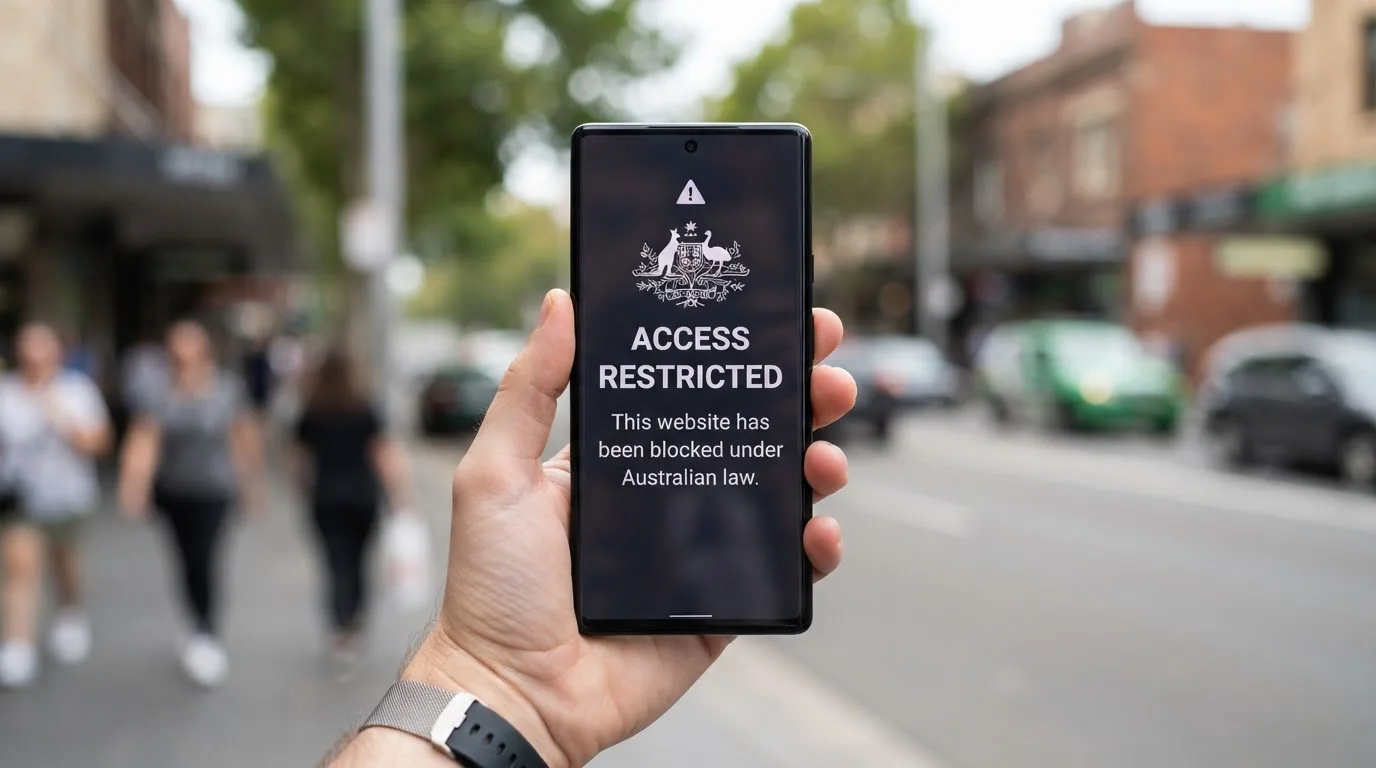
The relevant lines for a player who is reading about a first deposit bonus in Australia:
- The provider is the target, not the player. The Act is enforced against the company offering the service; an individual punter in Australia is not prosecuted for using it.
- No licence displayed on the casino site changes this. A Curaçao or Anjouan number on the footer of an offshore site is a licence to operate in that jurisdiction, not a permission to take Australian customers for casino games.
- An offshore casino is not connected to BetStop, the National Self-Exclusion Register that has been live since August 2023. The exclusion binds Australian-licensed wagering services only, so a self-excluded Australian who signs up with an offshore casino will not be stopped from doing so.
- An offshore casino gives no Australian consumer protection, no local complaints body, and no recourse if a withdrawal is refused or a balance is voided for a “bonus abuse” rule. The site can be blocked by an Australian ISP while a balance is still on it, and the operator is under no obligation to return it through an Australian channel.
The legal landscape is therefore the backdrop every other shelf in this guide reads against. A reader who wants a regulated Australian gambling experience is not short on options — licensed bookmakers, licensed pokies venues, and the land-based casinos in each state are a complete, lawful market — but none of those products is an online casino game, which is what a “first deposit bonus casino” is offering.
How the ACMA has enforced the prohibition
The Australian Communications and Media Authority investigates complaints, issues formal warnings to operators, and can direct Australian internet service providers to block illegal sites at the DNS level. The blocking tool has been in use since the first blocking request in November 2019, and the running total of blocked illegal gambling and affiliate marketing websites has reached 1,751 as of June 2026, with more than 230 unlicensed services having left the Australian market since 2017.
The most recent blocking round, reported on 26 June 2026, added twelve more sites: 7Signs, ChromaBet, Donbet, Duospin, Freshbet, Slots Gem, Jacks Club, Lucky Start, Pointsbetz.com, Spinrise, Vinyl Casino and Wildsino. Each name carries no judgement beyond the ACMA’s own action: these are not the worst of a market, they are the latest of a continuing process. The pace is steady, and the cumulative figure is what gives the picture its weight.
The blocking-rate of the ACMA’s enforcement is the arithmetic this page rests on. Taking the running total of 1,751 blocked sites and dividing it across the elapsed time from the first blocking request in November 2019 to the June 2026 snapshot — about six and a half years, or seventy-eight months — yields an average pace of roughly twenty-two sites blocked per month over the full window, with the early years slower and the recent rounds faster. That figure is the average, not a forecast: the monthly count has varied, some months see no new round, some see double-digit additions, and the cumulative curve is not a straight line. Read as a band, the rate sits between roughly fifteen and thirty sites per month across the life of the programme, and the upper end of that range is what the 2026 rounds have been hitting. The point for a reader is not the precise number; it is that the tool is being used on a continuous basis, and the pace has not slowed.
The ACMA also publishes formal warnings, which are the named actions a reader can look up. Each of the eleven operators covered later on this page has been the subject of one of those warnings, and each was warned for the same reason: offering prohibited interactive gambling services to people in Australia.
What is actually available to Australians who want to play
A reader who is in Australia and wants to gamble within Australian law has three live routes, none of which carries a first deposit bonus in the offshore-casino sense:
- Licensed bookmakers, registered in the Northern Territory or another jurisdiction, taking bets on racing and sport before the event. These are the operators behind the names most Australians already know: Sportsbet, Bet365, Ladbrokes, and the rest of the field. The product is wagering, not casino gaming, and the welcome credit is a different shape — a bonus bet, a deposit match against a racing bet — tied to a sporting outcome.
- Licensed pokies venues and land-based casinos in each state and territory. Clubs, hotels and casinos operate pokies under state regulation, and the major land-based casinos — Crown Melbourne, The Star Sydney, The Star Gold Coast, Crown Perth — operate under their own state licences. Membership is generally required for entry, age is verified at the door, and the welcome credit is the venue’s own loyalty program, not a deposit match.
- Lottery and keno products, run by the state lotteries and a small number of licensed operators, with draws published publicly and payout via registered channels.
A reader who wants to play online casino games for real money from inside Australia is, under the Interactive Gambling Act 2001, using a prohibited service. The remaining sections of this guide set out what is on the offer at offshore sites, how the payments around such offers work, and the responsible-gambling tools that apply only within the lawful parts of the market.
Money in and money out for first deposit bonuses pitched offshore
A first deposit bonus is only as good as the deposit that funds it. The mechanics of moving money between an Australian bank account and an offshore casino are not the same as moving money to a licensed bookmaker, and several Australian-specific frictions sit on the path.
Card payments and the credit-card ban
Since 11 June 2024, Australian-licensed online wagering services have been prohibited from accepting credit cards or credit-related products as payment, with penalties up to A$247,500 for operators who breach the rule. The restriction also catches linked digital wallets — Apple Pay, Google Pay, Samsung Pay — where the underlying funding source is a credit card. Apple Pay itself does not charge a consumer fee: any surcharge at the merchant comes from the card-processing fees that merchant pays its acquirer, not from Apple. The transaction limits and PIN requirements on Apple Pay are set by the card issuer or the merchant, not by Apple.
The Reserve Bank of Australia’s July 2025 review proposes removing surcharges only on eftpos, Mastercard and Visa transactions, leaving American Express outside the scope of the proposed surcharge ban — so an Amex transaction at any merchant, including a casino cashier, is still free to carry a surcharge. Amex itself is a three-party network, issuing its cards and processing the transactions itself rather than going through Visa or Mastercard’s four-party model; the company began life as a freight-forwarding business in 1850 and launched its first charge card on 1 October 1958.
None of that solves the underlying Australian rule: an offshore casino is not a “licensed online wagering service” within the meaning of the credit-card ban, and the ban does not directly prevent an Australian from depositing on an Amex or Visa credit card at an offshore cashier. What it does do is put every major Australian issuer in the position of deciding whether to authorise the transaction. Westpac’s gambling block works at card level: it refuses authorisation of transactions registered under the merchant category code “Betting/Casino Gambling” on eligible personal credit and debit cards. Commonwealth Bank offers a similar gambling lock in the CommBank app, with the same caveat that the bank cannot guarantee every gambling transaction will be stopped. ANZ’s gambling block, activated in the ANZ app, blocks gambling transactions made through a digital wallet such as Apple Pay on an eligible card, not just the physical card — and once turned on, removing it again requires a forty-eight-hour waiting period.
The practical effect: the deposit route that a credit card looks like at an offshore cashier is often the deposit route that an Australian bank declines at the authorisation step. A player who has not opted into a gambling block may still be declined on a per-transaction basis by their issuer’s gambling MCC filter, and there is no Australian consumer law that requires the bank to explain the decline.
Bank transfers, PayID and Osko
For a deposit that does not run through a card, an Australian customer is looking at a bank transfer. Australia’s New Payments Platform went live to the public on 13 February 2018 and is owned by New Payments Platform Australia Ltd, a non-profit whose thirteen shareholders include the Reserve Bank of Australia and the major banks. By April 2025, more than 25 million PayID identifiers had been registered on the platform, and PayID-based instant transfers are available at over one hundred Australian financial institutions.
Osko, the NPP’s real-time transfer service, settles a bank transfer between participating Australian banks in under a minute, twenty-four hours a day, seven days a week, addressed either to a BSB and account number or to a PayID. Paying to a PayID shows the name of the account holder before the transfer is sent, and the operator of the PayID system warns that being asked to transfer money to a PayID on an illegal gambling site almost certainly means a scam site.
AUSTRAC’s threshold-transaction-report rule, which requires reporting of transfers of A$10,000 or more, applies only to physical cash. Ordinary electronic bank transfers are not subject to that per-transaction reporting requirement, regardless of the amount sent. A bank can still flag a transaction for its own reasons — anti-money-laundering controls, account monitoring, gambling-block opt-ins — but the A$10,000 rule is not the trigger.
BPAY sits alongside bank transfer as a bill-payment rail. It is a service in online banking: the payer enters a Biller Code and a Customer Reference Number printed on the bill. BPAY has been operating in Australia since its launch on 18 November 1997, is available in the online banking of over one hundred and forty banks and financial institutions, and is offered by over ninety-five thousand businesses. It is run by Australian Payments Plus, the same operator as PayID and Osko, and is owned equally via Cardlink Services Limited by ANZ, Commonwealth Bank, National Australia Bank and Westpac.
BPAY is a bill-payment rail, not a casino-deposit rail. The closest a legitimate Australian player comes to using it for gambling is paying a betting account at a licensed bookmaker, where BPAY is one of the accepted deposit methods.
Mobile wallets and the share they take
By the end of 2025, Apple Pay, Google Pay and Samsung Pay collectively accounted for around forty-five per cent of all card payments in Australia by number. The dominant rail underneath those wallets is still the card network, so the credit-card ban and the issuer-level gambling blocks discussed above reach the wallet at the funding-card level rather than at the wallet itself. The wallet does not add a layer of consumer protection; it adds a layer of how the underlying card authorisation is presented to the merchant.
What the cashier at an offshore site actually looks like
An offshore casino cashier typically offers a deposit-card option, a bank-transfer option, and one or two e-wallets — Skrill, Neteller, ecoPayz — alongside a cryptocurrency option. The Australian-specific question is which of those rails will still be working by the time an Australian player tries to use them. The card rail may decline on issuer policy. The e-wallet option requires the player to have funded the e-wallet from an Australian source in the first place, and several e-wallets block gambling-related top-ups from Australian cards. The crypto option runs through a chain on which no Australian bank is the intermediary, and the player carries the conversion, the network fee and the on-chain traceability themselves.
The withdrawal side mirrors the deposit side in form and not in speed. A bank-transfer withdrawal from an offshore casino to an Australian account can take several business days once the casino’s internal “pending” period is cleared, and the pending period itself can run from forty-eight hours to a week. The PayID/Osko near-instant experience that an Australian player is used to at a domestic merchant does not carry across to an offshore operator; the operator controls when the funds are released, and the Australian banking system only handles the final leg.
Responsible gambling: what works in Australia, and what does not
The responsible-gambling infrastructure in Australia is built around Australian-licensed services. Three tools matter for a reader of this guide:
- BetStop, the National Self-Exclusion Register, has been live since August 2023. Registering with BetStop excludes a person from every Australian-licensed online and phone wagering service for a chosen period, with minimum three months and maximum life. The exclusion is enforced at the operator side: every Australian-licensed wagering service is required to check BetStop before allowing a new account or a new login. An offshore casino is not connected to BetStop, and registration with BetStop will not stop an offshore account from being opened.
- The National Gambling Helpline, 1800 858 858, is free, twenty-four hours a day, with web chat at Gambling Help Online. The line is for anyone affected by gambling harm in Australia, regardless of whether the gambling itself took place through a licensed service or an offshore one.
- The bank-level gambling blocks at Westpac, ANZ and Commonwealth Bank are the consumer-side controls that operate regardless of which service the customer is using. They are imperfect — the banks state that not all gambling transactions will be blocked, and some non-gambling transactions may be blocked in error — but they are the most consistently applied Australian-layer tool available to a player who wants to slow themselves down.
The gap between what the Australian responsible-gambling infrastructure covers and what an offshore casino offer covers is the single largest practical difference between the two. A licensed Australian bookmaker sits inside all three layers. An offshore casino sits inside none of them.
The ACMA’s published record against operators offering first deposit bonuses to Australians
The eleven operators below are not a ranking and not a recommendation. Each is named because the ACMA itself has issued a formal warning against the company behind it for offering prohibited interactive gambling services to people in Australia. The page cannot ship a “best first deposit bonus casino” comparison for a product that is prohibited under Australian law; what it can ship is the ACMA’s own published record, which is the source that a reader checking any of these names against an Australian register will meet first.
| Brand | ACMA action and date | Operator named by the ACMA | Subject support |
|---|---|---|---|
| RocketPlay | Formal warning, March 2026; earlier warning to Dama N.V., May 2022 | Pulsup Ltd (Rocketplay.com.au) | listings-only |
| Level Up Casino | Formal warning, May 2022 | Dama N.V. | listings-only |
| Woo Casino | Formal warning, March 2025 | Dama N.V. | — |
| Spirit Casino | Formal warning, May 2025 | Dama N.V. | — |
| National Casino | Formal warning, July 2025 | Consolutetish S.R.L. | listings-only |
| Bizzo Casino | Formal warning, July 2025; earlier warning, 2022 | Consolutetish S.R.L. (and earlier TechSolutions) | listings-only |
| Ignition Casino | Formal warning, July 2025 | Bamboo Media | — |
| Instant Casino | Formal warning, February 2025 | EOD Code SRL | listings-only |
| Jackbit | Formal warning, April 2026 | Ryker B.V. | — |
| Casino Intense | Formal warning, April 2025 | Sterplay Holding Ltd | listings-only |
| Sky Crown | Formal warning, September 2022 | Hollycorn N.V. | — |
The “subject support” column is what the broader industry listings report about each brand, not what the brand itself claims. A cell reading “listings-only” means the name appears on third-party listings that aggregate offshore casinos, with the implication being that a brand which is the subject of an ACMA warning is also the subject of listings that pitch it to Australian readers. The em-dash cells are brands the listings do not cover at all in the available sources, and the page leaves them out of the comparison rather than fill the gap with an unsourced claim.
What the table cannot show is the through-line. Dama N.V. is the operator named against four of the eleven brands on this page — RocketPlay (via the earlier 2022 warning), Level Up Casino, Woo Casino and Spirit Casino — across a four-year span of formal warnings. Consolutetish S.R.L. is named against two of them — National Casino and Bizzo Casino — in the same July 2025 warning round, with Bizzo Casino having been warned separately in 2022 against TechSolutions. The same operator appearing against multiple brands is not unusual in the offshore market, where a single licence-holding company runs a stable of casino brands under different front-end names; what the ACMA’s record shows is that warning one front-end does not necessarily bring down the others, and the warnings have to be issued brand by brand.
RocketPlay
RocketPlay is the most recently warned brand on this list. The ACMA issued a formal warning to Pulsup Ltd over Rocketplay.com.au in March 2026, in addition to the earlier May 2022 warning to Dama N.V. that named RocketPlay among six brands. The combination is unusual: a brand that has been the subject of an ACMA formal warning, continued to operate, and was the subject of a second, separately-named warning four years later. Industry listings still carry the brand. The verdict for a reader is the one the legal section above already delivers: an offshore casino cannot be licensed in Australia for the products it is offering, and the ACMA’s record against this brand is the most public version of that fact.
Level Up Casino
Level Up Casino is named in the May 2022 warning to Dama N.V., one of six brands covered in that round. The brand still appears on industry listings. The picture is the standard one for an offshore brand that has been warned under the Interactive Gambling Act 2001: a continuing presence in third-party listings, no Australian licence, no connection to BetStop, and the ACMA’s formal warning on the public record. A reader who sees the brand advertised with a first deposit bonus is seeing the product the Act prohibits being marketed.
Woo Casino
Woo Casino is named in the March 2025 warning to Dama N.V. The warning is one of two Dama N.V. warnings in 2025, the other being the May 2025 warning over Spirit Casino. The Dama N.V. pattern — a licence-holding company running multiple casino brands, each warned separately — is what brings Woo Casino into this list rather than any independent feature of the Woo Casino offering. Industry listings do not cover this operator, and no further details are publicly available.
Spirit Casino
Spirit Casino is named in the May 2025 warning to Dama N.V., the second Dama N.V. warning of 2025 alongside Woo Casino. Like Woo Casino, the brand is absent from industry listings, leaving the ACMA’s warning as the only official record.
National Casino
National Casino is named in the July 2025 warning to Consolutetish S.R.L., alongside Bizzo Casino. The warning round is one of two that month: the other is the warning to Bamboo Media over Ignition Casino. National Casino appears in industry listings, and the brand is one of the more visible offshore casinos pitched to Australian readers. The warning puts it on the same legal footing as every other brand in this table: a prohibited interactive gambling service being offered to people in Australia.
Bizzo Casino
Bizzo Casino is named in the July 2025 warning to Consolutetish S.R.L., alongside National Casino, and was the subject of an earlier formal warning in 2022 against TechSolutions (CY) Group Limited and TechSolutions Group N.V. The two warnings, three years apart, against two different operating-company names, are the most concrete published evidence of brand-and-operator continuity on this page. The brand appears in industry listings.
Ignition Casino
Ignition Casino is named in the July 2025 warning to Bamboo Media, one of two warnings in that month’s round. Third-party listings do not include this name; the ACMA warning serves as the only public verification of its status.
Instant Casino
Instant Casino is named in the February 2025 warning to EOD Code SRL. The brand appears in industry listings, and is one of the more visible names on affiliate pages. The warning puts it on the same legal footing as the rest of this list.
Jackbit
Jackbit is named in the April 2026 warning to Ryker B.V., alongside CasinOK. This operator is absent from industry listings, making the public ACMA notice the primary documentation of the brand’s position.
Casino Intense
Casino Intense is named in the April 2025 warning to Sterplay Holding Ltd. The brand appears in industry listings.
Sky Crown
Sky Crown is named in the formal warning to Hollycorn N.V. published in September 2022, alongside Blue Leo. Publicly available industry listings do not track this brand.
What a reader in Australia should actually do with this guide
The legal section above already sets out the position. The repetition that matters for the reader is the practical shape of the choice, not the law’s restatement.
A reader who wants to gamble online from Australia within Australian law has the licensed-bookmaker route for racing and sport, the licensed-pokies and land-based casino route for pokies and table games, and the lottery and keno route for those products. None of those routes carries a first deposit bonus in the offshore-casino sense, and each of them carries the consumer protections that the offshore route does not — a regulator, a complaints body, a self-exclusion register, and a deposit route through Australian banking channels that does not depend on the operator’s discretion.
A reader who is drawn to an offshore casino’s first deposit bonus is being drawn to a product the Interactive Gambling Act 2001 prohibits the operator from supplying to Australians. The bonus itself may be paid out, in part or in full, by an offshore operator that the ACMA has already moved against; the operator may continue to operate under a different front-end name while the warning round proceeds; the player’s deposit may travel through a card authorisation that an Australian bank declines, a wallet that an Australian bank declines, or a crypto rail that no Australian bank touches; and the player’s balance may be locked up by a max-cashout cap, a game-weighting rule, or a “bonus abuse” finding once the wagering is met. None of those are edge cases. They are the standard terms, and they are the standard outcomes.
The reader’s practical checklist is short. Read the ACMA’s formal-warning register before signing up with any operator whose name appears on this page or in the broader industry listings. Register with BetStop if the gambling is no longer fun. Call the National Gambling Helpline on 1800 858 858, free and twenty-four hours a day, if the gambling is causing harm. And take the licensed-bookmaker, licensed-venue and lottery routes as the Australian-market alternative to the offshore first deposit bonus — because they are the only routes the Act permits.
Frequently asked questions about first deposit bonuses in Australia
What is a first deposit bonus, and how does it differ from a no-deposit bonus?
A first deposit bonus is welcome credit a casino extends once a new account holder makes their first deposit — usually a percentage match, often paired with free spins on a named slot. A no-deposit bonus is the same kind of credit, with the same wagering, weighting and max-cashout rules attached, but credited on sign-up without requiring a deposit. The deposit version is larger; the no-deposit version is smaller and tighter.
Do first deposit bonuses usually carry wagering requirements?
Yes. The bonus — or the bonus plus the deposit — has to be turned over a stated number of times on eligible games before any of it can be cashed out. Forty times is a familiar figure, twenty is the friendlier end, anything above fifty is steep against the rest of the offshore market. Game weighting and time limits are standard additions.
Is it legal for an online casino to offer Australians a first deposit bonus?
No. The Interactive Gambling Act 2001, as amended in 2017, prohibits the supply of online casino games and online pokies to a person in Australia, and no state or territory issues a licence for those products. The Act targets the provider rather than the player; an offshore casino offering a first deposit bonus to an Australian is offering a prohibited service.
Can a first deposit bonus be withdrawn immediately after it is credited?
Almost never. The bonus is credited as a non-withdrawable balance until the wagering requirement is met, the time limit has not expired, the game-weighting rules have been respected, and any max-cashout cap has not been breached. A withdrawal attempt before those conditions are met typically forfeits the bonus.
What should someone read before accepting a first deposit bonus offer?
The wagering multiplier, the game-weighting list, the time limit, the max-cashout cap, the deposit-method eligibility, and the “bonus abuse” definition. Each is the term that turns the headline figure into the actual cost of clearing the bonus, and each is the term an offshore operator is most likely to enforce strictly when the player tries to withdraw. See also High roller casino bonuses for Australian players .
Does a bigger first deposit bonus automatically mean better value?
No. A 200% match to a low ceiling with forty times wagering and no max-cashout cap can be worth more than a 500% match to a higher ceiling with seventy times wagering and a low max-cashout cap. The headline percentage is the figure the marketing copy leads with; the wagering multiple, the cap and the weighting are the figures that decide what the player walks away with.