
Best RTP slots Australia: reading the number honestly in 2026
Return-to-player is the one number a slot advertises loudly, and the one most often used to dress up an offshore offer as if it were a sound investment. A 96.5% RTP sounds like almost-free play. It isn’t. The number is an average across millions of spins, paid back as a percentage of money wagered — never of money deposited — and the operator’s edge sits in the gap between it and 100. That gap is small in percentage terms, persistent in dollar terms, and invisible in a single session.
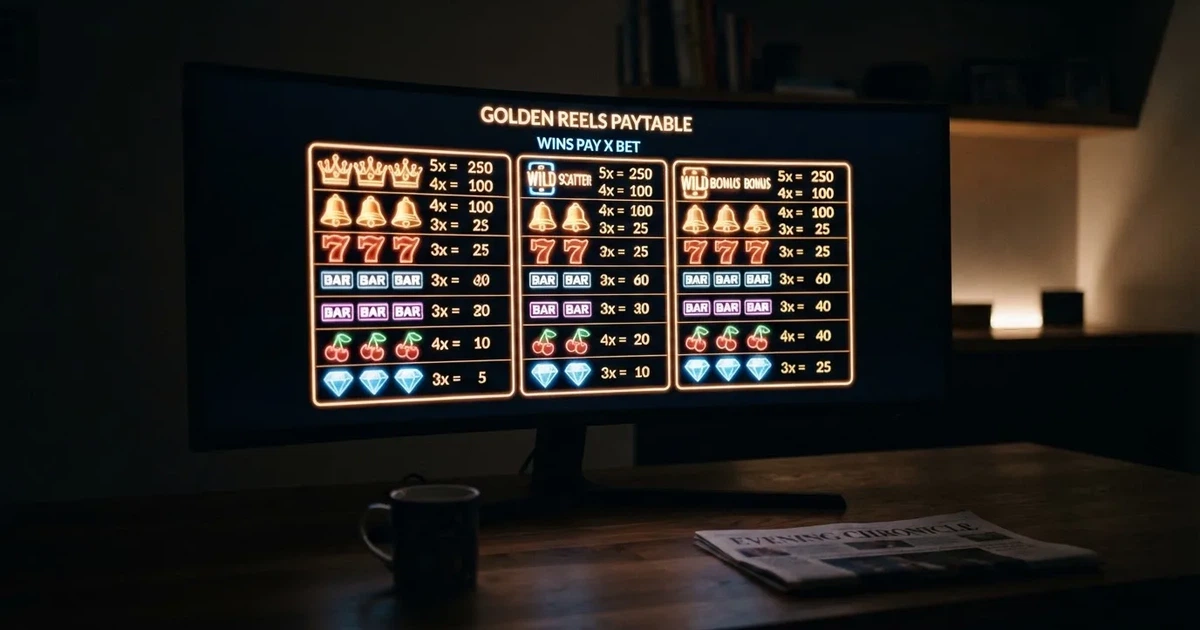
This page works through what RTP actually is, where the figure comes from, and what it costs a player who reads it the way the marketing wants them to. The Australian angle is not a footnote. Online casino games and online pokies cannot be licensed in this country. The Interactive Gambling Act 2001 closes that door, and the Australian Communications and Media Authority (ACMA) has been issuing formal warnings and ordering internet service providers to block offshore sites for years. So the “best RTP slots” advertised online are, by and large, products that Australian law treats as prohibited — and the RTP figure is the principal sales pitch for a service the regulator has already had a say on.
29 October 2026 — verified against the ACMA register of formal warnings and the 26 June 2026 blocking round.
Table of Contents
- What RTP actually is, and what it isn’t
- The Australian legal frame
- The cost of chasing a high RTP offshore
- Player protection, and where it ends
- Where the high-RTP slots actually live — and who runs them
- Reading the offers honestly
- The shelf of pokies, in numbers
- Comparing what high RTP really gives a player
- A reader-side checklist before any deposit
- Frequently asked questions
What RTP actually is, and what it isn’t
RTP is short for return-to-player. It is the share of total money wagered on a slot that the game is programmed to return to players, on average, across a very large number of spins. A slot at 96% RTP will, over millions of simulated spins, return A$96 for every A$100 put through it. The other A$4 is the house edge — the operator’s cut, baked into the math.

That figure is calculated, not measured. Game developers submit their math models to independent testing houses — names like eCOGRA, GLI, iTech Labs and BMM Testlabs come up across the industry — and those labs run simulations of tens or hundreds of millions of spins to verify that the long-run return matches what the developer claims. The figure on a game’s paytable or info page is therefore a designed parameter, audited before release. It is not a live statistic of what real players have experienced, and it does not update as people play.
The figure also says nothing useful about a single session. A player who sits down for an hour at a 96% RTP slot will almost certainly see something far away from 96% — a brutal run can return nothing, and a lucky streak on a single bonus feature can return many times the stake. RTP describes the average, the average takes millions of spins to converge, and a person playing for an evening is a sample of a few hundred. The arithmetic works; the experience almost never matches it.
Volatility is the other half of the picture and gets less attention than RTP for a reason: it is harder to put on a poster. A high-volatility slot pays out rarely but in larger chunks. A low-volatility slot pays out often but in smaller chunks. Two slots at 96% RTP can feel completely different to play — one punter might grind small wins for an hour, another might watch the balance drain and then hit a feature that triples it. The math averages out over time; the path to the average is what the player actually walks.
Where the figure sits, and where it doesn’t
A game’s published RTP sits in its information panel, usually reached from a paytable or help button. It is the same number across every licensed venue the game runs in, because the math is the same. What changes between venues is not the slot’s RTP but what sits around it: the bonus terms, the wagering requirements, the payment friction, the dispute pathway if a withdrawal is refused.
The figure does not sit on Australian-licensed electronic gaming machines, the ones in clubs, hotels and casinos commonly called pokies. Those machines are regulated under state and territory law, and disclosure of an RTP figure on the machine itself is not a uniform requirement. New South Wales publishes return-to-player figures for its gaming machines through Liquor & Gaming NSW, and players can ask staff for the published RTP of a particular machine. That is a different conversation from the offshore “best RTP slots” pitch, and the rest of this page makes a point of keeping them separate.
Why the number can drift between two versions of the same theme
A single slot can ship with more than one RTP setting. The reels and bonus features are identical; the symbol weights have been rebalanced to alter the hit rate, the feature frequency, or the average return. This is why two casinos might advertise the “same” game at 96.5% and at 94%, and why a quick check of the help screen matters before settling in. Operators in jurisdictions that cap minimum return — Nevada at 75%, New Jersey at 83%, Mississippi at 80% — typically run the higher setting because they have to; offshore operators often run whichever setting pays them more.
The practice is not a fraud. The math is auditable, and labs certify each configuration separately. It is, however, a choice the operator makes, and the figure the player sees depends on which configuration the operator has selected. A slot’s RTP is a property of the game as deployed, not a property of the game as named.
The Australian legal frame
Australia’s online gambling market is split down the middle. On one side sit licensed products: wagering on racing and sport (placed before the event, never in-play), lotteries and keno. On the other side sits everything else — online casino games, online pokies, in-play betting — and that other side is prohibited.
The Interactive Gambling Act 2001 is the law that draws the line. Strengthened by the Interactive Gambling Amendment Act 2017, it makes it an offence to provide online casino games or online pokies to a person physically in Australia. No state or territory licenses these products. The minimum age for any licensed gambling product is 18.
The Northern Territory Racing and Wagering Commission is the regulator most Australians never see but most licensed online bookmakers answer to. It licenses 52 of Australia’s online bookmakers — Sportsbet, Bet365, Ladbrokes among them — because the Territory charges lower licence fees than the larger states. The commission itself has no full-time staff and meets once a month in Darwin. That oddity is now under review; an ABC report from April 2026 covered a bill aimed at reforming what the headline called a de facto regulator.
What the ACMA has actually done
The ACMA investigates, issues formal warnings, and directs Australian internet service providers to block illegal sites. As of June 2026 the agency reported that 1,751 illegal gambling and affiliate marketing websites had been blocked since the first blocking request in November 2019. The same reporting noted that more than 230 unlicensed gambling services had voluntarily left the Australian market since enforcement was stepped up in 2017. The most recent round reported on 26 June 2026 added another 12 names to the block list — 7Signs, ChromaBet, Donbet, Duospin, Freshbet, Slots Gem, Jacks Club, Lucky Start, Pointsbetz, Spinrise, Vinyl Casino and Wildsino.
Formal warnings are the ACMA’s middle step, sitting between an investigation and a block request. They name the operator behind the brand and the date of issue, and they are published on the ACMA website. The list over the past two years is long, and several names reappear under different corporate entities. Dama N.V. was warned in May 2022 over six casino brands — Bambet, Dazard, Level Up, Rocketplay, Wild Tornado and Cobra Casinos — and was warned again in March 2025 over Woo Casino and in May 2025 over Spirit Casino. Bizzo Casino was the subject of a 2022 warning to TechSolutions, and a fresh warning followed in July 2025 against Consolutetish S.R.L. covering both National Casino and Bizzo Casino. The pattern is one company cycling through corporate shells while the underlying offer to Australian customers stays much the same.
The IGA targets the provider, not the player. An Australian who opens an account at an offshore casino is not committing an offence. The site is. That distinction does not, however, give the player any consumer protection: no Australian complaints body has jurisdiction, no local court has a straightforward path to a frozen balance, and the site can be blocked in Australia with money still on the account. The advertising pitch of “best RTP” rarely mentions that the site can be made unreachable from inside Australia with a regulator’s pen-stroke.
The 2026 reform bill, and what it doesn’t yet do
The Interactive Gambling Amendment (Gambling Reform) Bill 2026 passed Parliament on 19 August 2026. Its advertising and inducement measures commence on 1 January 2027. As of 2026 it is a law with a start date, not a regime that has begun. Mentioning it here is honest about the direction of travel; treating it as the current rule would not be.
The cost of chasing a high RTP offshore
The RTP figure is the headline; the price is everything else. A punter who opens an offshore casino chasing a 96.5% slot is paying in three layers the headline does not show.
The first layer is the house edge itself. At 96.5% RTP, every A$100 wagered returns A$96.50 in the long run. The other A$3.50 stays with the house. Over an evening’s play — say A$200 wagered across 800 spins — the expected loss under that RTP is roughly A$7. That is the average, and a single session will not hit it. But it is the cost the math says the player is paying for the entertainment.
The second layer is the bonus. Offshore casinos tie welcome packages to wagering requirements — typically 35x to 50x the bonus amount — that the player must clear before any winnings become withdrawable. The headline RTP applies to the wagering, not to the bonus. A bonus with a 40x requirement on a 96% slot still costs the player the 4% house edge on every spin through the requirement, on top of any time and deposit the clearing eats. The marketing word for this is “free”; the arithmetic is the same 4%.
The third layer is the absence of recourse. If the offshore casino declines a withdrawal, or voids winnings on a bonus-rule technicality, or simply stops answering email, the player has no Australian body to complain to. The ACMA’s enforcement action blocks the site; it does not arbitrate the disputed withdrawal. The cost here is uncertain and unbounded — a player can do everything right and still end up unable to recover their balance.
What an Australian punter actually has access to
The licensed alternative is not a casino product; it is wagering on races and sport, lotteries, and keno. Pokies exist as electronic gaming machines in clubs, hotels and casinos, not as an online product. The H2 Gambling Capital 2025 estimate put Australian losses to illegal gambling sites at about A$3.9 billion a year, and reported that the share of gambling going through legal channels had fallen from 74% in 2021 to 64%. That shift is the offshore market the ACMA’s enforcement is aimed at, and the “best RTP slots” pitch is part of how it grew.
For a player who wants a slot-style game in a licensed setting, the only legal option is a poker machine in a physical venue. Those venues publish their own return-to-player figures through the relevant state regulator — for New South Wales, Liquor & Gaming NSW publishes machine-level RTP data; other states publish similar information on request. The experience is regulated, the math is audited, and the consumer protection pathway exists. The selection of themes and the feel of the game is narrower than an offshore lobby. That is the trade-off the law has decided on.
Player protection, and where it ends
BetStop, the National Self-Exclusion Register, has been live since August 2023. It binds every Australian-licensed online and phone wagering service, which means it covers the licensed bookmakers and lottery products — the legal side of the market. It does not bind an offshore casino. A punter who registers with BetStop closes their account with the licensed bookmakers; the offshore site they also play at sees nothing of it.
The National Gambling Helpline is 1800 858 858, free, 24 hours a day, with web chat at Gambling Help Online. State-level services exist alongside it. These are the right numbers to call, and the right services to use, whether the gambling is licensed or not.
The protections extend to payments in a way that is easy to miss. Since 11 June 2024, credit cards, credit-related products and digital currency cannot be used to pay for licensed online wagering in Australia, with penalties for operators up to A$247,500. Legal deposit routes are debit card, bank transfer, PayID/Osko and BPAY. A casino asking an Australian player for a credit card or a crypto deposit is, on this evidence, operating outside the Australian rules — the payment friction alone is a flag.
A practical note for anyone reading this in distress: the helpline and BetStop cover more than the offshore problem. They cover the licensed side too. They are the right place to start regardless of where the gambling happens.
Where the high-RTP slots actually live — and who runs them
The slots themselves are products of a relatively small set of game studios. Pragmatic Play, NetEnt, Microgaming, Play’n GO, Evolution (for live dealer), Big Time Gaming, Push Gaming, Nolimit City and Hacksaw Gaming are the names that recur across the major lobbies. Each publishes RTP figures for its games, often with two or three configurations per title — the developer picks a default and a lower-cost-to-operator alternative, and the casino chooses which to run.
The same games run across dozens of casinos, and that is the source of the comparison problem. A punter looking at two sites sees the same slot name and, often, the same RTP figure — but the two sites are different companies running different bonus structures, different payment terms, and different complaint histories. The slot is the constant; the offer wrapped around it is not.
The ACMA enforcement record, in one place
The featured brands below all sit on the ACMA’s published list of formal warnings. The list is not a ranking and not a recommendation — these are brands the ACMA itself named in formal warnings for offering prohibited online casino services to people in Australia. Reading the column for a brand is not a route to playing there; it is a record of what the regulator has already said about each one.
| Brand | ACMA action and date | Operator named by the ACMA | Subject support |
|---|---|---|---|
| RocketPlay | Formal warning, March 2026 (Pulsup Ltd); earlier warning to Dama N.V., May 2022 | Pulsup Ltd (Rocketplay), with prior Dama N.V. action | — |
| Level Up Casino | Formal warning, May 2022 | Dama N.V. | listings-only (Bgaming) |
| Woo Casino | Formal warning, March 2025 | Dama N.V. | — |
| Spirit Casino | Formal warning, May 2025 | Dama N.V. | — |
| National Casino | Formal warning, July 2025 | Consolutetish S.R.L. | listings-only (en.wikipedia.org) |
| Bizzo Casino | Formal warning, July 2025 (Consolutetish S.R.L.); earlier warning to TechSolutions, 2022 | Consolutetish S.R.L., with prior TechSolutions action | — |
| Ignition Casino | Formal warning, July 2025 | Bamboo Media | — |
| Instant Casino | Formal warning, February 2025 | EOD Code SRL | — |
| Jackbit | Formal warning, April 2026 | Ryker B.V. | — |
| Casino Intense | Formal warning, April 2025 | Sterplay Holding Ltd | listings-only (ABC, acma.gov.au, Crown Melbourne) |
| Sky Crown | Formal warning, September 2022 | Hollycorn N.V. | — |
The pattern across the table is what the ACMA has been saying for years: the same operator names cycle through. Dama N.V. appears four times across different brands and different years. Consolutetish S.R.L. took over the National Casino and Bizzo Casino accounts from TechSolutions in 2025. Hollycorn N.V.’s September 2022 warning over Sky Crown and Blue Leo sits among the earlier actions. The casino brands change; the underlying corporate picture is smaller than the brand list suggests.
A note on the ACMA enforcement rate
Since the ACMA’s first blocking request in November 2019, the agency has directed Australian ISPs to block 1,751 illegal gambling and affiliate marketing websites — a figure reported in June 2026. Spread across roughly 80 months, that is an average of about 22 sites blocked per month. The pace is not slowing: the 26 June 2026 round alone added 12 names, including several — Wildsino, Vinyl Casino, Spinrise — that did not exist in this form when the first round ran. The blocking rate has stayed in the low-twenties per month across the period, with some months higher and some lower; on average the ACMA is closing roughly one illegal site every day and a half, and the new sites coming online keep pace with the old ones being blocked.
What this means for a player is straightforward. The “best RTP slots” pitch is not a static list — it is a moving target of brands that open, advertise heavily, attract Australian deposits, get warned, get blocked, and get replaced by the next name. The brand the marketing reached a reader through this month may not be reachable next month. The RTP figure on the slot is the same; the operator behind it is not.
Reading the offers honestly
A high RTP figure is a piece of information. It is not a reason to deposit. The number tells a player what the long-run return is — useful as one input among several, and only when the player knows the wagering requirements, the bonus cap, the withdrawal terms, and the regulatory standing of the operator behind it.
For an Australian reader, the most useful comparison is not between two offshore casinos advertising similar RTPs. It is between the offshore offer and the licensed alternative. The licensed alternative does not include online pokies. That is a hard constraint set by the Interactive Gambling Act, not a gap the market will close on its own. The offshore offer exists because it is outside the Australian licence regime, and that is also why it carries no Australian consumer protection.
A punter who wants to play slots legally in Australia is choosing between a poker machine in a club, hotel or casino, with regulated RTP and consumer protection, and not playing online at all. A punter who chooses the offshore route is choosing an offer that the regulator has repeatedly intervened against, that can be blocked with a balance on it, and where the only arithmetic the operator publishes is the figure most flattering to them. The math works the same way on both sides. The protection does not.
The shelf of pokies, in numbers
For a reader who wants a sense of scale, the Australian pokies landscape is large and lopsided. The most recent available counts of gaming machines outside casinos: New South Wales 87,298 (June 2023), Victoria 26,380 (2021–22), Queensland 21,122 (October 2023), South Australia 11,672 (September 2023) and the ACT 3,587 (November 2023). New South Wales has legalised slot machines since 1956. The national total of machines outside casinos was estimated at 97,103 by 2010 — a per-capita rate roughly five times that of the United States.
These are physical machines, not online products. They are the legal path for an Australian who wants to play a slot. They are also the path the IGA does not cover, because the IGA’s prohibition is on the online provision of casino-style games. A punter walking into a licensed club in Sydney and putting a note into a poker machine is doing something the offshore “best RTP slots” page is not, by law, allowed to offer them online.
The rest of the slots universe — the one the offshore pitches are selling — is the universe the ACMA’s block list is aimed at. The two worlds do not meet on an Australian’s screen without a workaround, and the workaround is the legal risk the offshore operator is absorbing in exchange for the deposit.
Comparing what high RTP really gives a player
Two slots at 96% RTP can be very different experiences. The figure does not say how often a feature lands, how big the top prize is, or how long a typical losing streak runs between payouts. That is the volatility question, and the answer is what a player actually feels.
A low-volatility 96% slot pays out often, in small amounts, and a session looks like a long slow drift. The balance moves down on average, but it moves down in small steps with frequent small wins to soften the landing. A high-volatility 96% slot pays out rarely, in larger amounts, and a session can be a long flat stretch followed by a single feature that returns many times the stake — or does not, and the player walks away with nothing. The math converges in both cases. The path does not.
For a player with a small bankroll who wants a longer session, a low-volatility game is the kinder choice — the balance survives long enough for the average to express itself. For a player chasing a big payout and willing to absorb a long cold stretch, a high-volatility game is the right shape. The RTP figure on both is identical; the experience of playing them is not.
What the marketing leaves out
“Best RTP” is the pitch. The reality of an offshore slot is that the figure is set by the developer, audited by an independent lab, and run in a configuration chosen by the casino. The punter does not pick the configuration. The casino does. A 96.5% setting and a 94% setting of the same game both have a published RTP; the player will not necessarily see which one is in front of them without checking the help screen. The casino’s incentive is the lower figure. The marketing incentive is the higher figure. These do not always line up.
A second thing the marketing leaves out is the bonus clearing cost. A 40x wagering requirement on a welcome bonus means 40 times the bonus amount must be put through the wagering before any winnings become withdrawable. The RTP figure applies to those spins. At 96% RTP, a 40x requirement on a A$100 bonus costs A$160 in expected house edge across the clearing volume — A$4,000 in total wagers, with the house keeping roughly 4%. The bonus is not free. The RTP figure did not change. The arithmetic just ran.
A reader-side checklist before any deposit
Three things are worth checking before any deposit, offshore or otherwise.
The first is the regulator’s record. The ACMA publishes formal warnings by name and date. A brand on the list is one the regulator has already acted against for offering prohibited services to Australians. The list does not say whether the brand is honest or dishonest — only that the regulator has already said it should not be offering what it offers to Australian customers. That is information.
The second is the game’s RTP and its configuration. The information panel of the slot itself shows the figure. Two configurations of the same game can differ by 2 or 3 percentage points, and the player can only see which is running by checking that panel. The marketing page almost never volunteers this.
The third is the payment method. Since 11 June 2024, credit cards and crypto have not been legal deposit routes for licensed Australian wagering. A casino asking for either is, by definition, operating outside the Australian rules. That is information too.
What to do when something goes wrong
If a withdrawal is refused, the first step is the casino’s own complaints process — written, not by chat, and with the response kept on file. The second step, for a licensed Australian product, is the relevant state or territory regulator or an external dispute resolution scheme the operator is signed up to. For an offshore casino, there is no equivalent. The ACMA’s role is to enforce the prohibition, not to arbitrate the dispute.
The right service to contact, at any point, is the National Gambling Helpline on 1800 858 858, or Gambling Help Online. BetStop covers the licensed side of a person’s gambling and is the right self-exclusion route for Australian-licensed products.
Frequently asked questions
How is a slot’s RTP percentage calculated over the long run?
RTP is calculated from the math model the developer builds for the game — symbol weights, reel layouts, paytable values and feature frequencies — and verified by independent testing laboratories that simulate tens or hundreds of millions of spins. The figure is the average return as a share of money wagered, not deposited, and it converges on that share across the simulation. A single session’s results will almost never match the figure; the average takes millions of spins to express itself.
Does a slot’s RTP figure guarantee any result over a single session?
No. RTP is an average over a very large number of spins, and a session of a few hundred spins is too small a sample for the average to dominate. A single session can return many times the stake or nothing at all. The figure describes what would happen if the same game were played millions of times by millions of players, not what will happen in any one of those sessions. Treating the figure as a session guarantee is the most common reading error on slot paytables.
Are RTP figures independently tested before a slot is released?
Yes. Labs like eCOGRA, GLI, iTech Labs and BMM Testlabs run simulations of new games to verify that the long-run return matches what the developer claims, and they re-test when the developer releases a new configuration of the same game. The certification is what allows a casino to advertise a specific figure with confidence. A figure without an independent certificate is a claim, not a verified fact.
How many licensed gaming machines operate outside casinos in Queensland compared with New South Wales?
The most recent available counts: 21,122 gaming machines outside casinos in Queensland (October 2023) and 87,298 in New South Wales (June 2023). New South Wales operates roughly four times as many non-casino machines as Queensland, reflecting the longer history of legalised poker machines in that state. Victoria sits between them, with 26,380 machines in 2021–22.
Why do two slots with the same theme sometimes carry different RTP figures?
A single game can ship in more than one configuration. The reels, features and theme are identical, but the symbol weights have been rebalanced to alter the hit rate or the average return. The casino chooses which configuration to run, and the figure the player sees depends on that choice. Two casinos advertising the same themed slot can legally offer it at 96.5% and at 94%, and the only way to know which is in front of you is the help screen on the game itself.
Can a player request the RTP figure for a specific licensed pokies machine in Australia?
Yes. In New South Wales, Liquor & Gaming NSW publishes return-to-player data for gaming machines, and venue staff can provide the published RTP for a particular machine on request. Other states publish similar information through their own gambling regulators. The figure is part of the machine’s compliance record. An offshore online casino, by contrast, has no equivalent obligation to disclose the configuration it is running, which is why checking the game’s own information panel matters more there than in a licensed venue.