
Best online casino with high cashback bonus australia 2026: the legal gap between the offer and the player
A reader searching for a “best online casino with high cashback bonus australia 2026” usually expects a tidy shortlist, an attached bonus percentage and a deposit button. The first thing this page has to do is refuse that expectation on its own terms. Under the Interactive Gambling Act 2001, offering online casino games — pokies, roulette, blackjack, anything that is not a pre-event wager — to a person physically in Australia is a prohibited service. No state or territory licenses it. The Australian Communications and Media Authority (ACMA) has spent the last several years warning the offshore operators who target Australian accounts anyway, and the brand names below are the ones it has acted against. A reader who arrived here expecting a place to play cannot be handed one. What a reader can be handed is the picture of how that gap is enforced, what the marketing around “high cashback” actually says once you read the terms, and where the lawful alternatives sit. Best online casino with high cashback bonus australia 2026 — More on this topic at crypto casino au .
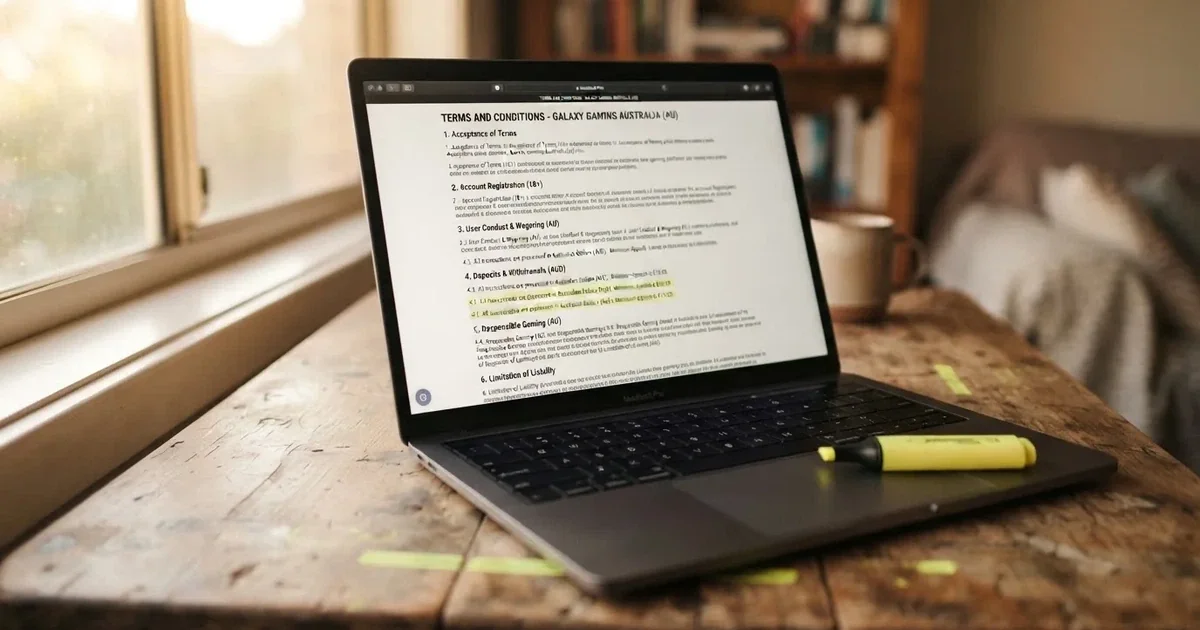
Current as of 29 October 2026 against the ACMA’s public register of formal warnings and blocking requests.
Table of Contents
- The brands the ACMA has acted against, side by side
- The legal landscape a “cashback casino” sits inside
- Player protection tools that actually work in Australia
- Crypto, digital wallets and the payment rails
- What “high cashback” actually means once you read the terms
- Operator write-ups
- The arithmetic of the ACMA’s blocking rate
- What a reader in Australia can actually do
- Frequently asked questions
The brands the ACMA has acted against, side by side
The eleven brands below are not a recommended shortlist. They are the operators the ACMA has itself named in formal warnings or blocking requests under the Interactive Gambling Act 2001. A reader who sees one of these names advertised as “cashback-friendly” or “Australian-friendly” should read the line beneath the marketing. None of them holds an Australian licence for online casino games, because no such licence exists.

| Brand | ACMA action and date | Operator named by the ACMA | Subject support |
|---|---|---|---|
| RocketPlay | Formal warning, March 2026 (Pulsup Ltd); earlier Dama N.V., May 2022 | Pulsup Ltd | Cashback listed by affiliate sources only — not an operator-published term |
| Level Up Casino | Formal warning, May 2022 | Dama N.V. | Cashback listed by affiliate sources only — not an operator-published term |
| Woo Casino | Formal warning, March 2025 | Dama N.V. | — |
| Spirit Casino | Formal warning, May 2025 | Dama N.V. | — |
| National Casino | Formal warning, July 2025 | Consolutetish S.R.L. | Cashback listed by affiliate sources only — not an operator-published term |
| Bizzo Casino | Formal warning, July 2025 (Consolutetish S.R.L.); earlier TechSolutions, 2022 | Consolutetish S.R.L. | Cashback listed by affiliate sources only — not an operator-published term |
| Ignition Casino | Formal warning, July 2025 | Bamboo Media | — |
| Instant Casino | Formal warning, February 2025 | EOD Code SRL | Cashback listed by affiliate sources only — not an operator-published term |
| Jackbit | Formal warning, April 2026 | Ryker B.V. | — |
| Casino Intense | Formal warning, April 2025 | Sterplay Holding Ltd | Cashback listed by affiliate sources only — not an operator-published term |
| Sky Crown | Formal warning, published September 2022 | Hollycorn N.V. | — |
The “Subject support” column is honest in a way a typical bonus comparison is not. Where research could only find the offer described on affiliate marketing listings rather than on the operator’s own published terms page, the cell says so. Where no reliable listing or operator page was found, the cell carries an em dash. The column is not a stamp of legitimacy — it is a record of how thin the public paperwork on these offers actually is.
The reason the brands keep changing hands at the company level — Dama N.V. in 2022, Dama N.V. again in 2025, then Pulsup Ltd in 2026 for the same domain family — is that the offshore casino business restructures around enforcement. The product the page is being asked about stays the same. The licence the site displays, usually Curaçao, applies only to the jurisdiction that issued it. Australia is not part of that jurisdiction.
The legal landscape a “cashback casino” sits inside
What the Interactive Gambling Act 2001 actually prohibits
The Interactive Gambling Act 2001, strengthened by the Interactive Gambling Amendment Act 2017, makes it an offence to provide a “prohibited interactive gambling service” to a person in Australia. A prohibited service, in plain language, is an online casino game: pokies (the Australian term for slot machines), table games, live-dealer roulette, in-play betting. It is not a wager on a horse race or a sporting event placed before the event starts, which is licensed — overwhelmingly through the Northern Territory — under a separate regime. Lotteries and keno are licensed too. Online casino games are not.
The 2023 amendments tightened what was already in place. They did not create a new offence for the player. The IGA targets the provider, not the punter. The person reading this page is not at risk of prosecution for opening an account with an offshore casino. The person is at risk of something the marketing never names: no Australian consumer protection, no Australian complaints body, no Australian recourse if a withdrawal stalls, and a real chance the site is blocked while a balance still sits on it.
How the ACMA enforces that prohibition
The ACMA’s enforcement tools are three. It can issue formal warnings to operators, which become part of the public register. It can direct Australian internet service providers to block domains. And it can refer matters for civil penalty proceedings. Two enforcement numbers carry the scale of what is happening.
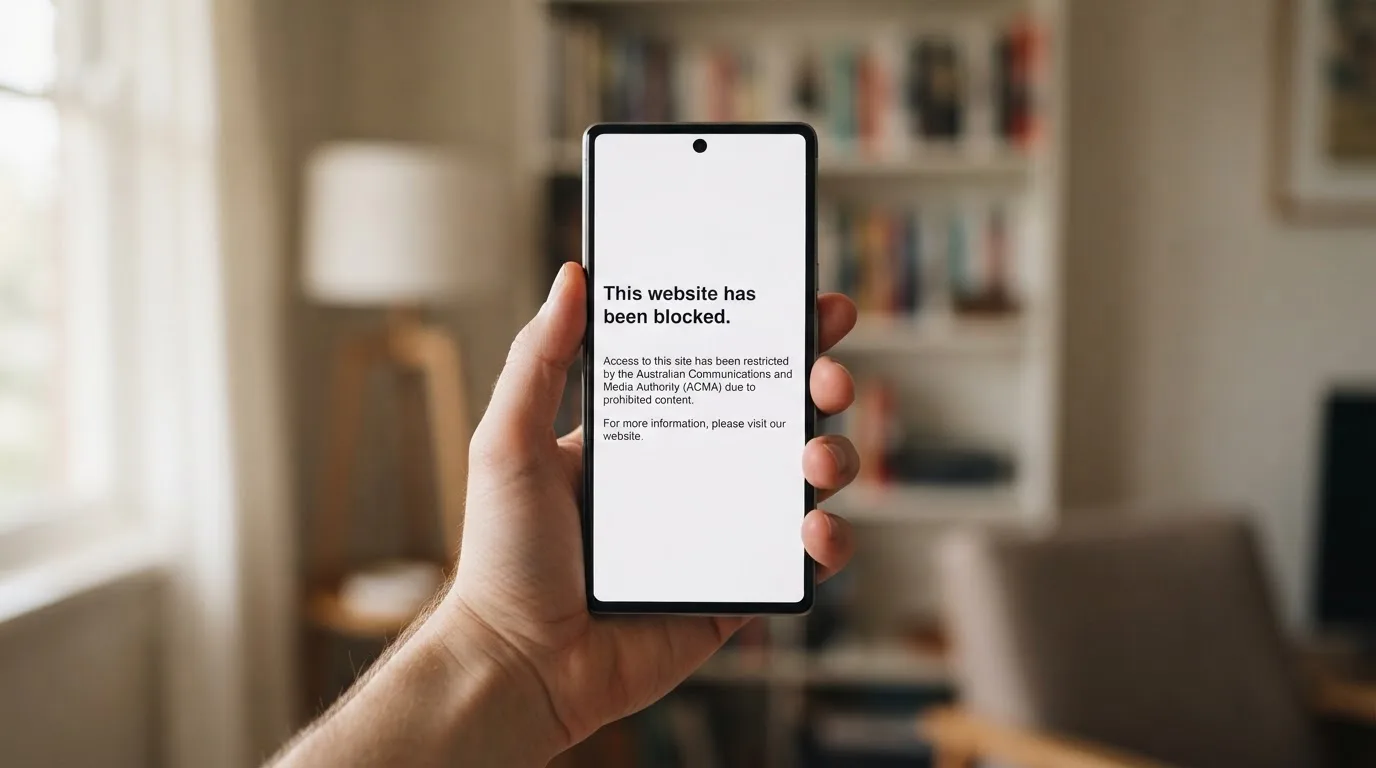
By June 2026, the ACMA had asked Australian ISPs to block a cumulative total of 1,751 illegal gambling and affiliate marketing websites since the first blocking request in November 2019. More than 230 unlicensed services had left the Australian market altogether since enforcement was strengthened in 2017. In a single round reported on 26 June 2026, twelve more domains went on the block list — 7Signs, ChromaBet, Donbet, Duospin, Freshbet, Slots Gem, Jacks Club, Lucky Start, Pointsbetz, Spinrise, Vinyl Casino and Wildsino. None of those twelve carries an Australian licence, because none of them could.
H2 Gambling Capital’s 2025 estimate puts the annual loss to illegal offshore sites at around A$3.9 billion, and tracks the share of gambling that goes through legal Australian channels falling from 74% in 2021 to 64%. That is the market a “high cashback” headline is competing for — and the same market the ACMA is steadily shrinking through blocking action.
What a licence on the wall actually covers
A reader who lands on one of these sites sees a Curaçao eGaming logo, or an Anjouan licence number, at the bottom of the homepage. What it covers is the operator’s right to take bets from jurisdictions that recognise that licence. It does not cover an Australian player, because the operator is offering a service the IGA prohibits in Australia. From the ACMA’s side, that licence is irrelevant; the warning is issued because of what the site is doing in Australia, not because of what is printed in the footer.
The Northern Territory Racing and Wagering Commission regulates 52 of Australia’s online bookmakers — Sportsbet, Bet365, Ladbrokes among them — but only for the wagering and racing products the Territory is empowered to license. A commission with no full-time staff that meets once a month in Darwin is the regulator for the wagering side of the Australian market. There is no equivalent regulator for online casino games, because there is no equivalent licence to issue.
The 2026 reform with a start date that has not yet arrived
The Interactive Gambling Amendment (Gambling Reform) Bill 2026 passed Parliament on 19 August 2026. Its advertising and inducement measures — the parts that most directly target the kind of marketing this page is being asked about — commence on 1 January 2027. On a page read in 2026, the law has been passed but is not yet in force. The blocking record above, and the formal warnings in the table at the top of this page, are still what the ACMA is actually doing. A “high cashback” inducement advertised today sits under the regime described in the first three sub-sections of this section, not under the new one.
Player protection tools that actually work in Australia
BetStop and what it binds
BetStop, the National Self-Exclusion Register, has been live since August 2023. A person registered with BetStop is excluded from every Australian-licensed online and phone wagering service — which is what the register covers. What it does not cover is an offshore casino. An offshore casino is not connected to BetStop, has no obligation to check the register, and has no technical reason to know a player has self-excluded in Australia. The register is real and useful, and its limits are part of its use.
The National Gambling Helpline — 1800 858 858 — is free, runs 24/7 and connects to chat support at Gambling Help Online. These are the avenues that work regardless of where the gambling happens.
Bank-side gambling blocks
Australian banks have built card-level and account-level blocks that work without the punter having to identify the merchant in advance.
| Bank | Block Scope | Feature |
|---|---|---|
| Westpac | Card level | Refuses authorisation on ‘Betting/Casino Gambling’ MCC |
| ANZ | Card and digital wallet | App-based, follows card to Apple Pay |
| Commonwealth Bank | Card level | App-based gambling lock on eligible cards |
Westpac’s gambling block refuses authorisation on transactions registered under the merchant category code for “Betting/Casino Gambling” on eligible personal credit and debit cards. ANZ runs an equivalent block through its app, and extends it to digital-wallet transactions on an eligible card — meaning the block follows the card into Apple Pay, not just the plastic. Commonwealth Bank offers a gambling lock on eligible cards through the CommBank app, with the same caveat the other banks state: the block catches most gambling transactions, but the bank does not guarantee every gambling-related purchase is stopped, and some non-gambling transactions may be caught in error.
ANZ’s block has a 48-hour cooling-off period before it can be removed once it has been turned on. That is a deliberate friction, and the same kind of friction exists across the major banks.
What that means for a “high cashback” deposit
A reader who has switched on a bank-side gambling block, or who is registered with BetStop, is partially insulated from the marketing the rest of this page describes. The block does not block the marketing email; it blocks the transaction. A “high cashback” headline that survives in the inbox is irrelevant once the deposit rail is closed. Where a block has not been turned on, the rest of the page applies.
Crypto, digital wallets and the payment rails
Credit cards, digital wallets and the 2024 ban
Since 11 June 2024, Australian-licensed online wagering services cannot accept payment by credit card or by credit-related products. The same restriction constrains digital wallets linked to a credit card — Apple Pay, Google Pay — because the underlying funding source is what the rule looks at. The penalty for a licensed operator that breaches it runs up to A$247,500.
A site that is not licensed in Australia — every operator in the table at the top of this page — is not bound by that ban, and several of them do accept card deposits from Australian accounts. The site is offering a service the IGA prohibits; it is also a service that uses a payment method the licensed side is banned from accepting. Two violations stacked, and the marketing on top calls it a “high cashback” perk.
Apple Pay, Google Pay and the mobile share of card payments
By the end of 2025, Apple Pay, Google Pay and Samsung Pay transactions together made up roughly 45% of all card payments in Australia by number. Apple does not surcharge consumers for using Apple Pay; any surcharge on a transaction comes from the merchant’s own processing arrangements. Apple also states that transaction limits and PIN requirements are set by the card issuer or the merchant, not by Apple — which matters because the issuer-side gambling block is what carries the actual restriction.
The Reserve Bank of Australia’s July 2025 review proposed removing surcharges only on eftpos, Mastercard and Visa transactions. American Express sat explicitly outside the proposed ban. Amex operates a three-party scheme — issuer, processor and network all in one — and has done since the company was founded as a freight-forwarding business in 1850 and issued its first charge card on 1 October 1958. The structural difference is the reason the RBA proposal stopped at it.
PayID, Osko and the name on the other side
PayID transfers between participating Australian banks arrive in under a minute, through Osko, 24/7 including weekends. Over 100 Australian financial institutions offer PayID-based instant transfers, and more than 25 million PayID identifiers were registered on the New Payments Platform by April 2025. Australia’s New Payments Platform itself opened to the public on 13 February 2018 and is owned by a non-profit whose 13 shareholders include the Reserve Bank of Australia and the major banks.
The detail that matters for the page’s subject is one line further on: when you pay to a PayID, the name of the account holder is shown before the transfer is sent. Australian Payments Plus — the operator of PayID and Osko — warns that being asked to transfer money to a PayID on an illegal gambling site almost certainly means a scam site. A reader who takes that warning seriously is doing the same check the ACMA’s blocking list does, by hand, on their own phone, before they hit send.
BPAY and the bill-payment rail
BPAY operates inside Australian online banking: the payer enters the Biller Code and the Customer Reference Number printed on the bill. It has been in operation since 18 November 1997 — launched that day, owned equally through Cardlink Services Limited by ANZ, Commonwealth Bank, National Australia Bank and Westpac. It is available through more than 140 banks and financial institutions and is offered by over 95,000 businesses. It runs through Australian Payments Plus, alongside PayID and Osko. BPAY is a bill-payment rail for Australian-licensed businesses, not a deposit method for an offshore casino.
What AUSTRAC looks at and what it does not
AUSTRAC’s threshold-transaction-report rule, which requires reporting of transfers of A$10,000 or more, applies to physical cash. Ordinary electronic bank transfers are not subject to that per-transaction reporting requirement, regardless of the amount sent. A reader moving A$500 to an offshore casino through an ordinary transfer is not generating an automatic AUSTRAC report, which means the surveillance that catches unusual activity runs through the bank’s own systems rather than through a regulator’s threshold.
What “high cashback” actually means once you read the terms
The shape of the offer
A cashback bonus, mechanically, returns a percentage of a player’s net losses over a defined period — usually a week, sometimes a day, sometimes a month. A deposit match bonus, by contrast, credits bonus funds equal to a percentage of what the player deposits, usually once on the first deposit and sometimes over the first few. The two are not the same shape of offer, and conflating them — which the affiliate marketing pages do routinely — is the first place a reader loses the plot.
Cashback is normally credited as bonus funds rather than as withdrawable cash. The qualifier matters: bonus funds are usually subject to a wagering requirement before they can be withdrawn, and that requirement can run anywhere from a low single-digit multiple to something well into double digits. A “20% cashback” advertised at the top of a promotions page can turn into a balance that needs to be turned over several times before it leaves the site.
What the wagering requirement does to a cashback percentage
A 20% cashback with a 5x wagering requirement on a A$100 net loss returns A$20 in bonus funds, which then needs A$100 of wagering to clear. A 20% cashback with a 1x requirement returns the same A$20 needing A$20 of wagering. The percentage on the headline is the same; the work the player has to do to make it real money is not. A higher percentage with a heavier multiplier can return less in real terms than a lower percentage with a lighter one.
Terms that cap how much cashback can be earned — a weekly ceiling, a maximum bonus amount, a restriction that excludes certain games from the calculation — do the same kind of work. A “high cashback” headline with a tight cap is a smaller offer than a moderate percentage with no cap, for any player whose losses would otherwise have run above the ceiling.
The “cashback” on crypto deposits
A crypto casino can offer cashback in the same way a fiat casino can — the structure of the offer does not depend on the currency. What is different is the audit trail. A crypto deposit goes through a wallet the bank does not see, the casino’s own payment processor sees, and no Australian regulator has jurisdiction over. The bonus funds credited after a loss are still bonus funds, still subject to wagering, still governed by the site’s own terms. The currency in which the cashback is paid does not change the structure of the offer.
What the currency does change is the recourse if something goes wrong. A fiat deposit through a card leaves a chargeback path the cardholder can pursue. A crypto deposit leaves a hash on a blockchain and a customer-service email address that may or may not respond. “Crypto cashback” carries the same marketing weight and the same wagering rules, with one fewer safety net underneath it.
Operator write-ups
The write-ups below are not endorsements. They are records. Each block states what the ACMA’s register says about the operator, what the marketing around cashback looks like in the affiliate listings research was able to find, and what verdict the block itself reaches on the basis of those two things. Where research carries only an affiliate-listing description, the block says so.
RocketPlay
The ACMA issued a formal warning to Pulsup Ltd over RocketPlay in March 2026, on top of an earlier 2022 warning to Dama N.V. over the same domain family. The site displays an offshore licence. Affiliate listings describe a cashback-style offer on losses; those listings are not the operator’s own published terms page, and the figure, frequency and wagering conditions are not verifiable from them. The marketing message is “high cashback”; the paperwork underneath it is a regulator’s warning and an affiliate’s description. A reader who treats the warning as the headline and the marketing as decoration has the right reading.
Level Up Casino
Dama N.V. received a formal warning in May 2022 covering Level Up alongside five other Dama brands. The ACMA’s register is the date-stamped record of that warning. The site’s bonus structure is described by affiliate pages rather than by a verifiable operator terms page; the gap between the two is the gap a reader cannot close on the evidence in front of them. Level Up’s position in the warning cluster is the same as four other Dama brands, and that is the line it stands on.
Woo Casino
Dama N.V. received a further formal warning in March 2025 specifically over Woo Casino, on top of the 2022 cluster. The site is one of two Dama brands the ACMA has gone back to in writing — the warning is a follow-up, not a first contact. No reliable affiliate listing of a cashback offer was found in research. The mark against it is the ACMA’s, twice.
Spirit Casino
Dama N.V. received the second of its 2025 follow-up warnings over Spirit Casino in May 2025. Like Woo Casino, it sits in a category where the regulator has come back for a second formal warning after the first round in 2022. No cashback listing was found in research. The picture is the same shape as Woo’s: a regulator that has gone back, a marketing footprint that research could not pin to a verifiable terms page.
National Casino
Consolutetish S.R.L. received a formal warning in July 2025 over National Casino, alongside Bizzo in the same warning round. BetStop and AUSTRAC materials reference the brand in their public-facing fraud and self-exclusion contexts, which is how a name ends up on a regulator-adjacent page. The cashback offer appears in affiliate listings rather than on the operator’s own published terms. The position in the warning cluster is shared with Bizzo; the audit-trail difference is the company name on the warning, not the shape of the marketing.
Bizzo Casino
The July 2025 warning to Consolutetish S.R.L. over Bizzo is the second time the brand has been warned — the first was a 2022 warning to TechSolutions (CY) Group Limited and TechSolutions Group N.V. The same operator, restructured, warned again. Affiliate listings describe the cashback offer; the operator’s own published terms did not surface in research. The double-warning is the only data point a reader needs to size the situation.
Ignition Casino
Bamboo Media received a formal warning in July 2025 over Ignition Casino. No cashback listing was found in research for this brand. Ignition is the brand in the table with the thinnest marketing footprint of the eleven on the cashback subject — the warning is on the public record, the offer is not.
Instant Casino
EOD Code SRL received a formal warning in February 2025 over Instant Casino. EcoPayz and PayID are the payment-method references research found alongside the brand, which is how a reader would actually reach it: through an e-wallet or an instant-transfer rail that the bank does not separately categorise as gambling. The cashback offer is in affiliate listings rather than in the operator’s terms. The payment path is the same one the bank-side gambling block catches — but only if it has been turned on.
Jackbit
Ryker B.V. received a formal warning in April 2026 over Jackbit, alongside CasinOK in the same round. No cashback listing was found in research. Jackbit is the most recent of the eleven to appear on the register, and it appeared with a sibling brand in the same warning.
Casino Intense
Sterplay Holding Ltd received a formal warning in April 2025 over Casino Intense. AUSTRAC, BetStop and affiliate sources reference the brand in their materials; the cashback offer is described by those sources rather than by a verifiable operator terms page. The position is the same shape as National Casino’s — a warning, an adjacent listing presence, no operator-published terms.
Sky Crown
Hollycorn N.V. received a formal warning published in September 2022 covering Sky Crown and Blue Leo. No cashback listing was found in research. The warning is the only verifiable data point on this brand in the materials in front of this page.
The arithmetic of the ACMA’s blocking rate
The plan for this page asks for one piece of arithmetic, and it is the kind that earns its place because it is not stated anywhere else in the page in this shape. The first ACMA blocking request went out in November 2019. By June 2026, the cumulative total of blocked websites stood at 1,751. That is roughly 1,751 ÷ (June 2026 − November 2019), or 79 months from the first blocking request to the June 2026 round. The result lands in a band rather than on a single figure because the blocking volume is not evenly distributed month to month — some months carry a single round of a dozen domains, others carry nothing — but the order of magnitude is around 22 blocked sites a month across the period. In the round reported on 26 June 2026 alone, twelve sites went on the list in one decision. The band sits somewhere between a steady drip of single-digit monthly rounds and a concentrated enforcement spike like the June 2026 round itself; the average is the floor, the round-by-round spike is the ceiling, and the steady state sits between them.
The condition on the arithmetic is the same as the condition on the rest of the page. The blocking rate describes the regulator’s output, not the regulator’s intent. The intent is on the record: a service the IGA prohibits, addressed to Australians. The rate is the only number the public data carries, and it carries it as a band rather than as a single figure for the reason the data itself is uneven.
What a reader in Australia can actually do
Licensed wagering and the boundary it draws
A reader who wants to place a wager in Australia can do so through a licensed bookmaker — the 52 operators the Northern Territory Racing and Wagering Commission regulates, plus the equivalent in other states. The boundary is the product: pre-event wagering on racing and sport is licensed; online casino games are not. A reader who treats a licensed bookmaker as an entry point to casino games will not find one. The licence is for the wager, not the spin.
Land-based alternatives
Australia’s land-based casinos, licensed clubs and hotels with poker machines are outside the IGA’s prohibition. They are regulated at state and territory level. BetStop, the helpline and the bank-side blocks all reach into that environment in different ways. A reader whose interest in a “cashback” headline is really an interest in a casino floor promotion should look at the licensed venue, not the offshore site.
The closing line
The reader who arrived here looking for a place to play is not going to find one on this page, and that is the page doing its job. The offer is on the marketing. The product is on the ACMA’s register. The “high cashback” headline is a number an offshore operator puts on a promotion the IGA prohibits, and the percentage on the headline does not change what the percentage sits on top of.
Frequently asked questions
What is the difference between a cashback bonus and a deposit match bonus?
A cashback bonus returns a percentage of net losses over a defined period; a deposit match bonus credits funds equal to a percentage of what the player deposits, usually on the first deposit. The first rewards continued play after a losing stretch; the second rewards a fresh deposit. They are different shapes of offer, and the wagering requirements that come with them are usually different too.
Is cashback usually paid as real money or as bonus funds?
Most commonly as bonus funds, which then carry a wagering requirement before they can be withdrawn. Cashback paid as withdrawable cash with no wagering is the rarer form, and the affiliate marketing pages are not the place to verify which form a given offer takes.
Is it legal for an online casino to offer cashback to players in Australia?
No. Online casino games are prohibited interactive gambling services under the Interactive Gambling Act 2001, and offering them to a person in Australia is the offence the ACMA acts against. Cashback is a marketing layer on top of the prohibited product; it does not change the status of the product underneath.
Can a crypto casino offer cashback the same way a fiat casino does?
Yes. The structure of a cashback offer does not depend on the deposit currency. What is different is the recourse available if a withdrawal goes wrong — fiat deposits can sometimes be chargebacked, crypto deposits cannot, and no Australian regulator has jurisdiction over the offshore operator either way.
What terms usually cap how much cashback can be earned?
Common caps include a maximum bonus amount per period, a weekly or monthly ceiling, and a restriction on which games count toward the loss calculation that the cashback percentage is applied to. A high headline percentage under a tight cap is a smaller offer than a moderate percentage without one, for any player whose losses would otherwise have run above the cap. See also What an offshore “welcome bonus” really costs an Australian player in… .
Does a high cashback percentage make up for unfavourable bonus terms?
Usually not. A 20% cashback with a 5x wagering requirement is worth less in real terms than a 15% cashback with a 1x requirement for most players. The percentage on the headline is the marketing; the multiplier, the cap and the game exclusions are the terms, and the terms are what the cashback actually pays out.