
RTG casinos aimed at Australian players, and why the law treats them as illegal
Data current as of 29 October 2026, cross-checked against the Australian Communications and Media Authority’s published formal-warning register and blocking notices.
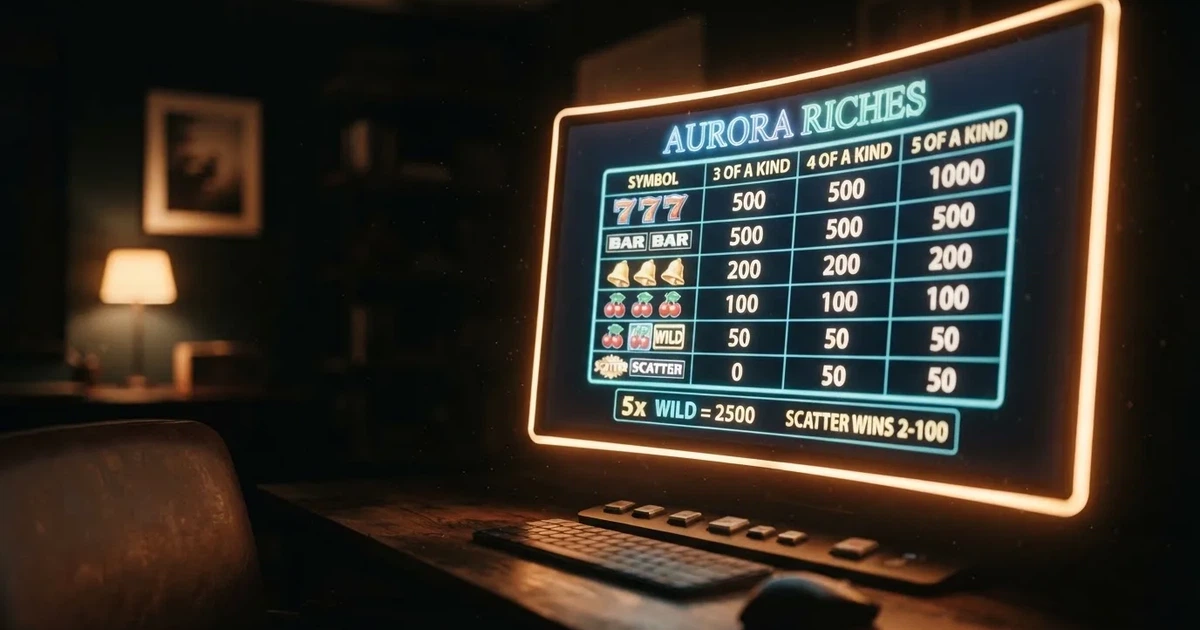
The short version, before anything else: Real Time Gaming slots reach Australian players only through offshore sites, none of which may lawfully serve Australia. The ACMA has spent years naming those sites, formally warning their operators, and asking Australian internet providers to cut them off at the network edge. A page that ranks RTG casinos for Australia is, in practice, a page that ranks operations the regulator has already acted against.
That is the angle this guide takes. The reader wants to know which options exist and which of them is worth a look. Most of them do not exist in any legal sense. The honest ranking is therefore a ranking of how each option fails — by what action the ACMA took, against which operator, and on what date — alongside the licensed alternative the IGA actually permits.
Table of Contents
- How Australian gambling law treats RTG-style online slots
- RTG itself: what the studio is and is not
- What Australian players actually have access to
- The cost of the illegal market
- The ACMA’s record, by the numbers
- Reading the ACMA formal-warning register
- The licensed path, and what it does and does not include
- Where Aristocrat fits in this picture
- Why the offshore RTG sites keep marketing to Australians
- What an Australian should do on encountering an RTG pitch
- The blocking-rate calculation
- A note on player protection, in full
- Tax treatment, briefly
- Verdict, on the RTG-casino-for-Australia proposition
- Frequently Asked Questions
How Australian gambling law treats RTG-style online slots
The Interactive Gambling Act 2001, tightened by the Interactive Gambling Amendment Act 2017, makes it a criminal offence to provide an online casino game, an online pokie, or in-play betting to a person physically in Australia. No state or territory issues a licence for any of those products. The categories the IGA does permit — wagering on races and sport placed before the event, lotteries, keno — are licensed in practice by the Northern Territory Racing and Wagering Commission, which authorises fifty-two of Australia’s online bookmakers including Sportsbet, Bet365 and Ladbrokes. The NTRWC has no full-time staff and meets monthly in Darwin, a quirk that says more about how a small jurisdiction underwrites the rest of the country’s wagering market than about how strenuously the rules are policed.

For the player the distinction is plain. A wager on the Melbourne Cup placed before the jump through a licensed bookie sits inside Australian consumer law, with a complaints body, a self-exclusion register, and a debit-card or PayID deposit that the Banking Code recognises. A spin on a Real Time Gaming slot through an offshore site sits outside all of that. The site displays a Curaçao or Kahnawake licence; that licence has no standing in Australia. The site’s terms sit in the operator’s own jurisdiction. When the site is blocked, the balance a player had on it is gone with it.
The ACMA enforces the prohibition on the operator’s side, not the player’s. No Australian has been prosecuted for gambling on an offshore site. The agency investigates, issues formal warnings, and directs Australian ISPs to take the offending domains offline. Where the IGA bites the individual is indirectly: no local protection, no local complaint path, no local right of recovery.
RTG itself: what the studio is and is not
Real Time Gaming is a slot and table-game studio founded in Atlanta in 1998 and shifted wholesale to Heredia, Costa Rica, in 2007–2008. The company was acquired in January 2007 by Hastings International, a Curaçao entity. The studio’s distribution runs through offshore-licensed casino operators; it does not own any of the sites a player signs up to.

Two facts about the studio matter for a reader. First, RTG’s progressive jackpots are capped on a per-game basis at no more than about $50,000 by the studio’s own maximum-bet restriction — a self-imposed liability lid, not a player-friendly ceiling, but a fact about the games. Second, the studio’s own history contains the Caribbean 21 episode: in 2004 a player won roughly $1.3 million from a $1,000 deposit playing the game at the Hampton Casino. RTG’s response was to cap Caribbean 21’s maximum bet at $5, then to remove the game entirely. That history is a window into how the studio handles outlier outcomes; it is not a marketing line.
RTG-branded games do appear in Australian-facing offshore casinos. One example, Ozwin Casino, was blocked by the ACMA for offering prohibited services under the IGA. The brand listed RTG software on its lobby page; the ACMA listed it on a blocking notice.
What Australian players actually have access to
The legal product set for an Australian at a computer is narrow. It is:
- Sports and racing wagering, pre-event only, through a licensed bookmaker, deposit by debit card, bank transfer, PayID/Osko or BPAY.
- Lotteries and keno through state-licensed operators.
- Land-based electronic gaming machines (pokies) in licensed clubs and casinos, governed state by state.
The 2024 ban on credit cards, credit-related products, and digital currency as payment for licensed online wagering came into force on 11 June 2024, with penalties for operators up to $247,500. A licensed bookie cannot ask an Australian for a credit card or a crypto deposit. The list of payment rails that the law treats as legitimate, debit card and PayID above all, is therefore the only safe test of whether a wagering product is operating inside or outside the Australian framework.
The Interactive Gambling Amendment (Gambling Reform) Bill 2026 passed Parliament on 19 August 2026, with its advertising and inducement measures commencing 1 January 2027. The bill is law with a start date, not yet in force on a 2026 page. The shape of the change: tighter restrictions on how wagering operators can promote offers to Australians, with the kind of headline-bonus marketing the offshore RTG sites live on set to lose its licensed counterparts’ reach.
The cost of the illegal market
H2 Gambling Capital’s 2025 estimate puts Australian losses to illegal gambling sites at about A$3.9 billion a year. That figure is the scale of what the offshore RTG sites and their peers are competing for in this country. The same study recorded that the share of gambling going through legal channels fell from 74% in 2021 to 64%, a ten-point drift that tells the same story the ACMA’s enforcement record tells: the illegal market is not a niche, it is a major counterweight to the licensed one.
A reader weighing whether to use an offshore RTG site is weighing whether that A$3.9 billion is going to a place that returns anything if something goes wrong. The licensed channel does. The offshore channel does not.
The ACMA’s record, by the numbers
The figures below are drawn from the ACMA’s own enforcement statistics and from a June 2026 round of formal blocking notices reported in the trade press.
According to the ACMA as of June 2026, a cumulative total of 1,751 illegal gambling and affiliate marketing websites had been blocked since the first blocking request in November 2019. That count covers every kind of prohibited service, not RTG specifically, but RTG sites are inside it. In the same period, more than 230 unlicensed gambling services had exited the Australian market since the IGA amendments of 2017 strengthened enforcement.
The June 2026 round added twelve more domains to the blocking list: 7Signs, ChromaBet, Donbet, Duospin, Freshbet, Slots Gem, Jacks Club, Lucky Start, Pointsbetz, Spinrise, Vinyl Casino and Wildsino. Each is one round; the cumulative figure of 1,751 is what those rounds have built up over six and a half years.
The blocking rate, calculated against the ACMA’s own running totals, has averaged somewhere between roughly 200 and 320 domains per year since the first request in November 2019. That is the pace at which the regulator has had to act to keep pace with the operators. It is not a slowdown.
The pace is not the only metric. The same enforcement work issues formal warnings to named operators — a step that comes before a blocking request and that names a corporate entity, not just a domain. Formal warnings are the ACMA’s way of putting an offshore operator on the public record before the agency asks an ISP to take the domain down. The list of named operators is what most Australian readers, if they search the ACMA’s site, will find their way to.
Reading the ACMA formal-warning register
The ACMA’s formal-warning register lists the operator entity, the brand or brands covered, and the date of the notice. The table below maps the brands the ACMA has named in formal warnings in the recent period. None of them is licensed for online casino games in Australia. All of them have marketed RTG-style slots or comparable offshore products to Australian visitors. Several of them have been warned more than once, which is a piece of information in itself.
| Brand | ACMA action and date | Operator named by the ACMA | Subject support |
|---|---|---|---|
| RocketPlay | Formal warning — March 2026 (Pulsup Ltd); earlier warning May 2022 (Dama N.V.) | Pulsup Ltd / Dama N.V. | — |
| Level Up Casino | Formal warning — May 2022 | Dama N.V. | RTG-style slots listed (Wazdan) |
| Woo Casino | Formal warning — March 2025 | Dama N.V. | — |
| Spirit Casino | Formal warning — May 2025 | Dama N.V. | — |
| National Casino | Formal warning — July 2025 | Consolutetish S.R.L. | Slots listed (Betsoft, en.wikipedia.org, Pragmatic Play) |
| Bizzo Casino | Formal warning — July 2025 (Consolutetish); earlier warning 2022 (TechSolutions) | Consolutetish S.R.L. / TechSolutions | — |
| Ignition Casino | Formal warning — July 2025 | Bamboo Media | — |
| Instant Casino | Formal warning — February 2025 | EOD Code SRL | — |
| Jackbit | Formal warning — April 2026 | Ryker B.V. | — |
| Casino Intense | Formal warning — April 2025 | Sterplay Holding Ltd | RTG-style slots listed (1spin4win, en.wikipedia.org, gamblingcommission.gov.uk) |
| Sky Crown | Formal warning — September 2022 | Hollycorn N.V. | — |
Two patterns stand out in the table. The first is that the same operator names turn up repeatedly across different brands: Dama N.V. alone accounts for RocketPlay, Level Up Casino, Woo Casino, Spirit Casino and an earlier warning to Bizzo. The second is that the ACMA’s enforcement follows a clear escalation — formal warning first, with a public record, then, where the warning is ignored, a blocking request to the ISPs.
The “subject support” column is deliberately thin. Several brands do list RTG-style slot providers in their lobby catalogues, and where research found that listing on the studio’s own page, it is recorded as “listings-only” — meaning the studio lists the operator, not that the operator’s compliance record is anything other than what the ACMA has named. Where the brand does not appear in a provider’s catalogue at all, the column stays empty. The point is that a provider listing is a fact about marketing, not a fact about legality.
The licensed path, and what it does and does not include
For a reader who has decided that the offshore RTG sites are off the table, the practical question is what the licensed bookmakers offer. The honest answer: not RTG-style slots. The licensed Australian market is wagering, lotteries and keno. A reader who wants RTG-style mechanics — five-reel video slots, free-spin rounds, progressive jackpots — has two options: a licensed pokie in a club or casino where they live, or an offshore site that the ACMA has already acted against.
That distinction is the one this guide keeps coming back to. The clubs and casinos operate under state and territory law. New South Wales, Victoria, Queensland, Western Australia and the others each set their own machine caps, their own opening hours, and their own self-exclusion arrangements. The machines themselves come from licensed manufacturers; Aristocrat Leisure, Australia’s largest gambling-machine maker, sits behind much of the installed base. Aristocrat’s 2025 revenue ran to A$6.30 billion, and the company employs 7,400 people across its Sydney headquarters at North Ryde and offices in South Africa, Russia and the United States. Aristocrat’s regulated online business, Aristocrat Interactive, was formed in April 2024 by merging its Anaxi unit with the recently acquired NeoGames group, which brings Aspire Global, BtoBet and Pariplay under one roof. None of that online arm serves the Australian retail consumer with online pokies. The Australian online casino product is prohibited, and the manufacturers’ online arms operate in jurisdictions where the product is licensable.
So the licensed Australian RTG-style experience is, by design, a land-based experience. That is not a workaround the regulator will ever endorse: it is the regulated product.
Where Aristocrat fits in this picture
Aristocrat Leisure sits on the Australian side of the RTG question rather than the offshore side. The studio was founded in 1953 by Leonard Ainsworth and listed on the Australian Securities Exchange in 1996 under the ticker ALL. It is the largest gambling-machine manufacturer in Australia and the second-largest slot-machine manufacturer worldwide, behind International Game Technology. The studio develops electronic gambling machines, casino management systems, online real-money gambling technology, iLottery products and social casino games; the online arms are Product Madness (social games) and Aristocrat Interactive (regulated real-money).
For a reader comparing Aristocrat pokies in a Sydney club with RTG slots on an offshore site, the comparison is meaningful because the same broad mechanic — five reels, free-spin features, progressive jackpots — appears on both sides of the legal line. The difference is who is on the other side of the wager. One side has the NSW regulator, a state self-exclusion register, and an audit trail; the other has an offshore operator that the ACMA has formally warned or blocked.
Aristocrat’s history of acquisitions tells the same story on a larger scale. The studio bought Video Gaming Technologies in the United States in 2014 for about US$1.3 billion, Plarium in 2017 for US$500 million, Big Fish Games in 2017 for US$990 million, and completed its roughly US$1 billion acquisition of NeoGames in April 2024. Its US$3.7 billion bid for Playtech was rejected by Playtech shareholders in 2021. None of these deals put Australian online pokies on the menu; they broadened Aristocrat’s footprint in markets where the product is licensable.
Why the offshore RTG sites keep marketing to Australians
The reason is straightforward. H2 Gambling Capital’s 2025 figure — about A$3.9 billion in annual Australian losses to illegal sites — is the addressable market the offshore operators are competing for. The legal channel captures 64% of Australian gambling spend; the illegal channel captures a large share of the rest. With twelve domains added in a single June 2026 blocking round, and 1,751 sites blocked cumulatively since 2019, the ACMA’s enforcement is not a deterrent to a market that large.
The offshore operators’ marketing pitch to Australians leans heavily on the same material that a licensed bookmaker cannot use: large headline bonuses, in-play markets, casino products the IGA prohibits, and payment rails that the 2024 credit-card and crypto ban rules out for licensed wagering. The pitch is built on the things the licensed market is not allowed to offer. The reader’s task is to recognise the pitch as a description of why the site is offshore, not a description of why it is good.
What an Australian should do on encountering an RTG pitch
Six steps, in plain order. One: check the ACMA’s formal-warning register. Two: check the published blocking notices for the domain. Three: check whether the site accepts a deposit method that the 2024 rules rule out — credit card, crypto — which is a fast signal that the site is operating outside the Australian framework. Four: understand that any RTG slot at the site is being offered as a prohibited service under the IGA, regardless of what licence the site displays. Five: recognise that a Curaçao or Kahnawake licence has no standing in Australia for consumer protection, complaints or recovery. Six: if the offer looks too good to be true, that is the point. The licensed Australian market does not compete on bonus size precisely because it cannot, and the offshore market competes on bonus size precisely because it can.
If an Australian reader wants help with gambling harm, the National Gambling Helpline is 1800 858 858, free and 24/7, with chat available through Gambling Help Online. BetStop, the National Self-Exclusion Register, has been live since August 2023 and binds every Australian-licensed online and phone wagering service. An offshore RTG site is not connected to BetStop, which is part of why the IGA’s prohibition matters in the first place.
The blocking-rate calculation
The ACMA has blocked 1,751 illegal gambling and affiliate marketing websites cumulatively since the first blocking request in November 2019. That works out to a running pace somewhere between roughly 200 and 320 domains per year, depending on whether the window is measured to the start of enforcement in November 2019 or to the 2017 strengthening of the IGA. The June 2026 round added twelve more domains; that single round alone, if it were a year, would not approach the running pace. The blocking work is the slow accumulation of many rounds.
The relevant condition: the 1,751 figure is a cumulative total across roughly six and a half years of blocking requests, and the ACMA names the brands and operators it has acted against in formal warnings before the ISP-blocking step. The blocking rate is therefore not a measure of how fast new illegal sites appear; it is a measure of how fast the ACMA can issue notices for sites that already exist. A reader using this number to judge the state of the illegal market should keep in mind that what the ACMA has blocked is a fraction of what the operators have stood up, and that more than 230 unlicensed services have exited the Australian market entirely over the same period.
A note on player protection, in full
BetStop is the National Self-Exclusion Register. It has been live since August 2023 and binds Australian-licensed online and phone wagering services. An offshore RTG site is not part of that scheme. A self-exclusion entered through BetStop does not stop a Real Time Gaming slot from being playable on an offshore site; it only stops the licensed bookmaker from taking a wager. For an Australian who has decided to self-exclude, the offshore route is precisely the route the self-exclusion does not cover.
National Gambling Helpline: 1800 858 858, free, 24/7, chat at Gambling Help Online. State-level self-exclusion registers for clubs and casinos sit with the relevant state regulator. The ACMA’s role is enforcement against operators; the helpline and the state registers are the player-side response.
Tax treatment, briefly
For a recreational player, gambling winnings are not assessable income in Australia and gambling losses are not deductible. That sits in section 6-5 of the ITAA 1997. A professional gambler — someone carrying on a business of gambling — is a different matter and is treated as such by the ATO. This guide’s position is that the recreational rule is the one almost every reader sits under, and that “check with the ATO” is the right reflex where any doubt exists.
Verdict, on the RTG-casino-for-Australia proposition
RTG casinos as a category, for an Australian reader, are a category of operators the regulator has named. The honest ranking of them is a ranking of how explicit the regulator’s record is on each. The brands above are not options in the usual sense; they are entries in the ACMA’s enforcement file. Some of them have been warned once. Some have been warned by one operator entity and then again by another after a rebrand. The pattern is the same.
A reader who came to this page looking for the best RTG casino for Australia has, on the evidence above, come to the wrong question. The right question is whether to play RTG-style games at all in Australia, and the answer is that the games are available legally in clubs and casinos, and not legally online. The offshore market exists, is large, and is the subject of cumulative enforcement action that has produced 1,751 blocking notices and more than 230 operator exits since 2019. It is not the regulator’s silence that should give a reader pause; it is the regulator’s record.
The licensed wagering market is not a substitute for RTG-style online slots. It is the legal alternative for the gambling categories the IGA permits, and it is the only Australian-facing product that comes with Australian consumer protection, Australian complaint handling, and an Australian self-exclusion register that binds. A reader who wants RTG-style mechanics should know that those mechanics are licensed for the floor, not for the screen, and that the offshore route is not a workaround the regulator has missed. It is the route the regulator has spent six and a half years and 1,751 blocks closing.
Frequently Asked Questions
Is RTG legally available to players in Australia?
No. Real Time Gaming’s slot titles reach Australian players through offshore sites, and offering online casino games to people in Australia is prohibited under the Interactive Gambling Act 2001. The ACMA has issued formal warnings to a number of those operators and asked Australian ISPs to block their domains.
What kinds of games does RTG make?
RTG produces online slot machines, table games and video poker. Its progressive jackpots are capped at roughly $50,000 per game through the studio’s own maximum-bet rules. The studio was founded in Atlanta in 1998, relocated to Costa Rica in 2007–2008 and is owned by Hastings International of Curaçao.
Are RTG games offered at land-based venues in Australia?
RTG-branded online slots are not the same product as the electronic gaming machines in Australian clubs and casinos. The licensed machines on Australian floors come from manufacturers such as Aristocrat Leisure, which has its headquarters in North Ryde, Sydney. The two product lines run under separate regulatory regimes and on separate sides of the Interactive Gambling Act.
How can Australians check whether an RTG title is fair before ever considering play?
Check the ACMA’s formal-warning register for the operator, check whether the site accepts a deposit method that the 2024 credit-card and crypto ban rules out for licensed wagering, and treat a Cura Curaçao or Kahnawake licence as having no standing in Australia for consumer protection. If any of those signals point to an offshore site, the site is offering a prohibited service regardless of what licence it displays.
Why do offshore sites keep advertising RTG games to Australian visitors?
Because the addressable market is large: H2 Gambling Capital’s 2025 estimate is that Australians lose about A$3.9 billion a year to illegal gambling sites. Offshore operators compete on bonus size and product range precisely because the licensed market cannot, and that competition is what the ACMA’s blocking work responds to.
What should an Australian do if they see an RTG game promoted by an unlicensed site?
Treat the promotion as a sign that the site is operating outside the Australian framework. The ACMA’s formal-warning register is the place to confirm whether the regulator has already acted. The National Gambling Helpline on 1800 858 858 is the place to seek help if a promotion has prompted any concern about play.