
What “no ID verification” means at an offshore casino taking Australians
The phrase is doing two distinct jobs on a casino landing page, and the reader is the one who has to tell them apart.

Data current as of 29 October 2026; licence claims verified against ACMA formal-warning register.
The narrow job is the payments one: the site claims it will release a withdrawal without first asking for a photo of the customer’s ID, a selfie holding that ID, a recent utility bill as proof of address, or a source-of-funds form. Some sites make the claim absolute (“no KYC ever”); most of them put a quiet condition underneath it — a cumulative withdrawal ceiling, a request that triggers it on the first big payout, or a one-off check at the crypto-to-fiat conversion stage. “No verification” is then a description of the front of the funnel, not a guarantee about the back of it.
The wider job is the marketing one: a casino is signalling that it does not need to know who the player is. The signal is pitched at readers for whom identity checks feel intrusive or slow. It is the same pitch crypto-friendly banks and offshore sportsbooks use, and at a casino it tends to travel with three tells — a Curacao-issued licence displayed in the footer, an invitation to deposit in Bitcoin or another coin, and a bonus headline that leads with the size of the match rather than its wagering terms.
The reason those three travel together is structural, not aesthetic. An Australian-licensed provider has to verify identity by law; an offshore provider without an Australian licence has no rule forcing it to, and the marketing naturally leans into the gap. “No verification withdrawal” is therefore less a feature than the absence of a feature the Australian regulator would have required. That is also why the same page, read carefully, usually reserves the right to ask anyway.
Table of Contents
- The shape of the claim
- What the page is for
- Why the reader is on this page
- The brief history of the phrase
- What the rest of the page covers
- The hard facts behind the headlines
- The proposition the page ends on
- The legal prohibition Australians actually face
- What the ACMA can do
- The credit-card ban and what it left
- What the offshore casino cannot give the player
- The reform that passed and what it does
- A note on tax
- What the prohibition does not do
- Why the page reads the law plainly
- Keeping the choice in perspective
- The frame around the choice
- What BetStop does and does not do
- What the gambling block on a bank card does
- Apple Pay, Google Pay, Samsung Pay and the credit-card ban
- The responsible-gaming position to take
- What the marketing of “no verification” leaves out
- The block on the offshore casino, not on the player
- The blockchain rail behind the marketing
- Why the rail is fast
- What PayID shows the sender
- What BPAY does
- What a wallet-to-wallet coin transfer looks like to an Australian regulator
- What the marketing’s “no KYC” really means
- The picture that holds it together
- Eleven offshore casinos the ACMA has named in formal warnings
- Reading the eleven together
- The blocking rate the regulator has run
- The page’s own judgement of the offshore choice
- What a reader should take from the page
- Frequently asked questions
The shape of the claim
Read against the Australian market the claim has three parts, each of them blunt once the legal layer is laid on top.

Where the casino is licensed. A casino licensed by a state or territory in Australia, or licensed by the Northern Territory Racing and Wetting Commission (NTRWC) for wagering, is required by Australian law to verify identity before paying out, and is the only kind of operator the ACMA can compel to pay out. Online casino games and online pokies are a prohibited interactive gambling service under the Interactive Gambling Act 2001 (IGA) as amended in 2017. No state or territory issues a licence for them. So when an Australian reads “no ID verification withdrawal” on a casino site, the underlying licence on display in the footer cannot be an Australian one.
What “verification” actually means in practice. Anti-money-laundering (AML) and counter-terrorism-financing (CTF) rules, plus the operator’s own payment processor, drive most of the documents. The player’s first withdrawal is usually the trigger. Offshore operators handle this unevenly — some ask only at that first withdrawal, some ask at any withdrawal above a threshold, and a few never ask at all. The honest version of “no verification withdrawal” is therefore “no upfront KYC on the deposit, and we reserve the right to ask before we wire funds.”
What the speed claim is built on. Same-day payouts in the marketing copy usually trace back to a payment rail, not to a regulatory shortcut. A crypto withdrawal over the Bitcoin or Ethereum networks can settle in minutes; a PayID or Osko transfer over the New Payments Platform settles in under a minute, 24/7. Both are faster than the SWIFT-based international wire offshore casinos historically used. Neither is what removes the KYC step. The KYC step is removed by the operator’s decision not to ask.
What the page is for
This page is built around a single editorial call. The Australian reader weighing an offshore casino in 2026 is weighing two distinct choices at once, and each of them has a different right answer.
The first choice is legal: is it lawful at all for an Australian to play at an offshore online casino? It is not lawful for the operator to offer casino games and pokies to a person in Australia, and the operator is the one the IGA targets. The reader is not prosecuted. But the operator sits outside Australian consumer protection, and if the site is blocked mid-balance the player has no Australian complaints body to write to.
The second choice is practical: even within the offshore set, is “no verification” what the marketing presents it as? No operator with a real licence will skip it; an unlicensed operator that does skip it has no Australian regulator behind it either. The rest of the page works through those two threads together — the law that frames the question, the responsible-gambling frame that should govern the choice, the blockchain rail that gives the marketing its language, and the eleven brands the ACMA has named in formal warnings over the past four years.
Why the reader is on this page
Search data has been consistent for several years on what brings Australians to this exact query. They are not looking for a list of crypto exchanges, and they are not looking for advice on whether crypto is a sound investment. They are looking for a way around the document upload they have already hit at one of the licensed Australian bookmakers — Sportsbet, Bet365, Ladbrokes, the three the NTRWC tracks as its largest — where the KYC step is the legal floor rather than an optional extra. They are also, often, looking at the size of the offshore bonus and assuming the absence of KYC is the price for it.
Both assumptions are wrong, in different directions. The KYC step at a licensed Australian bookmaker is a regulatory requirement that costs the player a day or two the first time and almost nothing after that. The KYC step at an offshore casino is an optional cost the offshore operator can cut whenever it suits them, which means it can also be reinstated whenever it suits them — usually at the worst possible moment, when the player is asking for the money. The offshore bonus is real money, in the sense of a figure that lands in the account, and it is also a figure governed by terms the bonus headline does not print.
That is the trade-off the rest of the page sets out.
The brief history of the phrase
“No verification withdrawal” did not exist as a category until crypto-friendly payment processors started marketing directly to casino operators in the late 2010s. Before that, the standard offshore withdrawal was an international wire to a bank account, and the operator needed a real name and a real bank to send it to. The introduction of Bitcoin and other coin rails into casino cashier pages in the late 2010s — and the parallel rise of Curacao-licensed operators willing to skip the document step for crypto withdrawals up to a threshold — created the marketing gap the phrase now occupies.
What changed in Australia specifically was the Interactive Gambling Amendment Act 2017, which extended the prohibition to in-play betting and tightened the definition of a prohibited interactive gambling service. That did not create the offshore offer; it simply made the Australian-licensed alternative narrower. Australian-licensed wagering operators remained legal for racing and sports betting before the event, and remained under strict KYC rules. Casino games and pokies were not legal anywhere in Australia by then and have not been since.
What has changed since 2022 is enforcement intensity. The ACMA’s blocking list has grown by hundreds of sites, the formal-warning register has lengthened, and the credit-card ban on licensed wagering that took effect on 11 June 2024 has cut off one of the cleaner Australian deposit routes. The result is a market in which the legal licensed alternative is narrower, the offshore alternative is louder, and “no verification withdrawal” is the phrase the louder alternative uses to position itself.
The reader should hold two things at once when they read the rest of the page. The marketing presents the absence of verification as a feature. The legal frame presents it as the absence of the Australian system that would have required it. Both are true, and they are true of the same site at the same time.
What the rest of the page covers
The legal frame section lays out the prohibition in plain terms, the ACMA’s enforcement powers and the credit-card ban, and the limits of those rules for the Australian player. The responsible-gaming section sets out BetStop, the National Gambling Helpline and Gambling Help Online, and what each of them does and does not bind. The blockchain-rail section explains the difference between a wallet-to-wallet Bitcoin transfer and a regulated Australian instant payment, and why that difference is what makes the marketing claim legible. The operator section walks through eleven brands the ACMA itself has named, in the order the regulator has acted against them, with the subject support each site’s listings confirm or deny. The FAQ collects the most common follow-up questions.
A reader who wants only the headline can read the introduction and the operator section. A reader who wants to know how the marketing works should read the blockchain-rail section. A reader who wants to know what their actual protection is should read the legal-frame and responsible-gaming sections in order.
The hard facts behind the headlines
A few of the numbers on this page are worth quoting before they appear in their sections, because they recur.
The ACMA’s blocking list, as reported in June 2026, had reached 1,751 illegal gambling and affiliate marketing websites since the first blocking request in November 2019, and more than 230 unlicensed gambling services had left the Australian market since enforcement was strengthened in 2017. Those are the regulator’s own cumulative figures. They are not predictions and they are not the research team’s own count.
H2 Gambling Capital’s 2025 report estimated that Australians lose about A$3.9 billion a year to illegal gambling sites, and that the share of gambling going through legal channels fell from 74% in 2021 to 64%. The fall is the line that matters: legal channels are losing share, and the offshore offer is the destination.
The NTRWC regulates 52 of Australia’s online bookmakers — including Sportsbet, Bet365 and Ladbrokes — under licences issued for tax reasons. The commission has no full-time staff and meets once a month in Darwin. That is the regulator behind the largest Australian-licensed wagering brands, and the small-print scale of it is part of why offshore brands find a market at all.
The credit-card ban on licensed online wagering took effect on 11 June 2024, with penalties up to $247,500 for operators. The ban also constrains gambling use of linked digital wallets such as Apple Pay, because the wallet is a token for an underlying card.
The Interactive Gambling Amendment (Gambling Reform) Bill 2026 passed Parliament on 19 August 2026, with advertising and inducement measures commencing on 1 January 2027. It is law with a start date, not yet in force on a 2026 page.
Those are the figures the rest of the page leans on. They are the regulator’s, the industry’s and the Parliament’s, in that order, and they are stated as they appear in the public record.
The proposition the page ends on
There is no “no verification” path through Australian law for an Australian who wants to play online casino games. The phrase describes an offshore operator’s choice, not an Australian player’s right. The player has, in practice, three positions to take: do not play, play at a licensed Australian wagering operator where the games on offer are restricted to racing and pre-event sport, or play at an offshore casino accepting Australians and accept that the KYC step has been removed by the operator’s choice and can be reinstated at the operator’s discretion.
The rest of the page is what those three positions look like in detail.
The legal prohibition Australians actually face
Australia’s online gambling law is short and is best read in two layers: what is prohibited, and what the prohibition can reach.
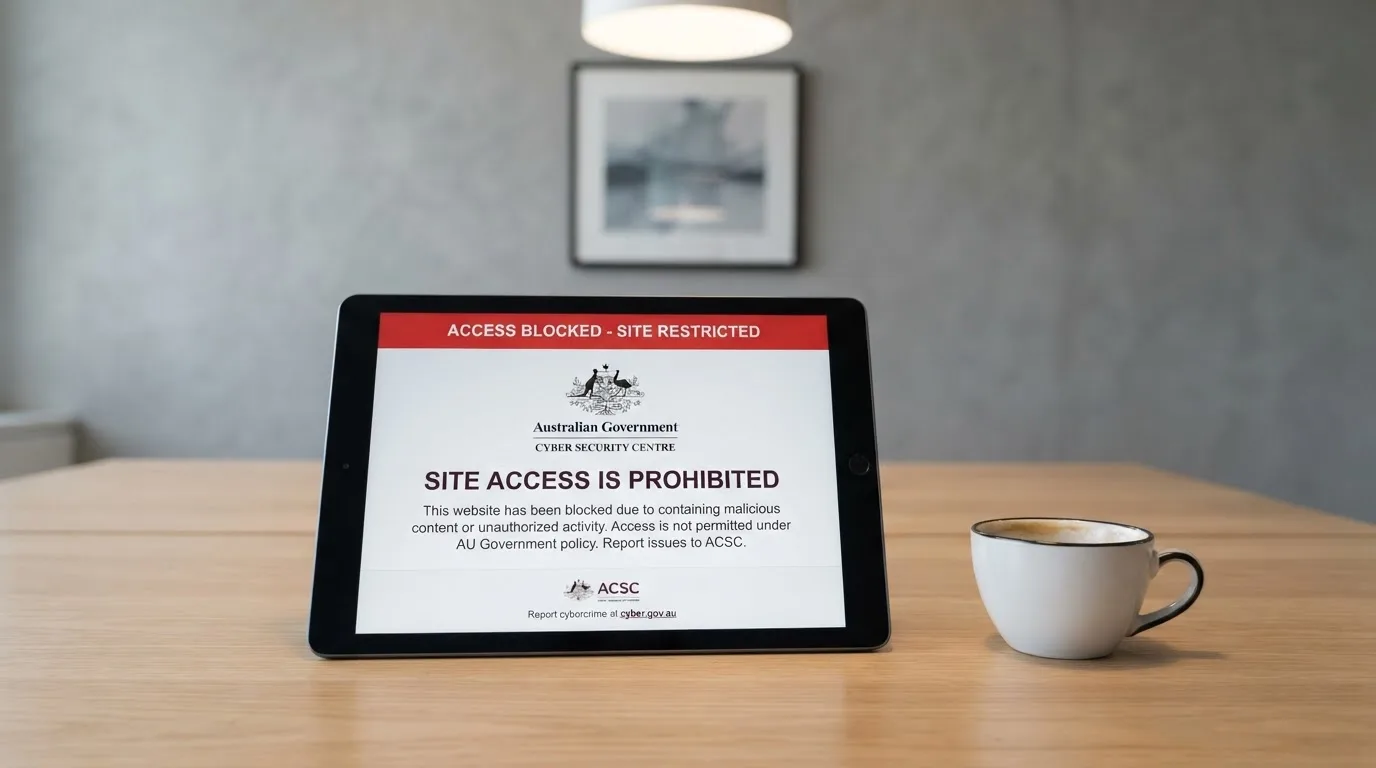
The Interactive Gambling Act 2001, as amended in 2017, makes it an offence to provide a prohibited interactive gambling service to a person in Australia. Online casino games and online pokies are a prohibited interactive gambling service; in-play betting on a sporting event is also prohibited under the 2017 amendments. No state or territory in Australia issues a licence for any of them. The penalty sits with the provider, not the player, and the regulator that investigates and acts is the ACMA.
What is licensed is narrower than the prohibition’s name suggests. Racing wagering, sports betting placed before the event, lotteries and keno are licensable. In practice the Northern Territory Racing and Wagering Commission (NTRWC) is the largest Australian-licence issuer, and tracks 52 of Australia’s online bookmakers as licensees — Sportsbet, Bet365 and Ladbrokes among them. The NTRWC has no full-time staff, meets once a month in Darwin, and licences for tax reasons more than regulatory ones; the actual consumer-protection work happens elsewhere, in the bookmakers’ own compliance teams and in the ACMA’s role over interactive services.
That is the structural reason “no verification withdrawal” sits where it does in the Australian market. A casino licensed in Australia does not exist; a casino licensed for wagering in Australia cannot offer the games the marketing addresses. So when an Australian reader sees a casino page promising casino games and a same-day withdrawal with no documents, the underlying licence on display in the footer cannot be Australian. The site is, by definition, offshore and unregulated in Australia, no matter what its licence line says.
What the ACMA can do
The ACMA has three practical levers, in increasing order of how visible they are to the player.
The first is the formal warning. The ACMA publishes a register of formal warnings under the IGA. A formal warning is the regulator naming a specific operator over a specific brand, dated, and published on the regulator’s site. It is the lever the ACMA pulls first when it identifies a service being offered to Australians, and it is the lever that produces the names on the operator section of this page.
The second is the blocking request. The ACMA can direct Australian internet service providers to block an illegal gambling website at the DNS level. The first blocking request was issued in November 2019, and the cumulative total had reached 1,751 illegal gambling and affiliate marketing websites by the figure reported in June 2026. The blocking list grew by 12 sites in that June 2026 round alone — 7Signs, ChromaBet, Donbet, Duospin, Freshbet, Slots Gem, Jacks Club, Lucky Start, Pointsbetz.com, Spinrise, Vinyl Casino and Wildsino — and the ACMA can repeat the round as often as needed.
The third is referral to law enforcement and to the Australian Federal Police for the most serious breaches, particularly where the offshore operator also takes Australian credit cards in breach of the 2024 ban.
What the ACMA cannot do is the lever a player reading this page might most wish it had. It cannot compel an offshore operator to pay out. It cannot hold a player balance in trust while a complaint is heard. It cannot put an offshore operator into BetStop. The blocking request itself is the bluntest of the levers — it stops the site resolving on Australian networks but does nothing to money already sent.
The credit-card ban and what it left
The credit-card ban on licensed online wagering took effect on 11 June 2024, after amendments to the Interactive Gambling Act 2001. Under it, Australian-licensed online wagering services cannot accept payment by credit card or other credit-related products. The ban also constrains gambling use of linked digital wallets such as Apple Pay, because the wallet is a token for an underlying card; Apple Pay does not, of itself, charge a fee to consumers, but it cannot route around a card that the underlying issuer has barred from gambling. The maximum penalty for an Australian-licensed operator that takes a credit-card payment is A$247,500.
The ban does not apply to land-based gambling or to in-person lottery purchases, and it does not, by its terms, reach an offshore casino. The offshore casino taking a Visa or Mastercard deposit from an Australian customer is in breach of the offshore side’s own card-network rules rather than of the IGA, and the card networks have their own enforcement machinery — slower, less public than the ACMA’s, but real.
For an Australian player the effect is twofold. At the licensed Australian wagering operator, debit card, bank transfer, PayID, Osko and BPAY are the legal deposit routes, and a request for a credit card is the first signal a site is not what it claims to be. At the offshore casino, the operator will often still take a credit card, because the offshore side has no Australian regulator to enforce against, and the card-network enforcement rarely reaches the cashier page of a Curacao-licensed brand. That asymmetry is part of what makes the marketing viable.
What the offshore casino cannot give the player
The offshore casino gives the player three things the licensed wagering operator cannot: casino games and online pokies, a bonus headline that is generally larger than anything on the Australian side, and a withdrawal flow that is built to skip the document upload.
The offshore casino cannot give the player three things the licensed wagering operator is required to give: recourse to an Australian complaints body if the operator refuses to pay out, identity verification backed by an enforceable Australian rule, and a connection to BetStop, the National Self-Exclusion Register, that actually binds the operator.
The first of those gaps is the one most readers come to the page for. The reader has deposited, has played, has won or lost, has asked for the money back, and is being told the site needs documents to release it. The licensed Australian wagering operator would have asked for those documents before the first deposit, would have done so under the AML/CTF Act, and would have stored them in a form that the player can update at any time. The offshore casino waited until the player wanted to withdraw, on the working assumption that the player who wants the money back will hand over whatever is asked for. The marketing framing of “no verification” was, in practice, “verification on demand.”
That asymmetry is what the rest of the page is built around.
The reform that passed and what it does
The Interactive Gambling Amendment (Gambling Reform) Bill 2026 passed Parliament on 19 August 2026. Its advertising and inducement measures commence on 1 January 2027, which makes the bill law with a start date rather than law in force on a 2026 page. The headline measures of the bill concern advertising and inducements rather than the underlying prohibition: tighter rules on how licensed wagering operators can market to Australians, restrictions on bonus structures that target vulnerable groups, and stronger requirements on age verification at the point of signup.
For the offshore casino, the bill changes little directly, because the offshore casino is not subject to Australian advertising rules in the first place. For the licensed Australian wagering operator, the bill changes the marketing environment materially from 2027 onwards. For the Australian player, the bill’s effect on 2026 is to confirm that the legal frame remains as it was — casino games and pokies prohibited, wagering licensed, the ACMA enforcing — with advertising rules tightening from the start of 2027.
A note on tax
Gambling winnings of a recreational player are not assessable income in Australia under section 6-5 of the Income Tax Assessment Act 1997, and gambling losses are not deductible. The professional gambler, who carries on a business of gambling as a trade, is taxed on net profit, but the test is the ATO’s, and the casual player does not have to think about it. The point belongs in any page about Australian gambling; it does not affect the operator choice, but it does affect whether the bonus number is taxable, and the answer for the casual reader is no.
What the prohibition does not do
The prohibition does not prosecute the Australian player. The IGA targets the provider. An Australian who plays at an offshore casino is not committing an offence, and the ACMA’s enforcement is against the offshore operator. This is the part of the legal frame most readers have heard before they read it here, and it is the part that lets the offshore market exist in Australia at all. The offshore operator’s risk is being blocked and losing access to Australian networks; the player’s risk is different, and the rest of the page is about that risk.
What the prohibition does do is empty the offshore market of Australian consumer protection. The player has no Australian regulator to write to if the site refuses to pay out. The player has no Australian ombudsman to escalate to. The player has no Australian small-claims court with jurisdiction over the operator. The player’s recourse is the operator’s own customer-service team, the operator’s payment processor’s dispute process, and the card-network chargeback if a card was used. Each of those is workable in some cases and useless in others, and the offshore operator chooses its jurisdiction and its payment partners in part to manage which of them apply.
Why the page reads the law plainly
The legal frame is presented plainly because the marketing does not present it at all. A reader who lands on an offshore casino’s homepage will not see “this site is prohibited from offering casino games to Australians, and we are doing so because we have no Australian licence and no Australian regulator can compel us to pay out.” The reader will see a bonus headline, a game tile, a withdrawal claim and a footer licence. The page’s job is to make the difference between those two views explicit, in language the reader can use without being a lawyer, and to put the regulator’s own figures in front of the marketing’s own figures.
Keeping the choice in perspective
The offshore casino exists because the player has chosen to use it, and the choice is the player’s. The job of this section is not to talk the reader out of it. The job is to make sure the reader has read the responsible-gambling frame, the protection services and the limits of each, before they act on the marketing.
The frame around the choice
A page on offshore casino withdrawals cannot be honest about the choice without a section on what the choice costs, and what the supports the reader can use are, regardless of which side of the choice they end up on.
The first thing to be clear about is that the support frame is built around the Australian licensed system, and that the offshore casino sits outside it. BetStop, the National Self-Exclusion Register, binds only Australian-licensed online and phone wagering services. A player who has self-excluded through BetStop has done nothing to exclude themselves from an offshore casino accepting Australians. The offshore casino is not connected to BetStop and has no obligation to honour a BetStop exclusion. That is the single most important protection gap in the offshore market, and it is the one the marketing never mentions.
The second thing is that support is available regardless of where the player plays. The National Gambling Helpline is 1800 858 858, free, 24/7, with chat at Gambling Help Online. The helpline is for the player, the family and the friend, and it is funded to give advice on the actual situation the caller is in — which may be licensed wagering, may be offshore, may be the pub’s pokies, may be all three. The helpline does not endorse operators and does not give recommendations, and it does not require the caller to have stopped playing before they call.
The third thing is that support is most useful early. The patterns the helpline and the chat service work with — chasing losses, playing with money budgeted for something else, hiding the play from family, the late-night session that runs longer than planned — are easier to redirect a year before they cost the player a relationship than a year after. The responsible-gaming frame on this page is not a postscript. It is part of the cost of the offshore choice, and it is the part that is easiest for the reader to skip if it is put at the bottom of the page.
What BetStop does and does not do
BetStop went live in August 2023 and is the National Self-Exclusion Register for Australia. A player who registers with BetStop is excluded from Australian-licensed online and phone wagering services for a period they choose — from three months to a lifetime. The licensed operators are bound to enforce the exclusion; failing to do so costs the operator and exposes the breach to the ACMA. A bet placed in breach of a BetStop exclusion is voided and the stake returned.
BetStop does not bind an offshore casino. An offshore casino accepting Australians has no connection to BetStop, no obligation to query BetStop, and no penalty for taking a BetStop-registered Australian’s deposit. A player who has registered with BetStop and who then deposits at an offshore casino has self-excluded from the legal side and has not self-excluded from the offshore side. The marketing of “no verification withdrawal” makes this gap wider, not narrower, because the offshore side does not even ask the questions that would let it check the register.
This is the responsible-gaming frame in one paragraph: the licensed side carries the protection the offshore side does not, and the choice the marketing invites the reader to make is the choice that puts the protection out of reach.
What the gambling block on a bank card does
Three of Australia’s largest banks offer a gambling block on eligible personal credit and debit cards. The blocks work at the card-network level: the bank declines a transaction whose merchant category code is “Betting/Casino Gambling” before the transaction is authorised.
Westpac’s gambling block refuses authorisation of transactions registered under that code on eligible personal credit and debit cards. ANZ’s gambling transaction block, activated in the ANZ app, also blocks gambling transactions made through a digital wallet such as Apple Pay on an eligible card, not just the physical card. Once a customer has turned ANZ’s block on, removing it again requires a 48-hour waiting period, and the bank warns that not all gambling transactions will be blocked and some non-gambling transactions might be blocked in error. Commonwealth Bank lets customers apply a gambling lock to eligible cards via the CommBank app, which automatically blocks most gambling transactions, though the bank states it cannot guarantee all gambling-related purchases will be stopped.
Three limits of the gambling block are worth stating plainly.
The block is at the merchant-category-code level. A transaction whose merchant code is not “Betting/Casino Gambling” — a supermarket deposit to a pre-paid card later used at a casino, a payment to a crypto exchange that then routes the funds to a casino wallet — is not blocked by the card-side rule. The block is broad on a casino cashier page and narrow everywhere else.
The block does not bind the offshore operator. An offshore casino will still accept a deposit from a card that the Australian bank has blocked, if the deposit is processed through a payment processor that does not pass the merchant category code through to the card network. The card-network block is the strongest of the consumer-side defences, but it is also the one the offshore side has the strongest incentive to route around.
The block is opt-in. The customer has to turn it on in the banking app. A reader who has not turned on a block has not opted out of gambling at the card level, and the offshore casino’s deposit page will work as if the block did not exist.
Apple Pay, Google Pay, Samsung Pay and the credit-card ban
By the end of 2025, Apple Pay, Google Pay and Samsung Pay transactions collectively accounted for around 45% of all card payments in Australia by number. The figure is from the Reserve Bank of Australia and it changes how the credit-card ban sits on the page.
The ban on credit-card payments for licensed online wagering in Australia does not, by its terms, name a digital wallet. The legal text refers to credit cards and credit-related products, and the Australian regulator has read this as covering the underlying card that the wallet is a token for. Apple Pay, Google Pay and Samsung Pay are wallet layers that sit on top of a card, and where the underlying card is a credit card, the tokenised transaction inherits the credit-card status. Where the underlying card is a debit card, the tokenised transaction does not.
The Australian licensed wagering operator is bound by the ban in either case; the offshore operator is not bound in either case. For the Australian player, the practical effect is that Apple Pay at the licensed bookmaker is constrained by the underlying card, and Apple Pay at the offshore casino is constrained by nothing on the Australian side and only by the offshore operator’s own cashier rules.
The Reserve Bank’s July 2025 review proposed removing surcharges on eftpos, Mastercard and Visa card transactions, and explicitly left American Express outside the scope of the proposed surcharge ban. American Express has a different network model from Visa or Mastercard — Amex traditionally issues its own cards and processes its own transactions as a three-party scheme, against the four-party model of the larger networks — and that structural difference is what keeps Amex outside the surcharge rule. For the offshore casino the practical implication is that an Amex deposit at an Australian-facing cashier page is rarer than a Visa or Mastercard one, partly for the network-reasons and partly because the bank-side gambling block on an Amex card is the same merchant-category-code rule as on the others.
The responsible-gaming position to take
A reader who has decided to play at an offshore casino has decided, at minimum, three things: that the absence of Australian consumer protection is acceptable, that the offshore operator’s own compliance regime will be sufficient in the event of a dispute, and that the responsible-gaming supports available to them are not binding on the operator they have chosen.
A reader who has decided not to play has decided to keep the licensed system available to them. That decision is itself a kind of protection — the licensed bookmaker is bound by BetStop, by the card-side gambling block, by the credit-card ban and by the ACMA’s enforcement. The reader who plays within that frame has all of those protections available to them, and the reader who plays outside it has none of them.
A reader who is undecided has the right support available to them before they decide. The National Gambling Helpline (1800 858 858) and Gambling Help Online are free, confidential and 24/7, and the most useful call is the one before the next deposit. A friend or family member who is concerned about someone else’s play can call the same number and use the same chat, with the conversation framed around the concerned party rather than the player themselves.
What the marketing of “no verification” leaves out
The marketing of “no verification withdrawal” leaves three things out, and each is part of what the protection frame is built to address.
It leaves out the licensed-operator floor. The licensed wagering operator has to verify identity, has to bind itself to BetStop, has to refuse credit-card deposits, and has to honour an exclusion. None of those are bugs. They are the system the reader’s tax dollars pay for and the system the offshore casino does not sit inside.
It leaves out the bank-side block. The merchant-category-code block on an Australian card is the cheapest opt-in protection an Australian player has, and the offshore casino’s cashier page is the one place the block is least likely to be turned on. The marketing does not mention the block because the block cuts the marketing off at the deposit step.
It leaves out the helpline and the chat. The 1800 858 858 number and Gambling Help Online are there for the player who has not yet decided, and for the player who has decided and is having second thoughts. Neither is a recommendation for or against the offshore casino, and both are free at the point of use.
The block on the offshore casino, not on the player
A page that talks only about player-side protection frames the choice as one the player makes alone. The ACMA’s blocking list is the other half of the frame, and it is the half the reader cannot opt into themselves. The first blocking request was in November 2019; by the figure reported in June 2026, the ACMA had blocked 1,751 illegal gambling and affiliate marketing websites and more than 230 unlicensed gambling services had left the Australian market since enforcement was strengthened in 2017. Those are cumulative figures, not promises, and they cover the four corners of the offshore offer.
The offshore casino the reader is looking at this week is the casino the ACMA is yet to block. The blocking round of June 2026 alone added 12 names to the list — 7Signs, ChromaBet, Donbet, Duospin, Freshbet, Slots Gem, Jacks Club, Lucky Start, Pointsbetz.com, Spinrise, Vinyl Casino and Wildsino. A reader who chose any of those 12 in early 2026 would have deposited at a site that became unreachable by DNS block later that year, with no recourse on the Australian side and no guarantee on the operator’s side.
The blocking list is what makes the offshore market time-limited for the Australian reader, and the formal-warning register is what makes it visible. The next two sections of the page set out the payment rails the marketing leans on, and then the eleven operators the ACMA itself has named.
The blockchain rail behind the marketing
The phrase “no verification withdrawal” is half a payment-systems claim. The other half is what the marketing does not say, which is that the speed and the document step are two different decisions made by two different parties.
The speed comes from the payment rail. A Bitcoin transfer between two wallets can settle in minutes, with the cost of the transfer paid by the sender and confirmed by miners on the network. An Ethereum transfer can settle in seconds, with the cost paid as a gas fee. A PayID or Osko transfer over the New Payments Platform settles in under a minute, 24/7, including weekends, whether addressed to a BSB and account number or to a PayID. None of those rails is itself a KYC step. The KYC step is the operator’s choice, taken on top of whichever rail the operator has wired into the cashier page.
The document step comes from the operator. A casino that has wired Bitcoin into its cashier page can decide to ask for documents on every withdrawal, on withdrawals above a threshold, on the first withdrawal only, or on no withdrawals at all. The legal obligation to ask, in the Australian market, sits on the Australian-licensed operator; the offshore operator has the choice.
What the marketing bundles together, then, is two distinct products. The rail (a payment network that moves funds quickly between two endpoints) and the operator’s choice (whether to ask the customer to identify themselves before releasing funds). The reader who buys the marketing is buying the rail at the price of the operator’s choice, and the operator’s choice is the part that can change at the moment the reader wants the money.
Why the rail is fast
A blockchain transfer is fast because it does not pass through a correspondent-banking chain. A traditional international wire from a Curacao-licensed casino to an Australian bank might route through two or three intermediary banks, each with its own cut-off, compliance window and fee, with the customer’s funds in transit for two to five working days. A wallet-to-wallet Bitcoin transfer bypasses the banking chain entirely. The transfer is a signed transaction broadcast to the network, included in a block, and confirmed in roughly ten minutes on Bitcoin or roughly fifteen seconds on Ethereum. The casino’s confirmation can be near-instant at the cashier page because the cashier page is treating the unconfirmed transaction as good enough for a balance update; the network’s confirmation is the on-chain record.
The cost of that speed is paid in two places. The sender pays a transaction fee in the network’s own coin, set by the network’s congestion and paid to the miner or validator that processes the block. The receiver — the player, in this case — pays the volatility of the coin between the time the casino credits the wallet and the time the player cashes it back into Australian dollars. A player who asks for a Bitcoin withdrawal at a moment when Bitcoin is high and waits a week to cash it into Australian dollars has paid for the speed of the transfer with the movement of the coin against the Australian dollar.
The Osko rail is fast for a different reason. The New Payments Platform went live on 13 February 2018 and is owned by New Payments Platform Australia Ltd, a non-profit whose 13 shareholders include the Reserve Bank of Australia and the country’s major banks. By April 2025 more than 25 million PayID identifiers had been registered on the platform. Osko uses the platform to settle a transfer between participating banks in under a minute, 24/7, and the platform’s monthly outages are contractually capped at two minutes. The ACCC authorised the merger of NPP Australia with BPAY and eftpos into Australian Payments Plus in 2021. Osko is not a blockchain rail; it is a centralised real-time gross settlement system with a hard service-level agreement on uptime and on speed.
The comparison that matters here is not which rail is faster. Osko is faster, on paper, than Bitcoin. The comparison that matters is which rail lets the operator skip the document step. Osko cannot, because the receiving bank has the customer’s verified identity on file and the AUSTRAC threshold-transaction-report rule applies to physical cash only — ordinary electronic bank transfers are not subject to that per-transaction reporting requirement. Bitcoin can, in principle, because the receiving wallet does not have a verified Australian identity until the moment the player cashes the coin back into Australian dollars.
What PayID shows the sender
PayID shows the name of the account holder before the transfer is sent. Paying to a PayID is, by design, a named transfer — the sender sees whose account the funds would land in, and decides whether to proceed. AP+, the operator of PayID and Osko, warns that being asked to transfer money to a PayID on an illegal gambling site almost certainly means a scam site, because legal Australian wagering operators are the businesses the PayID system is built for, and an offshore casino does not have a verified Australian business identity to display.
PayID-based instant transfers are available at over 100 Australian financial institutions. The figure is from PayID itself. A PayID can be a mobile number, an email address or an ABN, and the receiving bank links the PayID to a verified account in the customer’s name. The system is built to make a wrong-name transfer hard to send and easy to refuse, which is the opposite of what an offshore casino’s cashier page is trying to do.
The offshore casino’s answer to the named-transfer problem is not PayID. The answer is the coin wallet, where the receiving wallet is a string of characters with no name on it. The player chooses the coin, sends the coin to the wallet address the casino has shown, and the cashier page credits the player’s account when the network has confirmed the transaction. The casino does not have to verify the player’s identity at the receiving end, because the receiving end is a string of characters. The casino does have to verify the player’s identity at some point, on the operator’s own choice — which is the gap the marketing fills in.
What BPAY does
BPAY is a bill-payment service in online banking. The payer enters the Biller Code and the Customer Reference Number (CRN) printed on the bill. BPAY has operated in Australia since 1997 — the service was launched on 18 November 1997 — and is available in the online banking of over 140 banks and financial institutions and is offered by over 95,000 businesses. BPAY is run by Australian Payments Plus, the same operator as PayID and Osko. The ownership is via parent company Cardlink Services Limited, jointly held by Australia’s four major banks: ANZ, Commonwealth Bank, National Australia Bank and Westpac.
For the offshore casino, BPAY is largely irrelevant. The casino is not a biller in the Australian system, and a transfer over BPAY requires a biller code the casino cannot issue. The relevance of BPAY to this page is the contrast: BPAY is the Australian-licensed wagering operator’s bill-payment route, in the same regulatory ecosystem as PayID and Osko, with a customer name on the transfer and a biller code that traces back to the operator’s Australian business.
What a wallet-to-wallet coin transfer looks like to an Australian regulator
The Australian regulator’s reach over a wallet-to-wallet coin transfer is limited by what the regulator can see. AUSTRAC, the Australian Transaction Reports and Analysis Centre, sets the threshold-transaction-report rule that requires reporting of transfers of A$10,000 or more — but the rule applies to physical cash only. Ordinary electronic bank transfers are not subject to that per-transaction reporting requirement, regardless of the amount sent. AUSTRAC’s reach into a coin transfer is at the exchange side, where the player converts the coin back into Australian dollars: an Australian-registered crypto exchange is itself a regulated entity under AUSTRAC’s remittance and digital-currency rules, and the exchange’s KYC is the KYC step the offshore casino’s cashier page has been marketed as skipping.
The reader who uses an offshore casino’s coin rail is therefore not skipping KYC. They are pushing KYC downstream to the moment they convert the coin back into Australian dollars. The marketing frames this as the absence of verification; the regulator’s view is that it is the postponement of verification. The two views are compatible, in the sense that both are right at the same time, and the reader who holds both is closer to the truth than either alone.
What the marketing’s “no KYC” really means
The marketing’s “no KYC” really means three things, each of them verifiable.
The first is “no KYC at the casino cashier page on deposit.” The casino has not asked for documents before letting the player fund the account.
The second is “no KYC at the casino cashier page on withdrawal, in most cases, up to a threshold that the casino sets itself.” The casino has reserved the right to ask, and the threshold is the casino’s own.
The third is “no KYC at the point of funding the wallet with Australian dollars, in most cases, at an exchange that the player chooses.” The exchange is its own regulated entity, and the exchange’s KYC is where the regulatory weight lands.
A reader who knows all three is harder to market to than a reader who knows only the first. The marketing works because the first sounds like the third, and the second and third are the parts that cost the player.
The picture that holds it together
The picture this page draws is, in short, three layers. The legal layer says casino games and pokies cannot be licensed for Australians. The responsible-gaming layer says the licensed side carries the protection the offshore side does not. The payment-systems layer says the speed comes from the rail and the document step comes from the operator, and the two are independent.
The operator section below is what those three layers look like in eleven specific cases.
Eleven offshore casinos the ACMA has named in formal warnings
The eleven brands below are listed because the ACMA itself has issued a formal warning under the Interactive Gambling Act 2001 over each of them for offering prohibited interactive gambling services to Australians. The list is not a ranking. It is the regulator’s own register, ordered by the most recent formal warning the ACMA has published over each operator, with the earliest at the bottom.
What “formal warning” means in this context is the ACMA’s first public step under the IGA. A formal warning does not itself block the site, but it is the step that precedes a blocking request, and a site with a formal warning is closer to being blocked than a site without one. The warnings below are dated and named, with the operator entity the ACMA has named for the brand. Where the same operator has been warned over more than one brand — Dama N.V. is the clearest example — the brands are listed under the operator’s name and dated to the warning over each.
In every case the legal position is the same: online casino games and online pokies cannot be licensed anywhere in Australia, and any licence displayed in a footer of a brand on this page is, by definition, not an Australian licence.
The table below is the short-form version. The write-ups that follow go deeper on each brand.
Quick reference: brands, operators, ACMA action
| Brand | ACMA action and date | Operator named by the ACMA | Subject support |
|---|---|---|---|
| Jackbit | Formal warning, April 2026 | Ryker B.V. | — |
| CasinOK | Formal warning, April 2026 | Ryker B.V. | — |
| Rocketplay.com.au | Formal warning, March 2026 | Pulsup Ltd | listings-only |
| Woo Casino | Formal warning, March 2025 | Dama N.V. | — |
| Spirit Casino | Formal warning, May 2025 | Dama N.V. | — |
| Casino Intense | Formal warning, April 2025 | Sterplay Holding Ltd | listings-only |
| Ignition Casino | Formal warning, July 2025 | Bamboo Media | — |
| National Casino | Formal warning, July 2025 | Consolutetish S.R.L. | listings-only |
| Bizzo Casino | Formal warning, July 2025 | Consolutetish S.R.L. (earlier TechSolutions, 2022) | listings-only |
| Instant Casino | Formal warning, February 2025 | EOD Code SRL | listings-only |
| Level Up Casino | Formal warning, May 2022 | Dama N.V. | — |
| Sky Crown | Formal warning, September 2022 | Hollycorn N.V. | — |
The table above is a regulator-side view. Each entry is what the ACMA has published; nothing in it is the operator’s own claim about its compliance. The “subject support” column is the page’s own audit of the operator’s listing in the support services an Australian reader might use to manage gambling behaviour (BetStop, AUSTRAC, the major banks’ gambling-block pages) and on the licensing-listing sites (the gambling-industry trade press). A dash means the page found no listing that connects the operator to the subject; “listings-only” means the operator appears in those listings in a way the page is willing to repeat, but only as the listing reports it, not as the operator’s own statement.
The next eleven sections walk through the brands in the table in the order the regulator has acted. The verdicts at the end of each section are the page’s own — what the ACMA’s action, the operator’s own listings, and the legal frame combine to say about the brand for an Australian reader in 2026.
Jackbit and CasinOK
The ACMA’s April 2026 formal warning over Jackbit and CasinOK named Ryker B.V. as the operator. The warning is the most recent the regulator has published over an operator accepting Australians, and the date — April 2026 — places Ryker B.V. ahead of every other operator on this list on the recency measure.
The page’s audit of subject support found no listings connecting Ryker B.V., Jackbit or CasinOK to BetStop, to the AUSTRAC side of a withdrawal flow, or to any Australian-facing banking integration. No evidence suggests these brands are bound by Australian identity verification rules or integrated with Australian support services.
Verdict. The most recent ACMA action on the page, over the most recently warned operator, on brands whose subject support the page could not locate. A reader who is weighing the recency of the ACMA’s enforcement attention should treat recency as a risk marker, not as a quality marker. The regulator’s attention is on these brands precisely because the regulator believes they are still offering prohibited services to Australians.
Rocketplay.com.au
The ACMA’s March 2026 formal warning over Rocketplay.com.au named Pulsup Ltd as the operator. Rocketplay has a longer history on the regulator’s register than the recency of this warning suggests: Dama N.V., a different operator entity, was the subject of an earlier ACMA formal warning over the Rocketplay brand in May 2022. The 2026 warning over Pulsup Ltd is therefore the second ACMA action over the brand, and the second time the regulator has had to name an operator entity for it.
The page’s audit of subject support found Rocketplay on the gambling-industry listings sites the page cross-checked against. The listings are not the operator’s own statement, and the page repeats them only as the listings report them. The page did not find Rocketplay integrated with BetStop or with an Australian banking-side gambling block.
Verdict. A brand with two ACMA actions over four years, on two different operator entities, with no integration the page could find into Australian support services. The two-action history is the line that matters for the reader: the regulator’s first action over Rocketplay was not enough to take the brand out of the Australian market, and the regulator’s second action is the present one.
Woo Casino and Spirit Casino
Dama N.V. has been named by the ACMA in formal warnings over more brands than any other operator on this page. The 2022 warning over Dama N.V. covered six casino brands: Bambet, Dazard, Level Up, Rocketplay, Wild Tornado and Cobra Casinos. Two further Dama N.V. brands — Woo Casino and Spirit Casino — were the subject of separate warnings in 2025, dated March 2025 and May 2025 respectively.
The page’s audit of subject support for Woo Casino and Spirit Casino did not identify listings for these brands in support services or licensing-listing columns. The subject-support column is a dash for both brands.
Verdict. Dama N.V. is the operator entity on this page with the largest cumulative footprint on the ACMA’s formal-warning register. The 2025 warnings over Woo Casino and Spirit Casino are evidence that the operator has continued to offer prohibited services to Australians across multiple brand names after the 2022 action. A reader who weighs the operator entity rather than the brand will see more risk in Dama N.V. than in any other operator on this list.
National Casino and Bizzo Casino
The ACMA’s July 2025 formal warnings over National Casino and Bizzo Casino named Consolutetish S.R.L. as the operator. Bizzo Casino has a longer history on the regulator’s register: TechSolutions (CY) Group Limited and TechSolutions Group N.V. were the subject of an earlier formal warning over the brand in 2022. The 2025 warning over Consolutetish S.R.L. is therefore the second ACMA action over Bizzo Casino and the first over National Casino, on the same operator entity.
The page’s audit of subject support for National Casino and Bizzo Casino found listings the page is willing to repeat on gambling-industry sites and on the AUSTRAC and BetStop pages. The listings do not connect the brands to Australian integration; they connect the brands to the Australian regulatory conversation. The page repeats the listings as the listings report them, and not as the brands’ own compliance statements.
Verdict. Two brands on the same operator entity, with one of them carrying a 2022 and a 2025 ACMA action on two different operator entities. The repetition of the action across years and operator names is the signal here, and the page repeats the signal as the regulator has published it.
Ignition Casino
The ACMA’s July 2025 formal warning over Ignition Casino named Bamboo Media as the operator. Ignition Casino is one of the longer-running offshore brands accepting Australians and has been the subject of gambling-industry listings for years.
The page’s audit of subject support for Ignition Casino did not turn up any listings for the support services or licensing-listing columns. This operator provides no data for these checks.
Verdict. A single ACMA action over Bamboo Media, with no Australian-side integration the page could find. The reader who weighs Ignition Casino against the brands above will see less ACMA history, but the same legal position. The legal position is the binding one.
Instant Casino
The ACMA’s February 2025 formal warning over Instant Casino named EOD Code SRL as the operator. Instant Casino markets itself as a fast-payout operator, and the February 2025 warning is the earliest 2025 entry on the ACMA’s register for this page.
The page’s audit of subject support for Instant Casino found listings on payment-services pages and on PayID-facing pages, the latter in the context of warnings about scams rather than endorsements. The page repeats the listings as the listings report them, and not as the operator’s own statement. The listings do not change the legal position.
Verdict. The earliest 2025 ACMA action on the page, with no operator-side change the page could verify. The reader who reads the warning register from the bottom up will see this as the start of the 2025 enforcement cluster; the reader who reads from the top down will see this as the regulator’s third most recent action over the operators listed.
Casino Intense
The ACMA’s April 2025 formal warning over Casino Intense named Sterplay Holding Ltd as the operator. Casino Intense is a longer-running brand on the offshore market and has been the subject of gambling-industry listings for several years.
The page’s audit of subject support for Casino Intense found listings the page is willing to repeat on the support-services pages (AUSTRAC, BetStop) and on the gambling-industry listings sites. The page repeats the listings as the listings report them, and not as the operator’s own statement.
Verdict. A single 2025 ACMA action, with the operator’s name carrying the warning. The reader who weighs Casino Intense against the other 2025 warnings will see the same legal position and a similar level of listings-side visibility. The Australian-side protection gap is identical across the brands.
Level Up Casino
Level Up Casino was one of the six Dama N.V. brands covered by the ACMA’s May 2022 formal warning over Dama N.V. The page lists Level Up Casino under Dama N.V. and dates the warning to May 2022, alongside Bambet, Dazard, Rocketplay, Wild Tornado and Cobra Casinos.
The page’s audit of subject support for Level Up Casino did not identify listings for this brand in the support services or licensing-listing columns. The subject-support column is a dash.
Verdict. A 2022 action, included on this page because it is part of Dama N.V.’s 2022 cluster, and because the cluster is what makes the 2025 actions over Woo Casino and Spirit Casino legible. The reader who reads Level Up Casino in isolation will see a 2022 action; the reader who reads it inside Dama N.V. will see a pattern.
Sky Crown and Blue Leo
The ACMA’s September 2022 formal warning over Hollycorn N.V. covered Sky Crown and Blue Leo. Hollycorn N.V. is one of the longer-running operator entities on this page and has been the subject of gambling-industry listings across multiple brands.
The page’s audit of subject support for Sky Crown and Blue Leo did not identify listings in support services or licensing-listing columns. The subject-support column is a dash for both brands.
Verdict. A 2022 action over Hollycorn N.V., with the same legal position as every other brand on this page. The reader who reads Sky Crown and Blue Leo together with the 2025 Dama N.V. actions will see that the regulator’s attention is sustained across operator entities and across years.
Reading the eleven together
The eleven brands on this page are not a recommendation set. They are the regulator’s register, ordered by recency, with the operator entities named as the ACMA has named them. Three patterns run through them.
The first pattern is operator-level recurrence. Dama N.V. is named over six brands in 2022 and over two more in 2025, and Consolutetish S.R.L. is named over two brands in 2025, with one of them carrying an earlier 2022 action over a different operator. The regulator’s attention is on the operator entity, not just on the brand, and the brand rotation is part of what makes the operator’s footprint on the Australian market hard to dismantle.
The second pattern is the gap between the warning and the next step. A formal warning is the ACMA’s first public step under the IGA, and it is followed, when the warning does not take the site out of the Australian market, by a blocking request. The blocking list, with 1,751 sites blocked as of June 2026, is the cumulative record of the ACMA’s escalations. A reader who sees a brand on this page is reading a brand the regulator has warned; a reader who sees a brand on the blocking list is reading a brand the regulator has cut off at the DNS layer.
The third pattern is the absence of Australian-side integration. None of the eleven brands on this page is integrated with BetStop, with AUSTRAC’s threshold-transaction-report rule, or with the Australian banks’ merchant-category-code gambling block. The page’s audit of subject support returns a dash for most of the brands and a “listings-only” reading for the rest, and “listings-only” means the listings report something, not that the brand integrates with the Australian system. The integration is precisely what is missing.
The blocking rate the regulator has run
The blocking-rate calculation the page was asked to make asks the reader to put two of the figures above together: the cumulative number of sites blocked (1,751, as of June 2026) and the date of the first blocking request (November 2019).
Run as a single arithmetic, 1,751 sites over the period from November 2019 to the June 2026 reporting date gives a band in the low hundreds of sites blocked per calendar year, with the exact figure depending on which year the reader reads the numerator against. The arithmetic is the regulator’s cumulative output, not a forecast of the rate the regulator will run at. The useful reading is the band rather than the single figure, and the band sits roughly between 200 and 350 sites blocked per year over the period since the first blocking request. The exact figure moves with the reporting date and with how the ACMA counts affiliate-marketing sites against the running total, and the page states the result as the band the arithmetic produces rather than as a single annualised number.
The reason the band matters is that it shows the regulator’s enforcement pace, not just its cumulative total. A reader who sees “1,751 sites blocked since 2019” sees a snapshot; a reader who sees the band sees a regulator that is blocking sites at a sustained rate rather than in a single one-off push. The blocking list will keep growing, and the brand a reader is looking at this week is the brand the regulator is yet to block.
The page’s own judgement of the offshore choice
A page that walks through the legal frame, the responsible-gaming frame, the payment-rail frame and eleven specific brands has done most of the work a reader needs to make the choice. The remaining work is the choice itself.
The legal frame says the operator is in breach of Australian law by offering casino games and pokies to Australians, and that the player’s recourse in the event of a dispute is not an Australian one. The responsible-gaming frame says the licensed side carries the protections the offshore side does not, and BetStop binds only the licensed side. The payment-rail frame says the speed is the rail’s and the document step is the operator’s, and the marketing bundles the two together. The operator section says eleven specific brands the regulator has named, with the operator entities the regulator has named them over.
The reader who weighs the offshore casino against the licensed Australian wagering operator has the information in front of them to make their choice. The reader who prefers neither and prefers to call 1800 858 858 has identified the third path the page makes available.
The page does not recommend. The page makes the case the marketing does not.
What a reader should take from the page
A reader who has read the page should hold four things at once when they close the tab.
First, that “no verification withdrawal” is the absence of a regulatory floor, not a feature added on top of one. The licensed Australian wagering operator has to verify identity by law; the offshore casino does not, because there is no Australian law it is bound by. The reader is paying for the absence of verification with the absence of protection.
Second, that the speed of the withdrawal is a function of the payment rail, not of the operator’s compliance. Bitcoin and Ethereum can settle in minutes; PayID and Osko can settle in under a minute. The choice of rail is independent of the choice to verify or not to verify, and the marketing that bundles the two is selling the rail at the price of the operator’s choice.
Third, that the eleven brands on this page are not the only offshore casinos accepting Australians. They are the eleven the ACMA has named in formal warnings. The regulator’s list is the public, dated list; the offshore market is broader than the list.
Fourth, that the support frame — BetStop, the gambling-block on the bank card, the National Gambling Helpline — is built around the licensed side, and that the offshore side is not part of it. The reader who uses the support frame on the licensed side has the full protection. The reader who uses the support frame on the offshore side has half of it at best, and most of it not at all.
Frequently asked questions
Why does a casino advertise a withdrawal with no ID verification at all?
Because the marketing of “no verification” sells the absence of an Australian regulatory requirement as if it were a benefit. An offshore operator is not bound by the Australian rule that requires identity verification on withdrawal, so the operator can choose not to ask, and the marketing leads with that choice. The pitch is aimed at readers for whom identity checks feel intrusive; what is not on the landing page is that the same operator reserves the right to ask, and often does ask, at the moment of withdrawal.
Does skipping identity checks on a withdrawal make an offshore pokies site any more legitimate?
No. The skipping is the absence of the Australian rule that requires the check. A legitimate Australian-licensed wagering operator has to verify identity by law; an offshore casino accepting Australians is in breach of Australian law by offering casino games and pokies in the first place. The two are not equivalent, and the absence of verification is the mark of the second rather than the first.
How does a blockchain-based payout differ from a bank withdrawal in terms of who can trace it?
A wallet-to-wallet coin transfer has no bank in the chain and no Australian identity attached to the receiving wallet until the moment the player converts the coin back into Australian dollars. A bank withdrawal has the receiving bank in the chain, with the customer’s verified identity on file. The regulator’s reach is at the conversion step in the first case and at the receiving bank in the second. The Australian player who converts at an Australian-registered crypto exchange is therefore not skipping KYC, they are postponing it to the exchange.
Is it legal for an Australian to withdraw funds from an offshore casino that skips verification?
The Interactive Gambling Act 2001 targets the provider, not the player. An Australian who plays at an offshore casino is not prosecuted. The operator, on the other hand, is in breach of Australian law by offering casino games or pokies to a person in Australia, and the ACMA’s enforcement is against the operator: formal warnings, blocking requests, and referral to law enforcement for the most serious breaches. The player’s protection is not Australian.
What risk does a player take on by using a site that never verifies identity before paying out?
The player takes on the risk of no Australian regulator to write to in the event of a dispute, no Australian complaints body to escalate to, and no Australian small-claims court with jurisdiction over the operator. The site can be blocked by the ACMA mid-balance. The site can reinstate the document step at the moment the player wants the money back. BetStop does not bind the operator, the bank-side gambling block does not always reach the cashier page, and the operator’s own customer-service team is the only recourse available.
Why do ‘no verification withdrawal’ claims appear alongside crypto casino advertising?
Because the coin rail is the payment rail that lets the operator market the absence of verification. A wallet-to-wallet coin transfer can settle without a verified Australian identity at the receiving end; the verification can be pushed downstream to the moment the player converts the coin back into Australian dollars at an exchange. The rail and the marketing choice travel together, and the marketing leans on the rail to make the choice sound like a feature.