
Quickspin casinos in Australia: the real shape of the offshore market in 2026
Data current as of 29 October 2026 and cross-checked against the Australian Communications and Media Authority’s published register of formal warnings.
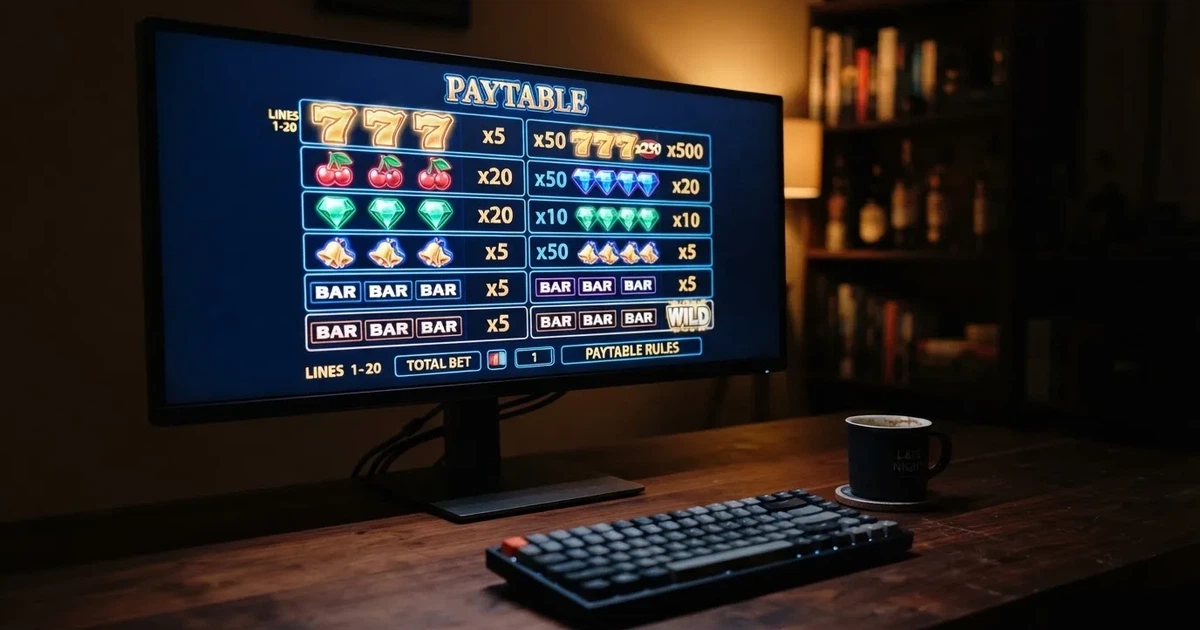
Anyone who has looked for these games has already met the central oddity of the Australian online casino market. The titles are advertised heavily. Quickspin-branded slot games show up on glossy offshore sites, complete with welcome packages and free-spin bundles, and the same sites are targeted by the ACMA, blocked by Australian internet service providers and, in some cases, named in formal warnings to the operators behind them. The market for Quickspin casinos in Australia is a market that exists in the open and does not exist at all under Australian law, and that contradiction is the only honest starting point for a page about it.
This guide works through that contradiction rather than around it. It looks at what Quickspin actually produces as a studio, where the games sit inside the regulated Australian landscape, what offshore operators marketing the titles have had happen to them under the Interactive Gambling Act, and what an inducement — a deposit bonus, a free-spin bundle, a “no deposit” offer — typically costs a player who takes it up. The comparison table at the centre of the page lists eleven operators the ACMA has acted against directly. None of them is recommended. The aim is to make the cost visible, not to push the reader toward any one of them.
Table of Contents
- Quickspin on a mobile browser and through a casino app
- Quickspin-branded slot games: what the studio actually makes
- The eleven operators the ACMA has acted against
- The Australian frame: what is legal, what is not
- Responsible gambling supports relevant to Quickspin-branded slots
- Deposits, withdrawals and the offshore payout picture
- Bonuses and free-spin offers as inducements
- How the comparison on this page was put together
- The current reform window
- Tax and winnings: the Australian position
- What an Australian player can actually do
- Frequently asked questions
Quickspin on a mobile browser and through a casino app
Quickspin-branded slot titles are built in HTML5, which is the technical point that matters most for how they run on a phone. The games do not require a separate download or an installed casino app to play in a browser. They load directly inside the page a player has already opened, scale to the screen they are viewed on and use the touch interface for spins, bet sizing and the paytable. That is the practical shape of a “Quickspin mobile casino”: a browser tab on a phone, not a packaged application sitting on the home screen.

Some offshore operators that carry Quickspin titles do ship their own mobile apps, available through links on the operator site rather than through Google Play or Apple’s App Store. Australian app stores do not carry real-money casino apps, because of the Interactive Gambling Act. What an Australian player downloads in practice is an APK file or a profile install from a third-party page, and the install sits outside the protection of either store’s review process. The games themselves, once loaded, run the same way they would in a desktop browser, but the wrapper around them has none of the safeguards an Australian app store would normally provide.
The most useful comparison point is between browser play on a regulated Australian wagering site and browser play on an offshore casino carrying Quickspin. Both are HTML5, both load in a few seconds on a modern handset, both run without an app. The relevant difference is what sits underneath the game: an Australian wagering site carries a licence, a complaint body and a connection to BetStop, the National Self-Exclusion Register. An offshore casino carries none of those. The mobile experience on the screen looks similar. The legal and financial shape behind the screen does not.
Quickspin-branded slot games: what the studio actually makes
Quickspin is a Stockholm-founded slot studio that began in 2011 with three developers who, by the company’s own account, set out to make the slot games they wanted to play themselves. It was acquired by Playtech in 2016, a step the studio describes on its own site as “a major milestone”, and it now operates from offices in Stockholm, Sliema in Malta and Kyiv in Ukraine, with about 100 staff across more than 30 nationalities spread over five countries. The studio’s catalogue sits inside the wider Playtech distribution network, which is how Quickspin titles end up on hundreds of offshore casino sites rather than on a small number of platforms the studio runs itself.
Quickspin holds a Malta Gaming Authority Critical Gaming Supply Corporate licence, number MGA/CRP/137/2007, issued on 6 December 2018. It is also covered by its parent company Playtech’s UK Gambling Commission account, number 38516, which the UKGC register lists as active with remote casino and gambling-software licences. Those licences cover the studio’s supply of games to licensed operators; they do not, in themselves, make any casino site legal in Australia. A licence issued in Malta or the United Kingdom authorises a casino to operate in those jurisdictions, and the same licence document does not extend to taking bets from people in Australia, where the Interactive Gambling Act 2001 prohibits the supply of online casino games to Australian customers.
The titles themselves are video slots with the kind of feature set that has become standard in the segment: free-spin rounds with multipliers, wilds that expand or lock, scatter pays, and a small number of jackpot variants. The studio’s reputation is built on a tight catalogue rather than a sprawling one, and the games are typically released in a small number of regional variants to satisfy different regulated markets.
For an Australian player the question is not what Quickspin makes — it is where the games can be played lawfully. In Australia, licensed online wagering covers racing and sport, not casino games or pokies, and the answer for slots is the land-based venues that state and territory regulators supervise. Offshore sites that market Quickspin titles to Australians are doing so outside the law, regardless of the licence documents those sites display at the foot of their home pages.
The eleven operators the ACMA has acted against
The comparison below is not a ranking and is not a recommendation. Each of the eleven operators has had a formal warning issued against it by the ACMA under the Interactive Gambling Act 2001, and the warning names the parent company and the date the ACMA published it. The table illustrates the regulator action on this subject: it puts the eleven brands side by side with the regulator action each one attracted, and lets a reader see how far the ACMA’s enforcement has reached into the offshore segment that markets Quickspin titles.
| Brand | ACMA action and date | Operator named by the ACMA | Quickspin coverage |
|---|---|---|---|
| RocketPlay | Formal warning, March 2026 | Pulsup Ltd (Rocketplay.com.au); earlier Dama N.V., May 2022 | — |
| Level Up Casino | Formal warning, May 2022 | Dama N.V. | Wazdan listings report it as a partner site |
| Woo Casino | Formal warning, March 2025 | Dama N.V. | — |
| Spirit Casino | Formal warning, May 2025 | Dama N.V. | — |
| National Casino | Formal warning, July 2025 | Consolutetish S.R.L. | Betsoft and Pragmatic Play listings report it as a partner site |
| Bizzo Casino | Formal warning, July 2025; earlier 2022 | Consolutetish S.R.L.; earlier TechSolutions | — |
| Ignition Casino | Formal warning, July 2025 | Bamboo Media | — |
| Instant Casino | Formal warning, February 2025 | EOD Code SRL | — |
| Jackbit | Formal warning, April 2026 | Ryker B.V. | — |
| Casino Intense | Formal warning, April 2025 | Sterplay Holding Ltd | 1spin4win and other studio listings report it as a partner site |
| Sky Crown | Formal warning, September 2022 | Hollycorn N.V. | — |
The empty cells in the right-hand column are not a gap in the table; they are the point of it. Most of these operators do not appear on the studio listings pages Quickspin or its peers publish, which means the brand a player sees advertised as carrying Quickspin titles may or may not actually run them. What the table proves is simpler and starker: every brand listed has been the subject of a formal warning from the regulator whose job it is to police this market, and none of them holds an Australian licence. The Quickspin column adds one layer of detail for the three operators whose names do surface in studio listings pages, and stays blank everywhere else because nothing in the public record puts the brand on Quickspin’s distribution list.
A reader who arrived at this page looking for a shortlist to choose from is owed a direct statement. There is no shortlist to choose from. The Interactive Gambling Act prohibits the supply of online casino games — which is the category Quickspin slots fall into — to people in Australia, and no state or territory issues a licence that would cover them. The brands above are not “Quickspin casinos in Australia” in the sense the marketing language implies; they are offshore sites marketing Quickspin titles into a market they are not licensed to serve.
RocketPlay
Pulsup Ltd received a formal warning from the ACMA in March 2026 over the domain Rocketplay.com.au, with the warning publication identifying the site as offering prohibited interactive gambling services to Australians. The same brand had already been the subject of a 2022 warning to Dama N.V., which at that time covered Rocketplay alongside five other casino brands. Two warnings, four years apart, on the same brand name, point to a parent-company structure that has shifted across that period without shifting the underlying problem: the site has continued to take Australian-facing traffic and the ACMA has continued to act. The Quickspin coverage cell is empty; the studio’s own listings pages do not name Rocketplay.
Level Up Casino
Level Up Casino was named in the May 2022 ACMA warning to Dama N.V., which covered six brands at once — Bambet, Dazard, Level Up, Rocketplay, Wild Tornado and Cobra Casinos. Wazdan’s own site lists Level Up among the operator partners carrying its games; Quickspin’s pages do not, so the connection to Level Up here runs through a peer studio’s distribution list rather than through Quickspin itself. The relevant point for a reader is that the brand sits inside a parent-company portfolio that the ACMA has treated as a single enforcement target.
Woo Casino
Woo Casino drew a formal warning to Dama N.V. in March 2025, more than two years after the original 2022 warning to the same parent. The gap between warnings is not unusual; offshore operators often rebrand or re-route their domains after an enforcement action and the same parent company appears under a fresh notice. Quickspin coverage on Woo Casino is not attested in studio listings.
Spirit Casino
Spirit Casino drew a formal warning to Dama N.V. in May 2025, two months after the Woo Casino warning to the same parent. The clustered timing is consistent with the ACMA treating a single operator portfolio as one enforcement matter. No studio listings page identifies Spirit Casino as a Quickspin partner.
National Casino
National Casino was named in the ACMA’s July 2025 warning to Consolutetish S.R.L., which also covered Bizzo Casino in the same notice. Studio listings pages identify National Casino as a partner site of both Betsoft and Pragmatic Play, which puts it inside the broader peer-studio distribution network Quickspin sits in. The connection is real but indirect — it runs through studios that share Quickspin’s distribution channels rather than through Quickspin itself.
Bizzo Casino
Bizzo Casino received a formal warning to Consolutetish S.R.L. in July 2025. It had already been the subject of an earlier 2022 warning to TechSolutions (CY) Group Limited and TechSolutions Group N.V., making it one of the few brands in this list with two named parent companies across two ACMA actions. The Quickspin column is blank; no studio listing names Bizzo directly.
Ignition Casino
Ignition Casino received a formal warning to Bamboo Media in July 2025. The brand is well known in the US-facing market and has appeared in Australian-facing marketing through affiliate redirects. Studio listings pages do not name Ignition Casino as a Quickspin partner.
Instant Casino
Instant Casino drew a formal warning to EOD Code SRL in February 2025. The brand has been a frequent subject of affiliate promotion into the Australian market; the ACMA’s action here is one of several warning notices the agency has issued to the operators behind it. Quickspin coverage is not attested.
Jackbit
Jackbit drew a formal warning to Ryker B.V. in April 2026, alongside CasinOK in the same notice. Jackbit operates in the crypto-friendly segment of the offshore market, and the formal warning marks the ACMA’s response to that segment’s Australian-facing activity. No studio listings page names Jackbit as a Quickspin partner.
Casino Intense
Casino Intense drew a formal warning to Sterplay Holding Ltd in April 2025. Studio listings pages identify Casino Intense as a partner of 1spin4win and others, putting it inside the wider peer-studio network. Quickspin coverage is not directly attested.
Sky Crown
Sky Crown drew a formal warning to Hollycorn N.V. in September 2022, in the same notice that covered Blue Leo. Sky Crown’s positioning in the offshore market has been Australian-facing for several years, and the brand has been a familiar name in affiliate marketing targeting Australian traffic. Studio listings do not name Sky Crown as a Quickspin partner.
The Australian frame: what is legal, what is not
The legal shape of the Australian online gambling market is set by the Interactive Gambling Act 2001, strengthened by the Interactive Gambling Amendment Act 2017. The Act makes it an offence to provide online casino games, online pokies or in-play betting to a person physically in Australia. No state or territory issues a licence that would cover those products. What is licensed is wagering on racing and sport placed before the event, lotteries and keno — in practice, licensed by the Northern Territory Racing and Wagering Commission. The NTRWC regulates 52 of Australia’s online bookmakers, including Sportsbet, Bet365 and Ladbrokes, and meets once a month in Darwin with no full-time staff; the arrangement exists because the Northern Territory’s tax treatment of wagering operators is favourable, not because the Territory’s regulator has the scale to supervise 52 remote operators in depth.
Minimum age for any licensed gambling product in Australia is 18. The ACMA investigates breaches, issues formal warnings and directs Australian internet service providers to block illegal sites. As of June 2026, the ACMA reports that 1,751 illegal gambling and affiliate marketing websites have been blocked since the first blocking request in November 2019, and that more than 230 unlicensed gambling services have left the Australian market since enforcement was strengthened in 2017. A single round reported in June 2026 added 12 more sites to the block list — 7Signs, ChromaBet, Donbet, Duospin, Freshbet, Slots Gem, Jacks Club, Lucky Start, Pointsbetz.com, Spinrise, Vinyl Casino and Wildsino — making the running total a moving figure rather than a fixed one.
The legal target under the IGA is the provider of the service, not the individual player. No Australian reader of this page is at risk of prosecution for having played on an offshore site. What is at risk is the balance sitting in the account if the site is blocked mid-session, and the absence of any Australian complaint body or consumer protection route if a withdrawal is refused. H2 Gambling Capital’s 2025 report estimates that Australians lose about A$3.9 billion a year to illegal gambling sites, and that the share of gambling going through legal channels fell from 74% in 2021 to 64%. The bulk of that shift is happening on the supply side the IGA targets, not on the player side.
What is licensed onshore
Australian-licensed wagering covers racing, sport and lotteries. The licensed operators are bookmakers registered in the Northern Territory or another jurisdiction, and they accept bets placed before the event, not during it. In-play betting on racing and sport is also restricted under the IGA in most forms; the small set of in-play products that are licensed is the exception rather than the rule. The products covered are not casino games and not pokies. A player looking for an Australian-licensed route into a slot machine is looking at a land-based venue, not an online product.
What is offered offshore
Everything else. Offshore operators offer the products the IGA prohibits for the Australian market: online casino games, online pokies, in-play betting on a wide range of markets, and live dealer tables. The Australian-facing marketing of those products is what the ACMA acts against. The offshore licence document an operator displays at the foot of its home page — most often Curaçao, sometimes Malta, occasionally Anjouan — authorises the operator to take bets from a defined set of jurisdictions; it does not authorise the operator to take bets from Australians, and the same document is not a protection for an Australian customer who has a dispute.
Responsible gambling supports relevant to Quickspin-branded slots
The responsible-gambling supports that apply to Australian players sit on the licensed side of the market. The National Gambling Helpline, 1800 858 858, is free and operates 24 hours a day, with a chat service available at Gambling Help Online. BetStop, the National Self-Exclusion Register, has been live since August 2023 and lets a player exclude themselves from every Australian-licensed online and phone wagering service with a single registration.
The boundary that matters here is the one between licensed and offshore. BetStop binds Australian-licensed services only. A player who has registered with BetStop is excluded from licensed bookmakers; the same registration does not reach an offshore casino marketing Quickspin titles, because no offshore casino is connected to BetStop. Self-exclusion on an offshore site is a voluntary measure the site itself applies, with no Australian oversight. For a player whose gambling has become a problem, the responsible answer is to use BetStop for the licensed side and to treat the offshore side as unprotected territory.
Other Australian-licensed protections do not extend either. The credit-card ban on licensed online wagering, in force since 11 June 2024, applies to operators licensed under the Australian regime; an offshore site accepting credit cards or cryptocurrency for an Australian customer is not subject to the same rule. Loss limits, deposit ceilings and reality-check prompts sit in the licensed operators’ product, not in the offshore ones. The legal frame gives an Australian player the protections listed here, and nothing else.
Deposits, withdrawals and the offshore payout picture
On an Australian-licensed wagering site, deposits and withdrawals run through the methods the licensing rules allow: debit card, bank transfer, PayID/Osko and BPAY. Settlements through PayID and Osko are typically near-instant; BPAY and bank transfer can take a working day or two. Credit cards and credit-related products, and digital currencies, are not permitted as payment for licensed online wagering since 11 June 2024, with penalties of up to A$247,500 for an operator that accepts them. The list of accepted methods is short, regulated and audited.
On an offshore casino, the deposit and withdrawal methods are determined by the operator, not by an Australian regulator. They typically include debit and credit cards (the credit card side is in breach of Australian rules even though the operator accepts it), bank transfer, e-wallets such as Skrill and Neteller, and cryptocurrencies including Bitcoin, Ethereum and USDT. Settlement times depend on the method: e-wallet withdrawals can clear within a day once the operator’s internal processing approves them, bank transfers take longer, and crypto withdrawals are typically faster in technical terms but depend on confirmation times on the chain the operator uses.
The cost to the player sits in two places. First, an offshore operator does not guarantee a withdrawal will be processed at the speed the marketing suggests; the operator’s own terms usually reserve several business days for “verification” and “processing”, and what looks like an instant payout on the surface can sit in a queue for a week. Second, there is no Australian complaint body for a refused withdrawal. A dispute with an Australian-licensed wagering operator can be escalated through the operator’s nominated complaints mechanism and ultimately to the relevant state or territory regulator. A dispute with an offshore casino is a dispute with the operator alone, in whatever jurisdiction its licence document names, with whatever recourse that jurisdiction offers.
Quickspin titles in a payment-method context
Quickspin games themselves do not determine deposit or withdrawal method. The payment methods are set by the operator running the site, and Quickspin is one of many studios whose titles sit on that operator’s platform. A player who has chosen an offshore site because of the Quickspin catalogue inherits the operator’s payment stack — the methods, the limits, the processing times and the absence of an Australian complaints route — rather than anything the studio sets. The studio’s Malta Gaming Authority Critical Gaming Supply licence, MGA/CRP/137/2007, authorises Quickspin to supply games to licensed operators; it does not, and cannot, authorise any of those operators to take bets from Australians.
Bonuses and free-spin offers as inducements
The marketing language around Quickspin casinos in Australia leans heavily on bonuses and free-spin bundles. The shape of an offer on an offshore site typically includes a deposit match — the operator adds a percentage of the player’s first deposit as bonus funds — bundled with a free-spin allocation on one or more named Quickspin titles. The numbers are large because the inducement is meant to overcome the player’s hesitation about an unlicensed site, and the conditions attached to those numbers are where the cost to the player actually lives.
A wagering requirement is the central condition. The bonus funds and, often, the winnings from the free spins must be turned over a stated multiple of times before they can be withdrawn. A typical offshore welcome package attaches a wagering multiple in the 35x to 50x range to the bonus amount, and a separate multiple to free-spin winnings. A max-cashout cap is the second condition: even after the wagering requirement is cleared, the operator sets a ceiling on the amount that can be withdrawn from bonus-derived winnings, often in the low hundreds of dollars. A game-weighting clause is the third: not every Quickspin title contributes 100% to the wagering requirement, and some contribute nothing, which means a player who plans to clear the bonus on a specific game has to check the weighting table before they start.
The free-spin side is where the math tightens further. Free spins are typically allocated at a small per-spin value — A$0.10 to A$0.20 — and the wagering requirement applies to the winnings, not the stake. A player who runs through 100 free spins at A$0.20 and lands a small win will see that win enter the wagering requirement at the operator’s stated multiple, and the max-cashout cap will then apply. The win that looked like a gift on the marketing page becomes a number the player has to clear a multiplier on, against a ceiling the operator has set in advance.
What the bonus actually costs
The arithmetic of a bonus offer on a Quickspin slot illustrates the cost for a reader who has decided to take up such an offer despite the warnings above. A reasonable scenario: a A$100 deposit match with a 40x wagering requirement on the bonus amount, played on a Quickspin slot with a published RTP in the mid-96% range and a stake-per-spin of A$1. The required turnover is A$4,000, which at 5 seconds per spin and A$1 per spin is 4,000 spins and roughly 5.6 hours of continuous play. The expected loss on that turnover at a 96% RTP is about A$160, which is more than the deposit and the bonus combined. The bonus, in other words, costs more than it pays under the assumptions the marketing language leaves out.
The conditions attached to the offer can move the cost further. A max-cashout cap that limits bonus-derived withdrawals to, say, A$200 means the player cannot realise any upside beyond that ceiling, however the wagering requirement resolves. A game-weighting table that down-weights the player’s chosen Quickspin title forces a longer turnover to clear, and a longer turnover at the same house edge costs the player more in expected loss. None of these conditions is unusual; they are the standard structure of an offshore welcome package, and a reader who takes up such an offer is paying the cost they add, in addition to the underlying house edge of the game itself.
The blocking rate as a measure of enforcement reach
The blocking rate of illegal sites over the ACMA’s enforcement period is the cleanest summary of how much the market has moved. As of June 2026, 1,751 illegal gambling and affiliate marketing websites have been blocked since the first blocking request in November 2019, which works out to roughly 88 blocks per quarter, or about 29 sites blocked every month across the seven-year window. The running total grew by 12 in the June 2026 round alone — a single month’s work. The pace of enforcement has not slowed; it has accelerated, with the largest quarterly counts falling in the most recent reporting periods rather than the earliest.
The volume of blocks does not, on its own, tell a reader what proportion of the offshore market has been removed. The 1,751 figure is a count of enforcement actions, not a count of unique operators, and many operators rebrand and reappear under fresh domains after a block. The figure that bears on a reader’s decision is the direction of travel: more blocks per quarter now than at any earlier point in the period, and a regulator that has named specific operators in formal warnings rather than only blocking their domains. An offshore operator with an ACMA formal warning against it is more likely to be the next target of a deeper enforcement action than a fresh brand with no history.
How the comparison on this page was put together
The shortlist of eleven operators in the table above is not a shortlist of recommended sites; it is a shortlist of sites the ACMA has acted against directly. The criterion is regulator action, not bonus size, not game catalogue, not payout time. Each operator in the table has had a formal warning issued against it under the Interactive Gambling Act 2001, and the warning names the parent company and the date the ACMA published it. The same criterion applies to every brand on the list — there is no second tier, no honourable mentions section, no operator that escapes the regulator action framing.
The criteria that did not make the cut are the criteria affiliate marketing pages rely on: welcome package size, free-spin count, game catalogue breadth, loyalty programme structure, mobile app availability. Those criteria belong to the offshore marketing layer, which is the layer the IGA prohibits. A comparison built on those criteria would be a comparison between options none of which is legal in Australia, and the result of such a comparison would not be a recommendation any reader could use. The single criterion the page uses — ACMA enforcement action — is the criterion that lets the reader see what is actually true.
Within that single criterion, the table records two pieces of information: the warning date and the parent company named in the warning. Both come from the ACMA’s own publication of the formal warning, which is the public record of the action. A second warning on the same brand under a different parent name is recorded as such, because it shows that the brand has survived a reorganisation and the regulator’s view of it has not changed. The Quickspin column adds information for the three brands whose names appear on peer-studio listings pages, and stays blank for the rest, because nothing in the public record puts those brands on Quickspin’s distribution list. An empty cell is a more honest answer than a guess.
The current reform window
The Interactive Gambling Amendment (Gambling Reform) Bill 2026 passed Parliament on 19 August 2026. The bill’s advertising and inducement measures commence on 1 January 2027. As of the publication of this page, the bill is law with a future start date; the inducement measures are not yet in force. A reader reading this page in the back half of 2026 will see the new law on the books but not yet operating, and the offshore bonus structures described above remain the structure the market is running on through the rest of this year.
The reform measures that start in January 2027 are aimed at advertising and inducements around wagering, not at the supply of online casino games, which has been prohibited since 2017. The change the bill introduces is in how wagering operators market their products to Australians, not in whether casino games can be supplied. Online casino games and online pokies remain prohibited to supply to Australian customers after the reform as they were before it. The bill tightens the inducement layer; it does not open a new licensed channel for the products the rest of this page is about.
Tax and winnings: the Australian position
Gambling winnings of a recreational player in Australia are not assessable income. Section 6-5 of the Income Tax Assessment Act 1997 covers the position, and the practical effect is that a punter who lands a win — on a horse, on a sports bet, on a slot machine in a land-based venue — does not pay income tax on the win, and cannot deduct the losses. The exception is a person who carries on a business of gambling, which the Australian Taxation Office treats as a distinct activity with its own record-keeping and reporting obligations. A recreational player reading this page falls outside the business exception, and the winnings side of the question is settled by the general rule.
The losses side is more relevant to most readers of this page. Losses on gambling are not deductible against other income for a recreational player, regardless of whether the gambling was on a licensed product or on an offshore site. The cost of an offshore casino session is a personal expense, and the bonus structure described above adds to that expense rather than reducing it. A reader making the comparison between the licensed and the offshore side should price both sides as fully out-of-pocket for a recreational player, because that is what they are.
What an Australian player can actually do
For a player who wants to play Quickspin titles in a regulated environment, the answer is land-based venues. State and territory regulators supervise pubs, clubs and casinos, and the electronic gaming machines in those venues are the regulated Australian equivalent of what an offshore site markets as a Quickspin slot. Aristocrat Leisure, Australia’s largest gambling-machine manufacturer and the second-largest slot manufacturer worldwide behind International Game Technology, builds the bulk of the machines installed in Australian venues; its 2025 revenue was A$6.30 billion on a normalised net profit after tax and amortisation of A$1.55 billion, with 7,400 employees. The Aristocrat catalogue is what an Australian player sees in a regulated venue, and the experience there is the regulated counterpart to the offshore Quickspin marketing.
For a player who wants to bet on racing or sport online, the licensed wagering operators carry a full Australian framework: deposits through PayID, Osko, BPAY and debit card, withdrawals through the same channels, complaints routes through the relevant state or territory regulator, and connection to BetStop for self-exclusion. The products covered are not casino games. The licensed wagering channel and the land-based venue channel are the two regulated routes, and they do not overlap.
For a player who is weighing an offshore site despite the warnings above, the page has tried to make the cost visible. The expected loss on the turnover required to clear a standard welcome package is greater than the deposit and the bonus combined, under the assumptions the marketing language leaves out. The withdrawal is at the operator’s discretion, with no Australian complaint body behind it. The site can be blocked while the balance is still on it, because the ACMA’s enforcement has accelerated rather than slowed. The licensed alternative is more limited in product range and is the more expensive route on a per-spin basis in some cases, but it carries the protections the offshore route does not.
Frequently asked questions
Is Quickspin legally available to players in Australia?
No online casino or online pokies product is licensed for the Australian market under the Interactive Gambling Act 2001. Quickspin holds a Malta Gaming Authority licence and is covered by Playtech’s UK Gambling Commission account, both of which authorise supply to licensed operators in those jurisdictions; neither authorises an operator to take bets from Australian customers. Quickspin titles can be played on offshore sites that market to Australians, but the supply of those games to Australian customers is prohibited.
What kinds of games does Quickspin make?
Quickspin is a video-slot studio. Its catalogue runs to slot titles with free-spin rounds, multipliers, wilds and scatter pays, plus a small number of jackpot variants. The studio was founded in Stockholm in 2011, acquired by Playtech in 2016, and now operates from offices in Stockholm, Sliema and Kyiv with about 100 staff across more than 30 nationalities. The studio’s output is HTML5-based, which is why the games run on a mobile browser without a separate download.
Are Quickspin games offered at land-based venues in Australia?
Quickspin is an online slot studio and its catalogue is built for online distribution through Playtech’s network. The regulated Australian slot machines are supplied by domestic manufacturers, principally Aristocrat Leisure. An Australian player looking for a regulated slot experience finds it in pubs, clubs and casinos under state and territory supervision, where the machines are Aristocrat and other Australian-licensed manufacturers’ product rather than Quickspin titles.
How can Australians check whether a Quickspin title is fair before ever considering play?
The studio’s games are independently tested and certified under its Malta Gaming Authority licence (MGA/CRP/137/2007) and through Playtech’s UK Gambling Commission account. The published RTP for any given Quickspin title is on the studio’s game page. None of those certifications authorises an Australian-facing casino to take bets from Australians; the certifications tell a player the game is fair as a random-number-generator product, not that the casino offering it is licensed in Australia.
Why do offshore sites keep advertising Quickspin games to Australian visitors?
Because the offshore casino market is large, the Australian-facing segment of it is large, and the enforcement window on the Australian side has not closed the marketing channel completely. The ACMA’s enforcement has accelerated — 1,751 sites blocked since November 2019 and a quarterly pace that has grown rather than slowed — and the inducement measures in the Interactive Gambling Amendment (Gambling Reform) Bill 2026 commence in January 2027. The market the offshore sites are marketing into is shrinking, but it is not closed.
What should an Australian do if they see a Quickspin game promoted by an unlicensed site?
The ACMA accepts reports of illegal gambling services through its website. The formal warning notices and the block list are both published, so a reader can check whether a brand has already been the subject of action. For a player who has already played on an unlicensed site and has a balance or a withdrawal in dispute, the route is limited: there is no Australian complaints body for offshore operators, and the credit-card ban that applies to licensed wagering does not extend to the offshore side. The licensed Australian wagering and land-based venue channels are the regulated alternative, with their own product limits but with the protections the offshore side does not carry.