
Booongo Casinos in Australia: What the Market Actually Looks Like in 2026
Booongo’s slot catalogue has become a familiar sight on offshore casino sites pitched at Australian players. The premise of this page — that there are best Booongo casinos to choose from in Australia — sits in an awkward place. Under the Interactive Gambling Act 2001, no Australian-licensed operator can offer online casino games or online pokies. Every site that promotes Booongo titles to Australian accounts is doing so from outside Australia, and the Australian Communications and Media Authority has spent the last several years formalising that fact, one warning letter at a time. The rest of this page works through what that means for anyone weighing where — or whether — to play.
Currency stamp: Data current as of 29 October 2026 and checked against the ACMA’s published register of formal warnings and blocking requests.
Table of Contents
- Mobile and App Versions of Booongo Casino Sites
- What Booongo’s Slot Catalogue Actually Contains
- What the Operator Landscape Looks Like — and Why It Is the Way It Is
- What the Blocking Record Tells Us
- The Legal Frame Around Online Casino Play
- Responsible Play and Where to Get Help
- What Deposits and Withdrawals Look Like Offshore
- What Bonuses and Free Spins Are Worth on These Sites
- Brand-by-Brand Notes on the Featured Set
- The Bigger Picture on Australian Gambling Losses
- Tax Treatment of Any Winnings
- What a Reader Should Take Away
- Frequently Asked Questions
Mobile and App Versions of Booongo Casino Sites
Booongo’s slot library was built in HTML5 from the start, which is the practical reason every site carrying its titles works straight from a mobile browser. A standalone “Booongo app” does not exist, because Booongo is a content supplier, not an operator — the apps that appear under names like “Booongo casino” in app stores are skins built around its games by the offshore operator that published them.
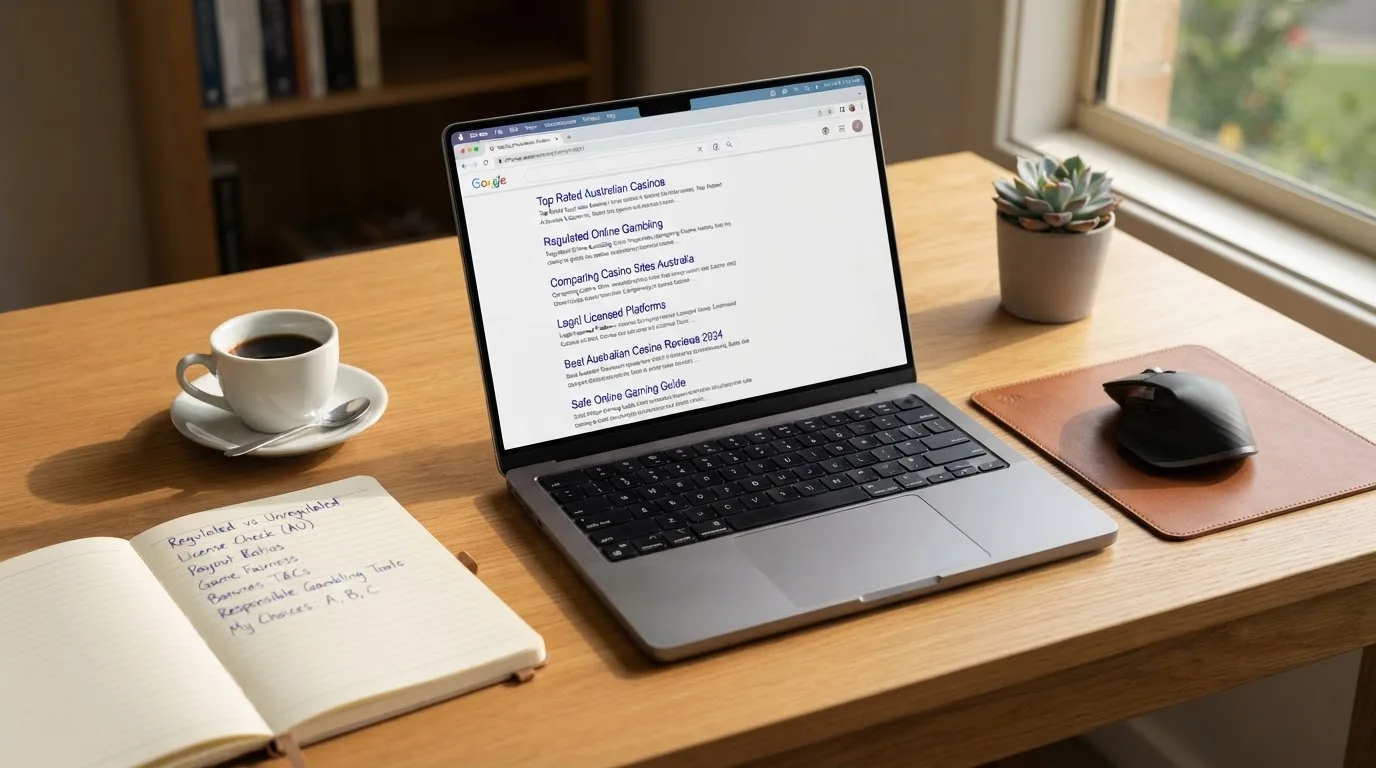
What an Australian player gets on a phone, then, is the same browser-based lobby any desktop visitor would see, scaled down and re-flowed for portrait orientation. Deposits, withdrawals, bonus claims and live-chat support run through the same account whether the player logs in on a laptop or on a 4G connection in a cafe. Game loading times are determined by the studio’s lightweight build rather than by anything the operator has tuned, which is why Booongo titles tend to perform reliably on older handsets and on patchy reception.
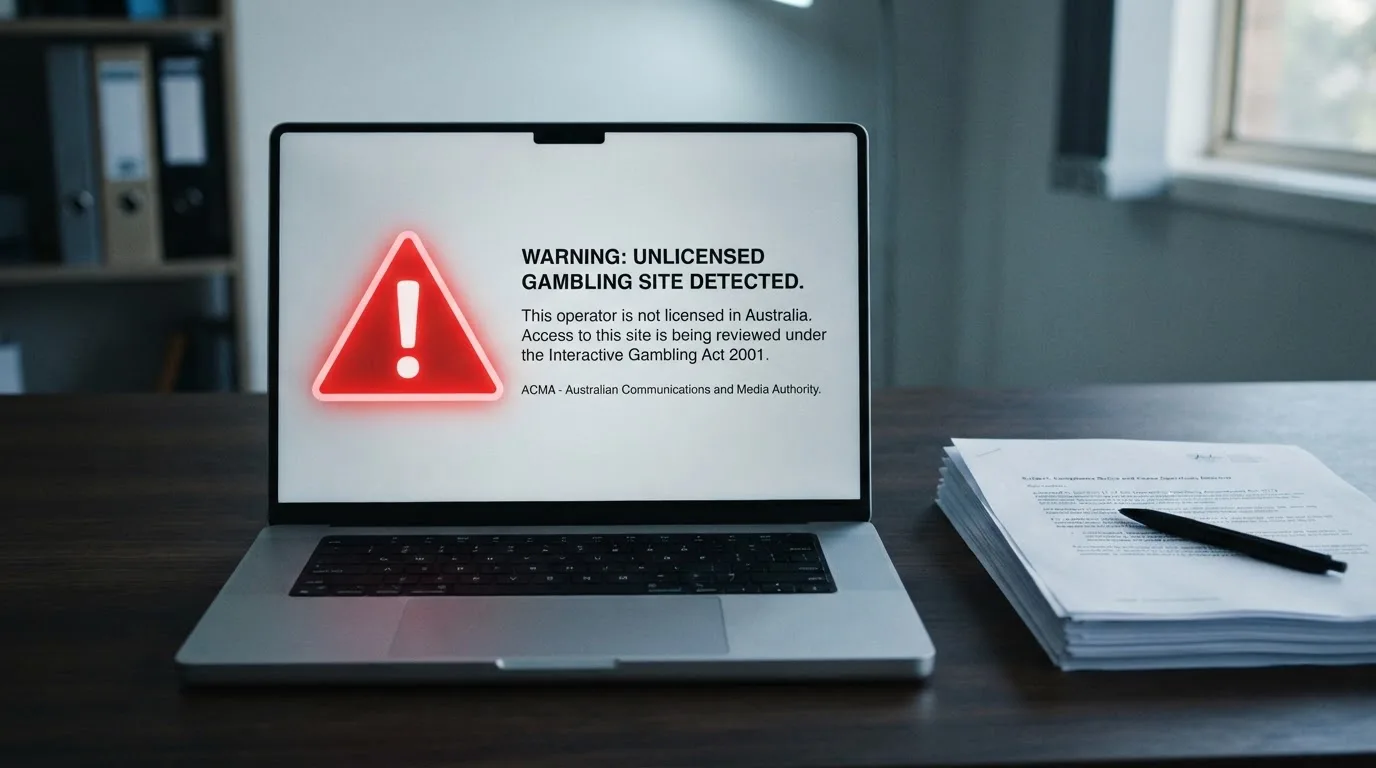
The catch sits one layer up. An app that has been downloaded from a storefront still answers to the operator that published it, and that operator in the Australian context is an offshore entity with no Australian licence. The convenience of a tap-to-open icon does nothing to change what happens when a withdrawal stalls, when a bonus term is disputed, or when the site is added to the ACMA’s next blocking request and disappears overnight.
What Booongo’s Slot Catalogue Actually Contains
Booongo began life as a studio supplying 3D video slots to online casino operators, and the 3D presentation was its early calling card. The company restructured in 2021, and the regulated-market brand that emerged from that process — 3 Oaks Gaming — has since picked up a UK Gambling Commission remote operating licence on 9 February 2024, a Malta Gaming Authority recognition notice on 4 August 2025, and earlier market approvals in Portugal and Romania. ## Certified Slot Titles
The UK Gambling Commission and Malta Gaming Authority have certified several 3 Oaks Gaming titles, confirming their availability for regulated markets.
| Slot Title | Regulator Certification |
|---|---|
| 3 Pots of Egypt | UK Gambling Commission |
| Storm of Olympus | UK Gambling Commission |
| 777 Fruity Classic | UK Gambling Commission |
| Hawaii Riches | UK Gambling Commission |
| Sun of Egypt 4 | Malta Gaming Authority |
| Coin UP: Lightning | Malta Gaming Authority |
| 3 Hot Chillies | Malta Gaming Authority |
The catalogue being marketed under the “Booongo” name on offshore sites is therefore the legacy library from before the restructuring, repackaged under a brand that is no longer the same legal entity. That distinction matters for anyone trying to find the developer behind a specific game: the slot running on an offshore site may be signed by “Booongo” while its current rights-holder is registered elsewhere.
A typical Booongo paytable follows the 5-reel, multi-payline structure common to mid-2010s online slots. Volatility on the most-circulated titles tends to sit on the higher side, which is part of the marketing pitch to offshore operators — long dry stretches punctuated by larger hits read better in promotional screenshots than steady small wins. Specific published RTP figures and volatility ratings for individual titles are not carried in the research underlying this page, and that absence is worth being honest about: the studio’s own game pages are the only reliable source for those numbers, and they may not exist for every legacy title that is still circulating.
The paytable itself, when a player opens it, lists the symbol hierarchy from highest-paying to lowest, the value of each combination, the rules for scatter and wild substitutions, and any bonus-round trigger conditions. None of that machinery is unique to Booongo — what differentiates one studio from another is usually the maths model underneath and the visual treatment on top.
What the Operator Landscape Looks Like — and Why It Is the Way It Is
Eleven brands have appeared in the ACMA’s published register of formal warnings in connection with prohibited interactive gambling services, and the table below sets out each one alongside the operator name the ACMA itself used and the date of the action. The list is presented as a record of regulatory action, not as a ranking or shortlist. There is no Booongo-specific licence or endorsement to verify against, and the brands appear because the ACMA itself named them.
| Brand | ACMA action and date | Operator named by the ACMA | Subject support |
|---|---|---|---|
| RocketPlay | Formal warning, March 2026 | Pulsup Ltd | — |
| Level Up Casino | Formal warning, May 2022 | Dama N.V. | listings reference |
| Woo Casino | Formal warning, March 2025 | Dama N.V. | — |
| Spirit Casino | Formal warning, May 2025 | Dama N.V. | — |
| National Casino | Formal warning, July 2025 | Consolutetish S.R.L. | listings reference |
| Bizzo Casino | Formal warning, July 2025; earlier 2022 | Consolutetish S.R.L.; earlier TechSolutions | — |
| Ignition Casino | Formal warning, July 2025 | Bamboo Media | — |
| Instant Casino | Formal warning, February 2025 | EOD Code SRL | — |
| Jackbit | Formal warning, April 2026 | Ryker B.V. | — |
| Casino Intense | Formal warning, April 2025 | Sterplay Holding Ltd | listings reference |
| Sky Crown | Formal warning, September 2022 | Hollycorn N.V. | — |
The shape of the table reflects the shape of the Australian offshore-casino market. Dama N.V. shows up three times — for Level Up, Woo and Spirit — because the same Curaçao-incorporated operator runs multiple brands and the ACMA’s enforcement follows the corporate entity, not the marketing surface. Consolutetish S.R.L. appears twice, for National and Bizzo, with Bizzo additionally having been warned in 2022 under the earlier TechSolutions ownership. Most of the operator names are unfamiliar to anyone outside the iGaming compliance world, which is itself a clue: an Australian player typically meets the brand first, the corporate parent never.
The “Subject support” column records whether the research found any published connection between this brand and Booongo or its 3 Oaks successor. Three brands — Level Up, National and Casino Intense — carry listings references from supplier pages, which is to say a third-party game provider’s catalogue mentions the brand as a partner. Eight carry no such reference, and the column reflects that with an em dash rather than an invented association.
What the Blocking Record Tells Us
The ACMA’s first blocking request went to Australian internet service providers in November 2019. By the agency’s own June 2026 count, 1,751 illegal gambling and affiliate marketing websites have been added to the block list since, and more than 230 unlicensed gambling services have left the Australian market since enforcement was strengthened in 2017. The latest reported round alone asked ISPs to block twelve sites in one batch: 7Signs, ChromaBet, Donbet, Duospin, Freshbet, Slots Gem, Jacks Club, Lucky Start, Pointsbetz, Spinrise, Vinyl Casino and Wildsino.
What does 1,751 blockings over roughly six and a half years actually mean in practice? Divided across the months from November 2019 to the June 2026 reporting date, the long-run rate works out to somewhere between twenty and twenty-five sites added per month, with the variation reflecting the size of individual rounds rather than any steady drumbeat. That is the condition: a band, not a single figure, because the ACMA’s rounds are batched and the months in between carry no enforcement action at all. The point worth sitting with is not the average but the asymmetry — the regulator adds sites on its own schedule, but a player who has deposited with one of them does not get a refund notice when the site vanishes.
The blocking list is one of two enforcement rails the ACMA uses. The other is the formal warning letter, which precedes a blocking request in most cases and which is the mechanism that produced every brand named in the table above. A site that ignores a warning can expect to be on the next blocking round; a site that complies by exiting the Australian market ends up in the “230 services that left” tally rather than in the block list.
The wider economic backdrop is set out in H2 Gambling Capital’s 2025 estimate: Australians lose roughly A$3.9 billion a year to illegal gambling sites, and the share of gambling going through legal channels has fallen from 74 per cent in 2021 to 64 per cent. That is the cost — to players, to the regulated market, and to the consumer-protection mechanisms that only operate inside it.
The Legal Frame Around Online Casino Play
The Interactive Gambling Act 2001, as strengthened by the Interactive Gambling Amendment Act 2017, makes it an offence to provide online casino games, online pokies or in-play betting services to a person in Australia. No state or territory issues a licence for any of these products. What is licensable is wagering on races and sporting events placed before the event, lotteries and keno — in practice these are licensed by the Northern Territory Racing and Wagering Commission, which regulates 52 of Australia’s online bookmakers including Sportsbet, Bet365 and Ladbrokes from a Darwin office that meets once a month.
The minimum age for any licensed gambling product in Australia is 18. The enforcement target under the IGA is the provider, not the individual player — an Australian punter does not face prosecution for placing a bet on an offshore site. What an offshore site does not provide is the corresponding set of consumer protections: there is no Australian complaints body, no recourse if a withdrawal is refused, and no guarantee that any balance left in an account will be retrievable if the site is added to a blocking round.
A 2026 reform sits one layer above all of this. The Interactive Gambling Amendment (Gambling Reform) Bill 2026 passed Parliament on 19 August 2026; its advertising and inducement measures commence on 1 January 2027, which means the law is on the books but has not yet taken effect at the time of writing. A reader comparing two pages from the same publisher a few months apart may find the legal frame has tightened further.
On the payment side, credit cards, credit-related products and digital currency have been banned as payment methods for licensed online wagering since 11 June 2024, with penalties of up to A$247,500 for operators that breach the rule. The legal deposit routes that remain are debit card, bank transfer, PayID/Osko and BPAY. A site asking an Australian customer to fund an account with a credit card or a crypto wallet is, by definition, operating outside the Australian regulatory frame.
Responsible Play and Where to Get Help
Anyone weighing offshore casino play should know where the help lines are before deciding whether to play at all. Gambling Help Online runs a free, confidential service around the clock, with web chat available; the National Gambling Helpline is 1800 858 858, also free and also 24/7. BetStop, the National Self-Exclusion Register, has been live since August 2023 and binds every Australian-licensed online and phone wagering service — but it does not bind offshore casinos, which is precisely the gap that makes it relevant to this page rather than a complete answer to it.
If the question is whether self-excluding from BetStop stops play at an offshore site, the short answer is no — BetStop covers the licensed wagering market. The longer answer is that blocking the licensed side removes the bulk of legal Australian-facing options, and the offshore sites that remain are exactly the ones this page has been cataloguing. The next step beyond BetStop, for someone who has already self-excluded and is still being tempted by offshore marketing, is to talk to Gambling Help Online directly rather than rely on a register that does not reach the problem.
What Deposits and Withdrawals Look Like Offshore
The mechanics of moving money into and out of an offshore casino account sit outside the Australian regulatory frame, which is the same thing as saying there is no Australian default. Each operator sets its own minimum deposit, its own accepted payment methods, and its own withdrawal processing time. Crypto deposits are commonly accepted on the sites named in the table above, which is consistent with the 11 June 2024 Australian ban on crypto as a payment method for licensed wagering: the ban only applies inside the licensed system, so its appearance on an offshore site is itself a signal that the site is not part of it.
Withdrawal speed is the figure most often advertised by these operators, and the figure most often disappointed by in practice. The marketing claim is hours; the experience is more often several business days, with additional holds for verification documents on first withdrawal. None of this is enforceable through any Australian body. The only consumer-protection mechanism that reaches an offshore site is the ACMA’s power to block it — which solves the going-forward problem of further play but does nothing for a balance that was already in flight when the site went dark.
A practical sequence for someone who has decided to play anyway: confirm the operator’s withdrawal terms in writing before depositing, test a small withdrawal before committing a larger balance, and keep records of every transaction. None of these precautions are a substitute for the regulatory protections that licensed wagering provides, but they narrow the gap between what the marketing claims and what the player actually receives.
What Bonuses and Free Spins Are Worth on These Sites
The bonus offers advertised by offshore casino sites follow a familiar shape: a deposit match, a bundle of free spins, sometimes a “no deposit” credit to start an account. The headline number — “100% up to A$500”, “200 free spins on a featured slot” — is the marketing figure, and the marketing figure is not where the cost lives. The cost lives in the wagering requirement that turns a bonus credit into withdrawable cash, and in the maximum-cashout cap that limits how much of any bonus-derived win a player can actually take out.
A typical offshore welcome package carries a wagering multiplier somewhere in the 35x to 50x range on the bonus amount, sometimes on the bonus-plus-deposit total, with a cashout cap that can be as low as a few times the bonus value on free-spin wins. None of these terms are negotiable after the fact, and they are the part of an offer a player should read in full before claiming rather than after.
The “no deposit” variants are the ones that look most generous and cost most to chase. The credit itself is small — typically the cash equivalent of a handful of spins — but the wagering requirement is set high enough that converting it to a withdrawable balance requires more play than the credit would ever cover at face value. The maths is the offer’s selling point in reverse: the operator is paying for the player’s time on the site, and the player is paying for the chance of a small payout with a long stretch of required play.
A bonus calculation, for the reader who wants the arithmetic in one place. A bonus of A$100 at a 40x wagering requirement on the bonus amount means A$4,000 of required turnover before the bonus credit converts to withdrawable cash. At a slot stake of A$1 per spin, that is 4,000 spins; at five seconds per spin, roughly five and a half hours of continuous play. The expected cost of clearing the bonus, at a typical online slot RTP of around 96 per cent, sits at roughly A$160 in expected loss against the A$4,000 turnover — which is to say the bonus’s headline value is real, and the bonus’s real cost is larger than the headline.
Brand-by-Brand Notes on the Featured Set
The eleven brands below are the operators the ACMA has named in formal warnings. Each entry records what the ACMA itself published, names the operator behind the brand where the agency did so, and closes with a one-line read of what the brand’s profile means in the Australian context.
RocketPlay — Warned Twice, Most Recently in March 2026
The ACMA’s March 2026 warning to Pulsup Ltd named Rocketplay directly; an earlier Dama N.V. warning from May 2022 covered six Dama brands of which Rocketplay was one. The double appearance in the register tells the reader that a brand can cycle through operators and still re-enter the warning list under its new ownership. The relevant fact for someone considering an account is not which operator is currently behind the brand but that the brand itself has been the subject of regulator action twice.
Level Up Casino — Dama N.V., May 2022
One of the six Dama N.V. brands warned in May 2022 alongside Bambet, Dazard, Wild Tornado and Cobra Casinos. The supplier-side listings reference for Level Up comes from Wazdan, not Booongo, which is a fair sample of how thin the actual Booongo connection is on most of these sites — the brand may carry a few legacy Booongo titles in a much larger catalogue.
Woo Casino — Dama N.V., March 2025
A second Dama N.V. brand, warned in March 2025. The gap between the May 2022 warning to Dama and the March 2025 warning to the same operator suggests the ACMA’s enforcement reaches back to the corporate entity rather than treating each brand as a fresh start. For a reader, that is useful: a warning to one Dama brand is informative about the others.
Spirit Casino — Dama N.V., May 2025
The third Dama N.V. brand on the register, warned two months after Woo Casino. The two-month gap between warnings to the same operator is small enough that the ACMA was clearly treating them as part of a single enforcement thread rather than as separate cases.
National Casino — Consolutetish S.R.L., July 2025
Named alongside Bizzo Casino in the July 2025 warning to Consolutetish S.R.L. The supplier-side listings references for National are unusually broad — Betsoft, Pragmatic Play and the studio catalogue entries — which is consistent with a site that aggregates content from many providers, of which any Booongo titles are a small slice.
Bizzo Casino — Consolutetish S.R.L., July 2025; Earlier TechSolutions, 2022
The only brand on this list with a warning issued under two different ownerships: Consolutetish S.R.L. in July 2025, and earlier TechSolutions (CY) Group Limited and TechSolutions Group N.V. in 2022. The corporate history is itself the warning — a brand that has cycled through two operators and been warned under both is the textbook case for treating any “new management” claims with scepticism.
Ignition Casino — Bamboo Media, July 2025
The ACMA’s July 2025 warning to Bamboo Media named Ignition Casino among its targets. The brand is one of the more recognisable names on the offshore-Australian market, which is the relevant fact for a reader who may have seen it advertised elsewhere; the warning tells the reader where the regulator stands on those advertisements.
Instant Casino — EOD Code SRL, February 2025
Warned in February 2025 by the ACMA over EOD Code SRL. The early-2025 timing matters because it places the brand inside the same enforcement cluster as the Dama N.V. warnings to Woo and Spirit Casino — three separate operators, three formal warnings within roughly fifteen months of each other.
Jackbit — Ryker B.V., April 2026
The April 2026 warning to Ryker B.V. named both Jackbit and CasinOK; CasinOK does not appear separately in this list because the warning was issued jointly. The relevant read for the reader is that Jackbit and CasinOK are treated as a single enforcement case, which is consistent with them being operated by the same corporate parent.
Casino Intense — Sterplay Holding Ltd, April 2025
The April 2025 warning to Sterplay Holding Ltd is the only one in this list whose supplier-side listings reference connects back to a specific Australian-context mention: 1spin4win, a Curaçao-licensed slot provider founded in 2021 with more than 190 titles in its catalogue and more than 1,000 partnerships. The Booongo connection through Casino Intense is indirect at best — a third-party partner of a partner — but the listing reference is what research actually carries.
Sky Crown — Hollycorn N.V., September 2022
Named alongside Blue Leo in the ACMA’s September 2022 warning to Hollycorn N.V., the earliest formal warning on this list outside the 2022 Dama N.V. round. Hollycorn operates multiple brands; the warning to one is informative about the others in the same way the Dama N.V. cluster is.
The Bigger Picture on Australian Gambling Losses
The A$3.9 billion per year that H2 Gambling Capital’s 2025 report attributes to illegal Australian-facing gambling sites is the headline cost figure. The drop in legal-channel share from 74 per cent in 2021 to 64 per cent is the more revealing number, because it measures how much of the total spend has migrated out of the regulated system into exactly the offshore sites this page catalogues.
The licensed wagering market continues to grow — 52 online bookmakers under Northern Territory oversight is a non-trivial industry — but the share of gambling happening through legal channels is the figure that tells the reader whether the offshore market is expanding or contracting. It is expanding, which is why the ACMA’s enforcement pace has not slowed.
Tax Treatment of Any Winnings
For a recreational player in Australia, gambling winnings are not assessable income under section 6-5 of the Income Tax Assessment Act 1997, and losses are not deductible. The exception is a person who carries on a business of gambling, which is a different category and a different set of record-keeping obligations. The general rule for the typical player is: keep records of deposits and withdrawals in case the ATO asks, do not declare winnings as income, and do not claim losses as a deduction. Anyone whose gambling activity looks more like a trading operation than a hobby should check the position with a registered tax agent rather than rely on the general rule.
What a Reader Should Take Away
The honest summary of “best Booongo online casinos Australia” is that no licensed Australian casino offers Booongo titles, that the brands promoted under that description are offshore operators the ACMA has warned by name, and that the consumer-protection gap between the licensed wagering market and those offshore sites is the single most important fact about any of them. A player who decides to play anyway is making a choice that the regulator has already documented; a player who decides not to is making a choice that the regulator would prefer.
Frequently Asked Questions
Is Booongo itself an operator or just a content supplier?
A supplier. Booongo — and the regulated-market successor 3 Oaks Gaming — design and license slot titles to operators. Any casino site carrying Booongo games is doing so under licence from the studio, not as a part of it.
Can Booongo titles be played at any Australian-licensed casino?
No. Online casino games and online pokies cannot be licensed in Australia under the Interactive Gambling Act 2001, so any site offering Booongo titles to Australian accounts is doing so from outside the licensed system.
How does a typical Booongo slot differ in its paytable from other studios’ games?
The mechanics — 5 reels, multiple paylines, scatter and wild symbols, a bonus-round trigger — are standard for the genre. The differentiation is mostly in the volatility profile and the visual treatment; specific RTP and volatility figures are best read from the studio’s own game page for each title.
Does Booongo run its own casino site?
No. Booongo licenses its content to operators; it does not operate a casino directly. Sites marketed under the “Booongo” name are third-party brands built around the studio’s catalogue.
Why do offshore casinos highlight Booongo titles to Australian visitors?
Because the brand recognition carries conversion weight. A punter searching for a specific studio’s slots is a more qualified lead than one browsing by theme, and the offshore sites compete for that search traffic with named-developer marketing.
Is it legal for an offshore site to offer Booongo games to Australians?
It is an offence under the Interactive Gambling Act 2001 for the provider to offer those services to a person in Australia. The individual player is not prosecuted, but the site can be blocked and any balance on it at that point is not protected by Australian consumer law.