
Lightning Link Online Pokies in Australia: The Real Cost of the Hold-and-Spin Format
Pokies are part of the everyday pub and club landscape in Australia, and the Lightning Link cabinet format is among the most recognised reel sets a player will encounter inside those venues. The hold-and-spin bonus, the linked reel variants and the lantern iconography are all Australian-venue staples. What is not licensed is the online version of the same game. Under the Interactive Gambling Act 2001 no operator in Australia may lawfully offer online casino games or online pokies to a person physically in Australia, and the rule applies to Lightning Link the same as it applies to any other title once that title is offered over an internet connection rather than inside a licensed venue. This page works through that gap — what the cabinet actually is, why the online version cannot reach an Australian lawfully, and what a player who is comparing the hold-and-spin format against other reel sets is in fact being asked to choose.
Current as of 29 October 2026 against the ACMA’s published register of formal warnings and blocking actions.
Table of Contents
- How the Lightning Link Reel Format Actually Works
- The Bonus Round, in Plain Terms
- Why the Online Version Cannot Reach an Australian Lawfully
- The Blocking Rate, and What It Says About Enforcement
- The Cost Frame for an Australian Player Considering the Online Version
- The Land-Based Version, and Why It Looks Different
- Responsible Play Around a Hold-and-Spin Format
- Why the Online Version Markets Itself the Way It Does
- The Operators Named by the ACMA
- What a Player Comparing Sites Should Actually Compare
- The Mobile and App Picture
- The Bonus Format That Travels With the Cabinet
- A Note on the Pokies Landscape in Numbers
- What to Do With the Search Result
- Frequently Asked Questions
How the Lightning Link Reel Format Actually Works
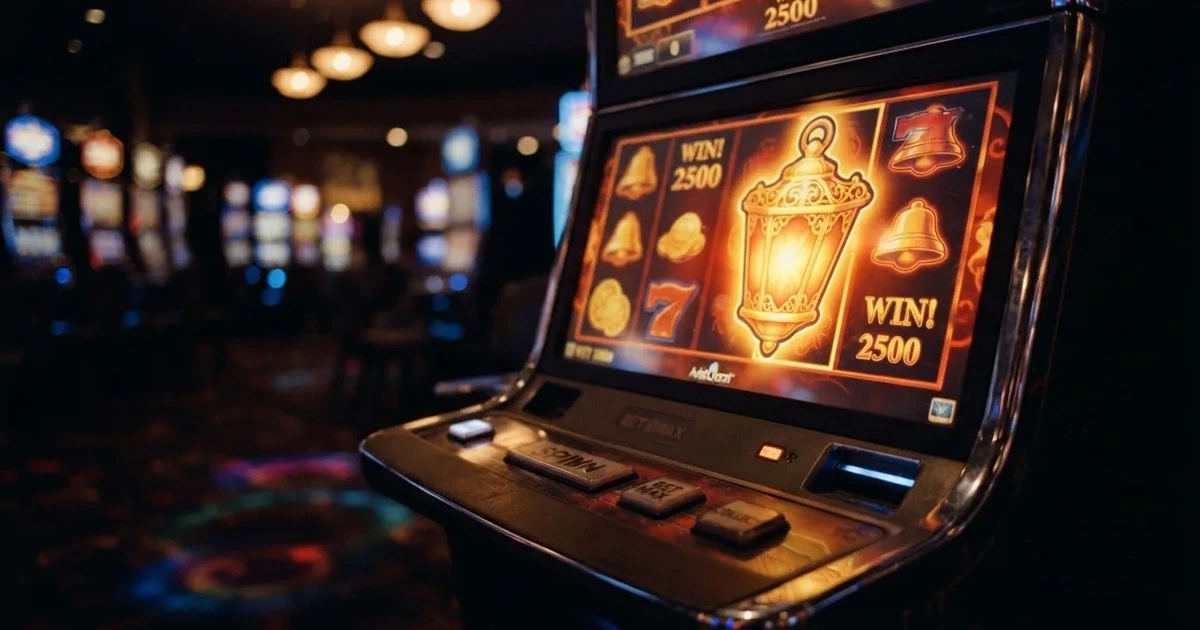
Lightning Link is a cabinet platform, not a single game. Aristocrat designed it as a cluster of linked reel sets, each themed — the original Happy Lantern, alongside Buffalo, High Stakes, Diamond King and others — that share a common bonus mechanic and a common presentation layer. That is why a player who has spent an hour on one of the themes will recognise the screen layout, the chime, and the prize ladder on every other theme in the same family: the artwork changes, the maths underneath is recognisably the same.

The feature that ties the family together is the hold-and-spin bonus round. The mechanic is built to keep a player engaged across an extended sequence of spins: a defined set of bonus symbols lands on the reels, those symbols lock in place, and the remaining reel positions respin, with the goal of landing more bonus symbols to fill the board. The round ends when either the full board is filled or the respins run out without a fresh hit, and the final payout is the sum of the locked-in values plus whatever jackpot the filled pattern triggers. Aristocrat’s name for the round varies from theme to theme — “Hold and Spin” on some cabinets, “Lightning Link” on others — but the structure is consistent, and that consistency is the entire reason a player looking for Lightning Link online is looking for a specific shape of gameplay rather than for a specific artwork set.
The four most common reel themes inside the Lightning Link family share a paytable structure but differ in symbol set, free-spin trigger frequency and the value of the top fixed jackpots. Happy Lantern, the original, leans into Asian-themed iconography and is the most heavily licensed for Australian venues. High Stakes raises the volatility, with bigger top-end prizes and fewer low-tier hits. Diamond King runs a brighter visual style and trades jackpot ceiling for hit frequency. Buffalo is the licensed branding of an Aristocrat title that travels across multiple Aristocrat formats; in the Lightning Link cluster it presents as a four-reel set themed around the North American plains animal. None of those themes is available for real-money play online from inside Australia. The cabinets in clubs and pubs are licensed state by state, and Aristocrat’s licensing footprint in this market is for the venue floor, not for an app or a browser tab.
The minimum theoretical return on a poker machine in Australia is set by the state or territory that licenses the venue. The floor sits at 85 per cent in New South Wales, the Northern Territory and Queensland, generally 87 per cent in Victoria (87 per cent is the level reported at Crown Melbourne), 87 per cent in the Australian Capital Territory and Tasmania, 87.5 per cent in South Australia, and 90 per cent in Western Australia, where pokies are otherwise banned outside the one casino. Those figures are the regulatory floor; the configured return on a given cabinet is typically higher than the floor but varies by venue and by the operator’s commercial choice. The Lightning Link cabinet sits inside that range on licensed floors, just as the other Aristocrat formats do.
The Bonus Round, in Plain Terms
The hold-and-spin mechanic is built to extend a session rather than to compress it, and the design intent is worth saying plainly. A player who triggers the bonus round has usually already lost money getting there: the feature triggers on a combination of bonus symbols scattered across the reels, and the bonus does not pay out at the trigger — it pays out across the subsequent respins, which may or may not produce additional locked values. The pacing is what keeps the player at the cabinet: the respins can run for several rounds, the board fills in stages, and the player is watching a partly-built pattern with the possibility that the next spin completes it.
Two practical consequences flow from that design. First, the bonus round is the feature most likely to keep a player at a cabinet past the point they originally intended to stop — and that is the reason responsible-gaming guidance on any hold-and-spin cabinet always emphasises a fixed time limit set before the session begins, rather than an in-game prompt that arrives once the player is already inside the round. Second, the mathematics of the round are not a payout per spin: they are a payout per round, calculated across the average number of respins and the average final locked value. A player who judges the format by a single round’s experience will routinely over- or under-estimate the cost of an hour at the cabinet, depending on whether the round they remember landed a strong finish.
The same mechanics travel into any online version of Lightning Link that an unlicensed operator offers. The reel format, the bonus structure, and the respin pacing are the lure. The legal position of the online version is what makes the rest of this page necessary, and it is the subject of the next section.
Why the Online Version Cannot Reach an Australian Lawfully
The Interactive Gambling Act 2001, as tightened by the Interactive Gambling Amendment Act 2017, makes it a criminal offence to provide an online casino game or an online pokie to a person physically in Australia. The Act targets the provider, not the individual player — a person who clicks through to one of these sites is not personally prosecuted — but the operator that offered the game is. No state or territory in Australia issues a licence for online casino games or online pokies, and there is no route through which a foreign licence becomes valid for an Australian player. What the NTRWC does licence is wagering on races and sport placed before the event, lotteries and keno; the online casino product sits outside that frame.
Enforcement of the prohibition is the ACMA’s job, and the ACMA has built a public track record. According to the ACMA, as reported in June 2026, a total of 1,751 illegal gambling and affiliate-marketing websites had been blocked since the first blocking request in November 2019, and more than 230 unlicensed gambling services had left the Australian market since enforcement was strengthened in 2017. The blocking mechanism is administrative: the ACMA asks Australian internet service providers to add named domains to the block list, and the ISPs comply. The list is updated in rounds. The round reported on 26 June 2026 added twelve names in one batch: 7Signs, ChromaBet, Donbet, Duospin, Freshbet, Slots Gem, Jacks Club, Lucky Start, Pointsbetz.com, Spinrise, Vinyl Casino and Wildsino.
A formal warning sits one step before blocking. The ACMA issues a formal warning under the Interactive Gambling Act to the operator it believes is offering a prohibited service, naming the corporate entity behind the site and the URL at which it is offered. The list of named operators and URLs is published on the ACMA website, and any player who is curious about whether a site they have used has been the subject of action can check there. The warning itself does not block the site; it puts the operator on notice that further action will follow if the service continues. If the service continues, the next step is the request to the ISPs to block.
That is the legal frame, and it sits behind every operator named in the comparison table that follows. None of the eleven sites in this comparison is licensed to offer an online casino game to a person in Australia. Several have already been the subject of an ACMA formal warning, and the warnings have continued into 2025 and 2026, which means the operator behind the brand has had the ACMA’s view of its conduct put to it in writing and has continued operating regardless.
The Blocking Rate, and What It Says About Enforcement
The arithmetic on the ACMA’s blocking record belongs to the page, because it is the cleanest picture of how often an enforcement round actually removes a site from an Australian player’s reach.
| Metric | Details |
|---|---|
| Total sites blocked | 1,751 |
| First blocking request | November 2019 |
| Average blocking rate | ~22 sites/month |
The running total of blocked sites is 1,751 and the date of the first blocking request was November 2019. From November 2019 to the report dated 26 June 2026 is roughly eighty months, or about six years and eight months.
Dividing 1,751 blocked sites across eighty months gives an average of roughly twenty-two sites blocked per month, or one block roughly every thirty-six hours. That figure is a band, not a constant: the rate varies by round, with some rounds blocking a single domain and others blocking a dozen or more in one batch. The single round reported on 26 June 2026, for example, added twelve domains in a single action — more than half a month’s average from one batch.
The rate is also a lower bound, not a full count. A blocked domain is one the ACMA has asked the ISPs to remove from reach for Australian customers. The 230-odd unlicensed operators that have left the Australian market in the same period are a separate flow: some were blocked, some were warned and wound down their Australian-facing operations, and some moved their content to fresh domains after the original was blocked. The combined picture is of an enforcement system that removes sites faster than a casual reader expects, and that does so without putting the individual player at any legal risk.
The Cost Frame for an Australian Player Considering the Online Version
Two layers of cost sit underneath any “play Lightning Link online” search from Australia. The first is the cost of the game itself, which on a licensed Australian floor sits inside the state-by-state return-to-player range set out above. The second is the cost of accessing the online version: no Australian consumer protection if the operator refuses a withdrawal, no complaints body, no recourse to BetStop or the National Self-Exclusion Register because the offshore operator is not connected to those systems, and the real possibility that the site is blocked while a balance remains on the account.
H2 Gambling Capital’s 2025 report estimates that Australians lose about A$3.9 billion a year to illegal gambling sites, and that the share of gambling going through legal channels fell from 74 per cent in 2021 to 64 per cent. That figure is a national estimate, not an estimate per online pokie or per hold-and-spin format, but it is the cleanest number attached to the offline-and-online gap, and the gap is where the Lightning Link search lands.
The hard framework an Australian personal player operates inside is set by the federal layer rather than by the offshore operator. Credit cards, credit-related products and digital currency are banned as payment for licensed online wagering since 11 June 2024, with penalties of up to A$247,500 for operators who take them. Legal deposit routes for licensed wagering are debit card, bank transfer, PayID/Osko and BPAY. An online casino asking an Australian for a credit card or a crypto deposit is operating outside the Australian rules — which is consistent with the fact that an online casino offering games to an Australian at all is operating outside the Australian rules.
The age floor for any form of gambling in Australia is eighteen. Recreational gambling winnings are not assessable income under section 6-5 of the Income Tax Assessment Act 1997, and losses are not deductible, unless the person is carrying on a business of gambling — and that business test is a different question entirely. None of those points tells an Australian reader that an online pokie site is the right place to play; they are the floor underneath the answer to that question, which is no.
The Land-Based Version, and Why It Looks Different
The Lightning Link cabinet is licensed in Australian venues, not online. The distinction matters because the cost frame, the consumer protection frame and the bonus format are all different on a venue floor.
On a licensed Australian floor, the venue is responsible for the cabinet’s compliance with state rules. The return-to-player floor varies by jurisdiction, as set out above. Player losses at the venue scale to figures that are larger than the online-only estimate and that are tracked state by state: New South Wales had 87,298 gaming machines outside casinos across 2,195 venues as of June 2023, with player losses of A$8.18 billion in 2022–23; Queensland had 21,122 gaming machines operating in 351 venues in October 2023; Victoria had 26,380 outside Crown Casino in 488 venues in 2021–22, under a 30,000 statewide limit. Western Australia banned poker machines in pubs and clubs when Crown Perth opened in 1985, and Crown Perth’s own machine count has since grown from roughly 200 in 1985 to about 2,500, all approved by the state’s Gaming and Wagering Commission. Tasmania ended the Federal Group’s monopoly over its poker machines in legislation passed in November 2021, with oversight moving to the Tasmanian Liquor and Gaming Commission, and Tasmania’s planned mandatory pre-commitment cards — nation-leading at the time of passage — were delayed to late 2025.
Across the same 2020–21 window, the broader gaming-machine figure is close to one Australian dollar in seven going through a poker machine: Australians bet almost A$150 billion through gaming machines and lost A$12.18 billion on them, and Australia holds about 3 per cent of the world’s pub and club poker machines with 0.3 per cent of the global population. That ratio is the structural fact that puts the Lightning Link format in front of Australian players in the first place. The same ratio is what makes an unlicensed online version attractive: the audience is already familiar with the cabinet, and the operator does not need to teach the mechanic, only to offer it on a different screen.
The 2026 reform package is worth knowing about even though its advertising and inducement measures do not commence until 1 January 2027. The Interactive Gambling Amendment (Gambling Reform) Bill 2026 passed Parliament on 19 August 2026, and the advertising-side measures apply to licensed Australian wagering services rather than to offshore casino operators, which are already prohibited. The reform is a tightening of the rules around how licensed operators may advertise, not a tightening of the prohibition on online casino games themselves.
Responsible Play Around a Hold-and-Spin Format
The hold-and-spin mechanic is built to extend a session. That is a design statement, not an editorial one, and it is the reason any responsible-gaming guidance on the format emphasises a fixed time limit set before play begins rather than an in-game prompt to step away. The prompt arrives once the player is already inside the round, which is the worst moment to set a stopping rule.
Two systems exist for an Australian player who wants to use them. BetStop, the National Self-Exclusion Register, has been live since August 2023 and binds Australian-licensed online and phone wagering services — a person who registers with BetStop is excluded from licensed wagering across every Australian-licensed operator that connects to the register. The limitation is the binding: an offshore casino is not connected to BetStop, so registering with BetStop does not exclude a player from an unlicensed operator. The system is the strongest self-exclusion tool available to an Australian player who is dealing with wagering services, and it does not cover online casino play because online casino play is not licensed.
The second is the National Gambling Helpline, 1800 858 858, free and 24/7, with chat at Gambling Help Online. The helpline is not gated by which form of gambling prompted the call, and a player who is concerned about pokies play — venue-based or online — can call the same number. The service is funded separately from the ACMA’s enforcement function and operates as a counselling and referral line.
A fixed time limit set in advance is the operational rule underneath both. The hold-and-spin bonus round does not announce its duration, and a player who decides to stop in the middle of the round is making the right call; a player who decides to “finish the round” before stopping is making the call the format was designed to elicit.
Why the Online Version Markets Itself the Way It Does
The marketing language around an unlicensed Lightning Link site is built to look like the licensed venue marketing language. The same cabinet names appear, the same bonus-round descriptions appear, and the same jackpot ladder appears — because the artwork is licensed from the cabinet and the maths underneath is whatever the operator has decided to configure. None of those choices changes the legal status of the offer.
A useful framing test: if the site offers the player a credit card or a crypto deposit, it is operating outside the Australian rules. If the site offers a bonus that is contingent on a turnover multiple, that turnover multiple is whatever the operator has decided, not whatever an Australian regulator has set. If the site refuses a withdrawal, the player has no Australian complaints body to take the dispute to. If the site is blocked, the balance on the account is the player’s loss.
That is the cost frame an Australian reader is operating inside when the search result offers “Lightning Link online” and the destination is an offshore operator. The game is familiar; the rules around it are not the Australian ones.
The Operators Named by the ACMA
The table below lists eleven brands that the ACMA has acted against, in the order in which research has them. The ACMA action is the action the regulator itself has published; the operator name is the corporate entity the ACMA named on the formal warning. The Subject support column reflects what the available listings report about whether the brand lists Lightning Link as a supported title — and where the listings carry no such confirmation, the cell stays empty rather than claiming the brand offers or does not offer the game. None of the eleven is licensed to offer online casino games to an Australian, and the table is not a ranking or a recommendation: it is a record of regulator action.
| Brand | ACMA action and date | Operator named by the ACMA | Subject support |
|---|---|---|---|
| RocketPlay | Formal warning, March 2026; earlier Dama N.V., May 2022 | Pulsup Ltd (Rocketplay.com.au); earlier Dama N.V. | — |
| Level Up Casino | Formal warning, May 2022 | Dama N.V. | Listings only |
| Woo Casino | Formal warning, March 2025 | Dama N.V. | — |
| Spirit Casino | Formal warning, May 2025 | Dama N.V. | — |
| National Casino | Formal warning, July 2025 | Consolutetish S.R.L. | Listings only |
| Bizzo Casino | Formal warning, July 2025; earlier TechSolutions, 2022 | Consolutetish S.R.L.; earlier TechSolutions (CY) Group Limited and TechSolutions Group N.V. | — |
| Ignition Casino | Formal warning, July 2025 | Bamboo Media | — |
| Instant Casino | Formal warning, February 2025 | EOD Code SRL | — |
| Jackbit | Formal warning, April 2026 | Ryker B.V. (over Jackbit and CasinOK) | — |
| Casino Intense | Formal warning, April 2025 | Sterplay Holding Ltd | Listings only |
| Sky Crown | Formal warning, September 2022 | Hollycorn N.V. | — |
The corporate entities behind the brands are the long thread through the table. Dama N.V. surfaces for RocketPlay (in 2022), Level Up Casino, Woo Casino and Spirit Casino — three years and four brands, which is the cleanest pattern of corporate continuity the table shows. The two TechSolutions entities appear in 2022 and again in 2025 under a different operator name (Consolutetish S.R.L.) for Bizzo Casino, which is the same shape of continuity with a corporate name change attached. Hollycorn N.V. was named over Sky Crown in 2022, and the warning is the only formal action the table shows for the brand.
The Subject support column is honest by absence: three of the eleven brands — Level Up Casino, National Casino and Casino Intense — appear in listings that mention Lightning Link alongside other titles, and that listing-only status is named as listings-only rather than as the brand’s own confirmation. The remaining eight carry no listing entry at all from the consulted sources, which is not the same as the brand not offering the game — only that no consulted listing confirms it. A reader who lands on any of these eleven and is told the site offers Lightning Link is being told something the operator has chosen to say, and the ACMA’s formal warning is the regulator’s view of the operator’s conduct in offering prohibited games to Australians.
RocketPlay
RocketPlay appears twice in the ACMA’s published register, which is unusual and worth saying. The earlier action is a May 2022 formal warning over six Dama N.V. brands including RocketPlay; the later action is a March 2026 formal warning naming Pulsup Ltd specifically over Rocketplay.com.au. Two operators named against one brand across four years is the regulator’s view that the brand continued to be offered in prohibited form even after the first warning. The operator named on the second warning is different from the one named on the first, which is a corporate change rather than a clean handover to a licensed operator.
Level Up Casino
Level Up Casino sits inside the May 2022 Dama N.V. warning that covered six brands in one batch. The brand appears in some listings as a pokies destination with a Lightning Link entry, which is consistent with the broader pokies catalogue an unlicensed operator offers but is not, on its own, evidence that the operator has any right to offer the game to an Australian player. The licensing claim on the site is whatever the operator has chosen to display, and the Interactive Gambling Act 2001 makes that claim irrelevant to the legality of the offer.
Woo Casino
Woo Casino was the subject of a separate ACMA formal warning to Dama N.V. in March 2025. The 2025 action came after the 2022 batch, which means the operator behind Woo Casino had already received the ACMA’s view of its conduct in writing before the second warning. A continued presence under the same operator name is the cleanest signal the ACMA’s process can produce that the operator is willing to absorb formal warnings as a cost of doing business.
Spirit Casino
Spirit Casino is the fourth Dama N.V. brand in the table, with a May 2025 formal warning. The progression from the May 2022 batch through the March 2025 warning over Woo Casino and the May 2025 warning over Spirit Casino is a four-year, four-brand pattern under one corporate entity, and that pattern is the structural reason the ACMA’s blocking mechanism exists: a warning that does not stop the conduct is followed by a request to the ISPs.
National Casino
National Casino was named in the July 2025 formal warning to Consolutetish S.R.L., alongside Bizzo Casino. The brand appears in listings that mention Lightning Link among other titles, but the listing entry is the listings’ report rather than the operator’s own statement of which games are available to an Australian player.
Bizzo Casino
Bizzo Casino carries two warnings in the table. The earlier one is a 2022 formal warning to TechSolutions (CY) Group Limited and TechSolutions Group N.V.; the later one is the July 2025 formal warning to Consolutetish S.R.L. that also named National Casino. The corporate name change between the two warnings is the kind of restructuring an unlicensed operator uses when it wants to keep the brand visible while moving the legal entity, and the ACMA’s action in both years is the regulator’s view that the brand is the same brand regardless of the operator name attached.
Ignition Casino
Ignition Casino was named in the July 2025 formal warning to Bamboo Media. The brand does not carry a confirmed listing for Lightning Link in the consulted sources.
Instant Casino
Instant Casino was named in the February 2025 formal warning to EOD Code SRL. The brand also lacks a confirmed listing for the game.
Jackbit
Jackbit was named in the April 2026 formal warning to Ryker B.V. over Jackbit and CasinOK. Naming two brands in one warning is the ACMA’s efficient use of one action over two sites under the same operator, and like the others, it carries no confirmed listing for Lightning Link.
Casino Intense
Casino Intense was named in the April 2025 formal warning to Sterplay Holding Ltd. The brand appears in some listings as a pokies destination with a Lightning Link entry, and the listing-only status is named as such rather than as the operator’s own confirmation. Casino Intense sits alongside Casino Intense as one of three brands in the table for which the consulted listings report a Lightning Link entry.
Sky Crown
Sky Crown was named in the September 2022 formal warning to Hollycorn N.V., alongside Blue Leo. The warning is the only formal action the ACMA has published against the brand in the consulted record, and the brand has no confirmed listing for the title.
What a Player Comparing Sites Should Actually Compare
The comparison the table supports is a regulator-action comparison, not a product comparison. Every brand in the table is offering a product that cannot lawfully be offered to a person in Australia, and the differences between them — corporate entity, year of warning, whether a listing mentions Lightning Link — are not differences that change that underlying fact.
Three differences are worth noting, because they are the differences that affect what happens to an Australian player who lands on the site.
First, the corporate continuity. Brands under Dama N.V. have been warned in 2022, 2025 and again in 2025 — three rounds across four brands. The same operator has absorbed three formal warnings from the ACMA and continued to offer the games. A player who is deciding which site to use on the basis of “I have heard of this operator before” is picking on a basis the ACMA has already taken action against.
Second, the listing-vs-no-listing difference. Three brands in the table — Level Up Casino, National Casino and Casino Intense — appear in listings that mention Lightning Link, and the listings-only status is the cleanest signal that an external source reports the game as available on the brand. The other eight carry no such listing entry, which is not the same as the brand not offering the game — only that no consulted listing confirms it. A reader who wants to know whether a brand actually offers Lightning Link on its lobby will see it on the site itself, and the consulted listings are not the place to look for an answer that holds up against an operator’s own marketing page.
Third, the age of the warning. A 2022 warning is three to four years old, and the operator has had that long to continue, to wind down, to rebrand, or to be blocked. A 2025 or 2026 warning is recent, and the brand is on the ACMA’s current register rather than its archive. The recent warnings sit at the front of any reasonable search of the ACMA’s published list.
None of those differences makes any of the eleven a safe destination for an Australian player looking for the Lightning Link format. The game itself is licensed for the venue floor; the online version is not licensed for any Australian destination. The right place to play the Lightning Link format is a licensed venue, and that is true regardless of which unlicensed site is offering it online.
The Mobile and App Picture
The “Lightning Link app” search is, in practice, a search for the same unlicensed offer wrapped in an icon. An app claiming to run Lightning Link pokies on a phone is offering the same activity as a desktop site, regardless of how it is packaged: the operator is still outside Australia, the offer is still prohibited, and the player protection frame is still the offshore one.
Two practical tests separate an app from a licensed venue product. First, an app that asks for a credit card or a crypto deposit is operating outside the Australian rules, because both are banned as payment for licensed online wagering in Australia. Second, an app that promises a “real money” Lightning Link session from inside Australia is offering a prohibited service, and the offer does not become lawful because it sits in an app store rather than in a browser tab.
The licensed Australian alternative for the Lightning Link format is the venue. The pokies app market that targets Australian players is an unlicensed market, and the licensing claim on the app store listing is the operator’s choice, not the ACMA’s.
The Bonus Format That Travels With the Cabinet
The hold-and-spin mechanic is the bonus format that travels from the venue to the unlicensed online site. The marketing around an online version leans on that continuity: the respin round, the locked symbols, the prize ladder and the jackpot pattern are recognisable from the venue floor, and the player is being offered a familiar shape of gameplay rather than a new game.
The cost of that familiarity is the legal status of the offer. The bonus mechanic is the same; the rules around the bonus are whatever the offshore operator has chosen, not whatever an Australian regulator has set. The wagering requirement attached to a deposit bonus, the maximum cashout on a free-spin offer, the game-weighting that determines how much a Lightning Link spin contributes to a turnover multiple — none of those are covered by an Australian regulator, because the offer is not in front of an Australian regulator at all.
A player who is making a feature-by-feature comparison of bonus formats is comparing features on a product that is not licensed to reach them. That comparison is informative about what the format is, but it is not informative about whether the format is a safe destination.
A Note on the Pokies Landscape in Numbers
The Australian pokies landscape is large, which is why an online version of a familiar cabinet can find an audience. The 2020–21 figures — A$150 billion bet through gaming machines, A$12.18 billion lost on them — sit inside a state-by-state breakdown that has changed modestly since but not dramatically: New South Wales remains the largest market by machine count and by player loss; Queensland and Victoria sit behind it; Western Australia’s ban in pubs and clubs keeps the cabinet count down to the one casino; Tasmania has moved off the monopoly model but has not yet reached the planned mandatory pre-commitment regime.
The ratio of poker machines to population is the structural fact that explains the offer. Australia has about 3 per cent of the world’s pub and club poker machines with 0.3 per cent of the global population. The same audience that fills a venue floor is the audience an unlicensed operator targets when it offers the same cabinet online, and the operator does not need to teach the audience what the hold-and-spin round is. It only needs to put the offer in front of them, and the offer sits inside the prohibition the IGA names.
What to Do With the Search Result
A player who has searched for Lightning Link online pokies in Australia and has landed on this page is being offered a choice the Australian framework does not actually permit: play the cabinet format at a licensed venue, or do not play it online. The unlicensed sites listed above — RocketPlay, Level Up Casino, Woo Casino, Spirit Casino, National Casino, Bizzo Casino, Ignition Casino, Instant Casino, Jackbit, Casino Intense and Sky Crown — are not destinations; they are warnings the ACMA has issued, and the table is a record of those warnings.
A player who is set on the online format is making a choice the regulator has already made for them, and the choice is not in the player’s favour. The cabinet format is real, the venues are licensed, and the cost frame inside a venue is the cost frame an Australian regulator has set. The online version is the same artwork on a screen that cannot lawfully carry it.
Frequently Asked Questions
Can Lightning Link be played online for real money in Australia?
No. The Interactive Gambling Act 2001 prohibits the supply of online casino games and online pokies to a person in Australia, and no Australian state or territory issues that kind of licence. Any site offering Lightning Link online to an Australian is offering a prohibited service, and the operator — not the individual player — is the party the Act targets. The ACMA has issued formal warnings to more than a dozen operators over exactly this offer, and has asked Australian ISPs to block more than 1,750 illegal sites since November 2019.
What actually triggers the hold-and-spin bonus round on a Lightning Link cabinet?
A defined set of bonus symbols, scattered across the reels, locks in place and the remaining reel positions respin. The round ends when the full board is filled or the respins run out without a fresh hit, and the payout is the sum of the locked values plus whatever jackpot the final pattern triggers. The format is built to extend a session, which is why a fixed time limit set before play matters more than any in-game prompt to step away.
Is Lightning Link available at licensed venues in Australia?
Yes. Aristocrat licenses the Lightning Link cabinet format to Australian venues state by state, and the format is one of the most recognised reel sets in the country. The venue floor is where the licensed product sits; the online version is the unlicensed copy of the same artwork. The state-by-state return-to-player floor ranges from 85 per cent in NSW, the Northern Territory and Queensland to 90 per cent in Western Australia, and most cabinets are configured above the floor.
Do Lightning Link promo codes work the same way across different cabinet themes?
The hold-and-spin mechanic is the same across the Lightning Link family, but the symbol set, free-spin trigger frequency and top fixed jackpots differ from theme to theme. Happy Lantern, High Stakes, Diamond King and Buffalo each present a different volatility profile under the same bonus structure. A promo code attached to one theme does not translate cleanly to another because the underlying maths differ, and the marketing around the codes tends to elide that point.
Does a Lightning Link app on a phone offer a different game to the desktop version?
No. The reel format and the bonus structure are the same, and the legal status of the offer is the same: an app claiming to run Lightning Link pokies on a phone is offering the same prohibited activity as a desktop site. An app that asks for a credit card or a crypto deposit is operating outside the Australian payment rules, and that is consistent with the broader status of the offer rather than a separate problem.
What separates the different Lightning Link reel sets from each other?
The artwork and the maths. The hold-and-spin bonus round, the prize ladder structure, and the locked-symbol mechanic are the family-wide elements; the symbol set, the volatility profile and the top-end jackpot differ by theme. Happy Lantern is the most heavily licensed for Australian venues; High Stakes trades hit frequency for bigger top-end prizes; Diamond King runs a brighter visual style with a lower jackpot ceiling; Buffalo is the plains-themed variant that travels across multiple Aristocrat formats. None of those distinctions is available through an Australian-facing online offer.