
Live roulette with English-speaking dealers in Australia: what the table actually is
29 October 2026 · figures cross-checked against the Australian Communications and Media Authority’s list of formal warnings and blocking actions.
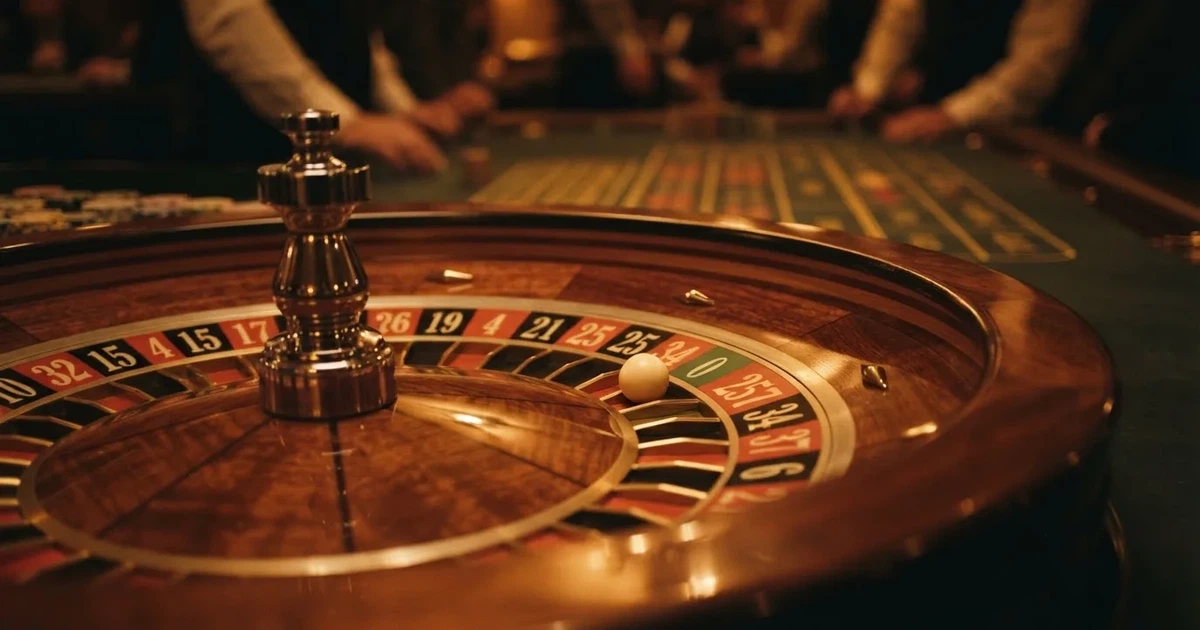
A “live roulette with English-speaking dealers” table is, at the table, a spinning wheel run by a person on camera rather than by software. The dealer calls the game in English, the stream runs in real time, and the bets resolve in front of the camera the same way they do in a physical casino. Nothing about the dealer speaking English changes the wheel, the odds, or — for an Australian player sitting in Australia — whether the site offering the table is lawful. The Interactive Gambling Act 2001 makes it an offence to provide online casino games to a person in Australia, and a live-dealer roulette stream sits inside that prohibition alongside the computer-generated version. The first thing this page is, therefore, is honest about that: the language the dealer speaks has nothing to do with whether the stream itself is permitted, and most of the brands an Australian sees advertising “live roulette with English-speaking dealers” are offshore operators the ACMA has already written to.
What follows then does the second thing this page is: it sets out what the table actually involves — single-zero versus double-zero wheels, the house edges each carries, the variants and side rules that change them — and the practical layer around it: how the dealer-language pitch is built, why a bitcoin-funded live table does not run a different wheel, how a payout compares with a slot payout, and what the ACMA’s enforcement record over the past two years looks like. Eleven brands that have had formal warnings issued over them appear in their own section near the end, and the closing calculation walks through the rate at which the ACMA has been adding illegal sites to its blocking list since the first request in November 2019.
Table of Contents
- How the live roulette table actually works
- Why “English-speaking dealers” is the marketing pitch it is
- What a bitcoin-funded live roulette table actually changes
- What a PayID-funded live roulette table changes
- How a live roulette payout compares with a slot payout
- What the ACMA has actually done, and at what pace
- The legal frame for an Australian resident
- Player protection, and what an offshore site doesn’t carry
- Payments in and out, and what the 11 June 2024 ban covered
- The eleven brands the ACMA has formally warned
- What the table above and the brands below add up to
- What the live roulette offer actually costs
- What the ACMA’s enforcement pace means for an operator choosing to keep running
- Where this leaves an Australian reader
- Frequently asked questions
How the live roulette table actually works
A live roulette table is a physical wheel, a physical ball, a real croupier, and a studio camera. Bets are placed on a digital layout on the player’s screen; the wheel is spun in the studio; the result is read by sensors in the wheel and by the dealer’s eye; winning bets are settled on screen. The dealer-language pitch exists because the studios are regional — Evolution’s main studio is in Riga, with satellites in Malta, Vancouver, and Tbilisi; Pragmatic Play Live runs from Bucharest — and the dealer speaks the language of the studio shift. “English-speaking dealers” in the marketing line usually means a Riga or Bucharest table on an Anglophone shift rather than a separate English-only operation.
The table itself, once a player is on it, is a standard roulette wheel. Which wheel it is, however, changes everything else: the house edge on a single bet, the layout, the variants the casino can offer. Most live-dealer tables in 2026 are single-zero European wheels, which carry a house edge of 2.70% on every bet except the five-number basket (which is only available on double-zero wheels and runs higher). A meaningful minority, especially the US-facing tables and some game-show variants, are double-zero American wheels, which carry a house edge of 5.26%. Some operators now offer a triple-zero wheel — 39 pockets (0, 00, 000 and 1-36) — with a house edge of 7.69%; that one is rare on the live side and worth checking the layout for before sitting down.
A handful of single-zero tables run an “en prison” or “la partage” rule on even-money outside bets. Under those rules, an even-money stake that loses to a single zero is either held over for the next spin (“en prison”) or returned half to the player (“la partage”). The effect is to lower the effective house edge on red/black, odd/even and high/low from 2.70% to roughly 1.35%. It does not apply to inside bets or to dozens and columns. Whether a live table carries the rule is written in the game-info panel of the studio; it is not the default.
The wheel type — single-zero, double-zero, or the rarer triple-zero — is the single biggest determinant of what a player pays the house over time. The dealer speaking English does not change it. The site being “live” does not change it. A live table running a triple-zero wheel pays the operator almost three times as much per A$100 wagered as a single-zero table with la partage, before any bonus, rake, or side bet enters the picture.
Wheel geometry and the house edge it sets
| Wheel layout | Pockets | House edge on a straight-up bet | House edge with la partage (even-money bets only) |
|---|---|---|---|
| Single-zero (European) | 37 (0 and 1-36) | 2.70% | ~1.35% |
| Double-zero (American) | 38 (0, 00 and 1-36) | 5.26% | not applicable |
| Triple-zero | 39 (0, 00, 000 and 1-36) | 7.69% | not applicable |
That table summarizes the wheel mechanics. A live table is a live table; the wheel it spins decides what it costs. Beyond that, the practical differences — minimum and maximum bets, racetrack layout for announced bets, the slow or fast spin pattern of the croupier — are cosmetic.
Side bets, racetrack, and announced bets
Most live single-zero tables run a racetrack overlay for the French and called bets — Voisins du Zéro, Tiers du Cylindre, Orphelins, Jeu 7 — and the usual set of side bets: neighbours, finals, hot and cold numbers displayed on the side panel. None of these change the underlying house edge. The neighbours bet is just a way to bet on five adjacent numbers with a single click; the edge is still 2.70% on each number. The hot and cold numbers panel is a presentational artefact: the wheel has no memory, the displayed “hot” run is the same distribution the player would have seen over any other equally long sequence.
Game-show variants and the value they don’t add
Lightning Roulette, Immersive Roulette, Mega Roulette, PowerUp Roulette — these are overlay games on a standard single-zero wheel. A multiplier (50x, 100x, 200x, 500x) is applied to one or more straight-up numbers per spin at random; the straight-up payout goes from 35:1 to between 50:1 and 499:1 on the boosted numbers, but every other bet on the table pays less than it would on a vanilla single-zero wheel. The published house edge on the boosted games sits above the 2.70% baseline for that reason: the studio takes the multiplier cost out of the even-money bets. A player who wants the cheapest roulette on the floor plays a vanilla single-zero table; a player who wants the variance plays a game-show variant. The two are not the same game, and treating them as the same game is the commonest way a live-roulette session ends up costing more than the player planned.
Why “English-speaking dealers” is the marketing pitch it is
The pitch exists because the studios that supply live casino games to offshore operators staff their shifts by language, and the English-language shift is the one with the largest addressable market. It is not a feature in the sense that the wheel or the rules are features; it is a configuration of the studio shift. An English-speaking dealer at a Riga table is the same croupier with the same training running the same wheel; the language of the call is the only thing that has changed.
For an Australian player, three things follow from this. First, an English-language table is not an Australian table — the studio is in Europe or in Latin America, the licence on the wall is a Curaçao or Kahnawake licence, and the regulator who licensed the operator is not the ACMA. Second, the language of the dealer does not move the site outside the IGA’s prohibition. The IGA names online casino games, which includes live-dealer roulette; it does not name the language of the studio. Third, the language of the dealer is irrelevant to whether the brand offering the table has been formally warned by the ACMA. Eleven of the brands that run live roulette with English-speaking dealers have been the subject of ACMA formal warnings since 2022; another twelve were added to the ACMA’s June 2026 blocking round alone.
The English-speaking pitch is, in short, a sales line built around the addressable market. It is not a regulation, a licence, a wheel type, or a protection. A player who filters on it is filtering on the marketing, not on the substance.
What a bitcoin-funded live roulette table actually changes
A bitcoin-funded live roulette table spins the same physical wheel as a card-funded one. The croupier is the same; the studio is the same; the game-info panel is the same. The only thing the bitcoin changes is the payment rail on either side of the session.
Inside the session, the practical differences are small. The deposit is converted from bitcoin to the site’s house currency at the rate on the cashier page; the bet sits in that currency at the table; a win returns to that currency; the withdrawal — when a withdrawal is permitted — is converted back to bitcoin (or to a stablecoin, on some sites) at the rate on the cashier page at the time of withdrawal. The two conversions carry a spread, which is the operator’s cut on the route in and the route out. A player who funds in bitcoin, plays in bitcoin-equivalent units, and withdraws in bitcoin pays the spread twice. A player who funds in bitcoin and withdraws to a card or to PayID pays the spread on the way in only.
For an Australian player specifically, two extra things apply. First, the Australian rules prohibit digital currency as a payment for licensed online wagering, with effect from 11 June 2024. A site that accepts bitcoin from an Australian is, on that ground alone, an offshore site outside the Australian rules. Second, bitcoin transactions are recorded on a public ledger. An Australian depositing in bitcoin is broadcasting the fact of the deposit to anyone who can associate the address with the player — which is more identifying than a card transaction, not less. The bitcoin layer is often pitched as the “anonymous” option; in practice, on a public ledger, it is the opposite. It is faster than a card route, and it bypasses the card-issuer block, and those are real differences; anonymity is not one of them.
What a PayID-funded live roulette table changes
A PayID deposit on a live roulette table is, on the operator’s side, an instant Osko transfer to a nominated account. The deposit clears in seconds; the funds land in the cashier account; the table accepts them. The wheel itself is indifferent to the route the money took. A withdrawal back through PayID is an Osko transfer in the other direction, subject to the operator’s standard review and any pending-wagering requirements sitting on the bonus balance.
The PayID route has the same Australian-rules issue as any other deposit route on an offshore live-roulette site. PayID and Osko are legal deposit routes for licensed Australian wagering services. They are not legal deposit routes for an offshore operator, because the offshore operator is not an Australian wagering service. The route’s domestic legality does not change the offering’s domestic legality. An Australian who funds a live roulette table with PayID is using a permitted Australian payment rail to fund a prohibited Australian offering. The rail is not the offence; the offering is.
For a player comparing PayID with bitcoin on the same live table: PayID is faster on the deposit (seconds), slower on the withdrawal (the review window plus the Osko transfer, often 24 hours in total on a quiet cashier). Bitcoin is roughly the same speed on the deposit, and faster on the withdrawal once the operator approves it, with the spread cost on both legs. Neither route makes the offering itself any more or less lawful.
How a live roulette payout compares with a slot payout
A live roulette payout, after the spin, is a credit to the player balance on the cashier. A slot payout is the same thing. The wheel-versus-slot distinction is at the front end of the session, not the back end: the bet is on different numbers, the house edge is different, the variance is different. The withdrawal is the same operation in both cases.
What changes between the two, in practice, is the review the withdrawal goes through on the way out. A live-roulette session tends to produce a high number of small wins and a smaller number of large ones; a slot session produces a lower number of more evenly distributed wins. The operator’s anti-fraud check tends to be tighter on a session that has accumulated balance through a high-volume, low-margin game than on a session that has accumulated it through a low-volume, high-margin one — not always, and not on every brand, but as a tendency. The check is a function of the operator’s risk model, not of the game.
The wait, in both cases, is the operator’s stated pending period plus the payment-rail time. On a PayID or Osko withdrawal that is reviewed cleanly, the operator’s pending period plus the rail time is the same whether the balance came from roulette or from slots. On a bitcoin withdrawal, the same applies. The payment method, not the game, sets the wait.
What the ACMA has actually done, and at what pace
The ACMA has been the regulator responsible for IGA enforcement since the 2017 amendments strengthened the Act. Two of its tools are visible to the public: formal warnings to operators offering prohibited services, and blocking requests to Australian internet service providers. A third — investigation and referral — runs in the background. A formal warning is published on the ACMA’s website; a blocking request, once executed, takes the listed domains off Australian networks. The numbers below come from the ACMA’s published actions and from H2 Gambling Capital’s 2025 reporting.
As of the round reported on 26 June 2026, the ACMA had asked Australian ISPs to block 1,751 illegal gambling and affiliate marketing websites since the first blocking request in November 2019 — a span of just over six and a half years. More than 230 unlicensed services had left the Australian market voluntarily since 2017. The 26 June 2026 round added twelve more: 7Signs, ChromaBet, Donbet, Duospin, Freshbet, Slots Gem, Jacks Club, Lucky Start, Pointsbetz.com, Spinrise, Vinyl Casino and Wildsino. H2 Gambling Capital’s 2025 report estimates that Australians lose about A$3.9 billion a year to illegal gambling sites, and that the share of gambling going through legal channels fell from 74% in 2021 to 64%.
The rate of blocking, worked out across the ACMA’s published blocking rounds, comes out at roughly 260 sites a year on average since November 2019 — see the worked calculation in the section below. The rate has not been linear; the early years after the 2017 amendments were a build-up, the post-2022 years have been heavier. The single round of 26 June 2026 added twelve sites in one announcement. Twelve is one round; 1,751 is the running total.
The blocking rate, worked through
The first ACMA blocking request was in November 2019. The cumulative total stood at 1,751 blocked sites by the round reported on 26 June 2026. That is a span of 81 months, or just over six years and nine months. The average rate across the span is 1,751 ÷ 81 ≈ 21.6 blocked sites a month, which works out to roughly 260 a year. The figure is a band rather than a single rate: the ACMA’s published rounds have not run at a constant pace, with the early rounds smaller and the post-2022 rounds larger, so the practical reading is “the ACMA has been adding illegal sites to the blocking list at an average of just over twenty a month for nearly seven years, with the recent rounds at the higher end of that range”. The total is the headline; the pace is what it costs an operator to assume a fresh domain will outlive an enforcement cycle.
Formal warnings as a separate track
Formal warnings are issued under the IGA before a blocking request goes out, in most cases. A warning puts the operator on notice; a blocking request is the next step. The eleven brands in the operator section of this page have each received at least one formal warning, and several have received more than one across the entities behind the same brand: Dama N.V. was warned in May 2022 over six brands including Bambet, Dazard, Level Up, Rocketplay, Wild Tornado and Cobra Casinos, then again in March 2025 over Woo Casino and in May 2025 over Spirit Casino. Two warnings to the same operator over different brand names is a common shape; the underlying entity persists across the rebrand. A player who filters on brand name is filtering on the marketing layer; the ACMA’s actions go through to the operating company behind it.
The legal frame for an Australian resident
The Interactive Gambling Act 2001 (IGA) makes it an offence for a person to provide certain interactive gambling services to customers physically in Australia. The Interactive Gambling Amendment Act 2017 extended the prohibition and tightened the definition of a “prohibited interactive gambling service”. Online casino games — which the ACMA’s guidance and the IGA’s text together cover — are inside the prohibition. Live-dealer roulette is, in the IGA’s terms, an online casino game. The dealer being on camera does not move the offering outside the Act.
What is licensable in Australia, in practice, is wagering on sport and on races (placed before the event begins) and lotteries and keno. The Northern Territory Racing and Wagering Commission (NTRWC) regulates the largest of the wagering licences — 52 online bookmakers including Sportsbet, Bet365 and Ladbrokes — and meets once a month in Darwin with no full-time staff. The Commission’s role is licensed wagering, not licensed casino games; the IGA does not give the NTRWC the power to license an online roulette table.
State-level casino regulation covers physical premises only. The Victorian Gambling and Casino Control Commission (VGCCC) took over from the VCGLR on 1 July 2022 under the Casino Control Act 1991 and approves the rules for table games played at Crown Melbourne, including baccarat, blackjack and the variants. NSW’s Casino Control Act 1992 carries a parallel requirement that games and their rules be approved before being offered. Both are physical-premises regulators. A live-dealer stream run from Riga, Bucharest or Tbilisi and addressed to an Australian player is not within the VGCCC’s or the NSW regulator’s jurisdiction.
The player side of the IGA is, in practice, unenforced. The Act targets the provider. The consequence is not a prosecution of the player; it is the absence of an Australian complaints body, the absence of an Australian dispute resolution route, and the absence of any guarantee that a balance held by an offshore operator is recoverable if the operator refuses the withdrawal or goes offline. The ACMA’s blocking action can take a site off Australian networks with a balance still on it.
What changes on 1 January 2027
The Interactive Gambling Amendment (Gambling Reform) Bill 2026 passed Parliament on 19 August 2026. Its advertising and inducement measures commence on 1 January 2027 — that is, on a page dated 2026, the year that begins on 1 January 2027. The 2026 amendments tighten what licensed wagering operators can advertise; they do not legalise online casino games, and they do not narrow the IGA’s prohibition on offering them. The reforms sit on top of the existing prohibition, not as a replacement for it. A live-dealer roulette stream aimed at Australia remains prohibited under the IGA from 1 January 2027 as it was before the reforms passed.
Player protection, and what an offshore site doesn’t carry
Australian-licensed wagering services are bound by BetStop, the National Self-Exclusion Register, which has been live since August 2023. A player who registers with BetStop is excluded from every participating licensed operator in a single step. Offshore live-roulette operators are not participants in BetStop; a self-exclusion registered with an Australian operator does not extend to them. The exclusion layer the register provides is Australian-licence only; an offshore site is outside the layer.
The National Gambling Helpline on 1800 858 858 is free, 24/7, with chat at Gambling Help Online. Both are available to an Australian player regardless of where they have been playing. The helpline is the single most useful resource on the page for a player who has been chasing losses on a live-roulette stream and is reading the warnings too late: it costs nothing to call, it does not require a self-exclusion to be in place, and it is staffed around the clock.
A fixed loss limit matters more on a live-roulette session than the pattern of recent spins. The wheel has no memory. The dealer speaking English does not change the wheel. The site being new does not change the wheel. What matters is the total amount the player has wagered across the session, and the total amount left in the bankroll at the end of it. A player who walks in with a number and walks out the moment that number is gone has done more for their own protection than any self-exclusion register can do after the fact.
Payments in and out, and what the 11 June 2024 ban covered
From 11 June 2024, credit cards, credit-related products and digital currency have been banned as payment methods for licensed online wagering in Australia. Penalties for an operator accepting them run to A$247,500. The ban applies to licensed wagering. It does not, on its face, change the IGA’s prohibition on offering online casino games — the offering is the offence, the payment route is a separate prohibition layered on top.
What the ban means for an Australian player who lands on a live-roulette site is simple. A site asking for a credit card or for a crypto deposit is operating outside the Australian rules on two grounds: it is offering an unlicensed interactive gambling service (the IGA), and it is offering payment through a route the licensed market is not allowed to take (the 11 June 2024 ban). A site asking for a debit card, a bank transfer, PayID/Osko or BPAY is taking a payment route that is legal for licensed wagering but is being used here for an unlicensed offering. The distinction does not rescue the offering; it sharpens the diagnosis.
A practical note: a deposit made by credit card through an offshore operator is, on the player’s side, a chargeback case in the making. The card issuer may treat the transaction as a disputed transaction once the player realises the offering was unlicensed; the operator’s response is typically to point to the cashier terms. The cardholder is the one left carrying the dispute, and the offshore operator is the one who is unreachable through Australian dispute resolution once the chargeback fails.
What an Australian player actually has to work with
For an Australian player who wants to play online, the lawful offering is wagering — sport and racing pre-event, plus lotteries and keno. Sportsbet, Bet365, Ladbrokes and the other 49 NTRWC-licensed bookmakers are the licensed route. Crown Melbourne, The Star Sydney and the other physical casinos are the licensed route for table games, on premises. There is no licensed online casino table game in Australia, and there is no licensed online live-dealer roulette stream aimed at Australians.
A player who nevertheless wants to play live roulette online has two choices: do it on a licensed wagering platform with whatever casino-style games the platform chooses to make available (the offering is usually slots or keno rather than live roulette, and the rules of the IGA’s wagering carve-out still apply), or do it on an offshore site outside the Australian framework. The second option is the subject of the rest of this page.
The eleven brands the ACMA has formally warned
Each of the brands below has been the subject of at least one formal warning from the ACMA under the Interactive Gambling Act 2001. The list is in the order the ACMA’s actions place them, with the most recent action date first where the research supports it. The list is not a recommendation. Online casino games cannot be licensed anywhere in Australia, whatever licence the brand displays on its footer. The subjects each brand supports, where the research supports a subject, are written as the listings report them, not as the operator’s own claim.
A block of this kind reads cleanly as a single section when it is in table form; the columns below are the matters this page cares about. The fifth column — subject support — is what the listings say about whether the brand is associated with the subject of the page (live roulette, English-speaking-dealer tables, or related live-dealer studio content). Where the research carries a listing-only attribution, the column states what the listing says and names the source. Where the research carries no data, the column carries the article-language no-data marker rather than a fabricated association.
| Brand | ACMA action and date | Operator named by the ACMA | Other ACMA action on related entities | Subject support |
|---|---|---|---|---|
| RocketPlay | Formal warning, March 2026 | Pulsup Ltd (Rocketplay.com.au) | Earlier Dama N.V. warning, May 2022 | — |
| Level Up Casino | Formal warning, May 2022 | Dama N.V. | Dama N.V. also warned in March 2025 over Woo Casino and May 2025 over Spirit Casino | Live-dealer studio listings report Level Up as a host of BGaming live-roulette tables (per BGaming’s own listings) |
| Woo Casino | Formal warning, March 2025 | Dama N.V. | Dama N.V. also warned in May 2022 (six brands) and May 2025 (Spirit Casino) | — |
| Spirit Casino | Formal warning, May 2025 | Dama N.V. | Dama N.V. also warned in May 2022 and March 2025 | — |
| National Casino | Formal warning, July 2025 | Consolutetish S.R.L. | — | Roulette coverage is reported in general roulette-reference listings |
| Bizzo Casino | Formal warning, July 2025 | Consolutetish S.R.L. | Earlier TechSolutions (CY) Group Limited and TechSolutions Group N.V. warning, 2022 | — |
| Ignition Casino | Formal warning, July 2025 | Bamboo Media | — | — |
| Instant Casino | Formal warning, February 2025 | EOD Code SRL | — | — |
| Jackbit | Formal warning, April 2026 | Ryker B.V. | Same entity warned over CasinOK | — |
| Casino Intense | Formal warning, April 2025 | Sterplay Holding Ltd | — | Roulette and adjacent casino content is reported in general casino-reference listings |
| Sky Crown | Formal warning, September 2022 | Hollycorn N.V. | Same entity warned over Blue Leo | — |
A player reading down the rightmost column should treat the entries that name listings as what those listings report — they are not statements that the brand actually runs a live roulette table with English-speaking dealers; they are statements that, in the listings this page consulted, the brand is associated with the relevant subject. The entries that carry the no-data marker carry it because the listings this page consulted do not associate the brand with the subject. Neither reading is a recommendation; both are the page’s honest record of what the research found.
What the table shows, taken across the rows, is that the ACMA’s enforcement has been consistent enough over the past four years that eleven of the brands a typical Australian search for “live roulette with English-speaking dealers” will surface have all been formally warned at least once. The table also shows that the warnings follow the operating company more closely than the brand — Dama N.V. alone accounts for four of the eleven entries on this list, and TechSolutions accounts for a fifth under a different warning cycle.
RocketPlay
RocketPlay received an ACMA formal warning in March 2026 over its Australian-facing site at Rocketplay.com.au, with the operator named by the ACMA as Pulsup Ltd. The same brand had previously been the subject of a Dama N.V. warning in May 2022 — Dama N.V. was warned over six brands including Rocketplay on that date — which is the typical pattern of an offshore operator re-entering the Australian market under a new corporate wrapper after the prior entity has been warned. Research for this page does not associate RocketPlay with the live-roulette-with-English-speaking-dealers subject. The brand’s draw is on a different subject (online pokies and slots). An Australian reader is unlikely to be looking for it on this specific subject, but it serves as a useful case of the re-wrap pattern in action.
Level Up Casino
Level Up Casino received an ACMA formal warning in May 2022 as part of the Dama N.V. warning covering six brands. Dama N.V. has since been warned again in March 2025 over Woo Casino and in May 2025 over Spirit Casino. BGaming’s own listings associate Level Up with BGaming live-roulette tables, making it one of the brands listed here that relates to the subject. Listings are just that, however, and a listings-association is not an operator’s own confirmation. Note that these listings do not describe the dealer language at those tables.
Woo Casino
Woo Casino received an ACMA formal warning in March 2025 over the brand, with Dama N.V. the named operator. Dama N.V.’s prior warning in May 2022 had covered six brands including some adjacent to Woo; the second warning is a separate cycle. Research carries no subject association for Woo. This brand sits in the middle of the Dama N.V. re-warning cycle, with the second warning running on a brand that the operator had not been warned over in the first cycle. The ACMA’s issuance of a second letter highlights the operator’s continued presence.
Spirit Casino
Spirit Casino received an ACMA formal warning in May 2025 over the brand, with Dama N.V. the named operator — the third Dama N.V. warning cycle in this record, after May 2022 and March 2025. Research carries no subject association for Spirit. This brand exists in listings mostly due to the operating company behind it; it represents the third rewrap in three cycles, and a player reading down the Dama N.V. entries will see the pattern clearly.
National Casino
National Casino received an ACMA formal warning in July 2025, with the named operator Consolutetish S.R.L. — a separate operating company from the Dama N.V. cluster that runs the four preceding brands. The research’s listings report National Casino in the context of general roulette-reference listings; the listings do not associate the brand with English-speaking-dealer tables specifically. The verdict this page reaches: a brand with a general-roulette association rather than a live-dealer one on the listings consulted, and a separate operating company from the Dama N.V. cluster — which is why it appears in the table as its own row rather than as another entry in the Dama N.V. set.
Bizzo Casino
Bizzo Casino received an ACMA formal warning in July 2025 over the brand, with Consolutetish S.R.L. the named operator — the same entity warned over National Casino on the same date. Bizzo had also been the subject of a 2022 formal warning to TechSolutions (CY) Group Limited and TechSolutions Group N.V., which is the second operating-company rewrap on this page. Research carries no subject association for Bizzo. The ACMA’s two-warnings-two-operators pattern is particularly sharp here, identifying the brand as the common link.
Ignition Casino
Ignition Casino received an ACMA formal warning in July 2025, with the named operator Bamboo Media. Ignition is historically associated with the Australian-facing poker market, and the warning cycle sits alongside the 2022 and 2025 actions on the broader offshore casino market. Research carries no subject association for Ignition. It appears on this page because the ACMA has written to its operator, not because listings place Ignition with the live-roulette subject. A player reading the Ignition name in search results for live roulette is more likely to be looking at poker rooms than live casino content; the warning covers the entire offering.
Instant Casino
Instant Casino received an ACMA formal warning in February 2025, with the named operator EOD Code SRL. Research carries no subject association for Instant. The brand name suggests an instant-play casino product rather than a live-dealer one, and it appears here due to the ACMA’s formal warning, not because listings associate it with the subject matter.
Jackbit
Jackbit received an ACMA formal warning in April 2026, with the named operator Ryker B.V. — the same entity warned over CasinOK. Jackbit markets itself as a crypto-casino operator. This brand sits at the intersection of the bitcoin-funding discussions and the ACMA enforcement record; the operating entity provides the link, while the brand acts as the crypto-facing wrapper.
Casino Intense
Casino Intense received an ACMA formal warning in April 2025, with the named operator Sterplay Holding Ltd. The research’s listings report Casino Intense in the context of general roulette and adjacent casino content in casino-reference listings; the listings do not associate the brand specifically with English-speaking-dealer tables. The verdict this page reaches: a brand whose listing on this page sits between the listing-only brands above and the no-data brands around it, with a general-roulette association that is real on the listings but does not, on the listings consulted, extend to the page’s specific subject. A player who arrives at Casino Intense from a search for live roulette is reading the listings, not the operator’s own description.
Sky Crown
Sky Crown received an ACMA formal warning in September 2022, with the named operator Hollycorn N.V. — the same entity warned over Blue Leo. The 2022 warning is the oldest on this page. Research carries no subject association for Sky Crown. This brand’s presence here highlights the longevity of the warning, which remains relevant despite the passage of time.
What the table above and the brands below add up to
The eleven brands above share three properties. Each has had at least one formal warning issued over it by the ACMA under the IGA. Each operates an offshore licence rather than an Australian one. Each is named in search results an Australian player might run into for “live roulette with English-speaking dealers” — whether because of a listings association with the subject, because of a general-roulette association, or because the brand is in the live-dealer-studio rotation regardless of its listings profile.
None of the eleven is a place to play. The IGA names the offering; the IGA names it as an offence to provide; the ACMA has written to each of these eleven operators specifically over the offering. A player reading the table should treat it as the record of a regulator’s actions, not as a ranking. The brands that surface in a player-facing review of “live roulette with English-speaking dealers” are the brands the regulator has been writing to over the same period, because the regulator’s actions and the affiliate marketing push the same set of brands up the same search results. The review and the enforcement are looking at the same list; they are just coming at it from opposite directions.
What the live roulette offer actually costs
What a live roulette session costs the player is, on the operator’s side, the published house edge times the volume wagered. A$100 wagered on a single-zero even-money bet costs, on average, A$2.70. The same A$100 on a double-zero bet costs A$5.26. The same A$100 on a triple-zero bet costs A$7.69. A la partage single-zero bet on red/black, odd/even or high/low drops the even-money house edge to roughly A$1.35 per A$100. None of these figures is a guaranteed loss for a single session; the variance on roulette is large enough that any short session can land either side of the average. Across enough spins, the figure holds. Across a thousand spins of A$10 each on a single-zero table, the expected loss works out to A$100 × 10,000 × 2.70% = A$270. Across the same thousand spins on a triple-zero table, the expected loss works out to A$769.
A bonus with a wagering multiple of 40× the bonus requires a player to wager forty times the bonus amount before the bonus balance moves to the withdrawable balance. The expected loss on the turnover is the house edge times the turnover. A live-roulette bonus on an offshore brand is an offer whose cost depends on the wagering factor; the player who claims the bonus without reading the terms is the player who pays the cost the operator built into the offer.
The third cost is the operator’s reach. The ACMA’s blocking action can take a brand off Australian networks in a single announcement, with any balance still on the cashier. The cost of an offshore offering to a player who leaves a balance on the site and returns to find the site blocked is, in practice, the entire balance — there is no Australian dispute resolution route, no Australian complaints body, and no Australian regulator to escalate the case to. The 1,751 sites the ACMA has blocked since November 2019 are 1,751 sites on which balances were, at the moment of blocking, no longer reachable from Australia.
What the ACMA’s enforcement pace means for an operator choosing to keep running
The blocking-rate calculation — roughly 260 sites a year on average since November 2019 — shows the pace. The cost to an offshore operator is not the financial penalty, which applies to licensed operators; the cost is the brand-cycle cost. A warning over one brand under one operator entity leads, on the pattern this page documents, to a second brand under the same operator two to three years later (Dama N.V., May 2022 → March 2025 → May 2025), then to a third (CasinOK under Ryker B.V. alongside Jackbit in April 2026), then to a fourth. The same marketing team writes the same English-speaking-dealer pitch for each new brand name; the ACMA writes to each in turn.
A player reading this section who is also reading the brand table above sees the same pattern from the other side: the brand is the new wrapper, the operating company is the continuity, and the ACMA’s letter catches up over a two-to-three-year cycle. The pace is what makes the cycle sustainable for the operator and unsustainable for the player whose balance gets caught in a blocking round.
Where this leaves an Australian reader
The legal position is that no live roulette table streamed to an Australian resident is licensed in Australia, and the IGA names the offering as one an Australian-facing provider cannot make. The market position is that an Australian who wants to play live roulette online plays it on an offshore site, on a wheel the operator chooses, with a dealer the operator has assigned to the English-language shift, and with a balance that becomes harder to recover the longer it sits on the site.
The trade-offs on the page are sharp. A vanilla single-zero live table with la partage is the cheapest option a player who plays anyway can choose — roughly 1.35% on even-money bets — and the more decorated the table (game-show overlays, side bets, racetrack announcements) the higher the effective house edge runs. A bitcoin-funded table pays for the spread on two conversions rather than one. A PayID-funded table uses a legal Australian rail to fund an unlawful Australian offering. An ACMA-warned brand is on the regulator’s record, and the regulator’s record is what an Australian player has no Australian regulator to dispute against.
A reader who has been playing on one of the brands above and wants to stop can call the National Gambling Helpline on 1800 858 858, free, 24/7, with chat at Gambling Help Online. BetStop is the register an Australian-licensed wagering operator is bound by; an offshore site is not a participant, and a self-exclusion from an Australian operator does not extend to the offshore site. The fixed loss limit the player sets for themselves is, for the offshore site, the only limit the player has.
Frequently asked questions
Is it legal to play live roulette for real money at an online casino in Australia?
No. The Interactive Gambling Act 2001, as strengthened by the 2017 amendments, makes it an offence to provide online casino games to a person in Australia, and the ACMA treats a live-dealer roulette stream as an online casino game. The player is not the target of the offence, but the operator is, and an offshore site offers no Australian dispute resolution if a withdrawal is refused. As of the round reported on 26 June 2026, the ACMA had asked Australian ISPs to block 1,751 illegal gambling and affiliate sites since November 2019.
What is the practical difference between a single-zero and a double-zero roulette wheel?
The single-zero wheel has 37 pockets (0 and 1-36) and carries a house edge of 2.70%. The double-zero wheel has 38 pockets (0, 00 and 1-36) and carries a house edge of 5.26%. Some single-zero tables also offer la partage or en prison on even-money bets, lowering the effective edge on red/black, odd/even and high/low to roughly 1.35%. The wheels pay the same on every bet — the house edge is what differs.
Why might a live roulette table specifically advertise English-speaking dealers?
The studios that supply live casino games — Evolution’s Riga operation, Pragmatic Play Live’s Bucharest studio, and others — staff their shifts by language. The English-language shift is the largest addressable market, so it gets the marketing. The dealer speaking English does not change the wheel, the rules, the house edge, or the regulator on the wall. It does not move the offering outside the IGA’s prohibition on offering online casino games to Australians.
Does a bitcoin-funded live roulette table use a different wheel to a card-funded one?
No. The wheel, the dealer, the studio and the rules are the same. The bitcoin changes the payment rail only. A player who funds in bitcoin pays the spread on the conversion into the site’s house currency and again on the conversion back to bitcoin at withdrawal. Bitcoin transactions are recorded on a public ledger, which is more identifying, not less, than a card transaction. From 11 June 2024, digital currency has been a banned payment route for licensed Australian online wagering, and an offshore site that accepts it is outside the Australian rules on two grounds.
Can betting patterns based on previous spins improve the odds on a live roulette table?
No. The wheel has no memory. Each spin is independent. A hot-number panel on the studio display is a presentational artefact — the distribution it shows is the same distribution any other equally long sequence would have produced. The expected loss on the session is the house edge times the wagered volume; the sequence of recent spins does not change it. The patterns a player reads off the panel are the patterns the studio decided to show the player, not a forecast of what comes next.
How is a live roulette payout processed compared with a slot machine payout?
Once the win is on the player balance, the two payouts are the same operation: the cashier’s pending period plus the payment rail. The game shape varies the front end of the session — a live-roulette session tends to be high-volume and low-margin per spin, a slot session tends to be lower-volume and higher-margin per spin — but the withdrawal is the same. The payment method, not the game, sets the wait. A PayID or Osko payout that clears cleanly is roughly the same speed for a roulette win and a slot win; a bitcoin payout is roughly the same speed for both, with the spread on the conversion either way.