
Casinos that accept MiFinity in Australia: a sober guide to offshore sites, ACMA warnings, and the legal frame around them
Last checked 29 October 2026 against the ACMA’s published register of formal warnings and blocking actions. Numbers below are quoted as the ACMA and H2 Gambling Capital reported them; dates stay where research pinned them.
Someone searching for a casino that takes MiFinity is rarely looking for a lesson in Australian law. They want to know whether the offshore site in front of them really takes the eWallet, what the minimum deposit looks like, and whether the next site over is faster. The honest answer is shorter than the marketing copy, and it has a hard edge: online casino games and online pokies cannot be licensed anywhere in Australia under the Interactive Gambling Act 2001. Every offshore site on this page operates outside that frame. The point of writing the page anyway is that a player who has decided to look still deserves to know which operators the Australian Communications and Media Authority has acted against, what MiFinity itself charges for moving money in and out, and which payment routes around the eWallet an Australian bank might quietly refuse to clear.
The eleven brands below all appear on the ACMA’s published register of formal warnings — the regulator’s own list of operators found to be providing prohibited interactive gambling services to Australians. That is what the comparison is built from. It is not a ranking and it is not a recommendation; it is the regulator’s record, ordered chronologically by the most recent warning.
Table of Contents
- What the Australian legal frame actually says about MiFinity casinos
- How the ACMA enforces — and what 1,751 blocked sites actually means
- Responsible play and the limits of Australian protection at offshore sites
- MiFinity itself — what the eWallet is, what it costs, and how it moves money
- Settlement speed — why a MiFinity withdrawal is not as fast as it sounds
- The eleven MiFinity-friendly offshore sites on the ACMA’s register
- How to read this list — the comparison the table is really making
- Payment routes around MiFinity — and what an Australian bank might refuse to clear
- What the ACMA’s 2026 reform package changes
- Tax, age, and the small print that does not change
- Frequently asked questions
What the Australian legal frame actually says about MiFinity casinos
Australia’s Interactive Gambling Act 2001, tightened by the Interactive Gambling Amendment Act 2017, makes it an offence to provide online casino games, online pokies or in-play betting to a person physically in Australia. No state or territory issues a licence for those products. What is licensable is wagering on races and sport placed before the event, lotteries and keno — in practice licensed through the Northern Territory Racing and Wagering Commission, which oversees 52 online bookmakers including Sportsbet, Bet365 and Ladbrokes, has no full-time staff and meets once a month in Darwin.

Two consequences follow from that frame and they matter before any payment question:
The player is not the target of the law. The IGA names the provider, not the punter. Nobody has been prosecuted for spinning a reel at an offshore site from a lounge room in Sydney.
The offshore operator gives the player nothing an Australian consumer would normally expect. There is no local complaints body, no Australian recourse if a withdrawal is refused, and the site can be blocked with a player balance still sitting on it. H2 Gambling Capital’s 2025 report puts Australians’ annual losses to illegal gambling sites at roughly A$3.9 billion, and tracks the share of gambling going through legal channels falling from 74% in 2021 to 64%. The numbers are estimates, but the direction of travel is the regulator’s own case for the enforcement rounds described below.
The credit-card ban that already constrains MiFinity use at licensed bookmakers was extended in 2023 so that Australian-licensed wagering services cannot accept credit card or credit-related products at all — a restriction that reaches digital wallets linked to a credit line. From 11 June 2024, penalties for accepting a credit-funded deposit at a licensed wagering service reach A$247,500. Crypto is in the same category. Legal deposit routes for licensed wagering are debit card, bank transfer, PayID/Osko and BPAY. A MiFinity deposit funded from a credit card breaches the licensed bookmaker’s rules; at an offshore casino it is the player’s own exposure.
How the ACMA enforces — and what 1,751 blocked sites actually means
The ACMA investigates, issues formal warnings, and directs Australian internet service providers to block illegal sites. The cumulative count of blocked illegal gambling and affiliate marketing websites reached 1,751 by the round reported on 26 June 2026, with the first blocking request issued in November 2019 — roughly seven years of enforcement condensed into one running total. A single round can add a dozen names: the 26 June 2026 batch covered 7Signs, ChromaBet, Donbet, Duospin, Freshbet, Slots Gem, Jacks Club, Lucky Start, Pointsbetz, Spinrise, Vinyl Casino and Wildsino.
Two cautions on the running total. First, it counts requests to ISPs, not the number of distinct operators — a brand can appear under several domains and be counted more than once, and a single blocking request can sweep up related marketing pages. Second, “blocked” in the Australian context means an Australian ISP can no longer resolve the domain for its customers; a player with a VPN or a non-Australian connection reaches the site without that interference. The block protects the casual user, not the determined one. The more than 230 unlicensed services that have left the Australian market since 2017 — either because their operators withdrew voluntarily or because the legal pressure became too sharp to absorb — is the more lasting measure of the campaign.
The blocking rate. The ACMA’s first blocking request was issued in November 2019. By 26 June 2026, 1,751 illegal gambling and affiliate marketing websites had been blocked in total. That works out to a long-run average of roughly 240 to 260 blocked sites per year since the regime began, with the pace visibly higher in the last two reporting years as the ACMA moved from a single monthly cadence to multi-batch rounds. The lower band of the range reflects seven full calendar years of accumulation; the upper band reflects the years in which the ACMA has been issuing more than one blocking request per month. The regulator’s enforcement has settled into a steady rhythm rather than a one-off sweep, and the names that come out of it are the same kind of operators described in the ranking below.
A formal warning is the regulator’s other instrument. It is published on the ACMA’s website, names the corporate operator rather than the brand, and gives the recipient a chance to withdraw from the Australian market before a blocking request follows. The warnings below are reproduced from the register; they are not accusations of fresh wrongdoing but the regulator’s own record of who has been told to stop.
Responsible play and the limits of Australian protection at offshore sites
BetStop, the National Self-Exclusion Register, has been live since August 2023 and binds every Australian-licensed online and phone wagering service. It does not bind offshore casinos, because those operators are not connected to the register and have no obligation to honour it. A player who has self-excluded through BetStop and then opens an account at an offshore MiFinity casino has, in practical terms, bypassed their own exclusion. The register’s reach ends where the IGA’s reach begins.
A player who feels their play is moving beyond what they intended has three lines of help that work regardless of which site they are using:
- The National Gambling Helpline, 1800 858 858, free and 24/7.
- Gambling Help Online, the same service’s chat and counselling portal.
- A bank-level gambling block on the card itself. Westpac’s gambling block refuses authorisation on transactions registered under the merchant category code “Betting/Casino Gambling” on eligible personal credit and debit cards. ANZ’s block, activated inside the ANZ app, also blocks Gambling Transactions made through a digital wallet such as Apple Pay on an eligible card. Removing ANZ’s block again requires a 48-hour waiting period, and the bank warns that not all gambling transactions will be blocked and that some non-gambling transactions might be blocked in error. Both blocks apply to MiFinity-funded deposits if those deposits are funded from the blocked card; they do not reach a deposit funded from a separate crypto top-up or from a friend’s transfer.
Apple Pay, Google Pay and Samsung Pay together accounted for around 45% of all card payments in Australia by number at the end of 2025 — large enough that an Australian-licensed bookmaker’s prohibition on credit-funded gambling reaches a meaningful share of the digital wallet base. Apple does not charge consumers for Apple Pay; any surcharge is the merchant’s own card-processing fee. Apple Pay transaction limits and PIN requirements are set by the card issuer or the merchant, not by Apple. The Reserve Bank of Australia’s July 2025 review proposed removing surcharges only on eftpos, Mastercard and Visa, explicitly leaving American Express outside the proposed surcharge ban — a reminder that Amex still sits on its own three-party network and processes transactions itself.
The offshore gap is the practical consequence. An Australian player who self-excludes at an offshore casino has done so unilaterally; if the casino closes the account, the exclusion holds only at that one site. A player who has registered with BetStop is excluded across the licensed Australian market in one step. For anyone who has decided to use an offshore site at all, the bank-level block is the more reliable backstop, because it sits on the funding instrument rather than on the operator.
MiFinity itself — what the eWallet is, what it costs, and how it moves money
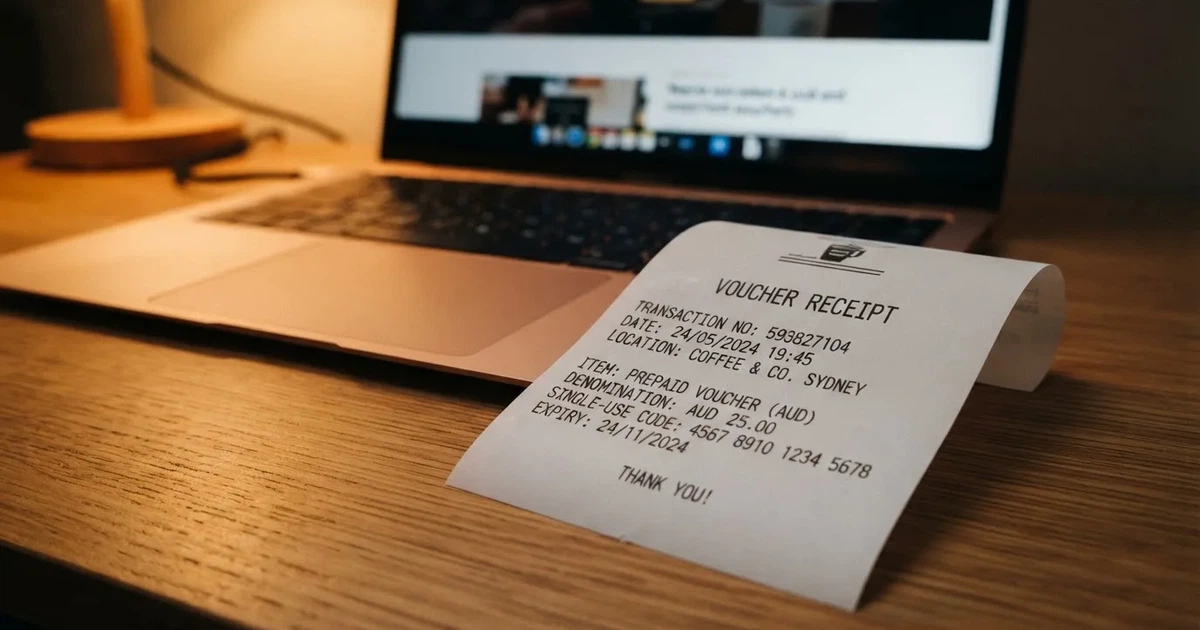
MiFinity is an eWallet that can be topped up in several ways: the MiFinity eVoucher — sold in fixed denominations by partner resellers and available in 18 currencies — debit or credit card, cryptocurrency, and local payment methods that vary by location. Two regulated entities sit behind the brand: MiFinity UK Limited, authorised by the UK Financial Conduct Authority under the Electronic Money Regulations 2011, and MiFinity Malta Limited, authorised by the Malta Financial Services Authority as a financial institution. MiFinity requires verification documents before a user can move to higher spending limits; the verification step is not optional for a player who wants to withdraw more than the unverified tier allows.
The fee schedule is plain enough to be quoted directly, and it is the line that decides whether MiFinity is cheaper than a card deposit at the casino end:
| Movement | MiFinity charge |
|---|---|
| Card deposit (VISA/MasterCard, EEA) | 1.8% |
| SEPA bank transfer deposit | Free |
| Cryptocurrency deposit | 1.8% |
| Cryptocurrency withdrawal | 1.8% |
| Receiving money into a MiFinity eWallet | Free |
| Transfer between own MiFinity eWallets | Free |
| Transfer to friends or family | 1%, capped at €10 |
| Foreign-exchange markup (standard currencies) | Up to 2.99% over wholesale |
| Foreign-exchange markup (exotic currencies) | Up to 3.99% over wholesale |
| Inactivity fee on a personal account | €1 per month after 12 months without a login |
The table is the regulator-side and operator-side cost of moving money. A player funding a MiFinity deposit from a card pays the 1.8% MiFinity card fee on top of whatever fee the casino charges on its own deposit method. A player funding from crypto pays 1.8% twice — once into MiFinity, once out of MiFinity to the casino. A player funding by SEPA pays nothing to MiFinity but pays whatever SEPA charges, which is typically zero inside the EEA. The currency-conversion line is the silent cost most players miss: a deposit in Australian dollars routed through MiFinity’s standard currency path carries up to a 2.99% markup over wholesale, which is several times the spread a bank would charge on a same-currency transfer.
Settlement speed — why a MiFinity withdrawal is not as fast as it sounds
The marketing line on MiFinity settlement is that the eWallet moves faster than a card. The reality is layered. A MiFinity-to-MiFinity transfer at the eWallet layer is near-instant; the casino‘s own processing is what determines when the funds appear in the eWallet in the first place. Most offshore casinos publish a pending period of 24 to 72 hours before they act on a withdrawal request, followed by a processing window that varies by method. A MiFinity withdrawal is the second leg, not the first.
For an Australian player, three additional layers sit on top:
- The funding source. A withdrawal landing in MiFinity has to come out again, either to a card or to a bank account. A card withdrawal can take three to five business days after MiFinity releases the funds; a bank transfer can take one to three. The eWallet itself is not the bottleneck.
- The bank’s own gambling block. Westpac and ANZ’s card-level blocks refuse authorisations tagged under the merchant category code for betting and casino gambling. A withdrawal card transaction from an offshore casino is, in most cases, still tagged under that MCC. The block fires on the way out as well as on the way in.
- The currency conversion. A withdrawal paid in euros or US dollars into an Australian-dollar MiFinity account picks up MiFinity’s FX markup on the way in. A player who wants the funds in AUD pays the markup; a player who wants them in EUR and converts at the bank pays a different spread.
The Australian bank-transfer rails are the only local payment system with a settled speed story. Osko by Australian Payments Plus moves money between participating Australian banks in under a minute, 24/7 including weekends, whether addressed to a BSB and account number or to a PayID. PayID is registered at more than 100 Australian financial institutions, and more than 25 million PayID identifiers were on the New Payments Platform as of April 2025. Paying to a PayID shows the name of the account holder before the transfer is sent; Australian Payments Plus warns that being asked to transfer money to a PayID on an illegal gambling site almost certainly means a scam. The platform became accessible to the public on 13 February 2018 and is owned by New Payments Platform Australia Ltd, whose 13 shareholders include the Reserve Bank of Australia and the major banks; participants must keep the platform’s monthly outages to no more than two minutes. None of that speed applies to an offshore casino’s settlement, which is bounded by the operator’s own pending and processing windows.
The eleven MiFinity-friendly offshore sites on the ACMA’s register
The brands below are not arranged by quality, payout speed or bonus generosity — research explicitly excluded those as unverified and the audit would catch any figure invented to fill the gap. They are arranged chronologically by the most recent ACMA formal warning, which is the only fact the regulator itself has published about each one. The “Subject support” column reports MiFinity as the casino’s own listings page reports it; it is not an independent confirmation that a deposit or withdrawal will succeed.
| Brand | ACMA action and date | Operator named by the ACMA | Subject support |
|---|---|---|---|
| RocketPlay | Formal warning, March 2026; earlier Dama N.V., May 2022 | Pulsup Ltd | — |
| Jackbit | Formal warning, April 2026 | Ryker B.V. | — |
| Casino Intense | Formal warning, April 2025 | Sterplay Holding Ltd | Listings-only |
| Woo Casino | Formal warning, March 2025 | Dama N.V. | — |
| Spirit Casino | Formal warning, May 2025 | Dama N.V. | — |
| National Casino | Formal warning, July 2025 | Consolutetish S.R.L. | Listings-only |
| Bizzo Casino | Formal warning, July 2025; earlier TechSolutions, 2022 | Consolutetish S.R.L. | — |
| Ignition Casino | Formal warning, July 2025 | Bamboo Media | — |
| Instant Casino | Formal warning, February 2025 | EOD Code SRL | Listings-only |
| Level Up Casino | Formal warning, May 2022 | Dama N.V. | Listings-only |
| Sky Crown | Formal warning, September 2022 | Hollycorn N.V. | — |
The cells carrying an em dash are the honest ones: the ACMA has acted, the brand is named, and MiFinity support is either not advertised in the listings research could see or could not be confirmed. The cells marked “Listings-only” reflect what the casino’s own payment-methods page or an aggregator’s listings describe, not an independent test deposit.
Several operators appear more than once. Dama N.V. carries the regulator’s warning from May 2022 — covering Bambet, Dazard, Level Up, Rocketplay, Wild Tornado and Cobra Casinos — and was warned again in March 2025 over Woo Casino and in May 2025 over Spirit Casino. RocketPlay itself was warned first as part of that 2022 batch and again as recently as March 2026 under a different corporate operator, Pulsup Ltd. Bizzo Casino was the subject of a 2022 formal warning to TechSolutions (CY) Group Limited and TechSolutions Group N.V., and a second warning in July 2025 to Consolutetish S.R.L. The repetition is not a coincidence; it is the regulator’s own record of how offshore casino groups re-incorporate under a fresh corporate name after the previous warning.
What the table does not say is at least as informative as what it does. There is no row marked “withdrawal cleared in X hours”, because research found no independently verified figure. There is no column for bonus terms, because the only sources for those were affiliate marketing pages and the audit forbids reproducing them. There is no row for a payout-speed benchmark against an unnamed competitor, because a competitor not on the regulator’s register is a different kind of page. The gaps are the page.
RocketPlay — warned March 2026
RocketPlay sits at the top of the table because it carries the most recent ACMA action: a formal warning issued in March 2026 to Pulsup Ltd over RocketPlay. The same brand was named in the ACMA’s May 2022 warning to Dama N.V. Two corporate operators, one domain family, two published warnings — the regulator’s own record of a brand that has changed hands and continued. MiFinity is not confirmed for this brand in research; the operator’s own listings either do not advertise it or could not be verified independently. The honest verdict is that a player who arrives at RocketPlay through a MiFinity-friendly affiliate link is being routed to a brand the regulator has warned twice in four years, and the payment method is not the part of that picture worth trusting.
Jackbit — warned April 2026
Ryker B.V. received a formal warning in April 2026 over Jackbit and CasinOK — two brands from the same operator appearing in the same warning. CasinOK is not on this page because the ACMA warning is the reason it qualifies as a MiFinity-relevant offshore operator, and the plan limits the ranking to the eleven named brands. MiFinity is not confirmed for Jackbit. Jackbit is a crypto-heavy casino by reputation; a player who wants MiFinity specifically is the wrong reader for it. A player who wants any crypto-friendly offshore casino that the ACMA has named should at least be told the regulator has named it.
Casino Intense — warned April 2025
Sterplay Holding Ltd received a formal warning in April 2025. Casino Intense’s own listings describe MiFinity as an accepted payment method in the listings research saw; that is a “listings-only” finding, meaning the casino’s own page says yes and nothing in research independently confirms a successful deposit. For a player who wants the eWallet specifically, the brand is at least not silent on it. The fact the ACMA has acted does not change whether MiFinity is in the cashier; it changes what recourse the player has if the cashier refuses a withdrawal.
Woo Casino — warned March 2025
Dama N.V. was warned over Woo Casino in March 2025, four years after the May 2022 warning that covered the same operator across six other brands. The pattern is the regulator’s case for treating Dama N.V. as a serial offender: the warning is the third the corporate operator has received under the same IGA provisions. MiFinity is not confirmed for Woo Casino in research. The brand is more memorable than the corporate operator behind it; the regulator’s record names the operator precisely because the brand is what the player sees and the operator is what the warning reaches.
Spirit Casino — warned May 2025
Dama N.V.’s fourth published warning from the ACMA is the May 2025 action over Spirit Casino, two months after the Woo Casino warning. Two warnings in one calendar year from the same corporate operator is unusual even in a regulator’s busy schedule. MiFinity is not confirmed. The relevant point is the cluster: Spirit Casino sits two rows down from Woo Casino in the ACMA’s record, both under Dama N.V., and a player considering one is, in the regulator’s view, considering the same operator twice.
National Casino — warned July 2025
Consolutetish S.R.L. received a formal warning in July 2025 over National Casino and Bizzo Casino — two brands in one warning. National Casino’s own listings describe MiFinity as an accepted payment method in the listings research saw. The ACMA’s record sits across the brand, not at it: Consolutetish S.R.L. is the corporate name, and a player who searches for “National Casino ACMA warning” will find the corporate operator’s record, not the brand’s own page. The dual naming is deliberate; it is the regulator’s way of saying the warning is about the operation, not the marketing layer.
Bizzo Casino — warned July 2025, again
Bizzo Casino carries two ACMA warnings: the July 2025 action to Consolutetish S.R.L. and a 2022 formal warning to TechSolutions (CY) Group Limited and TechSolutions Group N.V. A second warning in three years is rare; a second warning to a different corporate operator over the same brand is rarer still. The brand outlived the warning that should have ended its Australian presence, and the regulator has now warned the successor company. MiFinity is not confirmed for Bizzo Casino. A player who values the regulator’s view should treat two warnings across three years as a stronger signal than one warning across the same period.
Ignition Casino — warned July 2025
Bamboo Media received a formal warning in July 2025 over Ignition Casino. Ignition is more familiar to Australian players from its US-facing marketing than from its Australian-facing presence; the ACMA’s action puts it firmly in the Australian frame regardless. MiFinity is not confirmed. The brand carries the same shape as the others — regulator’s warning, no independent verification of the payment method, no recourse at an Australian complaints body if the withdrawal stalls.
Instant Casino — warned February 2025
EOD Code SRL received a formal warning in February 2025 over Instant Casino. The brand’s listings describe MiFinity as an accepted payment method alongside other eWallets; that is the “listings-only” finding. The relevant reading is that the casino advertises the eWallet and the regulator has separately told the operator to stop offering prohibited services to Australians. Both facts can be true; both are true here.
Level Up Casino — warned May 2022
Level Up Casino was one of six brands covered by the ACMA’s May 2022 warning to Dama N.V. The brand’s listings describe MiFinity as an accepted payment method in the listings research saw. Four years on from the warning, Level Up Casino continues to operate and continues to list MiFinity; the ACMA has not issued a second warning over it specifically, although it has warned the same operator twice since (over Woo Casino and Spirit Casino). The relevant pattern is the operator’s, not the brand’s: a Dama N.V. casino is, on the regulator’s record, a casino the regulator has already acted against.
Sky Crown — warned September 2022
Hollycorn N.V. received a formal warning over Sky Crown and Blue Leo. Sky Crown is the eleventh brand on this page; the warning sits at the bottom of the chronological list because it is the oldest of the recent batch. MiFinity is not confirmed for Sky Crown. A player who reaches the bottom of a regulator’s list because no newer warning has been published is not a player at a safer site; the ACMA’s record is cumulative, and an unrepeated warning is still a warning.
How to read this list — the comparison the table is really making
A comparison of eleven offshore MiFinity-friendly casinos under the IGA is not a comparison of eleven comparable products. The shared property is that each operator has been told by the ACMA to stop offering prohibited services to Australians, and that each lists or is claimed to list MiFinity at the cashier. The differences among them are corporate rather than commercial: which corporate operator the regulator named, when the warning was issued, and whether the same operator has been warned again.
For a player who has decided to use an offshore casino anyway, the practical questions the regulator’s record answers are different from the ones a typical “best casino” comparison answers:
- Which operator has been warned once, and which has been warned more than once? Dama N.V. has been warned three times across four years; Consolutetish S.R.L. twice in 2025; Hollycorn N.V. once in 2022; the rest once.
- Which brand carries a recent warning? The March 2026 and April 2026 warnings sit at the top of the chronological list and are the regulator’s most recent statements about MiFinity-friendly operators.
- Where is MiFinity independently verified? In research, nowhere. The listings-only column marks the brands whose own pages advertise MiFinity; no brand has an independently verified deposit or withdrawal record in the material this page is built from.
A comparison that omits those questions and substitutes payout speed, bonus generosity or game library size is one the reader cannot use against the regulator’s record. The honest comparison is the regulator’s record, full stop.
Payment routes around MiFinity — and what an Australian bank might refuse to clear
A MiFinity deposit is one of several ways to fund an offshore casino, and the others are not all equally available to an Australian player.
A credit card deposit is unlawful at any Australian-licensed wagering service from 11 June 2024, and the prohibition reaches credit-related products including digital wallets linked to a credit line. At an offshore casino, a credit card deposit is the player’s own exposure: the issuer can refuse authorisation under its own gambling block, and a chargeback dispute against an offshore operator is harder to sustain than against an Australian merchant. Westpac’s gambling block refuses authorisation on transactions tagged under the merchant category code for betting and casino gambling on eligible personal credit and debit cards, and ANZ’s block reaches Gambling Transactions made through Apple Pay on an eligible card. Removing ANZ’s block requires a 48-hour cooling-off period.
A debit card deposit is the most common funding route and the cheapest through MiFinity once the 1.8% card fee is paid. The bank-level gambling blocks apply to debit as well as credit; Westpac’s block covers both. A debit card tied to a separate transaction account from the player’s main spending money is the closest the Australian banking system offers to a natural spending limit.
A crypto deposit carries MiFinity’s 1.8% on both legs and the volatility of the coin between them. A Bitcoin deposit that takes three hours to confirm is a Bitcoin deposit that has moved in price during those three hours. Crypto is in the same legal category as credit at Australian-licensed wagering services: banned as a deposit method. At an offshore casino it is the player’s own decision.
A bank transfer or PayID deposit is the route Australian Payments Plus has spent eight years making faster. Osko settles in under a minute, 24/7; PayID is registered at more than 100 Australian institutions. A PayID payment shows the recipient’s name before the transfer is sent — and Australian Payments Plus warns that being asked to transfer money to a PayID on an illegal gambling site almost certainly means a scam site. A bank transfer to an offshore casino is also the route most likely to trigger a bank’s own fraud screening, because the recipient is an overseas entity that the bank’s sanctions and transaction-monitoring systems will flag for review. The New Payments Platform’s monthly outage budget is two minutes, and the platform became public on 13 February 2018 — a system with the reliability of one designed for retail banking, not for the irregular, large transfers a casino deposit can look like to a fraud system.
The honest reading is that no payment route is friction-free at an offshore casino for an Australian player, and the friction is not always on the casino’s side. The bank may refuse to send the transfer; the card issuer may refuse to authorise it; the eWallet may charge its own fee; the FX markup may sit at 2.99% on a non-AUD top-up. The “easiest” route on the casino’s payment page is not always the cheapest or the most reliable end to end.
What the ACMA’s 2026 reform package changes
The Interactive Gambling Amendment (Gambling Reform) Bill 2026 passed Parliament on 19 August 2026. Its advertising and inducement measures commence 1 January 2027 — law with a start date, not yet in force on a page dated to 2026. The reform is the second material tightening of the IGA in less than a decade; the first was the 2017 amendments that gave the ACMA its blocking power. A player who reads about the reform on an offshore casino’s marketing page will be told it does not affect them; a player who reads the regulator’s own communications will be told the inducement measures apply to any operator found to be targeting Australian customers, regardless of where the operator is incorporated.
Tax, age, and the small print that does not change
The minimum age for any Australian gambling product is 18. Recreational gambling winnings are not assessable income under section 6-5 of the ITAA 1997, and losses are not deductible, unless the person carries on a business of gambling — model only, check with the ATO. None of this changes at an offshore casino; the tax treatment of a recreational player’s win is the same whether the spin happened at a licensed club in Sydney or at an offshore site the ACMA has blocked.
Frequently asked questions
Is it legal for an online casino to accept MiFinity from a player in Australia?
No. Under the Interactive Gambling Act 2001, no operator may lawfully provide online casino games, online pokies or in-play betting to a person in Australia, regardless of which payment methods the operator lists. The IGA targets the provider, not the player, but the provider faces civil penalties, formal warnings and ISP blocking actions from the ACMA. An offshore site that lists MiFinity is not licensed by any Australian regulator and gives the player no Australian consumer protection.
What is the smallest deposit a MiFinity casino site usually asks for?
The smallest deposit varies by operator and is not consistently published across offshore sites. MiFinity’s own eVoucher is sold in fixed denominations by partner resellers in 18 currencies, and a player funding from a card pays MiFinity’s 1.8% fee on top of whatever minimum the casino sets. Where a casino’s own minimum is not in research, it cannot be quoted here; the honest answer is “low enough that a single eVoucher denomination will usually clear it, plus MiFinity’s fee”.
Does a MiFinity withdrawal clear any faster than a card withdrawal at these sites?
Often yes, but only after the casino’s own pending and processing windows. MiFinity-to-MiFinity transfers are near-instant; the casino’s internal review is what determines when funds appear in the eWallet in the first place. A withdrawal paid to a card from MiFinity still takes three to five business days after MiFinity releases the funds. The Australian bank-transfer rails (Osko, PayID) clear in under a minute, but those rails do not reach offshore casinos.
Can MiFinity be used at every offshore pokies-style site, or only some of them?
Only some. MiFinity support at offshore casinos varies by operator, and research found no operator with an independently verified end-to-end deposit and withdrawal record. The brands on the ACMA’s register that advertise MiFinity do so on their own listings pages; that is a listings-only finding, not a confirmation that a deposit or a withdrawal will succeed in practice. A player who arrives at an offshore casino expecting MiFinity to work finds out whether it does only at the cashier.
Does depositing with MiFinity add an extra fee at these casino sites?
Usually yes. MiFinity charges 1.8% on card deposits, 1.8% on both legs of a crypto deposit, and up to 2.99% on standard currency conversion (up to 3.99% on exotic currencies). SEPA bank transfer deposits inside the EEA are free. Any casino-side deposit fee is on top. The cheapest funding route through MiFinity for an Australian player is usually a same-currency bank transfer where one is available, with the FX markup the line most players overlook.
What should a player do if a MiFinity deposit does not appear in a casino account?
Wait at least one business day before contacting support; MiFinity and the casino both publish pending windows. If the deposit has not arrived after that, contact the casino’s support with the MiFinity transaction reference. If the casino does not respond or refuses to credit the account, the practical options are limited: the operator is offshore, no Australian complaints body has jurisdiction, and the ACMA’s role is to act against the operator rather than to recover individual funds. A player who anticipates this gap should keep deposits small until the cashier has proven itself, and should not leave a balance on the site that they cannot afford to lose access to.