
GameBeat online casinos in Australia: what the marketing never says first
The page below was written for someone in Australia typing “gamebeat casino” into a search box and expecting a working shortlist. That shortlist cannot exist, in the honest sense of the word: the Interactive Gambling Act 2001 prohibits the supply of online casino games to anyone in Australia, and no state or territory licenses it. So the page does not pretend otherwise. It sets out the law, the regulator’s enforcement record, the GameBeat product itself, and the options that are lawful for an Australian reader who wants to play casino-style games. The angle that runs through it is cost — what an offshore site charges the person on the other end of the screen once marketing stops speaking.

Currency figures are current as of 29 October 2026 and the regulatory claims below were checked against the Australian Communications and Media Authority’s published register of formal warnings.
Table of Contents
- What GameBeat actually is, before the word “casino” gets attached
- Why an Australian-facing “best GameBeat casino” list is impossible to build honestly
- How the ACMA has applied the ban, brand by brand
- Mobile play, and why the “best GameBeat mobile casino” question has the same answer
- What GameBeat’s gameplay actually looks like, for the reader who still wants to know
- Bonuses, free spins and the arithmetic that makes them less generous than they look
- Payments and the gap between deposit and payout
- What the lawful options actually look like
- Responsible gambling: the limits of the Australian regime
- What the ACMA’s blocking arithmetic actually says
- The tax position, briefly
- Where the page leaves the reader
- Frequently asked questions
What GameBeat actually is, before the word “casino” gets attached
GameBeat is a slot game studio, not a casino. The company describes itself on its own corporate page as a business-to-business software developer that supplies games only to licensed operators and commercial partners, never to players directly. It was set up in 2021 and sits in a market crowded with similar B2B suppliers: 1spin4win, also founded in 2021, runs more than 190 online slots on an HTML5 stack built for low-bandwidth connections and reports more than a thousand operator and aggregator partnerships; BGaming, founded as a brand in 2018 but with team history back to 2012, lists more than 250 certified games and counts Blaze, Pin-Up and Gamdom among its operator customers. GameBeat’s catalogue fits into that same shape — reels, paytables, RTP figures, a handful of mechanics — but the consumer never buys a GameBeat product directly. The consumer buys it from a casino that has licensed it in.

That detail matters because it determines what a search for “gamebeat casino” can ever return. A reader is not looking for a studio with a cashier; a reader is looking for a casino that has integrated GameBeat’s games. The first question any responsible shortlist has to answer is therefore not “which brand is best” but “is the thing being short-listed lawful to use from Australia at all.” On current Australian law, for casino games specifically, the answer is no.
The wider machine still has plenty to say. GameBeat competes in the same space as Betsoft, which was founded in 2006 and lists more than 200 RNG games across slots, table games and video poker with published RTPs in the 95–96% band and volatility tags ranging from Medium to Very High. Aristocrat Leisure, the largest gambling-machine manufacturer in Australia and second-largest slot maker worldwide, runs a separate regulated real-money online arm, Aristocrat Interactive, formed in April 2024 from the merger of its Anaxi unit with the newly acquired NeoGames group. These are the bigger neighbours GameBeat sits among on a supplier’s content aggregator — but on this page they are background. The reader in Australia is asking what to do with a GameBeat result, not which supplier has the largest balance sheet.
Why an Australian-facing “best GameBeat casino” list is impossible to build honestly
The phrase a search returns — “best gamebeat online casinos australia” — assumes a market where a casino can hold an Australian licence to offer online slots, take an Australian dollar deposit and pay out to an Australian bank account under Australian consumer protection. That market does not exist for casino games.
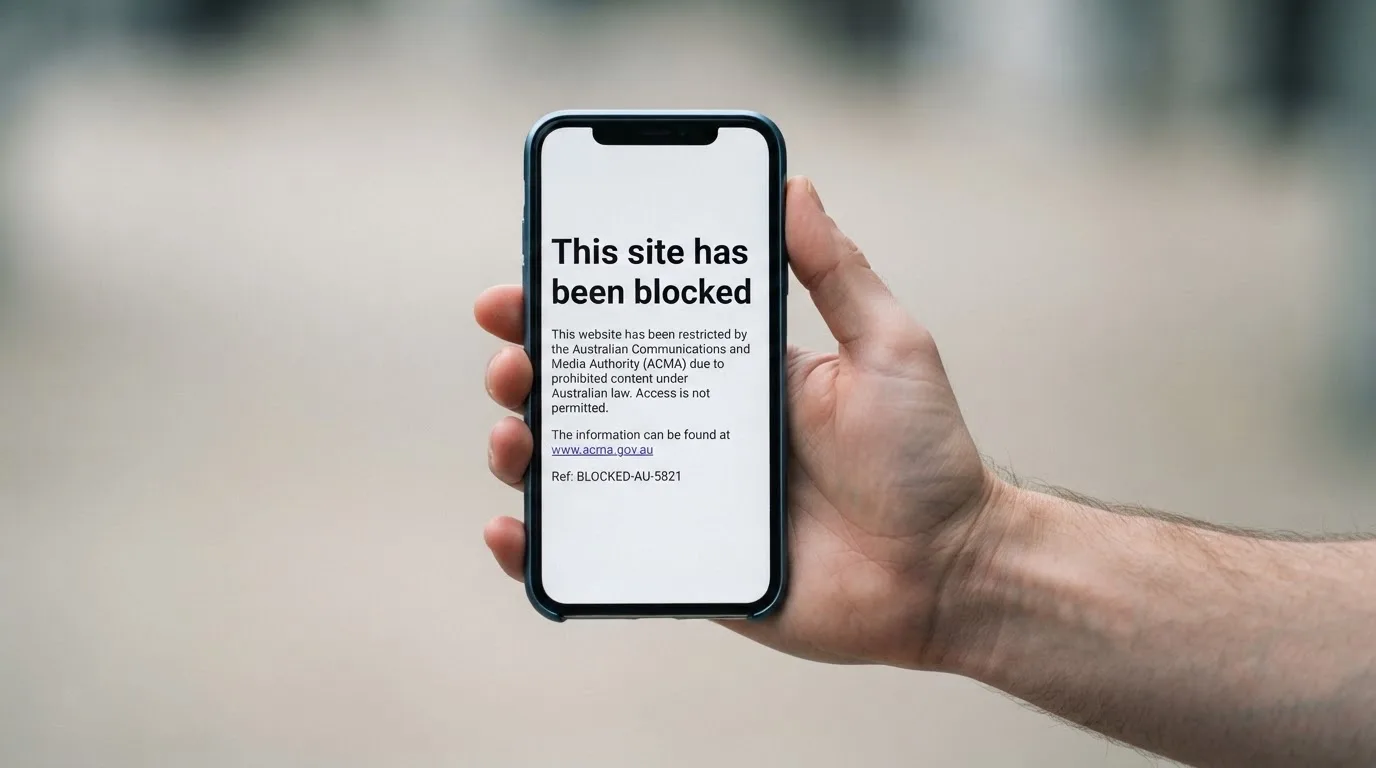
The Interactive Gambling Act 2001 (IGA), as tightened by the Interactive Gambling Amendment Act 2017, makes it an offence to provide an online casino game, online pokies or in-play betting to a person physically in Australia. What is licensable is wagering on races and sporting events placed before the event, lotteries and keno. In practice the betting side of the Australian market is licensed in the Northern Territory through the Northern Territory Racing and Wagering Commission, which regulates 52 of the country’s online bookmakers — including Sportsbet, Bet365 and Ladbrokes — and runs with no full-time staff, meeting once a month in Darwin. That covers sports and racing. It does not cover a GameBeat slot.
Minimum age across the licensed market is 18. The individual player is not the target of IGA enforcement — the Act hits the supplier, not the punter — but the offshore site that sits outside the regime gives no Australian consumer protection, no complaints body and no recourse if a withdrawal is refused. A balance can be sitting in an account one morning and unreachable by that evening if the regulator’s block list catches up with the brand. That is the cost the marketing language never names.
How the ACMA has applied the ban, brand by brand
The Australian Communications and Media Authority enforces the IGA through formal warnings, civil penalty proceedings and — when a site keeps advertising or accepting Australian customers — directing Australian internet service providers to add it to a block list. By June 2026 the ACMA had asked ISPs to block 1,751 illegal gambling and affiliate marketing websites since the first blocking request in November 2019, and more than 230 unlicensed gambling services had left the Australian market since the regime was strengthened in 2017. The June 2026 round alone added twelve names: 7Signs, ChromaBet, Donbet, Duospin, Freshbet, Slots Gem, Jacks Club, Lucky Start, Pointsbetz, Spinrise, Vinyl Casino, and Wildsino.
The following table collects the formal warnings the ACMA has issued specifically against brands that a reader searching for GameBeat content is likely to encounter. Each brand’s row carries the brand name, the ACMA action and date, the operator the ACMA named, and whether GameBeat subjects appear in any third-party listings that name the brand. Several rows carry no GameBeat finding at all: in those cases the brand is shown on its ACMA action alone, not as a confirmed GameBeat host.
| Brand | ACMA action and date | Operator named by the ACMA | Subject support |
|---|---|---|---|
| RocketPlay | Formal warning — March 2026; earlier Dama N.V. warning May 2022 | Pulsup Ltd | — |
| Level Up Casino | Formal warning — May 2022 | Dama N.V. | listings only (Wazdan) |
| Woo Casino | Formal warning — March 2025 | Dama N.V. | — |
| Spirit Casino | Formal warning — May 2025 | Dama N.V. | — |
| National Casino | Formal warning — July 2025 | Consolutetish S.R.L. | listings only (Betsoft, en.wikipedia.org, Pragmatic Play) |
| Bizzo Casino | Formal warning — July 2025; earlier TechSolutions warning 2022 | Consolutetish S.R.L. | — |
| Ignition Casino | Formal warning — July 2025 | Bamboo Media | — |
| Instant Casino | Formal warning — February 2025 | EOD Code SRL | — |
| Jackbit | Formal warning — April 2026 | Ryker B.V. | — |
| Casino Intense | Formal warning — April 2025 | Sterplay Holding Ltd | listings only (1spin4win, en.wikipedia.org, gamblingcommission.gov.uk) |
| Sky Crown | Formal warning — September 2022 | Hollycorn N.V. | — |
The two columns to read first are the ACMA action and the operator named. The regulator’s record is the public, citable proof that the brand has been told, in writing, that what it is offering to Australians is prohibited. The Subject support column is intentionally thin: across eleven brands, only three have any third-party listing that names them in a GameBeat-adjacent context. The remaining eight have no listing the research could verify, which is itself a finding — an aggregator page that does not name the studio should not be the reason a reader assumes the studio’s games are on the brand’s lobby.
RocketPlay
The most recent ACMA action against this brand is a formal warning issued in March 2026 to Pulsup Ltd over Rocketplay, sitting on top of an earlier May 2022 warning to Dama N.V. that covered RocketPlay alongside five other casino brands. GameBeat is not listed among RocketPlay’s verified content subjects by any source the research could reach, so any reader who arrives here expecting to find GameBeat slots specifically on RocketPlay is buying a brand name, not a confirmed product line. The verdict is the ACMA’s, not the page’s: a brand the regulator has warned twice in four years is not one an Australian reader should approach expecting normal consumer protections.
Level Up Casino
The ACMA’s record on Level Up goes back to the May 2022 Dama N.V. warning. The brand appears in third-party listings under Wazdan, a separate studio — there is no GameBeat finding attached. That detail changes the picture less than it sounds like it should: a brand can host a hundred studios and still be unlawful to use from Australia. The honest read of Level Up is that an Australian reader is using a brand the regulator has already named, on terms an Australian licence does not cover.
Woo Casino
The ACMA warned Dama N.V. over Woo Casino in March 2025, one of two follow-ups the regulator issued to the same operator within three months. The research carries no GameBeat subject support for this brand. The page reaches the same conclusion it reaches for the other Dama N.V. names: the ACMA has put the brand on its register for a reason that has not gone away.
Spirit Casino
Spirit Casino was the second Dama N.V. brand the ACMA warned within the same 2025 window — May 2025, two months after Woo. No GameBeat subject support is recorded. The pairing with Woo is itself the story: the regulator moved against the operator twice in quick succession, on what appears to be the same conduct, and the brand kept running under a fresh name in between. The verdict follows from the regulator’s posture, not from anything the page can prove about the product on the lobby.
National Casino
National Casino was named in the ACMA’s July 2025 warning to Consolutetish S.R.L. Its subject support shows up in third-party listings under Betsoft and Pragmatic Play, alongside an encyclopaedic reference — GameBeat is not on that list. The substantive point holds regardless: an Australian-facing reader cannot use the brand lawfully, and the regulator has already said so in writing.
Bizzo Casino
Bizzo was named in the same July 2025 Consolutetish S.R.L. warning as National Casino, on top of a 2022 formal warning to TechSolutions Group. The brand has now been the subject of two ACMA actions over four years. No GameBeat subject support. The verdict for a reader is that the regulator’s patience has already been tested on this name once.
Ignition Casino
The ACMA warned Bamboo Media over Ignition Casino in July 2025. The brand carries no GameBeat subject support in the research. What it does carry is a regulator action that says, in plain terms, that supplying online casino games to Australians is the conduct the warning is about.
Instant Casino
Instant Casino was the subject of a February 2025 ACMA warning to EOD Code SRL. The regulator named the operator; no GameBeat subject support was found. The brand sits at the early end of the ACMA’s recent enforcement arc against the brands this page is built around.
Jackbit
The ACMA’s April 2026 warning to Ryker B.V. named Jackbit alongside CasinOK. No GameBeat subject support is on record. A formal warning two months before this page is published is recent enough that the brand’s Australian-facing posture has not had time to be tested again.
Casino Intense
Casino Intense was named in the ACMA’s April 2025 warning to Sterplay Holding Ltd. Its subject support runs through 1spin4win and encyclopaedic and UK Gambling Commission references — GameBeat is not among the verified subjects. The same legal position holds as on the rest of the list: a warning the regulator has issued is a warning the regulator has issued, regardless of which studio supplies the games.
Sky Crown
Sky Crown was named in the September 2022 formal warning to Hollycorn N.V., which also covered Blue Leo. It is the oldest entry on this list. No GameBeat subject support. A warning that old is still a warning, and the IGA has not been amended to permit what it prohibits.
Mobile play, and why the “best GameBeat mobile casino” question has the same answer
GameBeat’s product is built to run on a phone. The supplier side of the market — 1spin4win, BGaming, Betsoft — produces HTML5 stacks that target low-bandwidth connections and modern mobile browsers. A reader’s phone will load the lobby without complaint; the technology is not the obstacle. The obstacle is that the act of using it from Australia is the regulated conduct, and the device in the hand does not change which regulator has the standing to enforce.
The “best GameBeat mobile casino” angle the search engines return usually means one of two things. Either it means an Australian-licensed betting app that has a casino tab on it — and no such product exists, because the IGA does not licence that tab. Or it means an offshore casino wrapped in a downloadable app from a third-party store or sideloaded directly. The ACMA’s block list reaches both: blocking is applied at the domain level by Australian ISPs, and most of the apps named in the search results route to the same domains. A reader who has installed the app, funded the account and started playing has still had the brand put on a block list the next morning, and the balance they thought they had access to is on a server the regulator cannot help them reach.
That is the practical mobile-side answer. The page is not telling the reader the phone is the problem; the phone is fine. The phone does not move the activity out of Australian jurisdiction. The cost the page keeps returning to is paid by the person holding the phone.
What GameBeat’s gameplay actually looks like, for the reader who still wants to know
GameBeat publishes a catalogue in the same shape as the rest of the B2B slot market: reels, paylines, a published RTP per title, a volatility tag, a hit frequency. The headline numbers on comparable titles in adjacent studios run from the mid-90s for return-to-player — Betsoft’s Good Girl Bad Girl 2 sits at 96.22% on a 5-reel, 20-payline layout with Very High volatility and a 15.59% hit rate, while its older The Slotfather, live since December 2012, is 95.69% on 5 reels and 30 paylines at Medium volatility and an 8.17% hit rate. BGaming pushes proprietary mechanics like TRUEWAYS, which can present up to 262,144 ways to win on a single title. GameBeat’s specific mechanics and exact paytable numbers sit in the same shape but are not part of the research the page is built on, and the page does not invent them. What the page can say is that the consumer-facing experience of a GameBeat slot is functionally interchangeable with any other B2B HTML5 slot — same reels, same bonus rounds, same RTP/hit-rate framing, same volatility tag.
What the page cannot say is which Australian-facing brand runs GameBeat under which licence. The third-party listings the research turned up name a handful of brands under other studios; the GameBeat-specific listings are thin. The honest read is that an Australian reader cannot verify the supplier list of an offshore casino without making an account, and the act of making an account is the act the regulator has put on warning.
Bonuses, free spins and the arithmetic that makes them less generous than they look
Offshore casinos marketing GameBeat content use the same inducements the rest of the offshore market uses: deposit-match bonuses, free-spin bundles, “no deposit” credit drops, promo codes in affiliate copy. The research does not carry verified turnover or wagering figures for any brand on the ACMA list — those figures exist on affiliate pages whose accuracy the page cannot verify, and which the ACMA’s enforcement record does not endorse.
What the page can do is name the cost the marketing language does not. A standard deposit-match bonus in this market multiplies the bonus amount by a wagering factor to produce a required turnover — the dollar amount a player must put through the games before any of the bonus balance becomes withdrawable. A wagering factor of 40x on a A$100 bonus is A$4,000 of wagered play before withdrawal. At a typical slot RTP of 96%, the expected loss on that turnover is roughly A$160, against a A$100 headline bonus — a net cost to the player of about A$60 before any other cap (a max cashout, a game weighting, a per-spin stake ceiling) starts to bite. Free-spin bundles carry the same shape: the wins are paid as bonus balance, the wagering runs on the bonus balance, and the cashout cap on free-spin wins is usually small enough that the headline number on the offer never quite reaches the player’s bank.
The expected-loss arithmetic is the part the marketing does not say. A reader looking at “100% match up to A$500 + 200 free spins” is reading the deposit-side number and not the turnover number. The deposit number is the friendly front; the turnover number is what the bonus actually costs. None of this changes the Australian-law objection to using the brand at all — but it explains why an honest comparison of “best” has nothing to compare, even if the legal question were set aside.
Payments and the gap between deposit and payout
The Australian regime for licensed online wagering is restrictive on the payment side. Since 11 June 2024 credit cards, credit-related products and digital currency are banned as payment methods for any licensed Australian online wagering service, with penalties up to A$247,500 for operators that take them. What is allowed is debit card, bank transfer, PayID/Osko and BPAY. A site that asks an Australian for a credit card or a crypto deposit is by definition operating outside the Australian licence regime. The IGA means that is the only shape an online casino takes for an Australian reader — every deposit route an Australian is offered is the deposit route of an offshore operator.
The payout side carries the same gap. An offshore casino pays back to whatever rail it prefers, on whatever timeline its terms page sets, with whatever Know Your Customer friction its payments team feels like applying on the day. The licensed Australian bookmaker publishes a payout window in hours, because the regulator and the Australian bank rails make it enforceable. The offshore casino publishes a payout window in business days, because the regulator and the bank rails are not in the room. The page returns to the same finding it returns to on the bonuses: the headline number on the offer is the deposit-side number, and the cost is paid by the person who has to withdraw.
The lawful alternative has a different shape entirely. A licensed Australian bookmaker — Sportsbet, Bet365, Ladbrokes, the 52 brands the Northern Territory commission regulates — offers debit card, PayID/Osko and BPAY as deposit routes, settles back to the same Australian bank account, and is subject to Australian consumer protection law when something goes wrong. There is no casino tab on those sites, because the IGA does not permit one. The reader who wants to bet on a race or a sport from Australia has a working market to do it in. The reader who wants to play GameBeat slots does not.
What the lawful options actually look like
For a reader in Australia who wants to play casino-style games, the lawful options fall into three groups, and none of them is an offshore casino accessed from an Australian IP address.
The first group is licensed land-based casinos and pokies venues. The Australian states and territories licence physical casinos and gaming machines — pubs and clubs with poker machines, often called “pokies”, and the integrated casino resorts in Sydney, Melbourne, the Gold Coast and elsewhere. These are physical premises with physical machines, not websites. They are outside the IGA’s scope, because the Act covers online supply. A reader who wants the GameBeat-style experience in a lawful setting is looking at Aristocrat Leisure’s electronic gaming machines — the Sydney-headquartered company whose 2025 revenue was A$6.30 billion on a normalised net profit after tax and amortisation of A$1.55 billion, and which describes itself as the largest gambling-machine manufacturer in Australia. Those are the machines on the floors of Australian venues.
The second group is social and free-to-play casino apps. GameBeat and the other B2B studios publish versions of their slots for social-casino platforms and for free-play modes that do not involve real-money wagering. Aristocrat runs a social-casino arm through Product Madness. BGaming’s catalogue has free-play modes. A reader who wants to play the games for entertainment, with no real money on the line, has a working market; the IGA does not regulate games that do not pay real-money prizes to Australians.
The third group is the National Self-Exclusion Register, BetStop. BetStop went live in August 2023 and binds every Australian-licensed online and phone wagering service. A reader who wants the casinos to stop being available to them can register once and have every licensed operator close their account and refuse to reopen it for the chosen exclusion period. BetStop does not reach an offshore casino, because the offshore casino is not licensed in Australia and is not connected to the register. The page returns to that fact more than once, because it is the single point at which the legal architecture and the offshore market collide most visibly.
Alongside BetStop, the National Gambling Helpline on 1800 858 858 is free and available 24/7, with chat support through Gambling Help Online. These are the services an Australian reader can lean on; they are the parts of the regime that work whether or not the offshore casino cooperates.
Responsible gambling: the limits of the Australian regime
BetStop and the helpline are the visible side of the responsible-gambling regime. Less visible is the architecture around them: the ACMA’s blocking powers, the credit-card and crypto ban on licensed wagering, the age floor of 18 across the licensed market, and the consumer-protection laws that an Australian-licensed bookmaker is subject to. All of that architecture rests on the operator being Australian-licensed. The offshore casino does not sit under it. The offshore casino’s own self-exclusion, its own deposit limit, its own reality check is whatever the operator’s terms page says — and the operator’s terms page is what the operator’s terms page is, on the day the player tries to use it.
The H2 Gambling Capital 2025 estimate puts Australian losses to illegal gambling sites at about A$3.9 billion a year, with the share of gambling going through legal channels falling from 74% in 2021 to 64%. The reader sitting behind that 64% is the reader this page is for. The arithmetic is plain: every dollar that flows to an offshore site is a dollar the Australian responsible-gambling regime cannot see, account for, or recover if the site stops paying out.
The 2026 reform path does not change any of this for casino games in the short term. The Interactive Gambling Amendment (Gambling Reform) Bill 2026 passed Parliament on 19 August 2026 and its advertising and inducement measures commence on 1 January 2027. Law with a start date, not yet in force on a page written in 2026. The bill tightens what is already prohibited; it does not open a category that is currently closed.
What the ACMA’s blocking arithmetic actually says
The blocking rate the page can derive from the public record runs from a clear starting point. The ACMA’s first blocking request was issued in November 2019; by June 2026 the running total of blocked sites had reached 1,751. That works out to a long-run rate of roughly 264 sites blocked per year, or about 22 per month, averaged over the seven-and-a-bit years since the first request. The June 2026 round alone added 12 names — 7Signs, ChromaBet, Donbet, Duospin, Freshbet, Slots Gem, Jacks Club, Lucky Start, Pointsbetz, Spinrise, Vinyl Casino and Wildsino — so the most recent month’s run rate is below the long-run average; the June 2024 round that included a high-profile batch of brands sits above it. The honest framing of that arithmetic is a band, not a point estimate: somewhere between a steady monthly clip of a dozen or so new additions and the occasional enforcement burst that puts twenty or thirty names on the list in a single week. What the figure says, plainly, is that the block list is not a one-off action. It is a flow.
The tax position, briefly
For an Australian resident, gambling winnings of a recreational player are not assessable income under section 6-5 of the ITAA 1997, and losses are not deductible — unless the person carries on a business of gambling. The page records the position without recommending anything; the ATO is the right place to confirm the position for a specific case, and a reader whose activity has moved from recreation into something the ATO might read as a business has moved into a different conversation entirely.
Where the page leaves the reader
The honest shortlist an Australian reader can act on does not contain any of the offshore brands on the ACMA’s warning register. It contains three entries: licensed land-based casinos and pokies venues, social and free-to-play casino apps, and BetStop self-exclusion for anyone who wants the licensed wagering market to close around them. The “best GameBeat casino” question, as a search box would phrase it, is not a question the Australian law permits an answer to. The page has set that out at length, because the cost of misunderstanding it is paid by the person on the other end of the transaction, and the marketing on the offshore side of the wall is built to make that misunderstanding easy.
The reading order that follows from the page is the order it has laid out. First the legal frame, then the enforcement record, then the mobile and payment mechanics, then the gameplay and bonus arithmetic, then the responsible-gambling tools, then the tax position. Each block tells the reader what it costs to use what the search results are pointing at — and what stands in its place that the reader can use lawfully.
Frequently asked questions
What kind of games does GameBeat make?
GameBeat is a slot game studio set up in 2021 that builds HTML5 slot content for licensed B2B customers, in the same shape as comparable studios like BGaming, Betsoft and 1spin4win. The games run in licensed casinos’ lobbies and are not sold directly to players.
Is GameBeat used by any casino licensed to operate in Australia?
No Australian state or territory licences online casino games, so no Australian-licensed casino runs GameBeat’s games. Every brand in research that names GameBeat in any third-party listing is an offshore operator, and most of those brands appear on the ACMA’s formal-warning register.
Can Australians legally play GameBeat slots at an online casino?
No. The Interactive Gambling Act 2001 prohibits the supply of online casino games to anyone in Australia, and the ACMA enforces that through formal warnings and ISP-level blocking. The individual player is not prosecuted, but the offshore site gives no Australian consumer protection.
Are GameBeat games available at land-based Australian casinos?
Australian land-based venues use Aristocrat Leisure and other manufacturers’ electronic gaming machines rather than GameBeat’s online slot catalogue. The GameBeat product line is built for online play; the lawful equivalent on Australian soil is the poker machine on the floor of a licensed pub, club or casino.
What should someone check before trusting a site that claims to offer GameBeat games?
An Australian reader should check whether the brand appears on the ACMA’s published register of formal warnings, whether the site accepts credit cards or crypto (both banned for licensed Australian wagering since 11 June 2024), and whether the operator is named and reachable in a jurisdiction an Australian could complain to. The site being “licensed” in Curaçao or Malta is not a substitute for any of those.
Does GameBeat software run on mobile browsers?
Yes — GameBeat’s catalogue is built in HTML5 for low-bandwidth connections and runs in modern mobile browsers the same way comparable B2B slot content does. The phone being capable of running the games is not the issue; the legal status of supplying them to an Australian reader is.