
$20 minimum-deposit online pokies in Australia: why the search and the product don’t match
A person typing “2026 minimum deposit pokies australia” usually wants one of two things. They want a stake small enough to spin a few reels without a big commitment, or they want the online version of the poker machine they already play at the local pub or club. In Australia, those two wants sit on opposite sides of a legal line that has been drawn for a quarter of a century, and the page that follows is built around that gap. $20 minimum-deposit online pokies in Australia — More on this topic at crypto casino au .
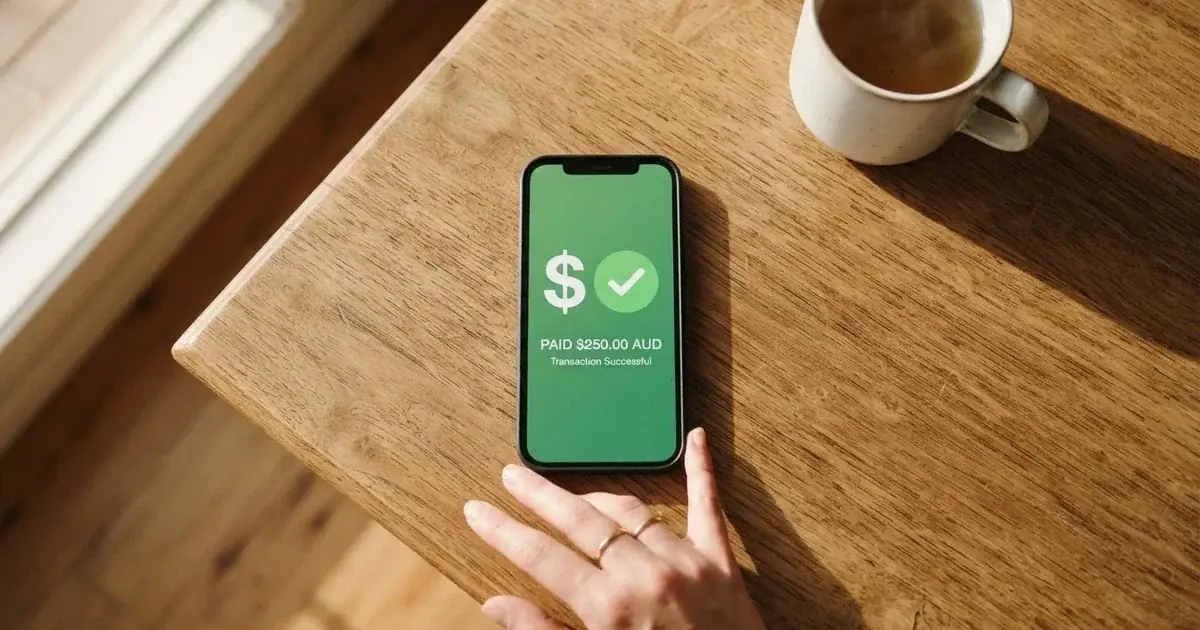
The short version of the law is this. Under the Interactive Gambling Act 2001 it is an offence to supply online casino games — online pokies included — to a person physically in Australia. No state or territory issues a licence for them. The only “2026 minimum deposit pokies australia” a person in Australia can buy legally is the floor-standing poker machine inside a licensed venue, paid in cash or by debit card at the venue. Everything else — every offshore site accepting Australian dollars, advertising in Australian dollars, and accepting a $20 minimum deposit — is operating outside Australian law, which means it has no Australian licence to lose, no complaints body to answer to, and no Australian consumer protection to fall back on.
This page maps what that search returns, why it looks the way it does, and what the legal alternative actually delivers for the same $20.
Currency and authority check: current as of 29 October 2026; operator claims, ACMA enforcement actions and venue figures cross-checked against the Australian Communications and Media Authority register, the H2 Gambling Capital 2025 report and state-level gaming-machine data.
Table of Contents
- The fundamentals: what $20 buys, and where
- How many machines, how much lost
- Why the search brings up offshore sites
- What the law actually says
- What changed on 11 June 2024
- Where the offshore industry gets caught
- The eleven operators the ACMA has warned
- RocketPlay
- Level Up Casino
- Woo Casino
- Spirit Casino
- National Casino
- Bizzo Casino
- Ignition Casino
- Instant Casino
- Jackbit
- Casino Intense
- Sky Crown
- What none of these brands can give a reader
- Help that actually reaches the player
- Money flow on the wire: what an Australian deposit actually does
- What $20 actually buys at the venue
- Tax: a brief note
- Where this leaves the search
- Frequently asked questions
The fundamentals: what $20 buys, and where
The first thing to clear up is the difference between the two products the search term covers.

A pub or club poker machine is a real, licensed piece of equipment. It sits inside a venue that has a gaming-machine licence from the state or territory regulator. The state controls the maximum number of machines at each venue, the minimum return-to-player percentage the machine must be programmed to deliver over its life, and the venue’s harm-minimisation obligations. The Australian version of the device — the “pokie” — operates in every state and territory, and each jurisdiction regulates them separately. The legal minimum return-to-player is 85 per cent in New South Wales, the Northern Territory and Queensland, 87 per cent in the Australian Capital Territory and Tasmania, 87.5 per cent in South Australia and 90 per cent in Western Australia; Crown Melbourne’s machines sit at 87 per cent. Western Australia is the outlier — poker machines are banned outside the one casino in Perth, where the count has grown from roughly 200 in 1985 to about 2,500 today.
A $20 minimum deposit online pokies site is something different. It is a website. It takes the $20 through a payment processor, credits an account, and runs a software version of a pokie on a server somewhere offshore. The “pokie” on the screen is a game produced by a software studio — most of them based in Curaçao, Malta, the Isle of Man, the Philippines — and the RTP is whatever the studio chose to publish. The licence the site displays at the bottom of its homepage is from one of those same jurisdictions. None of them is recognised for the purposes of supplying casino games to Australians.
That is the first thing to hold on to: the only product that legally delivers “2026 minimum deposit pokies australia” is the device at the venue, and the term in the search box also covers a product that, by statute, cannot be licensed here.
How many machines, how much lost
The scale of the legal market is what makes the offshore market worth chasing. Australia has roughly 3 per cent of the world’s pub and club poker machines and 0.3 per cent of the global population. In 2020–21 Australians bet close to A$150 billion through gaming machines and lost about A$12.18 billion on them. New South Wales alone had 87,298 gaming machines outside casinos across 2,195 venues in June 2023, with player losses of A$8.18 billion in 2022–23. Queensland had 21,122 machines in 351 venues in October 2023, and Victoria 26,380 machines outside Crown Casino in 488 venues, all within a statewide cap of 30,000. Western Australia has the fewest by design. Tasmania, where the Federal Group held a monopoly on every machine from 1968 until legislation passed in November 2021 ended it, planned nation-leading mandatory pre-commitment cards, with implementation running behind schedule into late 2025.
These are not small numbers. The shape of the legal market — high machine density, a heavy loss profile, a dense pub and club footprint, and minimum returns that sit between 85 and 90 per cent — is the reason a search for “2026 minimum deposit pokies australia” is meaningful in the first place. Punters are looking for the same product at a lower friction, and the offshore market has spent the last decade trying to look like the venue, with a $20 minimum deposit at the door.
Why the search brings up offshore sites
If the supply is illegal, why does the search return anything at all? Two reasons.
The first is marketing. Offshore operators and their affiliate networks buy Australian-facing search terms, run display advertising, and target Australian dollar deposits. They can do this from outside the country because the Australian prohibition applies to the supply, not to the prospective player; the criminal liability sits with the operator, not with the person depositing.
The second is that enforcement happens after the fact. The Australian Communications and Media Authority — the ACMA — investigates complaints, issues formal warnings, and can direct Australian internet service providers to block offending sites. As of June 2026 the ACMA reported that 1,751 illegal gambling and affiliate-marketing websites had been blocked since the first blocking request in November 2019, and more than 230 unlicensed gambling services had left the Australian market since enforcement was strengthened in 2017. In the June 2026 round alone the regulator asked ISPs to block 12 more: 7Signs, ChromaBet, Donbet, Duospin, Freshbet, Slots Gem, Jacks Club, Lucky Start, Pointsbetz.com, Spinrise, Vinyl Casino and Wildsino. A block is a wall, not a recall — balances on file at those operators at the time of blocking are typically forfeit, and the operator has no obligation to return them.
The offshore market also has a measurable financial footprint. H2 Gambling Capital’s 2025 report puts Australians’ losses to illegal gambling sites at about A$3.9 billion a year, and tracks the share of gambling going through legal channels falling from 74 per cent in 2021 to 64 per cent. That number — about one in three dollars now going through an offshore site that the ACMA has no power to license — is the case for writing this page.
What the law actually says
The framework has been stable since 2001. The Interactive Gambling Act 2001 — the IGA — makes it an offence to provide certain interactive gambling services to customers in Australia. The Interactive Gambling Amendment Act 2017 strengthened it: it extended the prohibition to in-play betting, allowed the ACMA to issue formal warnings and infringement notices, and gave the regulator the power to direct ISPs to block offending sites.
What the Act prohibits is supply — the operator. The Act does not make it an offence for a person in Australia to place a wager through an offshore site. The state-side enforcement sits with the ACMA, and the operator-side penalty regime runs through infringement notices and prosecutions in the Federal Court. The minimum age to use any licensed Australian gambling service is 18.
The same framework covers what is and is not licensable. Races, sports betting placed before the event, lotteries and keno are licensable. Online casino games, online pokies and in-play betting are not. Online wagering licences in Australia are, in practice, Northern Territory licences — the Northern Territory Racing and Wagering Commission regulates 52 of Australia’s online bookmakers, including Sportsbet, Bet365 and Ladbrokes, which licence in the Territory because of its tax regime. The commission has no full-time staff and meets once a month in Darwin.
The 2026 reform wave came and went without touching the substantive prohibition on online casino games. The Interactive Gambling Amendment (Gambling Reform) Bill 2026 passed Parliament on 19 August 2026, but its advertising and inducement measures commence on 1 January 2027 — law with a start date, not yet in force. The ban on the supply of online pokies to Australians is unchanged.
What changed on 11 June 2024
If a site asks for a credit card or cryptocurrency, that is its own smoking gun. From 11 June 2024, credit cards, credit-related products and digital currency are banned as payment for any licensed online wagering service in Australia. The prohibition sits in the IGA and the regulations made under it, with penalties of up to A$247,500 per breach for operators. Legal deposit routes for licensed wagering are debit card, bank transfer, PayID / Osko, and BPAY. A deposit page that offers Visa or Mastercard credit, or Bitcoin or Ethereum, is the deposit page of an operator that is not subject to the Australian rules. Anyone sending a deposit that way is sending it outside the framework that gives them recourse.
Where the offshore industry gets caught
The ACMA keeps a public list of formal warnings. A formal warning is not a fine and not a court finding — it is a written notice that the regulator has formed the view that the named service is or has been supplying a prohibited interactive gambling service to customers in Australia, and that further action may follow if the conduct does not change. Once a warning is in the public register it does not age out of it.
What follows is the ACMA’s own record of formal warnings over offshore operators marketing online pokies to Australians. None of the eleven brands below holds an Australian licence for online casino games. All have been the subject of an ACMA formal warning or, in the case of one, an earlier warning over a parent entity.
The eleven operators the ACMA has warned
The columns here name the brand, the action and date as the ACMA has published them, the operator entity the regulator named, and what the page itself is willing to say about that brand. Where the regulator’s own publication is the only source for any marketing claim, the page treats that claim as what the regulator says it is — not as the operator’s own fact.
| Brand | ACMA action and date | Operator named by the ACMA | Subject support |
|---|---|---|---|
| RocketPlay | Formal warning, March 2026; earlier Dama N.V., May 2022 | Pulsup Ltd (Rocketplay.com.au) | — |
| Level Up Casino | Formal warning, May 2022 | Dama N.V. | Listings-only (Bgaming.com) |
| Woo Casino | Formal warning, March 2025 | Dama N.V. | — |
| Spirit Casino | Formal warning, May 2025 | Dama N.V. | — |
| National Casino | Formal warning, July 2025 | Consolutetish S.R.L. | Listings-only (en.wikipedia.org) |
| Bizzo Casino | Formal warning, July 2025; earlier TechSolutions, 2022 | Consolutetish S.R.L. | — |
| Ignition Casino | Formal warning, July 2025 | Bamboo Media | — |
| Instant Casino | Formal warning, February 2025 | EOD Code SRL | — |
| Jackbit | Formal warning, April 2026 | Ryker B.V. | — |
| Casino Intense | Formal warning, April 2025 | Sterplay Holding Ltd | Listings-only (Abc.net.au, acma.gov.au, Crownmelbourne.com.au) |
| Sky Crown | Formal warning, September 2022 | Hollycorn N.V. | — |
Settlements and how the block list has grown
The blocking arithmetic is worth doing out loud. The first blocking request went to Australian ISPs in November 2019. As of June 2026 the ACMA reported a running total of 1,751 blocked sites — illegal gambling services and affiliate marketing pages combined. That is roughly the 1,751 sites blocked across the period November 2019 to June 2026 — a 79-month window.
What that number is and what it isn’t: it is the count of distinct domains or URLs the ACMA has asked ISPs to block since 2019, not the count of operator groups and not the count of unique brands. A single operator can sit behind several domains; a brand can reappear after a block under a different web address. The count also covers affiliate marketing pages — the search-engine-optimised review and “best casino” sites that drive traffic to the operators — which is part of why the figure is so high.
What it shows about the rate of enforcement is the more useful calculation. Spread across the 79 months between November 2019 and June 2026, that is roughly 22 blocked domains per month — closer to one site taken offline every 36 hours than the round-number “block wave” the headlines tend to imply. The ACMA publishes blocking in batches of around a dozen at a time, but the run rate, year on year, has stayed in the same neighbourhood. The June 2026 batch of 12 blocked sites matches that trend.
A reading: the regulator’s tool is working at the rate the regulator’s tool works. It is not stopping the supply, it is not making the offshore market contract, and the H2 Gambling Capital loss estimate for illegal sites in Australia has moved up, not down, over the period the block list has existed. A blocked site does not equal a refunded customer, and the running total is a measure of enforcement activity, not of consumer protection delivered.
RocketPlay
RocketPlay is the brand most recently named by the ACMA. The regulator published a formal warning in March 2026 against Pulsup Ltd, the operator behind Rocketplay.com.au, for supplying prohibited interactive gambling services to customers in Australia. The Rocketplay.com.au domain is, on the regulator’s own record, an Australian-facing site. The same brand had previously been the subject of a Dama N.V. formal warning in May 2022. Two warnings across two operators is not the same as a finding of fact, but it is the regulator telling the market it considers the conduct ongoing.
Rocketplay.com.au sits among the most recently added entries on the ACMA’s list and is one of the easier ones to point to when a search returns a “2026 minimum deposit pokies australia” result with the same name. The brand’s owner and the brand’s web address are both named in the formal warning, so there is no ambiguity about who the regulator says is supplying the service. As with every brand on this page, the bottom line is the same: there is no licence for online casino games in Australia, the brand’s own homepage will display a Curaçao or similar offshore licence, and that licence has no legal effect for an Australian customer.
The verdict on RocketPlay is the simplest one on the page: the regulator has named this brand twice in four years, and a deposit to it carries every consumer-protection risk the offshore market carries.
Level Up Casino
The ACMA’s May 2022 formal warning over Dama N.V. covered six casino brands at once, and Level Up was one of them. Dama N.V. is a Curaçao-registered operator that ran a stable of brands off the same platform — Bambet, Dazard, Level Up, Rocketplay, Wild Tornado and Cobra Casinos were all named in the same notice.
Level Up’s own listing on Bgaming.com, the studio site of one of its software suppliers, is the only verifiable mention of the brand outside the operator’s own marketing. That is the shape of the evidence here: a regulator warning, a software-supplier directory page, and nothing else. No licence record, no Australian-facing consumer review that an Australian consumer could rely on, no operator-side commitment that would survive an Australian dispute.
The Dama N.V. cluster of brands is the cluster a reader is most likely to find if they keep clicking through the same Australian-facing affiliate sites — the affiliate network stitches them together, and they look and feel like one product. They are six brands, all warning-listed, all operating from the same address. Level Up is the cleanest illustration of that pattern.
Woo Casino
Woo Casino picked up its formal warning in March 2025, again under the Dama N.V. umbrella, in a separate notice that did not name the other five brands. A reader who has come across Woo Casino through an affiliate site has, almost certainly, come across at least one of the others as well — Dama N.V. runs an unusually large stable.
A separate warning for a brand that had already been warned as part of the 2022 group is the regulator’s way of saying the conduct did not stop. The formal warning is a written view that the regulator has formed; it is not a court finding. What it does mean is that Woo Casino has been formally told, by the regulator with the power to direct ISPs to block it, that its supply of online casino games to Australians is prohibited.
Spirit Casino
Spirit Casino received its formal warning in May 2025, again under Dama N.V. The pattern is the same — a separate notice, a separate brand, and a regulator willing to publish the brand name rather than only the operator entity. Spirit Casino is one of the Dama N.V. brands an Australian reader will see in search results if they have been browsing the cluster.
National Casino
The ACMA’s July 2025 formal warning over Consolutetish S.R.L. covered National Casino and two other brands from the same operator. Consolutetish is a Costa Rica-registered entity, and the ACMA’s publication of the parent company name alongside the brand is what makes the warning useful — National Casino’s own homepage will not name Consolutetish, and a reader clicking through from a search result will not know the operator until they hit the small print at the bottom of the deposit page.
National Casino is listed on the English-language Wikipedia entry on gambling in Australia as a brand associated with the offshore market — the kind of secondary mention that tells a reader what the search returns without telling them anything about the operator’s fitness. The regulator’s warning does the work that needs doing.
Bizzo Casino
Bizzo Casino is the brand on the ACMA’s list with the longest trail. The 2022 formal warning over TechSolutions (CY) Group Limited and TechSolutions Group N.V. named it, and the 2025 warning over Consolutetish S.R.L. named it again under a different operator entity. Two operators, two separate warnings, same brand. The regulator’s view is, on the face of the record, that the conduct has continued.
The shift in operator entity between 2022 and 2025 is itself informative: a brand that moves between operators is a brand that someone is keeping in business. From an Australian reader’s point of view the change is mostly a change in the small print at the bottom of the homepage. The legal status does not change.
Ignition Casino
The July 2025 formal warning to Bamboo Media named Ignition Casino. Ignition is one of the more recognisable names in the offshore market — it has been marketed heavily to Australian poker players, in particular, which is part of why it shows up in the search results. The ACMA has now named the operator entity, the brand and the Australian-facing nature of the supply.
Instant Casino
The February 2025 formal warning to EOD Code SRL named Instant Casino. Instant Casino has been a heavy advertiser across the affiliate network in Australia; the regulator’s notice predates the 2026 enforcement wave by a year. The fact that a brand can be named by the regulator, see its affiliate marketing paused or pruned, and then continue to acquire new Australian customers through new affiliate sites is part of why the block list keeps growing.
Jackbit
The ACMA’s April 2026 formal warning to Ryker B.V. named Jackbit and CasinOK in the same notice. Jackbit is a more recent brand than most of the list — it sits in the offshore market’s current growth wave around cryptocurrency-friendly casinos. A cryptocurrency deposit from an Australian reader to a Ryker B.V. brand is, on the regulator’s own payment rule, not a deposit that any licensed Australian operator could accept.
Casino Intense
Sterplay Holding Ltd received a formal warning in April 2025 for Casino Intense. Casino Intense is one of the few brands on this page with a verifiable presence in mainstream Australian media — ABC News has covered the offshore market in ways that have referenced Casino Intense, alongside the regulator’s own pages and venue-facing publications like Crown Melbourne’s. The fact that the brand shows up in mainstream coverage is not a recommendation; it is evidence of how much advertising spend the brand has put behind its Australian acquisition.
Sky Crown
Hollycorn N.V. — the operator that runs Sky Crown and Blue Leo — was the subject of a formal warning in September 2022, the earliest warning on this page. The Hollycorn cluster of brands has been in the Australian search results for the better part of three years now, which is a useful counter to the assumption that warning-listed operators disappear.
What none of these brands can give a reader
None of the eleven operators above can give an Australian reader three things the legal alternative can.
First, recourse. A licensed Australian wagering provider is bound by Australian consumer law, has an Australian complaints pathway, and answers to a state regulator. An offshore operator answers only to the regulator in the jurisdiction it has licensed in — Curaçao, Anjouan, Costa Rica, the Philippines. A withdrawal that is refused at an offshore site has no Australian complaints body to take it to. The ACMA’s role is to enforce the prohibition against the operator, not to mediate disputes on the player’s behalf.
Second, payment protection. The credit card and crypto prohibition applies to licensed operators only. A licensed Australian wagering site cannot accept a credit card deposit or a Bitcoin deposit; an offshore site can. From the reader’s perspective, that is the moment to notice what kind of site they are on. If a deposit can be made by credit card or by crypto, the deposit is going outside the framework that gives the depositor any right of redress.
Third, harm-minimisation linkage. The National Self-Exclusion Register — BetStop — has been live since August 2023 and binds every Australian-licensed online and phone wagering service. An offshore casino is not connected to it. A self-excluded customer who switches from a licensed Australian wagering site to an offshore pokies site is not self-excluded on the offshore site.
Help that actually reaches the player
For a person in Australia whose gambling has moved from entertainment to harm, the help that works is the help that does not depend on which site they were using. The National Gambling Helpline — 1800 858 858 — is free, confidential and 24/7, with web chat at Gambling Help Online. The service is funded federally and is run by state-recognised counselling organisations. It does not require the caller to name a site or an operator.
BetStop, the National Self-Exclusion Register, lets a person exclude themselves from every Australian-licensed online and phone wagering service in one registration. The exclusion can be set for periods of three months, one year or permanently, and cannot be reversed early. Once registered, a person cannot open a new account with an Australian-licensed wagering provider while the exclusion is in force.
Neither tool touches an offshore site. That is a real gap, and it is the gap the regulator’s enforcement is not built to close. For someone who has moved their play offshore, the support system that helps is the support system that is paid for and run in Australia, not the one the offshore operator advertises.
Money flow on the wire: what an Australian deposit actually does
A $20 deposit to an offshore pokies site in 2026 typically goes through a payment processor — usually one of three routes.
A debit card deposit is the route that looks most like a normal online purchase. The processor will usually be a merchant-of-record entity that aggregates payments across many operators; on the bank statement the deposit shows up as a small charge to a name that does not match the casino brand, and the charge may be in a currency other than the Australian dollar. A deposit that lands in a different currency is a deposit that has already paid a conversion spread before the player has spun a reel.
A crypto deposit routes the $20 through a Bitcoin, Ethereum, Tether or similar transfer to a wallet address the operator controls. The transaction is irreversible once it has been confirmed on the blockchain. A chargeback is not available. This route is also the one the licensed Australian wagering framework does not allow, which is the surest signal that the operator is not licensed for Australian play.
A bank-transfer or PayID deposit is the rarest of the three on an offshore pokies site, and where it does exist the transfer is usually to a payment intermediary rather than to the operator itself. The intermediary then credits the casino account.
On the way back, withdrawals are slower, not faster. The offshore site typically imposes a pending period of one to three business days while the withdrawal is “reviewed” — a phrase without an industry-standard definition — followed by the payment-processor transit time, which can be several more business days for a bank transfer and shorter for crypto. The total time from requesting a withdrawal to seeing the funds can run from a working day to more than a week. The published “fast payout” claim an operator puts on its homepage has no defined meaning and is not enforced by any Australian regulator. A withdrawal that is refused — for a bonus-rule breach the operator did not disclose in advance, for example — has no Australian complaints path.
A $20 deposit is, in practice, the entry price for the offshore market, not the price of a guaranteed product. The player who treats the deposit as the price of admission and the spin as the entertainment is closer to the truth than the player who treats the deposit as the start of a withdrawal transaction.
What $20 actually buys at the venue
The same $20 at a licensed venue buys a different thing, with different rules.
At the venue, the $20 is loaded onto a poker machine either as cash or via a ticket-in / ticket-out system that handles the credit. The minimum return-to-player is set by the jurisdiction — 85 per cent in NSW, the Northern Territory and Queensland, 87 per cent in the ACT and Tasmania, 87.5 per cent in South Australia and 90 per cent in Western Australia. Crown Melbourne sits at 87 per cent. These are minimums across the machine’s life, not on any individual session; the published return is what the machine must average across many plays. A player can lose the entire $20 in a single session, and that does not violate any rule.
State law also imposes a cap on the stake per spin and, in some venues, on the number of machines accessible on a single cash-in. NSW requires a $1 maximum stake per spin on most machines. The mandatory pre-commitment card scheme planned for Tasmania — where a player registers a daily, weekly or monthly spend cap and the machine enforces it — was delayed into late 2025 and has not yet been confirmed as live. Western Australia’s venue, Crown Perth, sits outside the public pub-and-club market altogether. The point is that the rules differ state by state, and the $20 buys what the state of the venue says it buys.
The two products — the $20 at the venue and the $20 at the offshore site — are not the same product at a different price. They are different products with different rules, and the law recognises only one of them.
Tax: a brief note
Gambling winnings of a recreational player are not assessable income in Australia — section 6-5 of the Income Tax Assessment Act 1997 — and losses are not deductible. The exception is a person who carries on a business of gambling, in which case the tax treatment follows the business rules and the ATO’s published guidance. For the search that brought a reader to this page, the answer is straightforward: a recreational $20 deposit, won or lost, is not a tax event. Check with the ATO or a registered tax agent for any situation that does not look recreational.
Where this leaves the search
The “2026 minimum deposit pokies australia” search is not a search that ends well for an Australian player who treats it as the start of a real-money wagering session. The product the search returns is illegal to supply in Australia, the sites that take the deposit are operating outside the Australian rules, and the regulator’s enforcement is a block-list that grows, not a complaints path that resolves.
The legal alternative — the licensed venue’s poker machine — is the same product in its licensed form. The return-to-player is set by the state, the stake is capped by the state, the venue is licensed, and the deposit is paid in cash at the venue. The minimum is lower than $20 at many venues, and the rules are the rules a player can read.
The choice, then, is not between two $20 pokies. It is between a legal product with the protections of Australian law and an illegal product without them. The deposit amount is the same. Everything else about it is not.
Frequently asked questions
Can a person in Australia legally play online pokies with a $20 deposit?
No. The Interactive Gambling Act 2001 prohibits the supply of online casino games — online pokies included — to customers in Australia. No state or territory issues a licence for online pokies, and an offshore operator’s own licence does not change that. The only product that fits the description is a licensed poker machine inside a licensed venue.
What happens to a $20 deposit sent to an offshore online pokies site?
It is paid to an operator that the Australian regulator has no power to licence. If the site is later added to the ACMA’s block list, the balance may become unrecoverable; if the operator refuses a withdrawal, there is no Australian complaints body to take it to. The deposit’s legal status is that of a payment to an unlicensed offshore service, and Australian consumer-protection law does not apply to the relationship.
How is a $20 online pokies deposit different from feeding $20 into a pub poker machine?
The pub or club machine is a licensed device inside a licensed venue, regulated by the state or territory. The minimum return-to-player is set by the jurisdiction — 85 per cent in NSW, the Northern Territory and Queensland, 87 per cent in the ACT and Tasmania, 87.5 per cent in South Australia and 90 per cent in Western Australia — and the venue is bound by harm-minimisation obligations. The offshore site is none of those things, and the $20 is paid to an operator outside Australian law.
Why do $20 deposit pokies ads keep appearing if online pokies are banned here?
Because the prohibition applies to the operator, not to the marketing. Offshore operators and affiliate networks buy Australian-facing search terms, run display advertising, and target Australian dollar deposits from outside the country. Enforcement happens after the fact — the ACMA issues formal warnings, directs ISPs to block offending sites, and has asked Australian ISPs to block more than 1,750 illegal gambling and affiliate marketing pages since November 2019. None of that stops new ads from appearing.
Is there a licensed Australian app for $20 deposit online pokies?
No. The Interactive Gambling Act 2001 does not distinguish between a website and an app for the purpose of the prohibition. The Google Play and Apple App Store policies for Australia reflect the same prohibition. A licensed Australian wagering app covers sports and racing, not online pokies. See also A $5 minimum deposit casino in Australia in 2026 .
Is there any deposit size at which online pokies become legal for Australians to play?
No. The prohibition on supply is not graded by deposit size. A $5 deposit is as illegal as a $500 deposit. What changes at higher deposits is the regulator’s response — a higher volume of funds will draw a faster investigation — but the underlying status does not. The only legal form of the product is the licensed machine at the licensed venue, regardless of how much a person is spending.