
What an offshore “welcome bonus” really costs an Australian player in 2026
Current as of 29 October 2026 — checked against the Australian Communications and Media Authority’s (ACMA) public register of formal warnings, blocking actions and operator notices. What an offshore “welcome bonus” really costs an Australian player in… — More on this topic at crypto casino au .
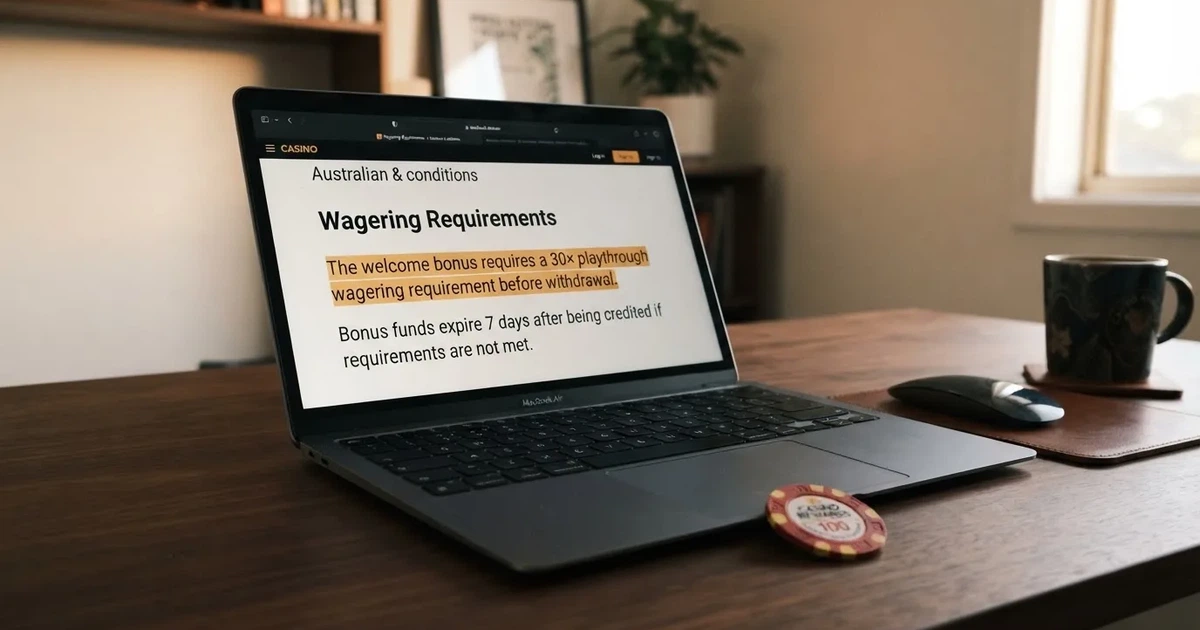
A short note before anything else. There is no licensed online casino in Australia offering a welcome bonus, because there is no licensed online casino in Australia offering anything at all. Casino games and online pokies cannot be licensed by any state or territory; the Interactive Gambling Act 2001 makes it an offence to provide them to a person physically in Australia. Every “best welcome bonus” page that ranks operators is therefore ranking brands that the ACMA has formally warned, blocked, or both — never brands licensed here. The eleven brands listed below are not recommendations. They are the ones the ACMA itself has acted against. That single fact shapes everything that follows.
Table of Contents
- How a “welcome bonus” works as marketing
- The Australian legal frame: why every operator on this page is offshore
- Responsible gambling supports that apply regardless of where someone plays
- Crypto deposits, anonymity and the gap between what they promise and what they do
- Deposits, withdrawals and the timing an Australian player should expect
- The eleven brands the ACMA has acted against
- What the ACMA blocking data actually shows
- The angle, plainly stated
- Welcome bonus offers: what they share
- What changes in 2027
- Currency stamp and data freshness
- Frequently asked questions
How a “welcome bonus” works as marketing
A welcome bonus is the price a casino pays to put a player through the door. The headline — A$1,500 plus 200 free spins, a 100% match, a “no deposit” credit — is paid for in three ways the marketing page tends to leave off: a wagering requirement that turns bonus cash into something the player has to grind through before it can be withdrawn, a maximum-cashout cap that limits what any of it can become, and a game-weighting rule that quietly counts slots at 100% but blackjack, roulette and most live games at 10% or 0%. None of those terms is unusual; almost every offshore bonus carries them. What is unusual is the gap between the figure on the banner and the figure that lands in a player’s account after the conditions are met.

The mechanics vary in shape but not in logic. A deposit-match bonus matches what the player deposits up to a cap, then attaches a wagering multiple — 35x, 40x, sometimes 50x — to the combined deposit-and-bonus figure. A “no deposit” bonus hands over a small credit, often A$10 to A$25, in exchange for an email address, then attaches a wagering multiple and a max-cashout ceiling of two to five times the credit. Free-spin bundles are sold as their face value in spins, then expose themselves as a wrapper around the same wagering multiple once a single spin produces a withdrawal-eligible win. The promise is not “free money”. It is “a longer session at our tables in exchange for a constraint on how and when anything you win can leave”.
Two features deserve a separate mention because they are the ones a player encounters first and understands last. The first is game weighting: a A$1 wager on slots counts as A$1 against the requirement; a A$1 wager on most table games counts as A$0.10, or nothing. The second is bonus-abuse rules, which can void winnings for behaviours the casino considers irregular — covering too many roulette positions, betting in patterns the system detects, opening more than one account from the same household, or playing games the bonus terms exclude entirely. Both are written into the same small print; both are enforced at the moment a player tries to withdraw.
The Australian legal frame: why every operator on this page is offshore
Australia’s online gambling regime is built on a single carve-out. The Interactive Gambling Act 2001, as tightened by the Interactive Gambling Amendment Act 2017, prohibits the supply of online casino games, online pokies and in-play betting to people in Australia. Wagering on racing and sporting events placed before the event, lotteries and keno are licensable, and the Northern Territory Racing and Wagering Commission (NTRWC) regulates 52 online bookmakers — Sportsbet, Bet365, Ladbrokes among them — for tax reasons. The NTRWC has no full-time staff and meets once a month in Darwin, a structural detail that matters when one wonders who, in practice, audits the largest Australian-facing online gambling operators. None of those licensed operators offers a casino welcome bonus, because none of them offers casino games.
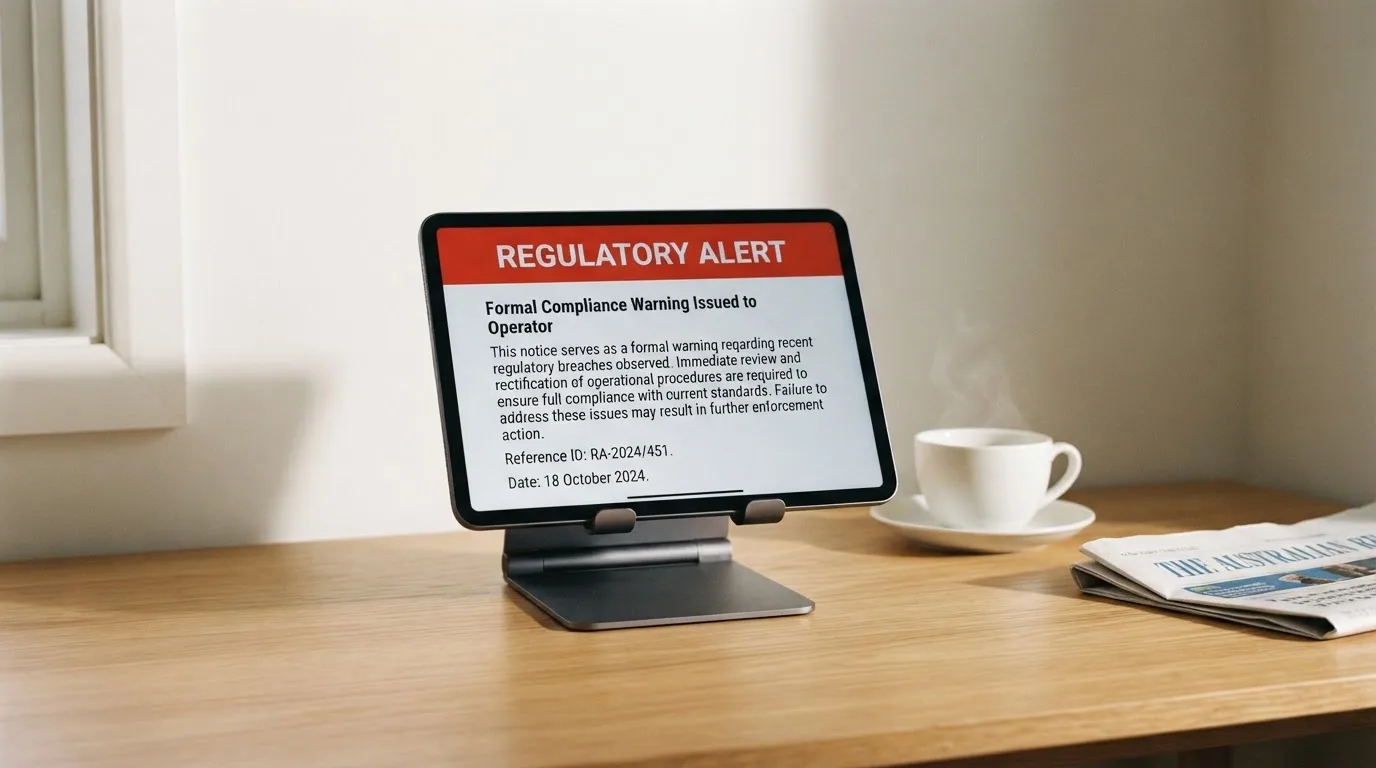
Enforcement sits with the ACMA. It investigates complaints, issues formal warnings to offshore operators found serving Australian customers, and can direct Australian internet service providers to block offending websites. By the end of June 2026, the ACMA had asked ISPs to block 1,751 illegal gambling and affiliate marketing websites since the first blocking request in November 2019, and more than 230 unlicensed services had withdrawn from the Australian market since 2017. A round reported on 26 June 2026 alone added twelve names: 7Signs, ChromaBet, Donbet, Duospin, Freshbet, Slots Gem, Jacks Club, Lucky Start, Pointsbetz, Spinrise, Vinyl Casino and Wildsino.
The IGA targets the provider, not the individual player. That distinction matters for the legal question but not for the practical one: an offshore site gives an Australian no consumer protection, no complaints body and no recourse if a withdrawal is refused. The site can also be blocked while a balance is still on it, with the player’s funds sitting in an account the player no longer has a way to reach. The H2 Gambling Capital 2025 estimate is that Australians lose about A$3.9 billion a year to illegal sites, and that the share of gambling going through legal channels fell from 74% in 2021 to 64%. The volume is large; the protection on the receiving end is zero.
A 2026 reform has changed what the licensed bookmakers can advertise. The Interactive Gambling Amendment (Gambling Reform) Bill 2026 passed Parliament on 19 August 2026, and its advertising and inducement measures commence on 1 January 2027. That is a law with a start date, not a law in force on a 2026 page; the inducement rules will bind licensed Australian wagering operators once 2027 begins. They do not bind the offshore casinos this page is about.
Responsible gambling supports that apply regardless of where someone plays
The Australian responsible-gambling infrastructure is built around licensed wagering and land-based gaming, not offshore casino play. Two services are worth knowing because they exist whether the player is using a legal bookmaker, a poker machine in a pub, or an offshore casino the ACMA has just blocked.
The first is Gambling Help Online, run under the national gambling helpline 1800 858 858 — free, 24/7, with web chat. It is the front door for anyone whose gambling has become a problem and the one that works for offshore play, because it takes the player as a person rather than as an account on a particular platform. The second is BetStop, the National Self-Exclusion Register, live since August 2023. BetStop binds every Australian-licensed online and phone wagering service, which means a registered player cannot open a new account with Sportsbet, Bet365, Ladbrokes or any other locally licensed bookmaker. BetStop does not bind offshore casino operators, because offshore casinos are not part of the Australian framework and cannot be excluded from it. Self-exclusion on an offshore site is a setting that operator controls alone, with no Australian backstop if the player changes their mind and the operator does not.
Two practical notes follow. Banks now offer gambling blocks that work at the card level rather than at the merchant level: ANZ, Commonwealth Bank and Westpac all let a customer refuse authorisation of transactions registered under the merchant category code “Betting/Casino Gambling” on eligible personal credit and debit cards. ANZ’s block extends to digital-wallet transactions on an eligible card, including Apple Pay. ANZ warns that removing the block requires a 48-hour cooling-off period, that not all gambling transactions will be blocked, and that some non-gambling transactions may be blocked in error. Commonwealth Bank offers the same kind of lock through the CommBank app, with the same caveat that it cannot guarantee every gambling-related purchase will be stopped. Westpac’s block is card-level only; it does not extend to Apple Pay or Google Pay. Card-level blocking is a strong default; it is not a substitute for self-exclusion at the operator, because it works only as long as the player uses the blocked card.
Crypto deposits, anonymity and the gap between what they promise and what they do
Cryptocurrency is the payment method most often sold as anonymity, and the gap between that promise and what it does for an Australian is large. A Bitcoin or other coin deposit moves value without a card network, which means it slips past bank-level gambling blocks set on Visa, Mastercard or American Express. It also slips past the credit-card ban that, since 11 June 2024, prevents Australian-licensed online wagering services from accepting credit or credit-related products. For an offshore casino, neither of those rules applies — the casino is not licensed here and the IGA penalty regime ($247,500 per offence for licensed operators) does not reach it.
What crypto does not give the player is anonymity from the casino. Every deposit arrives at a wallet address the casino controls; every withdrawal is paid to a wallet the player controls and can be traced on a public ledger. The casino’s own KYC procedures still apply at withdrawal, and most reputable offshore operators run the same identity-document checks for crypto withdrawals as they do for card withdrawals. What crypto gives, in practice, is a fast rail and an off-card money path. The trade-off is that a crypto deposit into an offshore casino the ACMA has blocked is also a deposit into a venue that may disappear, taking the wallet balance with it.
The IGA does not name cryptocurrency by name, but the prohibition on unlicensed interactive gambling services applies whatever the payment method. A site that takes Bitcoin from an Australian customer for the purpose of supplying prohibited casino games is supplying those games. The marketing claim that crypto makes the transaction “private” should be read as a claim about the payment rail, not about the player’s exposure to the operator or to the regulator.
Deposits, withdrawals and the timing an Australian player should expect
The licensed Australian wagering payment stack is well-defined. Debit card, bank transfer, PayID/Osko instant transfers and BPAY are the legal deposit routes. PayID instant transfers are available at over 100 Australian financial institutions and clear in under a minute, 24/7 including weekends, whether addressed to a BSB and account number or to a PayID. Paying to a PayID reveals the name of the account holder before the transfer is sent; AP+ warns that being asked to send money to a PayID on an illegal gambling site almost certainly means a scam. More than 25 million PayID identifiers had been registered on Australia’s New Payments Platform as of April 2025, and Apple Pay, Google Pay and Samsung Pay collectively accounted for around 45% of all card payments in Australia by number at the end of 2025. The domestic rails are fast. They are also the rails an offshore casino does not accept, because accepting PayID or Osko would put the operator inside the Australian payments perimeter it has chosen to stay outside of.
What an offshore casino accepts is mostly card-based. Visa and Mastercard debit cards are the workhorse; some accept credit cards, which is itself a marker of how far outside the Australian rules the operator sits. E-wallets such as Skrill, Neteller and ecoPayz are common, as are a handful of prepaid voucher schemes. Withdrawal times vary by method: e-wallets typically clear within 24 to 48 hours once the casino’s internal review is complete, card withdrawals can take three to seven business days, and bank wires run from five to ten. AUSTRAC’s threshold-transaction-report rule, which requires reporting of transfers of A$10,000 or more, applies only to physical cash; ordinary electronic bank transfers are not subject to that per-transaction reporting requirement, regardless of the amount sent. That distinction matters to anyone thinking about a large withdrawal through an Australian bank.
American Express sits in its own corner of the card market. Unlike Visa or Mastercard’s four-party network, Amex traditionally issues cards and processes transactions itself as a three-party scheme, and the Reserve Bank of Australia’s July 2025 review of merchant card payment costs proposes removing surcharges only on eftpos, Mastercard and Visa transactions, explicitly leaving American Express outside the scope of the proposed surcharge ban. For a player, that means an Amex deposit at an offshore casino is more likely to incur a surcharge than a Visa or Mastercard deposit — and the surcharge is set by the merchant, not by Apple Pay, Google Pay or Samsung Pay, none of which charges consumer fees.
Two details to flag for any reader still weighing the practical mechanics. The first is the 48-hour cooling-off period ANZ imposes on the removal of a gambling block; it is a real friction, designed to make a hasty reversal harder. The second is the Westpac card-level block’s narrow scope: it works on the physical card and does not extend to Apple Pay or Google Pay on the same card number. The pattern across the banks is consistent — blocking is card-level, not wallet-level, and is best understood as a default rather than as a guarantee.
The eleven brands the ACMA has acted against
The brands below are not a ranked shortlist. They are the brands the ACMA itself has identified, in formal warnings published on its website, as having supplied prohibited interactive gambling services to Australians. Each carries an operator name as the ACMA recorded it and a date. None of them is licensed to offer online casino games in Australia. None of the bonus terms on their marketing pages has any Australian regulatory backing.
RocketPlay — Pulsup Ltd’s 2026 warning and the Dama N.V. trail
The ACMA’s most recent formal warning over RocketPlay was issued in March 2026 to Pulsup Ltd for the domain Rocketplay. A separate warning to Dama N.V. in May 2022 covered six casino brands including RocketPlay, which means the same product has been the subject of two regulator actions four years apart. For a reader, the practical read is that the brand keeps reappearing under new corporate names — a pattern common to offshore operators, where a licence change in Curaçao or Cyprus resets the legal entity while the product, the bonus terms and the player base carry over. The bonus headline still promises a multi-thousand-dollar match and free spins; the marketing pages for the brand list the welcome package; and the ACMA notice is the only part of the picture that is enforceable in Australia.
Level Up Casino — Dama N.V.’s May 2022 warning
Dama N.V. was the subject of an ACMA formal warning in May 2022 covering six brands, of which Level Up Casino was one. Dama N.V. has remained an active target: further formal warnings were issued to the same operator over Woo Casino in March 2025 and over Spirit Casino in May 2025, which means a single Curaçao-based operating company has attracted four ACMA actions across four years. For a reader, the takeaway is that the bonus offers on Level Up, Woo and Spirit are coming out of the same operator pipeline, and that pipeline has been told more than once to stop.
Woo Casino — Dama N.V.’s March 2025 warning
Woo Casino sits inside that Dama N.V. cluster, with an ACMA formal warning issued in March 2025. The brand’s own marketing presents a tiered welcome package across the first two deposits, with free spins attached; the standard wagering multiple applies. None of that has any Australian regulatory standing. The audit question any Australian reader can actually answer is whether the brand’s own complaints process will return funds if the offshore operator disappears mid-session, and the honest answer is that no Australian complaints body will.
Spirit Casino — Dama N.V.’s May 2025 warning
Spirit Casino is the third Dama N.V. brand on this list, with a formal warning issued in May 2025. The pattern here is the same as Woo’s, and the same consequence follows: the bonus terms are written in the same kind of small print, with the same kind of withdrawal ceiling, and the ACMA action does not require the operator to remove a player’s balance or refund a player who has already deposited.
National Casino — Consolutetish S.R.L.’s July 2025 warning
The ACMA issued a formal warning to Consolutetish S.R.L. regarding National Casino in July 2025. The Australian-facing footprint of the brand has been tracked by several industry listings. For a reader, the more useful detail is that Consolutetish was warned in the same notice as Bizzo Casino, suggesting a shared operating structure, and that a 2022 formal warning over Bizzo had already been issued to TechSolutions (CY) Group Limited and TechSolutions Group N.V. Two operators, same product, two years apart.
Bizzo Casino — Consolutetish S.R.L.’s July 2025 warning, and a 2022 TechSolutions warning
Bizzo Casino was the subject of two ACMA formal warnings: the 2022 one to TechSolutions (CY) Group Limited and TechSolutions Group N.V., and the July 2025 one to Consolutetish S.R.L. The 2025 warning names the same brand under a new operator entity, again reflecting the licence-change pattern offshore operators use to reset their legal exposure. The marketing pages continue to advertise the welcome offer. The ACMA notices continue to be the only part of the picture with any regulatory weight in Australia.
Ignition Casino — Bamboo Media’s July 2025 warning
Bamboo Media received an ACMA formal warning in July 2025 concerning Ignition Casino. The brand has been a long-running name in offshore casino marketing. The 2025 warning does not change the bonus headline; it changes the legal weight of any promise the bonus headline carries. Australian players have no Australian complaints body to approach if a withdrawal is refused.
Instant Casino — EOD Code SRL’s February 2025 warning
Instant Casino was the subject of an ACMA formal warning issued in February 2025 to EOD Code SRL. The brand’s marketing emphasises rapid payout, a deposit-match welcome and a recurring reload structure. The payment pages reference e-wallets such as ecoPayz and PayID-based instant transfers — the latter being the rail most often used by Australians for everyday payments. PayID’s account-holder name check is a feature designed to surface scams; the brand’s reference to PayID does not mean PayID is the rail that will actually settle the deposit.
Jackbit — Ryker B.V.’s April 2026 warning
Jackbit was the subject of an ACMA formal warning issued in April 2026 to Ryker B.V., alongside CasinOK, in a single notice. Jackbit’s marketing centres on a crypto-first product, with welcome bonuses denominated in Bitcoin and a sportsbook attached. None of that is licensed in Australia. A crypto deposit at an offshore site is also a deposit the player has no Australian recourse over if the operator disappears.
Casino Intense — Sterplay Holding Ltd’s April 2025 warning
Casino Intense was the subject of an ACMA formal warning issued in April 2025 to Sterplay Holding Ltd. The brand’s marketing carries a standard deposit-match welcome and free-spin bundle. The ACMA action does not require the operator to remove a balance from a player’s account; it requires the operator to stop offering prohibited services to Australians. The two are not the same thing.
Sky Crown — Hollycorn N.V.’s formal warning
Sky Crown was the subject of an ACMA formal warning to Hollycorn N.V., alongside Blue Leo. The formal warning was published in September 2022. Hollycorn N.V.’s product portfolio is wide, with welcome offers across its brands that share most of the same small print. A reader choosing between Sky Crown and any of the other Hollycorn brands is choosing between the same operator’s product under different names, with the same regulatory standing in Australia.
What the ACMA blocking data actually shows
The blocking figures the ACMA publishes are the most informative single signal an Australian reader has about the offshore casino market. The arithmetic that matters is the relationship between how many sites have been blocked and how long the regime has been running.
The ACMA reports that, by the end of June 2026, a total of 1,751 illegal gambling and affiliate marketing websites had been blocked since the first blocking request in November 2019. That is just over six and a half years of enforcement, covering 1,751 blocked domains. The annualised rate therefore falls in a band around 260 to 280 blocked sites per year, with the actual year-by-year figure varying as enforcement rounds cluster. The 26 June 2026 round alone added twelve new domains in a single notice, which is consistent with the pattern the ACMA has used since 2019: a series of notices issued in batches rather than a steady one-by-one blocklist. The relevant reading is not that one site has been blocked; it is that the blocked-domains curve has not flattened across six and a half years, which suggests the offshore supply continues to refresh itself faster than the blocklist can be applied.
The annualised rate is itself a band, and the right way to read it is as the rate at which the ACMA has needed to act, not the rate at which the offshore market has been contained. Each blocked site is one request, one ISP-direction, one notice. Each replacement site is one new domain and a small reworking of the marketing. The cost of the latter is small; the cost of the former is a regulator’s time. The reader who wants a working picture should hold two figures in mind at once: 1,751 blocked sites, and a market that continues to absorb A$3.9 billion a year in losses to illegal operators.
The angle, plainly stated
A welcome bonus at an offshore casino is the marketing wrapper around a product that cannot be lawfully supplied to an Australian player. The bonus terms — wagering multiples, max-cashout caps, game-weighting tables, bonus-abuse clauses — are not negotiable and not Australian-enforceable. The only recourse the ACMA has is to ask ISPs to block the site, which means the player can be left with a balance they cannot reach. The block on credit cards for licensed wagering does not bind offshore casinos, because they are not licensed. Crypto deposits clear bank-level gambling blocks but do not give the player anonymity from the operator, and the operator’s own KYC runs at withdrawal regardless. The H2 Gambling Capital estimate is that Australians lose about A$3.9 billion a year to illegal gambling sites, with the share going through legal channels falling from 74% in 2021 to 64%. None of those billions is going through a venue that returns a player’s balance if the regulator steps in.
A reader who has decided to deposit anyway should know four things before doing so. The bonus figure on the banner is not the figure that will reach a bank account; the wagering multiple and the max-cashout cap are what stand between the two. The site can be blocked mid-session, leaving the balance inside. The complaints body that exists for licensed Australian wagering does not exist for offshore casinos, and the ACMA’s enforcement is against the operator, not on the player’s behalf. The same marketing pages selling the welcome offer are also selling a product the ACMA has formally warned the operator about, often more than once.
For anyone whose gambling has become a problem, the front door is the same regardless of where they play: Gambling Help Online at 1800 858 858, free and 24/7 with chat. BetStop binds licensed wagering services; offshore casinos are not part of it. Bank-level gambling blocks on ANZ, Commonwealth Bank and Westpac cards are the strongest practical default an Australian has for stopping further deposits, and ANZ’s 48-hour cooling-off on removal is a real friction designed to make a hasty reversal harder.
Welcome bonus offers: what they share
The eleven brands above are not a comparison of welcome bonuses, because the only sources for bonus terms at each of them are affiliate marketing pages, and the ACMA formal warnings are the only part of the picture with any Australian regulatory weight. What the brands share, on the evidence the ACMA has published, is more informative than any per-brand bonus number.
Summary of ACMA actions
| Brand | ACMA action and date | Operator named by the ACMA | Subject support |
|---|---|---|---|
| RocketPlay | Formal warning, March 2026; earlier May 2022 | Pulsup Ltd (2026); Dama N.V. (2022) | Listings only |
| Level Up Casino | Formal warning, May 2022 | Dama N.V. | Listings only |
| Woo Casino | Formal warning, March 2025 | Dama N.V. | — |
| Spirit Casino | Formal warning, May 2025 | Dama N.V. | — |
| National Casino | Formal warning, July 2025 | Consolutetish S.R.L. | Listings only |
| Bizzo Casino | Formal warning, July 2025; earlier 2022 | Consolutetish S.R.L. (2025); TechSolutions (2022) | Listings only |
| Ignition Casino | Formal warning, July 2025 | Bamboo Media | — |
| Instant Casino | Formal warning, February 2025 | EOD Code SRL | Listings only |
| Jackbit | Formal warning, April 2026 | Ryker B.V. | — |
| Casino Intense | Formal warning, April 2025 | Sterplay Holding Ltd | Listings only |
| Sky Crown | Formal warning, September 2022 | Hollycorn N.V. | — |
The “Subject support” column records whether independent listings — sources such as industry reports, the ACMA’s own register, the Westpac gambling block page, the AUSTRAC threshold-transaction-report rule page and BetStop’s National Self-Exclusion Register — name the same brand. A dash means no such listing was found; that is not the same as saying the brand does not exist, only that no independent listing was located. The full ACMA action is what binds in Australia.
The table’s purpose is not to invite a reader to choose between these brands. It is to make the regulator-side picture easy to scan, because that picture is what an Australian can actually verify. The bonus terms on each brand’s marketing pages are written by the brand and enforced by the brand, with no Australian consumer-law framework behind them.
What changes in 2027
The Interactive Gambling Amendment (Gambling Reform) Bill 2026 passed Parliament on 19 August 2026. Its advertising and inducement measures commence on 1 January 2027. The Bill targets licensed Australian wagering operators, not offshore casinos, which means the inducement rules will tighten what locally licensed bookmakers can advertise as welcome offers, free bets and bonus credits. They do not touch the offshore casinos on this page, because those casinos are not within the Australian regulatory perimeter to begin with. A reader comparing this page in early 2027 should expect the licensed side of the market to look different from the offshore side, with the licensed side tightening and the offshore side unchanged.
Currency stamp and data freshness
The figures on this page are current as of 29 October 2026, drawn from the ACMA’s public register of formal warnings and blocking actions, from the Reserve Bank of Australia’s July 2025 review of merchant card payment costs and surcharging, from Australian Payments Plus’s PayID and Osko documentation, and from H2 Gambling Capital’s 2025 report on Australian gambling spend. Dates in the ACMA warning entries are the dates the ACMA itself publishes; dates in statute references are the dates the statute or amendment took effect. A reader checking this page against a later ACMA round should treat the new round as the freshest data on the blocked-domains total.
Frequently asked questions
Are online casino welcome bonuses legally offered to players based in Australia?
No. The Interactive Gambling Act 2001 prohibits the supply of online casino games to people in Australia, and a welcome bonus is the marketing wrapper around an offer of casino games. No Australian state or territory licenses online casino games or online pokies. Every welcome bonus an Australian can actually claim comes from an offshore operator, and the ACMA has issued formal warnings to most of the brands that advertise them to Australian customers.
Why do offshore casino sites use welcome bonuses as their main marketing tool?
Because the player-acquisition cost is paid for by the bonus, and the bonus carries conditions that bind the player to a longer session on the operator’s games. A deposit-match bonus attaches a wagering multiple to the bonus-and-deposit figure, which means the player must keep playing until that volume has been turned over. The marketing logic is sound for the operator: a higher bonus attracts more sign-ups, and the small print converts the bonus into play time rather than into withdrawable cash.
What conditions typically apply before a welcome bonus can be withdrawn as cash?
Three conditions recur across offshore welcome offers. A wagering multiple — commonly 35x to 50x on the bonus-and-deposit figure — has to be met before any winnings become eligible for withdrawal. A maximum-cashout cap — typically two to five times the bonus amount — limits what the bonus can ever become. A game-weighting rule counts most slots at 100% toward the requirement and most table and live games at 10% or 0%, which means the requirement is realistically cleared on slots rather than on blackjack or roulette.
Do licensed Australian pokies venues offer anything similar to an online welcome bonus?
No. Land-based pokies venues and licensed Australian wagering operators do not offer an online casino welcome bonus, because they do not offer online casino games. What they may offer is a membership card, venue-based loyalty rewards or a free-bet credit on a licensed wagering product; none of these is an online casino welcome bonus. The carve-out in the Interactive Gambling Act 2001 covers wagering on racing and sport before the event, lotteries and keno — and only those products can be licensed.
Can accepting a welcome bonus commit a player to ongoing marketing contact?
Yes, in practice. Accepting a bonus usually means agreeing to the operator’s promotional terms, which include email and SMS marketing about reload bonuses, free-spin drops and tournament entries. The unsubscribe path is governed by the operator’s own rules, not by Australian consumer law, because the operator is not an Australian-licensed entity. The unsubscribe link works for many operators; the absence of an Australian complaints body means a player whose unsubscribe request is ignored has no Australian backstop. See also Casino bonus codes aimed at Australians in 2026 .
Where can an Australian find independent support if bonus-chasing becomes a problem?
Gambling Help Online is the front door: free, 24/7, with web chat and a phone line at 1800 858 858. BetStop, the National Self-Exclusion Register, binds every Australian-licensed online and phone wagering service and stops a registered player from opening new accounts with locally licensed bookmakers. Bank-level gambling blocks at ANZ, Commonwealth Bank and Westpac add a payment-side default that refuses authorisation of gambling-coded transactions on the blocked card. None of these tools removes money already on an offshore casino account, but they stop the next deposit.