
High RTP Pokies in Australia: What the Numbers Mean, What the Law Permits, and Where the Machines Actually Live
Australia’s relationship with pokies is one of the most tightly regulated and heavily contested in the world. The country holds roughly 3% of the world’s pub and club poker machines, despite having only 0.3% of the global population. In 2020–21 alone, players wagered close to A$150 billion through gaming machines and lost A$12.18 billion on them. Return-to-player figures sit at the centre of how those machines are designed, marketed and policed, yet the term itself is widely misunderstood.
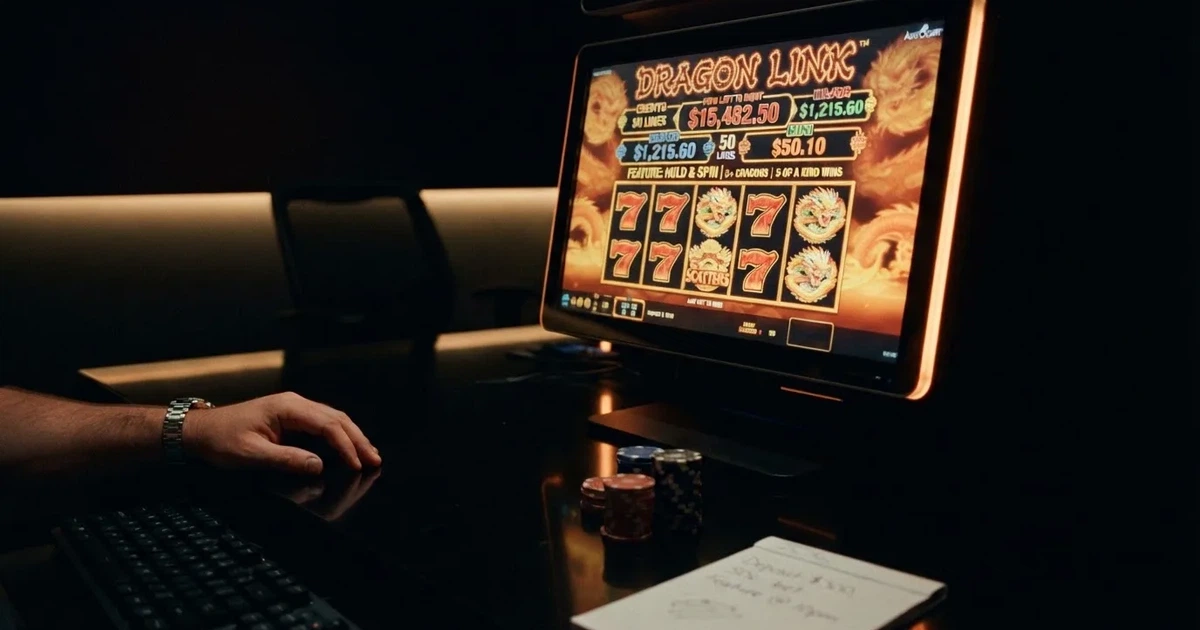
This guide explains what high RTP actually means on Australian machines, where the figure is disclosed and where it isn’t, what the law does and doesn’t allow, and how the offshore online market fits (or, more accurately, doesn’t fit) into a picture dominated by pubs, clubs and state-licensed casinos. The subject is one a reader can act on, so the page takes a position rather than splitting the difference.
Data current as of 29 October 2026; ACMA enforcement records and state-level gambling statistics were checked against the Australian Communications and Media Authority’s published formal warnings and the relevant state regulator data for each jurisdiction cited.
Table of Contents
- The Core Concept: What RTP Means on a Pokies Machine
- How RTP Differs from the Chance of Winning on a Single Spin
- Where RTP Is Legally Required to Be Disclosed
- Can Venues Change a Machine’s RTP After Installation?
- Offshore Online Pokies: The Product Australia Does Not License
- How the ACMA’s Enforcement Stack Actually Reads
- What Counts as a Legally Playable Pokies Machine in Australia
- Responsible Gambling Support and Where Players Get Help
- Blocking-Rate Calculation: How Many Sites the ACMA Has Shut Per Year
- Specific Games and Providers: Baccarat and Blackjack as Pointers
- What the Numbers Mean at the Pub or Club
- Land-Based Casino Table Games: What the Player Actually Sees
- What a High RTP Means for the Person Playing
- State-by-State Variations and What They Mean for Players
- Tax Position for Recreational Players
- 2026 Reform and What It Will and Won’t Change
- The Brands the ACMA Has Named on the Public Record
- Frequently Asked Questions
The Core Concept: What RTP Means on a Pokies Machine
Return-to-player, abbreviated RTP, is the share of every dollar a machine takes in that it is programmed, over a very long run, to pay back to players. The remainder is the house edge. If a machine carries an RTP of 87%, the long-run theoretical return is 87 cents in the dollar, and the house retains 13 cents in the dollar as its margin.

Two things matter about this number. First, it is a long-run average — a statistical estimate across millions of spins, not a promise about any individual session. A player can walk away after ten minutes ahead, even on a machine programmed to keep 13%. The figure describes the game as a system, not a single spin. Second, RTP is set into the machine’s software by the manufacturer and approved by the relevant state regulator. The figure is not negotiable at the venue.
Australian jurisdictions each set a legal minimum RTP for gaming machines operating under their authority. New South Wales, the Northern Territory, Queensland and most of Victoria require a minimum of 85%, with Crown Melbourne’s machines set at 87%. The Australian Capital Territory and Tasmania set their minimum at 87%, South Australia at 87.5%, and Western Australia at 90%. Western Australia’s higher floor reflects the state’s restrictive stance — poker machines are banned outright in pubs and clubs, so the only machines in the state are at Crown Perth, where every unit is approved individually by the state’s Gaming and Wagering Commission.
A “high RTP” pokie in Australian parlance generally refers to a machine sitting above these floors, often in the 90–96% range, with the theoretical house edge compressed to single digits. Even at 96%, the house still wins on average — that is the structure of the product, not a flaw in a particular brand.
How RTP Differs from the Chance of Winning on a Single Spin
The single most common confusion around RTP is treating it as a per-spin probability. It is not. RTP describes what happens across millions of outcomes, not what happens on the next pull. A machine with a 95% RTP can still produce a line-hit jackpot on the third spin and then take A$200 off a player over the next hour. The two facts coexist because RTP is an average; volatility is what shapes any individual session.
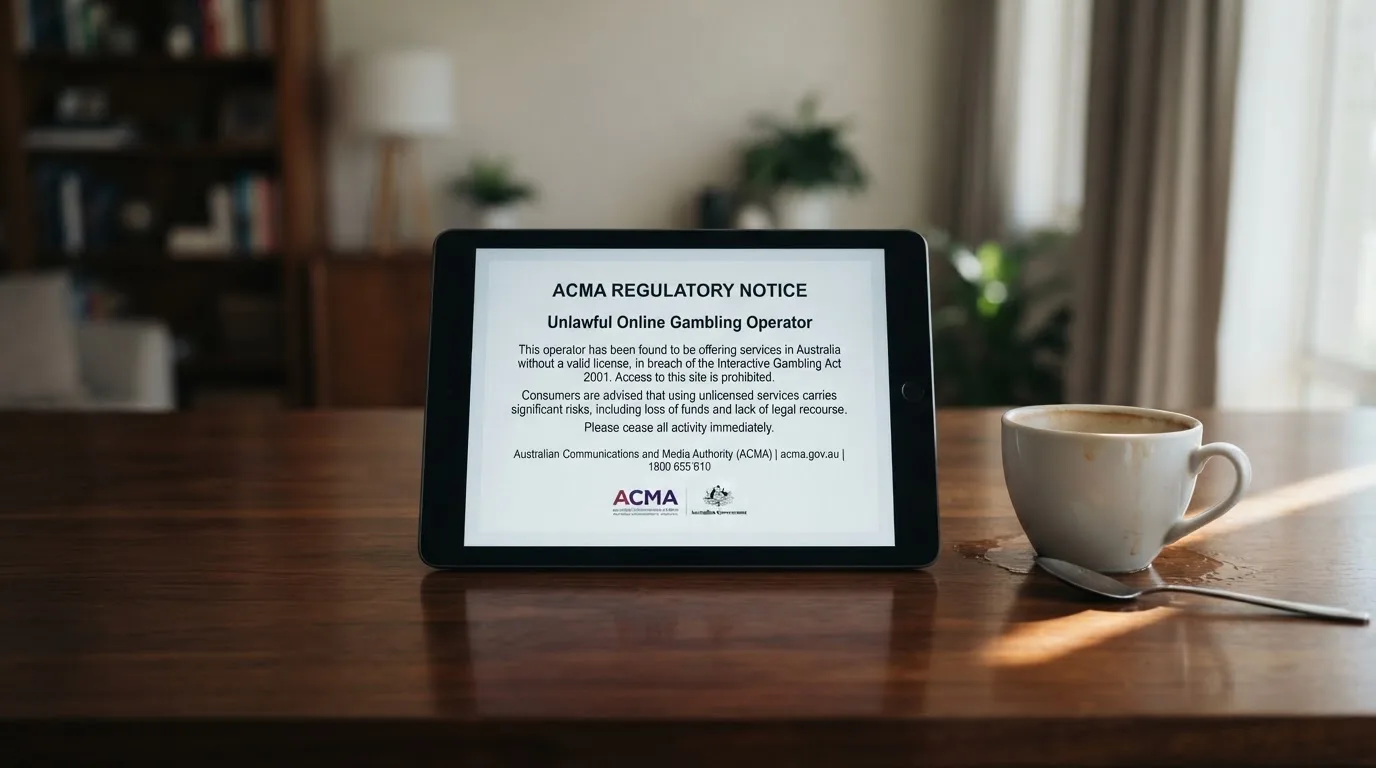
Volatility — sometimes called variance — describes how RTP is distributed across outcomes. A low-volatility machine returns most of its RTP through frequent small wins. A high-volatility machine returns it through rare but larger outcomes. Two machines can both carry a 95% RTP and behave completely differently at the level a player experiences: one feeds small credits back steadily, the other goes quiet for long stretches before a larger feature triggers.
This matters when a reader sees a “high RTP” label applied to a machine they intend to play. The figure tells them the long-run cost; volatility tells them what the experience of paying that cost actually feels like. High RTP does not mean the machine pays out often. It means it pays out more, on average, than a lower-RTP machine does.
Where RTP Is Legally Required to Be Disclosed
Australian gaming machine regulations are not uniform across states, but the disclosure of RTP sits inside the approvals process rather than on the front of the cabinet in every case. In Victoria, the Victorian Gambling and Casino Control Commission publishes game-level details including theoretical RTP for approved games, and venue operators must make approved rules available on request. New South Wales requires game rules and return-to-player information to be accessible at the venue, generally through printed material or point-of-sale signage. The Western Australia model is the most restrictive, with each machine individually approved.
What is consistent across jurisdictions is that the figure exists somewhere in the regulatory record before the machine goes live. A machine without a published RTP is a machine without state approval. Players can request the figure from venue staff or from the relevant state regulator’s website, and the request is a reasonable one to make.
What is not disclosed is the per-spin outcome, because that is the function of a random number generator that the state approves as a system but does not audit spin by spin. The approval confirms that the math holds across a population of outcomes; it does not certify the next spin.
Can Venues Change a Machine’s RTP After Installation?
No, not unilaterally. The RTP setting is part of the machine’s approved configuration, and any change requires re-approval from the relevant state regulator. Operators cannot quietly reconfigure a cabinet to a lower-paying version, because each cabinet’s software is sealed against field changes that would alter the approved return.
What can vary, within the same machine, is the denomination being played. A multi-denomination cabinet might run at a different theoretical RTP at A$1 per spin than at A$0.01 per spin, even though the cabinet itself is the same unit. Players who want to check the figure for a particular denomination can ask venue staff for the game’s information screen or printed help card, which typically lists the RTP range by credit value.
What is also worth knowing is that some game manufacturers offer cabinets in multiple RTP configurations — for instance, an 88% model and a 92% model of the same game. The configuration a venue installs is one of those models, and that choice is on the regulator’s record. Asking which version of a game is installed at a particular venue is a legitimate question with a real answer attached.
Offshore Online Pokies: The Product Australia Does Not License
This is where the picture changes shape, and where most of the confusion begins. Online casino games, including online pokies, cannot be licensed for Australian customers under the Interactive Gambling Act 2001 as amended in 2017. The product is prohibited. No state or territory issues an Australian licence for an online casino.
What exists offshore is a separate market: Curaçao-licensed, Anjouan-licensed, occasionally Kahnawake-licensed, and unregulated entirely in some cases. These sites accept Australian sign-ups, accept Australian dollars in many cases, and advertise RTP figures often higher than what Australian state regulations require of land-based machines — frequently in the 96–98% range. The figure is real to the software, but the regulatory framework around it is not Australian.
The Interactive Gambling Act targets the provider, not the player. Australians are not prosecuted for using these sites. The sites themselves are subject to enforcement, and the Australian Communications and Media Authority (ACMA) has issued a long series of formal warnings and blocking requests against them. According to ACMA figures reported in June 2026, a total of 1,751 illegal gambling and affiliate marketing websites had been blocked since the first blocking request in November 2019. More than 230 unlicensed gambling services had left the Australian market since enforcement was strengthened in 2017. In a single round reported on 26 June 2026, the ACMA asked Australian internet service providers to block 12 more sites — 7Signs, ChromaBet, Donbet, Duospin, Freshbet, Slots Gem, Jacks Club, Lucky Start, Pointsbetz, Spinrise, Vinyl Casino and Wildsino.
H2 Gambling Capital’s 2025 report estimates that Australians lose about A$3.9 billion a year to illegal offshore sites. The share of gambling going through legal channels fell from 74% in 2021 to 64%, which is the same trend as a different number, viewed from the other side.
The legal point worth carrying is that an offshore licence displayed on the site is a licence issued by some other jurisdiction, binding under some other set of rules. If a withdrawal stalls, the player has no Australian complaints body, no local court remedy, and no guarantee the balance survives a blocking request. An ACMA block does not refund the funds on the account.
How the ACMA’s Enforcement Stack Actually Reads
The ACMA operates a layered enforcement model rather than a single dramatic tool. At the front are formal warnings — published notices naming the operator and the brand, on the public record, which carry weight in subsequent regulatory action. Behind those are civil penalty proceedings under the Interactive Gambling Act, then infringement notices, and finally the request to Australian internet service providers to block the site at the network level.
The formal-warning record gives a useful picture of which offshore groups are repeatedly engaging with the Australian market. Dama N.V., for instance, has been the subject of multiple warnings covering different brands — a 2022 warning covering Bambet, Dazard, Level Up, Rocketplay, Wild Tornado and Cobra Casinos, then separate warnings in 2025 over Woo Casino and Spirit Casino. Other operators appear across the same periods: Bamboo Media over Ignition Casino in July 2025; Consolutetish S.R.L. over National Casino and Bizzo Casino in July 2025; EOD Code SRL over Instant Casino in February 2025; Sterplay Holding Ltd over Casino Intense in April 2025; Hollycorn N.V. over Sky Crown and Blue Leo. In April 2026, the ACMA warned Ryker B.V. over Jackbit and CasinOK, and in March 2026 it warned Pulsup Ltd over Rocketplay. Bizzo Casino’s 2025 warning from Consolutetish was not its first — TechSolutions Group had already received a 2022 warning over the same brand.
This is not a ranking. The brands listed are operators the ACMA has named on the public record for offering prohibited services to Australians. The page lists them because the record is what it is; describing them as alternatives to a licensed Australian pokie would misrepresent what they are.
What Counts as a Legally Playable Pokies Machine in Australia
The legal product is the land-based machine — in a pub, club or casino — and the licences that govern it sit at the state and territory level, not federal. Each jurisdiction regulates the design, the deployment and the player-protection regime around its own machines. The federal frame (the Interactive Gambling Act) covers the prohibition on online casino products and the ACMA’s enforcement reach; the state frame covers the cabinets themselves.
New South Wales is the largest machine market in the country. As of June 2023, there were 87,298 gaming machines outside casinos across 2,195 venues, with player losses of A$8.18 billion in 2022–23. Queensland had 21,122 machines across 351 venues in October 2023. Victoria had 26,380 machines outside Crown Casino across 488 venues in 2021–22, under a 30,000 statewide cap. Western Australia has Crown Perth’s roughly 2,500 machines and nothing in pubs or clubs; the cabinet count at Crown Perth has grown from about 200 in 1985 when the venue opened to around 2,500 today. Tasmania’s machines were long run under a monopoly licence held by the Federal Group from 1968, but legislation passed in November 2021 ended that monopoly and moved oversight to the Tasmanian Liquor and Gaming Commission.
The Commonwealth, through the Northern Territory Racing and Wagering Commission (NTRWC), regulates 52 of Australia’s online bookmakers — Sportsbet, Bet365 and Ladbrokes among them — licensed in the Territory largely for tax reasons. The NTRWC has no full-time staff and meets once a month in Darwin, a setup that has drawn criticism as a de facto gap in the regulatory architecture.
Responsible Gambling Support and Where Players Get Help
Responsible gambling support in Australia is structured around the licensed wagering market, which means its reach does not extend into offshore casinos. BetStop, the National Self-Exclusion Register, has been live since August 2023 and binds Australian-licensed online and phone wagering services. An offshore site is not connected to it, and an offshore player who signs up to BetStop will find that exclusion does not extend to those sites.
The National Gambling Helpline (1800 858 858) is free, available 24/7 and offers chat support through Gambling Help Online. State-level self-exclusion schemes operate alongside it for venue-based play: each state runs its own register for pub, club and casino exclusion. Players who want to step away from both licensed Australian wagering and venue-based machines will need to enrol separately in each regime that applies to their play.
Payment restrictions are the most concrete player-protection lever in the licensed market. From 11 June 2024, credit cards, credit-related products and digital currency were banned as payment for licensed online wagering, with penalties of up to $247,500 for operators who breach the rule. Legal deposit routes for licensed wagering are debit card, bank transfer, PayID/Osko and BPAY. An offshore site asking an Australian player for a credit card or a crypto deposit is operating outside these rules, and the absence of those restrictions is itself a signal about the regulatory framework the site is sitting in.
Blocking-Rate Calculation: How Many Sites the ACMA Has Shut Per Year
A useful frame for the enforcement story is the cumulative total of blocked sites against the years since the first blocking request. The ACMA’s blocking regime began with its first request to internet service providers in November 2019. As of June 2026, the cumulative total stood at 1,751 websites blocked.
That gives a rough running rate of 1,751 blocked sites over roughly 6.6 years from November 2019 to June 2026, or approximately 265 blocked sites per year on average — a band rather than a single figure, because monthly volumes have not been constant across that window. The 12-site round reported in June 2026 sits well within that band; earlier rounds have been larger, and the rate at which new sites surface and are acted against has been uneven.
The relevant condition on that rate is that it counts every blocking request, including affiliate marketing pages that redirect players to operator sites. The number of distinct operator brands affected is smaller than the site count suggests. But as a measure of enforcement volume, the rate shows what the ACMA’s blocking power looks like in practice: not a few spectacular shutdowns, but a steady, ongoing programme of removal.
Specific Games and Providers: Baccarat and Blackjack as Pointers
Pokies dominate Australian play, but the legal table-game market offers comparison points worth understanding. Baccarat and blackjack are the two most-played table games in Australian casinos, and both sit under different return-to-player profiles than the pokies floor.
In baccarat, the house edge is 1.06% on the Banker bet, 1.24% on the Player bet and 14.36% on the Tie. The game is dealt from a six- or eight-deck shoe; cards two through nine count at face value, ten/J/Q/K count as zero, aces count as one, and hand totals are taken modulo ten. Punto banco, the most-played variant today, was developed in Havana in the 1940s; the casino banks the game at all times and both hands play out under fixed drawing rules. The game has been played in Australian casinos under Crown Melbourne’s licence since at least the early 2000s, with Crown offering Traditional Baccarat, Crown Baccarat and 2 to 1 Baccarat as approved table games. The Victorian Gambling and Casino Control Commission, which replaced the VCGLR as Victoria’s casino regulator on 1 July 2022, governs the approval.
Blackjack, by optimal play, carries a house edge of about 0.28% under liberal Las Vegas Strip rules — dealer stands on soft 17, double on any two cards, double after split, resplit aces, late surrender — and about 0.43% under Atlantic City rules. Variants in Australian play include Spanish 21 (played without tens but with liberal player-favourable rules), Double Exposure (both dealer cards face-up), Blackjack Switch and Super Fun 21. The game’s history runs from the English vingt-un through Cervantes’ veintiuno, written around 1601–1602, to its modern name, taken on around 1899.
The comparison matters for what “high RTP” actually frames in an Australian context. A 96% pokie returns 4% to the house over the long run. Baccarat’s Player bet takes 1.24%. Blackjack under liberal rules takes 0.28%. None of these numbers describes a single session — all are long-run averages — but they show that pokies sit further from break-even for the player than table games under optimal play do.
What the Numbers Mean at the Pub or Club
The Australian pub and club machine is a regulated product, and the regulation is what gives its RTP figure its meaning. A 90% machine at a venue in Sydney carries that figure because the NSW regulator approved it at 90%. The same cabinet could exist at 85% — NSW’s legal floor — and a player would have no way to tell from the screen, only from the venue’s information material or a direct query to staff.
For players who want to optimise on RTP, the practical steps are limited but real: confirm the game’s RTP range on the venue’s help screens or regulator website, check the denomination being played (a multi-denomination cabinet may run at a different RTP at different credit values), and accept that the figure describes the long run rather than the next session.
The honest frame for any RTP claim — Australian or offshore — is that it is a long-run average, not a session outcome. Volatility shapes how the average is distributed across spins; venue-level rules shape the maximum stake and the maximum holding time; the regulatory framework shapes what recourse exists if something goes wrong. A high RTP figure is information about one of those three things and not the others.
Land-Based Casino Table Games: What the Player Actually Sees
Crown Melbourne’s baccarat floor is the largest in the southern hemisphere and offers the clearest picture of legal table-game play in Australia. Three variants are approved by the Victorian Gambling and Casino Control Commission. The figures published by Wizard of Odds show that the house edge on Banker is 1.06% and on Player is 1.24%; the Tie bet is structurally different and carries a much heavier 14.36% margin.
In blackjack, optimal play under liberal Las Vegas Strip rules gives the player a 0.28% house edge, and Atlantic City rules push it to 0.43%. These are the lowest house edges a casino customer will encounter in Australian legal play. By contrast, a 90% pokie carries a 10% house edge — more than thirty times the blackjack margin at its best. The pokies floor is the casino’s biggest revenue source for a reason.
Under section 66 of the NSW Casino Control Act 1992, a casino operator must not permit a game such as baccarat to be played unless the game and its rules are approved by the regulator, and the operator must make a copy of the approved rules available to patrons on request. This is the standard that gives a game in an Australian casino its meaning: an approved set of rules, available on request, audited by the regulator.
What a High RTP Means for the Person Playing
A 96% pokie gives back 4 cents on the dollar less than it takes, on average. Across an A$1,000 session, the expected loss is A$40. Across a year of regular play, the cumulative gap between money put in and money returned compounds. A player who treats the high RTP label as a reason to play more is paying for the label itself, with the rest of the balance going to the house.
A high RTP pokie costs less, per dollar wagered, than a low-RTP pokie — and that is the entire content of the claim. It does not promise wins. It does not promise near-misses that turn into hits. It does not promise a better session. It states the long-run rate at which the machine retains money, and a player who chooses the higher-RTP option is paying a smaller percentage of their play to the house.
That is a real advantage, and it is worth having — but it is worth having within a frame that recognises the rest of the structure. The cabinet has been approved by a state regulator. The stake limits are set at venue or state level. The session is one of many in a long statistical run. The product is a service the house sells; the RTP figure is the price.
State-by-State Variations and What They Mean for Players
Western Australia’s 90% minimum is the highest in the country, applied to the only machines available in the state — those at Crown Perth. Tasmania’s 87% sits above most of the mainland minimum, and the state has been preparing nation-leading mandatory pre-commitment cards for its machines, with implementation delayed to late 2025. New South Wales, the largest machine market, holds its floor at 85%. Queensland matches that. Victoria’s general floor is 85%, with Crown Melbourne’s machines approved at 87%.
These differences are not large in percentage terms — five points across the spread — but they shape the average cost of play state by state. A Western Australian player at Crown Perth plays a product with a 10% house edge as a floor; a New South Wales player at a Sydney pub plays a product with a 15% house edge as a floor. The figure printed on the help card tells the player where in that band their particular machine sits.
Western Australia’s ban on pub and club machines dates to 1985, when Crown Perth opened. Tasmania’s monopoly on machines ran from 1968 to 2021, when legislation ended the Federal Group’s exclusive position and moved oversight to the Tasmanian Liquor and Gaming Commission. Queensland’s machines operate under separate state approval, with 21,122 units across 351 venues as of October 2023. Victoria operates under a 30,000-machine statewide cap outside Crown Casino.
Tax Position for Recreational Players
Recreational gamblers in Australia do not pay tax on winnings. Under section 6-5 of the ITAA 1997, gambling winnings of a recreational player are not assessable income, and losses are not deductible. The position changes for someone who carries on a business of gambling — a professional punter, a card-counter operating at scale — at which point the ATO treats the activity as income. For the vast majority of players, the tax question does not arise.
The position does not affect how offshore sites are treated. The ACMA’s enforcement record and the Interactive Gambling Act’s prohibition on supplying online casino games to Australians sit independently of the player’s tax status. Tax status is a personal matter; product legality is a regulatory one.
2026 Reform and What It Will and Won’t Change
The Interactive Gambling Amendment (Gambling Reform) Bill 2026 passed Parliament on 19 August 2026. Its advertising and inducement measures commence on 1 January 2027, which makes the law enacted but not yet in force on this page. The bill tightens the rules around how licensed wagering operators can market to Australian customers — bonus offers, sign-up inducements and certain forms of advertising — but it does not change the underlying prohibition on online casino products. Online pokies remain prohibited for Australian customers after the reform takes effect; what changes is the marketing regime around the licensed products that are legal.
A reader encountering this page in late 2026 should understand the bill as law with a future start date, not as a current rule. The interactive gambling prohibition is unchanged. The offshore market’s legal status is unchanged. What will change in January 2027 is the licensed wagering industry’s marketing behaviour, with consequences for how sign-up bonuses and inducements appear in advertising.
The Brands the ACMA Has Named on the Public Record
The brands below are operators the ACMA has formally warned for offering prohibited interactive gambling services to Australians. The list is the ACMA’s, not a recommendation. Each entry is the operator behind the brand, the date of the warning, and the relevant source on the ACMA’s published record. The product these sites offer — online pokies and online casino games — is not legally available to Australian customers under any licence; an offshore licence on display is a licence from some other jurisdiction.
RocketPlay
RocketPlay has been the subject of two ACMA warnings under the Interactive Gambling Act 2001. The first was issued to Dama N.V. in May 2022. A second, more recent warning was issued to Pulsup Ltd over Rocketplay in March 2026. The same brand has surfaced under different corporate operators, which is a common pattern across offshore groups rotating between registered entities to extend the operational window in a market.
Level Up Casino
Level Up Casino received a formal warning from the ACMA in May 2022, with Dama N.V. named as the operator. The brand is one of six Dama N.V. brands covered in that 2022 warning, alongside Bambet, Dazard, Rocketplay, Wild Tornado and Cobra Casinos. Listings on BGaming reference the brand as a games-distribution partner, which describes the upstream software relationship rather than any Australian regulatory standing.
Woo Casino
Woo Casino received a formal ACMA warning in March 2025, with Dama N.V. named as the operator. The warning is a separate action from the 2022 Dama N.V. warning, suggesting the operator continued to engage with the Australian market after the earlier notice.
Spirit Casino
Spirit Casino received a formal ACMA warning in May 2025, also with Dama N.V. named as the operator. The 2025 warnings to Dama N.V. over Woo Casino and Spirit Casino are the ACMA’s follow-up actions after the original 2022 warning, and they appear together in the public record.
National Casino
National Casino received a formal ACMA warning in July 2025, with Consolutetish S.R.L. named as the operator. The same operator was warned over Bizzo Casino in the same round. Wikipedia entries reference the brand as a known offshore casino operation; the warning is the regulator’s record of action against it.
Bizzo Casino
Bizzo Casino received a formal ACMA warning in July 2025, with Consolutetish S.R.L. named as the operator. This was not the first warning over the brand — TechSolutions (CY) Group Limited and TechSolutions Group N.V. had received a 2022 warning over Bizzo Casino, so the brand has resurfaced under different corporate operators across both warning rounds.
Ignition Casino
Ignition Casino received a formal ACMA warning in July 2025, with Bamboo Media named as the operator. The warning names the brand in a separate action from the Consolutetish S.R.L. warnings over National Casino and Bizzo Casino in the same month.
Instant Casino
Instant Casino received a formal ACMA warning in February 2025, with EOD Code SRL named as the operator. The warning is one of several 2025 actions against offshore operators and is published on the ACMA’s record.
Jackbit
Jackbit received a formal ACMA warning in April 2026, with Ryker B.V. named as the operator. The same operator was warned over CasinOK in the same round, with both brands appearing together in the ACMA’s published action.
Casino Intense
Casino Intense received a formal ACMA warning in April 2025, with Sterplay Holding Ltd named as the operator. The brand appears in ABC reporting and ACMA publications alongside other offshore operators.
Sky Crown
Sky Crown received a formal ACMA warning from the ACMA over its casino services, with Hollycorn N.V. named as the operator. The same operator was warned over Blue Leo. The action is recorded in the ACMA’s September 2022 publication.
Frequently Asked Questions
What counts as a “high” RTP figure on an Australian pokies machine?
A high RTP figure on an Australian pokies machine is generally any figure sitting above the relevant state minimum — 90% or more in Western Australia, above 87% in Tasmania, the ACT and South Australia, above 85% in NSW, the NT, Queensland and most of Victoria. The casino floor typically sits at 87% at Crown Melbourne. Many Australian machines run between 87% and 92%, with high-end configurations approaching 95–96%.
Is RTP the same thing as the chance of winning on any single spin?
No. RTP is a long-run average across millions of spins, not a per-spin probability. A machine with a 95% RTP can produce any outcome on any single spin; the figure describes what happens across the entire population of outcomes over time, not what happens on the next pull. Volatility is a separate property that describes how RTP is distributed across individual outcomes.
Where is a pokies machine’s RTP figure legally required to be disclosed in Australia?
Disclosure requirements vary by state. In Victoria, the VGCCC publishes game-level RTP for approved games; venues must make approved rules available on request. NSW requires RTP and game-rule information to be accessible at the venue. Western Australia approves each cabinet individually. Across jurisdictions, the figure exists in the regulatory record before the machine is deployed, even when it is not printed on the cabinet itself.
Can a venue change a machine’s RTP setting after it’s installed?
No. The RTP setting is part of the approved configuration and any change requires re-approval from the state regulator. The cabinet’s software is sealed against field changes that would alter the approved return. What can vary is the denomination played on multi-denomination cabinets, which may run at different RTP figures at different credit values.
Does a high RTP figure mean smaller or larger individual wins?
It means neither directly. RTP is independent of win size; volatility is what shapes win size. A high-RTP machine can be high-volatility (rare but large wins) or low-volatility (frequent but small wins). Two machines with the same 95% RTP can produce very different session experiences depending on how their volatility is configured.
How does the number of pokies machines vary between Australian states?
NSW has the largest machine market, with 87,298 machines outside casinos across 2,195 venues as of June 2023. Queensland had 21,122 machines across 351 venues in October 2023. Victoria had 26,380 machines outside Crown Casino across 488 venues in 2021–22, under a 30,000 statewide cap. Western Australia has only Crown Perth’s roughly 2,500 machines, with pubs and clubs prohibited from operating them. Tasmania’s machines were long under a monopoly that ended in 2021.