
The honest picture on new online pokies for Australians in 2026
A player typing “new online pokies” or “new pokies” usually wants a shortlist of online casinos worth opening an account with. That shortlist cannot honestly be written for someone in Australia. The Interactive Gambling Act 2001 (IGA) prohibits offering online casino games — and the online pokies that come with them — to anyone physically in Australia. No state or territory issues a licence for the product. The brands a search engine returns for the phrase are almost all the same offshore operators the Australian Communications and Media Authority (ACMA) has spent the last several years warning, blocking, and walking off the market.
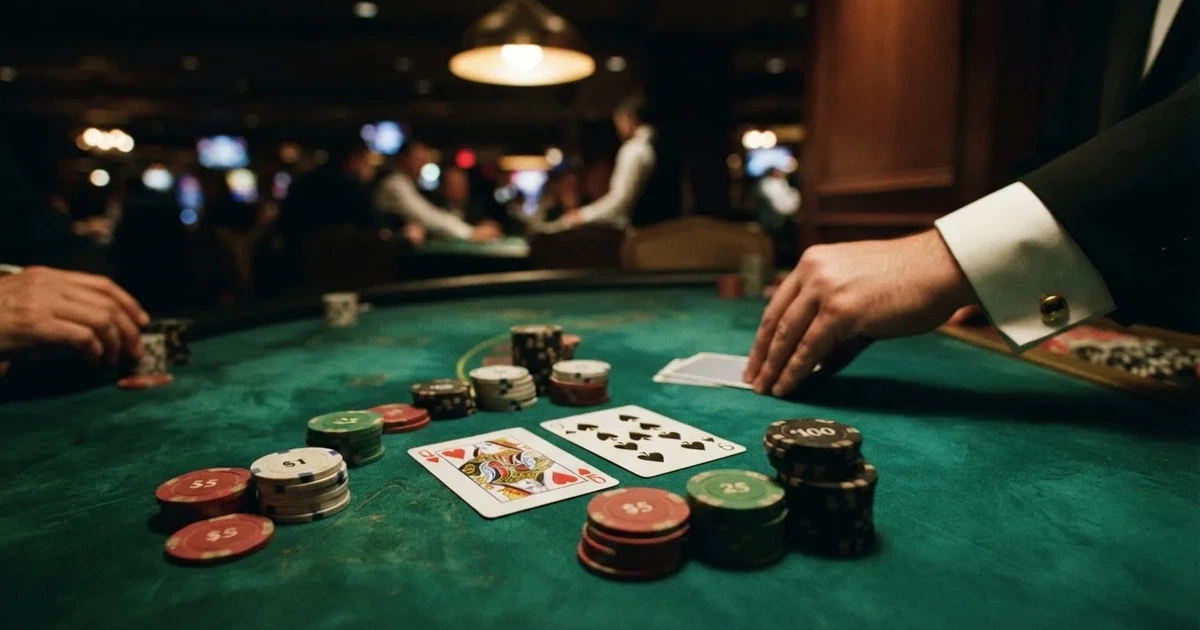
This page lays out that gap plainly. It covers the eleven offshore casino brands the ACMA has acted against most recently, the actual enforcement record behind them, and the lawful alternatives — licensed pokies venues, land-based casinos, and BetStop self-exclusion — for anyone reading from Australia. It also sets out what is and is not legal around paying these operators, since the same prohibition covers payment routing.
Data current as of 29 October 2026 and cross-checked against the ACMA’s published formal warnings and the Australian Communications and Media Authority’s blocking-order register.
Table of Contents
- Operator enforcement landscape
- What the law actually says in 2026
- What an Australian player can do that is actually lawful
- Paying an offshore casino from Australia
- Playing without the offshore casino
- The arithmetic behind the ACMA’s blocking rate
- Eleven brands, read individually
- The base-rate read on the offshore market
- What the next twelve months look like
- What to read next
- Frequently asked questions
Operator enforcement landscape
Eleven brands turn up, again and again, when an Australian searches for new online pokies. They are not a ranking and not a recommendation. They are the operators the ACMA itself has issued formal warnings to under the Interactive Gambling Act 2001 for offering prohibited services to people in Australia. Each one operates offshore, accepts Australian sign-ups without asking where the player actually is, and displays a Curaçao or Anjouan licence badge that has no standing under Australian law.

The same point reads differently when each brand is looked at individually. The table below shows what the ACMA has put on the record about each operator, in the order it has put it there.
| Brand | ACMA action and date | Operator named by the ACMA | Subject support |
|---|---|---|---|
| RocketPlay | Formal warning, March 2026 | Pulsup Ltd | — |
| Level Up Casino | Formal warning, May 2022 | Dama N.V. | Listed on BGaming |
| Woo Casino | Formal warning, March 2025 | Dama N.V. | — |
| Spirit Casino | Formal warning, May 2025 | Dama N.V. | — |
| National Casino | Formal warning, July 2025 | Consolutetish S.R.L. | Listed on Wikipedia |
| Bizzo Casino | Formal warning, July 2025; earlier 2022 | Consolutetish S.R.L.; TechSolutions Group N.V. | — |
| Ignition Casino | Formal warning, July 2025 | Bamboo Media | — |
| Instant Casino | Formal warning, February 2025 | EOD Code SRL | — |
| Jackbit | Formal warning, April 2026 | Ryker B.V. | — |
| Casino Intense | Formal warning, April 2025 | Sterplay Holding Ltd | Listed in regulator and industry reports |
| Sky Crown | Formal warning, September 2022 | Hollycorn N.V. | — |
Three things stand out from the list without anyone having to read every line. The first is that Dama N.V. shows up four times in the ACMA record — May 2022, then March 2025, then May 2025 again — which suggests rebranding rather than exit is the operator’s preferred response to enforcement. The second is that several brands change hands: Bizzo Casino was first warned as a TechSolutions operation in 2022, then re-warned under Consolutetish S.R.L. in 2025. The third is the speed of the recent round — five warnings in the past 18 months — and the implication that the ACMA’s caseload is rising, not fading.
A formal warning from the ACMA is not the same as a prosecution. It is the regulator telling the operator, in writing, that the named conduct is a contravention of the IGA, and that further action will follow if the conduct continues. Offshore operators tend to comply by moving their Australian-facing domains, reappearing under a fresh brand, and carrying on. The compliance cost is small; the marketing benefit, with thousands of Australian search terms to monetise, is large.
What an offshore licence badge actually covers
Several of these brands display a Curaçao, Anjouan or Kahnawake licence. None of those regulators has any standing with the ACMA. They do not allow the operator to take Australian customers. They do not give an Australian player any right of complaint or refund. If a withdrawal is refused, the dispute goes to the licence issuer — usually a complaint body in another jurisdiction, often paid by the operator. BetStop does not apply, because the operator is not connected to Australia’s National Self-Exclusion Register. The Australian bank may, on its own initiative, decline card transactions to known offshore gambling merchants.
The honest reading is that the licence badge is a payment-processing credential, not a consumer-protection one. It tells the operator’s payment partners that the site is supervised somewhere; it tells the player nothing about recourse in Australia.
Why a “new” pokies release still sits inside the prohibition
A new release from BGaming, Pragmatic Play, or any other studio is still an online casino game under the IGA once it sits on an offshore site accessible to Australian IP addresses. The novelty of the title does not change the law that the site offering it is offering a prohibited interactive gambling service. A handful of these brands carry BGaming or other studios in their catalogue; that listing tells the reader the studio supplies the games, not that the site is permitted to take Australian money.
What the law actually says in 2026
The Interactive Gambling Act 2001, as tightened by the Interactive Gambling Amendment Act 2017, makes it a contravention to provide an “interactive gambling service” to a person in Australia. An interactive gambling service covers online casino games — including online pokies — and in-play sports betting. The Act targets the provider, not the individual player, so opening an account and depositing is not, on its own, an offence under the IGA. What is certain is that the player has no Australian consumer protection behind the deposit.
No state or territory issues a licence for online casino games. The Australian-licensed online gambling product is wagering — racing and sports betting placed before the event — and the licensing is, in practice, the Northern Territory’s. The Northern Territory Racing and Wagering Commission (NTRWC) regulates 52 of Australia’s online bookmakers, including Sportsbet, Bet365 and Ladbrokes, and it does so with no full-time staff, meeting once a month in Darwin. Online lotteries and keno are licensed separately by their state of operation. Online pokies are not on that list.
The ACMA’s enforcement record
The ACMA’s enforcement has two prongs. The first is the formal warning, an open letter naming the operator and the conduct. The second is the blocking request, a direction to Australian internet service providers to make the named domains unreachable from Australian IP addresses.
According to the ACMA’s June 2026 update, a total of 1,751 illegal gambling and affiliate marketing websites have been blocked since the first blocking request in November 2019, and more than 230 unlicensed gambling services have left the Australian market since enforcement was strengthened in 2017. In the round reported on 26 June 2026 the ACMA asked Australian ISPs to block another twelve sites: 7Signs, ChromaBet, Donbet, Duospin, Freshbet, Slots Gem, Jacks Club, Lucky Start, Pointsbetz, Spinrise, Vinyl Casino and Wildsino. The pattern is consistent: a block is followed by a relaunch under a new domain, and the ACMA tracks the relaunches.
H2 Gambling Capital’s 2025 report estimates that Australians lose about A$3.9 billion a year to illegal gambling sites, and that the share of gambling going through legal channels fell from 74 per cent in 2021 to 64 per cent. That gap is the size of the offshore market this page is about — roughly A$1.6 billion a year moving outside the regulated perimeter.
What changed in 2026
Two regulatory moments are worth noting. The Interactive Gambling Amendment (Gambling Reform) Bill 2026 passed Parliament on 19 August 2026, and its advertising and inducement measures commence on 1 January 2027. The law is now enacted; the inducement provisions are not yet in force on a 2026 page, so affiliate marketing that targets Australian players remains the principal channel through which these brands acquire sign-ups in the run-up to commencement. The second is the ACMA’s increased cadence: five formal warnings in the 18 months to April 2026 against the eleven on this page, against three in the prior 18 months.
How this page treats the brands it names
A reader using this list to find a place to play is using it wrong. A reader using it to understand which operators the ACMA has actually acted against — and which operators have been warned more than once — is using it the way it was written. The page does not recommend any of the eleven. Where a brand has been warned once, that is recorded. Where the same operator entity appears under several brands, that is recorded too.
What an Australian player can do that is actually lawful
The lawful options are narrower than the marketing around them, and the same word — pokies — sits at the centre of both. Land-based poker machines are licensed and regulated state by state, and they are the only legally offered version of the game available to Australians in 2026.
The state and territory regulators keep separate registers and separate rule books. New South Wales had 87,298 gaming machines outside casinos across 2,195 venues in June 2023, with player losses of A$8.18 billion in 2022-23. Queensland had 21,122 machines in 351 venues in October 2023. Victoria had 26,380 machines outside Crown Casino in 488 venues in 2021-22, under a 30,000-machine statewide cap. Western Australia is the outlier: poker machines are banned in pubs and clubs, with Crown Perth’s roughly 2,500 machines the only legal supply, all approved by the state’s Gaming and Wagering Commission. Tasmania operated under a single-operator monopoly from 1968 until November 2021 legislation ended Federal Group’s exclusive hold and moved oversight to the Tasmanian Liquor and Gaming Commission.
The paytable side of “new”
A genuinely new pokies release in Australia follows a state-level approval path. Each jurisdiction’s regulator tests the game design, the return-to-player percentage and the rule set before the title is approved for club or pub floors. The minimum return-to-player that the law allows varies: 85 per cent in New South Wales, the Northern Territory, Queensland and generally Victoria (87 per cent at Crown Melbourne), 87 per cent in the ACT and Tasmania, 87.5 per cent in South Australia, and 90 per cent in Western Australia. A “new” title that clears those thresholds sits in the same envelope as an established one; what changes is theme, volatility band and feature set, not the regulatory floor underneath.
Tasmania planned nation-leading mandatory pre-commitment cards for its poker machines, with implementation delayed until late 2025. A pre-commitment card caps how much a player can lose in a session before the machine stops, and it is the structural answer to the harm the machines cause — the same harm the offshore market takes further from any oversight at all.
The 0.3 per cent stat, and what it really says
Australia has about 3 per cent of the world’s pub and club poker machines with 0.3 per cent of the global population. In 2020-21 Australians bet almost A$150 billion through gaming machines and lost A$12.18 billion on them. The disproportion is the reason the offshore market exists — the demand is large, regulated supply is constrained, and the gap is monetised by operators the ACMA then has to chase. The disproportion is also the reason an honest page about “new online pokies” for an Australian reader has to be different from the same page written for a reader in a jurisdiction where the product is licensed.
Paying an offshore casino from Australia
A licensed Australian wagering operator accepts debit cards, bank transfers, PayID/Osko and BPAY. Credit cards, credit-related products and digital currency have been banned as payment for licensed online wagering since 11 June 2024, with penalties of up to A$247,500 for operators that take them. An offshore casino is not bound by those rules, because it is not licensed in Australia, and most of them will take a credit card or a crypto deposit from an Australian customer without asking.
The payment routing is part of how the offshore market operates. The deposit typically goes through an intermediary in a third country, with no Australian bank in the chain. That is why an Australian bank can decline the transaction at its own discretion, and why an Australian chargeback is harder to win than a chargeback on a domestically licensed merchant. It is also why the ACMA’s blocking effort includes affiliate marketing pages — the affiliate is the click-through that brings the Australian to the deposit page.
PayID and the offshore casino question
PayID is an Australian real-time payment rail linked to a bank account or a phone number, and it settles through the New Payments Platform. Several offshore casinos advertise PayID as a deposit method, because it costs the operator less than card processing and settles faster than a wire. From the player’s side it looks convenient. From the regulatory side it is no different from any other deposit route: the receiving account is not an Australian-licensed wagering account, the transaction is not protected by Australian ePayments code dispute rights, and the operator is under no obligation to release a withdrawal once the deposit has cleared.
A reader who wants to deposit at an offshore casino using PayID should know that the payment rail is Australian, the receiving account is not, and the protection that comes with PayID — fast settlement, traceability through the user’s own bank — does not extend to the operator side of the transaction.
What a refund looks like in practice
If an offshore operator refuses a withdrawal, the path back is the operator’s own complaints procedure, then the licence issuer’s dispute body (where one exists), and then the card issuer’s chargeback process for any deposit paid by card. None of those paths goes through an Australian regulator, because the operator is not regulated by one. That is the consumer-protection cost of the offshore market in one sentence — the deposit is portable, the withdrawal is at the operator’s discretion, and the operator is the only party with leverage once the deposit has cleared.
Playing without the offshore casino
For an Australian reader who wants the experience of new pokies releases, the lawful route is the licensed venue. Clubs NSW, Clubs Queensland, the Victorian Commission for Gambling and Liquor Regulation, the South Australian Liquor and Gaming Commission and the Western Australian Gaming and Wagering Commission each publish registers of approved titles, and approved games move through those registers before they reach the floor. The pace is slower than an offshore release — a title that goes live on a Curaçao-licensed site on Monday may take months to reach an Australian club — and the trade-off is that the title sits under a regulator who can be complained to.
The harm-reduction side of the lawful market is what the offshore market most conspicuously lacks. Tasmania’s pre-commitment card scheme, the various state-level self-exclusion registers, the venue-level player-card systems and BetStop together form the architecture of harm reduction that sits on top of the licensed product. None of them applies to an offshore casino.
What BetStop does and does not do
BetStop, the National Self-Exclusion Register, has been live since August 2023. It binds Australian-licensed online and phone wagering services. A person registered with BetStop cannot open an account with a licensed Australian bookmaker, and the bookmaker is required to refuse the registration. BetStop does not bind offshore casinos, because offshore casinos are not connected to the register. A player who has self-excluded through BetStop and then opens an account with one of the eleven brands on this page is in breach of the self-exclusion commitment they made, but the offshore casino has no Australian-side mechanism that will stop it.
For someone whose gambling has moved past the point of enjoying, the right contact is the National Gambling Helpline on 1800 858 858, free, 24 hours a day, with chat at Gambling Help Online. The conversation is confidential and the service is independent of any operator.
The arithmetic behind the ACMA’s blocking rate
The ACMA’s published record gives two numbers that, divided against each other, produce a useful rate. As of June 2026, 1,751 illegal gambling and affiliate marketing websites have been blocked since the first blocking request in November 2019. From November 2019 to June 2026 is roughly 79 months.
Dividing 1,751 by 79 gives an average of roughly 22 blocked sites per month across the full period. The rate is not, however, constant across the period: enforcement was strengthened in 2017, the blocking regime became operational in late 2019, and the caseload has stepped up markedly since 2024 as the ACMA has moved from one-off warnings to rolling, larger blocking rounds. The June 2026 round alone directed the blocking of 12 sites in a single notice. A reader who wants the headline number should read it as “around two dozen sites a month on the long-run average, with the recent round several times that,” not as a flat rate — the actual rate depends on which window of months is taken, and the rate in the past 18 months is meaningfully higher than the average since 2019.
The arithmetic matters because the rate is what shapes the offshore market the ACMA is contending with. Each blocked domain is replaced, on average, by something — a relaunch, a redirect, a fresh brand — and the ACMA’s blocking rate has to outpace the replacement rate to shrink the market. The H2 Gambling Capital figure of A$3.9 billion a year to illegal sites suggests the market has not yet shrunk to a size the ACMA could consider closed.
The tax position of any winnings
Winnings of a recreational player are not assessable income under section 6-5 of the Income Tax Assessment Act 1997, and losses are not deductible. A player whose gambling is a business — a professional card-counter, a sports bettor whose activity meets the ATO’s business tests — is taxed differently, and the ATO’s website is the right starting point for that case. For the casual player, the tax outcome of any win is the same as the tax outcome of a win on a poker machine in a Sydney club: nothing to declare, nothing to deduct.
Eleven brands, read individually
The names below are not a ranking. Each one is the ACMA’s own list of operators it has warned under the Interactive Gambling Act 2001, and the date and the operating entity are the ACMA’s. Where the brand has been warned more than once, that is recorded. Where the operating entity has been warned under another brand, that is recorded too. The role of this section is to let a reader see exactly what the regulator has put on the record about the brands they will encounter in a search.
RocketPlay — Pulsup Ltd, March 2026
The ACMA’s most recent formal warning against this brand was issued in March 2026 and named Pulsup Ltd as the operator of Rocketplay. A separate warning, in May 2022, named Dama N.V. over a portfolio of brands that included RocketPlay among others — Bambet, Dazard, Level Up, Wild Tornado and Cobra Casinos. Two warnings six years apart, against different operating entities, indicate the brand has changed hands. A reader searching for “RocketPlay” today will land on a domain that may or may not be the one the ACMA warned in 2026.
Level Up Casino — Dama N.V., May 2022
Level Up was named in the same May 2022 batch of warnings to Dama N.V. as RocketPlay. The ACMA has not re-warned Level Up under a different operating entity, which is unusual among the brands in this list and may simply reflect that Level Up has had a quieter public profile since 2022. It is one of the brands for which a BGaming listing is the only subject-side data the regulator’s record carries — a separate point from the licence question.
Woo Casino — Dama N.V., March 2025
Woo Casino was the subject of one of two March 2025 and May 2025 follow-on warnings to Dama N.V. The pattern of repeated warnings to the same operator entity under different brand names — the May 2022 batch, then this March 2025 warning, then the May 2025 warning against Spirit Casino — is the most concrete evidence the ACMA has that the rebranding tactic is in active use.
Spirit Casino — Dama N.V., May 2025
Spirit Casino was the second of the 2025 warnings to Dama N.V. The proximity of the Woo Casino and Spirit Casino warnings — two months apart, same operator entity — is what makes the rebranding reading hard to avoid. An operator re-warning under a new brand is a known pattern, and the ACMA’s record captures it cleanly here.
National Casino — Consolutetish S.R.L., July 2025
National Casino was named in the July 2025 batch of warnings that also covered Bizzo Casino, both under Consolutetish S.R.L. The two brands share an operator entity and a warning date, and a reader who treats them as separate operations should be aware that the regulator does not.
Bizzo Casino — Consolutetish S.R.L., July 2025; TechSolutions, 2022
Bizzo is the cleanest example of the relaunch pattern in the ACMA’s record. The first formal warning, in 2022, named TechSolutions (CY) Group Limited and TechSolutions Group N.V. The second, in July 2025, named Consolutetish S.R.L. Three years between warnings, two different operator entities, one brand name. The ACMA’s record shows the brand was already on the regulator’s radar before the 2025 escalation.
Ignition Casino — Bamboo Media, July 2025
Ignition Casino was named alongside National Casino and Bizzo Casino in the July 2025 batch, but under a different operating entity — Bamboo Media. The brand targets the Australian market under a different commercial identity than the Consolutetish-branded pair.
Instant Casino — EOD Code SRL, February 2025
Instant Casino was the subject of a February 2025 warning, and the warning was among the earliest of the recent escalation in the ACMA’s caseload. The brand has a single warning in the public record.
Jackbit — Ryker B.V., April 2026
Jackbit was named alongside CasinOK in an April 2026 warning to Ryker B.V. The same operator entity, the same warning date, two brands. Jackbit’s recent appearance on the ACMA’s list puts it among the newer entries on the regulator’s radar.
Casino Intense — Sterplay Holding Ltd, April 2025
Casino Intense is the brand that crosses most readily into other coverage. ABC News and the ACMA’s own publications have carried the operator’s name in passing, and Crown Melbourne’s coverage of approved baccarat variants references the same broader category. Casino Intense is not on Crown’s floor; the reference is to the genre of play, and it makes Casino Intense the brand where the most independent third-party data on the ACMA’s record coincides.
Sky Crown — Hollycorn N.V., September 2022
Sky Crown was the subject of the September 2022 formal warning to Hollycorn N.V., which also covered Blue Leo. Hollycorn is one of the older operator entities on the ACMA’s list, and the warning is the most dated of the eleven. A reader searching for the brand in 2026 will find that the ACMA has not re-warned it, which can be read either as compliance or as a quiet relaunch under a different name.
The base-rate read on the offshore market
The eleven brands on this list are not the only operators the ACMA has warned. They are the operators who turn up most consistently in an Australian-facing search for new online pokies, and they are the ones for which the ACMA has published formal warnings that name the operating entity. The pattern of repeated warnings to the same operating entity under different brand names — Dama N.V. across 2022, 2025 and 2025; TechSolutions/Consolutetish across 2022 and 2025 — is the structural feature of the offshore market the ACMA is contending with.
| Body | Role |
|---|---|
| ACMA | Investigates illegal sites, issues formal warnings and blocking orders |
| NTRWC | Licenses online wagering services in the Northern Territory |
| BetStop | National Self-Exclusion Register for licensed wagering services |
| ATO | Taxes professional gambling income; recreational wins are tax-free |
For a reader in Australia, the practical implication is short. The list of brand names is longer than the list of operating entities, and an Australian-facing search engine is more likely to surface a brand the ACMA has not yet warned than an operator the ACMA has never named. The ACMA’s blocking cadence — twenty-two blocked sites a month on the long-run average, with recent rounds several times that — is the regulator’s response to that fact, and the pace is the metric a reader should watch to see whether the gap to legal channels is closing.
What the next twelve months look like
The Interactive Gambling Amendment (Gambling Reform) Bill 2026 commences its advertising and inducement measures on 1 January 2027. From that date, the legal exposure of an Australian-facing affiliate that markets one of the eleven brands above changes — the inducement provisions make the affiliate’s conduct a contravention in its own right, not just a piece of evidence the ACMA uses to characterise the operator’s conduct. The provisions are not yet in force on a 2026 page, so affiliate marketing that targets Australian players remains the principal acquisition channel.
The ACMA’s recent pace — five warnings in the 18 months to April 2026, twelve blocks in the June 2026 round alone — suggests the regulator’s operational tempo will hold through the run-up to commencement. A reader watching the market through 2026 should expect the operator list to keep changing, even where the names on it keep recurring.
What to read next
This page is a starting point, not a destination. For the consumer-protection architecture that applies to licensed wagering, the ACMA’s website is the primary regulator. For the state-level pokies register in any particular jurisdiction, the relevant state commission is the right contact — Liquor & Gaming NSW, the Victorian Gambling and Casino Control Commission, the Queensland Office of Liquor and Gaming Regulation, the SA Consumer and Business Services, the WA Department of Local Government, Sport and Cultural Industries, the Tasmanian Liquor and Gaming Commission, the ACT Gambling and Racing Commission, and the NT’s Licensing NT. For anyone whose gambling has moved past the point of enjoying, the National Gambling Helpline on 1800 858 858 is the right first call, with chat at Gambling Help Online.
Frequently asked questions
How much do Australians lose on gaming machines in an average year?
According to Gambling in Australia, in 2020-21 Australians bet almost A$150 billion through gaming machines and lost A$12.18 billion on them. NSW alone recorded A$8.18 billion of machine losses in 2022-23. These figures cover the licensed, land-based market only — H2 Gambling Capital’s 2025 estimate of A$3.9 billion a year in losses to illegal offshore sites sits beside, not inside, the licensed total.
What counts as a new pokies release versus an established one?
In the licensed Australian market, “new” means a title that has cleared state-level approval — the regulator checks the design, the paytable and the return-to-player against the jurisdiction’s minimum, which ranges from 85 per cent in NSW, the NT, Queensland and generally Victoria to 90 per cent in Western Australia. The release date is the date the regulator approved the title, not the date the studio finished it. On an offshore site, the studio’s release date is what the site advertises, with no Australian-side approval step in between.
Is it legal for an online casino to offer new pokies titles to Australians?
No. The Interactive Gambling Act 2001, as amended in 2017, prohibits offering online casino games — including online pokies — to anyone in Australia. No state or territory issues a licence for the product. The eleven brands on this page have all been the subject of ACMA formal warnings under the IGA for offering prohibited services to Australians, and several have been warned more than once.
Can a new pokies bonus be claimed through a PayID deposit?
PayID is an Australian real-time payment rail that settles through the New Payments Platform. Several offshore casinos advertise PayID as a deposit method, because it is cheaper for the operator than card processing. The payment rail is Australian, but the receiving account is not an Australian-licensed wagering account, and the consumer protections that apply to PayID — fast settlement and traceability through the user’s own bank — do not extend to the operator side of the transaction.
Are new pokies titles tested before they appear on licensed club or pub floors?
Yes, but the test is not uniform. Each state and territory runs its own approval process, and the minimum return-to-player that the law allows varies by jurisdiction — 85 per cent in NSW, the NT, Queensland and generally Victoria (87 per cent at Crown Melbourne), 87 per cent in the ACT and Tasmania, 87.5 per cent in South Australia, and 90 per cent in Western Australia. A “new” title on a licensed floor sits under whichever regulator covers the venue; an offshore site does not run that approval step at all.
Why does Australia have such a large share of the world’s poker machines?
Australia has about 3 per cent of the world’s pub and club poker machines with 0.3 per cent of the global population. The disproportion is the result of state-by-state regulatory choices made over decades — NSW clubs received the first legal machines in 1956, Tasmania operated a single-operator monopoly from 1968 until 2021, and Western Australia is the only state that has banned poker machines in pubs and clubs, with Crown Perth the only legal supply. The demand created by that licensed supply is part of why the offshore market exists; the offshore market is the unregulated extension of the same demand.