
Live baccarat at Australian online casinos 2026
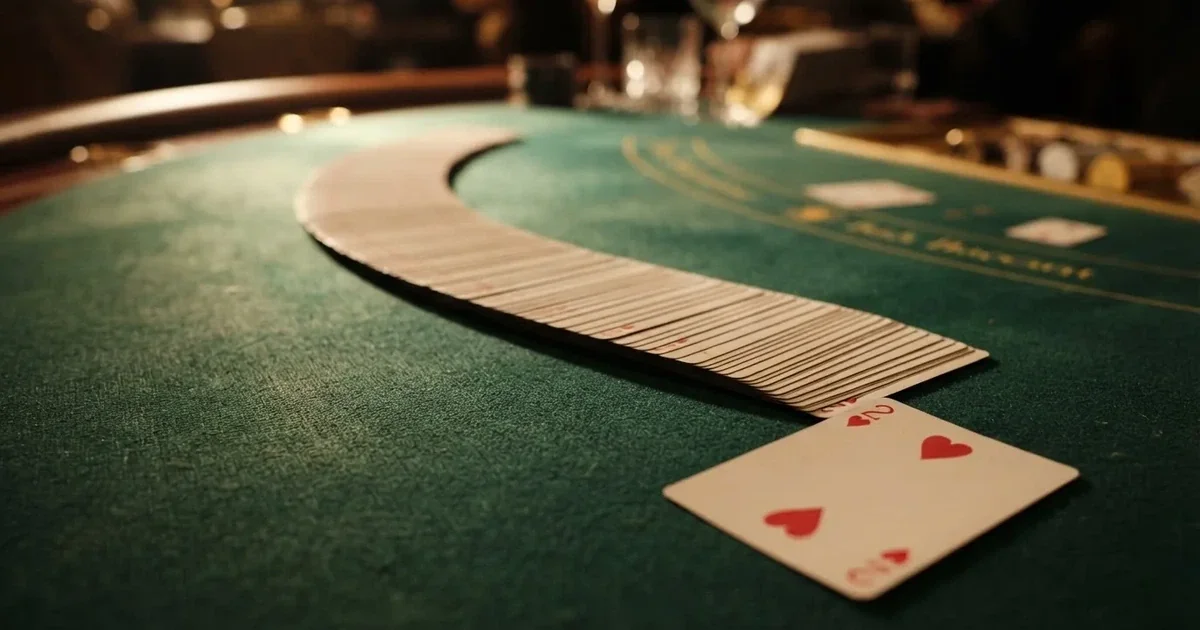
A live baccarat table streamed from a studio to an Australian player looks indistinguishable from one inside a Melbourne casino floor: same green felt, same dealing shoe, same quiet click of cards sliding out under a banker’s hand. What sits behind that stream is something the marketing never advertises — an offshore operator with no Australian licence, no local complaints body, and a regulator in Canberra that has, in the round reported on 26 June 2026, asked ISPs to block 12 more of them.
This guide walks through eleven brands the Australian Communications and Media Authority has issued formal warnings against for offering exactly this product, what their tables actually look like in terms of house edge, how a bitcoin deposit changes the experience, and what an Australian player gives up the moment a stream loads.
Currency stamp: As of 29 October 2026 against the Australian Communications and Media Authority’s register of formal warnings and blocking requests.
Table of Contents
- Landscape of ACMA-warned operators
- Paytable and house edge at a live baccarat table
- How fast a live baccarat session actually runs
- Live dealer versus computer-generated baccarat
- Crypto deposits and the payment rail
- Legality under the Interactive Gambling Act 2001
- Responsible gambling and what an Australian player gives up
- What providers and game studios appear in this space
- What the table tells the reader
- Frequently asked questions
Landscape of ACMA-warned operators
The table below is not a ranking. None of these brands holds an Australian licence to offer live baccarat or any other online casino game — the Interactive Gambling Act 2001 makes that product unlawful for the provider to supply to a person in Australia, whatever licence the offshore site displays in its footer. The brands appear here because the ACMA itself, in formal warnings published on its website, has named each one for offering prohibited interactive gambling services to Australian customers.

| Brand | ACMA action and date | Operator named by the ACMA | Subject support |
|---|---|---|---|
| RocketPlay | Formal warning, March 2026; earlier Dama N.V. warning, May 2022 | Pulsup Ltd (Rocketplay.com.au) | — |
| Level Up Casino | Formal warning, May 2022 | Dama N.V. | listings-only (Bgaming) |
| Woo Casino | Formal warning, March 2025 | Dama N.V. | — |
| Spirit Casino | Formal warning, May 2025 | Dama N.V. | — |
| National Casino | Formal warning, July 2025 | Consolutetish S.R.L. | listings-only (en.wikipedia.org) |
| Bizzo Casino | Formal warning, July 2025; earlier TechSolutions warning, 2022 | Consolutetish S.R.L. | — |
| Ignition Casino | Formal warning, July 2025 | Bamboo Media | — |
| Instant Casino | Formal warning, February 2025 | EOD Code SRL | — |
| Jackbit | Formal warning, April 2026 | Ryker B.V. | — |
| Casino Intense | Formal warning, April 2025 | Sterplay Holding Ltd | listings-only (public regulatory records) |
| Sky Crown | Formal warning, September 2022 | Hollycorn N.V. | — |
The “subject support” column reflects only what third-party listings and the ACMA’s own file confirm for live baccarat specifically. An em dash means research found no listing, no provider partnership and no publisher reference for that brand carrying baccarat tables — a gap that is itself a finding, because a live baccarat brand with no visible trail on the open web is precisely the kind of brand the ACMA has to chase.
A reader looking at the column will notice that “live baccarat” appears nowhere in the ACMA’s formal warnings. The regulator names the operator and the prohibited service class — “online casino games” — without distinguishing the live-dealer stream from the RNG version. The table is the regulator’s table; the live baccarat frame is what the search query placed on top of it.
Paytable and house edge at a live baccarat table
A live baccarat table uses a paytable that has not changed in generations. Two cards are dealt to a Banker hand and two to a Player hand; a third card may be drawn under fixed rules; the closest hand to nine wins. Cards 2 through 9 count at face value, ten and the picture cards count as zero, the ace counts as one, and totals are taken modulo ten so a hand of 7 and 8 reads as five. Punto banco — the variant almost every live table streams — is dealt from a shoe of six or eight decks, with the casino banking the game at all times and playing out both hands by fixed drawing rules rather than letting the punter choose.

| Bet | House Edge | Payout |
|---|---|---|
| Banker | 1.06% | 0.95:1 |
| Player | 1.24% | 1:1 |
| Tie | 14.36% | 8:1 |
Understanding the Baccarat Edge
A reader weighing where to place chips should notice what 1.06% means in a session. At a five-second hand cadence, a Banker-only strategy on a A$10 chip loses, on average, around A$7 an hour in house edge alone — before variance, before tipping, before any side bet the live studio tucks into the corner of the layout. Side bets — Player Pair, Banker Pair, Either Pair, Perfect Pair, Big, Small — sit well outside those three numbers and carry edges several times higher. The Tie bet, at 14.36%, is the kind of number the house loves and the punter rarely remembers. A session built around Tie bets is the most expensive way to watch a deck being dealt.
Compared with other table games a reader might already know, baccarat’s main bet sits between blackjack and craps. Optimal blackjack under liberal Las Vegas Strip rules runs about 0.28% house edge; craps Pass/Come sits at 1.41% and Don’t Pass/Don’t Come at 1.36%; baccarat’s Banker at 1.06% is the cheapest single bet on a craps layout and beats every blackjack variant except the most permissive. The order inverts on Tie bets and side action, which is where the casino’s table designers build their margin.
How fast a live baccarat session actually runs
A live baccarat studio deals somewhere between 60 and 80 hands an hour, depending on how many players are at the table and how long the betting window stays open. The cadence feels slower than a computer-generated version because each hand depends on a real dealer lifting cards from a real shoe, but the pace still adds up. A punter sitting through 200 hands at a five-second cadence spends just under 17 minutes of pure decision time inside an hour-long session.
That cadence is the part the responsible-gambling guidance never quite reaches. The fast pace of consecutive baccarat hands makes it easy to lose track of time, so a session limit is worth setting before the stream starts. A punter who decides mid-session that the next hand will be the last almost never honours that decision; the next hand arrives in five seconds, and the one after that in another five. The economic consequence is that a player without a pre-set cap tends to play longer, and at 1.06% house edge, longer play means a higher cumulative loss — variance might still produce a winning session, but the average over many sessions runs against the punter at the rate the edge dictates.
Live dealer versus computer-generated baccarat
The difference between a live-dealer baccarat table and a computer-generated one is what the stream carries, not what the cards do. In both versions the cards are drawn from a shoe of six or eight decks and the result is governed by the same fixed drawing rules for the Player and Banker hands. The RNG version deals an outcome the player sees as a graphical animation of cards sliding out; the live version deals the same outcome from a real shoe under a real dealer, captured by cameras in a studio and streamed to the punter’s browser.
What changes between the two is the punter’s experience of the game and the studio’s experience of the punter. A live table typically displays the player’s chosen bets and the result history on screen, lets the punter chat with the dealer through a text box, and includes side bets the RNG version may not. A live studio also charges a premium on minimum stakes compared with its RNG counterpart — a A$5 minimum at the live table is common where the same operator runs a A$1 minimum on the RNG baccarat. That premium is the cost of the camera, the studio and the dealer, and it does not change the underlying house edge: 1.06% on Banker is 1.06% on Banker regardless of who is dealing.
A punter who wants the cards and not the conversation can choose either. A punter who values the human dealer, the visible shoe and the social thread of the table pays for it in higher minimums, not in worse odds. The trap is treating the live stream as if it conferred some kind of fairness advantage over the RNG game. Both versions use a fixed-edge mathematical structure; neither runs at the punter’s favour; neither pays out at better-than-odds rates; neither is subject to Australian consumer protection.
Crypto deposits and the payment rail
A bitcoin-funded live baccarat table runs the same dealt cards as a card-funded one, with only the payment rail changed. The paytable, the third-card rule and the 1.06% / 1.24% / 14.36% edge structure are identical. What differs is everything around the bet: how the player funded the account, how the operator holds the funds, and what happens when the punter tries to take the winnings back out.
The Australian rules on this point sit in the Interactive Gambling Act’s payment-prohibition framework. Credit cards, credit-related products and digital currency are banned as payment for licensed online wagering since 11 June 2024, with penalties of up to A$247,500 for operators who breach the rule. The law is aimed at licensed Australian wagering services, but the policy intent is plain: an Australian depositing with bitcoin at a live baccarat table is moving money through a rail the regulator does not recognise for this product. A site asking for a crypto deposit is, by definition, an offshore site; an Australian-licensed bookmaker does not take bitcoin and does not run live baccarat.
The practical consequence for a punter is settlement speed on the way in and friction on the way out. A bitcoin deposit usually clears within an hour, faster than a card deposit and faster than a bank transfer. The winnings, if there are any, take the same rail back. Offshore operators vary in how quickly they process bitcoin withdrawals, and the smaller the operator, the more likely a withdrawal stalls pending additional verification — the kind of verification the ACMA warned Dama N.V. over in March 2025 and May 2025, in formal warnings naming Woo Casino and Spirit Casino respectively. A punter who chooses bitcoin for speed on the way in should expect to face a different speed on the way out, and should not be surprised if the operator asks for documents the punter did not need to send on deposit.
The deeper problem with crypto at an offshore live baccarat table is recourse. If a withdrawal is refused, an Australian punter has no local complaints body to approach. The Australian-licensed framework — including BetStop, the National Self-Exclusion Register — binds Australian-licensed online and phone wagering services; an offshore casino is not connected to it. The crypto rail that made the deposit fast also makes the dispute harder: a chargeback is not available, the exchange rate has moved by the time the dispute resolves, and the operator holds the punter’s identity documents for the duration. That is the actual cost of paying in bitcoin at an offshore live baccarat table, and it is the cost the marketing copy never names.
Legality under the Interactive Gambling Act 2001
The Interactive Gambling Act 2001, strengthened by the Interactive Gambling Amendment Act 2017, makes it an offence to provide online casino games, online pokies and in-play betting to a person in Australia. The product class is “prohibited interactive gambling service,” and the law targets the provider, not the player — corporations face penalties of up to A$1.1 million a day and individuals up to A$220,000 a day for offering these services to Australians. The player is not prosecuted, but the law leaves no room for ambiguity about the underlying transaction.
What is licensable in Australia is wagering on races and sport placed before the event, lotteries and keno — in practice licensed by the Northern Territory Racing and Wagering Commission, which regulates 52 online bookmakers including Sportsbet, Bet365 and Ladbrokes for tax reasons. The NTRWC has no full-time staff and meets once a month in Darwin; it does not license online casino games, online pokies or live dealer tables. No state or territory licenses them either.
That regulatory map is why live baccarat does not appear in any Australian casino product offering. Crown Melbourne, the country’s largest land-based casino complex, runs three baccarat variants — Traditional Baccarat, Crown Baccarat and 2 to 1 Baccarat — under Victorian Gambling and Casino Control Commission approval; those tables exist on the floor of the Southbank complex and nowhere else. The VGCCC, which replaced the VCGLR as Victoria’s casino regulator on 1 July 2022, approves any change to a table game’s rules before it is introduced; a player who sits at a Crown Melbourne baccarat table is sitting at a VGCCC-approved game. A player who opens a browser tab to a live dealer stream from Curaçao or Cyprus is not.
What the ACMA actually does
The Australian Communications and Media Authority investigates complaints, issues formal warnings to offshore operators, and directs Australian internet service providers to block illegal sites. The blocking regime has produced a cumulative count of 1,751 illegal gambling and affiliate marketing websites blocked since the first blocking request in November 2019, with more than 230 unlicensed gambling services having left the Australian market since enforcement was strengthened in 2017. In the round reported on 26 June 2026, the ACMA asked ISPs to block 12 more: 7Signs, ChromaBet, Donbet, Duospin, Freshbet, Slots Gem, Jacks Club, Lucky Start, Pointsbetz.com, Spinrise, Vinyl Casino and Wildsino. None of the eleven brands in the table above is on that round’s block list, because their operators were caught earlier and the ACMA’s response was a formal warning rather than a fresh blocking request.
The blocking rate provides a helpful perspective on this material. The cumulative count grew from zero in November 2019 to 1,751 by June 2026 — a span of six years and seven months, or 79 months. That works out to a long-run average of roughly 22 sites blocked per month, or about 266 per year. A reader should treat that figure as a band, not a single point: enforcement is lumpy, with months of zero additions followed by rounds of a dozen or more in a single announcement. The figure also reflects only what the ACMA has formally asked ISPs to block; it does not count brands the ACMA has merely warned, nor the offshore operators that quietly exit the Australian market after a warning without a blocking request.
Advertising and inducement reform
The Interactive Gambling Amendment (Gambling Reform) Bill 2026 passed Parliament on 19 August 2026; its advertising and inducement measures commence 1 January 2027. The bill is law with a start date and not yet in force on a 2026 page. Its effect, once it begins, will be to tighten the rules around how licensed wagering services market to Australians; it does not change the underlying prohibition on providing online casino games to Australians. A reader reading this page in 2026 sees the framework as the framework stands on publication; a reader reading the same page after 1 January 2027 sees a framework with new inducement rules layered on top of the same prohibition.
Responsible gambling and what an Australian player gives up
The fast pace of consecutive baccarat hands makes it easy to lose track of time, so a session limit is worth setting before the stream starts. The recommendation is mechanical and pre-loaded: pick a stop-loss, pick a stop-win, set a timer, and stop on whichever one fires first. A punter who reaches for the limit during a session almost always overrides it; a punter who set the limit before opening the table sometimes honours it.
BetStop, the National Self-Exclusion Register, has been live since August 2023. It binds Australian-licensed online and phone wagering services; an offshore live baccarat site is not connected to it. A punter who has registered with BetStop is excluded from every Australian-licensed wagering product but is not excluded from the offshore brands in the table above. Self-exclusion at an offshore site requires the punter to ask each operator individually, with no guarantee the request is honoured.
The National Gambling Helpline at 1800 858 858 is free, runs 24/7 and connects to Gambling Help Online’s chat service. The helpline is funded to support Australians experiencing harm from gambling; it is the same number whether the gambling takes place on a Melbourne casino floor, at a licensed TAB or at an offshore live baccarat stream. The advice it gives about session limits, deposit caps and self-exclusion applies to all three; the legal protections it can offer apply only to the first two.
The Australian-licensed framework gives a player a deposit ceiling, a self-exclusion register, a complaints body and recourse if a withdrawal is refused. The offshore framework gives a player none of those. The cost of an offshore live baccarat table is not the 1.06% house edge — that is the same number Crown Melbourne’s baccarat tables effectively carry in their favour after considering the standing rules. The cost is the loss of every layer of protection the Australian framework provides the moment a punter logs in. An offshore site can be blocked with a balance still on it; the ACMA’s blocking round reported on 26 June 2026 added 12 more sites to that list.
What providers and game studios appear in this space
The punter does not see the game studio at a live baccarat table; the marketing runs on the operator’s brand. Behind the stream sits a studio licence — typically from a jurisdiction outside Australia — and a software provider whose tables the operator rents by the month. The table above lists the brands by operator; the providers that supply the actual dealing equipment sit one layer down.
The Australian-facing live baccarat studios that the research could verify through third-party listings are limited. Level Up Casino lists Bgaming as a content provider; National Casino appears on a public game catalogue with baccarat variants; Casino Intense is referenced through Australian-facing coverage that names baccarat tables in passing. The other eight brands in the table above carried no third-party reference to a specific live baccarat provider at the time of research — a gap that is consistent with the ACMA’s pattern of warning operators whose product line is hard to map from the open web.
The take from the gap is not that those eight brands lack a live baccarat product. They carry them; the ACMA’s formal warnings name them as online casino operators, and a live baccarat product is part of the standard offering of every brand in the warning list. The take is that the third-party trace is thin — a fact in itself, because the thinner the trace, the harder it is for an Australian punter to check what the table is paying out, what licence the studio operates under, and what jurisdiction’s consumer law applies when a withdrawal is refused.
A Crown Melbourne baccarat table, by contrast, is a VGCCC-approved game whose rules are published by the operator and whose outcomes are subject to oversight by a Victorian regulator whose name and address the punter can read on the regulator’s website. That is what the offshore table is not, and the difference is the page’s whole point.
What the table tells the reader
The eleven brands sit on the same legal ground: each has been the subject of a formal ACMA warning for offering prohibited interactive gambling services to Australians. The dates span from 2022 to April 2026; the operators behind them are spread across Curaçao, Cyprus, the Seychelles and other offshore jurisdictions; the brand names are interchangeable from a regulatory standpoint because the regulator’s view is that none of them should be offering the product at all.
What the table does not tell the reader is which brand is “safest” — because the question does not apply. An offshore live baccarat table carries the same structural risk as another offshore live baccarat table: no Australian consumer protection, no local complaints body, no recourse if a withdrawal stalls, and a regulator in Canberra that can block the site at any time. The differences between brands are in game selection, minimum stakes and payment methods, and the reader’s guide to those differences is “all eleven of these are operating outside Australian law, and the right answer is to play at a venue that holds an Australian licence — which, for live baccarat, means a Crown Melbourne table on the floor.”
The page concludes on that point because it summarizes the reality of the situation. A reader who arrived searching for the best live baccarat site for Australians is reading the wrong comparison; the comparison that applies is between a Crown Melbourne baccarat table on the Southbank floor and an offshore stream that the ACMA has asked ISPs to block. The paytable and the edge are not the differentiating factor — those are roughly the same. What differs is the regulatory architecture around the bet, and that is the cost the marketing never names.
Frequently asked questions
Is it legal to play live baccarat for real money at an online casino in Australia?
No. The Interactive Gambling Act 2001 makes it an offence to provide online casino games to a person in Australia; no state or territory licenses live baccarat or any other online casino product. The player is not prosecuted, but the offshore operator is, and the ACMA has issued formal warnings to eleven brands operating in this space.
How does a live-dealer baccarat table differ from a computer-generated version?
The cards and the paytable are the same — six or eight decks, 1.06% on Banker, 1.24% on Player, 14.36% on Tie. The difference is the delivery: a live dealer in a studio streams the shoe to the player’s browser, while an RNG version animates a digital outcome. Live tables charge higher minimums but offer the same underlying math.
Does a bitcoin-funded live baccarat table use a different card-dealing process?
No. The cards are dealt from a real shoe under a real dealer regardless of the payment rail. Bitcoin only changes how the player funds the account and how winnings come back. It does not change the rules, the edge or the dealing process. It does change the regulatory position: credit cards and digital currency are banned as payment for licensed Australian wagering since 11 June 2024.
What is the difference between betting on Banker, Player and Tie in baccarat?
The Banker bet wins slightly more often than the Player bet because of the third-card rule and pays 0.95 to 1 to recover that edge, giving a house edge of 1.06%. The Player bet pays even money and carries a 1.24% house edge. The Tie bet pays 8 to 1 but carries a 14.36% edge, making it the most expensive single bet on the table.
Can a live baccarat session be joined mid-shoe, or only at the start?
Mid-shoe is the default at most live baccarat studios. The dealer runs the shoe continuously and players join or leave between hands. The shoe itself is not paused for a new participant; the result history and roadmaps on screen reflect every hand dealt since the shoe was opened.
How fast do consecutive hands typically run at a live baccarat table?
A live baccarat studio deals somewhere between 60 and 80 hands an hour, depending on the table’s player count and the betting window. At a five-second hand cadence, 200 hands consume just under 17 minutes of decision time. The pace is what makes a session limit worth setting before the stream starts.