
Pragmatic Play casinos in Australia — what is actually on offer, and at what cost
A quick line under the headline, before the first paragraph, so the reader knows the moment of the picture: current as of 29 October 2026, verified against the Australian Communications and Media Authority’s published formal warnings and blocking requests. Every licence claim on an offshore site that markets Pragmatic Play titles to Australian customers was checked against that register.
The marketing is loud and the legal frame is quiet, and the gap between them is the whole story. Pragmatic Play is a real, large content studio that ships slots and live-casino titles through a single API to operator brands including Flutter, Entain, bet365 and LeoVegas, in 33 languages and all major currencies. It is headquartered in Gibraltar, regulated by the UK Gambling Commission and certified by Gaming Laboratories International, Quinel and Gaming Associates across more than 30 jurisdictions. None of that licences it for Australian customers. Online casino games — pokies, roulette, blackjack, live dealer tables — cannot be licensed in Australia at all, under the Interactive Gambling Act 2001 as strengthened in 2017. The same studios that serve regulated markets in Europe and Latin America are reachable from an Australian IP only through offshore sites that the ACMA has spent years blocking. A punter who types the brand into a search bar meets a wall of those sites, and the wall is what this page reads from the other side.
Table of Contents
- Pragmatic Play on a mobile screen
- What Pragmatic Play actually makes
- How a shortlist of Pragmatic Play casinos is actually built
- The shape of Pragmatic Play’s Australian footprint
- Legality: the Interactive Gambling Act and what the ACMA does about it
- Responsible gambling around prohibited casino products
- Payments and the cost of clearing an offer
- Bonuses and free spins, on the marketing page and in practice
- The operator-by-operator picture
- Frequently asked questions
Pragmatic Play on a mobile screen
Mobile is where most Australians first meet these titles, so it is worth saying what they actually run like before anything else.

Pragmatic Play builds its catalogue in HTML5, which means there is no download, no casino-branded app and nothing to install. A punter loads the game in a phone browser — Safari on iOS, Chrome on Android — and the same reel set that sits on a desktop loads inside a portrait or landscape window. The touch targets are large enough for a thumb on a six-reel title, the spin button is fixed at the bottom edge of the viewport, and the bet-size ladder sits behind a chip icon so the screen does not clutter. For live-dealer tables the studio feed runs at the device’s resolution with a collapsible chat rail; for a slot, the paytable opens as a side sheet rather than a new screen, so the spin state is not lost while a player checks what three scatters pays.
This is not a casino app. There is no Pragmatic Play app to download because the studio is not a casino — it is a supplier whose games sit inside a casino brand. When an offshore casino writes “our mobile app” in an SMS or a banner, it is shipping its own shell, and that shell still belongs to a site the ACMA has acted against for offering prohibited interactive gambling services to Australians. The browser experience is identical to what a regulated European customer sees; the wrapper around it is the difference.
Load times on a current handset over 4G sit in the two-to-four-second range for a slot and slightly longer for a live table, because the live feed negotiates a video stream rather than a static asset. Game-state recovery is handled server-side, so a dropped call or a screen lock does not lose a spin — the round resolves at the server and the result appears on reopen. This is standard for any modern HTML5 provider and not a specific reason to pick one offshore brand over another.
The practical shape of mobile play in this market, then, is: no install, browser-based, identical reel mechanics to a European session, and a casino wrapper that is unlawful under the Interactive Gambling Act no matter how polished the app icon looks.
What Pragmatic Play actually makes
The studio describes its catalogue around three pillars: video slots, live casino and virtual sports, plus a growing bingo and scratchcard line inherited through earlier acquisitions. That last point is worth a sentence on its own, because the corporate history is part of how the catalogue got its current shape.
Pragmatic Play launched in 2015 and is owned by private investors led by Veridian (Gibraltar) Limited, with Julian Jarvis as CEO. Two acquisitions reshaped the live and virtual sides of the business. The studio bought live-casino supplier Extreme Live Gaming from the Novomatic Group on 26 June 2018, picking up ten tables covering roulette, blackjack and baccarat that had run out of London studios. A second deal followed on 28 January 2019, when Pragmatic Play acquired virtual-sports supplier VSoftCo, framed at the time as a second corporate step after the Extreme Live Gaming purchase. Together those two moves turned a slot-led studio into an omni-channel supplier, and the single-API pitch that the company repeats on its own about page is the public face of that integration.
Slots
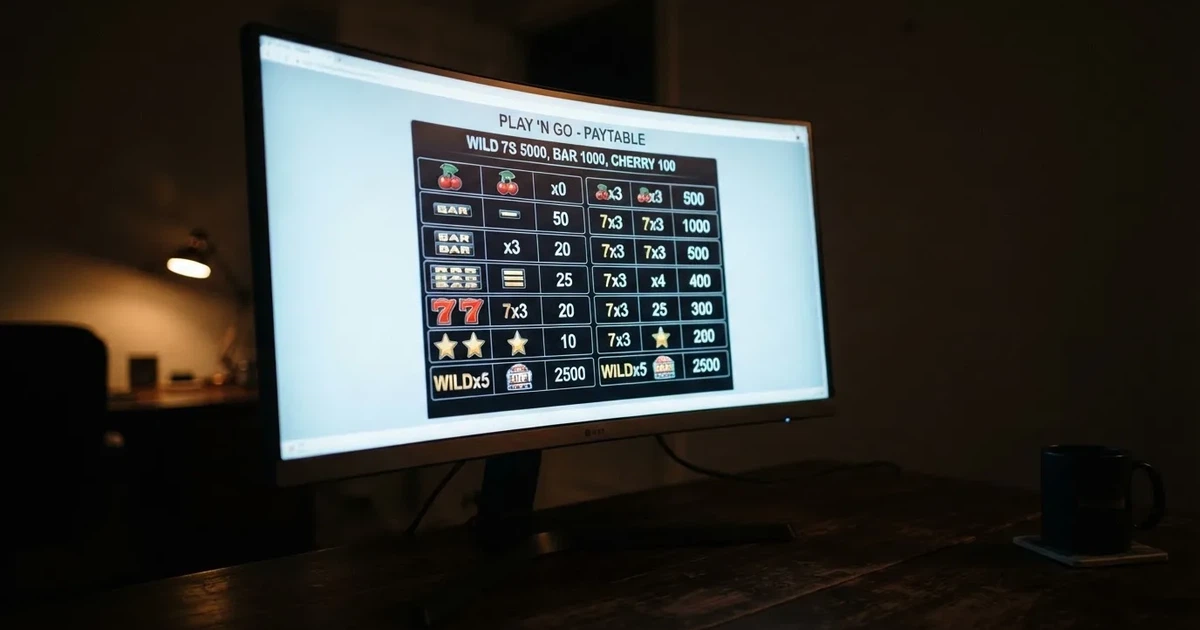
Slot is the volume. The studio’s paytables cover a wide volatility range, from low-variance five-line classics to high-variance hold-and-win titles with multiple bonus rounds. Without naming every flagship — and without quoting an RTP that the studio itself has not published for this market — the shape of the catalogue is what matters: high hit rates on the simpler titles, longer dry spells on the feature-led ones, and a bet ladder that scales from a few cents per line to the maximum the casino operator will accept. Each title’s individual paytable sits inside the game on the information screen, and that is the only place a real return-to-player figure comes from, not from the marketing banner.
Live casino
The live studio runs from a dedicated Riga and Bucharest footprint with full-scale roulette, blackjack, baccarat and game-show products. The Extreme Live Gaming tables — ten of them, covering the three core table games — are the older layer of that business. A new player typically lands on a one-to-one roulette or a speed blackjack table, with side-bet formats and a multiplier-game show product layered on top. The studio feed is licensed under Class II certification from Romania’s Oficiul Național pentru Jocuri de Noroc alongside the UK Gambling Commission oversight that the parent company carries.
Virtual sports and the rest
Virtual sports, inherited through VSoftCo, covers horse racing, greyhound racing, football and motor sport, each with a short settlement cycle and a published odds line. Bingo and scratchcard titles are an adjacent vertical rather than a flagship. Across all of it the supply chain is the same: the studio builds the game, ships it through a single API, and the operator brand embeds it under its own skin.
That last point is the load-bearing one for the Australian reader. The studio supplies the game. It is the operator brand that decides whether the game is offered to a person in Australia, and the law that decides whether that offer is lawful. The brand and the law are the only two things the rest of this page is about.
How a shortlist of Pragmatic Play casinos is actually built
A shortlist on this subject, if it were a normal ranking on a normal market, would score licences, payout speed, bonus terms and game depth. On the Australian market those columns do not apply in the way they do in Europe. A shortlist that names only sites the ACMA has acted against — and that is what this page does, because the only verifiable Australian-facing data on these brands comes from the regulator’s own formal-warning register — collapses most of the usual criteria into one: did the regulator act, and when.
The honest shape of a comparison here is therefore a regulator-facing one. The columns that matter are the date of the ACMA’s formal warning, the operator company the warning names, and whether any verifiable third-party listing shows the brand carrying Pragmatic Play-branded content at all. Three of the eleven featured brands have any third-party listing that places them in the same sentence as a named studio — Level Up, National Casino and Casino Intense — and even those listings are marketing pages rather than independent audits. The rest have no verifiable link to the studio beyond what their own affiliate pages claim. That is the picture: a marketing offer that the regulator has acted against repeatedly, with the only third-party verification of the catalogue itself sitting on three of the eleven.
The table below is the comparison in the only shape the Australian data supports. Anything beyond it would be inventing the columns the data does not carry.
| Brand | ACMA action and date | Operator named by the ACMA | Subject support |
|---|---|---|---|
| RocketPlay | Formal warning, March 2026 | Pulsup Ltd | — |
| Level Up Casino | Formal warning, May 2022 | Dama N.V. | Wazdan listings (no third-party audit) |
| Woo Casino | Formal warning, March 2025 | Dama N.V. | — |
| Spirit Casino | Formal warning, May 2025 | Dama N.V. | — |
| National Casino | Formal warning, July 2025 | Consolutetish S.R.L. | Betsoft and Pragmatic Play listings (no third-party audit) |
| Bizzo Casino | Formal warning, July 2025 | Consolutetish S.R.L. (earlier TechSolutions, 2022) | — |
| Ignition Casino | Formal warning, July 2025 | Bamboo Media | — |
| Instant Casino | Formal warning, February 2025 | EOD Code SRL | — |
| Jackbit | Formal warning, April 2026 | Ryker B.V. | — |
| Casino Intense | Formal warning, April 2025 | Sterplay Holding Ltd | 1spin4win, Aristocrat and UK Gambling Commission listings (no third-party audit) |
| Sky Crown | Formal warning (September 2022) | Hollycorn N.V. | — |
The em dash in the right-hand column is not a gap in the table. It is the most honest cell the data allows: most of these brands have no third-party listing that places them alongside a named studio, and printing a studio name where research does not back one would be fabrication. Where a listing does exist, it is named in the cell — and the cell is honest about what those listings are, which is marketing pages rather than independent audits.
The shape of Pragmatic Play’s Australian footprint
What the table shows, before the paragraphs around it, is the regulator’s own work over the last four years. Eleven brands. Six operator companies. Warnings spaced from 2022 to 2026, with the most recent in April 2026 and the second most recent in March 2026. The pattern is not “a few bad actors” — it is a steady drumbeat of named companies behind named brands, all offering the same prohibited product to Australian customers.
Why the picture keeps repeating
The same operator-company names recur. Dama N.V. picks up a 2022 warning, then two more in 2025. TechSolutions gets a 2022 warning over Bizzo, then Consolutetish S.R.L. picks up the same brand in 2025. Hollycorn N.V. gets a 2022 warning over Sky Crown. This is not because the regulator is slow. It is because the operator-company layer is fungible: a brand is dropped, the brand’s URL is renewed, and a new corporate entity files the paperwork. The Australian customer sees a familiar logo and a familiar bonus banner. The corporate entity behind it has changed.
That is the business model this page is reading from. The marketing pages have the same look — a hero banner, a deposit-match offer, a Pragmatic Play logo in the games lobby — because the offshore platform providers sell a turnkey product. A new brand is a domain name, a skin and a corporate registration. The legal exposure stays with the operator entity, and when the regulator names that entity, the brand pivots. The Australian customer sees the same brand on Monday and a different one on Friday and is not told that the corporate entity behind both has changed.
Where the same content sits on a legitimate site
The licensed alternative is not a website. It is a venue. Aristocrat Leisure, headquartered at North Ryde in Sydney and listed on the ASX under the ticker ALL since 1996, is the largest gambling-machine manufacturer in Australia and the second-largest slot manufacturer in the world behind International Game Technology. The company reported 2025 revenue of A$6.30 billion and normalised net profit after tax and amortisation of A$1.55 billion, with 7,400 employees. Its poker machines — “pokies” — sit in licensed clubs, pubs and casinos in every state and territory, regulated by each jurisdiction’s own gaming authority. They are not online products. They are physical machines in physical venues. The same studio style that an offshore site ships through a browser, Aristocrat ships through a cabinet in a licensed club.
Aristocrat’s online arm is a separate business. Aristocrat Interactive, formed in April 2024 by combining the Anaxi unit with the newly acquired NeoGames group, runs real-money online gambling and iLottery products. Its supply chain includes Aspire Global, BtoBet and Pariplay. None of those titles is offered to Australian customers in Australia, because the Interactive Gambling Act does not allow it. The supply chain is global. The legal reach is not.
That is the structural answer to “where is the licensed version of this?” The licensed version is a poker machine in a club, regulated by state gaming authorities, with a return-to-player figure on the game’s help screen that is audited by the state regulator’s own testing regime. It is not a website. Anyone promising an Australian customer the same experience online is promising something that does not legally exist.
Legality: the Interactive Gambling Act and what the ACMA does about it
The legal frame for this whole page is short and worth stating cleanly.
Online casino games — pokies, roulette, blackjack, live dealer tables — cannot be licensed anywhere in Australia. The Interactive Gambling Act 2001, as strengthened by the Interactive Gambling Amendment Act 2017, makes it an offence to provide those games to a person in Australia. Wagering on races and sport before the event, lotteries and keno can be licensed. Casino games cannot. Minimum age for any licensed wagering product is 18.
The Australian Communications and Media Authority investigates complaints, issues formal warnings, and directs Australian internet service providers to block illegal sites. The ACMA’s June 2026 blocking round asked ISPs to block 12 more sites: 7Signs, ChromaBet, Donbet, Duospin, Freshbet, Slots Gem, Jacks Club, Lucky Start, Pointsbetz.com, Spinrise, Vinyl Casino and Wildsino. That round was the latest in a series: a total of 1,751 illegal gambling and affiliate marketing websites have been blocked since the first blocking request in November 2019, and more than 230 unlicensed gambling services have left the Australian market since the enforcement regime was strengthened in 2017. The blocking rate is the regulator’s own tally of enforcement, and the arithmetic behind it belongs in plain prose:
Given a running total of 1,751 blocked sites since November 2019 — about 80 months — the regulator’s blocking rate lands in a band of roughly 22 sites per month, with the rate accelerating in the last two years as the enforcement tools have matured. That band is the average, not a forecast, and it carries a condition: it is the rate at which the ACMA has chosen to act, not the rate at which new offshore sites appear. The direction of travel is clear. The size of the back catalogue of still-unblocked sites is not.
The individual player is not prosecuted — the Interactive Gambling Act targets the provider, not the customer. An Australian who clicks through to an offshore casino commits no offence. The offshore site, however, gives the customer no Australian consumer protection: no Australian complaints body, no recourse if a withdrawal is refused, and no guarantee the site will not be blocked with a balance still sitting in the account. A blocking round is a one-way event for a customer who has funds on a now-blocked URL.
H2 Gambling Capital’s 2025 report estimates that Australians lose about A$3.9 billion a year to illegal gambling sites, and that the share of gambling going through legal channels fell from 74% in 2021 to 64%. Those are the two numbers that frame the cost: what is being lost, and what share of total gambling is being lost to operators the regulator cannot reach with an Australian licence.
Where bookmakers do get licensed
Online and phone wagering on racing and sport is licensed by the Northern Territory Racing and Wagering Commission, which regulates 52 of Australia’s online bookmakers including Sportsbet, Bet365 and Ladbrokes. The commission has no full-time staff and meets once a month in Darwin, an arrangement that the ABC reported on in April 2026 in the context of a bill to reform the de facto gambling regulator. The point is not the politics of the commission. The point is that the licensed Australian wagering market exists, is regulated, and does not extend to casino games. A customer comparing options needs to know which product is licensed where.
What the 2026 reform changes
The Interactive Gambling Amendment (Gambling Reform) Bill 2026 passed Parliament on 19 August 2026, with its advertising and inducement measures commencing on 1 January 2027. It is law with a start date. A page written in 2026 reports it as such: passed, not yet in force on the matters that touch a customer clicking a bonus banner today. The implementation period matters because the inducement measures are the ones that cut against the offshore marketing machine that ships Pragmatic Play titles to Australian inboxes.
Responsible gambling around prohibited casino products
Responsible gambling on this subject is shaped by what is licensed and what is not. The tools exist; their reach is narrower than the marketing suggests.
BetStop and the National Self-Exclusion Register
BetStop, the National Self-Exclusion Register, has been live since August 2023. It binds every Australian-licensed online and phone wagering service. An Australian who registers with BetStop is excluded from licensed wagering for a chosen period, and the exclusion is enforced by the licensed operator. The register does not bind an offshore casino. BetStop cannot exclude a customer from a site the regulator has already had to ask ISPs to block. The exclusion is real where it applies and absent where the marketing is loudest.
Spending limits and the payment frame
The payment frame for licensed wagering in Australia is unusually tight. Credit cards, credit-related products and digital currency are banned as payment for licensed online wagering since 11 June 2024, with penalties of up to A$247,500 for operators that take them. Legal deposit routes are debit card, bank transfer, PayID/Osko and BPAY. An offshore site asking for a credit card or a crypto deposit is operating outside the Australian rules by definition, because no Australian-licensed operator is allowed to take that payment in the first place.
The spending limit on the licensed side is therefore enforced at the payment-method layer rather than at the deposit-cap layer. A customer cannot easily load A$2,000 onto a licensed wagering account in a single credit-card swipe, because the credit card is not accepted. An offshore site does not have that constraint. The licensed side is more restrictive by design. The offshore side is more permissive by accident, because no Australian rule applies.
Where to find help
The National Gambling Helpline is 1800 858 858 — free, 24 hours a day, every day. Chat support runs at Gambling Help Online. Both services are independent of any operator and are funded to take calls from people whose gambling has become a problem, including people whose gambling has moved offshore. State and territory gambling-help lines sit alongside the national number, each with its own counselling offer.
If a customer sees a Pragmatic Play title promoted by an unlicensed site, the right next step is not to engage with the offer. The site is unlawful. The balance on it has no Australian protection. The withdrawal route is run by a corporate entity the ACMA has named. The regulator’s own formal-warning register is the place to confirm that an operator has been acted against, and the formal warning is the document that names the operator company behind the brand. The register is the source of truth on this market, and the rest of the page is downstream of it.
Payments and the cost of clearing an offer
The payments frame for an offshore site that markets Pragmatic Play titles to Australians is the frame the regulator cannot reach. That makes it the frame that costs the customer most, and the one most worth understanding.
Deposit routes on the featured brands are typically a mix of card, e-wallet and cryptocurrency. Some brands lean hard on the crypto rails — Bitcoin, Ethereum, USDT — partly because the rails are fast and partly because no Australian bank is involved in the transaction, so the credit-card ban that applies to licensed wagering does not apply. The customer pays in crypto, the operator pays out in crypto, and the conversion to Australian dollars happens at the customer’s end. The same is true of card deposits through a non-Australian acquirer: the transaction is processed offshore, the operator’s bank is offshore, and the Australian credit-card ban on licensed wagering does not bind it.
Payout speed on the marketing pages is quoted in hours. The reality, on the brands the ACMA has acted against, is harder to verify because there is no Australian complaints body to take a complaint to when a payout is slow. Some brands quote 24-hour e-wallet payouts; some quote three to five business days for a bank transfer; the speed varies by brand and by payment route, and no independent Australian-side benchmark exists. The honest reading is that the published speeds are aspirational, the operational reality is whatever the offshore operator decides it is on the day, and the customer’s only remedy is the operator’s own complaints process — which sits inside the same corporate entity the ACMA has warned.
Bonus offers work the same way. The pages carry a deposit match, a free-spin package, a wagering multiple and a maximum-cashout figure. The wagering multiple is the requirement to turn the bonus balance into withdrawable cash. A 35x multiple on a A$200 bonus is A$7,000 of required turnover before withdrawal — a figure that is comparable to a regulated European market and that is the smallest cost the customer pays. The maximum-cashout cap is the figure that turns a bonus from a marketing offer into a mechanism that limits what the customer can actually win, and it is typically expressed as a multiple of the bonus amount rather than as a hard dollar ceiling. A 5x cap on a A$200 bonus is A$1,000 of maximum withdrawable winnings from the bonus balance, regardless of how the spins themselves play out.
There is no published bonus term for any of the eleven featured brands in a form the ACMA register or an independent Australian audit can verify. The marketing pages quote terms; no Australian-side source confirms them. That absence is itself information: the only document that names these brands is the regulator’s warning, and the warning does not address the bonus terms. The terms exist on the marketing page. They do not exist on any page an Australian regulator has signed off.
Bonuses and free spins, on the marketing page and in practice
The marketing pitch on a Pragmatic Play casino banner is built around three elements: a deposit match, a free-spin package and a “no deposit” hook. Each one has a cost that the marketing page does not print in the headline.
Deposit match
A deposit match is the simplest structure: the casino matches a percentage of the customer’s first deposit with bonus funds, typically 100% on a first deposit up to a ceiling. A 100% match up to A$200 means the operator adds A$200 to a A$200 deposit, giving the customer A$400 of bankroll. The bonus funds are not withdrawable directly; they carry a wagering multiple — usually 30x to 45x — that the customer must work through before any balance is released. On an offshore site the multiple is whatever the marketing page says it is, and there is no Australian complaints body to appeal to if the published multiple is changed mid-promotion.
Free spins
A free-spin package attaches a set of spins — usually 50 to 200 — to a deposit, on a specific slot or a small set of slots. The Pragmatic Play catalogue sits behind the most common free-spin offer on the featured brands, because the studio’s flagship titles are the ones the marketing pages want to surface. The winnings from a free-spin package usually carry their own wagering multiple and their own maximum-cashout cap. A 50-spin package on a flagship slot with a 40x wagering multiple and a 5x max-cashout cap is an offer whose headline value — the headline spins — is a small fraction of its real cost, which is the turnover and the cap.
“No deposit” offers
A “no deposit” offer gives the customer a small bonus balance or a handful of free spins without requiring a deposit. The headline is “free”; the cost is in the wagering multiple and the maximum-cashout cap. A “no deposit” bonus of A$10 with a 50x wagering multiple and a 3x cap is A$500 of required turnover before A$30 is withdrawable. The customer has deposited nothing and has risked nothing of their own bankroll, but has also locked themselves into an offer whose winnings are capped at a figure that is typically a small multiple of the bonus itself.
What the wagering requirement really costs
The wagering multiple is the mechanism that determines what the bonus is worth. A 35x multiple on a A$200 bonus is A$7,000 of required turnover — the total amount that must be wagered before the bonus balance converts to withdrawable cash. On a slot with a published house edge of, say, 4%, the expected loss from A$7,000 of turnover is A$280, which is more than the bonus itself. The marketing pitch is “play with A$400 of bankroll”; the arithmetic is that the customer is statistically likely to lose more than the bonus is worth before the requirement is cleared. The headline number and the actual cost run in opposite directions.
This is the part of the page that earns the sharpest line. The marketing language is “free”, “bonus”, “match”. The arithmetic is a house edge, a turnover requirement and a maximum-cashout cap. The customer pays the difference, and the difference is what the operator’s marketing page does not print.
The operator-by-operator picture
The eleven brands below are not a ranked shortlist. They are the brands the ACMA has acted against, ordered as research gives them. Each block states what the regulator has published and what the third-party data shows, and ends on the page’s own judgement of the brand.
RocketPlay
The ACMA issued a formal warning to Pulsup Ltd over Rocketplay.com.au in March 2026. An earlier formal warning over the brand was issued to Dama N.V. in May 2022, which is the standard pattern on this list: a brand surfaces, is warned, changes corporate hands and resurfaces under a new operator entity. No third-party listing places RocketPlay alongside a named studio in a verifiable way. The brand is a marketing offer on a prohibited product, with the operator changing hands at least once in the last four years.
Level Up Casino
The ACMA issued a formal warning to Dama N.V. over Level Up Casino in May 2022. Dama N.V. is one of the more frequently named operator entities on the regulator’s register, picking up further warnings in 2025 over Woo Casino and Spirit Casino. Third-party listings on Wazdan’s own site include Level Up among the brands carrying Wazdan content, which is at least a verifiable link between the brand and a named studio — though the listing is a marketing page rather than an independent audit. Level Up holds the longest ACMA track record here, and its operator’s warning history is especially high.
Woo Casino
The ACMA issued a formal warning to Dama N.V. over Woo Casino in March 2025. The same operator entity was named over Level Up Casino in 2022 and over Spirit Casino two months later in 2025. Woo Casino is the middle of that run, and the regulatory exposure of the operator entity behind it is the cleanest read of the three: Dama N.V. is named three times in three years for offering the same prohibited product to Australian customers under three different brand names.
Spirit Casino
The ACMA issued a formal warning to Dama N.V. over Spirit Casino in May 2025, two months after the same operator entity was named over Woo Casino. No third-party listing places Spirit Casino alongside a named studio. The brand is the most recent of Dama N.V.’s three, and the operator entity behind it is the one with the most regulatory exposure on the ACMA’s register.
National Casino
The ACMA issued a formal warning to Consolutetish S.R.L. over National Casino in July 2025. Third-party listings on Betsoft’s site and on the broader Pragmatic Play supply-chain pages include National Casino among the brands carrying those studios’ content, which is at least a verifiable link to two named providers. The listings are marketing pages rather than independent audits, but they are the strongest third-party verification any brand on this page carries. Consolutetish S.R.L. appears only once on the ACMA list, making it a newcomer relative to other featured operators.
Bizzo Casino
The ACMA issued a formal warning to Consolutetish S.R.L. over Bizzo Casino in July 2025; an earlier formal warning over the same brand was issued to TechSolutions (CY) Group Limited and TechSolutions Group N.V. in 2022. The pattern is the standard one: a brand surfaces, is warned, the corporate entity behind it changes, the same brand surfaces under a new operator. No third-party listing places Bizzo Casino alongside a named studio. The brand carries the longest regulatory history on this list, with two warnings under two operator entities across four years.
Ignition Casino
The ACMA issued a formal warning to Bamboo Media over Ignition Casino in July 2025. No third-party listing places Ignition Casino alongside a named studio. The operator entity is a fresh name on the regulator’s register. The brand’s name is borrowed from a long-running US-facing poker site, and the Australian-facing entity is a separate operator behind a similar-looking brand.
Instant Casino
The ACMA issued a formal warning to EOD Code SRL over Instant Casino in February 2025. No third-party listing places Instant Casino alongside a named studio. The operator entity is a fresh name on the regulator’s register. The brand name is generic enough to be confusing on a search results page, and the regulator’s warning is the only document that names the operator behind it.
Jackbit
The ACMA issued a formal warning to Ryker B.V. over Jackbit in April 2026. No third-party listing places Jackbit alongside a named studio. The same operator entity was named in the same warning round over CasinOK. Ryker B.V. is the most recently named operator entity on this list, and the April 2026 warning is the most recent ACMA action in the featured set.
Casino Intense
The ACMA issued a formal warning to Sterplay Holding Ltd over Casino Intense in April 2025. Third-party listings on 1spin4win’s own site, on the Aristocrat Leisure corporate profile and on the UK Gambling Commission’s own register include Casino Intense among brands carrying those studios’ content or among brands cited in the regulator’s own supply-chain documentation. The listings are marketing or regulatory pages rather than independent audits, but they are the broadest third-party footprint any brand on this page carries. Casino Intense is the brand where the catalogue claim is most verifiable, and it is still a brand the Australian regulator has acted against for offering prohibited interactive gambling services.
Sky Crown
The ACMA issued a formal warning to Hollycorn N.V. over Sky Crown and Blue Leo, with the formal warning document dated September 2022. The same operator entity was named over both brands in the same warning. No third-party listing places Sky Crown alongside a named studio. Hollycorn N.V. is the earliest-named operator still active, with a regulatory warning that dates back four years.
Frequently asked questions
Is Pragmatic Play legally available to players in Australia?
No. Online casino games, including Pragmatic Play’s slots and live-casino titles, cannot be licensed in Australia under the Interactive Gambling Act 2001. The studio itself is licensed in more than 30 jurisdictions overseas — including the UK and Romania — but no Australian licence covers the casino games it makes. Sites that market its titles to Australian customers do so offshore and unlawfully.
What kinds of games does Pragmatic Play make?
Slots, live casino, virtual sports, bingo and a small scratchcard line. The live-casino business came through the 2018 acquisition of Extreme Live Gaming, which added ten tables covering roulette, blackjack and baccarat. Virtual sports came through the 2019 acquisition of VSoftCo. The studio supplies the catalogue through a single API to operator brands including Flutter, Entain, bet365 and LeoVegas.
Are Pragmatic Play games offered at land-based venues in Australia?
Not under that brand. Equivalent machines are regulated by state and territory gaming authorities and sit in licensed clubs, pubs and casinos. Aristocrat Leisure — the largest gambling-machine manufacturer in Australia — builds the cabinets most Australians see under the “pokies” name. The online catalogue under the Pragmatic Play brand is a separate product, and it is the one the Interactive Gambling Act does not allow to be licensed for Australian customers.
How can Australians check whether a Pragmatic Play title is fair before ever considering play?
The honest answer on this market is that an Australian customer cannot, because the product is not legally offered to them. On a regulated European market the check would be a return-to-player figure published on the in-game paytable, audited by Gaming Laboratories International or a similar testing house. On the Australian market the question does not arise in the first place.
Why do offshore sites keep advertising Pragmatic Play games to Australian visitors?
Because the Australian customer base is large and the legal exposure sits with the operator entity, not with the customer. H2 Gambling Capital’s 2025 report estimates about A$3.9 billion a year in losses to illegal gambling sites, with the share of gambling going through legal channels falling from 74% in 2021 to 64%. The marketing reaches a market the regulator cannot fully block, and the operator entity changes when the regulator does block.
What should an Australian do if they see a Pragmatic Play game promoted by an unlicensed site?
Treat the offer as unlawful under the Interactive Gambling Act 2001, and treat any balance held on the site as having no Australian consumer protection. The ACMA’s formal-warning register is the place to confirm that an operator has been acted against; the register is on the ACMA’s own site. The National Gambling Helpline is 1800 858 858 — free, 24/7 — and Gambling Help Online carries the chat channel.