
Real Money Online Casinos in Australia 2026: The Offshore Market, the Prohibitions, and What Licensed Play Looks Like
The phrase “real money online casino” does a lot of work in Australian search results, and most of that work is misleading. No online casino offering real-money play to a person physically in Australia can be licensed under Australian law, whatever stamp a foreign regulator puts on the site. The Interactive Gambling Act 2001 has run that prohibition for almost a quarter-century; the amendments of 2017 turned it into an actively enforced regime, and the ACMA has been issuing formal warnings and requesting blocks against offshore operators at a steady pace ever since. What an Australian punter sees when they Google “real money online casino” is, in the main, a set of offshore brands that have simply decided to accept Australian traffic anyway.
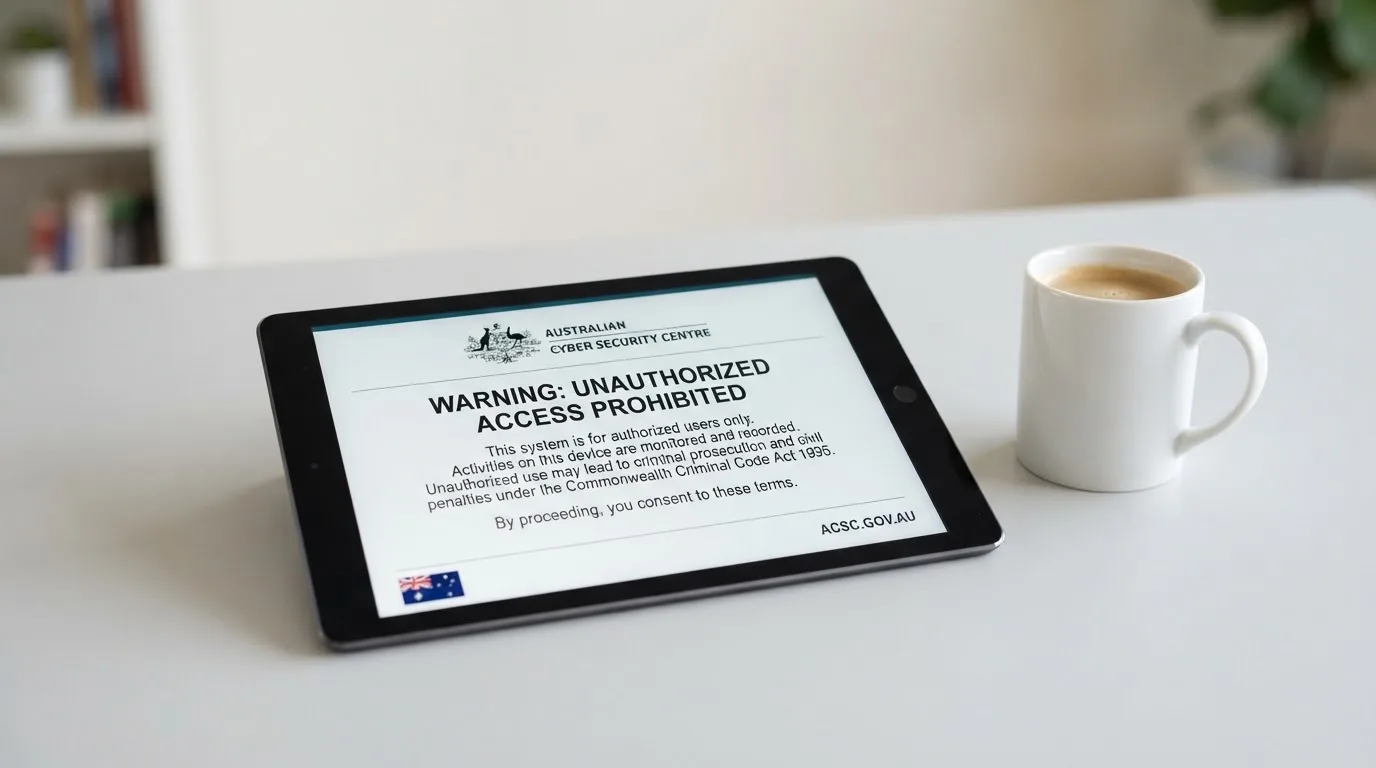
This page works through what that means in practice. It covers the brands the ACMA itself has named in formal warnings, the payments infrastructure that touches Australian bank accounts, the responsible-gambling supports that do and do not reach a player on an offshore site, and the narrow set of venues where real-money play sits inside the Australian regulatory frame: licensed clubs, pubs and casinos running pokies and table games in person, plus a handful of licensed online wagering services limited to racing and sport.
Current as of 29 October 2026. Licence claims and operator registrations were checked against the ACMA register and state and territory gambling regulators.
Table of Contents
- What “New Real Money Online Casino” Means in Australia 2026
- The Top Real-Money Online Casino Brands the ACMA Has Acted Against
- What the ACMA’s Enforcement Record Looks Like
- The Legal Frame Around Real-Money Online Casino Play in Australia
- Where Real-Money Play Actually Happens Inside the Australian Frame
- Responsible Gambling Supports: What Reaches an Australian Player and What Does Not
- Mobile and App: How Real-Money Online Casino Play Performs on an Australian Phone
- Specific Games, Providers, and Live Tables
- What a Reader Walking Away From This Page Should Know
- Frequently Asked Questions
What “New Real Money Online Casino” Means in Australia 2026
The phrase “new online casino Australia real money” circulates constantly in affiliate marketing, and it carries one consistent signal: the casino is new. That’s it. Newness is a marketing date, not a legal status. A site that launched its first deposit in the last six months sits under the same Interactive Gambling Act section 15AA prohibition as a brand that has been running for a decade, because what is prohibited is the act of providing real-money online casino games to a person in Australia, and the prohibition does not have a start-up exemption.

What “new” tends to attach to in practice is a softer set of signals. A recently launched operator usually runs a higher welcome offer, because it has to build a player base from scratch; it is more likely to accept a broader range of deposit methods, including crypto, which licensed Australian wagering services cannot; and its licence will, almost without exception, be issued by a regulator outside Australia, frequently Curaçao or Anjouan, neither of which gives a player in Sydney or Perth any standing to file a complaint. The house edge does not change. The games on offer are largely the same catalogue of pokies and live tables supplied by the same handful of studios, distributed through the same aggregator platforms. A new real-money casino offers a new wrapper around an established product, and the wrapper is the part that is unlawful when the player is in Australia.
The label does carry one consequence worth noting. New operators churn fast. A site that pays out reliably for its first eighteen months may be sold, rebranded or quietly wound up when the parent company decides the jurisdiction has become too expensive. The ACMA’s blocking history shows the pattern: of the roughly 1,751 domains blocked since November 2019, the bulk are brands that were running Australian-facing marketing within the previous two years. A shortlist of new real-money casinos is, in effect, a shortlist of sites that may not be reachable from Australia for the entirety of their useful life.
The Top Real-Money Online Casino Brands the ACMA Has Acted Against
The ranking that follows is not a recommendation and not a quality ordering. Each brand sits here because the ACMA itself issued a formal warning over it for providing prohibited interactive gambling services to Australians. The list is ordered by date of most recent ACMA action. Where a brand has been warned more than once, both actions are noted.

The legal frame is uniform across every entry. Online casino games and online pokies cannot be licensed anywhere in Australia, under any circumstances, for any operator. The site displaying a Curaçao or Anjouan licence stamp does not change that, because the IGA targets the act of supplying the service to a person physically in Australia, and a foreign licence does not authorise it. What the ACMA formal warnings establish is that the regulator has investigated, identified the operator and concluded the service is prohibited.
RocketPlay
The ACMA issued a formal warning to Pulsup Ltd over RocketPlay in March 2026. The brand had earlier been the subject of a May 2022 warning to Dama N.V. — the same Dama N.V. that has been warned over half a dozen sister brands in recent years. RocketPlay is consistently listed by affiliate trackers as a multi-vendor casino running pokies and live tables. The relevant signal for an Australian reader is not the catalogue but the trajectory: this is a brand the regulator has come back to twice across four years, and the service it offers remains prohibited.
Level Up Casino
Level Up was the subject of a May 2022 formal warning to Dama N.V. The same warning covered five other Dama brands in a single notice — Bambet, Dazard, Rocketplay, Wild Tornado and Cobra Casinos — which says something about how the regulator views operator-versus-brand separation at this holding company. A punter who lands on one Dama site and migrates to another for a fresh bonus is, in the regulator’s view, still on a Dama operation, and the warning has followed the operation, not the brand wrapper.
Woo Casino
Woo Casino received a formal warning in March 2025, again addressed to Dama N.V. The regulator’s return to the same parent operator for a different brand within the Dama stable underlines the conclusion from Level Up: brand-level movement does not put a punter outside the warning’s scope. Woo Casino is not, on the evidence available, treated differently from the other Dama sites that have been the subject of formal action.
Spirit Casino
The ACMA issued a May 2025 warning to Dama N.V. over Spirit Casino. Spirit is a more recent Dama brand than the 2022 cohort, which suggests the operator continues to launch new properties rather than letting warnings close them down. Each new launch is, on this pattern, a new front for the same prohibited service. Australian-facing marketing from Spirit Casino carries the same warning as the older Dama brands.
National Casino
National Casino was the subject of a July 2025 formal warning to Consolutetish S.R.L. The warning also covered Bizzo Casino. National Casino is consistently listed by responsible-gambling reference sites and by transaction-monitoring authorities, which means it sits in databases the banks and payment processors consult when flagging gambling-related flows. That flagging is part of how a player finds a withdrawal blocked by their own bank before the casino ever sees the request.
Bizzo Casino
Bizzo Casino received a July 2025 formal warning to Consolutetish S.R.L., with the ACMA noting that Bizzo had already been the subject of a 2022 formal warning to TechSolutions (CY) Group Limited and TechSolutions Group N.V. Two warnings across different parent companies, four years apart, point to continuity in the underlying operation under successive corporate shells. The Australian-facing marketing carries on; the corporate name has changed.
Ignition Casino
Ignition Casino was the subject of a July 2025 formal warning to Bamboo Media. Ignition sits in a different operator cluster from the Dama and Consolutetish brands. It has historically been promoted heavily toward Australian poker and blackjack players and remains one of the more heavily marketed offshore casinos in the Australian search results.
Instant Casino
Instant Casino received a February 2025 formal warning to EOD Code SRL. The brand is listed on payment-processor pages and on PayID’s published warnings about illegal gambling, which means the payment infrastructure has itself recorded the brand as a flagged destination. A player whose bank flags a transaction to Instant Casino is seeing the same data the regulator used to ground its warning.
Jackbit
Jackbit was the subject of an April 2026 formal warning to Ryker B.V., which also covered CasinOK. Jackbit is a more recent entry into the Australian-facing market and has been promoted heavily on crypto-friendly terms — a payment profile that sits directly outside the Australian rules for licensed wagering services, which cannot accept credit or crypto from Australian customers. That payment posture is part of why the brand appears on the ACMA’s enforcement list rather than the licensed register.
Casino Intense
Casino Intense received an April 2025 formal warning to Sterplay Holding Ltd. The brand appears on responsible-gambling and transaction-monitoring databases, including BetStop and AUSTRAC reference listings, which means it sits in the datasets the banks and self-exclusion services consult. The warning and the database entries are consistent: the service is identified, by both the regulator and the financial side of the Australian market, as outside the legal frame.
Sky Crown
Sky Crown was the subject of a formal warning to Hollycorn N.V., published in September 2022. The same warning covered Blue Leo. Hollycorn is one of the more prolific offshore operators in Australian-facing marketing and has run several brands in parallel. The 2022 warning has not, on the evidence available, ended the marketing — the brands continue to appear in Australian search results.
What the ACMA’s Enforcement Record Looks Like
The ACMA’s blocking record is the cleanest summary of how the prohibition operates in practice. As of June 2026, a total of 1,751 illegal gambling and affiliate marketing websites had been blocked since the first blocking request in November 2019. More than 230 unlicensed gambling services had left the Australian market entirely since the 2017 amendments strengthened enforcement. In the round reported on 26 June 2026 alone, the ACMA asked Australian internet service providers to block 12 further websites: 7Signs, ChromaBet, Donbet, Duospin, Freshbet, Slots Gem, Jacks Club, Lucky Start, Pointsbetz, Spinrise, Vinyl Casino and Wildsino.
The blocking-rate arithmetic sits in those two figures. Between November 2019 and the end of June 2026 — roughly 79 months — the ACMA’s blocking requests covered 1,751 domains. That is an average of roughly 22 blocked domains per month across the whole period, though the rate has not been uniform. Earlier rounds ran in the low single digits per month; more recent rounds have moved faster, partly because affiliate marketing has multiplied the number of mirror domains, landing pages and tracking URLs attached to a single underlying operation. The honest reading is that the rate is high and getting higher, not that the prohibition has been fully effective. A blocked domain does not stop the parent operator from launching a replacement; it stops one address.
The rate of formal warnings is the other half of the picture. The ACMA’s enforcement operates in two lanes: blocking requests to ISPs, which are administrative and cover whole domains, and formal warnings to named operators, which name the corporate entity and the brand. The warning list above is a snapshot of the second lane. A punter who is considering one of those brands should know that the regulator has already concluded, on the evidence, that the service is prohibited — not that it is merely unregulated, not that it is licensed elsewhere and therefore fine, but prohibited.
Brands the ACMA Has Formally Warned
| Brand | ACMA action and date | Operator named by the ACMA | Subject support |
|---|---|---|---|
| RocketPlay | March 2026 (Pulsup Ltd); May 2022 (Dama N.V.) | Pulsup Ltd; Dama N.V. | listings only (Gambling Insider) |
| Level Up Casino | May 2022 | Dama N.V. | listings only (Westpac) |
| Woo Casino | March 2025 | Dama N.V. | — |
| Spirit Casino | May 2025 | Dama N.V. | — |
| National Casino | July 2025 | Consolutetish S.R.L. | listings only (acma.gov.au, austrac.gov.au, betstop.gov.au) |
| Bizzo Casino | July 2025 (Consolutetish S.R.L.); 2022 (TechSolutions) | Consolutetish S.R.L.; TechSolutions | listings only (Gambling Insider) |
| Ignition Casino | July 2025 | Bamboo Media | — |
| Instant Casino | February 2025 | EOD Code SRL | listings only (EcoPayz, PayID) |
| Jackbit | April 2026 | Ryker B.V. | — |
| Casino Intense | April 2025 | Sterplay Holding Ltd | listings only (austrac.gov.au, betstop.gov.au, Gambling Insider) |
| Sky Crown | September 2022 | Hollycorn N.V. | — |
The Subject support column records where, outside the ACMA’s own publications, the brand has been named in the listings research consulted. A dash means the research found no such listing. A dash does not mean the brand is safe; it means none of the reference sources consulted recorded it, which is a different observation.
The Legal Frame Around Real-Money Online Casino Play in Australia
The Interactive Gambling Act 2001, as amended by the Interactive Gambling Amendment Act 2017, makes it an offence to provide online casino games, online pokies or in-play betting to a person physically in Australia. No state or territory licenses those products. What is licensable is wagering on racing and sport, where the bet is placed before the event, plus lotteries and keno. The Northern Territory Racing and Wagering Commission regulates 52 of Australia’s online bookmakers — Sportsbet, Bet365 and Ladbrokes among them — licensed in the Territory for tax reasons; the commission has no full-time staff and meets once a month in Darwin, which is itself a useful illustration of how thin the licensed layer is.
Enforcement sits with the ACMA. The regulator investigates, issues formal warnings, and directs Australian internet service providers to block illegal sites. The individual player is not prosecuted — the IGA targets the provider — but an offshore site gives an Australian punter no consumer protection, no Australian complaints body, and no recourse if a withdrawal is refused. The site can also be blocked with a balance still sitting on it, because the ACMA’s blocking authority extends to domains hosting the service, not to balances held with the operator.
H2 Gambling Capital’s 2025 report estimates Australians lose about A$3.9 billion a year to illegal gambling sites, and that the share of gambling going through legal channels fell from 74% in 2021 to 64%. The figure is large enough that it should not be read as an abstraction — it is the annual spend by Australian residents on services the regulator has concluded are prohibited, and it sits alongside rather than inside the legal market.
The 2026 reform layer sits above all of this. The Interactive Gambling Amendment (Gambling Reform) Bill 2026 passed Parliament on 19 August 2026, with advertising and inducement measures commencing on 1 January 2027. The law is in force on a start date — it is enacted but not yet operative for the parts that touch advertising and inducements. For a page read in 2026, that means the new advertising rules begin to apply from the start of the next calendar year; what sits in force now is the 2001 Act as amended through 2023, which is what the ACMA has been enforcing all along.
Payments and What an Australian Player Can and Cannot Use
The payment side of the Australian rules is unusually detailed. Since 11 June 2024, Australian-licensed online wagering services cannot accept payment by credit card or other credit-related products; the prohibition extends to digital currency. Penalties for operators that breach this run up to A$247,500. Legal deposit routes for licensed wagering are debit card, bank transfer, PayID/Osko and BPAY. A site asking an Australian punter for a credit card or a crypto deposit is operating outside the Australian rules — which is, in practice, what every offshore real-money casino does.
The bank-side response is well developed. Westpac’s gambling block works at card level, refusing authorisation of transactions registered under the merchant category code “Betting/Casino Gambling” on eligible personal credit and debit cards. ANZ’s gambling transaction block, activated in the ANZ app, blocks gambling transactions made through a digital wallet such as Apple Pay on an eligible card — not just the physical card — and the bank warns that not all gambling transactions will be blocked and some non-gambling transactions might be blocked in error. Commonwealth Bank lets customers apply a gambling lock to eligible cards via the CommBank app, with the same caveat that most but not all gambling-related purchases will be stopped. Removing ANZ’s gambling block once activated requires a 48-hour waiting period, a friction designed to discourage impulse removal.
The instant-payments layer is more permissive on speed than on destination. With Osko, a bank transfer between participating Australian banks arrives in under a minute, 24/7, whether it is addressed to a BSB and account number or to a PayID. Paying to a PayID shows the name of the account holder before the transfer is sent; Australian Payments Plus warns that being asked to transfer money to a PayID on an illegal gambling site almost certainly means a scam site. PayID-based instant transfers are available at over 100 Australian financial institutions, and more than 25 million PayID identifiers had been registered on the New Payments Platform as of April 2025.
Apple Pay, Google Pay and Samsung Pay collectively accounted for around 45% of all card payments in Australia by number at the end of 2025. Apple does not charge fees to consumers for using Apple Pay — any surcharge comes from the merchant’s own card-processing fees — and Apple states that transaction limits and PIN requirements for Apple Pay purchases are set by the card issuer or merchant, not by Apple. The Reserve Bank’s July 2025 review proposes removing surcharges only on eftpos, Mastercard and Visa card transactions, explicitly leaving American Express outside the scope of the proposed surcharge ban. None of these observations changes the underlying prohibition: an Australian-licensed wagering service cannot accept credit, and most digital wallet transactions ultimately run on credit or debit instruments the bank can flag.
BPAY, a bill-payment service in online banking where the payer enters the Biller Code and the Customer Reference Number printed on the bill, has operated in Australia since 1997 and is available in over 150 banks and financial institutions. BPAY is run by Australian Payments Plus, the same operator as PayID and Osko. AUSTRAC’s threshold-transaction-report rule, which requires reporting of transfers of A$10,000 or more, applies only to physical cash — ordinary electronic bank transfers are not subject to per-transaction reporting, regardless of the amount sent.
Tax: What a Recreational Player Keeps
Gambling winnings of a recreational player are not assessable income under section 6-5 of the ITAA 1997, and losses are not deductible, unless the person carries on a business of gambling. That is the model — for anything that looks like professional play, the ATO is the right reference.
Where Real-Money Play Actually Happens Inside the Australian Frame
The licensed layer for real-money gambling in Australia is, by design, narrow. It covers wagering on racing and sport before the event, lotteries, keno, and the physical gaming floors of licensed venues. The Northern Territory Racing and Wagering Commission’s 52 licensed online bookmakers are the closest thing to a domestic online wagering market, and they sit alongside equivalent licences issued in other states. What none of those licences cover is online casino games — pokies, blackjack, roulette, baccarat — in the form that an offshore “real money online casino” offers.
What licensed Australian venues do offer, in person, is real-money pokies and table games. The differences between a poker machine in a licensed pub in Melbourne and a pokie on an offshore casino site are not trivial. The licensed machine sits in a venue that is itself licensed, with state-level oversight, mandatory return-to-player reporting, harm-minimisation requirements, and access to the state-based self-exclusion register. The offshore pokie runs on a server in a jurisdiction the ACMA cannot reach, with an RTP the player cannot verify, on a platform that is the subject of a formal warning for providing a prohibited service.
That is the practical answer to whether “playing pokies for real money at a licensed pub or club is different from doing so online.” Yes. The activity is the same — money in, reels spin, money out — but the regulatory frame around it is different in every way that matters for a player’s protection.
Responsible Gambling Supports: What Reaches an Australian Player and What Does Not
BetStop, the National Self-Exclusion Register, has been live since August 2023 and binds Australian-licensed online and phone wagering services. It does not bind offshore casinos. A player who registers with BetStop is excluded from licensed Australian wagering services; they are not excluded from the offshore brands the ACMA has warned over, because those brands are not connected to the register and have no obligation to honour it. That is the cleanest illustration of what an offshore site gives up: the support infrastructure that follows the legal market does not follow the illegal one.
The National Gambling Helpline, 1800 858 858, is free, runs 24/7, and offers chat through Gambling Help Online. It is reachable from any phone in Australia, regardless of where the player has been gambling. State-level problem-gambling services are also in place across every state and territory. None of these services is conditional on whether the gambling has been legal or illegal; they are designed to be reached.
What does not reach an Australian player on an offshore site is the complaints and dispute resolution layer. There is no Australian ombudsman for offshore casino disputes. There is no Australian court with cheap, fast recourse against an operator in Curaçao or Anjouan. A withdrawal refusal is, in practice, a private dispute between the punter and an operator whose only Australian-facing obligation is the one the ACMA is trying to enforce — and the ACMA’s enforcement targets the supply of the service, not the resolution of individual disputes.
Mobile and App: How Real-Money Online Casino Play Performs on an Australian Phone
The mobile experience is, in marketing terms, where offshore real-money casinos have invested most heavily. Most offer either a dedicated app for iOS and Android or a browser-based mobile site that runs on HTML5 and adapts to the screen. Browser play is the more common path because the app stores in both ecosystems have rules against real-money gambling apps in jurisdictions where the service is unlicensed, and offshore operators cannot get an Australian app listed.
That constraint shapes what a player sees. A player who searches the App Store or Google Play for a real-money casino app will find sports-betting apps from the licensed Australian bookmakers and not much else; the offshore brand sits behind a browser shortcut instead. The mobile browser experience is, on modern devices, close enough to the desktop that load times and game performance are rarely the deciding factor — though the deciding factor is rarely the deciding factor anywhere in this market.
What a mobile punter faces that the desktop player does not is a more aggressive payment surface. Apple Pay and Google Pay are the dominant deposit paths on mobile, and they run on the same underlying card instruments the bank has flagged. The bank-side gambling block applies through the digital wallet — ANZ’s block covers Apple Pay transactions on the blocked card — which means the mobile experience can collapse in the deposit step rather than at the withdrawal step, which is unusual in this market because withdrawal friction is the usual point of failure.
Specific Games, Providers, and Live Tables
The offshore real-money casino catalogue converges around the same handful of studios and the same game types. Pokies dominate by volume, with several thousand titles on the larger sites, running from classic three-reel formats to modern bonus-buy mechanics. Live dealer tables — blackjack, roulette, baccarat, game-show formats — are supplied almost exclusively by a small group of live-casino studios. Table games without a live dealer are filled out by RNG versions of the same staples.
The paytable detail a player can verify is, in practice, the RTP published on the game’s information panel. Independent testing-lab certification is widespread in the catalogue, but the certification tells the player the game’s mathematics has been tested at one point in time; it does not tell the player the operator has not swapped in a lower-RTP version of the same title. That gap between certification and operation is one of the harder things for an offshore punter to verify, and it is one of the reasons licensed Australian venues — where state regulators audit RTP — sit in a different category from offshore sites, where they do not.
Volatility is published inconsistently. Some providers label their games High, Medium or Low volatility; others leave the player to infer from the paytable. A punter who has been told a particular title is “high volatility” by an affiliate review should treat that as the affiliate’s reading rather than the studio’s.
What a Reader Walking Away From This Page Should Know
A reader looking for a real money online casino in Australia has, by the time they finish this page, two clean observations to take with them. The first is that no offshore brand can lawfully offer the service to them, and the regulator has issued formal warnings to the operators behind the most heavily marketed brands. The second is that licensed real-money play exists in person — at licensed pubs, clubs and casinos — and licensed online wagering sits in a narrow lane that covers racing and sport before the event, not casino games.
Between those two observations sits the practical question most readers arrived with: which of these offshore sites pays out? The honest answer is that some do, on a good day, and that the player has limited recourse when one does not. The block-rate arithmetic — 22 domains per month over seven years, accelerating — gives a reader a sense of how often the underlying operation itself becomes unreachable, separate from any individual withdrawal question. A blocked domain does not return a balance.
For a player who wants to keep gambling within the Australian frame, the licensed venues and the licensed online bookmakers are the route. For a player who is going to play offshore regardless, the responsible-gambling supports are reachable regardless of where the play happens, and BetStop is the most consequential registration available to anyone who feels their play is sliding.
Frequently Asked Questions
Can any online casino legally accept real-money bets from a player in Australia?
No. Under the Interactive Gambling Act 2001 as amended through 2023, it is an offence to provide online casino games, online pokies or in-play betting to a person physically in Australia, and no state or territory licenses those products. A licence displayed on an offshore site is issued by a foreign regulator and does not authorise the service to be supplied in Australia.
Why do offshore “real money” casino sites keep targeting Australian visitors despite the law?
Because the prohibition targets the provider, not the player, and because the financial upside is significant — H2 Gambling Capital’s 2025 estimate puts Australian losses to illegal sites at around A$3.9 billion a year. Offshore operators accept that some marketing channels will be blocked and build replacement domains accordingly, which is why the ACMA’s blocking rate has accelerated rather than declined.
Is playing pokies for real money at a licensed pub or club different from doing so online?
Yes, in every way that touches the player’s protection. A licensed Australian venue sits under state-level oversight, with mandatory return-to-player reporting, harm-minimisation requirements, and connection to the state self-exclusion register. An offshore online pokie runs on a server the ACMA cannot reach, with an RTP the player cannot independently verify, on a platform the regulator has formally warned is providing a prohibited service.
What happens if an Australian tries to withdraw funds from an offshore real-money casino site?
There is no Australian ombudsman, no Australian court with cheap recourse, and no obligation on the offshore operator to honour a request. The ACMA’s enforcement targets the supply of the service, not individual withdrawal disputes. The bank-side gambling block can also prevent the deposit step before the withdrawal question arises, which is the more common failure point.
Does the ACMA take action against offshore sites offering real-money casino games to Australians?
Yes, through formal warnings to named operators and through blocking requests to Australian internet service providers. As of June 2026, 1,751 illegal gambling and affiliate marketing websites had been blocked since the first blocking request in November 2019, and more than 230 unlicensed services had left the Australian market since 2017. The list of formal warnings above is a snapshot of the named-operator side of that enforcement.
How can someone confirm a payment method actually settles funds from a licensed venue?
For a licensed Australian wagering service, the legal deposit routes are debit card, bank transfer, PayID/Osko and BPAY. Paying to a PayID shows the name of the account holder before the transfer is sent, and Australian Payments Plus warns that being asked to transfer money to a PayID on an illegal gambling site almost certainly means a scam site. A licensed venue will route through these channels; an offshore site typically will not.