
Choosing between Bitcoin Cash casinos in Australia
Bitcoin Cash sits next to Bitcoin on most offshore casino cashier pages, and the choice between them looks small. It isn’t. The fork that produced BCH in August 2017 reshaped block sizes and confirmation behaviour, and at the cashier those differences show up as fees, deposit times and the way a confirmation settles before play starts. What does not change is the position an Australian resident occupies under the Interactive Gambling Act 2001 — the IGA targets the provider, not the rail, so a BCH deposit offers no special protection that a Bitcoin deposit would not. This page walks the choices a player actually has, the ones the ACMA has already acted against, and the cost of treating payment method as the differentiator. Choosing between Bitcoin Cash casinos in Australia — More on this topic at crypto casino au .

Currency stamp: data current as of 29 October 2026, cross-checked against the ACMA’s published enforcement list and AUSTRAC’s DCE register.
Table of Contents
- The landscape an Australian player walks into
- What Bitcoin Cash is, and why it lands at the cashier
- The legal frame an Australian player stands inside
- Where the rules around crypto cross the cashier
- How a Bitcoin Cash deposit actually moves
- What an Australian player is really choosing between
- The blocking rate, in one line
- The operators, one by one
- Where the choice actually lands
- What to do before a deposit goes out
- Responsible play in a market with no domestic protection
- Frequently asked questions
The landscape an Australian player walks into
The Australian online casino market is split by statute into two camps that never meet. On one side stand licensed wagering operators — Sportsbet, Bet365, Ladbrokes and their peers — authorised by the Northern Territory Racing and Wagering Commission for racing and sport betting placed before the event. On the other side stand every other site offering online casino games, online pokies and in-play betting. The Interactive Gambling Act 2001, as tightened by the 2017 amendments, makes those services prohibited for anyone physically in Australia, and the ACMA has spent the years since turning that prohibition into blocking requests, formal warnings and a steadily growing published register.
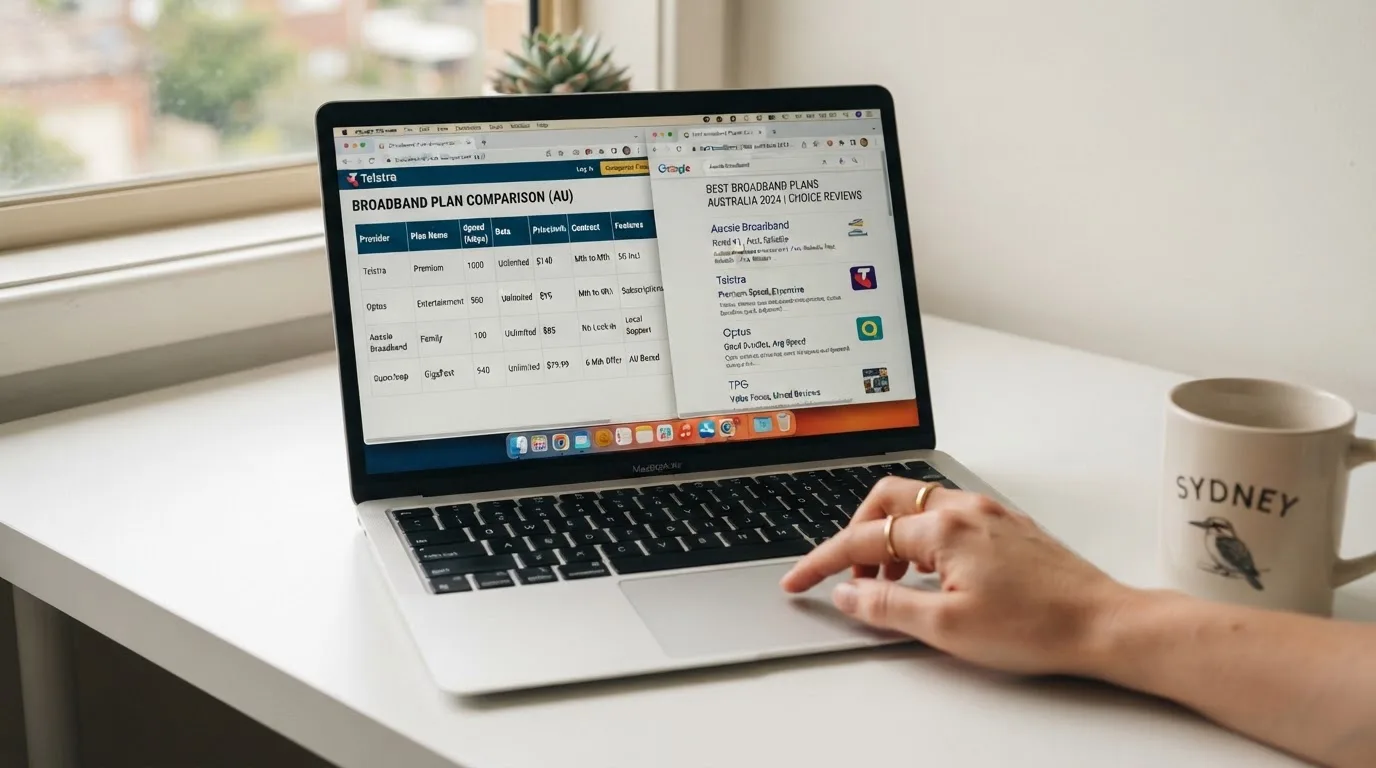
The Bitcoin Cash casinos an Australian player can actually open at are all in that second camp. They run on Curaçao, Anjouan or Costa Rica licences — none of which has any standing under the IGA — and they accept deposits in dozens of cryptocurrencies, including BCH, because doing so lets them stay reachable in markets where licensed rails are cut off. From the player’s seat, this is the whole market.
A few facts set the scale. As reported in June 2026, the ACMA had asked Australian ISPs to block 1,751 illegal gambling and affiliate marketing websites since the first blocking request in November 2019, and more than 230 unlicensed services had voluntarily left the Australian market since enforcement was strengthened in 2017. The most recent blocking round, also reported on 26 June 2026, named twelve sites in one batch — 7Signs, ChromaBet, Donbet, Duospin, Freshbet, Slots Gem, Jacks Club, Lucky Start, Pointsbetz.com, Spinrise, Vinyl Casino and Wildsino. H2 Gambling Capital’s 2025 report put Australians’ losses to illegal gambling at roughly A$3.9 billion a year, and tracked the share of gambling going through legal channels falling from 74% in 2021 to 64%.
| Regulatory Measure | Detail |
|---|---|
| Illegal gambling websites blocked (since Nov 2019) | 1,751 |
| Unlicensed services exited (since 2017) | 230+ |
| Estimated annual losses to illegal sites | A$3.9 billion |
This is the picture every operator card on this page sits inside. The brand differs; the position doesn’t.
What Bitcoin Cash is, and why it lands at the cashier
Bitcoin Cash forked from Bitcoin’s ledger on 1 August 2017 at block height 478,558. The split happened over a disagreement about block size: Bitcoin’s 1 megabyte cap was choking transaction throughput, and BCH launched with an 8 megabyte block limit that was raised to 32 megabytes in 2018. Everything downstream — fees, confirmation speed, the experience of moving coins to a casino wallet — flows from that choice.
Bitcoin Cash uses the same SHA-256 proof-of-work mining as Bitcoin and targets a 10-minute average block time, so the rhythm of new blocks feels familiar. The bigger block ceiling, though, lets more transactions fit into each block, which is why the project’s own materials describe fees as “under a penny” and confirmations as taking minutes. At the cashier, that translates into deposits that clear faster and cost less than the equivalent Bitcoin transfer during congested periods on Bitcoin’s network. Amaury Séchet, a former Facebook software engineer, was the lead developer of Bitcoin ABC, the first software implementation of the BCH protocol.
Like Bitcoin, BCH caps its total supply at 21 million coins — that figure is set by the protocol’s issuance schedule and is not a policy choice any operator can override. A block on BCH is just as irreversible as a block on BTC: once the network confirms a transaction, the funds move, and no operator button reverses it. That property is what makes crypto attractive to offshore operators — settlement is final, chargebacks don’t apply, and the receiver doesn’t need a banking relationship. It is also what makes it dangerous to the player who treats the deposit as a soft commitment rather than a spent one.
The legal frame an Australian player stands inside
The Interactive Gambling Act 2001 prohibits the supply of online casino games, online pokies and in-play betting to persons in Australia. Wagering on racing and sport before the event is licensable, in practice through the Northern Territory, and lotteries and keno are licensable through state regimes — but no Australian licence covers an online casino product. Minimum age is 18.
The ACMA, as the regulator, has three moves: investigate, issue a formal warning, and request that Australian internet service providers block the offending service at the DNS level. The blocking requests have produced the 1,751-site cumulative figure. The formal warnings sit on a public register and name the operator behind the brand, which is why the operator cards below carry an operating-company name rather than just a domain.
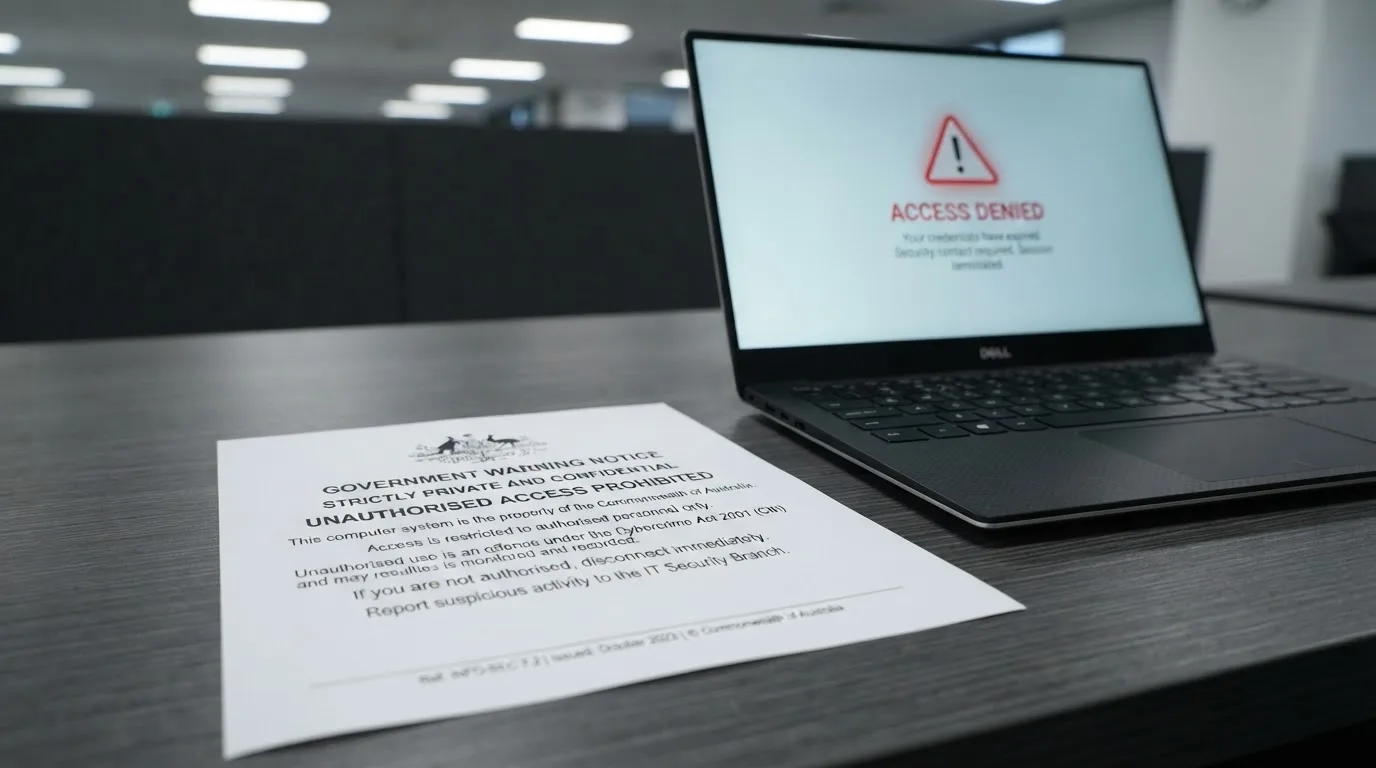
A formal warning is not a prosecution. The IGA’s penalties apply to the provider, not the player — no Australian resident has been charged for placing a bet at an offshore site. What the player loses in exchange is every protection a domestic licence would give: a complaints body, dispute resolution, identity-verified payouts, and the connection to BetStop, the National Self-Exclusion Register. Live since August 2023, BetStop binds Australian-licensed online and phone wagering services; an offshore casino is not connected to it, so a self-exclusion registered there does not block a BCH deposit at any site on this list. The National Gambling Helpline (1800 858 858) is free and runs 24/7, with chat at Gambling Help Online.
On the payment side, the rules tightened further. From 11 June 2024, credit cards, credit-related products and digital currencies are banned as funding methods for licensed online wagering in Australia, with penalties up to A$247,500 for operators that take them. The legal deposit rails for a licensed bookmaker are debit card, bank transfer, PayID/Osko and BPAY. A Bitcoin Cash deposit is, by definition, outside that envelope.
A reform sits in front of Parliament. The Interactive Gambling Amendment (Gambling Reform) Bill 2026 passed on 19 August 2026; its advertising and inducement measures commence on 1 January 2027. It is law with a start date, not yet in force on a page written in 2026.
Where the rules around crypto cross the cashier
AUSTRAC, Australia’s anti-money-laundering regulator, requires any business providing digital currency exchange services to Australian customers — including swapping BCH for fiat — to register as a Digital Currency Exchange provider. Operating unregistered is a criminal offence, and from 31 March 2026 the registration requirement widened beyond crypto-to-fiat to cover crypto-to-crypto exchange platforms, digital asset custody providers, and stablecoin issuers and distributors. A casino that takes BCH and credits a fiat balance is acting as a DCE in substance, and any Australian-resident exchange that sits between the player’s bank and the casino falls squarely inside the registration rule.
The ATO treats crypto assets, BCH included, as property for capital gains tax purposes. Most disposals — selling for AUD, swapping for another crypto, or spending BCH at a casino cashier — are CGT events, taxed at marginal rates. Assets held longer than 12 months qualify for a 50% CGT discount today; from 1 July 2027 that flat discount is replaced by CPI indexation of the cost base plus a 30% minimum tax rate on net capital gains. A small exemption exists for crypto assets held as a personal use asset costing A$10,000 or less to acquire — capital gains are disregarded in that case and capital losses cannot be used to offset other gains. Holding BCH as an investment takes it outside the exemption.
None of this alters the IGA calculus for the casino product. It does mean a BCH deposit, a BCH withdrawal and a BCH-to-AUD conversion all leave a paper trail a player is responsible for keeping.
How a Bitcoin Cash deposit actually moves
A Bitcoin Cash deposit is an on-chain transfer from the player’s wallet to the casino’s deposit address. The cashier generates a new receiving address for each transaction (or routes through a shared wallet with a unique memo), the player broadcasts the transfer, the network validates it into a block, and the casino credits the account after a set number of confirmations.
The mechanics are the same as for any other SHA-256 coin, and the cadence is set by block time. Bitcoin Cash targets a 10-minute block interval on average, just like Bitcoin. The difference is throughput per block: with the 32 megabyte ceiling in place since 2018, a BCH block can carry thousands more transactions than a BTC block, so during periods of network congestion fees stay low and confirmation queues stay short. On Bitcoin’s network the same conditions push fees up and slow settlement.
The practical comparison for an Australian player funding a casino account looks like this. A BCH transfer during a quiet network period can confirm within one or two blocks — fifteen to twenty minutes — and cost a fraction of a cent. The same player sending BTC during a busy period may wait several blocks for confirmation and pay a few dollars in fees. Neither cost is large in absolute terms, but at scale, or for a player moving funds in and out repeatedly, the difference compounds.
The deeper point is what confirmation means. Once a BCH transaction is in a block, the funds have moved and the casino’s accounting software can credit them. There is no chargeback path from here, no merchant-services dispute process, no bank recall. If the deposit address was a phishing clone rather than the genuine casino wallet, the funds are gone; if the casino declines to credit the account, the player has no Australian regulator to complain to and no bank to undo the transfer. The casino’s own confirmation count — typically one, two or three blocks — is the moment the casino agrees the deposit is real.
What an Australian player is really choosing between
Once the legal position is set, the practical question is which offshore BCH casino to use. The criteria that survive the prohibition are narrow: how the cashier handles BCH, how quickly confirmations credit, what identity checks the operator applies at withdrawal, and whether the operator has Australian-relevant enforcement history. Licence displays from Curaçao or Anjouan tell a player nothing about Australian standing.
The table below reads off the ACMA’s own published enforcement record. Every brand here is on that record because the ACMA issued a formal warning over it for offering prohibited services to Australians. That is what binds this set together, and it is why it sits on a page about Bitcoin Cash casinos at all — the coin and the legal position are the only common features across the operators an Australian can reach. Payment-rail behaviour is a secondary question, and an honest table reflects that.
| Brand | ACMA action and date | Operator named by the ACMA | Subject support |
|---|---|---|---|
| RocketPlay | Formal warning, March 2026; earlier Dama N.V. action in May 2022 | Pulsup Ltd | — |
| Level Up Casino | Formal warning, May 2022 | Dama N.V. | — |
| Woo Casino | Formal warning, March 2025 | Dama N.V. | Listings (Wikipedia) |
| Spirit Casino | Formal warning, May 2025 | Dama N.V. | — |
| National Casino | Formal warning, July 2025 | Consolutetish S.R.L. | Listings (NAB) |
| Bizzo Casino | Formal warning, July 2025; earlier TechSolutions action in 2022 | Consolutetish S.R.L. | — |
| Ignition Casino | Formal warning, July 2025 | Bamboo Media | — |
| Instant Casino | Formal warning, February 2025 | EOD Code SRL | — |
| Jackbit | Formal warning, April 2026 | Ryker B.V. | — |
| Casino Intense | Formal warning, April 2025 | Sterplay Holding Ltd | — |
| Sky Crown | Formal warning, September 2022 | Hollycorn N.V. | — |
The “Subject support” column is empty for most rows because no independent confirmation of Bitcoin Cash acceptance was available for those brands in the consulted set. Where a listing-type source mentioned the brand alongside BCH, that is noted in the column; otherwise the cell carries the no-data marker and the brand is presented on its other fields. Three warnings — to Dama N.V. in March 2025 (Woo Casino) and May 2025 (Spirit Casino), and to EOD Code SRL in February 2025 (Instant Casino) — are the most recent of the rounds and the ones most worth weighing when looking at the upper end of the table.
The cumulative block count itself tells a story. From November 2019, when the ACMA issued its first blocking request, to the 26 June 2026 report, the regulator asked ISPs to block 1,751 illegal gambling and affiliate marketing sites. That works out to roughly a quarter of a blocking request every working day over the seven-year window — a steady, mechanical enforcement pace that does not need a new law to keep producing results. The June 2026 round alone added twelve names. Treating any one of these operators as a stable address for funds is reading the table wrong.
The blocking rate, in one line
The arithmetic the page offers is the rate at which the ACMA has been converting enforcement attention into blocked sites. From the first blocking request in November 2019 to the 26 June 2026 total of 1,751 sites, the cumulative count grew at an average pace between 240 and 260 sites per year over the seven-year window — a band, not a single figure, because individual blocking rounds vary in size and the regulator’s pace is set by investigations rather than by a calendar. The June 2026 round added twelve, consistent with the long-run pace. What the band tells a reader is that the ACMA’s blocking tool is not a one-off; it is a steady-state mechanism, and the probability that any given offshore casino will end up on the list over a multi-year horizon is high enough that “the site I’m on hasn’t been blocked yet” is a poor basis for choosing it.
The operators, one by one
RocketPlay
RocketPlay sits at the top of this list because it carries two ACMA actions rather than one. The first came in May 2022, when the regulator issued a formal warning to Dama N.V. over RocketPlay alongside five other Dama brands — Bambet, Dazard, Level Up, Wild Tornado and Cobra Casinos. The second came in March 2026, when the ACMA issued a fresh formal warning to Pulsup Ltd over Rocketplay.com.au specifically. Two warnings, separated by four years, from two different operating companies, with the same brand at the centre: that is the operator’s enforcement history. The Australian player choosing this brand is choosing a casino the regulator has come back to twice.
Level Up Casino
Level Up Casino was caught in the same May 2022 round as RocketPlay, named in the formal warning to Dama N.V. along with Bambet, Dazard, Rocketplay, Wild Tornado and Cobra Casinos. Dama N.V. has been a recurring operator name on the ACMA’s enforcement record — the regulator returned to the same corporate vehicle in March 2025 for Woo Casino and in May 2025 for Spirit Casino. The pattern across those three warnings is what a player should weigh: an operator the regulator has acted against three times in four years is not a name the regulator has forgotten.
Woo Casino
Woo Casino’s formal warning landed in March 2025, when the ACMA came back to Dama N.V. four years after the original 2022 round. The brand is one of three Dama N.V. casinos the regulator has acted against since 2022 — the others are RocketPlay (2022, with a 2026 follow-up under Pulsup Ltd) and Spirit Casino (May 2025). Woo Casino has been listed on a public index page alongside Bitcoin Cash as a funding option, which is the only BCH-specific note carried by the consulted sources for this brand.
Spirit Casino
Spirit Casino’s formal warning landed in May 2025, the third Dama N.V. action in the post-2022 window. The brand has no independent data on BCH support; the only thing an Australian reader can verify from public records is the ACMA action and the operator behind it. Where the previous Dama warning sat three years before this one, this one sat two months after the Woo Casino warning — a tighter cadence that says more about the regulator’s enforcement tempo than about any one brand.
National Casino
National Casino was caught in the July 2025 round, alongside Bizzo Casino, when the ACMA issued formal warnings to Consolutetish S.R.L. Both brands share an operator and a warning date, which is the practical reason they sit next to each other on the regulator’s record. National Casino has been listed on a public page alongside Bitcoin Cash, which is the only BCH-specific note carried by the consulted sources for this brand.
Bizzo Casino
Bizzo Casino has the longer record of the two Consolutetish S.R.L. brands. The July 2025 warning was the second time Bizzo appeared on the ACMA’s record — the first came in 2022, when the regulator issued a formal warning to TechSolutions (CY) Group Limited and TechSolutions Group N.V. The operator behind the brand has changed across the warnings; what has not changed is the regulator’s attention. For an Australian player weighing BCH deposit convenience, the double warning is a stronger signal than a single one.
Ignition Casino
Ignition Casino’s formal warning landed in July 2025 alongside the National Casino and Bizzo warnings, but to a different operator — Bamboo Media, rather than Consolutetish S.R.L. Three operators, three brands, one month: the July 2025 round is the densest single window on the regulator’s record for the brands in this table. Ignition Casino lacks verified public data on BCH acceptance.
Instant Casino
Instant Casino’s formal warning landed in February 2025, when the ACMA issued it to EOD Code SRL. The brand sits at the front end of the most recent enforcement wave; the warning predates the Woo Casino and Spirit Casino warnings to Dama N.V. by a month. An Australian player choosing this brand is choosing one the regulator acted against earlier than most of the others on this list.
Jackbit
Jackbit’s formal warning landed in April 2026, alongside a warning to the same operator — Ryker B.V. — over CasinOK. Two brands, one warning round, one operator: the regulator’s pattern of grouping warnings by operator rather than by brand continues here. Jackbit does not confirm BCH acceptance in available public records.
Casino Intense
Casino Intense’s formal warning landed in April 2025, when the ACMA issued it to Sterplay Holding Ltd. The brand sits in the middle of the 2025 warning window, between the February 2025 EOD Code SRL action and the May 2025 Dama N.V. Spirit Casino action. Casino Intense shows no public confirmation of BCH support.
Sky Crown
Sky Crown’s formal warning predates most of the others on this list — it sits in the September 2022 ACMA publication, alongside a warning to Hollycorn N.V. over its Blue Leo casino service. Sky Crown and Blue Leo share an operator and a warning document. For a reader choosing between operators on enforcement recency, Sky Crown is the longest-standing warning on the list; the brand has lived with a formal warning on the public record for the longest stretch of the eleven operators above.
Where the choice actually lands
The honest version of the choice an Australian player is making runs through three layers, and they don’t cancel each other out. The first is the legal layer: an offshore casino offering BCH deposits to an Australian resident is, by definition, offering a prohibited interactive gambling service under the IGA, and no licence the operator displays changes that. The second is the operational layer: the casino will, at some point, ask for identity documents to process a withdrawal, and the documents the player provides then carry the same CGT-event implications as any other crypto disposal. The third is the cash-flow layer: a BCH transfer confirms in minutes and costs a fraction of a cent, but the funds move irreversibly the moment the network confirms the transaction, and there is no Australian regulator the player can complain to if the operator declines to credit the account or pay out a balance.
What “best” means in this market is therefore narrower than the topic implies. It is not a question of which casino has the largest bonus or the most polished interface — those are marketing claims, and the consulted sources for this page did not carry verified bonus terms for any of the eleven brands above. It is a question of which casino has the cleanest enforcement record among the eleven the ACMA has acted against, and the cleanest record in this table belongs to Casino Intense (one warning, April 2025) and National Casino (one warning, July 2025) — neither brand has been named in a second ACMA action under a different operator, which is the bar the RocketPlay, Bizzo and Sky Crown rows fail.
The deeper point is the one the IGA writes into the page. The Australian player choosing among these operators is choosing between eleven prohibited services, and the differences between them are operational rather than legal. A reader who has decided to play at an offshore casino should weigh the ACMA record, the BCH cashier behaviour the operator publishes, and the absence of Australian consumer protection before deciding which of eleven prohibited services to use. The legal layer does not soften because the cashier is fast or the fees are low.
What to do before a deposit goes out
The mechanical steps a player goes through with a BCH deposit are predictable, and the points where they stall are predictable too. The first step is generating the deposit address at the casino cashier — that address is either unique to the transaction or paired with a memo that has to be included in the transfer. Missing the memo is the most common reason a BCH deposit arrives at the casino wallet without being credited to a player account; the funds are then recoverable only through the casino’s support team, which sits outside Australian jurisdiction.
The second step is broadcasting the transfer from the player’s wallet. The player pays the BCH network fee, which is small, and the transaction enters the mempool. The third step is confirmation: one block, two blocks, three blocks, depending on the casino’s published policy. A casino that requires three confirmations on BCH is asking the player to wait roughly thirty minutes during a quiet network period; a casino that requires one confirmation will credit within ten minutes. The difference matters more at withdrawal, where a larger sum moving out of the casino faces the same confirmation cadence in reverse.
The fourth step is what comes after. A withdrawal to a BCH wallet then sits in the player’s wallet until the player decides what to do with it — sell for AUD, hold, or use it at another casino. Each of those is a CGT event under ATO guidance, with the holding-period discount or, from 1 July 2027, CPI-indexation rules applying. A player who treats BCH deposits as a way to avoid the AUD banking system is choosing to take on the CGT-record-keeping burden instead.
Responsible play in a market with no domestic protection
A player funding an account with Bitcoin Cash is choosing a rail that confirms in minutes and cannot be recalled. That property is exactly what makes it attractive to operators that cannot rely on chargebacks or merchant disputes, and exactly what makes it costly to a player who loses track of spend. Two practices make the difference.
The first is treating the deposit as spent the moment it confirms. A BCH transaction in a block is no longer the player’s; the only thing that remains is an entry on the casino’s balance ledger, redeemable on the operator’s terms. A player who sees a BCH wallet balance growing while the casino balance sits at zero has not saved money — they have shifted it from one venue to another.
The second is using the protections that exist, even though they don’t reach offshore operators. BetStop, the National Self-Exclusion Register, blocks Australian-licensed wagering accounts; it does not block an offshore casino, but a self-excluded player who cannot reach a licensed bookmaker should not substitute an offshore casino as the next stop. The National Gambling Helpline (1800 858 858) is free and runs 24/7, with chat at Gambling Help Online — both reachable from inside Australia regardless of where the gambling is happening.
Frequently asked questions
Is it legal for a casino site to accept Bitcoin Cash from a player in Australia?
No. The Interactive Gambling Act 2001 prohibits the supply of online casino games and online pokies to persons in Australia, regardless of the payment rail. A Bitcoin Cash deposit changes nothing about the operator’s legal position. The player is not prosecuted under the IGA — the law targets the provider — but the player also gets no Australian consumer protection, no complaints body and no recourse if a withdrawal is refused.
How is Bitcoin Cash different from Bitcoin for making a casino deposit?
Bitcoin Cash forked from Bitcoin on 1 August 2017 with a larger block size — 32 megabytes since 2018, against Bitcoin’s 1 megabyte equivalent. The result is more transactions per block, which keeps fees low and confirmation queues short even during network congestion. The cashier experience is a faster, cheaper deposit during busy periods on Bitcoin’s network, with the same irreversible settlement once confirmed.
Does a Bitcoin Cash withdrawal require the same identity checks as a card withdrawal?
In practice, yes. Offshore casinos that take BCH deposits still run KYC checks before processing withdrawals — the player uploads identity documents, the operator verifies them, and only then does the BCH transfer go out. The blockchain does not replace the operator’s compliance step; it sits underneath it. The documents the player provides for the KYC check also create the paper trail the ATO uses to assess CGT on the disposal.
Is there a limit on how much Bitcoin Cash can be deposited at once?
For an Australian-licensed wagering service, yes — digital currencies have been banned as funding methods since 11 June 2024, with operator penalties up to A$247,500. For an offshore casino, the limit is whatever the cashier publishes, which varies by brand and by payment rail. No universal cap exists across the offshore segment, and the no-data cells in the table above reflect the absence of a single consulted source covering per-brand deposit ceilings for BCH.
What confirms a Bitcoin Cash deposit before it is credited to a casino account?
A block on the BCH blockchain. Bitcoin Cash targets a 10-minute average block time, and the casino’s published confirmation policy — typically one, two or three blocks — is the trigger that credits the player account. The cashier waits that many blocks because each confirmation makes a reversal exponentially harder; after three blocks a transaction is, for practical purposes, final. See also Casinos that accept Ethereum in Australia .
Can a Bitcoin Cash payment sent to a casino be reversed after it is sent?
No. Once a BCH transaction is confirmed in a block, the funds move and no party — neither the sender, the receiver, nor any third party — can reverse the transfer. There is no chargeback mechanism on the BCH network and no operator-level recall. This is what makes crypto attractive to offshore operators and what makes a mistaken deposit irretrievable; if the deposit address is wrong, the funds are gone.