
Solana casinos compared for Australian players
Data current as of 29 October 2026 and cross-checked against the Australian Communications and Media Authority’s public register of formal warnings and blocking requests. Solana casinos compared for Australian players — More on this topic at crypto casino au .
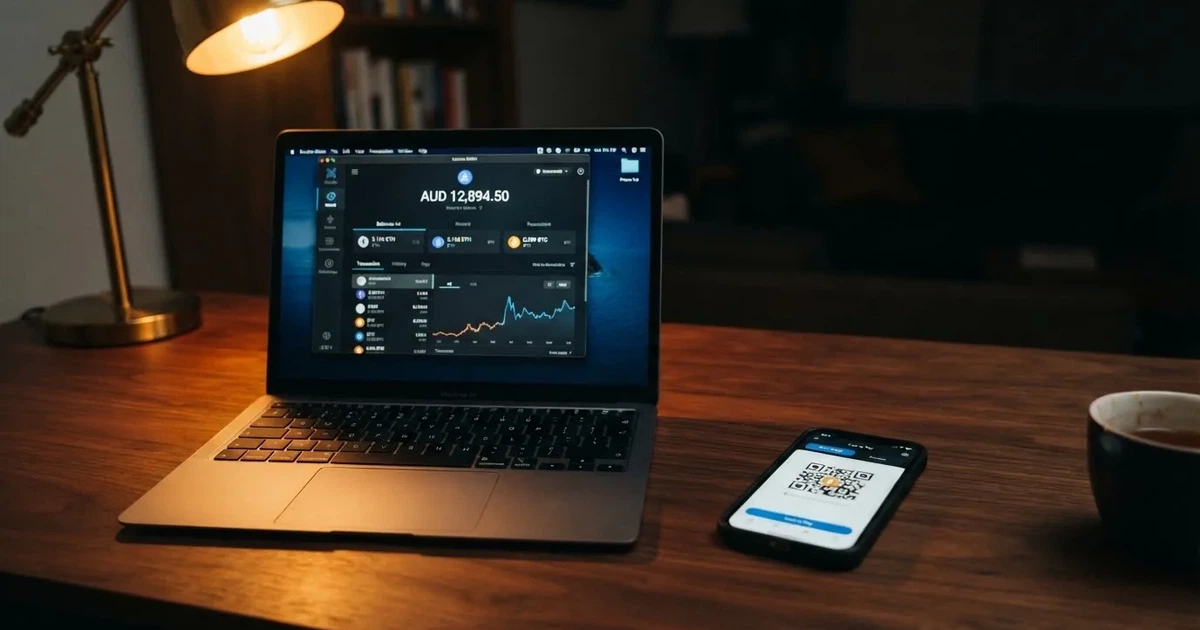
Table of Contents
- What a Solana casino is, and what the comparison is actually comparing
- The legal picture: prohibited product, regulator’s tools, what that means at the cashier
- What the regulator’s record actually says
- Responsible play: protections that apply, and protections that don’t
- How Solana fits into the payment story
- Eleven Solana-friendly casinos the ACMA has formally warned
- What the comparison actually finds
- The blocking arithmetic, at the regulator’s pace
- Where a careful player lands
- Frequently asked questions
What a Solana casino is, and what the comparison is actually comparing
A “Solana casino” is an offshore online gambling site that accepts the SOL token as a deposit and withdrawal method. The label says almost nothing about the licence a player sees when the homepage loads: an offshore operator can display a Curaçao or Anjouan licence number at the footer and still be unlawful to offer casino games to someone in Australia, because no Australian state or territory licences that product. The comparison below is between the public claims eleven such brands make and what the ACMA has already said about each of them in writing.
The word comparison is doing precise work here. It is not a ranking. Offshore casinos cannot be ranked for suitability, only described, because the legal status is identical across the set: every brand in this article sits outside Australian law. What differs is what each one has been warned about, when, and what the operator’s published footprint looks like before the page turns to the warning register.

Why Solana specifically, when most crypto casinos already take Bitcoin and Ethereum? Two technical properties are worth naming once, because they appear in every marketing line a Solana-friendly casino runs. The first is settlement speed. Solana’s design targets an 800-millisecond block time, and a queued transfer typically clears within seconds of confirmation rather than the tens of minutes a Bitcoin transaction can take. The second is transaction cost. Per-transfer fees on Solana run in fractions of a US cent, well below what Bitcoin or Ethereum typically charge during congested periods. Neither property changes the legality of the site a player is depositing into. It changes how long the deposit button takes, and how much of the deposit survives network charges.
The legal picture: prohibited product, regulator’s tools, what that means at the cashier
Australia’s Interactive Gambling Act 2001, tightened by the Interactive Gambling Amendment Act 2017, makes it an offence to provide online casino games or online pokies to a person physically in Australia. Bookmakers licensed in Australia can offer pre-event wagering on races and sport, lotteries and keno, and nothing else. The carve-outs do not reach a slots lobby, a live dealer table or a scratch-card product, however the operator frames them. Minimum age is 18.
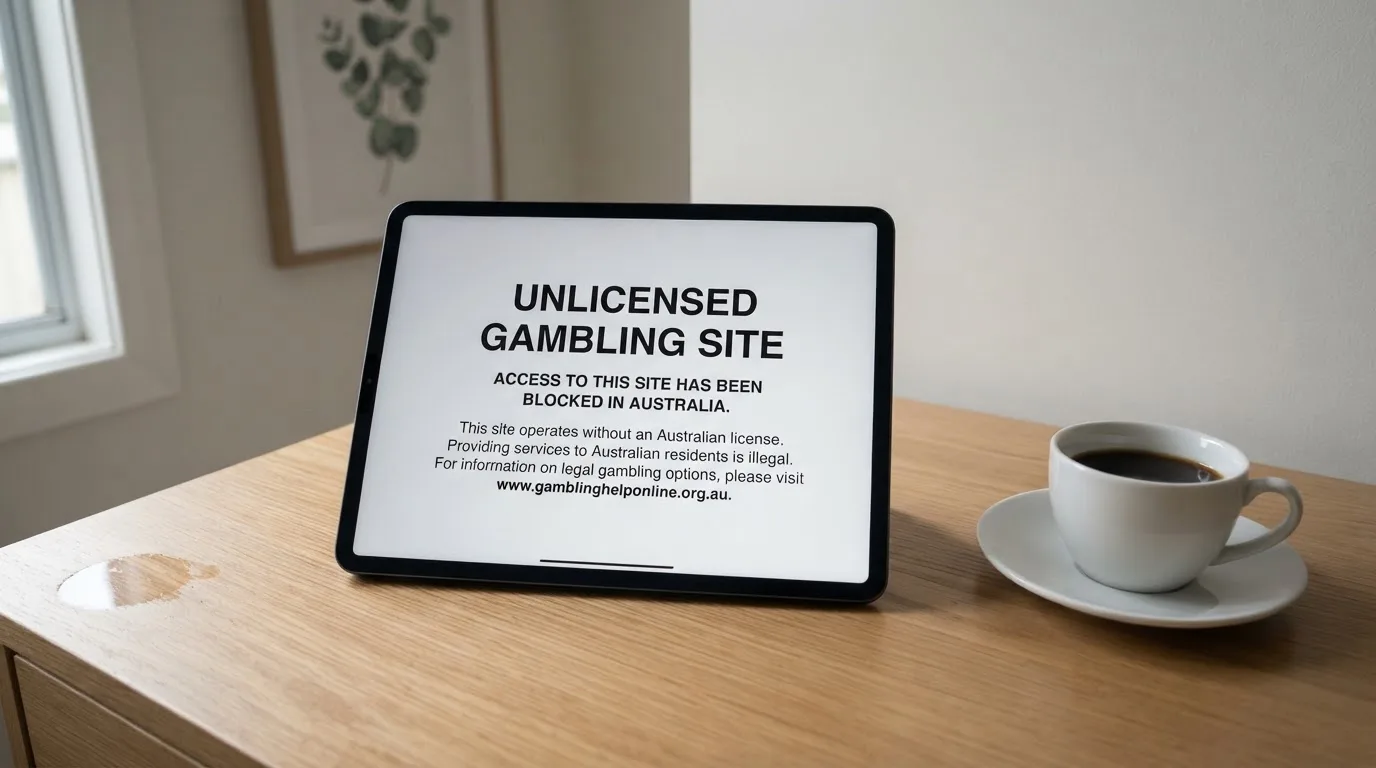
The regulator is the Australian Communications and Media Authority. Its three tools shape the offshore market. It can investigate complaints, issue a formal warning to the operator behind an unlawful site, and ask Australian internet service providers to block the domain. By June 2026 the cumulative count sat at 1,751 websites blocked since the first blocking request in November 2019, with more than 230 unlicensed services having left the market since enforcement was tightened in 2017. A blocking request is not a prosecution of the player. The penalty falls on the provider. The consequence for the player is that the same site the balance sits on may stop resolving at the ISP level without warning.
The individual Australian who clicks “deposit” is not the target of the Interactive Gambling Act, but the consequence of choosing an offshore site is asymmetric. There is no Australian complaints body an aggrieved punter can write to, no local licensee to suspend, no Australian deposit trust account waiting if the operator withholds a payout. A blocked domain still carries the player balance until the operator chooses to return it, and most never do. That is the choice the rest of the article describes.
What the regulator’s record actually says
The ACMA publishes formal warnings and blocking actions on its own website, and they are the single source of truth for what follows. Every brand in the operator set has at least one ACMA formal warning attached to it for offering prohibited interactive gambling services to Australians. Some have several, across different operating companies. A few have been added to blocking lists as well. The point of restating the record is that the regulator’s view, not the operator’s footer, is what determines legality for a player sitting in Sydney, Perth or Cairns.
A formal warning is not a prosecution. It is a written notice from the regulator that, in its view, the named service breaches the Interactive Gambling Act, that the conduct must cease, and that further action may follow. The operator named on the warning is the legal entity behind the service at that date; the same casino brand can change corporate hands and acquire a second warning under a new owner, which is why several entries below carry more than one date.
The market scale behind these warnings is large enough that the regulator tracks it annually. H2 Gambling Capital’s 2025 estimate put Australian losses to illegal offshore gambling sites at roughly A$3.9 billion a year, with the share of gambling going through legal Australian-licensed channels falling from 74% in 2021 to 64%. The contraction is the regulator’s working problem. Offshore marketing is louder than compliance enforcement, and a Solana-aware player is exactly the demographic those campaigns target.
Responsible play: protections that apply, and protections that don’t
The Australian player-protection framework is built for licensed Australian wagering services, and that scope matters. BetStop, the National Self-Exclusion Register, has been live since August 2023. Any Australian-licensed online or phone wagering service is required to honour a BetStop registration, refusing new accounts and blocking marketing to anyone on the list. An offshore casino is not connected to BetStop and has no obligation to honour an Australian self-exclusion. The exclusion works through Australian-licensed bookmakers; it does not extend into the offshore casino lobby.
Self-exclusion is one tool. Help is another, and the help lines operate nationally regardless of where a punter chose to play. The National Gambling Helpline on 1800 858 858 is free and runs 24/7. Gambling Help Online runs parallel chat and counselling channels. A player who needs to step back does not need to decide which product category to step back from first; the helpline answers to all of them.
Limits that apply at the cashier are equally worth naming. Since 11 June 2024, credit cards, credit-related products and digital currency are banned as a deposit method for licensed Australian online wagering, with penalties up to A$247,500 for an operator that accepts them. The legal deposit rails under an Australian licence are debit card, bank transfer, PayID, Osko and BPAY. A cashier asking an Australian player for a credit card number or a SOL wallet address is operating outside those rules. That is a useful litmus test the moment a site opens its deposit page.
How Solana fits into the payment story
Solana is a public blockchain launched in March 2020, designed around a technique called Proof of History that combines with proof-of-stake consensus to target an 800-millisecond block time. The project itself dates to 2018, when Anatoly Yakovenko published the Proof of History whitepaper and co-founded the network with Raj Gokal. SOL does not have a maximum supply cap; the network’s published inflation schedule sets an initial annual rate of 8%, disinflating by 15% each year until it reaches a long-term floor of 1.5%.
The features a casino cashier cares about all sit downstream of those design choices. Settlement speed: a Solana transaction generally clears in seconds, against the roughly ten-minute average for Bitcoin, where confirmation timing is probabilistic and can stretch longer during busy periods. Transaction cost: per-transfer fees on Solana sit in fractions of a US cent, against the multi-dollar figures Bitcoin and Ethereum can post when the network is congested. Throughput: Solana’s own materials describe payment channels designed to handle in the order of one million payments per second by authorising agent spending once rather than by settling each transaction on-chain individually. None of these claims change anything at the licence page, but they are why SOL keeps appearing in offshore cashier lists.
The receiving end of the network in August 2026, by Solana’s own roundup, included around A$4 billion in tokenised real-world assets and a growing share of stablecoin payments moving through the network. That is the broader context a casino marketing page is borrowing from when it advertises “instant SOL deposits”. The product itself works as advertised; the operator accepting it sits outside Australian law.
What the SOL wallet does and does not hide
A common assumption is that paying in crypto removes identity checks. It does not, in any way that changes the legal position for an Australian. What changes is who can verify identity: a properly registered Australian Digital Currency Exchange (DCE) must enrol with AUSTRAC under the Anti-Money Laundering and Counter-Terrorism Financing Act 2006, with the registration remit expanded in March 2026 to cover crypto-to-crypto exchange, digital asset custody, and stablecoin issuers and distributors. Operating that kind of business without DCE registration is a criminal offence under the Act. An offshore casino is not a registered DCE, and SOL arriving from a non-AUSTRAC exchange inherits no Australian identity verification, but inherits no Australian protection either.
Two Australian rules follow from this that are worth holding together. The Australian Taxation Office treats crypto assets including SOL as property, not as money or foreign currency, so disposing of, exchanging or spending the asset is a capital gains tax event; net gains on assets held for at least twelve months may qualify for the 50% CGT discount, which from 1 July 2027 will be replaced by CPI indexation of the cost base plus a 30% minimum tax rate on net capital gains. And the same DCE registration regime that requires an Australian exchange to know its customers does not extend a refund channel into an offshore cashier. The wallet’s privacy is the wallet’s privacy; the support line is overseas, in whatever jurisdiction the licence points to.
Solana versus the alternatives, in plain terms
Solana is not the only cryptocurrency the offshore cashier lists accept. Bitcoin is the oldest and most widely held, settled on a proof-of-work ledger that targets a ten-minute average block time and caps total supply at 21 million coins. Bitcoin Cash forked from Bitcoin on 1 August 2017, lifted its block size limit to 32 megabytes the following year, and describes its own transaction fees as “under a penny” with confirmations taking minutes. Ethereum adds a smart-contract layer that powers many of the gaming platforms offshore casinos deploy. Each carries the same legal status at the Australian end. The choice is not which coin is most lawful but which one a punter prefers to hold, transact and report for tax, and how that choice matches a particular casino’s cashier.
The comparison page the searcher arrived at exists because Solana-based marketing in 2026 is loud enough to deserve its own shelf. What that shelf actually compares is usually a mix of three things: deposit and withdrawal speed, the size of the cashier fee, and the breadth of the game lobby. Speed and fees are properties of the network, not of the casino. The lobby is the casino’s own editorial choice, and the comparison earns its keep in showing how those choices differ between brands. What does not differ is the licence, the regulator’s view of it, or the absence of an Australian complaints body when a payout stalls.
Eleven Solana-friendly casinos the ACMA has formally warned
The set below is not curated for quality. It is drawn from the ACMA’s own register of formal warnings, in the order the regulator has published them. Each entry starts with what the regulator said, then looks at the operator’s own public footprint before closing on what the entry actually establishes for a player reading it.
1. RocketPlay
The ACMA issued a formal warning to Pulsup Ltd over RocketPlay in March 2026. The same brand had earlier drawn a 2022 warning to Dama N.V. alongside five other casino sites in that operator’s portfolio. The corporate reshuffle between warnings is a useful marker: the brand did not close after the first notice, which is how the regulator ended up naming a different company for the same domain later. Online casino games cannot be licensed anywhere in Australia, whatever licence the site displays.
The brand’s own footprint around Solana is unverified in either direction. No Australian operator carries a Dama or Pulsup licence; the warning register is the trail. A punter at the cashier on Rocketplay’s homepage sees the same Solana deposit button any other offshore casino shows, and the same absence of an Australian licence behind it.
The entry establishes a specific anti-pattern: a brand that has crossed the regulator’s desk twice, under two different parent companies, both times for the same product. A punter looking at this entry is not looking at a fresh launch; they are looking at a brand whose non-compliance the regulator has already commented on twice.
2. Level Up Casino
The ACMA’s May 2022 warning to Dama N.V. covered Level Up alongside Bambet, Dazard, Rocketplay, Wild Tornado and Cobra Casinos. That single notice bundled six brands into one enforcement action, which is itself a clue about how the Dama portfolio was being marketed in Australia at the time. Online casino games cannot be licensed anywhere in Australia, whatever licence the site displays.
Level Up’s own marketing leans on the same crypto deposit vocabulary as every other brand on this list. There is no Australian licence against which to check the casino’s claims, and the operator named on the warning is a Curaçao-registered company. The brand sits inside a portfolio enforcement pattern rather than as a standalone breach.
The entry establishes the cluster problem: one warning from the regulator is frequently one warning against several sister brands, each with its own marketing budget and its own cashier. Counting the warning tells a punter that the brand sits in a portfolio the ACMA has already moved against.
3. Woo Casino
The ACMA issued a fresh formal warning to Dama N.V. over Woo Casino in March 2025, three years after the bundle that pulled in Level Up. Online casino games cannot be licensed anywhere in Australia, whatever licence the site displays. Woo Casino’s appearance in published Solana-friendly casino lists is what research flags here; that is the extent of what can be said about its Solana support without straying into marketing copy.
The repeat-warnings pattern is the headline. Dama N.V. ran a network of brands and the regulator acted against several, in tranches, over multiple years. A punter reading the Woo Casino entry is reading a brand whose operating company the regulator keeps having to write to.
The entry establishes that “the same brand” and “the same operator” are not the same thing in this market: the brand persists across warnings, the named corporate entity does not always, and a fresh warning is the regulator’s way of saying the conduct did not actually stop.
4. Spirit Casino
The ACMA issued a formal warning to Dama N.V. over Spirit Casino in May 2025, the second Dama-brand action inside three months that year and the third Dama-named action overall after May 2022 and March 2025. Because these sites offer prohibited interactive gambling, they operate outside Australian law. There is no Australian licence to compare the warning against, and no Australia-facing licence register in which the brand appears.
Spirit Casino sits inside the same Dama portfolio enforcement picture as Woo Casino and Level Up. The regulator’s view of the brand is the view it has published; the operator’s view of the brand, in marketing, is a separate document and not part of what this page carries.
The entry’s specific marker is timing: May 2025 sits after the March 2025 Woo Casino warning and before the July 2025 Ignition Casino action, which means the regulator was writing to the same operator about multiple brands over a span of months. The cluster effect is what a punter should take from the entry.
5. National Casino
The ACMA issued a formal warning to Consolutetish S.R.L. over National Casino in July 2025, alongside a parallel notice to the same operator over Bizzo Casino. No local authority permits these services, and the Interactive Gambling Act applies here. National Casino’s appearance on a published Solana-friendly list is what research reports on the subject support side; the operational substance is not carried here.
The Consolutetish S.R.L. action is a single notice covering two brands in one operator’s portfolio, which is the same pattern Dama N.V. has been drawn into across several years. The regulator’s July 2025 round sits at the midpoint of a busy enforcement year, and the bundling is what makes a single warning worth paying attention to beyond the brand it names.
The entry establishes parallel-brand enforcement at a corporate level: one warning can name two sites, and a punter approaching either of them is approaching the same operator. The regulator’s view of Consolutetish S.R.L. is the relevant fact, not which domain the punter was planning to visit.
6. Bizzo Casino
The ACMA issued a formal warning to Consolutetish S.R.L. over Bizzo Casino in July 2025, the same operator and the same action round as National Casino. Bizzo had already been the subject of a 2022 formal warning, in that earlier instance to TechSolutions (CY) Group Limited and TechSolutions Group N.V., which is the earlier corporate vehicle behind the brand. These brands are not Australian-licensed and remain subject to ACMA enforcement. There is no Australian-licence data side to report here.
Two operators, two warnings, both for the same brand. The corporate succession is what is informative, not the dates alone: the brand persisted through a change of the entity behind it, and the regulator has had to act against the new entity the same way it acted against the old one. The pattern is the same as RocketPlay, the same as Level Up, and the same as Woo Casino.
The entry establishes the strongest example on the set of a brand that has drawn the regulator’s written attention under more than one owner. A punter at this entry is looking at a brand whose non-compliance has survived a corporate restructure.
7. Ignition Casino
The ACMA issued a formal warning to Bamboo Media over Ignition Casino in July 2025, in the same enforcement round as the Consolutetish notices. Under the Interactive Gambling Act, such offshore sites remain prohibited from serving Australians. The brand’s footprint on the Solana side is not something research carries here, and the brand is also one that Australian-facing search results tend to surface under poker and casino verticals rather than as a Solana-led product.
Bamboo Media is a smaller operator name in the register than the Dama and Consolutetish names, and a single warning is the regulator’s complete position on the entity so far. That is not a less-serious marker by itself; it is a less-detailed one. A punter reading the entry is reading what the regulator has had to say, which is a single written notice and no indication of action beyond it.
The entry establishes that not every brand in the regulator’s view is a multi-warning cluster. Ignition Casino is on the register once, with one named operator. The size of that footprint is something a punter weighing the entry should note rather than infer.
8. Instant Casino
The ACMA issued a formal warning to EOD Code SRL over Instant Casino in February 2025. Being an offshore casino, the operator cannot lawfully offer these products to residents of Australia. The Solana-side footprint of the brand is not carried in research; that is what the no-data designation means, and the mark is not reproduced in the heading or the body.
The February 2025 timing sits at the early end of that year’s enforcement cluster. Instant Casino was the first EOD Code SRL warning, before the Dama notices of March and May, and the regulator’s view of the operator is one written notice without further published action in the same shape so far. The brand’s casino offer is what an offshore casino cashier typically carries, and the entry is the regulator’s published position on it.
The entry establishes a brand that is on the warning register, full stop. There is no second warning, no second operator name, no listing-internal Solana claim to set beside the regulator’s note. A punter looking at this entry is looking at the simplest version of the regulator’s view: one notice, one operator, one domain.
9. Jackbit
The ACMA issued a formal warning to Ryker B.V. over Jackbit and CasinOK in April 2026. The notice names two brands under one operator, which is the same portfolio pattern the Dama and Consolutetish records show. This operator is unlicensed in Australia, as online casino games are prohibited there. Jackbit’s presence on the list reflects the regulator’s published action; what the brand claims about Solana is not reported here.
Ryker B.V. is the most recent operator named in the regulator’s published action set as of the research date, with the warning issued less than three months before the June 2026 blocking round covered elsewhere on this page. The timing is what makes the entry worth reading beyond the bare warning: the ACMA is still naming operators, the latest of which sits inside the page’s comparison window.
The entry establishes that the regulator’s action has not slowed down. A punter who learned of the Jackbit brand from a marketing email in late 2025 is reading a brand that the ACMA was already acting against before the year closed.
10. Casino Intense
The ACMA issued a formal warning to Sterplay Holding Ltd over Casino Intense in April 2025. This operator is unlicensed in Australia, as online casino games are prohibited there. The operator footprint is what one written notice captures, with no portfolio bundling reported and no second warning published to the same entity in the same year.
The April 2025 warning sits within a busy enforcement window and is a single operator-single brand entry. Sterplay Holding Ltd does not appear elsewhere in the research’s named operator list, which is itself a meaningful marker in a market where the same parent companies recur across many brands.
The entry establishes what a lone warning looks like in the register: a brand, an operator, a date. The cleanest comparison against Casino Intense on this page is the cluster entries above it, and the difference is the absence of portfolio bundling or a second operator name.
11. Sky Crown
The ACMA issued a formal warning to Hollycorn N.V. over its Sky Crown and Blue Leo casino services. This operator is unlicensed in Australia, as online casino games are prohibited there. The operator footprint is what one notice captures, with the brand sitting alongside Blue Leo under the same parent at the time of the regulator’s action.
Hollycorn N.V. is one of the larger offshore casino operators with multiple brands, and the Sky Crown notice bundles Sky Crown with Blue Leo rather than treating them as separate actions. A punter looking at Sky Crown alone is looking at half a warning: the other half applies to a sister brand under the same operator.
The entry establishes portfolio bundling as a recurrent shape, with Sky Crown as one of the cleaner examples. The regulator acted against Hollycorn N.V. for two brands; what the regulator has not done is act against the parent for any other brands in the same notice. The structure is the information.
What the comparison actually finds
Read as a set, the eleven entries describe a market rather than a hierarchy. Five operators in the table account for the bulk of the formal warnings: Dama N.V. has been warned three times and counts six brands across its notices; Consolutetish S.R.L. once with two; Ryker B.V. once with two; Bamboo Media and Sterplay Holding Ltd each once with a single brand; Hollycorn N.V. once with two; EOD Code SRL once with one. The “operator behind the brand” layer is doing more of the structural work than the brand layer itself, and that is the comparison point a punter should weigh against marketing copy.
| Brand | ACMA action and date | Operator named by the ACMA | Subject support |
|---|---|---|---|
| RocketPlay | Formal warning, March 2026 (Pulsup Ltd); earlier Dama N.V., May 2022 | Pulsup Ltd | — |
| Level Up Casino | Formal warning, May 2022 | Dama N.V. | — |
| Woo Casino | Formal warning, March 2025 | Dama N.V. | listings-only |
| Spirit Casino | Formal warning, May 2025 | Dama N.V. | — |
| National Casino | Formal warning, July 2025 | Consolutetish S.R.L. | listings-only |
| Bizzo Casino | Formal warning, July 2025 (Consolutetish); earlier TechSolutions, 2022 | Consolutetish S.R.L. | — |
| Ignition Casino | Formal warning, July 2025 | Bamboo Media | — |
| Instant Casino | Formal warning, February 2025 | EOD Code SRL | — |
| Jackbit | Formal warning, April 2026 | Ryker B.V. | — |
| Casino Intense | Formal warning, April 2025 | Sterplay Holding Ltd | — |
| Sky Crown | Formal warning (September 2022) | Hollycorn N.V. | listings-only |
The Solana side of the table is mostly empty for a reason. Three brands appear in published listings referencing Solana; the other eight have no data on the topic, neither affirmed nor denied here, and that absence is a written part of this page rather than something inferred.
The shape the table describes is straightforward. The ACMA does not act against a brand because it accepts SOL; it acts because the brand offers prohibited interactive gambling services to Australians and accepts payment through whatever channels it likes, Solana included. The token a punter uses to fund the wallet tells the regulator nothing the cashier does not already know. The wallet sits downstream of the breach, not upstream of it.
The blocking arithmetic, at the regulator’s pace
The cumulative blocked-site count makes sense only against the first blocking request’s date. The ACMA asked Australian ISPs to start blocking unlawful gambling domains in November 2019; by June 2026 the running total had reached 1,751 websites blocked since that first round. Spread across the roughly seven years between those two dates, the long-run rate works out at around 250 blocking actions a year. The actual pace has been anything but even: enforcement strengthened in 2017, the formal-warnings pipeline ramped through 2022 and 2025, and a single June 2026 round alone added twelve more names to the list, including 7Signs, ChromaBet, Donbet, Duospin, Freshbet, Slots Gem, Jacks Club, Lucky Start, Pointsbetz, Spinrise, Vinyl Casino and Wildsino.
What that arithmetic gives a reader is a band, not a figure. The operator of a comparison page can look at 250-as-a-long-run-average and reasonably ask whether the regulator is on track to add 250 more sites by this time next year. The honest answer the data supports is that the band runs wide: a heavy round can add twelve in a single bulletin, a quiet year can run lower than the average. A punter reading the regulator’s output as a calendar prediction is reading past what the figures carry.
The June 2026 round is the more useful anchor. Twelve new blocking actions in one round, against eleven crypto-friendly brands already on the warning register, against an estimated A$3.9 billion a year leaving the regulated channel. The arithmetic that matters is not the cumulative count; it is that the regulator’s pipeline is still open and still publishing names. A brand the regulator has not yet warned is a brand on the regulator’s queue, not a brand the regulator has approved.
Where a careful player lands
A punter who has read this far and is still weighing whether to deposit SOL into an offshore casino has three paths the page should name plainly.
The first is the legal path. Licensed Australian wagering services take pre-event race and sport bets, lotteries and keno, through debit card, bank transfer, PayID, Osko and BPAY. The cashier is the litmus test: any page asking for a credit card or a SOL wallet address for an online casino product is offering something no Australian licence covers.
The second is the unsupported path. An offshore casino does not have to be malicious to be unsuitable for an Australian player. It only has to be outside the Interactive Gambling Act’s reach, which means outside BetStop, outside the Australian Complaints body, and outside any recourse the punter would have if a payout is refused or a balance becomes stranded by a blocking request. The deposit still happens; the protection does not.
The third is the stop-and-think path. Gambling Help Online and the National Gambling Helpline on 1800 858 858 operate nationally and at any hour. A punter who has already deposited at one of the brands above can self-exclude at BetStop from every Australian-licensed wagering service in a single registration; that does not extend into the offshore lobby, but it draws the line where the law allows. A punter who has not yet deposited has fewer lines to redraw.
The page does not recommend an operator to play at, and does not claim one is safer to deposit with than another. What it has compared is what each operator has done, what the regulator has written about that, and what the regulator’s own record says about the size of the legal gulf between an Australian-licensed bookmaker and an offshore casino taking SOL at the cashier. The rest is the punter’s call.
Frequently asked questions
Why would a casino specifically support Solana rather than just Bitcoin or Ethereum?
A casino chooses Solana because the network settles in seconds and charges fractions of a US cent per transfer, against the multi-dollar fees Bitcoin or Ethereum can show during congestion. The choice is about cashier economics, not customer demand, and every casino on this set still takes Bitcoin or Ethereum alongside SOL. The token a punter deposits does not change the operator’s licence status.
Does using Solana for deposits make transaction fees any different compared with other cryptocurrencies?
Yes. Per-transfer fees on Solana sit in fractions of a US cent, against the multi-dollar fees Bitcoin and Ethereum can post when the network is congested. Fees on Bitcoin Cash are described by the project itself as “under a penny” with confirmations taking minutes. The wallet-to-wallet fee is one number; the operator’s own deposit or withdrawal fee, if any, sits on top and is set by the casino’s cashier rather than the network.
Is depositing Solana into an offshore casino account something an Australian resident can lawfully do?
No. The Interactive Gambling Act 2001, tightened by the Interactive Gambling Amendment Act 2017, makes it an offence for an operator to provide online casino games or pokies to a person in Australia; no state or territory licences those products. The ACMA prosecutes the provider, not the player, but a player at an offshore cashier has no Australian complaints body and no consumer protection if a payout stalls. BetStop’s National Self-Exclusion Register binds Australian-licensed operators only; an offshore casino is not connected to it.
How does Solana’s transaction speed compare with a standard bank transfer for casino deposits?
A Solana transfer typically clears in seconds, against the minutes-to-hours a standard bank transfer through PayID or Osko can take. Speed is the property every crypto cashier advertises; legality is the property none of them advertise. A PunID or Osko deposit at an Australian-licensed bookmaker, with the cashier asking for a debit card or bank account rather than a credit card or wallet address, is operating inside Australian law by design. See also Deposits .
What is actually being compared on a Solana casino comparison page — fees, speed, or game selection?
A comparison page is usually mixing three properties: network-driven speed and fees, the size of the operator’s deposit-and-withdrawal fee, and the breadth of the game lobby. Of the three, speed and fees are properties of the network, not the casino. What actually differs between brands is the lobby and the corporate history written into the ACMA’s warning register, and that register is the comparison that matters for an Australian player.