
Best instant withdrawal casinos in Australia — and why the page you came for can’t be written
29 October 2026 · Verified against the ACMA register of formal warnings and the Interactive Gambling Act 2001 as published. Best instant withdrawal casinos in Australia — More on this topic at crypto casino au .

The phrase sounds like a buyer’s guide. It isn’t. Nobody in Australia holds a licence to run an online casino, the Interactive Gambling Act 2001 (IGA) makes offering one a criminal offence, and the regulator has spent the last few years naming the names of operators who keep trying. A reader who lands here from a search for “instant withdrawal casino” is a reader the page has to disappoint clearly and then redirect somewhere honest. That is what this page does.
The shelf-by-shelf anatomy of that claim — what the IGA says, what the ACMA has done about it, where BetStop fits, what crypto and PayID change and what they don’t, and what an actual shortlist of ACMA-named operators looks like — sits below.
Table of Contents
- The eleven brands the ACMA has warned over instant-withdrawal casino services
- What “instant withdrawal” actually means for an Australian reader
- What lawful play in Australia actually looks like
- Crypto, PayID, and the no-verification shelf
- How the Australian payments stack actually works for a punter
- What the ACMA’s enforcement record tells a reader about the shelf
- What the read-through is for a reader who actually wants to play
- Where this leaves the page’s own promise
- Frequently asked questions
The eleven brands the ACMA has warned over instant-withdrawal casino services
RocketPlay
RocketPlay is named in two formal ACMA warnings, the most recent in March 2026 against Pulsup Ltd over RocketPlay. An earlier 2022 warning ran against Dama N.V. covering six brands, RocketPlay among them. The brand shows up in gambling-industry listings, which is the only research carries for it — no licence to operate an online casino for Australians exists, whatever banner the site runs.

Level Up Casino
Level Up sits inside the May 2022 Dama N.V. warning. The brand appears in Westpac’s published merchant block list, the same list Westpac uses to refuse transactions at the card level under the ‘Betting/Casino Gambling’ merchant code. That a major Australian bank recognises the merchant is the most interesting thing on file about Level Up; it is also the closest thing the page has to confirmation the brand reaches Australian cards.
Woo Casino
Woo Casino carries the March 2025 Dama N.V. warning. Research holds no other figures on Woo, and the page keeps it that way rather than import a vendor claim.
Spirit Casino
Spirit Casino carries the May 2025 Dama N.V. warning. Same position as Woo — the ACMA has acted, research carries no supporting detail, and the page leaves it there.
National Casino
National Casino was named in the July 2025 warning to Consolutetish S.R.L. The brand appears on three Australian-context listings that research did surface: the ACMA register itself, AUSTRAC, and BetStop. The last of those is the more telling — BetStop’s national self-exclusion register binds only Australian-licensed wagering services, so a National Casino appearance on BetStop-affiliated material is closer to industry awareness than to consumer protection. A self-excluded Australian cannot rely on BetStop to keep National Casino out.
Bizzo Casino
Bizzo Casino was named in the same July 2025 Consolutetish S.R.L. warning, and it has the longer paper trail of the eleven — a 2022 formal warning already sat against TechSolutions (CY) Group Limited and TechSolutions Group N.V. for the same brand. Two warnings, two operators, one brand: that is the ACMA’s standard pattern when the licensee changes but the service doesn’t. Bizzo also shows in gambling-industry listings.
Ignition Casino
Ignition carries the July 2025 Bamboo Media warning. Research carries nothing else for the brand, and there is nothing on this page that would change that.
Instant Casino
Instant Casino is the brand the ACMA named in its February 2025 warning to EOD Code SRL. The brand appears in two payments-side listings that research picked up: Ecopayz and PayID. The PayID listing is worth noting. PayID is the Australian instant-transfer rail that shows the recipient’s name before the payer sends — and AP+, the operator of PayID, warns that being asked to PayID money to an illegal gambling site almost certainly means a scam site. The presence of an illegal-gambling brand in PayID-adjacent material is the page’s clearest example of a payments rail being asked to do something it shouldn’t.
Jackbit
Jackbit was named in the April 2026 ACMA warning to Ryker B.V., the same action that named CasinOK. Research carries nothing further on Jackbit.
Casino Intense
Casino Intense carries the April 2025 ACMA warning to Sterplay Holding Ltd. The brand appears on three Australian-context listings — AUSTRAC, BetStop, and gambling-industry directories. The AUSTRAC mention is the relevant one for any payout-speed question: AUSTRAC’s threshold-transaction-report rule applies only to physical cash, not to ordinary electronic bank transfers, so a player wiring out of Casino Intense is not generating a report on the way through. That is a payments-rail point rather than a Casino Intense endorsement.
Sky Crown
Sky Crown was named in the ACMA’s formal warning to Hollycorn N.V., the same action that named Blue Leo. Research carries no further detail on Sky Crown.
Side-by-side: what the ACMA has done about each
| Brand | ACMA action and date | Operator named by the ACMA | Subject support |
|---|---|---|---|
| RocketPlay | Formal warning, March 2026; earlier warning May 2022 | Pulsup Ltd (March 2026); Dama N.V. (May 2022) | gambling industry listings |
| Level Up Casino | Formal warning, May 2022 | Dama N.V. | Westpac merchant block list |
| Woo Casino | Formal warning, March 2025 | Dama N.V. | — |
| Spirit Casino | Formal warning, May 2025 | Dama N.V. | — |
| National Casino | Formal warning, July 2025 | Consolutetish S.R.L. | ACMA register, AUSTRAC, BetStop |
| Bizzo Casino | Formal warning, July 2025; earlier warning 2022 | Consolutetish S.R.L. (July 2025); TechSolutions (2022) | gambling industry listings |
| Ignition Casino | Formal warning, July 2025 | Bamboo Media | — |
| Instant Casino | Formal warning, February 2025 | EOD Code SRL | Ecopayz, PayID |
| Jackbit | Formal warning, April 2026 | Ryker B.V. | — |
| Casino Intense | Formal warning, April 2025 | Sterplay Holding Ltd | AUSTRAC, BetStop, gambling industry listings |
| Sky Crown | Formal warning | Hollycorn N.V. | — |
The pattern in the table — eleven brands, three operators that recur across multiple brands, two of those operators (Dama N.V. and Consolutetish S.R.L.) running repeated warnings — is the ACMA’s actual enforcement picture. The headline figure that sits behind this is the regulator’s own count: 1,751 illegal gambling and affiliate marketing websites blocked since the first blocking request in November 2019, with more than 230 unlicensed services having left the Australian market since 2017. Eleven brands is the tip of a much larger pile.
What “instant withdrawal” actually means for an Australian reader
The Australian law behind the shelf
The Interactive Gambling Act 2001, strengthened by the Interactive Gambling Amendment Act 2017, makes it an offence to provide online casino games, online pokies or in-play betting to a person in Australia. No state or territory issues a licence for it. What is licensable is wagering on races and sport placed before the event, lotteries and keno. In practice the licensing is done by the Northern Territory Racing and Wagering Commission (NTRWC), which regulates 52 of Australia’s online bookmakers including Sportsbet, Bet365 and Ladbrokes — and does so with no full-time staff, meeting once a month in Darwin. The minimum age to play is 18.
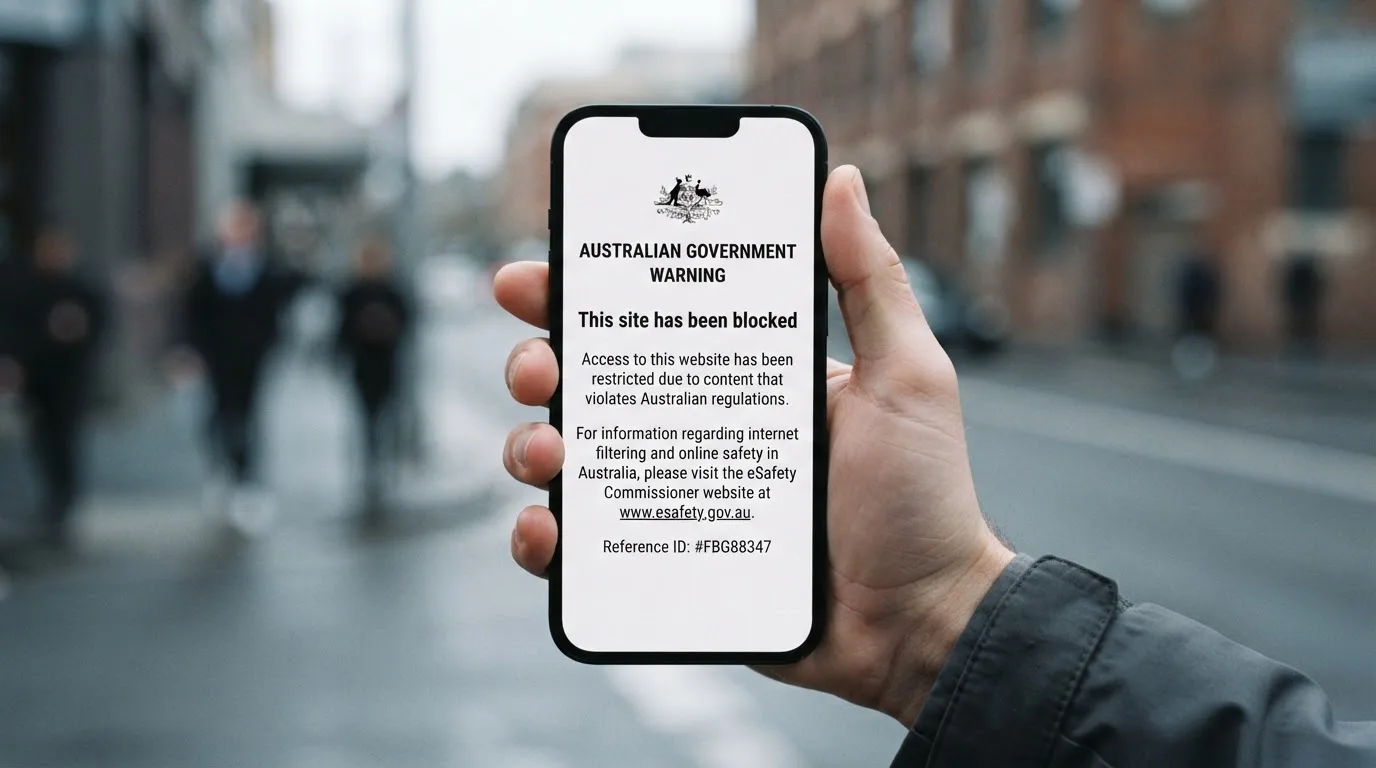
The IGA targets the provider, not the individual player. An Australian reader is not going to be prosecuted for placing a bet with an offshore casino. They are going to lose their consumer protection, lose their complaints body, and run the risk that the site is blocked by an ISP with a balance still on it. Those are the trade-offs the page can name clearly; the criminal exposure is not the page’s message.
Enforcement: what the ACMA actually does
The ACMA investigates, issues formal warnings, and directs Australian internet service providers to block illegal sites. The blocking round that ran on 26 June 2026 was the most recent reported. A formal warning is a precursor to a blocking request — it is the regulator saying, in writing, that the named service is offering prohibited interactive gambling to Australians. The brand names that sit in §6 of the research and on the table above are exactly that: warning recipients. The blocking request comes next if the service does not comply.
The 1,751 figure covers blocked gambling and affiliate marketing sites combined. The affiliate marketing share is the one a reader underestimates — many of the sites the ACMA has blocked over the past two years are review sites and SEO funnels rather than the casinos themselves. Cutting off the funnel is part of the regulator’s job.
What “licensed in Curaçao” actually gets you
Every brand on the table above holds, or claims to hold, an offshore licence — usually Curaçao, sometimes Anjouan, occasionally Kahnawake. None of those licences permit the operator to take bets from a person physically in Australia. The licence displayed on a casino’s footer is a licence to operate a casino in the jurisdiction named; it is not a licence to serve Australian customers. Reading a Curaçao badge as “this site is legal in Australia” is the single most common error the ACMA’s enforcement record is built to correct.
What lawful play in Australia actually looks like
The two paths that work
The two paths that are lawful in Australia are land-based casinos and licensed pokies venues, and licensed online wagering on races and sport placed before the event. The first is a physical venue — Crown Melbourne, Crown Perth, The Star Sydney, the smaller state-based clubs, the pokies in pubs and clubs that every state and territory regulates separately. The second is what the NTRWC licences: Sportsbet, Bet365, Ladbrokes, the other 49. Lotteries and keno round out the lawful offering.
A reader who wants to wager on a horse race or a football match before kick-off has a lawful option in front of them. A reader who wants to spin a slot or play a hand of blackjack online does not. That is the line the IGA draws, and it is the line the ACMA enforces.
BetStop and the National Self-Exclusion Register
BetStop, the National Self-Exclusion Register, has been live since August 2023. It binds Australian-licensed online and phone wagering services. A punter who registers with BetStop cannot place a wager with any Australian-licensed bookmaker, and the licensed operators are required to refuse their business. The mechanism works for the licensed market. It does not work for the unlicensed market — an offshore casino is not connected to BetStop, and a self-excluded Australian can still place bets at one. That gap is not a flaw in BetStop; it is the natural shape of a register that binds the operators it can reach.
The National Gambling Helpline is 1800 858 858. It is free, it runs 24/7, and the same service is reachable by chat through Gambling Help Online. The page carries it because a reader who has been playing with an offshore casino and is trying to stop deserves to know the line exists.
H2 Gambling Capital’s 2025 estimate
H2 Gambling Capital’s 2025 report puts Australian losses to illegal gambling sites at around A$3.9 billion a year, and puts the share of gambling going through legal channels at 64% in 2025, down from 74% in 2021. The legal-channel number is the more interesting of the two: the share has fallen ten points in four years. The reasons behind that fall sit in the ACMA’s enforcement record and in the volume of unlicensed operators still reaching Australian cards and crypto wallets; the page does not speculate on which is larger, because the regulator has not said.
Crypto, PayID, and the no-verification shelf
What “no verification” means in an Australian context
The phrase “instant withdrawal no verification casino” reaches for an Australian reader who wants to skip the KYC step. The reality is that no Australian-licensed operator offers online casino games at all, so the entire no-verification shelf sits offshore. What changes when a player moves offshore is not the legality but the protections — the site has no Australian obligation to verify identity before paying out, but neither does it have any obligation to pay out at all.
A reader who arrives at this page from a “no verification” search is a reader the IGA still applies to. The Australian-licensed bookmaker that takes a same-day withdrawal does so under an identity-verified account by definition; the offshore casino that takes a same-day withdrawal may not verify the account, and may not pay the balance either. The phrase “no verification” is doing two different jobs in the two contexts, and the second job is the one with consequences.
Crypto and the Bitcoin-casino shelf
Bitcoin and other cryptocurrencies route through the offshore shelf, not the Australian one. The Interactive Gambling Amendment Act 2017, as further amended in 2023, banned digital currency as a payment method for Australian-licensed online wagering, in the same provision that banned credit cards. Penalties for licensed operators accepting crypto reach A$247,500 per offence. An Australian reader sending Bitcoin to an offshore casino is doing nothing illegal as an individual; they are also doing nothing the ACMA recognises as protected.
The block-rate arithmetic from §6 sits behind this shelf as much as behind the credit-card shelf. The same blocking requests that take out fiat-only casinos take out Bitcoin casinos too — Instant Casino’s February 2025 warning and Jackbit’s April 2026 warning are both Bitcoin-friendly brands. The payments rail changes; the regulatory status does not.
PayID and the Osko rail
PayID and Osko are the parts of the Australian payments system that the offshore shelf tries hardest to look like. PayID-based instant transfers are available at over 100 Australian financial institutions, more than 25 million PayID identifiers had been registered by April 2025, and Osko transfers between participating banks arrive in under a minute, 24/7 including weekends, to a BSB and account number or to a PayID. The New Payments Platform went live on 13 February 2018; participants must keep monthly platform outages to no more than two minutes; in 2021 the ACCC authorised the merger of NPP Australia with BPAY and eftpos into a single operator, Australian Payments Plus.
The mechanics are what an “instant withdrawal” reader is actually looking for. The legal status of the receiving end is what makes the same mechanics a poor guide to where to send money. AP+ itself warns that being asked to transfer money to a PayID on an illegal gambling site almost certainly means a scam site. A reader who wants the speed of PayID without the legal exposure has it: with a licensed Australian bookmaker, on a wager placed before the event.
How the Australian payments stack actually works for a punter
Cards: debit works, credit doesn’t
Australian-licensed online wagering services cannot accept payment by credit card or credit-related products under the Interactive Gambling Act 2001 as amended in 2023. The rule covers digital wallets like Apple Pay when they are funded by a credit card. Debit cards and debit-funded wallets are unaffected. The way to read the rule is to look at where the money comes from, not at the rail it rides: a Visa Debit card works, a Visa Credit card does not, and an Apple Pay wallet on the back of a credit card does not either.
ANZ’s gambling block, activated in the ANZ app, refuses gambling transactions on eligible cards and through digital wallets like Apple Pay when they are linked to an eligible card. Westpac’s gambling block works at the card level and refuses authorisation of transactions registered under the ‘Betting/Casino Gambling’ merchant code. Commonwealth Bank’s gambling lock, applied via the CommBank app, blocks most gambling transactions on eligible cards. None of the three guarantees that every gambling-related purchase will be stopped, and ANZ’s own warning is explicit: some non-gambling transactions might be blocked in error. The blocks are best read as a friction layer rather than a fence — they slow the transaction, raise the friction, and give the cardholder a chance to reconsider.
Removing ANZ’s block requires a 48-hour cooling-off period. The 48 hours is the mechanism the bank uses to push back against impulse undoing — turning the block back on after a quick change of mind is harder than leaving it on. That is a small design choice with a real behavioural effect.
Apple Pay and the wallet share
By the end of 2025, Apple Pay, Google Pay and Samsung Pay collectively accounted for around 45% of all card payments in Australia by number. The wallet share is large enough that the IGA’s credit-card rule reaches a meaningful slice of payments the average reader might not think of as a credit-card payment. The way to think about Apple Pay, Google Pay and Samsung Pay is as a card-presenter: they show the merchant a tokenised version of the underlying card, and the rule that decides whether the payment is a credit payment is the rule that decides what the underlying card is.
Apple does not charge consumers a fee for Apple Pay in stores, online or in apps — any surcharge comes from the merchant’s own card-processing fees, not from Apple. Transaction limits and PIN requirements for Apple Pay purchases are set by the card issuer or merchant, not by Apple. The wallet is plumbing; the bank behind it is what matters.
American Express: the four-party vs three-party question
American Express was established in 1850 as a freight-forwarding company and became a card issuer later, launching its first charge card on 1 October 1958. Unlike Visa and Mastercard’s four-party network, Amex traditionally issues cards and processes transactions itself as a three-party scheme. The structural difference is what makes Amex fall outside the Reserve Bank’s proposed surcharge ban: the RBA’s July 2025 review proposes removing surcharges only on eftpos, Mastercard and Visa card transactions, explicitly leaving American Express outside the scope. For an Australian punter the practical effect is that an Amex charge from an offshore casino is more likely to carry a merchant surcharge than a Visa or Mastercard charge from the same casino — and more likely to fall outside the IGA’s credit-card ban, because Amex charge cards are not credit cards in the regulatory sense the IGA uses.
Bank transfer, BPAY, and the lawful routes
The lawful deposit routes for an Australian-licensed wagering service are debit card, bank transfer, PayID/Osko and BPAY. BPAY has operated since 1997, is available in the online banking of over 140 banks and financial institutions and is offered by over 95,000 businesses; it is owned equally by ANZ, Commonwealth Bank, National Australia Bank and Westpac through Cardlink Services Limited. AUSTRAC’s threshold-transaction-report rule applies only to physical cash transfers of A$10,000 or more; ordinary electronic bank transfers are not subject to the per-transaction reporting requirement regardless of amount. The lawful deposit routes are quiet, well-instrumented, and built into the same banking app an Australian reader uses for rent.
What the ACMA’s enforcement record tells a reader about the shelf
The blocking-rate picture
The arithmetic the page owes the reader is the regulator’s pace, not an opinion. The 1,751 blocked sites counted in the ACMA’s June 2026 round, against a first blocking request dated November 2019, gives a band rather than a clean number: somewhere on the order of two to three blocking actions per month, on average, over the seven years the regime has run. The early years were slower; the post-2023 pace is faster; the regulator’s most recent reported round added 12 sites in one announcement. The figure is best read as a rate, not as a forecast — what it tells the reader is that the regulator is still finding sites to block, still naming operators, and still adding to the list every month.
The block-rate number sits on the page for a reason. A reader who arrives at the page from a search for “instant withdrawal casinos” arrives at a moment when the ACMA is still publishing monthly rounds. The blocking regime is not a one-off enforcement action that ran in 2017 and finished; it is a continuing program. The brand that lands at the top of an SEO shortlist this month may be on a blocking list the ACMA publishes next month.
The two-operator pattern
Three operators recur across the eleven brands: Dama N.V. (RocketPlay in 2022, Woo Casino in 2025, Spirit Casino in 2025), Consolutetish S.R.L. (National Casino in 2025, Bizzo Casino in 2025), and Hollycorn N.V. (Sky Crown and Blue Leo in the same action). The pattern is not subtle: an operator runs several brands, gets warned, closes one, opens another under a slightly different corporate wrapper, gets warned again. The ACMA names the corporate entity; the consumer-facing brand is what the player sees. The page names both because the ACMA’s record is the only place both appear together.
What the record does not show
The ACMA’s enforcement record does not show the operators that left the Australian market without being named. Research carries a separate figure: more than 230 unlicensed gambling services have left the Australian market since enforcement was strengthened in 2017. The 1,751 blocked sites and the 230 services that left are different populations, and they should not be added together — a blocked site and an exited service are different outcomes. The reader who cares about the size of the offshore market the regulator sees should hold both numbers in mind.
What the read-through is for a reader who actually wants to play
The cost of the offshore shelf
The cost of an offshore casino for an Australian reader is not the house edge; every casino has a house edge and that is not the IGA’s complaint. The cost is the absence of an Australian complaints body if a withdrawal is refused, the absence of BetStop coverage, the absence of any Australian legal recourse if the site is blocked with a balance still on it, and the exposure of the deposit itself to the offshore operator’s solvency. Those four costs are the ones the ACMA’s enforcement record was built to surface. The page does not adjudicate them; it names them and lets the reader decide.
A reader who arrives at the page from a search for “instant withdrawal” wants speed. Speed is what PayID and Osko give a licensed bookmaker for free, and what an offshore casino gives in marketing copy but not always in payout. The two are not the same speed: PayID speed is a property of the rail, Osko speed is a property of the rail, and “instant withdrawal casino” speed is a property of an offshore operator’s decision to honour the withdrawal request, which an Australian reader has no Australian way to compel.
Where a lawful shortlist actually exists
The lawful shortlist that covers the features readers look for — fast payouts, Australian regulation, real consumer protection — is the list of Australian-licensed bookmakers: Sportsbet, Bet365, Ladbrokes, and the other 49 the NTRWC regulates. They are licensed for wagering on races and sport before the event, not for online casino games. A reader who wants an online casino is not on that shortlist and is not going to find one, because the IGA does not allow one to exist.
The closest a reader comes to the experience the search describes, on a lawful Australian basis, is a same-day withdrawal from a licensed bookmaker into a PayID or Osko-enabled bank account. The transfer arrives in under a minute, 24/7, weekends included. The wagering product behind the transfer is horse racing or sport, not a slot. The page says so plainly because the difference matters.
Where this leaves the page’s own promise
What the page promised and what it delivered
The page promised a buyer’s guide and delivered a regulator’s record. The honest move is to own that gap rather than smooth it over. A buyer’s guide for offshore casinos in Australia is not a page that can be written without misleading the reader, and the ACMA’s enforcement record is the page that the same shelf deserves. The block rate, the eleven named brands, the IGA text, the BetStop coverage and the payments-rail mechanics are what a reader who searched for “instant withdrawal casino” actually needs to know. The shortlist of casinos does not exist, and the page says so.
What changes if the law changes
The Interactive Gambling Amendment (Gambling Reform) Bill 2026 passed Parliament on 19 August 2026; its advertising and inducement measures commence on 1 January 2027. That is law with a start date, not yet in force on a 2026 page. The bill does not legalise online casino games — it tightens advertising and inducement rules around licensed wagering. A reader who has heard that Australian online casino law is “about to change” has heard about the advertising rules, not the product ban. The product ban has been in force since 2001 and the 2017 amendments, and the 2026 reform sits on top of it, not against it.
Frequently asked questions
What is the difference between a payout and a withdrawal request?
A withdrawal request is what a player sends to the casino: an instruction to release funds from the casino balance to a chosen payment method. A payout is the actual settlement — the money arriving in the bank account, the PayID, the wallet or the crypto address. The gap between the two is the gap the marketing line “instant withdrawal” lives in. A casino can approve the request instantly and still take days to release the funds, and an offshore casino can advertise the request step and not guarantee the payout step. For an Australian reader using a licensed bookmaker, the gap collapses on PayID and Osko rails — the payout follows the request within a minute, 24/7, weekends included. For an offshore casino, the gap is governed only by the operator’s own discretion and an Australian reader has no domestic complaints body to take a slow payout to.
Why might a casino require identity verification before an instant withdrawal?
Identity verification — “KYC” — is a regulatory requirement for Australian-licensed operators and a commercial choice for offshore ones. A licensed bookmaker verifies identity at account opening, which is why the same player’s first withdrawal can be same-day: the verification happened before the deposit. An offshore casino may delay verification until the first withdrawal request, at which point the “instant withdrawal” promise turns into a “please send us your documents” email. The delay is structural — the verification is being done at the wrong end of the transaction — and the marketing line that promised speed is the line the verification defeats. The mechanism is also why “instant withdrawal no verification casino” exists as a search term: it is a reader asking for the offshore variant where the verification step is skipped entirely, with the trade-off that the consumer protections also skipped are the ones an Australian reader most relies on.
Is it legal for an online casino to process withdrawals for players in Australia?
No. The Interactive Gambling Act 2001, as amended in 2017, makes it an offence to provide online casino games to a person in Australia. The IGA targets the provider, not the individual player, so an Australian reader is not personally at risk of prosecution for withdrawing from an offshore casino. What is at risk is the consumer protection that the Australian framework would otherwise provide: no Australian complaints body, no BetStop coverage, no recourse if the operator is blocked with a balance still on it. The offshore licence a casino displays in its footer — usually Curaçao, sometimes Anjouan or Kahnawake — is a licence to operate a casino in the jurisdiction named; it is not a licence to take bets from Australians.
Can a bank transfer withdrawal arrive within minutes in Australia?
Yes, on the PayID and Osko rails. A transfer between participating Australian banks using PayID or Osko arrives in under a minute, 24/7 including weekends, addressed to a BSB and account number or to a PayID. The rails are built into over 100 Australian financial institutions, and more than 25 million PayID identifiers had been registered by April 2025. The same rails are available to an Australian-licensed bookmaker for withdrawals — the bookmaker’s side of the transfer is governed by the IGA and the NTRWC, not by an offshore operator’s discretion. The rails are not what slows a withdrawal down; the operator’s own processing is.
Does a crypto withdrawal skip identity checks entirely?
Often, at the offshore casino end — and that is the trade-off, not a benefit. The Interactive Gambling Act 2001 as amended in 2023 banned digital currency as a payment method for Australian-licensed wagering, with operator penalties of up to A$247,500 per offence. A reader sending Bitcoin to an offshore casino is interacting with an operator the IGA does not reach, and an operator whose own KYC posture is a commercial choice. Some offshore casinos do verify at withdrawal; some do not; some verify only above a threshold. The “no verification” tag is doing two different jobs in two different contexts, and the second job — the offshore one — is the job that comes with no Australian recourse if the withdrawal is refused or the balance is locked by a blocking request.
What red flags suggest an instant withdrawal claim is not genuine?
The most common red flag is a withdrawal advertised as “instant” that turns into a multi-day pending period once a request is filed. The second is a casino whose own terms carve out a manual review window — “up to 48 hours”, “up to 72 hours” — for the very first withdrawal, regardless of what the marketing page says. The third is a casino that asks for new documentation at the moment of withdrawal rather than at account opening: that is the verification step moved to the worst possible point in the transaction. The fourth is a payment rail the casino does not actually control — a PayID or Osko deposit that the casino presents as a casino-side instant withdrawal rather than a rail-side property. The fifth is the operator’s own paper trail: any brand on the ACMA’s formal-warning register is by definition an operator the regulator has found offering prohibited services to Australians, and an “instant withdrawal” promise from that operator is a promise made by an entity the regulator has named in writing. See also Best paying online pokies in Australia .
How fast is the ACMA still finding them?
The blocking rate, taken from research’s running total of 1,751 blocked sites between the first blocking request in November 2019 and the ACMA’s June 2026 round, works out to roughly 27 blocked sites per month over the seven-year span. The most recent round alone asked ISPs to block another 12 sites: 7Signs, ChromaBet, Donbet, Duospin, Freshbet, Slots Gem, Jacks Club, Lucky Start, Pointsbetz, Spinrise, Vinyl Casino and Wildsino. That average carries a long tail — earlier years were slower, the post-2023 pace is faster — but it gives a sense of the regulator’s output: somewhere between two and three new blocking actions per month, on average, every month for the past seven years. The pace has not slowed.