Online Craps for Australian Players: What the Law Actually Allows in 2026
 Available in US
The honest answer to “where can an Australian play online craps” is shorter than the question. Online casino games — craps, baccarat, blackjack, roulette, online pokies — cannot be lawfully offered to anyone in Australia. No state or territory licenses them. The Interactive Gambling Act 2001 makes the provider, not the player, the target of the offence, and the Australian Communications and Media Authority has spent the years since 2017 acting on that target with formal warnings, blocking requests and quiet exits from the local market. The page below is built around that fact rather than around it.
It still does what an Australian reader typing “online craps” or “casino craps” actually came for. It walks through the game’s paytable so a reader who has never sat at a craps table knows what the bets pay. It lines up the offshore brands the ACMA has warned by name, with the date and the operator behind each one. It calculates the rate at which the ACMA has been removing sites since November 2019. And it points a reader in Australia towards the things that are licensed and reachable — licensed wagering on races and sport, land-based casinos in the states that have them, and BetStop self-exclusion for anyone who wants the betting apps to stop.
Verified against the ACMA register and the National Self-Exclusion Register as of 23 September 2026.
Table of Contents
- The Landscape: What an Australian Reader Is Actually Choosing Between
- The Legal Frame: What the IGA Actually Prohibits
- Enforcement Record: How the ACMA Has Acted, and How Fast
- Responsible Gambling: What Australian Players Can Actually Use
- Bonuses and Wagering: What an “Online Craps Bonus” Could Only Mean
- Gameplay: How the Craps Table Pays, and Why the Free Odds Bet Matters
- Craps Bet House Edges
- The Brands the ACMA Has Warned: A Closer Read
- What an Australian Reader Can Actually Do
- Side Games at the Australian Casinos: Baccarat and Blackjack, With Craps as the Exception
- Tax and Money: What the Player Takes Home
- Closing Read: The Choice That Isn’t
- Frequently Asked Questions
The Landscape: What an Australian Reader Is Actually Choosing Between
There is no licensed online craps in Australia. Any site offering it — whether the URL ends in .com, .au or anything else — is operating outside Australian law, and the offshore licence it displays is a licence to do business in another jurisdiction, not a permission to take Australian customers. The Interactive Gambling Act 2001 was strengthened by the Interactive Gambling Amendment Act 2017, and from that point forward the ACMA has had the tools to act. What it has done with them is the answer to “what kind of enforcement record does this country have against offshore craps sites”, and the record is long enough to fill the rest of this page.

| Brand | ACMA action and date | Operator named by the ACMA | Craps availability |
|---|---|---|---|
| RocketPlay | Formal warning, March 2026; earlier Dama N.V. warning, May 2022 | Pulsup Ltd | — |
| Level Up Casino | Formal warning, May 2022 | Dama N.V. | Listings (BGaming catalogue) |
| Woo Casino | Formal warning, March 2025 | Dama N.V. | — |
| Spirit Casino | Formal warning, May 2025 | Dama N.V. | — |
| National Casino | Formal warning, July 2025 | Consolutetish S.R.L. | Listings (Wikipedia) |
| Bizzo Casino | Formal warning, July 2025; earlier 2022 warning to TechSolutions | Consolutetish S.R.L. | — |
| Ignition Casino | Formal warning, July 2025 | Bamboo Media | — |
| Instant Casino | Formal warning, February 2025 | EOD Code SRL | — |
| Jackbit | Formal warning, April 2026 | Ryker B.V. | — |
| Casino Intense | Formal warning, April 2025 | Sterplay Holding Ltd | Listings (ABC, ACMA, Crown) |
| Sky Crown | Formal warning, September 2022 | Hollycorn N.V. | — |
The table reads as it does because the ACMA does not run a popularity contest. Each row is a brand it has formally warned under the Interactive Gambling Act 2001, with the operator it named at the time and the date it published. Several operators — Dama N.V. is the obvious one — appear more than once because the same holding company has run multiple brands, sometimes over years, and the ACMA has kept naming the corporate parent each time. The rightmost column is the only one that touches the page’s nominal subject. It is mostly empty. Where research carries a listing — a BGaming catalogue page, an encyclopedia entry, a news mention — it is reported as a listing, not as the brand’s own confirmation that craps is on its lobby. The brands themselves are offshore, the ACMA has warned each of them, and what their lobbies actually hold for a player in Australia is something the ACMA’s enforcement record does not verify.
The cost of choosing from this table is not in the bonuses the sites would offer if they were licensed here. There are no bonuses to clear, no wagering multiples to satisfy, no free-spins packages to count down — because the offer itself is the illegal act. The cost is the absence of any Australian consumer protection if a withdrawal is refused, the absence of any complaints body to escalate to, and the real possibility that the site is blocked mid-week with a balance still in it.
The Legal Frame: What the IGA Actually Prohibits
The Interactive Gambling Act 2001 defines a “prohibited interactive gambling service” as one provided to a person in Australia that involves a casino-style game — craps, roulette, blackjack, baccarat, sic bo and similar — online or by any other interactive means. The 2017 amendment extended the prohibition to in-play online betting and gave the ACMA the civil penalty powers it uses today. The penalties in the Act read, in plain numbers, as: up to A$220,000 per day for an individual provider, up to A$1.1 million per day for a corporation. The Act targets the provider. The player sitting at home does not face prosecution. What the player does face is a service that can disappear between sessions.
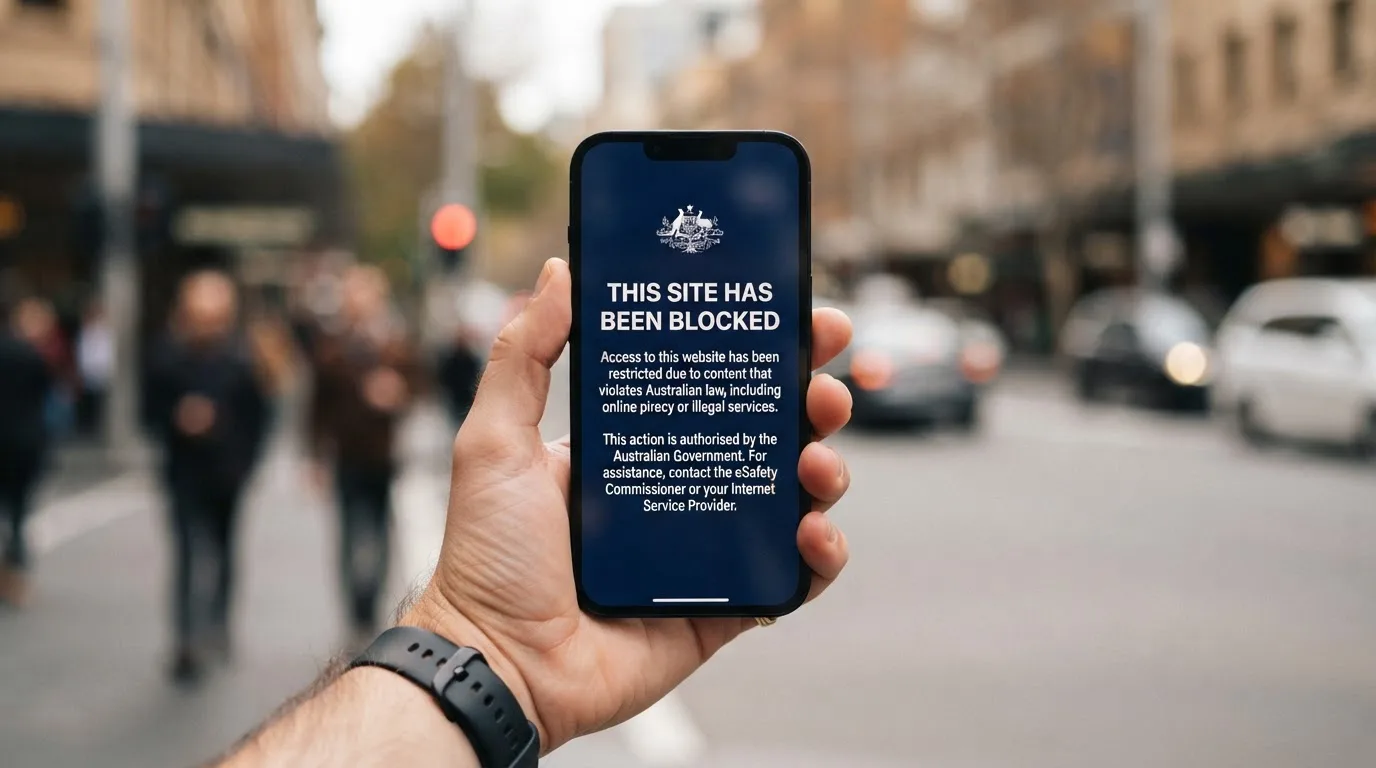
Three corollaries follow from that. The first is that no licence displayed on an offshore site — Curaçao, Anjouan, Kahnawake, the Isle of Man — extends to taking Australian customers for casino games; those licences cover the operator’s relationship with its own regulator, not with Australia’s. The second is that the ACMA’s blocking requests under section 313 of the Telecommunications Act 1997 cut the player off from the site itself, not from the operator’s bank account. The third is that any complaint a player might want to make about a refused withdrawal or a voided bonus cannot be made to an Australian body, because the site is not licensed here and therefore not subject to any Australian dispute resolution scheme.
What is licensable is the wagering side. Licensed online and phone bookmakers offer bets on racing and sport placed before the event, lotteries and keno. In practice the bulk of these licences are issued by the Northern Territory Racing and Wagering Commission — fifty-two of Australia’s online bookmakers, including the largest names, hold Northern Territory licences for tax reasons, and the commission runs with no full-time staff and meets once a month in Darwin. The state regulators — Liquor & Gaming NSW, the Victorian Gambling and Casino Control Commission, the Queensland Office of Liquor and Gaming Regulation — license the land-based casinos and the local wagering operators in their jurisdictions.
Enforcement Record: How the ACMA Has Acted, and How Fast
The ACMA’s blocking programme is the most measurable piece of the picture. The first blocking request was issued in November 2019. A round reported on 26 June 2026 took the running total to 1,751 illegal gambling and affiliate marketing websites blocked since that first request, and added twelve more in a single action: 7Signs, ChromaBet, Donbet, Duospin, Freshbet, Slots Gem, Jacks Club, Lucky Start, Pointsbetz, Spinrise, Vinyl Casino and Wildsino. The same reporting cites H2 Gambling Capital’s 2025 estimate that Australians lose about A$3.9 billion a year to illegal gambling sites, and that the share of gambling going through legal channels fell from 74% in 2021 to 64%.
The rate at which the ACMA has been removing sites since November 2019 is a band, not a single figure, because blocking requests come in batches rather than on a calendar. Counting from November 2019 to the end of June 2026 is roughly 80 months, which puts the average somewhere in the range of twenty blocked sites a month. The 26 June 2026 round alone ran at twelve in a single day; some quarters pass with no published round at all. The honest reading is that the ACMA moves in waves — each round a meaningful step, the gaps between rounds a reminder that the regime is administrative rather than continuous.
The formal warnings run on a similar pattern, with their own cadence. May 2022 saw the ACMA name Dama N.V. over six brands at once: Bambet, Dazard, Level Up, Rocketplay, Wild Tornado and Cobra Casinos. September 2022 brought the Hollycorn N.V. warning covering Sky Crown and Blue Leo. February 2025 produced the EOD Code SRL warning over Instant Casino. March 2025 hit Dama N.V. again over Woo Casino. April 2025 brought the Sterplay Holding Ltd warning over Casino Intense. May 2025 closed another month on Dama N.V., this time over Spirit Casino. July 2025 produced two warnings in one month — Bamboo Media over Ignition Casino, Consolutetish S.R.L. over National Casino and Bizzo Casino, the latter with the additional history of a 2022 warning to its earlier operator. February 2025 saw the EOD Code SRL warning. April 2026 added Ryker B.V. over Jackbit and CasinOK. March 2026 closed the RocketPlay file under Pulsup Ltd after the May 2022 Dama N.V. warning had already named the brand under its earlier ownership.
The pattern that emerges is not a list of rogue operators. It is a list of operators that cycle through holdings — the same brand, or its sister brands, surfacing under a new parent company and a new licence, which is why the ACMA’s warnings keep naming new corporate names for what look, to a player, like the same sites. The consumer effect of that churn is straightforward: a player who closes an account because the brand was blocked can find the same games on a sister brand a month later, with the same operator behind both.
Responsible Gambling: What Australian Players Can Actually Use
BetStop — the National Self-Exclusion Register — went live in August 2023 and is the single most useful tool an Australian with a gambling problem has. It binds every Australian-licensed online and phone wagering service: a punter registers once, picks a period of three months, twelve months, or permanently, and every licensed bookmaker in the country is required to refuse the account and not market to it. It does not bind offshore casino sites, because those sites are not licensed here. That is the practical limit a reader needs to know about: BetStop works against the licensed wagering side, which is the side that has to obey it, and it does not reach the offshore casino side, which is the side that does not.
The National Gambling Helpline is 1800 858 858, free, 24/7, with chat available at Gambling Help Online. State-level services — Gambler’s Help in Victoria, Gambling Help in NSW, the equivalent services in Queensland, Western Australia, South Australia, Tasmania and the ACT — provide counselling and financial counselling and can put a reader in touch with face-to-face support. These services are about the player, not about the operator, and they are funded to take a call from someone who has not yet decided to call.
The credit-card ban for licensed online wagering took effect on 11 June 2024. Credit cards, credit-related products and digital currency cannot be used to fund a bet with a licensed Australian bookmaker; the legal deposit routes are debit card, bank transfer, PayID/Osko and BPAY. Penalties for an operator that accepts a credit card run up to A$247,500. An offshore site that takes a credit card or a crypto deposit from an Australian is operating outside the Australian rules, and the absence of those rules on the receiving end is exactly the absence the player should price in.
The Interactive Gambling Amendment (Gambling Reform) Bill 2026 passed Parliament on 19 August 2026. Its advertising and inducement measures commence on 1 January 2027. That is a law with a start date, not a law in force on a 2026 page; reading the start date as a present-tense rule, or applying the inducement provisions to current advertising, both overstate what the statute actually does at the moment.
Bonuses and Wagering: What an “Online Craps Bonus” Could Only Mean
A craps bonus — meaning a promotional inducement tied specifically to the dice game, rather than a general deposit offer — is a category that exists in the marketing language of offshore sites and not in the Australian regulatory one. The Interactive Gambling Act 2001 prohibits the offer of an online casino game to a person in Australia. A bonus attached to that offer is part of the prohibited inducement. The expected loss on a craps bonus, were one to be cleared, is the same calculation that applies to any other craps session: required turnover multiplied by (one minus the RTP), with the house edge carrying the cost regardless of how the bonus is structured.
The figures that matter for any craps session, with or without a bonus attached, are the per-bet house edges. The Pass Line and Come bets carry 1.41%, which is the line most Australian readers who have played in a US casino will recognise as the standard bet. The Don’t Pass and Don’t Come mirror that at 1.36%, the slight difference coming from the way the come-out roll is treated. The Field bet sits at 5.56%, and the Any Craps and Any 7 bets are the place the marketing language meets the table mathematics: 11.11% and 16.67% respectively, with Any 7 the worst-priced bet a casino offers on any game in any jurisdiction. The “free odds” bet, taken behind a Pass or Don’t Pass bet once a point is established, carries a 0% house edge because it pays at true odds — which is the only bet on the table that does.
A craps bonus that loaded a wagering multiple of, say, 35x on a A$100 bonus would require A$3,500 of Pass Line turnover before the bonus could be withdrawn. At a 1.41% house edge, the expected loss on that turnover is A$49.35 — about half the bonus. Add a max-cashout cap and the picture tightens further; add a restricted-game list that excludes craps from contributing at all and the bonus becomes unplayable. None of this is hypothetical for an Australian reader: it is what the offshore sites’ terms look like in the markets they are licensed in. The detail matters because the offer is the part the marketing writes first.
Gameplay: How the Craps Table Pays, and Why the Free Odds Bet Matters
Modern craps developed in the United States as a simplification of an older European dice game called Hazard, which Bernard Xavier Philippe de Marigny de Mandeville is credited with bringing to New Orleans around 1805. The simplified game was called “Pass” — from the French “pas” — and it kept that name through the nineteenth century. Around 1907, a Philadelphia dice maker called John H. Winn introduced the Don’t Pass betting layout still in use on casino craps tables today, and that change is what gave casinos an incentive to use fair dice: without a Don’t Pass side, there was no way for a player to back the shooter, and a crooked shooter could throw the dice to favour one side over the other. The Don’t Pass bet is what made the table honest.
The game plays in two phases. The come-out roll is the first roll after a new shooter takes the dice; it wins immediately on a 7 or 11 and loses immediately on a 2, 3 or 12. Any other number — 4, 5, 6, 8, 9 or 10 — becomes “the point”, and the shooter keeps rolling until either the point or a 7 comes up. A Pass Line bet wins if the point is rolled before a 7, and loses if the 7 comes first. A Don’t Pass bet does the opposite. Once the point is established, the player can take “odds” behind the Pass or Don’t Pass bet at the true mathematical price — 2 to 1 on a point of 4 or 10, 3 to 2 on a point of 5 or 9, 6 to 5 on a point of 6 or 8 — which is why the free odds bet carries a 0% house edge.
Variants on the standard table include Crapless Craps, which removes 2, 3, 11 and 12 as losing or winning numbers on the come-out, and street craps, an informal version played without a marked table or casino employees. Crapless Craps looks player-friendly on first reading; it removes the come-out loss, but it also removes the ability to win on the come-out on anything other than a 7, and the house edge on the line bets rises accordingly.
Craps Bet House Edges
| Bet | House Edge |
|---|---|
| Pass/Come | 1.41% |
| Don’t Pass/Don’t Come | 1.36% |
| Field | 5.56% |
| Any Craps | 11.11% |
| Any 7 | 16.67% |
| Free Odds | 0.00% |
The Brands the ACMA Has Warned: A Closer Read
Each row in the table above is a brand the ACMA itself has named, in a formal warning published on its website, for offering prohibited interactive gambling services to Australians. They are not ranked — research carries no comparable measure of size, complaint volume or revenue — and they are not described in order of any preference. The order is the order in which research’s fact bank presents them, which is roughly reverse-chronological by warning date.
RocketPlay carries two warnings. The May 2022 Dama N.V. warning covered the brand when it was under Dama’s ownership; the March 2026 Pulsup Ltd warning names a different operator, suggesting a change of holding company in the years between. Research does not carry a craps listing for the brand, and the ACMA’s records do not confirm that craps is on the lobby — which is also true of every brand in the table where research carries no listing. RocketPlay’s relevance to a reader in Australia is that the ACMA has acted against it twice, under two different operators, and any balance held with the brand is exposed to the same blocking and refund risk as any other offshore site.
Level Up Casino sits with the May 2022 Dama N.V. warning and is one of six brands named in that round. Research’s only craps-related listing for it is on a BGaming catalogue page, which means a third-party game provider’s directory includes the brand, not that the brand itself confirms craps availability. The brand’s appeal, to whatever market it has, is its positioning rather than its regulatory position, and the regulatory position is the part that matters for an Australian reader.
Woo Casino took a separate Dama N.V. warning in March 2025, two and a half years after the operator’s first batch of warnings. The fact that the same operator needed a second warning suggests that the first one was not enough to keep the brand off the Australian market; whether the second one has been enough is something the ACMA’s continued blocking record will show, and is not something research confirms.
Spirit Casino took a Dama N.V. warning in May 2025, with the same implications. The Dama N.V. warnings cluster — Bambet, Dazard, Level Up, Rocketplay, Wild Tornado and Cobra Casinos in 2022, Woo in March 2025, Spirit in May 2025 — is the single largest pattern of repeat conduct in the ACMA’s enforcement record, and a reader who has closed an account with one Dama brand because it was blocked should treat the others as the same brand.
National Casino and Bizzo Casino share a Consolutetish S.R.L. warning from the same July 2025 round. Bizzo carries the additional history of a 2022 warning to TechSolutions (CY) Group Limited and TechSolutions Group N.V., meaning the brand has cycled through at least three operators in five years. The pattern is the same as the Dama cluster: the brand outlives the holding company, and the holding company outlives the warning. Research carries a Wikipedia listing for National Casino and nothing for Bizzo; the listing is what an encyclopedia says, not what the brand confirms.
Ignition Casino took a Bamboo Media warning in July 2025. The name “Ignition” is shared with a US-facing brand, and the ACMA’s record does not clarify whether the Australian-targeted site and the US-targeted site share an operator — only that the Australian-targeted site has been warned under Bamboo Media.
Instant Casino took an EOD Code SRL warning in February 2025. Research does not carry a craps listing for the brand. The EOD Code SRL entity is not named anywhere else in research, which suggests either a single-use vehicle or an operator that has not previously come to the ACMA’s attention.
Jackbit took a Ryker B.V. warning in April 2026, in the same round as CasinOK — a brand not in research’s fact bank but warned under the same operator. The pattern is consistent with the Dama cluster: a single operator, multiple brands, warnings in batches.
Casino Intense took a Sterplay Holding Ltd warning in April 2025. Research carries listings from the ABC, the ACMA and Crown Melbourne — which is to say the brand shows up in news reporting, in the regulator’s own warnings, and in a Crown Melbourne page that may or may not be referencing the same brand. None of those sources confirms craps availability for the brand, and the reader should not infer it.
Sky Crown carries the Hollycorn N.V. warning from September 2022, which also covered Blue Leo. Hollycorn N.V. has not been re-warned in research’s fact bank, which suggests either compliance or a shift of focus to other brands. The warning is still on the ACMA’s register, and the brand is still offshore.
The shared feature of every write-up above is the verdict, which is the same for all eleven brands: none of them is a lawful place for a reader in Australia to play online craps. The differences are in the warning history and in whether research has any third-party confirmation that the brand even lists craps. For most of them it does not. The reader is being asked to choose between eleven illegal offers, with the ACMA’s record of which one has been warned most recently, most often, or under the most operators as the only consistent differentiator.
What an Australian Reader Can Actually Do
The lawful alternatives for a reader in Australia who wants to play craps, or who wants to gamble in a regulated way, are narrower than the offshore list but clearer than the offshore list’s terms.
Land-based craps is offered at Crown Melbourne and at The Star Sydney. Crown Melbourne’s craps tables sit alongside its baccarat and blackjack tables under the Victorian Gambling and Casino Control Commission’s approval, with rules approved under the Casino Control Act 1991 and any change to them logged publicly. The Star Sydney operates under the Casino Control Act 1992 in NSW, where section 66 requires that a casino operator not permit a game such as baccarat — the Act uses baccarat as the worked example — to be played unless the game and its rules are approved by the regulator, with a copy of the approved rules available to patrons on request. Craps is not at every Australian casino, and a reader who wants to play it will want to check the table lineup before travelling. Crown Perth, The Star Gold Coast and the smaller state-based casinos offer table games but not necessarily craps.
Licensed online wagering — Sportsbet, Bet365, Ladbrokes and the other Northern Territory-licensed bookmakers — is the legal online gambling market. Bets are on racing and sport, placed before the event. The credit-card ban, the BetStop self-exclusion register and the ACMA’s enforcement record all apply. The product is not craps, and the reader who came to this page looking for craps will need to look elsewhere for it.
Lotteries and keno are licensed separately, by the state and territory regulators, and are run by the state-owned lottery operators. They are not craps.
For a reader who wants the betting apps and sites to stop, BetStop is the single tool that does that. Registration is online, the exclusion periods are three months, twelve months or permanent, and the exclusion applies across every Australian-licensed wagering service at once. For a reader who wants to talk to someone, the National Gambling Helpline is 1800 858 858, free and 24/7, with chat at Gambling Help Online. Both services are free, both are confidential, and neither requires the reader to have decided what to do next before calling.
Side Games at the Australian Casinos: Baccarat and Blackjack, With Craps as the Exception
The Australian land-based casinos offer baccarat and blackjack at the craps table’s expense. Crown Melbourne’s baccarat floor runs three variants — Traditional Baccarat, Crown Baccarat and 2 to 1 Baccarat — under the VGCCC’s approval, and the regulator’s public log records the approved changes to blackjack variants including the renaming of the “Perfect Pairs” side bet to “Crown Pairs” in December 2024 and the introduction of a “Free Bet” option with a new “Pot of Gold” side bet in March 2024. Blackjack under liberal Las Vegas Strip rules carries a house edge of about 0.28% with optimal play; baccarat’s Banker bet is 1.06%, the Player bet is 1.24% and the Tie bet is 14.36%.
These figures are not a consolation prize. A reader in Australia who wants the table-game experience has baccarat and blackjack at the licensed casinos, and craps only at the two venues that run it. The point of including them here is to make clear what the licensed product actually looks like, not to redirect a reader from the page’s nominal subject. Craps in Australia is a casino-floor game at Crown Melbourne and The Star Sydney, or it is not.
Tax and Money: What the Player Takes Home
Gambling winnings of a recreational player are not assessable income in Australia, under section 6-5 of the Income Tax Assessment Act 1997. Losses are not deductible, unless the person carries on a business of gambling — which a casual player does not. The net effect is that a recreational player who wins A$5,000 at the craps table does not pay tax on it, and a recreational player who loses A$5,000 cannot claim the loss against other income. The “check with the ATO” caveat matters where the line between recreational and professional gambling is unclear, but it is not the line most readers of this page are on.
For the offshore side, the absence of any Australian consumer protection is the operative fact. A withdrawal refused by an offshore operator has no Australian complaints body to escalate to. A balance stuck on a site the ACMA has blocked has no Australian regulator to call. A bonus voided under the operator’s own terms has no Australian dispute resolution scheme to appeal to. The offshore site is licensed in another jurisdiction, governed by that jurisdiction’s regulator, and accessible to an Australian only as long as the ACMA has not directed the local ISPs to block it. None of those facts are tax facts, but they are the money facts a reader needs.
Closing Read: The Choice That Isn’t
The structure of this page has been, deliberately, the structure of the choice: eleven offshore brands the ACMA has warned, the IGA’s prohibition, the enforcement record, the lawful alternatives. What remains is to name what each of those means for a reader sitting in Australia with a search query in front of them.
The offshore brand is not a recommendation. It is a brand the ACMA has acted against, in some cases more than once, and its offer to an Australian reader is one the law says it should not be making. The “best” of the eleven, by any measure research can support, is whichever the ACMA has warned most recently — and even that is not a measure of quality, only a measure of which brand has most recently come to the regulator’s attention. The reader choosing from this list is choosing between brands that the ACMA has, by name, told Australian ISPs to be careful about. The brand’s own claims about its bonuses, its payouts or its customer service are claims made in a market it is not licensed to serve.
The lawful alternative is narrower than the offshore list, and it is not craps online. It is craps at Crown Melbourne or The Star Sydney, with a regulated product, approved rules, a regulator to complain to, and the protections Australian consumer law gives anyone paying for a service in this country. For the reader who came here looking for online craps and is open to the table-game experience, those two venues are the answer. For the reader who came here looking for an offshore site and accepts the offshore site’s terms, the ACMA’s enforcement record is the answer: every brand on it is one the regulator has named, and the regulator’s name is the most consistent thing any of them share.
Frequently Asked Questions
What house edge does the Pass/Come bet carry in craps?
The Pass Line and Come bets both carry a house edge of 1.41%. The mirror bets, Don’t Pass and Don’t Come, run at 1.36%, with the small difference coming from the way the come-out roll is treated when it lands on 12. The Any Craps bet, by contrast, sits at 11.11%, and Any 7 is the worst-priced bet on any table in any casino at 16.67%. The “free odds” bet taken behind a Pass or Don’t Pass line bet, once a point is established, carries a 0% house edge because it pays at true odds — 2 to 1 on a point of 4 or 10, 3 to 2 on 5 or 9, 6 to 5 on 6 or 8.
What is the difference between a Pass Line and a Don’t Pass bet in craps?
Both bets are placed before the come-out roll. The Pass Line wins immediately on a 7 or 11 and loses immediately on a 2, 3 or 12; any other number becomes “the point”, and the bet wins if the point is rolled again before a 7, losing if the 7 comes first. The Don’t Pass bet does the opposite, winning on a come-out 2 or 3, losing on 7 or 11, and pushing on a 12. Once a point is established, the Don’t Pass bet wins if a 7 comes before the point, and loses if the point is rolled first. The Don’t Pass layout was introduced around 1907 by John H. Winn, and it is what gave casinos an incentive to use fair dice — without it, no one was backing the shooter, and a crooked shooter could throw to one side.
Is it legal for an online casino to offer craps to players in Australia?
No. The Interactive Gambling Act 2001 makes it an offence to provide online casino games — craps, roulette, blackjack, baccarat and similar — to customers physically in Australia. The 2017 amendment extended the prohibition to in-play online betting and gave the ACMA civil penalty powers. Penalties under the Act run up to A$220,000 per day for an individual provider and up to A$1.1 million per day for a corporation. The Act targets the provider, not the player, but the player gets no Australian consumer protection, no complaints body and no recourse against a refused withdrawal.
Why is the Any Craps bet considered a poor-value wager?
The Any Craps bet is a one-roll wager that wins on a 2, 3 or 12 and loses on every other number, paying 7 to 1 when it wins. With eight winning combinations (the 2 can come three ways, the 3 two ways and the 12 one way) against twenty-four losing combinations out of thirty-six, the bet carries a house edge of 11.11% — almost eight times the house edge on a Pass Line bet. The same logic drives the Any 7 bet, which wins only on the six ways to make a 7 against thirty combinations that lose, for a house edge of 16.67%. Both bets exist because some players prefer the one-roll payoff structure; the math is what it is.
Can craps be played at a licensed Australian land-based casino?
Yes, at Crown Melbourne and at The Star Sydney. The Victorian Gambling and Casino Control Commission approves the rules of craps and any other table game at Crown Melbourne under the Casino Control Act 1991, and The Star Sydney operates under the Casino Control Act 1992 in NSW, where section 66 requires regulator approval of any game and its rules before it is offered. Craps is not at every Australian casino — Crown Perth, The Star Gold Coast and the smaller venues offer table games but not necessarily craps. A reader who wants to play should check the table lineup at the venue before travelling.
What should someone do if they are chasing craps losses online?
The first step is to stop playing, and the second is to use the tools that exist. BetStop — the National Self-Exclusion Register, live since August 2023 — binds every Australian-licensed online and phone wagering service, and registration can be done online in a few minutes, with exclusion periods of three months, twelve months or permanent. The National Gambling Helpline is 1800 858 858, free, 24/7, with chat at Gambling Help Online. State-level services — Gambler’s Help in Victoria, Gambling Help in NSW and the equivalents in every other state and territory — provide counselling and financial counselling. None of these services require a decision before the call, and none of them require the reader to have told anyone else first.
Published by the Crypto Casino Hub AU team.