
Casino dice games in Australia — house edges, state floors, and an online market that is not lawful
Data current as of 29 October 2026, checked against the Australian Communications and Media Authority’s register of formal warnings and blocking actions.
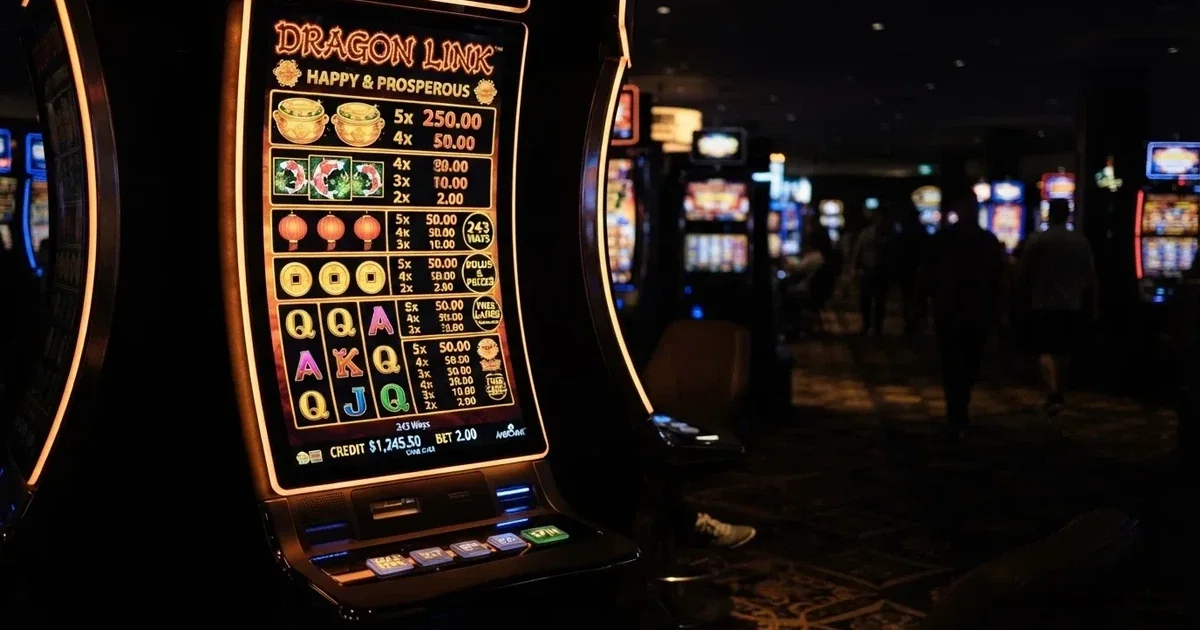
Dice games occupy a peculiar stretch of the Australian market. They sit openly on the floors of licensed casinos in Melbourne and Perth, where regulators approve them by name. They also sit, in their online form, on hundreds of offshore sites that the ACMA has spent the last several years warning, fining and asking ISPs to block. Both exist; only one of them is lawful for someone based in Australia. This page walks through what each side actually offers, what each bet costs in house edge, and what the legal frame around them means in practice.
Table of Contents
- What a casino dice game actually is
- Where dice games are legal in Australia — and where they are not
- What an offshore site costs the player who uses it
- Where to get help
- What an offshore casino dice game looks like in practice
- The brands the ACMA has acted against
- What the ACMA’s enforcement pattern looks like
- What is changing in 2026
- Choosing what to do with this picture
- Frequently asked questions
What a casino dice game actually is
Dice games in the casino sense are not the backgammon-and-yahtzee sense. They are games where the player bets on the outcome of a roll, and the house holds a fixed mathematical edge on every wager. Three games dominate the format globally: craps, sic bo and a coin-tossing game called two-up that has a particular place in Australian life.

Craps is built around the roll of two dice and a sequence of rounds that begins when a “shooter” sets a point and ends when that point is matched or a seven hits. Most of the bets are multi-roll, which is why the headline house edges on craps sit near the bottom of any casino game. Pass Line and Come carry 1.41%; Don’t Pass and Don’t Come 1.36%. The single-roll proposition bets inside the layout are a different animal — Any Craps is 11.11%, and specific triples run higher. The lesson the numbers carry is structural: in craps, the choice of bet matters more than the game itself.
Sic bo is the three-dice game that traces to ancient China, whose name translates roughly as “precious dice.” It reached the United States through Chinese immigrants in the early twentieth century and is now a standard offering in most Macau and Australian casino dice rooms. Three dice produce 216 equally likely outcomes, of which 56 are distinguishable. The Big/Small bet — total of 11 or 12 versus total of 9 or 10 — sits at 2.78%. Specific Triple bets can climb from 11.6% to over 30% depending on the ruleset.
Two-up is technically not a dice game at all. Two coins are tossed and the player bets on whether both will land on the same side. Its roots go back to the English and Irish game “cross and pile,” brought to Australia by convicts and then carried through the goldfields. It is illegal in Australia outside narrow exceptions: NSW permits it only on Anzac Day under the Gambling (Two-Up) Act 1998, played in RSL clubs and hotels. Kalgoorlie in Western Australia runs the only year-round legal two-up school. Inside licensed casinos, two-up became legal in 1973, starting at Hobart’s casino, and is now offered at Crown Perth and Crown Melbourne only.
A fourth game deserves mention because it lives near the dice games on most casino floors: baccarat. It is dealt from a shoe rather than rolled, but it shares the table-game neighbourhood and the same kind of flat house-edge structure. Banker carries 1.06%, Player 1.24%, Tie 14.36%. Punto banco, the version most players meet today, was developed in Havana during the 1940s; the casino banks both hands and the drawing rules are fixed.
Blackjack is the fifth game in the same family of low-edge table games, and is mentioned because Australian regulators treat it as a peer to craps and baccarat. Optimal play under liberal Las Vegas Strip rules brings the house edge down to about 0.28%; Atlantic City rules sit at 0.43%. Blackjack’s modern name came into use around 1899, credited to prospectors during the Klondike Gold Rush.
Where dice games are legal in Australia — and where they are not
The picture has two layers. The onshore layer is straightforward. Crown Melbourne, Crown Perth and the Star in Sydney each operate under state casino control acts — Victoria’s Casino Control Act 1991, Western Australia’s Casino Control Act 1985, NSW’s Casino Control Act 1992. Under section 66 of the NSW Act, a casino operator must not permit a game to be played unless the game and its rules are approved by the regulator, and the approved rules must be made available to patrons on request. The Victorian Gambling and Casino Control Commission (VGCCC), which replaced the VCGLR on 1 July 2022, maintains a public log of approved changes to Crown Melbourne’s blackjack variants and other table-game rules, including the renaming of Perfect Pairs to Crown Pairs in December 2024 and the introduction of a Free Bet option with a new Pot of Gold side bet in March 2024. Same pattern for baccarat: Crown Melbourne lists Traditional Baccarat, Crown Baccarat and 2 to 1 Baccarat as approved table games regulated by the VGCCC.
The offshore layer is where the dice games market actually sits for Australian online players — and where it stops being lawful. The Interactive Gambling Act 2001 (IGA), strengthened by the Interactive Gambling Amendment Act 2017, makes it an offence to provide online casino games, online pokies or in-play betting to a person physically in Australia. No state or territory licenses them. The only online wagering products Australian regulators license are pre-event race and sports betting, lotteries and keno. The Northern Territory Racing and Wagering Commission (NTRWC) regulates 52 of Australia’s online bookmakers — Sportsbet, Bet365 and Ladbrokes among them — and does so with no full-time staff and a once-a-month meeting in Darwin. That body exists for tax reasons: NT licensing is a longstanding structural choice, not a regulatory endorsement.
The practical meaning is that an offshore casino offering craps, sic bo or baccarat online to someone in Australia is offering a prohibited interactive gambling service. The ACMA has been turning that prohibition into blocks and warnings for years. A round reported on 26 June 2026 brought the running total to 1,751 illegal gambling and affiliate marketing websites blocked since the first blocking request in November 2019, with 12 more added in that single round: 7Signs, ChromaBet, Donbet, Duospin, Freshbet, Slots Gem, Jacks Club, Lucky Start, Pointsbetz, Spinrise, Vinyl Casino and Wildsino. More than 230 unlicensed gambling services have left the Australian market since enforcement was strengthened in 2017.
The arithmetic the page makes its own is a simple rate question: 1,751 sites blocked across roughly 79 months between November 2019 and June 2026. That is an average of around 22 blocked sites a month, with a clear recent acceleration — June 2026 alone added 12, and the April 2026 round added its own set. State the figure as a band, not a single number: somewhere between 20 and 30 blocked sites a month over the period, with the last two rounds running well above the early-period rate. The rate tells a reader how active enforcement is, and the band is honest about the fact that monthly volumes are uneven.
The blocking rate is a useful proxy for one thing only — the volume of fresh illegal sites surfacing to replace the ones already removed. It says nothing about whether any single site is still reachable, which changes month to month as ISPs comply and operators resurface under new domains.
What an offshore site costs the player who uses it
H2 Gambling Capital’s 2025 report estimates that Australians lose about A$3.9 billion a year to illegal gambling sites, with the share of gambling going through legal channels falling from 74% in 2021 to 64%. The flow of money is not the only cost. Three other costs sit on top of it:
No consumer protection. An offshore site is outside Australian jurisdiction. There is no local complaints body, no requirement to hold player funds separately, and no recourse if a withdrawal is refused or a bonus term is applied retroactively. The ACMA warns the operator; the player absorbs the consequence.
No connection to BetStop. The National Self-Exclusion Register, live since August 2023, binds only Australian-licensed online and phone wagering services. A player who has self-excluded through BetStop can still reach an offshore casino because the operator is not enrolled. That is a deliberate architectural choice in offshore licensing, not a bug.
Payment friction or worse. Credit cards, credit-related products and digital currency have been banned as payment for licensed online wagering since 11 June 2024, with penalties up to A$247,500 for operators. Legal deposit routes for licensed wagering are debit card, bank transfer, PayID/Osko and BPAY. A site asking an Australian for a credit card or a crypto deposit is operating outside the Australian rules — and it is doing so while still accepting the deposits.
The IGA targets the provider, not the player. Australians are not prosecuted for gambling on an offshore site. That is a fact about criminal exposure, not about the absence of risk.
Where to get help
Gambling Help Online runs the National Gambling Helpline on 1800 858 858, free, 24 hours a day, with a chat service on the same site. The helpline is the right first call regardless of whether the gambling was onshore or offshore, because what it treats is the behaviour, not the venue. BetStop, the National Self-Exclusion Register, is the second stop for anyone who has decided to stop and wants a binding arrangement with every Australian-licensed online and phone wagering service at once. State-based self-exclusion registers cover the casino floors in their jurisdiction and should be used alongside BetStop for someone who also plays onshore.
What an offshore casino dice game looks like in practice
An offshore site offering “dice games” to an Australian typically carries the craps table format adapted for a single player against the house, plus a sic bo layout, plus a handful of proprietary “dice slots” branded as casino dice. The craps edge structure is the same as the live game: Pass and Come near 1.41%, the proposition bets much higher. Sic bo carries the same 2.78% on Big/Small and the same elevated specific-triple edges. The proprietary dice slots run on whatever return-to-player the operator publishes, and the audit on those figures is whatever the operator’s testing lab chose to certify. The house edge on those proprietary games is whatever it is — and the player has no way to verify it without running the maths on observed outcomes.
The promotional layer compounds the problem. Offshore casinos compete on bonus size, because their edge on the game is small and they need volume to make it pay. A bonus with a 40x wagering multiple on the deposit plus bonus, applied to dice games that contribute 10% or 0% toward clearing, is a structurally different offer from the same headline on a pokies-only site. None of the brands below publish those terms in a form the ACMA’s formal-warning notices cover, and none are licensed to take Australian players in the first place.
The brands the ACMA has acted against
The list below is not a recommendation and not a ranking. Each brand is included because the ACMA itself issued a formal warning over it for offering prohibited interactive gambling services to people in Australia. The page does not assess any of them as a place to play. The page records what the regulator has said.
RocketPlay
The ACMA issued a formal warning to Pulsup Ltd over RocketPlay in March 2026. An earlier warning had already been issued to Dama N.V. in May 2022 covering six brands that included Rocketplay, so the 2026 notice sits on top of an existing regulatory record with the same operator lineage. RocketPlay carries no Australian licence; the offshore Curaçao registration it displays does not change the prohibition under the IGA for an Australian player. Verdict: the regulator’s record on this brand goes back further than most, and the 2026 warning is the latest entry in a multi-year pattern rather than a first contact.
Level Up Casino
The ACMA issued a formal warning to Dama N.V. over Level Up in May 2022, as part of the same six-brand notice that included Bambet, Dazard, Rocketplay, Wild Tornado and Cobra Casinos. The brand is listed in third-party game-provider catalogues as a venue where the provider’s dice-style content is hosted, which is the closest thing the public record carries on what the site actually offers. Verdict: an early entry in the ACMA’s casino-brand sweep, with no 2024–2026 enforcement update on file — though the absence of a fresh action is not the same as a clearance.
Woo Casino
The ACMA issued a formal warning to Dama N.V. over Woo Casino in March 2025. Woo sits in the same operator group as Level Up, RocketPlay and the rest of the Dama brands warned in 2022, but received its own discrete warning two and a half years later — a sign the regulator was tracking the brand separately rather than treating the 2022 notice as settled. Verdict: a 2025 escalation on a brand that was already on the regulator’s radar, indicating that the prior warning had not changed behaviour.
Spirit Casino
The ACMA issued a further formal warning to Dama N.V. over Spirit Casino in May 2025, two months after the Woo Casino warning. The pattern is the same Dama lineage. Verdict: another 2025 escalation in the same operator family, reinforcing the picture of a group that the regulator has now warned repeatedly and individually.
National Casino
The ACMA issued a formal warning to Consolutetish S.R.L. over National Casino in July 2025. National Casino is referenced in public encyclopaedic coverage of casino games as a venue where specific titles are hosted. Verdict: a 2025 action against a different operating entity from the Dama group, broadening the regulator’s reach across the offshore landscape rather than concentrating it.
Bizzo Casino
The ACMA issued a formal warning to Consolutetish S.R.L. over Bizzo Casino in July 2025, in the same notice as National Casino. Bizzo had already been the subject of a 2022 formal warning to TechSolutions (CY) Group Limited and TechSolutions Group N.V., making this a re-warning after a three-year gap — the same shape as the Woo Casino pattern. Verdict: the ACMA came back to Bizzo after treating the original 2022 warning as not effective, and the 2025 action names a new operating entity at the same brand.
Ignition Casino
The ACMA issued a formal warning to Bamboo Media over Ignition Casino in July 2025. Verdict: the regulator’s July 2025 round extended beyond the Consolutetish group to a separate operator, indicating that the action was not a one-off sweep but a parallel push against multiple groups at once.
Instant Casino
The ACMA issued a formal warning to EOD Code SRL over Instant Casino in February 2025. The February timing is notable because it predates the July 2025 round and the 2026 blocking round, sitting alone in its month as a discrete action. Verdict: an earlier-2025 standalone warning that fits the broader pattern of named-operator actions rather than anonymous blocking.
Jackbit
The ACMA issued a formal warning to Ryker B.V. over Jackbit and CasinOK in April 2026. The pairing of two brands under one warning suggests the regulator was treating the operator’s portfolio as a single target rather than chasing each brand individually. Verdict: a 2026 action against a portfolio rather than a brand, which is a structurally different regulator move from the per-brand warnings that came before.
Casino Intense
The ACMA issued a formal warning to Sterplay Holding Ltd over Casino Intense in April 2025. The brand is referenced in mainstream Australian reporting and on Crown Melbourne’s own site as a comparison point in coverage of Australian casino floors, though those references are not endorsements. Verdict: a 2025 warning against a brand whose name has spilled into Australian media coverage of the casino sector, putting it on the regulator’s record at the same time as it is being discussed in mainstream outlets.
Sky Crown
The ACMA issued a formal warning to Hollycorn N.V. over its Sky Crown and Blue Leo casino services. The published warning dates to September 2022, making it one of the earlier entries on the regulator’s record and a marker of how long the ACMA has been running this enforcement track. Verdict: a 2022 warning that has not been repeated on the page’s sources, which leaves open the question of whether the regulator’s enforcement against Hollycorn continued in the same form after 2022 — a question the available record cannot answer.
What the ACMA’s enforcement pattern looks like
The eleven brands above map onto a regulator moving from per-operator sweeps to per-brand notices to portfolio-level actions. The 2022 notices covered Dama N.V. across six brands and Hollycorn across two. The 2025 notices split: Dama received fresh per-brand warnings for Woo and Spirit, while Consolutetish, Bamboo Media, EOD Code SRL and Sterplay each received their first or second notices. The 2026 notices narrowed further still: Pulsup for Rocketplay, Ryker B.V. for Jackbit and CasinOK together. The blocking side has run in parallel, with the June 2026 round adding twelve unnamed sites to the 1,751-site total since November 2019.
The pattern tells a reader two things at once. First, the regulator is treating the offshore market as a continuing project rather than a one-off cleanup. Second, the move from operator-level warnings to brand-level warnings to portfolio-level warnings is a tightening of the legal net — each step makes it harder for the same operator to surface under a new name.
What is changing in 2026
The Interactive Gambling Amendment (Gambling Reform) Bill 2026 passed Parliament on 19 August 2026. Its advertising and inducement measures commence 1 January 2027 — law with a start date, not yet in force on a 2026 page. For a reader looking at the dice-games market right now, the practical frame is still the IGA as amended in 2017, enforced through the ACMA’s blocking and warning powers, with the offshore dice market operating outside it.
The tax position is unchanged. Gambling winnings of a recreational player are not assessable income under section 6-5 ITAA 1997, and losses are not deductible, unless the person carries on a business of gambling — a model only, and one a reader should check with the ATO before relying on it.
Choosing what to do with this picture
The choice the page lays out is not a brand-versus-brand comparison. It is a venue-versus-venue comparison. On one side sit the licensed casino floors in Melbourne, Perth and Sydney, where dice games and their peers are approved by name by the relevant state regulator and where a player has a complaints body, a self-exclusion option through state registers and the protections of the Casino Control Acts. On the other side sit offshore sites that the ACMA has been warning and blocking for years, where the consumer protections are whatever the operator’s terms page says they are and where a balance on the account at the moment of a blocking request is gone. Both sides offer dice games. Only one of them is a lawful option for someone based in Australia, and the lawful side is the smaller market by a wide margin — by the H2 Gambling Capital estimate, only 64% of Australian gambling now flows through legal channels, down from 74% in 2021.
A player who wants craps or sic bo with Australian consumer protection plays it on a casino floor in one of the three licensed venues. A player who wants the same games online plays them on an offshore site that the ACMA has, with the brands above as evidence, named by operator and date. The arithmetic behind that choice is not in the bonus terms; it is in the consumer law around the deposit.
Frequently asked questions
What is the house edge on a Pass Line bet in craps?
Pass Line carries a 1.41% house edge, one of the lowest in any table game on a casino floor. It is a multi-roll bet that wins on a natural 7 or 11 on the come-out roll and loses on 2, 3 or 12, then settles once the shooter sets and either matches or sevens-out a point.
Why does the Any Craps one-roll bet carry a much higher house edge than Pass Line?
Any Craps pays 7:1 on a single roll of 2, 3 or 12, while the true odds against any of those three totals showing are much longer. The 11.11% edge reflects that gap. One-roll proposition bets in craps are priced for excitement rather than value, and the choice of bet matters more than the game itself.
Are dice games like craps offered on licensed Australian casino floors?
Yes, on Crown Melbourne, Crown Perth and the Star Sydney, where regulators approve table games and their rules by name under the relevant Casino Control Act. The VGCCC publishes approved-rule changes for Crown Melbourne, including blackjack variants and baccarat versions such as Traditional Baccarat, Crown Baccarat and 2 to 1 Baccarat.
What’s the difference between a ‘right’ bettor and a ‘wrong’ bettor in craps?
A right bettor backs Pass Line and Come, which carry a 1.41% house edge. A wrong bettor backs Don’t Pass and Don’t Come, which carry a slightly lower 1.36% edge by betting against the shooter. Both are multi-roll bets with the same structure; the difference is which side of the dice the player is on.
Can an online dice game legally be offered to someone based in Australia?
No. The Interactive Gambling Act 2001, strengthened in 2017, prohibits the provision of online casino games — including dice games — to a person in Australia. No state or territory licenses them. The ACMA enforces through formal warnings and blocking requests to ISPs; the player is not prosecuted but has no Australian consumer protection on an offshore site.
Do all casino dice games use the same house-edge structure as craps?
No. Sic bo’s Big/Small bet sits at 2.78%, while specific-triple bets can run from 11.6% up to 30% depending on the ruleset. Two-up, played with coins rather than dice, has no published house-edge figure because it is illegal outside narrow exceptions and is not offered as a commercial casino product.