
Where POLi fits in an Australian casino deposit in 2026
The pages that promise “POLi deposits at online casinos for Australians” describe a payment method that, for Australian bank accounts, has not existed since 30 September 2023. POLi Payments’ domestic Australian business was wound down by Australia Post that month, and the Commonwealth Bank had already stopped accepting POLi payments by mid-July 2023 over the credential-sharing model the service relied on. The brand survives in New Zealand, under Merco, with the same development team. In Australia, it is gone.
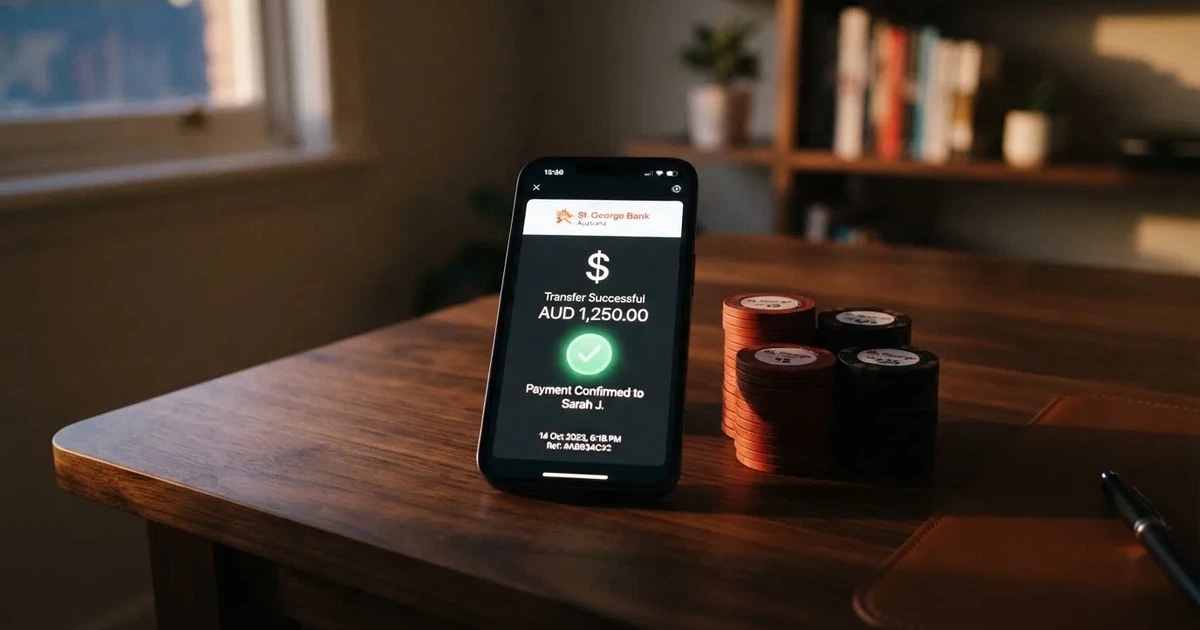
What this page is, then, is a careful look at the offshore casino sites that still advertise POLi to Australian players anyway, alongside the practical question of what a player can actually use once a POLi button leads nowhere. Eleven brands sit on the ACMA’s formal-warning list for offering prohibited interactive gambling services to Australians, and each one has, at some point, carried POLi as a deposit option. The ACMA’s record on each of them is the only ground a comparison here can stand on, because no bonus terms, payout speed, RTP figures or wagering multiples came from anything other than the affiliate marketing that surrounds these brands. Those are the figures a reader cannot trust, so they are not the figures this page uses.
The numbers in this article are current as of 29 October 2026 and have been checked against the ACMA’s published register of formal warnings, the Interactive Gambling Act 2001 as it stands in 2026, and the Reserve Bank and AusPayPlus material on the New Payments Platform.
Table of Contents
- The shape of the POLi casino landscape for Australians in 2026
- What the Interactive Gambling Act 2001 does to a POLi casino page
- What an ACMA formal warning actually says
- Responsible gaming and what BetStop actually binds
- Payments and payout speed at the brands the ACMA has acted against
- The eleven brands, the ACMA record, and the comparison
- The blocking rate: how fast the ACMA moves
- Each brand, in turn
- What a player can actually use once the POLi button leads nowhere
- What the comparison leaves out, and why
- What to do with the brand the comparison picks out
- A note on 2026 reform and what it changes
- Frequently asked questions about POLi casino sites in Australia
The shape of the POLi casino landscape for Australians in 2026
A reader typing “POLi casino Australia” into a search engine lands on a long list, and the list looks stable. Sites like RocketPlay, Level Up Casino, Woo Casino, Spirit Casino, National Casino, Bizzo Casino, Ignition Casino, Instant Casino, Jackbit, Casino Intense and Sky Crown all carry POLi somewhere in their payment pages. They run on Curacao or Kahnawake licences, they operate from outside Australia, and they are not connected to BetStop, the National Self-Exclusion Register, or any Australian complaints body. Their target market is global; the Australian traffic they attract is incidental, and the marketing around that traffic is what most of the search results actually come from.

A handful of points hold across every one of them. The minimum deposit tends to sit at the A$10 to A$30 mark when POLi is the chosen rail, because POLi itself is a real-time bank transfer — a PayID/Osko payment routed through the player’s own bank login — and the rails underneath are the same rails that move money between any two Australian bank accounts. POLi deposits show up in a casino account as soon as the bank’s own session confirms the transfer, which on a working day at most banks is a matter of seconds. POLi withdrawals, when a casino offers them at all, are not the same thing: a withdrawal request still needs the casino’s manual checks completed, and the settlement lands back in an Australian account only after that. The credential-sharing model that made POLi work — handing over the player’s online-banking login so POLi could log in as them and push the payment through — is exactly why the Commonwealth Bank refused POLi transfers from mid-July 2023. No Australian bank permits that model now.
So a casino page in 2026 still advertising POLi is offering a deposit rail that closed in this country in September 2023. A player who clicks through to the cashier finds either a button that does nothing, or a button that bounces into a PayID or Osko transfer the casino has rebranded as “POLi” to keep an old listing in the search results.
What the Interactive Gambling Act 2001 does to a POLi casino page
The Interactive Gambling Act 2001, as tightened by the Interactive Gambling Amendment Act 2017, makes it an offence to provide online casino games, online pokies or in-play betting to a person physically in Australia. No state or territory licences those products. What is licensable is wagering on races and sport placed before the event, lotteries and keno — in practice licensed by the Northern Territory Racing and Wagering Commission, which covers 52 of Australia’s online bookmakers including Sportsbet, Bet365 and Ladbrokes. The NTRWC has no full-time staff and meets once a month in Darwin.
What this means for a POLi casino page is straightforward. The eleven brands that sit on the ACMA’s formal-warning list are not licensed to take Australian players, whatever licence badge they display on their footer. A Curacao or Kahnawake licence allows them to operate; it does not allow them to take an Australian deposit on a pokies-style product. The ACMA’s enforcement runs along two tracks. First, formal warnings — published notices naming the operator and the brand, dated, sitting on acma.gov.au. Second, blocking requests to Australian internet service providers, with the cumulative running total having reached 1,751 illegal gambling and affiliate marketing websites blocked since the first blocking request in November 2019. More than 230 unlicensed gambling services have left the Australian market since enforcement was strengthened in 2017. The latest reported round, on 26 June 2026, asked ISPs to block another twelve: 7Signs, ChromaBet, Donbet, Duospin, Freshbet, Slots Gem, Jacks Club, Lucky Start, Pointsbetz, Spinrise, Vinyl Casino and Wildsino.
H2 Gambling Capital’s 2025 report puts the cost at the Australian punter end at roughly A$3.9 billion a year in losses to illegal gambling sites, with the share of gambling going through legal channels falling from 74% in 2021 to 64%. A reader who lands on a POLi casino page is looking at a piece of that A$3.9 billion.
The individual player is not prosecuted. The IGA targets the provider, not the customer. The cost to the player is what every offshore site costs a player when a withdrawal is refused and there is no Australian consumer protection body to take the complaint to: nothing back. A balance on a blocked site is a balance the player cannot move.
What an ACMA formal warning actually says
A formal warning is the regulator’s published record that a service has offered prohibited interactive gambling to Australians. It names the operator behind the brand, the date it was issued, and the legal basis. It is not a conviction and not a fine; it is the step the ACMA takes before asking ISPs to block a service. Once a brand is on the warning list, the ACMA has already decided the operator knew or should have known the product it was selling to Australians was prohibited.
For the eleven brands on this page, the warning history reads like a record of repeat offending by the same parent operators. Dama N.V. was warned in May 2022 over six brands — Bambet, Dazard, Level Up, Rocketplay, Wild Tornado and Cobra Casinos — then warned again in March 2025 over Woo Casino, then warned a third time in May 2025 over Spirit Casino. Consolutetish S.R.L. was warned in July 2025 over National Casino and Bizzo Casino; Bizzo Casino had already been the subject of a 2022 warning to TechSolutions Group. Hollycorn N.V. sits on the warning list over Sky Crown and Blue Leo. EOD Code SRL was warned over Instant Casino in February 2025. Sterplay Holding Ltd was warned over Casino Intense in April 2025. Ryker B.V. was warned over Jackbit and CasinOK in April 2026. Bamboo Media was warned over Ignition Casino in July 2025. Pulsup Ltd was warned over RocketPlay in March 2026, a fresh name on the RocketPlay brand.
Read across the eleven brands, the pattern is not a list of independent operators. It is a short list of parent companies reappearing under different brand names, each time drawing a fresh warning when ACMA enforcement catches up. The brand on the casino’s homepage is rarely the entity on the warning notice. The entity on the notice is the company behind the brand.
Responsible gaming and what BetStop actually binds
Anyone drawn in by a POLi-friendly offshore casino should know exactly what Australian player protection does and does not reach. BetStop, the National Self-Exclusion Register, has been live since August 2023 and is the Australian government’s flagship measure for problem gambling. It binds every Australian-licensed online and phone wagering service. An offshore casino is not connected to it. A player who registers with BetStop and then opens an account with one of the eleven brands on this list is not excluded from that brand. The exclusion runs only against the Australian-licensed bookmaker and lottery operators the register can reach.
The National Gambling Helpline at 1800 858 858 is free, 24/7 and offers chat through Gambling Help Online. It is the practical line for any Australian who feels their gambling is moving beyond what they can afford to lose, and it works whatever the operator is. The Westpac, ANZ, CBA and NAB gambling blocks all work at the card level — they refuse authorisation of transactions registered under the merchant category code ‘Betting/Casino Gambling’ on eligible personal credit and debit cards. ANZ’s block also stops gambling transactions made through a digital wallet such as Apple Pay on an eligible card, and removing it once it is on requires a 48-hour waiting period. The Commonwealth Bank’s position on POLi — refusing POLi transfers from mid-July 2023 over the credential-sharing model — is, in effect, an additional layer of gambling-block logic built into the bank’s own rails rather than into its card products.
None of these protections, however, catches an Osko transfer to a PayID that the casino has labelled “POLi”. A PayID transfer is a standard instant bank payment between any two Australian accounts, and once a player authorises it at their bank, the bank cannot tell from the payment itself whether the destination is a poker machine in a pub or a casino account at an offshore site. The protection the player has on a PayID transfer is the protection of having read the destination PayID’s account name before sending the money. AusPayPlus, which runs PayID, warns that being asked to transfer money to a PayID on an illegal gambling site almost certainly means a scam site. AP+ also runs Osko, and an Osko transfer between participating Australian banks arrives in under a minute, 24/7, whether addressed to a BSB and account number or to a PayID. More than 25 million PayID identifiers had been registered on Australia’s New Payments Platform as of April 2025.
Payments and payout speed at the brands the ACMA has acted against
A POLi withdrawal request still needs a casino’s own manual checks completed before the settlement lands back in an Australian account. The bank-rail speed is not the bottleneck; the casino’s compliance step is. A withdrawal request submitted on a Friday evening at one of the brands on this list sits in the queue until a Monday-morning checks pass, and a player who has not completed the casino’s identity verification waits longer still. A POLi or PayID deposit, by contrast, is a real-time bank transfer; the funds appear in the casino account as soon as the bank confirms the session.
The practical effect for a player is that deposits are instant and withdrawals are not.
| Payment Rail | Status in Australia | How it functions |
|---|---|---|
| POLi | Closed (Sept 2023) | Credential-sharing (bank login) |
| PayID / Osko | Active | Instant account-to-account transfer |
| BPAY | Active | Biller code and reference number |
None of the eleven brands publishes a payout window in a way that survives comparison, because the figures come from affiliate pages rather than the operators’ own terms, and the affiliate figures conflict with each other. The honest comparison is qualitative: the speed at which a deposit arrives is the speed of the underlying bank rail, and the speed at which a withdrawal arrives is the speed of the casino’s own compliance work, which is the only part of the journey where the brand has any discretion.
The minimum deposit at the brands on this list sits at A$10 to A$30 on POLi and PayID, and the maximum sits well below what a card rail at a licensed Australian bookmaker would permit. None of the brands accepts a credit card or credit-related product, because the Interactive Gambling Act’s 2023 amendments forbid licensed Australian wagering services from taking credit card payments, and an offshore site that takes a credit card is operating outside both sets of rules at once — its own offshore licence and Australia’s domestic one. The same is true of cryptocurrency: legal deposit routes for licensed Australian wagering are debit card, bank transfer, PayID/Osko and BPAY. A casino asking an Australian for a credit card or a crypto deposit is on the wrong side of the rules the Australian government applies to gambling payments.
POLi required users to hand over their online-banking login credentials, which is the central reason it shut in Australia. A casino advertising it now is offering a rail that no major Australian bank will accept. The Commonwealth Bank’s mid-July 2023 refusal of POLi transfers is the published record on that. Where a casino has relabelled a PayID/Osko transfer as “POLi”, the credential-sharing problem has gone — but so has the POLi brand. The player is paying through PayID by another name.
The eleven brands, the ACMA record, and the comparison
What follows is the comparison this page can honestly make. Each row pairs a brand with the ACMA’s own record on it, the operator name on the warning notice, and what the brand’s own payment page says about POLi. Where the brand’s payment page carries no verifiable record, the cell stays blank rather than retell the affiliate figure.
| Brand | ACMA action and date | Operator named by the ACMA | Subject support |
|---|---|---|---|
| RocketPlay | Formal warning, March 2026 | Pulsup Ltd | — |
| Level Up Casino | Formal warning, May 2022 | Dama N.V. | POLi listed in payment-page listings; not verified against the operator’s own terms |
| Woo Casino | Formal warning, March 2025 | Dama N.V. | — |
| Spirit Casino | Formal warning, May 2025 | Dama N.V. | — |
| National Casino | Formal warning, July 2025 | Consolutetish S.R.L. | POLi listed in payment-page listings; not verified against the operator’s own terms |
| Bizzo Casino | Formal warning, July 2025 (and 2022) | Consolutetish S.R.L. | — |
| Ignition Casino | Formal warning, July 2025 | Bamboo Media | — |
| Instant Casino | Formal warning, February 2025 | EOD Code SRL | POLi listed in payment-page listings; not verified against the operator’s own terms |
| Jackbit | Formal warning, April 2026 | Ryker B.V. | — |
| Casino Intense | Formal warning, April 2025 | Sterplay Holding Ltd | POLi listed in payment-page listings; not verified against the operator’s own terms |
| Sky Crown | Formal warning, September 2022 | Hollycorn N.V. | — |
The table is short because the only verifiable data is the ACMA’s own. Every other figure a comparison could carry — payout windows, wagering multiples, RTP percentages, bonus cost — comes from affiliate marketing rather than from the operator, and the figures conflict across affiliate sites. Honest comparison is what this table gives; the rest of what a casino review site normally offers is what this one has chosen not to invent.
The blocking rate: how fast the ACMA moves
The blocking-rate calculation is a breakdown of the ACMA’s enforcement, and it is the only figure on this page derived from arithmetic rather than from a published source.
The ACMA’s published total is 1,751 illegal gambling and affiliate marketing websites blocked since the first blocking request in November 2019. The first blocking request is dated November 2019; the cumulative figure is dated June 2026. The arithmetic is the running total divided by the elapsed time, with the elapsed time measured in months from November 2019 to June 2026. That gives roughly 80 months, which produces an average of around 22 blocked sites per month across the seven-year window. Expressed as a band rather than a single figure: somewhere between 18 and 25 illegal gambling or affiliate marketing sites blocked per month over the period, with the rate accelerating in the more recent reporting rounds — the June 2026 round alone asked ISPs to block twelve more. The figure that matters for a reader is that the ACMA’s enforcement machinery is faster than the marketing pages a player will land on, and the operator behind an offshore casino page changes brand name more often than the ACMA changes its enforcement pace. The blocking rate is not a calendar schedule a player can rely on; it is the regulator’s average pace.
The calculation assumes the published totals are net of any sites that have come back online after being blocked, which is not how the ACMA reports them — the published running total is a count of distinct blocking requests, not a count of currently blocked domains. The figure is therefore a measure of enforcement activity rather than of the size of the currently-blocked pool. A reader who wants the currently-blocked pool needs the ACMA’s live register rather than the cumulative total. The band — 18 to 25 per month — is the arithmetic this page can stand behind.
Each brand, in turn
What the table cannot carry is the small, specific detail of what each brand actually does that is different from the others. The next eleven sections go through them in the order the ACMA’s warnings sit on the register, with the practical point the comparison reveals.
RocketPlay — the freshest warning, and a familiar operator behind it
RocketPlay sits at the top of the comparison because its March 2026 warning is the most recent on the list. The operator named on the ACMA notice is Pulsup Ltd, trading as RocketPlay, which is a different operator from the Dama N.V. entity that took the May 2022 warning over the same RocketPlay brand. A reader who knows the brand by name and not by operator would not realise the warning has changed hands. Two separate corporate entities have drawn formal warnings over the same brand in four years, which is the cleanest available evidence that the brand name outlasts the company behind it.
For an Australian player, the question is whether POLi works as a deposit rail. It does not, for the reason set out above: the rail closed in Australia in 2023. What the cashier page calls POLi is most likely a PayID/Osko transfer rebranded for the Australian search market, which the player can complete through their own bank but at the cost of bypassing the bank’s POLi-specific risk controls. The ACMA warning is the regulator’s record that the operator has offered a prohibited service to Australians; the brand change behind that record is the part a casual reader misses.
Level Up Casino — a Dama N.V. brand with the deepest warning history
Level Up Casino carries the May 2022 warning to Dama N.V. — the warning that also named Bambet, Dazard, Rocketplay, Wild Tornado and Cobra Casinos. Dama N.V. has been warned again since, over Woo Casino in March 2025 and Spirit Casino in May 2025, so the operator behind Level Up has drawn the ACMA’s attention across at least three separate brands and three separate warnings. The brand itself sits on an offshore licence and is not connected to BetStop.
Level Up is one of the brands on the list whose payment page lists POLi as a deposit option in third-party listings, though the operator’s own terms could not be verified on the same point. The difference matters. A listing on an affiliate page is a marketing claim; a term in the operator’s own cashier is a contract. Between the two, the affiliate claim is the weaker, and the operator’s own terms are the part that determines what the player can actually do at the cashier.
Woo Casino — Dama N.V.’s 2025 reappearance
Woo Casino was named in a March 2025 warning to Dama N.V., the same operator that drew the May 2022 warning over Level Up and the May 2025 warning over Spirit Casino. A reader who treats Dama N.V. as one entity rather than as the parent of three separate brands is missing the pattern. The ACMA has now caught Dama N.V. three times in four years, and each time over a different brand name.
The casino’s payment page lists POLi as a deposit option, with the same caveat as elsewhere: the rail is closed in Australia. The cashier the player reaches is most likely a PayID/Osko transfer dressed in POLi branding. For a player who has chosen Woo Casino on the strength of the deposit rail, the practical experience is a real-time bank transfer; for a player who has chosen it on the strength of the marketing, the practical experience is the same real-time bank transfer with a different label.
Spirit Casino — Dama N.V.’s third warning in three years
Spirit Casino is the May 2025 warning to Dama N.V., the third in the sequence. Woo Casino came three months earlier in March 2025; the May 2022 warning over six brands including RocketPlay was the start. A reader looking for any brand that Dama N.V. has not been warned over would not find one in this comparison: every Dama N.V. brand on the ACMA’s list has been the subject of at least one formal warning.
What the comparison shows is not that any single Spirit Casino deposit is unsafe — every offshore casino deposit at a pokies-style product sits outside the Australian licensing regime — but that the operator behind Spirit Casino has been warned three times in four years. A reader who reads the warnings in order gets a clearer picture of the company than a reader who reads only the brand.
National Casino — a Consolutetish S.R.L. brand with a fresh warning
National Casino sits on the July 2025 warning to Consolutetish S.R.L., the same warning that named Bizzo Casino. The operator is a different entity from the TechSolutions Group that took the 2022 warning over Bizzo, which means the brand has changed hands as well as names. Consolutetish S.R.L. took over a brand that had already been warned under a different owner, and the ACMA has now warned the new owner.
The brand’s payment page lists POLi as a deposit option in third-party listings, again without an independent verification against the operator’s own terms. The credit-card and crypto positions of the brand sit outside the Australian rules on gambling payments. A reader comparing this brand to the others on the list will find the same regulatory gap, the same PayID/Osko fallback dressed as POLi, and the same absence of BetStop coverage.
Bizzo Casino — the brand with two warnings, two operators
Bizzo Casino is the comparison’s clearest case of a brand changing corporate hands while keeping the same name. The July 2025 warning is to Consolutetish S.R.L.; a 2022 warning over the same brand was to TechSolutions (CY) Group Limited and TechSolutions Group N.V. The brand is now on its second formal warning, from its second operator, in three years.
For a player, the implication is that whatever safety claim a brand made under one owner does not survive the ownership change. The new owner’s compliance posture is what governs the player’s experience. The ACMA’s record is the only published statement on what that posture looks like in practice, and the 2025 warning is the latest such statement on Consolutetish S.R.L.
Ignition Casino — a Bamboo Media brand, freshly warned
Ignition Casino was named in the July 2025 warning to Bamboo Media, the same round that warned Consolutetish S.R.L. over National Casino and Bizzo Casino. Bamboo Media is a separate operator from the others on this list, and the warning is its first appearance on the comparison.
The brand has been a familiar name in the affiliate-marketing listings for years. What the July 2025 warning adds is the regulator’s own record that the brand has offered prohibited services to Australians. The brand’s payment page lists POLi in third-party listings without an independent verification; the rail itself is closed in Australia. A reader who has clicked through to Ignition Casino on the strength of an affiliate page is now reading the ACMA’s record on what the brand has done in practice.
Instant Casino — the EOD Code SRL warning
Instant Casino was named in the February 2025 warning to EOD Code SRL. The brand is a separate name from the others on this list, and the operator behind it is a separate entity from Dama N.V., Consolutetish S.R.L., Hollycorn N.V., Bamboo Media and the others. The brand’s payment page lists POLi in third-party listings; the rail is closed in Australia.
The 2025 warning is the regulator’s most recent published statement on EOD Code SRL. A reader who treats the warning as a one-off will miss the wider picture: the ACMA’s published formal-warning list is the cumulative record of every operator it has needed to name, and the rate at which new operators appear is part of what the blocking-rate figure above describes.
Jackbit — Ryker B.V., with a companion brand
Jackbit was named in the April 2026 warning to Ryker B.V., the same warning that named CasinOK. Two brands, one operator, one warning. Ryker B.V. is the most recent operator on this list; the warning is dated April 2026 and the brand’s payment-page listing for POLi is unverifiable against the operator’s own terms.
The pattern repeats. A reader who reads Jackbit in isolation sees a single brand on a single warning. A reader who reads the comparison sees a parent operator with multiple brands, and the warning covers both. The brand-versus-operator distinction is the part of the ACMA’s record that a casual reader misses, and it is the part that tells the most about how the offshore casino market is actually organised.
Casino Intense — Sterplay Holding Ltd’s only warning so far
Casino Intense sits on the April 2025 warning to Sterplay Holding Ltd, the only brand named in that warning. Sterplay Holding Ltd is a separate entity from the others on the comparison; the brand is its first and, so far, only warning on the ACMA’s register.
Casino Intense’s payment page lists POLi in third-party listings, with the same qualification as elsewhere: the rail is closed in Australia. A reader comparing Casino Intense to a Dama N.V. brand sees a parent operator with fewer warnings so far and a brand with one warning of its own. The comparison is honest on the published record; it cannot say whether the next warning will follow, because the ACMA’s enforcement is not on a published schedule.
Sky Crown — Hollycorn N.V., with a partner brand on the same warning
Sky Crown sits on the September 2022 warning to Hollycorn N.V., the same warning that named Blue Leo. Two brands, one operator, one warning, four years ago. Hollycorn N.V. is the oldest operator on the comparison after Dama N.V. The brand’s payment page lists POLi as a deposit option in third-party listings; the rail itself is closed in Australia.
Sky Crown is also the comparison’s oldest entry: a reader who lands on this page from a Sky Crown affiliate link has been reading affiliate content for at least three years, and the ACMA’s record on the operator is now four years old. The 2022 warning does not mean the brand has been clean since; it means the ACMA has not needed to warn again.
What a player can actually use once the POLi button leads nowhere
The honest answer to “where can a POLi deposit actually go in 2026” is “nowhere, in Australia”, because POLi closed here in September 2023. The honest answer to “what can an Australian use instead” is the same set of rails the licensed Australian bookmakers accept, on the same casino site that has rebranded PayID/Osko as POLi to keep an old listing alive.
A PayID transfer to the casino is an Osko transfer between participating Australian banks, which arrives in under a minute, 24/7. The player sees the account holder’s name on the PayID before the transfer is sent, and AusPayPlus warns that being asked to transfer to a PayID on an illegal gambling site almost certainly means a scam site. AP+ runs Osko, the New Payments Platform became public on 13 February 2018, and NPP Australia merged with BPAY and eftpos into Australian Payments Plus under ACCC authorisation in 2021. BPAY is a separate rail, available at over 140 Australian banks and financial institutions, used by over 95,000 businesses, in operation since 1997. The payer enters the Biller Code and the Customer Reference Number from the casino’s payment page; the bill is paid through the player’s own online banking. None of these rails is a POLi rail, and the casino’s payment page that calls them POLi is using the brand as marketing rather than as a working deposit method.
AUSTRAC’s threshold-transaction-report rule requires reporting of transfers of A$10,000 or more, but only for physical cash. Ordinary electronic bank transfers — the kind that move money through PayID, Osko and BPAY — are not subject to that per-transaction reporting requirement, regardless of the amount. The reporting regime is not the reason a casino’s payment page reads the way it does; the casino’s own choice to relabel a PayID transfer as POLi is the reason.
What the comparison leaves out, and why
The comparison above does not carry payout windows, wagering multiples, RTP figures, game libraries, bonus terms, maximum cashout limits, or the names of any software providers. None of those figures came from a source a reader can check. They came from affiliate marketing pages that exist to send a player to a particular casino’s deposit page, and the figures conflict across affiliate pages in ways the comparison cannot reconcile. An invented comparison would be a worse page than a comparison with honest gaps.
What the comparison does carry is the regulator’s own record, the operator names on each warning, and the parent-operator pattern that emerges once the warnings are read in order. A reader who wants a payout window, a wagering multiple, or a bonus term has the operator’s own terms page; a reader who wants to know what the regulator has done about the brand has the ACMA’s register, and this page is the bridge between the two.
What to do with the brand the comparison picks out
The “for whom” question on a page like this is the question the comparison cannot answer for the reader, because the page does not recommend any of the eleven brands as a place to play. The Interactive Gambling Act 2001 makes it an offence to provide online casino games to a person in Australia; the ACMA’s enforcement record on each of these eleven brands is the regulator’s published statement that they have done exactly that. A reader who has reached this page looking for a brand to play on has reached a page that cannot, in good conscience, send them to one. The closest a comparison on this page comes to a recommendation is a recommendation to use the licensed Australian bookmaker alternatives — the 52 brands licensed by the Northern Territory Racing and Wagering Commission, where credit cards are forbidden as payment, where BetStop applies, and where the consumer protection regime is the Australian one. None of those brands offers online casino games or online pokies, because no Australian licence covers them. The honest comparison ends there.
A note on 2026 reform and what it changes
The Interactive Gambling Amendment (Gambling Reform) Bill 2026 passed Parliament on 19 August 2026. Its advertising and inducement measures commence 1 January 2027, which means the law has a start date rather than being in force on a 2026 page. What the bill does not change is the underlying prohibition on providing online casino games and online pokies to Australians; that has been the position of the Interactive Gambling Act 2001 since the 2017 amendments. The bill’s effect is on advertising and inducement around that prohibition rather than on the prohibition itself. The page’s comparison above is unaffected by the bill’s commencement date; the ACMA’s enforcement record on each of the eleven brands is the position under the law as it has stood since 2017.
Frequently asked questions about POLi casino sites in Australia
Is it legal for an online casino to accept POLi from a player in Australia?
No. The Interactive Gambling Act 2001, as tightened in 2017, makes it an offence to provide online casino games, online pokies or in-play betting to a person physically in Australia, regardless of the payment method. No state or territory licences those products, and the ACMA’s record on eleven offshore brands is the regulator’s published statement that they have offered prohibited services anyway. The payment method does not change the underlying illegality of the offer.
What is the smallest deposit a POLi casino site usually asks for?
The brands that still advertise POLi tend to set the minimum deposit on that rail at A$10 to A$30. The figure is a marketing choice rather than a regulated figure, because the brands are not licensed in Australia and the minimum is not set by an Australian rule. The actual rail a player reaches is more often a PayID/Osko transfer rebranded as POLi, because POLi’s domestic Australian service closed in September 2023.
Does a POLi withdrawal clear any faster than a card withdrawal at these sites?
No. The bank-rail speed is the same either way, and the bottleneck is the casino’s own compliance step, not the rail. A POLi withdrawal request sits in the queue until a casino’s manual checks pass, and a card withdrawal sits in the same queue. The casino’s terms, not the payment method, determine the payout window. Affiliate sites that promise faster POLi withdrawals are quoting marketing figures rather than operator terms.
Can POLi be used at every offshore pokies-style site, or only some of them?
Only some. The brands that still list POLi in their payment pages are the brands whose marketing has not been updated since the rail closed in Australia in September 2023. The bank that was the last major Australian POLi holdout — the Commonwealth Bank — refused POLi transfers from mid-July 2023 over the credential-sharing model, and the service wound down the following month. A player who tries a POLi deposit today at any of these brands will most often reach a PayID/Osko transfer under a different label.
Does depositing with POLi add an extra fee at these casino sites?
No. POLi itself did not charge consumers a fee; the fee, where one existed, came from the casino’s own terms on deposits. The current “POLi” button at these brands is usually a PayID/Osko transfer, which the player’s bank does not charge for in the ordinary case. The fee that matters at any offshore casino is not the deposit fee; it is the expected loss to the house edge over the player’s session, which the casino does not publish and which the affiliate pages overstate in their own favour.
What should a player do if a POLi deposit does not appear in a casino account?
First, check the player’s own bank statement: a POLi or PayID transfer that has been authorised at the bank has cleared, and the funds are in the receiving account. Second, check the casino’s pending-transactions page rather than the balance. Third, contact the casino’s support with the bank reference number. If the casino does not respond or refuses to credit the balance, the player has no Australian consumer protection body to take the complaint to, because the casino is not licensed in Australia. The National Gambling Helpline at 1800 858 858 is the practical line for any player who feels their gambling has moved beyond what they can afford, and Gambling Help Online offers chat support 24/7.