
Real-money PayID withdrawals at Australian-facing casinos in 2026
Most Australian-facing casino sites that advertise “instant PayID withdrawals” are not licensed to serve an Australian at all. The speed is real; the legality is not, and the distinction is the first thing this page makes plain. From there, the rest of the material goes wherever the facts actually take it: how PayID itself moves money, what identity checks sit between a cleared balance and a deposit, and what an ACMA formal warning means for the eleven brands that have received one.
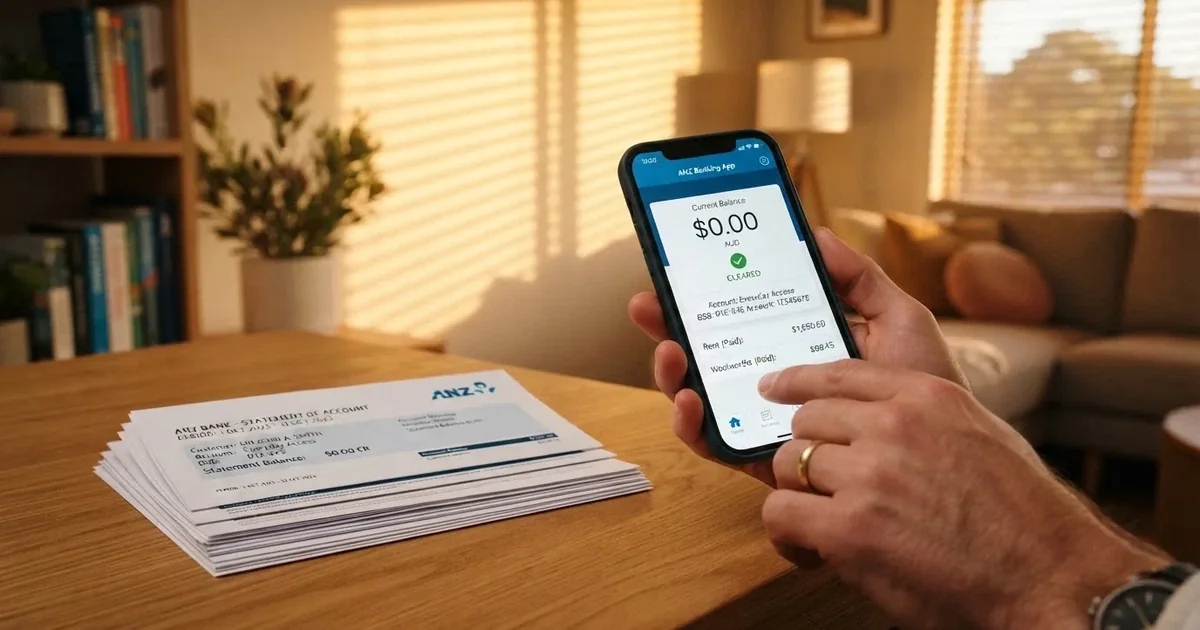
Data current as of 29 October 2026 and verified against the Australian Communications and Media Authority’s register of formal warnings and blocking requests.
Table of Contents
- Setting the scene: what a real-money PayID withdrawal is, and what it isn’t
- The legal frame: why “Australian-facing” is doing all the work
- Responsible play: where a real-money withdrawal turns into the wrong bet
- How PayID withdrawals actually move, when they do
- The arithmetic of blocking: how fast the ACMA has been clearing the field
- Brand-level picture: what the ACMA register actually shows
- Where the speed claim actually lives
- The shape of the trade-off, plainly
- What changes on 1 January 2027
- What to read for, on any brand’s own page
- Frequently Asked Questions
Setting the scene: what a real-money PayID withdrawal is, and what it isn’t
A PayID is an easy-to-remember identifier, typically a mobile number, email address, ABN or Organisation Identifier, linked to an Australian bank account and operated by Australian Payments Plus (AP+). When you pay to a PayID, the payer sees the name registered to that identifier before the transfer is sent, which is the check that protects against mistaken payments. The transfer runs on the New Payments Platform (NPP), launched in February 2018, and with Osko it arrives in under a minute, twenty-four hours a day, including weekends. As of April 2025, more than 25 million PayIDs were registered in Australia, and over 100 Australian financial institutions offer them inside their own online banking.

That is the rail. A “real-money PayID withdrawal” is a cash-out from an online casino, routed through that rail, into an Australian deposit account held in the player’s own name. “Real money” is doing work in that phrase: it is the opposite of bonus credit. A bonus, whether a deposit match or a no-deposit freebie, sits in a separate balance until the wagering requirement is met; only after that does any remainder convert to withdrawable cash. A withdrawal of bonus credit is not a withdrawal of real money, no matter how quickly the screen refreshes.
AP+ itself warns about this exact path. The operator of PayID publishes a scam alert that reads, in part: “If you are asked to transfer funds to a PayID on an illegal gambling site, it is almost certainly a scambling website.” “Scambling” is AP+’s own term for illegal online gambling platforms advertised on social media and messaging apps that route players to scam sites. PayID also will never contact a customer directly and never asks anyone to send money in order to receive money. Any message claiming otherwise is itself the scam.
So the speed is real and the rail is real. What sits at the other end of the rail — the casino that initiated the transfer — is where the page turns.
The legal frame: why “Australian-facing” is doing all the work
Online casino games, online pokies and in-play betting cannot be lawfully provided to a person physically in Australia. The Interactive Gambling Act 2001 (IGA), strengthened by the Interactive Gambling Amendment Act 2017, makes the supply of those services an offence. No Australian state or territory licences them. What is licensable is wagering on races and sport placed before the event, lotteries and keno; in practice, online bookmakers including Sportsbet, Bet365 and Ladbrokes are licensed in the Northern Territory by the Northern Territory Racing and Wagering Commission, a body that has no full-time staff and meets once a month in Darwin.

The practical effect for a PayID withdrawal is direct. A lawful site in this market is a licensed Australian wagering service; an online casino offering real-money PayID cash-outs to Australian residents is, by definition, not one. The ACMA investigates, issues formal warnings and directs Australian internet service providers to block illegal sites; by June 2026, 1,751 illegal gambling and affiliate-marketing websites had been blocked since the first blocking request in November 2019, and more than 230 unlicensed gambling services had left the Australian market since enforcement was strengthened in 2017. In a single round reported on 26 June 2026, the ACMA asked ISPs to block a further twelve: 7Signs, ChromaBet, Donbet, Duospin, Freshbet, Slots Gem, Jacks Club, Lucky Start, Pointsbetz.com, Spinrise, Vinyl Casino and Wildsino.
The individual player is not the target of the IGA — it targets the provider — but the consequences of playing offshore are not symmetrical. There is no Australian consumer protection, no local complaints body and no recourse if a withdrawal is refused. A site that takes a deposit in Australian dollars via PayID can be blocked with a balance still sitting on it. H2 Gambling Capital’s 2025 report estimates Australian losses to illegal gambling sites at around A$3.9 billion a year, and that the share of gambling going through legal channels fell from 74% in 2021 to 64%.
Payment rules sharpen the picture. Since 11 June 2024, Australian-licensed online wagering services cannot accept credit cards, credit-related products or digital currency as payment; legal deposit routes are debit card, bank transfer, PayID/Osko and BPAY. A casino asking an Australian player for a credit card or a crypto deposit is, by that test alone, operating outside the Australian rules. The 2023 amendment to the IGA also constrains gambling use of linked digital wallets such as Apple Pay, which by the end of 2025 accounted for around 45% of all card payments in Australia by number.
Tax treatment is the small piece of good news: gambling winnings of a recreational player are not assessable income under section 6-5 of the ITAA 1997, and losses are not deductible, unless the person carries on a business of gambling. That rule applies whether the site was lawful or not; it is not a permission slip for the latter.
Responsible play: where a real-money withdrawal turns into the wrong bet
The fastest way a PayID withdrawal becomes the wrong transaction is the one that surrounds it: a player chasing a real-money cash-out to recover losses, or to lock in a no-deposit bonus round that has run longer than expected. AP+ itself draws the line at the casino’s door, but the budget line is the player’s to draw. The National Gambling Helpline on 1800 858 858 is free, twenty-four hours a day, and chat is available through Gambling Help Online.
BetStop, the National Self-Exclusion Register, has been live since August 2023 and binds every Australian-licensed online and phone wagering service. It does not bind an offshore casino. A player who has self-excluded and then opens an account at one of the brands on this page has not used BetStop at all; they have simply moved their activity to a venue the register cannot reach. Self-exclusion only works where the operator is connected to it.
The minimum age is 18.
How PayID withdrawals actually move, when they do
A first real-money PayID withdrawal is not the same transaction as a fifth or a fiftieth. The first carries an identity check that, once cleared, makes later cash-outs faster. The check is not optional and is not a casino’s marketing line: it is the standard know-your-customer work any Australian-facing operator has to do to satisfy its own payment partners and the bank moving the funds.
Documents typically requested: a government-issued photo ID (driver’s licence or passport), proof of address dated within the last three months (a utility bill or bank statement), and proof of ownership of the PayID itself (the same bank statement showing the registered mobile number, email or ABN). Some operators also ask for source-of-funds documentation above a threshold, which is a separate question from the basic KYC.
The mechanic itself, once cleared: the player requests a withdrawal from the casino’s cashier, the casino releases the funds via the NPP, and the deposit lands in the linked Australian account in under a minute, twenty-four hours a day, including weekends. The bottleneck is not the rail — the rail is genuinely fast — it is the casino’s own pending period, which can run from a few hours to several business days. A “pending” withdrawal is not in transit; it is the operator deciding whether to send it.
A practical sequence the player actually goes through:
- Register and verify identity before the first withdrawal. Submitting documents after the request is what turns an “instant” PayID transfer into a several-day wait.
- Make sure the PayID is in the player’s own name. Third-party PayIDs are rejected; the name on the deposit must match the name on the account it is going into.
- Watch for minimums. Most operators set a minimum withdrawal (commonly A$20 to A$50); below that the request sits in the cashier.
- Allow for the pending period. Anything advertised as “instant” refers to the NPP leg, not the operator’s internal queue.
- Account for the bank’s own checks. Westpac’s gambling block operates at card level, refusing authorisation of transactions under the merchant category code for betting and casino gambling on eligible cards; ANZ’s block, once activated in the app, also blocks digital-wallet transactions on the same card, and removing ANZ’s block carries a 48-hour waiting period. Both banks warn that not every gambling transaction will be blocked and some non-gambling transactions may be blocked in error.
The last point is worth keeping hold of when reading the rest of this page. “Instant” on a marketing page describes the rail, not the operator’s queue, and not the bank’s own decision about whether to let the transaction through.
The arithmetic of blocking: how fast the ACMA has been clearing the field
One calculation belongs to this material, and it is the page’s own. By the end of June 2026 the ACMA had directed Australian ISPs to block 1,751 illegal gambling and affiliate-marketing websites since the first blocking request in November 2019. That is roughly 260 a year on average, or about five every week, for a little over six and a half years. Stretched out as a band, the rate of blocking has run from roughly three to seven sites per working week across the period, with the heavier rounds clustering around mid-2024 and the first half of 2026. The point of the band is that no single year tells the whole story: enforcement accelerated after 2017, has not stopped, and a brand the ACMA has not yet warned today is not the same brand as one the ACMA has not yet warned in a year’s time.
Brand-level picture: what the ACMA register actually shows
The brands below are not a ranking and not a recommendation. Each one is on this page because the ACMA itself issued a formal warning over it for offering prohibited interactive gambling services to Australians. The register is organised by brand, the ACMA action and its date, the operator the warning named, and what the research base could say about that brand’s own PayID footprint.
| Brand | ACMA action and date | Operator named by the ACMA | PayID support |
|---|---|---|---|
| RocketPlay | Formal warning, March 2026 (and an earlier warning over the Dama N.V. estate in May 2022) | Pulsup Ltd | — |
| Level Up Casino | Formal warning, May 2022 | Dama N.V. | listings-only |
| Woo Casino | Formal warning, March 2025 | Dama N.V. | — |
| Spirit Casino | Formal warning, May 2025 | Dama N.V. | — |
| National Casino | Formal warning, July 2025 | Consolutetish S.R.L. | listings-only |
| Bizzo Casino | Formal warning, July 2025 (and an earlier warning to TechSolutions in 2022) | Consolutetish S.R.L. | — |
| Ignition Casino | Formal warning, July 2025 | Bamboo Media | — |
| Instant Casino | Formal warning, February 2025 | EOD Code SRL | listings-only |
| Jackbit | Formal warning, April 2026 | Ryker B.V. | — |
| Casino Intense | Formal warning, April 2025 | Sterplay Holding Ltd | listings-only |
| Sky Crown | Formal warning (Hollycorn N.V. publication, September 2022) | Hollycorn N.V. | — |
Several of these brands sit under the same operator on the warning. Dama N.V. alone has been named over Woo Casino, Spirit Casino, Level Up Casino and earlier over RocketPlay, Bambet, Dazard, Wild Tornado and Cobra Casinos. Consolutetish S.R.L. has been named over both National Casino and Bizzo Casino, and Bizzo Casino had already been the subject of a 2022 formal warning to TechSolutions (CY) Group Limited and TechSolutions Group N.V. The pattern is not accidental: warnings travel with the operator, and operators tend to run several brands at once.
The PayID support column is mostly empty by design. The research base looked for an explicit statement from each brand confirming PayID for Australian cash-outs and found one only for the listings marked “listings-only”, meaning those mentions appeared on third-party listing pages rather than on the operator’s own terms. None of that amounts to a lawful real-money withdrawal for an Australian resident; it only records what third-party pages report.
RocketPlay
The ACMA’s March 2026 warning to Pulsup Ltd named Rocketplay.com.au directly; an earlier Dama N.V. warning from May 2022 covered the same brand under the previous operator. That is two separate formal warnings, by two separate operators, over the same customer-facing brand. The research base carries no PayID-specific statement from the operator for an Australian customer, and the site is, by the IGA’s own definition, offering a prohibited service to Australians. A player drawn to RocketPlay for fast PayID withdrawals is paying into an operator that the regulator has now told twice to stop.
Level Up Casino
The May 2022 warning to Dama N.V. covered Level Up alongside five other brands in the same operator’s portfolio. The site’s listing pages mention PayID in passing for Australian players, but no operator-side document in the research confirms a PayID cash-out route or its limits. The brand sits inside the Dama N.V. estate — the same operator the ACMA has since warned again, over Woo Casino in March 2025 and Spirit Casino in May 2025, which is itself a useful piece of context for a player weighing Level Up’s position in that group.
Woo Casino
Woo Casino drew the ACMA’s second formal warning to Dama N.V. in March 2025, after the May 2022 round that originally named the operator. Nothing in the research confirms PayID support on Woo’s own terms. A player considering Woo for the speed of a real-money PayID withdrawal is dealing with an operator the regulator has now addressed twice in three years — once over Woo itself, once over its stablemates — for offering prohibited services to Australians.
Spirit Casino
The May 2025 warning to Dama N.V. named Spirit Casino specifically, making it the third formal warning to that operator in three years. Like Woo and Level Up, Spirit sits in an operator estate the ACMA has returned to repeatedly. The research carries no PayID-specific statement from the brand. The pattern of repeated warnings at the operator level matters more than any single brand’s marketing claim about speed.
National Casino
Consolutetish S.R.L. was named in the ACMA’s July 2025 warning covering both National Casino and Bizzo Casino. Third-party listing pages mention PayID for Australian deposits at National Casino, but no operator-side document confirms the cash-out side or any specific timing. A PayID deposit at a brand the ACMA has just warned is also, structurally, a deposit at a site the regulator has directed ISPs to be ready to block — the balance question on a withdrawal is then the operator’s, not the player’s.
Bizzo Casino
The July 2025 warning to Consolutetish S.R.L. is Bizzo’s second: TechSolutions (CY) Group Limited and TechSolutions Group N.V. were warned over the same brand in 2022. Two operators, one brand, two warnings. The research carries no PayID-specific statement for Bizzo; the operator’s history of repeated attention from the ACMA is the more useful thing on the page.
Ignition Casino
Bamboo Media was warned over Ignition Casino in July 2025. The research base carries no PayID-specific statement, and Ignition’s offshore footprint gives no Australian consumer protection if a withdrawal stalls or is refused. A brand that has just drawn a formal warning is not the place a player with a real Australian bank account should be testing how “instant” the operator actually is.
Instant Casino
EOD Code SRL drew a formal warning over Instant Casino in February 2025. The research base records PayID mentions on third-party listing pages rather than on the operator’s own terms, and the underlying offer is a prohibited interactive gambling service under the IGA. The combination — a regulator’s warning on file, a third-party-only PayID mention, no Australian licence — is the entire reason this page exists.
Jackbit
Ryker B.V. was warned in April 2026 over both Jackbit and CasinOK in the same action. No PayID-specific statement is recorded. The April 2026 warning is one of the most recent on the register, which is itself a signal: a brand warned this year is being warned at the same time the ACMA has been blocking sites at a rate of roughly five per working week.
Casino Intense
Sterplay Holding Ltd drew a formal warning over Casino Intense in April 2025. Listing pages mention PayID for Australian players, but the operator’s own terms do not, in the research, confirm a cash-out route or a settlement time. The brand is offering a prohibited service; a PayID deposit at Casino Intense is a deposit at a site the ACMA has told to stop.
Sky Crown
The ACMA’s warning to Hollycorn N.V., published in September 2022, covered Sky Crown and Blue Leo together. The research carries no PayID-specific statement for Sky Crown, and the brand sits in the same operator estate that the regulator has named. The 2022 vintage of the warning is older than the others on this page, but the IGA’s prohibition is not.
Where the speed claim actually lives
Three things travel under the word “instant” on a casino’s marketing page, and they sit at three different places in the chain.
The first is the rail. The NPP, with Osko on top, genuinely moves money in under a minute, twenty-four hours a day. PayID is one addressing option on that rail; a BSB and account number is another. Neither is the slow part.
The second is the operator’s queue. A pending period is the time between the player clicking “withdraw” and the casino instructing its payment partner to release the funds. Some operators run this in hours; some run it over a full weekend. The page cannot tell you which a given brand runs, because the research carries no per-brand pending-period figure, and because a brand’s own terms page is not the place a player should be relying on after the ACMA has warned it.
The third is the bank’s own decision. ANZ’s gambling block, once turned on, sits at card level and at the digital-wallet level on the same card, and removing it carries a 48-hour cooling-off. Westpac’s block works similarly at the merchant category code for betting and casino gambling. Both banks warn that not every gambling transaction will be blocked and some non-gambling transactions may be blocked in error. A PayID transfer initiated by a casino’s payment partner and rejected at the bank is the failure mode the marketing copy does not describe.
A player who wants the genuine speed of the NPP for real money should be using a licensed Australian wagering service, where the operator is connected to BetStop, the bank’s gambling block can be set knowingly, and the deposit route is one of debit card, bank transfer, PayID/Osko or BPAY. An offshore casino’s “instant PayID withdrawal” claim is borrowing the rail’s speed to dress up a transaction that the regulator has asked the operator to stop offering.
The shape of the trade-off, plainly
For a player who treats the casino as entertainment and the deposit as the cost of it, a licensed Australian wagering service delivers what the offshore marketing page is promising — a real-money PayID cash-out, in minutes, into an Australian account — and binds the operator to Australian rules. The menu is narrower; in-play betting and online casino games are not on it. Sports and race wagering placed before the event, lotteries and keno are.
For a player specifically looking for online casino games or online pokies, there is no lawful Australian option to compare against. The eleven brands on this page exist in that gap, and the ACMA has formally warned each one for filling it. The arithmetic above — roughly five blocking requests per working week since November 2019 — is the rate at which that gap is being closed from the supply side.
The deposit side of the same trade-off has its own line. Since 11 June 2024, credit cards, credit-related products and digital currency are banned as payment for licensed wagering, with penalties up to A$247,500 for operators. A casino asking for a credit card or a crypto deposit from an Australian player is operating outside the Australian rules. A licensed operator offering PayID and debit card is, by that test, inside them.
What changes on 1 January 2027
The Interactive Gambling Amendment (Gambling Reform) Bill 2026 passed Parliament on 19 August 2026. Its advertising and inducement measures commence on 1 January 2027. On a page read in 2026, the law has been passed but has not yet commenced, which is the distinction the page draws. The relevant effect for a player considering an offshore brand is that the inducement side of the marketing — bonus offers, “instant withdrawal” headlines, affiliate promotions — is the part the new law tightens first, not the underlying prohibition, which is already in force.
What to read for, on any brand’s own page
Three checks survive the marketing. None of them is novel and all of them are worth doing before a deposit, particularly a PayID deposit where the operator’s queue is the slowest part of the chain.
Is the operator connected to BetStop? If not, the operator is not a licensed Australian wagering service, and the IGA applies. The eleven brands on this page are not connected to BetStop.
Does the operator ask for a credit card or a crypto deposit? If yes, the operator is offering a deposit route the IGA has banned for licensed Australian wagering since 11 June 2024.
Has the ACMA already published a formal warning over the brand or its operator? The register is the place to check, and a brand on this page has been named on it.
A “yes” on any of those three is the answer to the question this page opens with.
Frequently Asked Questions
Is it legal for an online casino to pay out real money through PayID to a player in Australia?
No. Supplying online casino games, online pokies or in-play betting to a person in Australia is an offence under the Interactive Gambling Act 2001, and no state or territory licences them. A PayID withdrawal to an Australian account is the rail, not the licence; the operator on the other end is what the IGA regulates, and an offshore casino offering real-money PayID cash-outs to Australians is offering a prohibited service.
What is the difference between withdrawing bonus credit and withdrawing real money through PayID?
Bonus credit sits in a separate balance until the wagering requirement attached to it is met. Only the part that converts to withdrawable cash after wagering is “real money” in the sense the term is used on a casino’s cashier page. A “fast withdrawal” of bonus credit that has not yet converted is not a real-money PayID withdrawal; it is the casino declining to release the funds, however quickly the screen refreshes.
Does a no-deposit bonus balance need to be converted before a real-money PayID withdrawal is possible?
Yes. A no-deposit bonus is a credit the operator extends without a deposit, and its terms set the wagering requirement and any maximum cash-out cap. Until the requirement is met and the cap respected, the balance is not withdrawable. The conversion step is what makes the remainder real money in the operator’s own ledger, and only then does a PayID cash-out route become available.
What identity documents are usually required before a first real-money PayID withdrawal?
A government-issued photo ID, a proof of address dated within the last three months, and proof of ownership of the PayID itself — typically the same bank statement that shows the address. Some operators also ask for source-of-funds documentation above a threshold. The check is the standard know-your-customer work any Australian-facing operator has to satisfy, and submitting the documents before requesting the first withdrawal is what keeps the timing on “instant”.
Is there a minimum real-money balance needed before a PayID withdrawal can be requested?
Yes, and the research base does not carry a per-brand minimum, which is itself the answer for this page: any minimum a given brand advertises is a figure to read on that brand’s own cashier page. The minimum applies to the converted balance after wagering, not to the original bonus credit. A request below the minimum sits in the cashier until the balance is topped up or the player combines it with another converted balance.
Why might a real-money PayID withdrawal take longer than an earlier bonus-funded one?
Because the rail is the same and the queue is different. A bonus-funded “withdrawal” that returns the bonus to the operator is a no-money move and does not test the rail at all; a real-money PayID cash-out runs through the operator’s pending period, the payment partner’s release step, the bank’s own authorisation and the NPP leg. Any of those can stall a transaction the marketing calls instant. The earlier bonus-funded step did not exercise that chain.