
Best high volatility slots Australia: the picture an Australian reader is actually looking at
A search for “best high volatility slots Australia 2026” lands on a market that does not offer what the words ask for. Online casino games and online pokies — the entire category a “high volatility slots” shortlist lives in — are prohibited under the Interactive Gambling Act 2001. No state or territory issues a licence for them. What is licensable is wagering on races and sport placed before the event, lotteries and keno, in practice licensed through the Northern Territory. The list the search suggests it wants — ten offshore casinos ranked by bonus size or RTP — is not a list any Australian-facing page can honestly hand over, because every brand on it is breaking Australian law to take the bet.
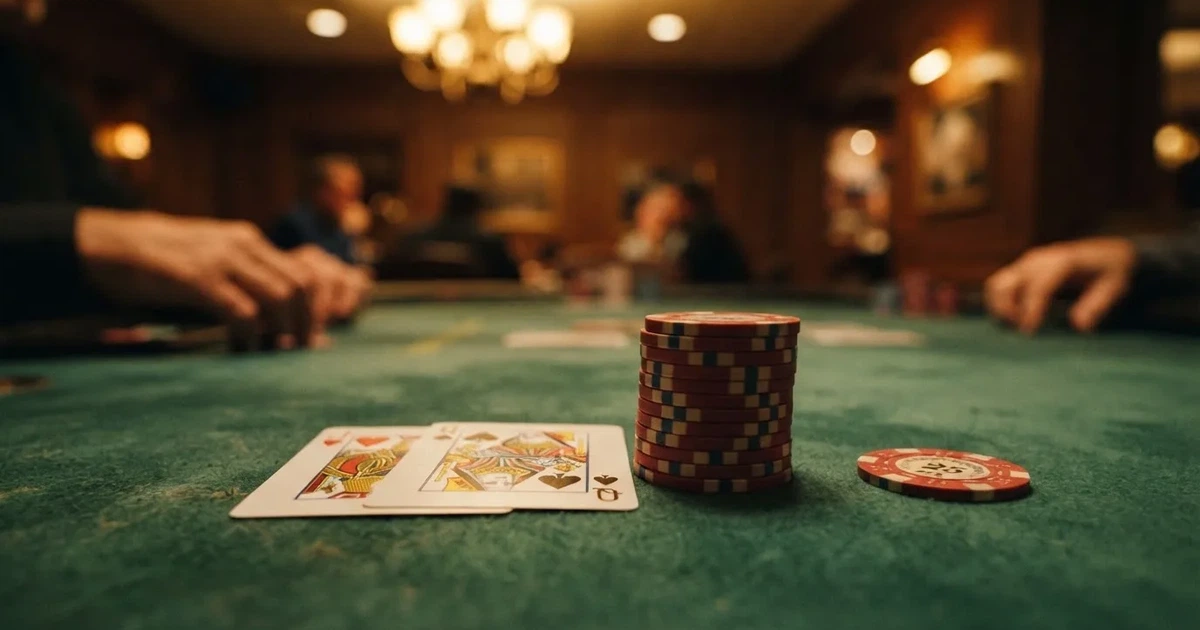
The page that follows keeps that as its spine rather than burying it under a marketing intro. It sets out what high volatility actually is in slot-machine terms, walks the Interactive Gambling Act 2001 and the ACMA’s enforcement record, points to the lawful alternatives Australians actually have (licensed pokies venues, land-based casinos, BetStop self-exclusion), and finishes with the ACMA’s own list of the offshore brands it has acted against — the only honest ranking this market supports, because the regulator’s list is the one ranking a reader can verify.
Current as of 29 October 2026 against the ACMA’s published register of formal warnings and blocking requests.
Table of Contents
- What “high volatility” actually means at the slot machine
- Where the law actually sits: the Interactive Gambling Act 2001
- How the ACMA has used those powers: the enforcement record
- What an Australian reader actually has: the lawful alternatives
- What player protection actually looks like
- The offshore shelf, by what the ACMA itself has done
- On the wider gaming-floor context: baccarat, blackjack and craps as house-edge reference
- How to read the ACMA’s record against the marketing claim
- A note on what the ACMA does and does not cover
- The picture the search was actually reaching for
- Frequently asked questions
What “high volatility” actually means at the slot machine
The word “volatility” in slot design describes the shape of the payout curve, not its generosity. A low volatility title pays small amounts often, so a session feels busy and the balance moves in short steps. A high volatility title pays rarely and pays large when it does, so a session can be long stretches of nothing punctuated by a single prize that is several hundred times the stake. The RTP — the long-run return to player — can sit at the same figure on two machines with very different volatility profiles; volatility is about the variance around that average, not the average itself.

That distinction matters because the marketing word “high volatility” is usually a sales handle, dressed up as a feature. The honest reading is closer to “this machine has a long tail”. A punter with a small bankroll who spins at A$1 a stake on a high volatility title is not buying better odds; they are buying fewer spins between the occasional big hit, which means more sessions that close at zero for the same wagered total. The math that decides whether high volatility suits you is not the RTP figure on the paytable; it is the size of the bankroll relative to the stake and the willingness to ride out the dry stretches.
Modern video slots — five reels, fifty-plus symbols per reel, multiple bonus mechanics layered on top — produce odds as high as 300 million to one against the top combination, against roughly a thousand combinations on a classic three-reel machine with about ten symbols per reel. That gap is the structural reason volatility is a meaningful label today: the old one-armed bandit had no real room for it.
Charles Fey of San Francisco built the first automatic slot mechanism in the late nineteenth century — three reels, five symbols (horseshoes, diamonds, spades, hearts and the Liberty Bell), three bells in a row paying the top prize of ten nickels. Bally’s “Money Honey” in 1963 introduced a bottomless hopper and automatic payout of up to 500 coins without an attendant. The first true video slot was the Fortune Coin machine out of Kearny Mesa, California in 1976. New South Wales legalised slot machines in 1956; by 2010 Australia was running an estimated 97,103 gaming machines outside casinos, a per-capita rate about five times that of the United States. The category is not new here, and the local name for it — pokies — is older than most of the international vocabulary that now wraps around it.
Where the law actually sits: the Interactive Gambling Act 2001
The Interactive Gambling Act 2001 (the IGA) is the federal statute. As strengthened by the Interactive Gambling Amendment Act 2017, it makes it an offence to provide online casino games, online pokies or in-play betting to a person in Australia. No state or territory issues a licence for online casino or online pokies. The licensable categories — wagering on races and sport, lotteries and keno — are run through state and territory regimes, in practice with the Northern Territory Racing and Wagering Commission (the NTRWC) holding 52 of Australia’s online bookmakers, including Sportsbet, Bet365 and Ladbrokes, licensed in the Territory for tax reasons. The NTRWC has no full-time staff and meets once a month in Darwin.
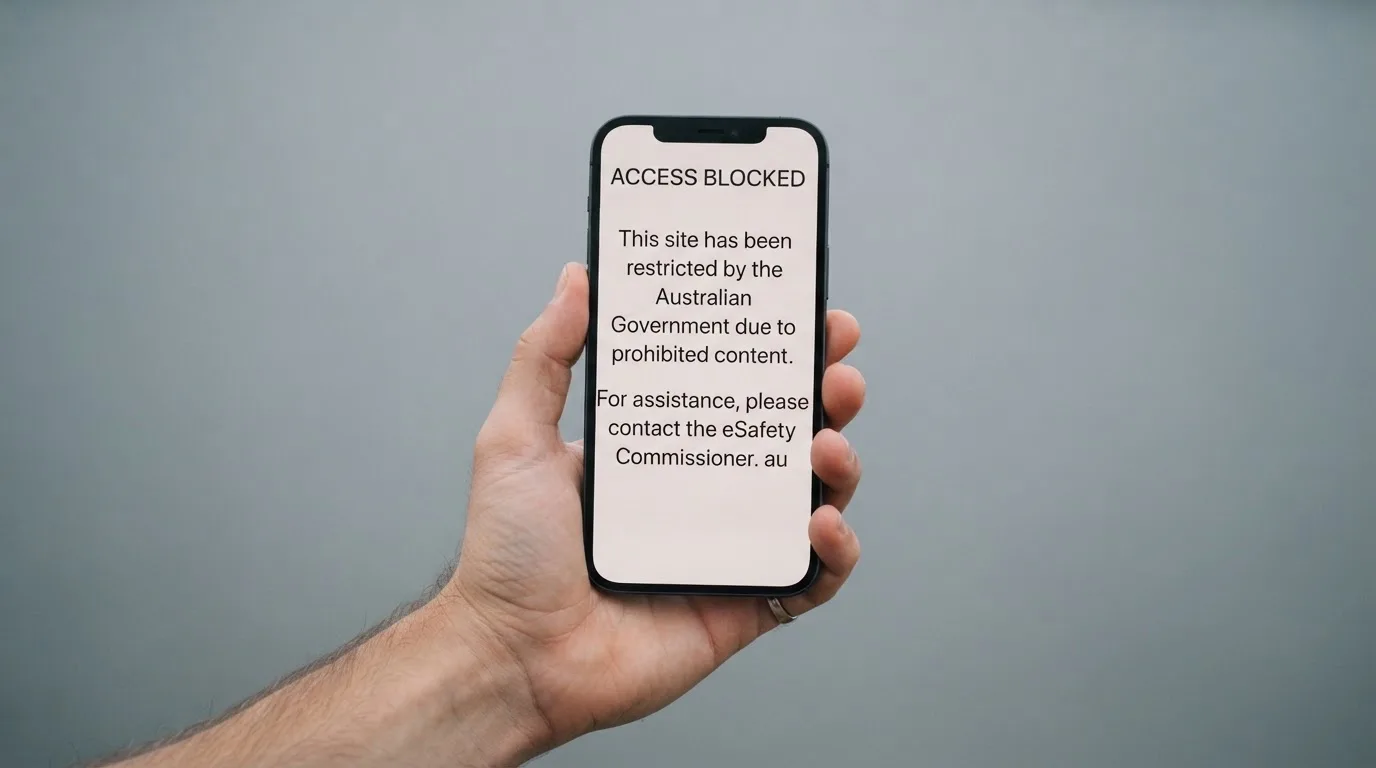
Enforcement sits with the ACMA. The regulator investigates complaints, issues formal warnings to operators, and can direct Australian internet service providers to block illegal sites. The individual player is not prosecuted — the IGA targets the provider, not the punter — but an offshore site carries no Australian consumer protection, no complaints body and no recourse if a withdrawal stalls, and it can be blocked with a balance still on it. The Interactive Gambling Amendment (Gambling Reform) Bill 2026 passed Parliament on 19 August 2026; its advertising and inducement measures commence on 1 January 2027. Law with a start date; not yet in force on a 2026 page.
The payment side closes off the obvious workarounds. Credit cards, credit-related products and digital currency have been banned as a payment method for licensed online wagering since 11 June 2024, with penalties of up to A$247,500 for operators. The legal deposit routes for a licensed Australian wagering account are debit card, bank transfer, PayID/Osko and BPAY. A site that asks an Australian punter for a credit card or a crypto deposit is operating outside the Australian rules; an offshore site routinely does.
On tax, gambling winnings of a recreational player are not assessable income under section 6-5 of the ITAA 1997 and losses are not deductible, unless the person carries on a business of gambling. The model is “check with the ATO” rather than a one-line answer.
How the ACMA has used those powers: the enforcement record
The ACMA’s blocking regime began with the first blocking request in November 2019. By June 2026, a cumulative 1,751 illegal gambling and affiliate marketing websites had been blocked, and more than 230 unlicensed gambling services had left the Australian market since enforcement was strengthened in 2017. In the round reported on 26 June 2026, twelve more sites were added to the block list: 7Signs, ChromaBet, Donbet, Duospin, Freshbet, Slots Gem, Jacks Club, Lucky Start, Pointsbetz, Spinrise, Vinyl Casino and Wildsino.
Blocking rate as a band, against the first blocking request in November 2019 and the running total of 1,751 blocked sites reported at June 2026: roughly 1,751 sites over the period from November 2019 to June 2026 — about 80 blocks per year on average, with the rate accelerating in recent rounds and the underlying total dominated by affiliate marketing pages alongside the casino brands themselves. Treat the headline figure as the running total reported by the ACMA in its June 2026 round; the per-year average falls out of that.
The parallel enforcement tool is the formal warning. A formal warning does not block a site, but it puts the operator on notice that the ACMA has formed a view that the service is a prohibited interactive gambling service, and the warnings roll up into the case for a future blocking request. The ACMA’s recent record reads as follows, by operator and date as published:
- Pulsup Ltd over Rocketplay, March 2026.
- Dama N.V. over six brands — Bambet, Dazard, Level Up, Rocketplay, Wild Tornado and Cobra Casinos — May 2022.
- Dama N.V. over Woo Casino, March 2025, and over Spirit Casino, May 2025.
- Bamboo Media over Ignition Casino and Consolutetish S.R.L. over National Casino and Bizzo Casino, July 2025; Bizzo had already been the subject of a 2022 formal warning to TechSolutions (CY) Group Limited and TechSolutions Group N.V.
- EOD Code SRL over Instant Casino, February 2025.
- Ryker B.V. over Jackbit and CasinOK, April 2026.
- Sterplay Holding Ltd over Casino Intense, April 2025.
- Hollycorn N.V. over Sky Crown and Blue Leo, September 2022.
H2 Gambling Capital’s 2025 report estimates that Australians lose about A$3.9 billion a year to illegal gambling sites, and that the share of gambling going through legal channels fell from 74% in 2021 to 64%. The scale of the offshore market is large; the law against it is also large. The two facts sit beside each other rather than cancelling out.
What an Australian reader actually has: the lawful alternatives
What is licensed in Australia, in the categories a “high volatility slots” search overlaps with, is land-based. Crown Melbourne in Victoria is regulated by the Victorian Gambling and Casino Control Commission (the VGCCC, which replaced the VCGLR as Victoria’s casino regulator on 1 July 2022). Crown Melbourne’s blackjack and baccarat variants are VGCCC-approved; new side bets and rule changes are logged on the VGCCC’s public register, with the “Perfect Pairs” side bet renamed to “Crown Pairs” on 23 December 2024 and a “Free Bet” option with a new “Pot of Gold” side bet introduced on 25 March 2024. In New South Wales, section 66 of the Casino Control Act 1992 requires a casino operator not to permit a game such as baccarat unless the game and its rules are approved by the regulator, with a copy of the approved rules available to patrons on request.
Outside the casino floors, the bulk of the machine stock is in pubs and clubs. As of mid-2023, pokies-style slot machines outside casinos numbered 87,298 in New South Wales, 26,380 in Victoria (2021–22), 21,122 in Queensland (October 2023), 11,672 in South Australia (September 2023) and 3,587 in the ACT (November 2023). New South Wales alone runs more pokies-style machines outside casinos than every other state and territory combined by a wide margin. Australia is one of the most heavily populated pokies markets in the world on a per-capita basis; the offshore site the search was trying to find is, at root, a way to reach the same game from a kitchen table.
For online wagering on races and sport, the legal picture is narrower. The licensed Australian bookmakers — Sportsbet, Bet365, Ladbrokes among them — are licensed for wagering, not for casino games or pokies. The product set inside the licensed account is the race form, the fixed-odds sports book and the in-play markets the IGA permits. A high volatility slot is not part of that product set. Where a “high volatility slots” review sits inside an Australian licensed product, it sits inside a land-based venue.
What player protection actually looks like
BetStop, the National Self-Exclusion Register, has been live since August 2023. It binds Australian-licensed online and phone wagering services; a person registered with BetStop is barred from opening new accounts and from marketing contact across the licensed wagering market. Offshore casino sites are not connected to BetStop — registering there does nothing, and offshore sites do not honour an Australian self-exclusion because they are not part of the Australian system. The honest statement is that BetStop covers the legal product, and the illegal product has no equivalent.
The National Gambling Helpline is 1800 858 858, free, 24/7, with chat available at Gambling Help Online. Each state and territory runs its own problem-gambling program with face-to-face counselling. The minimum age for any gambling product in Australia is 18.
For the offshore product specifically, the right framing is harm-reduction rather than consumer protection: an offshore site takes the deposit, sets the rules, and pays out on its own terms. There is no Australian complaints body to approach if a withdrawal is refused, and the site can be blocked by an ISP at any time, which can leave a balance in the account unreachable.
The offshore shelf, by what the ACMA itself has done
The brands below are not a ranking of where to play. They are an audit of what the ACMA has acted against, in the order the regulator’s own records put them. The block-and-warn list is the only honest comparison an Australian reader can make across offshore brands, because it is the only comparison the regulator has actually run and published. Every brand named below is operating in breach of the Interactive Gambling Act 2001 in offering online casino games or online pokies to a person in Australia, regardless of whatever offshore licence the site displays in its footer.
| Brand | ACMA action and date | Operator named by the ACMA | Subject support |
|---|---|---|---|
| RocketPlay | Formal warning March 2026; earlier Dama N.V. warning May 2022 | Pulsup Ltd (Rocketplay) | Not connected |
| Level Up Casino | Formal warning May 2022 | Dama N.V. | Listed on BGaming’s partner list |
| Woo Casino | Formal warning March 2025 | Dama N.V. | Not connected |
| Spirit Casino | Formal warning May 2025 | Dama N.V. | Not connected |
| National Casino | Formal warning July 2025 | Consolutetish S.R.L. | Listed in tertiary sources as an offshore brand |
| Bizzo Casino | Formal warning July 2025; earlier warning 2022 | Consolutetish S.R.L.; earlier TechSolutions (CY) Group Limited and TechSolutions Group N.V. | Not connected |
| Ignition Casino | Formal warning July 2025 | Bamboo Media | Not connected |
| Instant Casino | Formal warning February 2025 | EOD Code SRL | Not connected |
| Jackbit | Formal warning April 2026 | Ryker B.V. | Not connected |
| Casino Intense | Formal warning April 2025 | Sterplay Holding Ltd | Limited to what tertiary listings report |
| Sky Crown | Formal warning September 2022 | Hollycorn N.V. | Not connected |
The table carries only what research backs and what the ACMA has published. “Subject support” reflects whether the brand has a connection to high volatility slot content the page can verify; for most of these brands there is no verifiable connection, and the table records that as no-data rather than asserting one. The columns the page drops from this comparison are the columns an offshore site’s affiliate page would carry — bonus size, wagering multiple, payout time, RTP — because the only sources for those figures are affiliate marketing pages, which are themselves the kind of material the ACMA has been blocking since 2019.
A few of the operators sit under one corporate umbrella: Dama N.V. has had warnings covering Bambet, Dazard, Level Up, Rocketplay, Wild Tornado and Cobra Casinos (May 2022) and a further two warnings over Woo Casino (March 2025) and Spirit Casino (May 2025); Consolutetish S.R.L. was warned in July 2025 over both National Casino and Bizzo Casino; Hollycorn N.V. was warned over Sky Crown and Blue Leo in September 2022. The pattern is not a one-off raid. The ACMA’s enforcement record shows repeat warnings to repeat operators, with the regulator’s own position being that the offshore industry treats warnings as a cost of doing business rather than a reason to leave the Australian market.
On the wider gaming-floor context: baccarat, blackjack and craps as house-edge reference
The slot volatility question is sometimes framed against table games, so the house-edge figures for the common table products are worth setting out. In baccarat, the Banker bet carries a house edge of 1.06%, the Player bet 1.24%, and the Tie bet 14.36%. In craps, Pass/Come is 1.41%, Don’t Pass/Don’t Come is 1.36% and Any Craps is 11.11%. In blackjack, optimal play under liberal Las Vegas Strip rules (dealer stands on soft 17, double on any two, double after split, resplit aces, late surrender) gives a house edge of about 0.28%, and about 0.43% under Atlantic City rules.
The reason the figure matters in this context is that a high volatility slot is not “low house edge plus variance”; it is variance plus a house edge that is typically higher than the table products above. State regulation in the United States sets minimum slot payout percentages by jurisdiction — Nevada at 75%, Mississippi at 80%, New Jersey at 83%. Australian pub and club pokies do not have a federal minimum return-to-player figure the same way; the state and territory regimes set their own return-to-player floors, with substantial variation across products. The structural point holds regardless: a high volatility slot stretches the variance but does not move the average below the table games, and the variance is itself the cost the player is paying for the chance of the occasional large hit.
For table games specifically on the Australian casino floors: baccarat at Crown Melbourne comes in three approved variants — Traditional Baccarat, Crown Baccarat and 2 to 1 Baccarat — under the VGCCC; punto banco, the variant most played today, was developed in Havana in the 1940s and deals from a shoe of six or eight decks, with cards 2–9 at face value, 10/J/Q/K at zero and aces at one, hand totals taken modulo 10. Chemin de fer, the two-player French variant, emerged from baccarat banque in the late 19th century and is named “railway” for being quicker to play than the original game. Blackjack’s predecessor was the English vingt-un; a related veintiuno appears in Cervantes’ Rinconete y Cortadillo, written around 1601–1602. Spanish 21, Double Exposure Blackjack, Blackjack Switch and Super Fun 21 are the established blackjack variants a casino floor is likely to carry.
None of which changes the page’s main finding: the high volatility slot the search is looking for is not a product an Australian licensed venue can offer online, and the offshore shelf that does offer it is on the ACMA’s enforcement list.
How to read the ACMA’s record against the marketing claim
An offshore brand with a “best for high volatility” pitch in its banner is doing one of two things. Either it is licensed in a jurisdiction that does not restrict Australian-facing online casino games (most commonly Curaçao, in the cases above), or it has no licence and is operating as an unlicensed site. In either case the Australian-facing side of the product is a prohibited interactive gambling service under the IGA, and the ACMA has issued a formal warning naming the operator in every case the table records.
The marketing claim that wraps around it — “fast payouts”, “huge jackpots”, “high volatility favourites” — is the language the ACMA’s blocking regime has been directed at since 2019. The 1,751 cumulative blocked sites reported in June 2026 are heavily weighted to the affiliate marketing pages that drive traffic to these brands, alongside the brand domains themselves. The site’s offer page and the affiliate page that points at it are treated, by the regulator, as parts of the same illegal service.
A reader comparing two offshore brands is, in the ACMA’s framing, comparing two breaches of the same statute, on roughly the same legal footing, with the same absence of Australian consumer protection. The differences between them — the size of the welcome bonus, the wagering multiple, the live dealer count, the loyalty tiers — are differences within an illegal product, not differences between a legal and an illegal product. The honest way to read the comparison is to treat the whole shelf as outside the law, and to look at the differences between brands only as a guide to which operator is more or less likely to block, refuse withdrawals or change terms mid-session. The ACMA record above is the only public data on that, because it is the only data an Australian reader can verify.
A note on what the ACMA does and does not cover
The ACMA’s enforcement is on the provider, not the player. An Australian punter who deposits at an offshore site is not committing an offence under the IGA. They are spending money at a site that has no Australian consumer protection, that can be blocked at any time with a balance still on it, that pays out on the operator’s terms, and that pays tax to a jurisdiction other than Australia. The cost of that position falls on the player: no recourse if a withdrawal stalls, no BetStop coverage, no complaints body, and a real risk that the site disappears between deposits.
BetStop’s coverage, by contrast, is the licensed wagering market. An Australian who registers with BetStop is excluded across all Australian-licensed online and phone wagering services; the protection is comprehensive on the licensed side. It does not extend to offshore sites, because offshore sites are not part of the Australian system. The National Gambling Helpline (1800 858 858) and Gambling Help Online are the right routes for someone whose offshore play has moved from recreational to harmful; the right protection for someone who has not yet crossed that line is to not open the offshore account at all.
The picture the search was actually reaching for
A search for “best high volatility slots Australia 2026” is reaching for a market the IGA has closed. The shelf of offshore brands the page might have assembled in another country is a shelf the ACMA has been warning and blocking since 2019, with the regulator’s June 2026 round taking the cumulative block count to 1,751 sites and the operator-named formal-warning list above showing where the offshore industry’s compliance posture actually sits. None of those brands is legal for an Australian player; none has Australian consumer protection; none is covered by BetStop.
The lawful alternative is land-based. Crown Melbourne’s table games, the New South Wales pub and club network running 87,298 pokies-style machines outside casinos as of June 2023, the Victorian 26,380 machines and the Queensland 21,122 machines — that is the high-volatility product an Australian can actually play, in a venue the relevant state or territory regulator oversees, under rules that include problem-gambling programs and self-exclusion arrangements that work. The online version of the same product, on the offshore shelf the search was trying to reach, is the version the IGA prohibits and the ACMA enforces against.
Frequently asked questions
What does high volatility mean for a slot machine?
Volatility describes how the payouts are distributed, not how generous the machine is on average. A high volatility slot pays rarely and pays large when it does; a low volatility slot pays small amounts often. The RTP can be the same on two machines of very different volatility; the difference is the variance around that average, which is the structural reason high volatility suits a larger bankroll.
How big are the swings between wins on a high volatility slot compared with a steadier one?
The structural ceiling on a modern video slot is much higher than on a classic three-reel machine. Modern video slots can run five or more reels with fifty-plus symbols per reel, producing odds as high as 300 million to one against the top combination; a classic three-reel mechanical machine with about ten symbols per reel offers roughly a thousand possible combinations. A punter moving from a low volatility title to a high volatility one is moving from short-step balance changes to long dry stretches punctuated by single large hits.
Is it legal to play high volatility slots at an online casino from Australia?
No. The Interactive Gambling Act 2001 prohibits offering online casino games and online pokies to a person in Australia, and no state or territory licences them. The individual player is not prosecuted, but the offshore site carries no Australian consumer protection, no complaints body and no BetStop coverage, and can be blocked by an ISP with a balance still on it.
Are high volatility pokies-style machines common in Australian pubs and clubs?
Yes — Australia runs one of the most heavily populated pokies markets in the world on a per-capita basis. As of mid-2023, pokies-style slot machines outside casinos numbered 87,298 in New South Wales, 26,380 in Victoria, 21,122 in Queensland, 11,672 in South Australia and 3,587 in the ACT. New South Wales alone runs more pokies-style machines outside casinos than the rest of the country combined.
New South Wales alone had over 87,000 pokies-style machines outside casinos as of mid-2023 — how does that compare with other states?
New South Wales sits well ahead of the next largest state, at 87,298 machines in June 2023. Victoria ran 26,380 machines in 2021–22, Queensland 21,122 in October 2023, South Australia 11,672 in September 2023 and the ACT 3,587 in November 2023. The Northern Territory and Tasmania run smaller machine stocks in pubs and clubs and are not separately broken out in the standard figures; Western Australia does not permit general-pub poker machines outside the one casino licence.
Why might a high volatility slot suit a player with a bigger bankroll?
Because high volatility is a variance profile, and variance costs money to ride out. A bigger bankroll buys more spins between the occasional large hit, which is what the machine’s payout structure is built around. A small bankroll on a high volatility title is more likely to close a session at zero for the same wagered total; the right structural answer is a stake size and session length that can absorb the dry stretches.