
Best low volatility slots Australia 2026: a reader’s honest map
Low volatility slots are the quieter end of the slot catalogue — short sessions, smaller swings, fewer dry patches. In Australia, they sit inside a market the Interactive Gambling Act 2001 makes largely unlawful to supply online. The page that follows works through what that means in practice: how the games themselves behave, which providers sit behind them, how the regulator has acted against offshore operators offering them, and what a reader in Australia can lawfully reach instead. It is built around the recognition that “best” has a different answer in Australia than it does elsewhere, and that an honest shortlist respects that answer rather than dressing an offshore link as a recommendation.
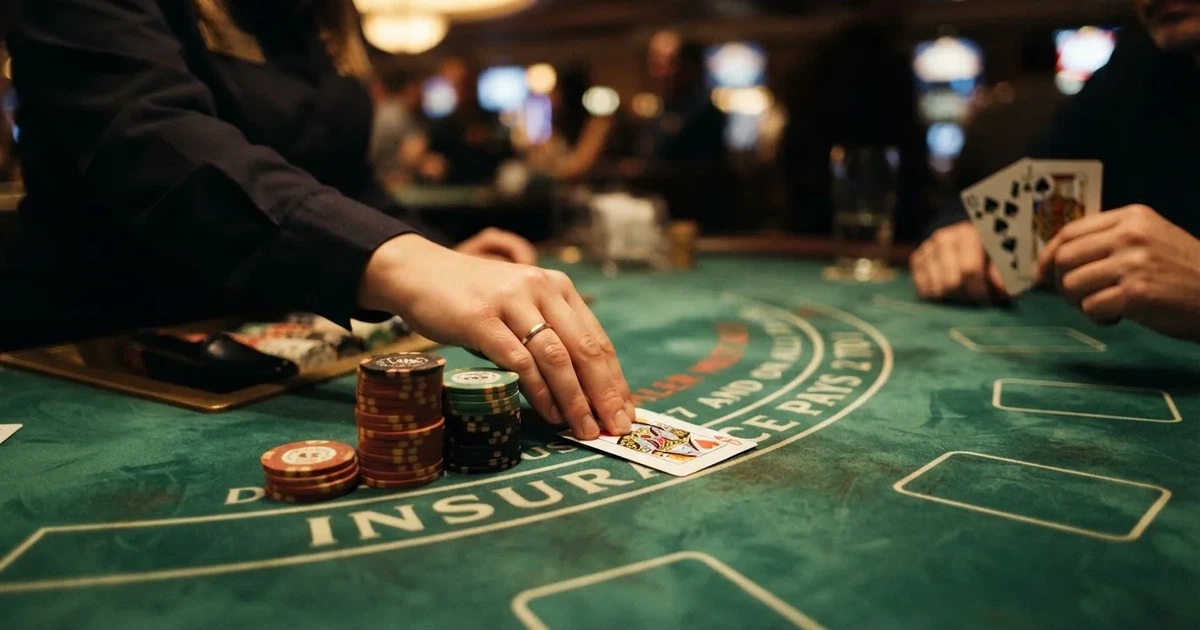
This article is current as of 29 October 2026, with licence claims and operator identifiers checked against the Australian Communications and Media Authority’s published warnings register.
Table of Contents
- What low volatility actually means at the reels
- Where Australian law stands on the game
- Responsible play and the offshore gap
- How a low volatility slot is built
- Operators the ACMA has acted against
- A lawful alternative for the Australian reader
- Working out what an offer really costs — the calculation
- What the Australian reader can rely on
- Frequently asked questions
What low volatility actually means at the reels
A low volatility slot is one whose payout pattern favours frequent, smaller wins over rare, larger ones. The same return-to-player (RTP) percentage can be hit two ways: a tight, low-variance design that dribbles wins back to the player session after session, or a high-variance design that starves the session and pays out in lumps. Low volatility is the first of these. The bankroll moves in smaller steps, the time between wins is shorter, and a stake that would otherwise disappear in ten dead spins tends instead to produce small returns often enough to keep playing.

This sits inside a longer mechanical story. The first automatic slot mechanism was Charles Fey’s late-19th-century three-reel machine with five symbols (horseshoes, diamonds, spades, hearts and the Liberty Bell), where three bells in a row paid the top prize of ten nickels. Bally’s 1963 “Money Honey” introduced a bottomless hopper capable of paying out up to 500 coins without an attendant — the moment slot play became a self-service product. Fortune Coin Co. developed the first video slot in 1976 in Kearny Mesa, California. Modern video slots now use five or more reels with 50-plus symbols per reel, producing odds as high as 300 million to one against a top combination; a classic mechanical three-reel machine with about 10 symbols per reel offered roughly 1,000 possible combinations. Low volatility games tend to keep the symbol count and reel layout in a moderate band so that “miss” outcomes aren’t punishingly long, while still allowing for occasional larger hits to break the rhythm.
A low volatility session is not a session in which the house loses. The house edge is what it is regardless of volatility — it is the shape of the return, not its average. A 96% RTP slot with low volatility still takes 4% over a long enough sample; the difference is that the same 4% arrives as many small siphons rather than one big one. For a player with a small bankroll, that matters: a high-volatility slot at the same RTP can wipe a stake in ten spins on a bad run, while a low-volatility slot stretches the same stake across several minutes of play. The longer session is not a kinder game; it is just a slower bleed.
How does low volatility differ from high volatility in slot design? In practical terms: the win-to-loss ratio per spin is closer to even on a low volatility title, the base-game return does more of the work, and bonus features typically pay smaller amounts more often. High volatility games reverse that — dead spins dominate, the bonus round carries most of the return, and a single feature can return 50x or more. Same theoretical RTP, very different texture. A punter who wants the experience of waiting for one big hit and can absorb the silence between hits is on a high-volatility title. A punter who wants the session to last and the bankroll to move in small steps is on a low-volatility title.
Where Australian law stands on the game
Australian law is unusually direct on this point. The Interactive Gambling Act 2001 (IGA), strengthened by the Interactive Gambling Amendment Act 2017, makes it an offence to provide online casino games, online pokies or in-play betting to a person physically in Australia. No state or territory issues a licence for these products. The IGA targets the provider, not the individual player — there is no prosecution risk for someone who clicks through to an offshore site — but the operator is on the wrong side of the Act the moment it accepts a wager from an Australian IP address.

Enforcement runs through the Australian Communications and Media Authority (ACMA). The ACMA investigates complaints, issues formal warnings to named operators, and can direct Australian internet service providers to block offending sites. As of a June 2026 round, the ACMA reported that 1,751 illegal gambling and affiliate marketing websites had been blocked since the first blocking request in November 2019, and more than 230 unlicensed gambling services had left the Australian market since enforcement was strengthened in 2017. That same June 2026 round added 12 more names to the blocking list: 7Signs, ChromaBet, Donbet, Duospin, Freshbet, Slots Gem, Jacks Club, Lucky Start, Pointsbetz.com, Spinrise, Vinyl Casino and Wildsino. The blocking-request total has run from a standing start in November 2019 to 1,751 by June 2026 — roughly six and a half years of enforcement.
Reading those numbers as a rate: between November 2019 and June 2026 (about 80 months), the ACMA moved from its first blocking request to 1,751 blocked sites. That is an average of just under 22 sites per month across the period, with the rate accelerating as the enforcement machinery matured. The result is best stated as a band rather than a single figure, because the monthly pace has not been uniform — early rounds produced handfuls, later rounds have run into the dozens.
Australia is not alone in running this line. State regulation in the United States sets minimum slot payout percentages by jurisdiction: Nevada requires at least 75%, Mississippi at least 80%, and New Jersey at least 83%. Australia has chosen a different lever — not a payout floor but a prohibition on the online supply of casino games altogether — and the ACMA’s blocking record is what that lever looks like when used consistently.
H2 Gambling Capital’s 2025 report estimates that Australians lose about A$3.9 billion a year to illegal gambling sites, and that the share of gambling going through legal channels fell from 74% in 2021 to 64%. The legal market — licensed wagering on sport and racing before the event, lotteries, keno — is concentrated in the Northern Territory. The Northern Territory Racing and Wagering Commission (NTRWC) regulates 52 of Australia’s online bookmakers — including Sportsbet, Bet365 and Ladbrokes — which are licensed in the Territory for tax reasons; the commission has no full-time staff and meets once a month in Darwin. The picture is of a regulator handling a wagering book it was set up to licence, with online casino games lying entirely outside its remit.
A separate reform has now passed Parliament: the Interactive Gambling Amendment (Gambling Reform) Bill 2026 passed on 19 August 2026, with its advertising and inducement measures commencing 1 January 2027. That is law with a start date, not yet in force on a 2026 page, and it sits beside — not in place of — the existing prohibition. Until commencement, the prohibition in the 2001 Act as amended in 2017 is the operative position.
Responsible play and the offshore gap
The lawful Australian player-protection framework runs through BetStop — the National Self-Exclusion Register, live since August 2023. A person registered with BetStop is barred from licensed online and phone wagering services. The register binds Australian-licensed operators only; an offshore casino is not connected to it. Self-excluding through BetStop does not stop an offshore site from accepting a deposit. That is the central gap: the safeguard a player can rely on exists, but it covers exactly the products the IGA already restricts, and it does not extend to the products an Australian player might still end up on.
Help outside BetStop is available regardless of which product is involved. The National Gambling Helpline (1800 858 858) is free, 24/7, with chat at Gambling Help Online. These services are not licensed-product-specific — they cover any gambling harm, including harm arising from offshore play that BetStop does not reach. The minimum age for any gambling product in Australia is 18.
Payment is the other quiet safeguard, and it was tightened in 2024. Credit cards, credit-related products and digital currency are banned as payment for licensed online wagering since 11 June 2024 (penalties up to $247,500 for operators). Legal deposit routes for licensed wagering are debit card, bank transfer, PayID/Osko and BPAY. The rule applies to operators licensed under the Australian regime. An offshore site asking for a credit card or a crypto deposit is operating outside the Australian rules — which, given the offshore site’s status, is already the case — and the deposit channel is one more sign that the Australian consumer-protection layer is not in play.
A separate question is tax. Gambling winnings of a recreational player are not assessable income (section 6-5 ITAA 1997) and losses are not deductible, unless the person carries on a business of gambling. This is the ATO’s model treatment for casual play, not a binding ruling on any specific case. Anyone with significant winnings — or losses being claimed — should check with the ATO directly.
How a low volatility slot is built
The mechanics behind the volatility label sit in three places: the paytable, the reel layout, and the bonus feature design. The paytable is where the game’s payout weights live — how much each symbol combination pays and how rare each combination is. A low volatility title tends to weight the lower-paying combinations more generously and the top-paying combinations more sparingly. Players see more “small wins” because the design has arranged for them.
The reel layout controls how often any combination lands at all. A modern video slot with five reels and 50-plus symbols per reel produces odds as high as 300 million to one against a top combination — a long odds figure that drives the top end of the volatility range. A lower-volatility title compresses this by reducing the symbol count, by paying on more lines, or by stacking symbols into frequent mid-value wins. A classic three-reel machine with about 10 symbols per reel offered roughly 1,000 possible combinations — a fundamentally shorter odds space, which is one reason vintage-style slots tend to read as lower volatility than their modern peers.
Bonus features — free spin rounds, pick’em games, hold-and-spin mechanics — are where high volatility games earn their volatility. The base game of a high-volatility slot is often deliberately dry, and most of the return is held back for the feature. A low volatility title moves more of the return into the base game and uses features as occasional punctuation rather than as the main event. That is why a low volatility session feels busier: more of the gameplay is doing paying work, and less of it is loading the chamber for a feature that may not arrive.
Provider catalogues reflect this. Some studios build primarily low- and medium-volatility titles aimed at the casual market; others build high-volatility titles aimed at the bonus-hunter segment. The Australian legal market — pubs, clubs, and land-based casinos — runs predominantly on pokies-style machines whose volatility profile is set by the venue’s regulator and game approval process, and whose payback is governed at the state level. The shape of the Australian pokie is not the shape of an offshore low-volatility slot; it is a different product with different rules, and the difference is part of why the offshore market exists at all.
Pokies in pubs and clubs, and where to check the count
Pokies-style slot machines outside casinos numbered 87,298 in New South Wales (June 2023), 26,380 in Victoria (2021–22), 21,122 in Queensland (October 2023), 11,672 in South Australia (September 2023) and 3,587 in the ACT (November 2023). New South Wales legalised slot machines in 1956; by 2010 Australia operated an estimated 97,103 gaming machines outside casinos, a per-capita rate about five times that of the United States. Pokies-style machines in pubs and clubs are common in Australia — particularly in New South Wales and Victoria — and they form the bulk of the lawful slot play that exists in the country.
A reader wanting to check how many pokies operate in their state can use the relevant state-level regulator or liquor and gaming authority. In New South Wales, that is Liquor & Gaming NSW; in Victoria, the Victorian Gambling and Casino Control Commission (VGCCC); in Queensland, the Office of Liquor and Gaming Regulation; in South Australia, Consumer and Business Services; in the ACT, the ACT Gambling and Racing Commission. Each publishes venue-level or region-level gaming machine data as part of its regular reporting.
A note on other table games
Casino floors regulated in Australia also run table games that sit alongside pokies, and the volatility discussion that runs through this page is slot-specific. Baccarat, for instance, has a fixed house edge of 1.06% on the Banker bet, 1.24% on the Player bet and 14.36% on the Tie — variance is low and the outcome distribution is tight. Baccarat’s origins are disputed (some accounts place it in 19th-century France, others say it was introduced from Italy at the end of the 15th century during the reign of King Charles VIII, with writer David Parlett considering the game Macao its immediate precursor); punto banco, the variant most played today, was developed in Havana during the 1940s. Crown Melbourne offers three baccarat variants — Traditional Baccarat, Crown Baccarat and 2 to 1 Baccarat — as approved table games regulated by the VGCCC, which replaced the VCGLR as Victoria’s casino regulator on 1 July 2022.
Blackjack, with optimal strategy, runs a house edge of about 0.28% under liberal Las Vegas Strip rules (dealer stands on soft 17, double on any two cards, double after split, resplit aces, late surrender) and about 0.43% under Atlantic City rules — lower than baccarat on the player bet, but variance per hand is higher because of the choice points. In Victoria, the Casino Control Act 1991 requires the VGCCC to approve any rules for table games, including blackjack, and any change to those rules, before they are introduced at the Melbourne casino. The VGCCC’s public log of approved changes includes renaming the “Perfect Pairs” side bet to “Crown Pairs” (23 December 2024) and introducing a “Free Bet” option with a new “Pot of Gold” side bet (25 March 2024). Neither of these is a low volatility slot; they sit alongside the slot product on a licensed Australian casino floor, and they explain why the licensed alternative to offshore slots is broader than just pokies.
Operators the ACMA has acted against
The brands below are not a recommendation. Each is listed because the ACMA itself issued a formal warning over it for offering prohibited interactive gambling services to Australians. The page describes what the ACMA said and when — the reader is the one who decides what to do with that information. No bonus terms are given: the only sources for them were affiliate marketing pages, which is exactly the layer the IGA prohibits.
RocketPlay
The ACMA issued a formal warning to Pulsup Ltd over Rocketplay.com.au in March 2026. Earlier, in May 2022, the ACMA issued a formal warning to Dama N.V. covering six casino brands including Rocketplay. The site accepts Australian players and advertises a casino-style product; under the Interactive Gambling Act 2001, that offering is prohibited. Any licence the site displays — Curaçao, Anjouan, or otherwise — does not change its status for an Australian reader: no Australian jurisdiction licences online casino games. For a reader who has landed on the site via search, the RocketPlay entry is the clearest example on this page of how recent and active the ACMA’s enforcement remains.
Level Up Casino
The ACMA issued a formal warning to Dama N.V. over Level Up Casino in May 2022 as part of a six-brand warning covering Bambet, Dazard, Level Up, Rocketplay, Wild Tornado and Cobra Casinos. Dama N.V. is one of the more frequently-named operators in the ACMA’s register — it has also received warnings over Woo Casino and Spirit Casino in 2025, covered elsewhere on this page. Level Up Casino has appeared in third-party listings of games supplied by BGaming, a studio whose titles show up across multiple offshore brands; that listing is what the research carries, and nothing more is claimed about Level Up’s own operations. This site’s inclusion follows the regulator’s formal finding of prohibited activity.
Woo Casino
In March 2025 the ACMA issued a formal warning to Dama N.V. over Woo Casino. Woo Casino is one of two Dama N.V. brands that attracted fresh ACMA action in 2025, alongside Spirit Casino. The pattern — repeated warnings to the same operator over different brands — is a feature of the ACMA’s record: when a parent company is identified, subsequent brands it launches face the same enforcement path. For a reader looking at Woo Casino, the relevant fact is not the brand name but the operator behind it and the regulator’s finding.
Spirit Casino
In May 2025 the ACMA issued a formal warning over Spirit Casino. Spirit is the second of the two Dama N.V. brands warned in 2025 and follows Woo Casino by two months. The two warnings together illustrate the ACMA’s approach to operators that continue to launch brands under the same corporate umbrella: each new brand receives its own formal warning. Spirit Casino carries the same prohibition status under the IGA as every other entry on this page.
National Casino
In July 2025 the ACMA issued a formal warning to Consolutetish S.R.L. over National Casino. The same July 2025 action also covered Bizzo Casino, listed separately below. National Casino has appeared in third-party listings that the research carries — a presence in those listings is what is being reported here, not an endorsement. The operator named by the ACMA, Consolutetish S.R.L., is the relevant entity for the formal warning, and this operator is listed because the ACMA found its offering to be an unlicensed interactive gambling service.
Bizzo Casino
In July 2025 the ACMA issued a formal warning to Consolutetish S.R.L. over Bizzo Casino. Bizzo Casino had already been the subject of a 2022 formal warning to TechSolutions (CY) Group Limited and TechSolutions Group N.V. — meaning the brand has appeared in the ACMA’s register twice, under two different operators, four years apart. This is unusual even within the ACMA’s record and is worth noting: a brand can be warned once, change corporate structure, and be warned again under the new operator name. The substantive finding — that the offering is prohibited for Australians — is the same both times.
Ignition Casino
In July 2025 the ACMA issued a formal warning to Bamboo Media over Ignition Casino. Ignition Casino’s branding has historically been associated with the Australian-facing market, and the ACMA’s action against it sits in the same July 2025 batch as the National Casino and Bizzo Casino warnings. The reader should treat this brand the same as every other entry on this page: the ACMA has formally found the offering to Australians to be prohibited under the IGA.
Instant Casino
In February 2025 the ACMA issued a formal warning to EOD Code SRL over Instant Casino. Instant Casino is one of the earlier 2025 actions on this list and sits in a different batch from the Dama N.V. warnings later the same year. The operator, EOD Code SRL, is the entity named on the ACMA’s register, and the formal warning is the regulator’s finding that the service as offered to Australians is prohibited.
Jackbit
In April 2026 the ACMA issued a formal warning to Ryker B.V. over Jackbit and CasinOK. The April 2026 action is the most recent entry on this list and was issued alongside the CasinOK brand. Ryker B.V. is the operator named on the ACMA’s register, and the formal warning is the same finding as the rest: offering online casino games from this operator to Australians is prohibited.
Casino Intense
In April 2025 the ACMA issued a formal warning to Sterplay Holding Ltd over Casino Intense. Casino Intense is the second April 2025 action in the ACMA’s register for that year — a year that also included the EOD Code SRL warning over Instant Casino in February and the Bamboo Media and Consolutetish S.R.L. warnings in July. Casino Intense has appeared in third-party listings that the research carries; the only claims made here are what those listings report and what the ACMA’s register says. Regulatory action was taken here due to the operator’s decision to provide prohibited games to Australians.
Sky Crown
The ACMA issued a formal warning to Hollycorn N.V. over its Sky Crown and Blue Leo casino services, published in September 2022. Sky Crown sits at the older end of the ACMA’s register on this list and is one of two Hollycorn N.V. brands named in the same warning (alongside Blue Leo). The same regulatory finding applies: the service as offered to Australians is prohibited under the IGA, regardless of the licence the site displays.
The picture across the list
| Brand | ACMA action and date | Operator named by the ACMA | Subject support |
|---|---|---|---|
| RocketPlay | Formal warning, March 2026 | Pulsup Ltd (Rocketplay.com.au); earlier Dama N.V., May 2022 | — |
| Level Up Casino | Formal warning, May 2022 | Dama N.V. | listings-only |
| Woo Casino | Formal warning, March 2025 | Dama N.V. | — |
| Spirit Casino | Formal warning, May 2025 | Dama N.V. | — |
| National Casino | Formal warning, July 2025 | Consolutetish S.R.L. | listings-only |
| Bizzo Casino | Formal warning, July 2025 | Consolutetish S.R.L.; earlier TechSolutions, 2022 | — |
| Ignition Casino | Formal warning, July 2025 | Bamboo Media | — |
| Instant Casino | Formal warning, February 2025 | EOD Code SRL | — |
| Jackbit | Formal warning, April 2026 | Ryker B.V. (Jackbit and CasinOK) | — |
| Casino Intense | Formal warning, April 2025 | Sterplay Holding Ltd | listings-only |
| Sky Crown | Formal warning, September 2022 | Hollycorn N.V. (Sky Crown and Blue Leo) | — |
The columns in this table are what the ACMA’s register carries: the action (always a formal warning under the IGA), the date, and the operator named. The Subject support column is empty where research carries no information on the brand’s specific catalogue of low volatility titles, and marked listings-only where research reports a third-party listing rather than a direct provider claim. The table does not include bonus terms or payout rates — research did not carry those from a verifiable source, and an empty cell on this page is more honest than an affiliate-marketing number.
Reading the table together: the ACMA’s enforcement is not concentrated on one operator or one corporate group. Of the eleven brands listed, four are linked to Dama N.V. and its successor entities, two to Consolutetish S.R.L., and the rest sit under separate operators. The pattern is breadth rather than depth — many operators, each warned once or twice, with the ACMA returning to repeat offenders under whatever brand the operator next launches. The action dates span from September 2022 to April 2026, with no obvious slowing. For a reader in 2026, the picture is that the ACMA is still actively issuing warnings, and the list of named operators continues to grow.
A lawful alternative for the Australian reader
The Australian reader who wants to play a low volatility slot has lawful paths, even if none of them is the offshore site the search results lead to. The most direct alternative is the licensed pokie machine — present in pubs and clubs across New South Wales, Victoria, Queensland, South Australia and the ACT, with the counts listed earlier in this article. Pokies are not identical to online low volatility slots — the reel layout, the volatility profile, and the bonus mechanics differ — but they are slot machines, they pay out on the same fundamental principle, and they are regulated at the state level.
The second alternative is the licensed land-based casino. Crown Melbourne, The Star Sydney, Crown Perth, The Star Gold Coast, and the casino floors in Canberra, Adelaide and elsewhere run slot machines under state-level casino control. These venues have RTPs approved by the regulator and operate within a complaints framework the offshore market does not offer. A punter who wants the experience of a quieter, lower-volatility session can ask the venue which machines have the lower variance profile — many venues publish a return-to-player figure on the machine or in the help screen.
The third alternative is to not play at all, and that is the honest answer for some readers. If the appeal of online low volatility slots is the convenience of playing from home, the closest Australian-legal equivalent is a licensed wagering product — sports or racing before the event — placed through a licensed Australian bookmaker. These are different games, with different mechanics, and no amount of repositioning makes them a low volatility slot. The right framing for a reader who wants to gamble online from Australia is that the product they are searching for is not legally available, and that the lawful Australian market offers a different shape of choice.
Working out what an offer really costs — the calculation
This article does not include bonus-cost calculations for the listed sites. Since these operators offer prohibited services to Australians, they cannot be recommended, and their bonus terms are not independently verifiable. The focus here is on the enforcement record and the legal framework. For readers interested in how such costs are generally structured, a standard calculation would involve multiplying the bonus by the wagering requirements to find the required turnover, then dividing by the stake per spin to estimate the number of spins required to clear the bonus. The expected loss from such play is then calculated by multiplying the spins by the stake and the house edge, represented as one minus the return-to-player percentage. Such figures are not applicable here, as no verifiable source exists for these offers.
What the Australian reader can rely on
The Australian reader’s decision tree is shorter than it looks. Online casino games and online pokies are prohibited for supply to anyone in Australia under the Interactive Gambling Act 2001. The ACMA enforces that prohibition through formal warnings, blocking requests to ISPs, and investigations; the blocking total stood at 1,751 sites as of June 2026, having run from a standing start in November 2019. The losses flowing through illegal offshore sites are estimated at A$3.9 billion a year, with the legal market’s share of total gambling having fallen from 74% in 2021 to 64%.
Within the Australian legal frame, the safeguard is BetStop — the National Self-Exclusion Register, binding licensed wagering operators — and the National Gambling Helpline (1800 858 858) for harm support. The minimum age is 18. Payment for licensed wagering is debit card, bank transfer, PayID/Osko or BPAY; credit cards, credit-related products and digital currency are banned as payment since 11 June 2024. Recreational gambling winnings are not assessable income under section 6-5 ITAA 1997, and losses are not deductible unless the person carries on a business of gambling.
For the reader who arrived at this page looking for a recommendation: the lawful Australian market is pubs, clubs, and licensed casinos running pokies and table games under state regulation. The offshore shortlist is not a lawful option, and the ACMA’s record over 2022 to 2026 shows how consistently it is treated.
Frequently asked questions
What does low volatility mean for a slot machine?
Low volatility describes the shape of a slot’s payouts, not the long-term return. A low volatility game pays out more often, in smaller amounts, with shorter gaps between wins. The RTP is the same as it would be on a higher volatility game at the same percentage; what changes is the texture of the session — small wins arrive often enough that the bankroll moves in steps rather than lurches.
How does low volatility differ from high volatility in slot design?
Low volatility games do more of their paying work in the base game and use bonus features as punctuation; high volatility games load the return into bonus features and let the base game run dry. The same RTP can sit behind either design. Low volatility suits a session that should last a fixed length; high volatility suits a player who is willing to wait for a single big hit and absorb the silence between hits.
Is it legal to play low volatility slots at an online casino from Australia?
No. The Interactive Gambling Act 2001, as strengthened by the Interactive Gambling Amendment Act 2017, makes it an offence to provide online casino games or online pokies to a person physically in Australia. No Australian jurisdiction licences these products. The individual player is not prosecuted, but an offshore site gives no Australian consumer protection, no complaints body, and no recourse if a withdrawal is refused, and it can be blocked with a balance still on it.
Are low volatility pokies-style machines common in Australian pubs and clubs?
Yes. Pokies-style machines outside casinos numbered 87,298 in New South Wales (June 2023), 26,380 in Victoria (2021–22), 21,122 in Queensland (October 2023), 11,672 in South Australia (September 2023) and 3,587 in the ACT (November 2023). New South Wales alone legalised slot machines in 1956, and by 2010 Australia operated an estimated 97,103 gaming machines outside casinos, a per-capita rate about five times that of the United States.
Where can someone see how many pokies machines operate in their state?
State-level regulators publish gaming machine data. In New South Wales, that is Liquor & Gaming NSW; in Victoria, the VGCCC; in Queensland, the Office of Liquor and Gaming Regulation; in South Australia, Consumer and Business Services; in the ACT, the ACT Gambling and Racing Commission. Each makes venue-level or region-level figures available as part of its regular reporting.
Does volatility affect how often a slot machine pays out, not just how much?
Yes. Volatility is the distribution of payouts across the session — how often, and in what sizes. A low volatility slot pays out more often, in smaller amounts; a high volatility slot pays out less often, in larger amounts. The overall return is governed by RTP, but volatility governs the path between the start of the session and the long-run average.