
best online casinos with big jackpot slots for Australian readers
Data current as of 29 October 2026, checked against the Australian Communications and Media Authority’s published register of formal warnings and blocking actions.
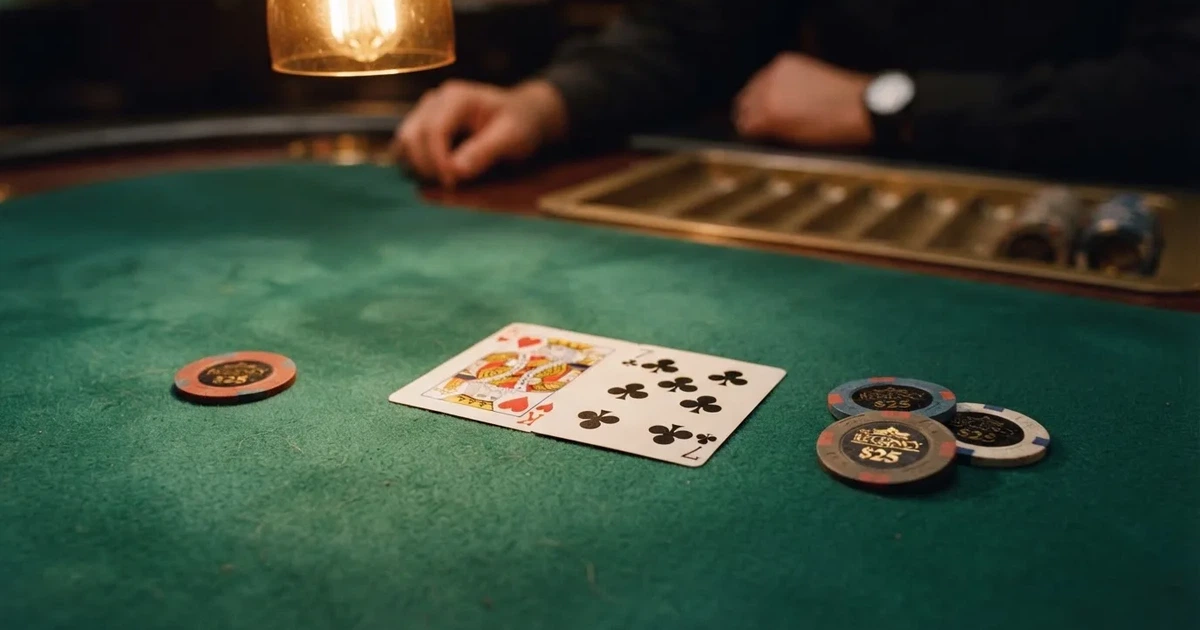
The phrase “best online casinos with big jackpot slots” reads like a shopping list. In Australia it runs straight into the Interactive Gambling Act 2001, and the shopping list empties. No state or territory issues a licence for online casino games or online pokies, so there is no Australian-licensed shortlist to hand over. The page below is the honest version of the question: what big jackpot slots are, how progressive jackpots actually work, which offshore brands the ACMA has acted against for offering them here, and where an Australian reader can put a wager on something like a jackpot in a venue that is actually licensed.
Table of Contents
- The shape of the Australian market for online jackpot slots
- How progressive jackpots actually work
- The mechanics behind a big jackpot slot
- Record wins and what the headlines actually mean
- Bitcoin, crypto and how payment intersects with the jackpot question
- How the ACMA has acted against jackpot-slot brands
- Where an Australian reader can actually wager
- What the ACMA’s blocking record actually shows
- BetStop and the responsible gambling frame
- What the math looks like for an Australian reader
- How to read an offshore jackpot slots site as an Australian reader
- FAQ
The shape of the Australian market for online jackpot slots
Australia runs a split market that confuses people searching from outside the country. Sports betting and racing are licensed and operate openly; online casino games, online pokies and in-play betting are prohibited, have been since the Interactive Gambling Act 2001 was tightened by the Interactive Gambling Amendment Act 2017, and no Australian jurisdiction licenses them. The Northern Territory Racing and Wagering Commission regulates fifty-two of Australia’s online bookmakers — Sportsbet, Bet365 and Ladbrokes among them — but those licences cover wagering on races and sporting events placed before the event, not online casino games. The commission has no full-time staff and meets once a month in Darwin. So the wagering side of Australian online gambling is real and regulated; the casino side of the same search box is not.

H2 Gambling Capital’s 2025 estimate puts what Australians lose to illegal offshore gambling sites at roughly A$3.9 billion a year. The same report notes that the share of gambling going through legal channels has fallen from 74% in 2021 to 64%. Two readings of the same drop are possible. The kinder reading is that Australians are spending more overall. The harsher reading is that more of what they spend is going to sites the ACMA is simultaneously trying to block. Both readings are consistent with the figure, and neither one lets an Australian reader off the hook for knowing which side of the line a particular site sits on.
The ACMA’s blocking programme is the visible edge of the prohibition. The agency asked Australian internet service providers to block a running total of 1,751 illegal gambling and affiliate marketing websites since the first blocking request in November 2019, and more than 230 unlicensed gambling services left the Australian market since enforcement was strengthened in 2017. In the round reported on 26 June 2026, twelve more were added to the list — 7Signs, ChromaBet, Donbet, Duospin, Freshbet, Slots Gem, Jacks Club, Lucky Start, Pointsbetz, Spinrise, Vinyl Casino and Wildsino. None of these names comes with a working Australian address; the URL is the front the offshore operator shows, and a block is what an Australian ISP puts in front of it.
How progressive jackpots actually work
A progressive jackpot is not a separate type of slot machine — it is a payout structure bolted onto a normal game. Each losing wager adds a small slice to a prize pool, the pool grows until someone wins, then it resets to a minimum seed value and starts building again. The seeding is what makes the headline numbers possible: a jackpot that has been building for months carries the previous winners’ losing wagers inside it, plus the seed that the casino or the network puts in to get the next cycle going.

The networks behind these pools are wider than any single casino. A standalone progressive lives inside one machine, with only that machine’s losing wagers feeding it. A local progressive links a bank of machines inside one venue. A wide-area progressive links machines across many venues, often across multiple licensed operators in several jurisdictions, and that is what produces the multi-million figures that make the news. The Mega Moolah series, distributed by Games Global (the business formerly known as Microgaming), is the best-known wide-area example; later wins announced by the company reached £11.5 million and £13.5 million.
A variant worth naming is the “must-hit-by” progressive. Instead of requiring a specific symbol combination, the random number generator sets the exact payout amount within a preset range — somewhere between, say, A$1,000 and A$3,000 — the moment the previous jackpot is won, and a player hits it by landing any qualifying combination. The marketing line is that “the jackpot must drop soon”. The reality is that the drop point is fixed at the start of every cycle, not when the meter feels generous.
The original progressive slot machine is older than most readers expect. Progressive jackpots were first introduced in large casinos in 1986. International Game Technology’s Megabucks paid out its inaugural jackpot of US$4,988,842.17 on 1 February 1987 — a figure modest by today’s standards, enormous at the time, and the same network concept that still drives the largest prizes on offer.
The arithmetic of when a progressive becomes worth chasing is genuinely interesting. In some progressive jackpot games — certain video poker variants and Caribbean Stud Poker among them — the prize can grow large enough to push the game’s theoretical return above 100%, creating a positive-expectation bet. For slot machines specifically, calculating that break-even point is hard because the reel layouts are not published. The result is a class of bet where, at certain meter readings, the math flips; the rest of the time, the house edge is the same as on any other slot. It is one of the few places in a casino where the edge genuinely can be on the player’s side, and it is also one of the few places where spotting the moment requires information the operator does not publish.
The mechanics behind a big jackpot slot
The “big” in a big jackpot slot is a feature, not a genre. A five-reel video slot with three rows and twenty paylines can carry the same progressive meter as a branded game with a feature film tie-in; what changes is how often the meter pays out, how much each losing wager feeds it, and what the base game pays while the meter is building. Two practical consequences follow.
The first is that base-game returns on progressive slots are usually lower than on non-progressive slots of the same theme. A slice of every losing wager goes into the jackpot pool, which means less is available for the small wins a base game would otherwise pay. A player who plans to spend an hour on a progressive slot without ever hitting the meter is paying for the chance that someone else, somewhere on the network, will. That trade-off is the whole economics of the format.
The second is that the meter resets after a win. A player who arrives at a “hot” machine right after a reset is sitting at the bottom of a long climb; a player who arrives at a meter that has been building for six weeks is sitting closer to the top. Both are paying the same per-spin contribution to the pool. Neither can know with certainty what the next spin will do, because the outcome is set by the random number generator, not by the meter reading. The meter is information about the past, not a forecast about the future.
A useful comparison is baccarat, where the math is open and small. The house edge is 1.06% on the Banker bet, 1.24% on the Player bet and 14.36% on the Tie. Those numbers do not change with shoe history, do not respond to recent results, and do not depend on how long anyone has been playing. Progressive slots, by contrast, publish almost nothing about their math — most providers do not release a return-to-player figure for a progressive title, and where one is published it covers the base game only, with the progressive treated as a separate wager. The result is that a player can compare a Banker bet to a Player bet in baccarat with full information, and can compare two progressive slots with almost none. The games pay differently because they tell the player differently.
Record wins and what the headlines actually mean
The record online slot jackpot stands at €19,430,723.60. It was won on 27 April 2021 by a player in Belgium at Napoleon Sports & Casino, on Microgaming’s Absolootly Mad: Mega Moolah — a branded variant of the wider Mega Moolah network. Two later wins announced by Games Global, the business that now distributes the Mega Moolah progressive series, came in at £11.5 million and £13.5 million. Three eight-figure payouts on a single jackpot family is not unusual; wide-area progressives pool losing wagers from a large installed base, and large pools pay large prizes occasionally by design.
A useful reader-side filter: every headline figure is a single payout, not a return rate. A jackpot slot that paid €19.4 million to one player in 2021 paid nothing close to that to the thousands of other players who fed the pool that year. Reading the headline as evidence that jackpot slots “pay out more” is the most common misreading of the format, and the marketing around these titles leans on it deliberately.
Another common misreading is that a long streak of small wins on a progressive slot means the big one is “due”. It is not. Each spin is independent of the last, the meter has no memory, and the random number generator does not consult the previous result. What the meter does carry is information about how much has been added to the pool; what it does not carry is information about when the next winning combination will land. Two ideas that sound similar are, in practice, opposites.
Bitcoin, crypto and how payment intersects with the jackpot question
The search term “crypto jackpot slots” exists because a slice of the offshore market accepts cryptocurrency deposits, and a slice of that slice attaches progressive jackpots to crypto-friendly titles. What the search term does not tell the reader is whether crypto changes the math of the game. It does not. The random number generator is the same, the reel layout is the same, and the contribution to the progressive pool is the same regardless of how the deposit arrived. What crypto does change is the payment rail between the player and the operator.
That change matters under Australian law, and it matters in a particular direction. Since 11 June 2024, credit cards, credit-related products and digital currency have been banned as payment for licensed online wagering in Australia. The ban carries penalties of up to A$247,500 for operators. The legal deposit routes for licensed wagering are debit card, bank transfer, PayID/Osko and BPAY. A site that asks an Australian reader for a credit card or a crypto deposit is operating outside the Australian rules, and the offshore status of the operator means the Australian consumer protection regime does not apply. There is no Australian complaints body, no Australian recourse for a refused withdrawal, and the site can be blocked with a balance still on the player account.
The picture is the same for jackpot slots as for any other casino game the ACMA has acted against: the payment method does not legalise the offer. A crypto deposit to a Curacao-licensed progressive jackpot site is the same prohibition under the Interactive Gambling Act 2001 as a Visa deposit to the same site. Both target the operator, not the player, but both leave the player outside the Australian protection regime.
How the ACMA has acted against jackpot-slot brands
The table below is not a ranking. Each brand appears because the ACMA itself issued a formal warning over it for offering prohibited interactive gambling services to Australians, and the operator named in that warning is the one the agency published. The point of the table is to make the enforcement record visible at a glance, not to recommend any of the named brands.
| Brand | ACMA action and date | Operator named by the ACMA | Subject support |
|---|---|---|---|
| RocketPlay | Formal warning, March 2026 | Pulsup Ltd (Rocketplay); earlier Dama N.V., May 2022 | — |
| Level Up Casino | Formal warning, May 2022 | Dama N.V. | Listed by BGaming as a host site |
| Woo Casino | Formal warning, March 2025 | Dama N.V. | — |
| Spirit Casino | Formal warning, May 2025 | Dama N.V. | — |
| National Casino | Formal warning, July 2025 | Consolutetish S.R.L. | Listed on en.wikipedia.org |
| Bizzo Casino | Formal warning, July 2025 | Consolutetish S.R.L.; earlier TechSolutions, 2022 | — |
| Ignition Casino | Formal warning, July 2025 | Bamboo Media | — |
| Instant Casino | Formal warning, February 2025 | EOD Code SRL | — |
| Jackbit | Formal warning, April 2026 | Ryker B.V. | — |
| Casino Intense | Formal warning, April 2025 | Sterplay Holding Ltd | Listed by ABC, acma.gov.au and Crown Melbourne as a brand in ACMA coverage |
| Sky Crown | Formal warning, September 2022 | Hollycorn N.V. | — |
Three patterns are visible in the table. The first is repetition of operator names: Dama N.V. appears four times across different brands and different years, which is how an offshore group structure presents in an enforcement register — one corporate entity, many front brands. The second is that the warnings are recent and ongoing, not historical: more than half the rows in the table are dated 2025 or 2026. The third is that the “subject support” column is mostly empty. Where a brand is listed by a third party, the table records that listing; where research has no third-party listing, the cell stays blank. The empty cells are the point — they show what the published record carries and what it does not.
RocketPlay
RocketPlay was the subject of a fresh formal warning in March 2026, with Pulsup Ltd named as the operator. A separate warning to Dama N.V. covered RocketPlay in May 2022, so the brand has been on the ACMA’s radar across two operators and four years. The site’s licence, whatever it displays in the footer, does not authorise it to offer online casino games to anyone in Australia; no Australian licence does. For an Australian reader, the practical question is whether the brand’s product offering — progressive jackpot slots, live dealer tables, the rest — is reachable from an Australian IP at all. The ACMA’s blocking actions are the working answer.
Level Up Casino
Dama N.V. was named by the ACMA in the May 2022 warning that covered Level Up alongside five other brands. BGaming lists Level Up as a host site in its distribution catalogue, which is what the third-party support column is reporting — not a recommendation, only a listing. The licence Level Up displays does not change its Australian status: online casino games cannot be licensed in Australia, and the ACMA’s warning predates the brand’s recent growth.
Woo Casino
Dama N.V. picked up a further warning in March 2025 over Woo Casino, on top of the 2022 batch. The pattern of repeat warnings to the same operator is what makes the table worth reading — a single warning can be a misunderstanding, a second is a habit. For an Australian reader, the relevant comparison is between an offshore jackpot slots site with an active ACMA warning and an Australian-licensed alternative with no warning at all, because the latter is a real option and the former is not.
Spirit Casino
Dama N.V. was warned again in May 2025, this time over Spirit Casino. The timing matters in a particular way: the warning landed in the same year as the Woo Casino warning, and within twelve months of warnings to two other Dama N.V. brands. An operator that draws multiple warnings in a short window is one the ACMA treats as a continuing presence in the Australian market, which is the practical meaning of a “formal warning” — it is one step short of a blocking request.
National Casino
Consolutetish S.R.L. was named in the ACMA’s July 2025 warning over National Casino. The brand appears in third-party listings, including en.wikipedia.org, which is what the support column records. The single warning, on a single date, from a single operator, does not change the broader picture: National Casino is one of a group of brands the ACMA has acted against, and the action is recent.
Bizzo Casino
Bizzo carries two warnings from the ACMA: one to Consolutetish S.R.L. in July 2025, and an earlier one to TechSolutions (CY) Group Limited and TechSolutions Group N.V. in 2022. Two operators, three warnings, four years. The support column is empty because research carries no third-party listing specific to Bizzo, which is itself useful information — a brand the ACMA knows is not one the broader listings catalogues have taken up. For an Australian reader, that asymmetry is a sign of how the offshore market works: enforcement follows complaints and referrals, not catalogue listings.
Ignition Casino
Bamboo Media was the operator named in the ACMA’s July 2025 warning over Ignition Casino. The brand name is the same one attached to a long-running offshore poker and casino operation; the ACMA warning is the Australian-specific element. No Australian licence covers what Ignition offers, the ACMA has acted against it, and an Australian reader looking for a jackpot slots site is looking at a brand the regulator has publicly called out for offering prohibited services.
Instant Casino
EOD Code SRL was named in the ACMA’s February 2025 warning over Instant Casino. The “instant” naming pattern is common across the offshore market and tends to signal a particular product positioning — quick deposits, fast withdrawals, no friction. None of which addresses the underlying legal position, which is unchanged by the marketing line. An Australian reader who reaches Instant Casino through an affiliate link reaches the same prohibition the ACMA has warned the operator about.
Jackbit
Ryker B.V. was named in the ACMA’s April 2026 warning, covering Jackbit and CasinOK together. Jackbit sits at the crypto-friendly end of the offshore market — the kind of brand a “crypto jackpot slots” search will surface — and the ACMA warning is the agency’s response to that product positioning meeting the Australian prohibition. The combination of a crypto-friendly deposit rail and an ACMA formal warning is the most common shape an Australian reader’s “best crypto jackpot slots” search result will take.
Casino Intense
Sterplay Holding Ltd was named in the ACMA’s April 2025 warning over Casino Intense. The brand carries third-party listings from Abc.net.au, the ACMA’s own publications and Crownmelbourne.com.au, all in the context of ACMA enforcement coverage rather than product recommendation. The support column reflects what those listings report and is not a separate endorsement.
Sky Crown
Hollycorn N.V. was named in the ACMA’s formal warning covering Sky Crown and Blue Leo. The PDF is dated September 2022 and the warning was one of the earlier post-2017 enforcement actions. Hollycorn has run multiple brands under the same operator structure; the ACMA warning captures two of them in a single action. The pattern repeats through the table: one operator, many brands, several years of warnings.
Where an Australian reader can actually wager
The honest answer to “where can I play big jackpot slots from Australia” runs through three legal channels and one caveat. The licensed channels are pubs and clubs with poker machines, land-based casinos, and licensed wagering operators that take bets on races and sport but not on casino games. The caveat is the offshore market, which is what the ACMA is blocking, warning against, and reporting on.
Land-based casinos in Australia offer table games that include jackpot-adjacent formats. Crown Melbourne, for example, runs three baccarat variants — Traditional Baccarat, Crown Baccarat and 2 to 1 Baccarat — as approved table games regulated by the Victorian Gambling and Casino Control Commission, which replaced the VCGLR on 1 July 2022. Blackjack is approved under the same framework, and the VGCCC’s public log of approved changes to Crown Melbourne’s blackjack variants includes renaming the “Perfect Pairs” side bet to “Crown Pairs” on 23 December 2024 and introducing a “Free Bet” option with a new “Pot of Gold” side bet on 25 March 2024. The NSW Casino Control Act 1992, section 66, requires a casino operator to make a copy of the approved rules available to patrons on request. Both regimes operate on the same logic: every table game played in a licensed Australian casino is approved by a state regulator before it goes live, and the approval is the answer to “is this game legal here”.
Pokies in pubs and clubs are the closest large-scale analogue to online jackpot slots. They are not progressive in the wide-area sense, but the prize structure is similar enough that the comparison is useful for a reader thinking about jackpot mechanics from the inside. The difference is the network: a single pub’s poker machine does not pool losing wagers across the country, and the jackpot ceiling is correspondingly smaller.
Licensed online wagering covers racing and sport only, not casino games. The Northern Territory Racing and Wagering Commission regulates fifty-two online bookmakers, including the largest by market share. None of them offers progressive jackpot slots. The closest product is a cumulative odds bet on a multi-leg racing or sporting event, which pays out as a lump sum if every leg wins — a different product, with a different math, and one where the bookmaker’s margin is published rather than hidden inside a jackpot pool.
What the ACMA’s blocking record actually shows
The blocking programme is the most measurable piece of the prohibition, and it carries two pieces of information a reader can use. The first is the running total of 1,751 illegal gambling and affiliate marketing websites blocked since November 2019 — almost seven years of enforcement, an average of roughly 250 blocks a year, and a number that has not slowed. The second is the round-by-round list of new additions, with the 26 June 2026 round alone adding twelve more sites. The arithmetic is simple: at the rate of the June 2026 round alone, more than 140 new sites would be added in a year, on top of the running total. Both numbers move in the same direction.
The right way to read the running total is not “the ACMA has stopped illegal online gambling in Australia” — the H2 Gambling Capital figure of A$3.9 billion a year in losses to illegal sites says otherwise. The right way to read it is that the supply side keeps growing faster than the enforcement side can remove it, which is the structural shape of any market where supply is offshore and demand is domestic. The offshore operator does not need an Australian address to take an Australian deposit; the ACMA needs to identify, warn, and block each new entrant, which is a slower process by design.
The most useful reader-side takeaway is that the absence of a brand from the ACMA’s published warnings is not the same as the brand being licensed in Australia. A site not yet warned is not the same as a site cleared by the regulator, and a site the reader reached through an affiliate link is not the same as a site that has been through an Australian approval process. The two are easy to confuse, and the affiliate marketing pages that drive most of the search traffic for “best jackpot slots” rely on the confusion.
BetStop and the responsible gambling frame
BetStop, the National Self-Exclusion Register, has been live since August 2023. It binds Australian-licensed online and phone wagering services — the racing and sports bookmakers regulated by the Northern Territory Racing and Wagering Commission and the state regulators. It does not bind offshore casinos, which are not connected to the Australian system at all. A player who has registered with BetStop has excluded themselves from every Australian-licensed wagering service; an offshore casino remains reachable from the same account unless the player separately restricts their own access.
The National Gambling Helpline is 1800 858 858, free, 24 hours a day, with chat available through Gambling Help Online. Both services are run for Australian residents regardless of which gambling product the call is about, and both are independent of the wagering and casino operators. They are the right first call for a reader who is worried about their own play or someone else’s.
For problem gambling specifically tied to offshore casino play, the same services apply, but the regulatory remedies do not. A complaint about an Australian-licensed bookmaker can be taken to the state or territory regulator; a complaint about an offshore casino cannot, because the offshore operator is outside the regulator’s reach. The recourse available to an Australian reader who is refused a withdrawal from an offshore casino is whatever the operator’s own dispute process offers, plus the practical pressure of an ACMA blocking request — neither of which is a substitute for a domestic consumer protection regime.
The 2026 reform picture adds one more layer. The Interactive Gambling Amendment (Gambling Reform) Bill 2026 passed Parliament on 19 August 2026; its advertising and inducement measures commence on 1 January 2027. The bill is law with a start date, not yet in force on a 2026 page, and the measures it introduces are aimed at licensed Australian operators rather than offshore brands. The ban on credit cards and crypto as deposit methods for licensed wagering is already in force; the new advertising rules sit beside it as the next step in tightening what licensed operators can do. None of this changes the offshore market.
What the math looks like for an Australian reader
The arithmetic that matters most for an Australian reader is not the math of any single jackpot slot but the cumulative cost of the offshore market as it stands. The H2 Gambling Capital 2025 figure is A$3.9 billion a year, the legal-channel share is 64% as of the same report, down from 74% in 2021. The drop from 74% to 64% across four years is ten percentage points of the Australian gambling market moving from licensed to unlicensed channels, and the dollar value of that ten-point shift is the bulk of the A$3.9 billion headline.
A second piece of arithmetic is the ACMA blocking rate. With 1,751 sites blocked since November 2019 and the latest reporting round adding twelve more, the rate is steady rather than tapering. The right way to read the running total is as the visible edge of a market that is still growing offshore, not as evidence that the prohibition is working. The two are not the same.
A third piece of arithmetic belongs to the games themselves. In baccarat, the house edge is 1.06% on the Banker bet and 14.36% on the Tie. In craps, Pass/Come is 1.41%, Don’t Pass/Don’t Come is 1.36%, and Any Craps is 11.11%. In blackjack, optimal play under liberal Las Vegas Strip rules produces a house edge of about 0.28%; Atlantic City rules produce about 0.43%. Progressive jackpot slots publish less of their math than any of these — most providers do not release a return-to-player figure for a progressive title, and where one is published it covers the base game only. The result is a product where the player knows less about the edge than in any other major casino game, and pays the same per-spin contribution to a pool they may never reach.
The last piece is the deposit arithmetic of a crypto-friendly offshore site. Since 11 June 2024, credit cards, credit-related products and digital currency have been banned as payment for licensed online wagering in Australia. The ban applies to licensed operators, with penalties up to A$247,500. The same payment methods remain technically usable at offshore sites, which is why a “crypto jackpot slots” search reaches the brands it reaches. The use of an illegal payment method at an illegal site is a layer of illegality on top of the underlying prohibition, and the consumer protection regime that applies to a PayID or BPAY deposit to a licensed bookmaker does not apply to the same deposit at an offshore casino.
How to read an offshore jackpot slots site as an Australian reader
Three checks reduce an attractive offer to its actual content. The first is the licence displayed in the footer. A Curacao licence, an Anjouan licence, a Kahnawake licence — none of these authorises the site to offer online casino games to anyone in Australia. No licence does, because no Australian jurisdiction issues one. The footer text is a brand asset, not an Australian regulatory fact.
The second is the payment screen. If the site offers credit card deposits, crypto deposits, or both, it is operating outside the Australian rules from the deposit side as well as the offer side. The legal deposit routes for licensed wagering in Australia are debit card, bank transfer, PayID/Osko and BPAY; an offshore site offering anything else is offering what Australian law has banned.
The third is the ACMA register. The agency’s website publishes its formal warnings and blocking requests, both searchable by brand name and by operator. A brand that has been warned is on the register; a brand that has not is not cleared — it has simply not been the subject of an action yet. The asymmetry matters. Absence from the register is not the same as approval.
The arithmetic of a particular offer, read through those three filters, is rarely the arithmetic the affiliate page is selling. A “200% welcome bonus” with a forty-times wagering requirement on a slot the player cannot legally reach is not a bonus at all; it is a marketing line on a site the ACMA is acting against. The honest version of the comparison is the licensed alternative: a poker machine in a pub or club, a table game at Crown Melbourne or The Star Sydney, or a wager on a racing or sporting event through a Northern Territory licensed bookmaker. None of those offers a progressive jackpot in the wide-area sense. All of them sit inside the Australian regulatory regime that protects the player who uses them.
FAQ
Which single online slot holds the record for the largest jackpot win?
The record online slot jackpot stands at €19,430,723.60, won on 27 April 2021 by a player in Belgium at Napoleon Sports & Casino on Microgaming’s Absolootly Mad: Mega Moolah. Games Global, the business formerly known as Microgaming, now distributes the Mega Moolah progressive jackpot series and has announced later wins of £11.5 million and £13.5 million. Three eight-figure payouts on a single jackpot family is the normal output of a wide-area progressive network.
Can a jackpot slot be funded with a cryptocurrency deposit?
A cryptocurrency deposit will reach some offshore jackpot slots sites, but it does not change the underlying prohibition. The Interactive Gambling Act 2001 prohibits offering online casino games to anyone in Australia regardless of payment method, and since 11 June 2024 credit cards, credit-related products and digital currency have been banned as payment for licensed online wagering in Australia. A crypto deposit to a Curacao-licensed progressive jackpot site is the same prohibition as a Visa deposit to the same site, and neither route carries Australian consumer protection.
Is it legal for an online casino to offer jackpot slots to Australians?
No. The Interactive Gambling Act 2001, strengthened by the Interactive Gambling Amendment Act 2017, prohibits offering online casino games, online pokies and in-play betting to anyone in Australia. No state or territory issues a licence for online casino games, so any offshore site offering jackpot slots to an Australian reader is operating outside the Australian regime. The ACMA enforces the prohibition through formal warnings, blocking requests to Australian ISPs, and a running total of 1,751 blocked websites since November 2019.
Why do jackpot slots typically pay out less often between big wins?
A progressive jackpot slot returns a slice of every losing wager to the prize pool, which leaves less available for the small wins a non-progressive base game would pay. The result is a lower base-game return between big wins, and longer dry stretches between payouts. The wide-area progressive networks pool losing wagers from a large installed base, which is what makes the headline payouts possible and what lengthens the gap between them.
What happened to the record jackpot won on Mega Moolah in 2021?
The €19,430,723.60 jackpot won on 27 April 2021 was a single payout to a player in Belgium, on the Absolootly Mad: Mega Moolah variant of the wider Mega Moolah network. The pool reset to its seed value after the win and began accumulating again, and Games Global has since announced later wins of £11.5 million and £13.5 million on the same network. The headline figure is a record for the network, not a return rate for the game.
Is there a way to play jackpot-style slots for real money through a licensed Australian venue?
The closest licensed analogues are poker machines in pubs and clubs, table games at land-based casinos such as Crown Melbourne, and licensed online wagering on races and sport through Northern Territory licensed bookmakers. None of these offers a wide-area progressive jackpot in the offshore sense. BetStop, the National Self-Exclusion Register, binds Australian-licensed wagering services; offshore casinos are not connected to it. The National Gambling Helpline is 1800 858 858, free, 24/7, with chat at Gambling Help Online.