
Best progressive jackpot slots 2026 in Australia: mechanics, marketing, and the law the marketing ignores
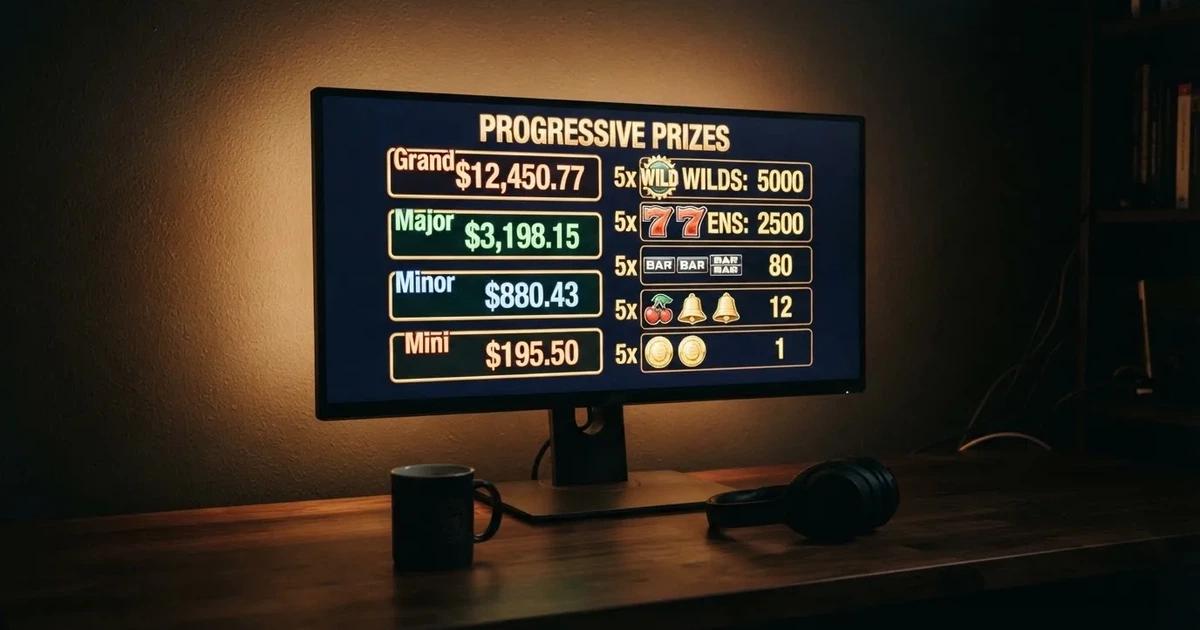
A progressive jackpot slot works on a small, repetitive motion: every losing wager pushes a fraction of itself into a shared pool, the pool keeps climbing until someone wins it, and the moment it pays out the counter resets to a preset minimum and starts climbing again. The pool is the product. A jackpot that has rolled over ten thousand times without paying out is doing exactly what a jackpot is supposed to do, which is why the same slot can advertise a “Must Win Soon” banner one day and a €19.4 million headline the next. None of that is in dispute, and none of it requires an Australian connection. The dispute is everything else: where these slots can be legally offered to Australians, who is offering them, and what happens when an Australian tries to play.
This article is current as of 29 October 2026 and was checked against the Australian Communications and Media Authority’s published register of formal warnings and blocking requests.
Table of Contents
- What a progressive jackpot slot actually is
- Where progressive jackpots can be played in Australia
- What the ACMA has actually done about it
- Player protection, and what an offshore site does not provide
- The progressive slot network behind the headlines
- What an offshore progressive slot site actually offers an Australian
- The brands the ACMA has warned: what each card is for
- Choosing what to do with this information
- How this page was put together
- Frequently asked questions
What a progressive jackpot slot actually is
A slot machine takes a cut of every spin and feeds it back to the player, on average, over a long stretch of play. That average is the return to player, or RTP, and on most modern slots it sits somewhere between 94% and 97%. A progressive slot is a slot that diverts part of that cut — usually a few tenths of a percent — into a separate jackpot pool, instead of returning it through the ordinary paytable. The pool is held by the operator or by the game’s network and added to with every spin until somebody wins it. Once won, the pool resets to a seed amount set by the operator and starts climbing again.

The mechanic dates to the mid-1980s. Progressive jackpots were first introduced in large casinos in 1986, and the first Megabucks progressive slot machine, made by International Game Technology, paid out its inaugural jackpot of $4,988,842.17 on 1 February 1987. The size of the inaugural prize was a deliberate signal: it told players the machine was connected, that the pool was real, that the money was not just sitting in one cabinet waiting to be hit. Thirty-eight years later, the largest publicly recorded online slot jackpot is €19,430,723.60, won on 27 April 2021 by a player in Belgium at Napoleon Sports & Casino on Microgaming’s “Absolootly Mad: Mega Moolah”.
Two technical details do most of the explaining. The first is the difference between a standalone progressive and a network progressive. A standalone progressive lives inside one machine, or one server, and grows only from bets placed there. The seed is small and the ceiling is low. A network, or wide-area, progressive pulls from many machines across many venues, or across many online casinos running the same game. The same fraction of every spin across the whole network feeds one shared pool, and the pool grows fast enough that the headline numbers climb into seven and then eight figures within weeks of a reset.
The second detail is the trigger. Older progressive slots required a specific combination of symbols, often on a max-coin spin, before the jackpot was even eligible. Newer ones do not. A “must-hit-by” progressive is a mystery-jackpot variant where a random number generator sets the exact payout amount within a preset range (for example $1,000-$3,000) immediately after the previous jackpot is won, so winning it does not require landing a specific combination of symbols. The visible “must hit by $X” amount is the upper edge of that range, and the actual trigger is a random draw that can happen on any spin.
What the paytable does not show
The paytable is the part of the screen a player is meant to read, and it does most of its work honestly. It shows the symbol pays, the bonus features and the jackpot tiers. What it does not show is the base RTP split: the ordinary RTP of the slot, the share diverted into the jackpot pool, and the share diverted into smaller jackpots or feature pools. A progressive slot with a headline jackpot of A$5 million might be running a base game that returns 91% of every dollar to the player, with the other 9% split between the operator’s margin and the various jackpots. Compared with a non-progressive slot in the same studio’s catalogue returning 96%, the player is paying roughly 5 cents per dollar for the chance at the big number on the marquee.
The reason progressive slots typically have a lower base return-to-player than fixed-jackpot games is the size of the diverted slice, not anything dishonest about the math. The slot still has to pay for the privilege of advertising a jackpot big enough to attract players, and the cost of that privilege comes out of the base RTP.
Where progressive jackpots can be played in Australia
This is where the picture splits in two, and the split is the one that matters to anyone trying to play.
Inside Australian borders, progressive jackpots exist. They sit inside the licensed poker-machine venues of each state and territory — the “pokies” of New South Wales and Victoria, the casinos of Melbourne, Perth, Sydney and the Gold Coast, the licensed clubs that hold gaming machine entitlements. Crown Melbourne, for example, offers three baccarat variants — Traditional Baccarat, Crown Baccarat and 2 to 1 Baccarat — as approved table games regulated by the Victorian Gambling and Casino Control Commission, which replaced the VCGLR as Victoria’s casino regulator on 1 July 2022, and the same regulator approves the rules for blackjack, roulette and other table games run on the floor. Those rules are published in a public log and the operator is required to make a copy available to patrons on request under section 66 of the NSW Casino Control Act 1992.
But progressive slots offered as an online casino product to Australians are not on that list. The Interactive Gambling Act 2001, strengthened by the Interactive Gambling Amendment Act 2017, makes it an offence to provide online casino games, online pokies or in-play betting to a person in Australia. No state or territory licenses them. The 52 online bookmakers the Northern Territory Racing and Wagering Commission regulates — including Sportsbet, Bet365 and Ladbrokes — are licensed in the Territory for tax reasons; the commission has no full-time staff and meets once a month in Darwin. What is licensed is wagering on races and sport placed before the event, lotteries and keno. Online casino games and online progressive slots are not in that list, and have not been added to it.
So when an Australian player sees an advertisement for a “progressive jackpot slot” being offered on a website that accepts Australian dollars, the site is offering a product the Australian law says cannot be supplied to Australians. The site may hold a licence from Curaçao, from Malta, from Anjouan or from somewhere else; that licence authorises the site to offer the product somewhere, just not here. The site knows this. The Australian Communications and Media Authority has been telling them, in writing, since at least 2022.
What the ACMA has actually done about it
The ACMA’s enforcement toolkit has three parts: formal warnings, blocking requests, and investigations that can lead to civil penalties.
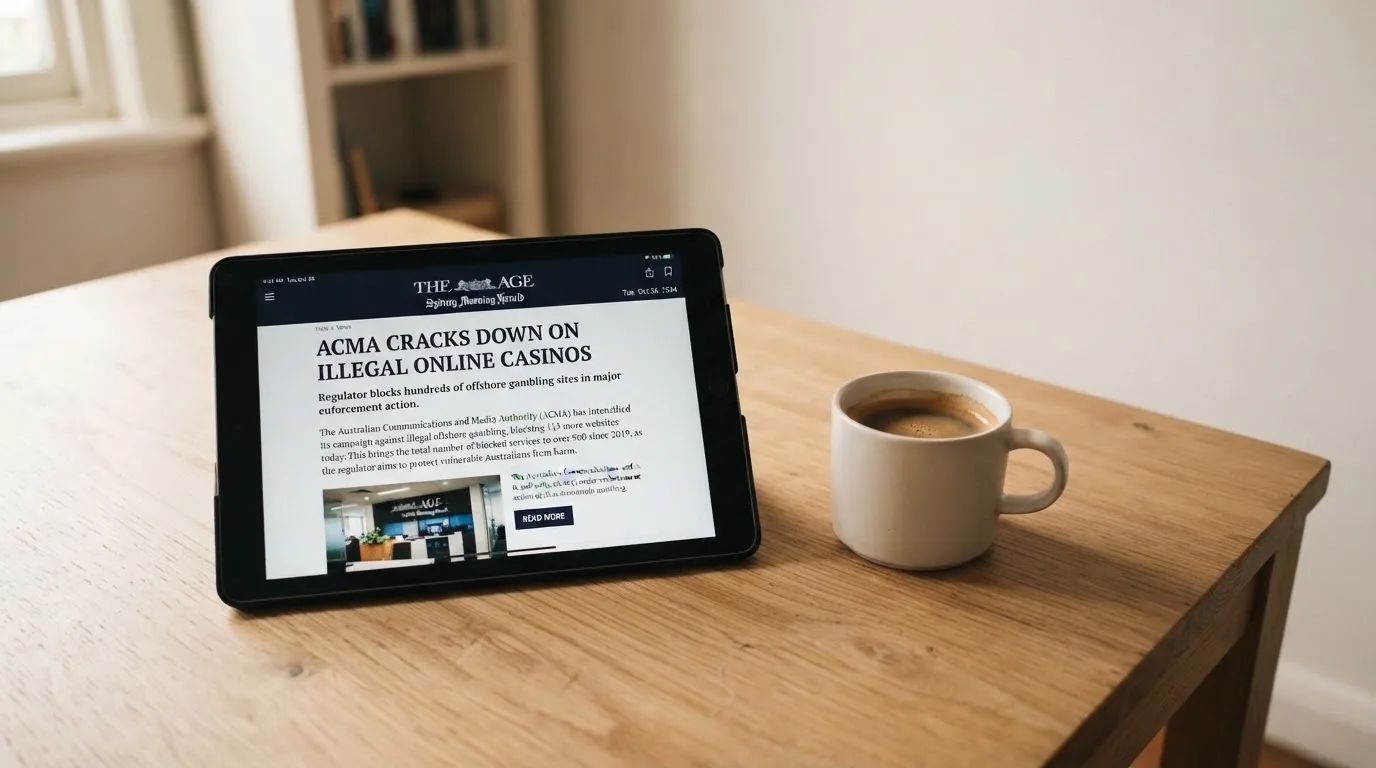
A formal warning is a published notice naming the operator and the offending brand. It does not block the site or take it offline, but it puts the operator on notice that the ACMA considers the service prohibited under the Interactive Gambling Act 2001. Since 2022 the register has filled up with offshore casino brands running progressive slots, live dealer tables and the rest of an online casino product aimed at Australian players. The March 2022 batch named six Dama N.V. brands at once — Bambet, Dazard, Level Up, Rocketplay, Wild Tornado and Cobra Casinos — and the same operator has been back twice more, with Woo Casino in March 2025 and Spirit Casino in May 2025. In February 2025 the ACMA issued a formal warning to EOD Code SRL over Instant Casino. In April 2025 the ACMA issued a formal warning to Sterplay Holding Ltd over Casino Intense. In July 2025 the ACMA issued formal warnings to Bamboo Media over Ignition Casino and to Consolutetish S.R.L. over National Casino and Bizzo Casino; Bizzo Casino had already been the subject of a 2022 formal warning to TechSolutions (CY) Group Limited and TechSolutions Group N.V. In March 2026 the ACMA issued a formal warning to Pulsup Ltd over RocketPlay, putting the same brand in front of a fresh operator a year after its 2022 warning. In April 2026 the ACMA issued a formal warning to Ryker B.V. over Jackbit and CasinOK.
The register also carries an older warning to Hollycorn N.V. over its Sky Crown and Blue Leo casino services. Each of these warnings is published in full on the ACMA website with the offending URLs and the section of the Act being breached.
Blocking is the harder tool. According to the ACMA as reported in June 2026, a total of 1,751 illegal gambling and affiliate marketing websites had been blocked since the first blocking request in November 2019, and more than 230 unlicensed gambling services had left the Australian market since enforcement was strengthened in 2017. In a round reported on 26 June 2026 the ACMA asked Australian internet service providers to block 12 more illegal gambling websites: 7Signs, ChromaBet, Donbet, Duospin, Freshbet, Slots Gem, Jacks Club, Lucky Start, Pointsbetz, Spinrise, Vinyl Casino and Wildsino. A site that is blocked is unreachable from the major Australian ISPs without a VPN, and a player with a balance on the site when the block lands cannot reach the cashier to withdraw it.
The arithmetic behind the blocking rate
The blocking programme has been running since November 2019. As at the ACMA’s June 2026 update, 1,751 sites had been blocked across the lifetime of the scheme, against more than 230 services that left the market between 2017 and June 2026. Spread across roughly 80 months of active blocking, that works out to an average blocking rate of around 22 sites per month, with the published batches varying from a handful at a time up to the 12-site June 2026 round.
The rate matters because it tells an Australian player what enforcement looks like at the margin. The ACMA is not pulling one site at a time off the air; it is taking them down in batches, and it is asking ISPs to do the technical work. The blocking rate is steady enough that operators treat it as a known cost of doing business, and short enough that a site blocked in 2026 might be replaced by a near-clone at a different domain within weeks. The blocking is real and effective, and it is also a workload the regulator has to keep on top of.
The losses behind the warnings
H2 Gambling Capital’s 2025 report estimates that Australians lose about A$3.9 billion a year to illegal gambling sites, and that the share of gambling going through legal channels fell from 74% in 2021 to 64%. The fall is the more important number. A growing share of Australian gambling spend is going to operators the ACMA has been publicly warning and blocking since at least 2022, and the dollar volume is large enough that the warnings are clearly not stopping the flow.
Player protection, and what an offshore site does not provide
The protective scaffolding around Australian-licensed wagering is built for Australian players. BetStop, the National Self-Exclusion Register, has been live since August 2023 and binds every Australian-licensed online and phone wagering service. A punter who registers with BetStop is excluded from opening new accounts, depositing, or receiving marketing from every Australian-licensed operator at once. The National Gambling Helpline on 1800 858 858 is free, 24/7, with chat available through Gambling Help Online. Australian-licensed operators are required to honour these tools.
None of this extends to an offshore progressive slot site. The site does not check BetStop. It does not block an Australian account holder who has self-excluded locally. It does not connect to the National Gambling Helpline. It is not subject to Australian consumer law, so a refused withdrawal or a confiscated balance has no Australian complaints body to escalate to and no Australian court that will necessarily accept jurisdiction. The site may offer its own responsible-gambling tools — deposit caps, timeouts, self-exclusion — and the better-run offshore sites do. Those tools are run by the operator on its own terms and can be revoked at any time.
Money and how it moves
Payment routes tell the same story. Since 11 June 2024, credit cards, credit-related products and digital currency have been banned as payment for licensed online wagering, with penalties of up to $247,500 for operators that take them. The legal deposit routes for a licensed Australian wagering account are debit card, bank transfer, PayID/Osko and BPAY. A site asking an Australian for a credit card deposit or a cryptocurrency deposit is operating outside the Australian rules, and the absence of those routes from a site’s cashier is one of the simplest tells that the site is offering something other than a licensed Australian product.
Tax follows the same line. Gambling winnings of a recreational player are not assessable income under section 6-5 of the ITAA 1997, and losses are not deductible, unless the person carries on a business of gambling. The model answer, if the ATO is asked, is to check with the ATO; the line between a recreational player and a business is the same line the ATO draws in any other context.
Reform that has been passed but not commenced
The Interactive Gambling Amendment (Gambling Reform) Bill 2026 passed Parliament on 19 August 2026, and its advertising and inducement measures commence 1 January 2027. The law is enacted but the inducement rules are not yet in force. For a 2026 reader, the practical effect is that an offshore site can still advertise its progressive slots to Australian audiences through 2026, with the inducement-side restrictions arriving at the start of 2027.
The progressive slot network behind the headlines
The headline jackpots come from a small number of long-running networks. Games Global, the business formerly known as Microgaming, distributes the Mega Moolah progressive jackpot series, which is the network the Belgian record was set on in April 2021, and has announced later Mega Moolah wins of £11.5 million and 13.5 million. The same kind of network sits behind NetEnt’s Mega Fortune, IGT’s Megabucks, Playtech’s series, and several Microgaming-adjacent progressive games that share a single seed-and-payout system across hundreds of online casinos.
That sharing is the point. A non-progressive slot running on a single operator’s site returns a defined percentage of every spin to the players of that one site. A wide-area progressive takes a fraction of every spin from every casino connected to the network and adds it to one pool. The pool grows faster, the reset is rarer, the marketing budget that justifies the jackpot is larger, and the player base paying for it is broader. The cost of the network is, again, paid out of the base RTP.
Some progressive games, including certain video poker and Caribbean Stud Poker variants, can grow large enough to push the game’s theoretical return to player above 100%, creating a positive-expectation bet, though this break-even point is difficult to calculate for slot machines because reel layouts are not published. This is a real phenomenon, and the obvious reading is that the player has the edge once the pool passes a threshold. The catch is the calculation: a slot’s positive-expectation threshold depends on the exact probabilities of every outcome, including the chance of the jackpot, and slot machines do not publish their reel layouts. The threshold can be estimated; it cannot be verified by the player.
What an offshore progressive slot site actually offers an Australian
The site the Australian player reaches through a search ad is, almost always, an offshore operator running a Curaçao or Anjouan licence, holding progressive slot content from one or more of the major studios, and offering the product to a global audience that includes Australians. The site has no Australian licence. The licence it does hold covers it to offer the product to somebody, somewhere, just not to Australians under the Interactive Gambling Act 2001.
Two things follow. First, the site can be warned, blocked, and warned again without losing its licence, because the licence authority is not the ACMA. Second, when the site fails to pay a withdrawal or to honour a bonus, the Australian player has no Australian complaints body to escalate to. The operator’s own terms usually name a foreign jurisdiction for disputes, and following that path costs the player more than the disputed balance is worth.
A site that publishes a “responsible gambling” page with self-exclusion and deposit limits, and a site that offers a customer support team reachable by live chat, can still be the kind of site the ACMA has just formally warned. The warning is over the supply of a prohibited service, not over the operator’s behaviour on its own terms. The two facts coexist.
The brands the ACMA has warned: what each card is for
The table below sets out the offshore brands the ACMA has formally warned over the supply of online casino games to Australians. The product on offer is a prohibited service under the Interactive Gambling Act 2001, and any progressive jackpot slot advertised by one of these brands is part of that prohibited product. The table is a register of warnings, not a recommendation, and not a ranking. No brand listed here is suitable as a place for an Australian to play.
| Brand | ACMA action and date | Operator named by the ACMA | Subject support |
|---|---|---|---|
| RocketPlay | Formal warning, March 2026 (also May 2022 under earlier operator) | Pulsup Ltd | — |
| Level Up Casino | Formal warning, May 2022 | Dama N.V. | listings-only (per public listings) |
| Woo Casino | Formal warning, March 2025 | Dama N.V. | — |
| Spirit Casino | Formal warning, May 2025 | Dama N.V. | — |
| National Casino | Formal warning, July 2025 | Consolutetish S.R.L. | listings-only (per public listings) |
| Bizzo Casino | Formal warning, July 2025 (also 2022) | Consolutetish S.R.L. (also TechSolutions) | — |
| Ignition Casino | Formal warning, July 2025 | Bamboo Media | — |
| Instant Casino | Formal warning, February 2025 | EOD Code SRL | — |
| Jackbit | Formal warning, April 2026 | Ryker B.V. | — |
| Casino Intense | Formal warning, April 2025 | Sterplay Holding Ltd | listings-only (per public listings) |
| Sky Crown | Formal warning, September 2022 | Hollycorn N.V. | — |
The entries marked “listings-only” reflect what the AGCO, ACMA, ABC News and Crown Melbourne’s own pages name; the absence of a mark in the remaining rows means research could not confirm the brand’s inclusion in any progressive-jackpot-specific listing, not that the brand is excluded from the broader offshore progressive slot market. Each brand has been warned for the prohibited product, and the same warning applies to any progressive slot it advertises.
RocketPlay
Two operators have run the same brand past the regulator. The May 2022 warning covered Rocketplay under Dama N.V. alongside five other Dama brands in a single batch; the March 2026 warning named Pulsup Ltd over RocketPlay, a fresh operator over the same brand. The product the brand advertises is the same prohibited online casino product the ACMA has been warning on since 2022, and the change in operator is a change of nameplate on the same kind of service.
Level Up Casino
A Dama N.V. brand from the May 2022 batch. The same six-brand warning that covered Bambet, Dazard, Rocketplay, Wild Tornado and Cobra Casinos also covered Level Up, and the warning has not been withdrawn. Public listings note Level Up among brands offering progressive slot content; local play remains prohibited.
Woo Casino
Dama N.V. returned to the ACMA register in March 2025 with a warning over Woo Casino, three years after the May 2022 batch. The warning is over the same prohibited product, and the site’s continuing offer of progressive slots to Australian-facing traffic is what the ACMA named.
Spirit Casino
Dama N.V. again, this time in May 2025, with Spirit Casino. The pattern is the one the May 2022 batch started: a single operator running multiple brands, each one warned in its own right and each one offering the same prohibited product.
National Casino
A Consolutetish S.R.L. brand warned in July 2025 alongside Bizzo Casino. Public listings name National Casino as offering progressive slot content; for Australians, this remains a prohibited service with no local recourse.
Bizzo Casino
Two warnings, two operators: a 2022 warning to TechSolutions (CY) Group Limited and TechSolutions Group N.V., and a July 2025 warning to Consolutetish S.R.L. The current operator is the 2025 one; the earlier warning is part of the brand’s history with the regulator.
Ignition Casino
Bamboo Media, July 2025. The brand carries a familiar name to North American players, but the ACMA’s interest is in the offer of a prohibited product to Australians.
Instant Casino
EOD Code SRL, February 2025. The warning is the same as the others: an offshore operator offering a prohibited online casino product to Australians.
Jackbit
Ryker B.V., April 2026. The same warning as the others, issued in the same April that the Interactive Gambling Amendment (Gambling Reform) Bill 2026 was passing through Parliament.
Casino Intense
Sterplay Holding Ltd, April 2025. Public listings note Casino Intense among brands offering progressive slot content; for players in Australia, the site offers no local consumer protection or complaints channel.
Sky Crown
Hollycorn N.V., September 2022. The ACMA’s published notice covers Sky Crown and Blue Leo as the same operator’s two casino services, with the same prohibited product.
Choosing what to do with this information
For an Australian reader, the choices are narrow and they are real. The first choice is between a licensed Australian venue and an offshore site. The licensed venue offers the game under Australian rules, with BetStop, with the National Gambling Helpline, with Australian consumer recourse, and with a regulator the player can lodge a complaint with. The licensed venue is also a physical destination in most cases: the casino floors at Crown Melbourne, Crown Perth, The Star Sydney, The Star Gold Coast and Sky City Adelaide, plus the licensed clubs and pubs of each state. The Australian online wagering licences do not cover online casino games.
The second choice is the one the ACMA’s register keeps being built around. An offshore progressive slot site will accept an Australian deposit, will offer the same content the player sees on a licensed site, and will do so under a licence that does not authorise the offer to Australians. The site may be a fine, well-run operator under its home jurisdiction. It is also offering a prohibited service, can be warned and blocked at the regulator’s discretion, and gives the Australian player none of the local protective scaffolding.
For the player who wants the game
The licensed Australian venue is where the game is offered under Australian law, in person, on approved machines. The catalogue varies by state, and the operator is the licensed club, casino or hotel that holds the relevant gaming machine entitlements. The licensed Australian venues do not offer online progressive slots, because the licence category does not exist.
For the player who wants the network
The wide-area progressive networks — Mega Moolah, Mega Fortune, the IGT Megabucks family, the Playtech progressive series — run across hundreds of online casinos. None of those casinos are licensed in Australia to offer the product. A player reaching the network through an offshore site is paying for the network with the base RTP of every spin, and is doing so on a site the ACMA has either warned or could warn.
For the player who needs to step back
BetStop is the right tool for an Australian-licensed account. The National Gambling Helpline on 1800 858 858 is free, 24/7, with chat at Gambling Help Online. Self-exclusion at an offshore site is run by the operator on its own terms and is not connected to BetStop. The line between a recreational player and a problem gambler is not one a player has to draw alone.
How this page was put together
This page is built from the ACMA’s published register of formal warnings and blocking requests, from the regulator’s own published statements, and from the publicly stated terms of the Interactive Gambling Act 2001 and its 2017 and 2026 amendments. The headline jackpot figures come from the named record holders and from the studios’ own media releases. The blocking rate is the page’s own arithmetic on the ACMA’s running totals.
Where the page cannot confirm a fact — whether a particular brand still offers a particular game to Australians, whether a particular progressive network still routes a particular jackpot through a particular site — the page says so, or leaves the field blank. No figure on this page has been invented. Where the ACMA’s published information is silent, the page is silent with it.
Frequently asked questions
How does a progressive jackpot slot’s prize pool actually grow between wins?
Every losing wager on a connected machine or game feeds a fraction of itself into a shared pool, and the pool is added to until somebody wins it. Once won, the pool resets to a preset seed amount and starts climbing again, with the cycle repeating until the next win. The fraction diverted is part of the slot’s RTP structure and is paid for by the player through a lower base RTP than a non-progressive slot would offer.
What is the difference between a standalone jackpot and a network-wide progressive jackpot?
A standalone jackpot sits inside one machine, or one server, and grows only from bets placed on that one machine. A network-wide progressive pulls from many machines across many venues, or many online casinos running the same game, and adds a fraction of every spin across the whole network to one shared pool. The wider the network, the faster the pool climbs and the larger the headline figure.
Do licensed Australian pokies venues offer progressive jackpot machines?
Yes. Progressive jackpot machines are offered in the licensed poker-machine venues of each state and territory, including the casino floors of Crown Melbourne, Crown Perth, The Star Sydney, The Star Gold Coast and Sky City Adelaide, and the licensed clubs and hotels that hold gaming machine entitlements. Online progressive jackpot slots are not licensed in Australia and cannot be lawfully supplied to Australians by any operator.
Why do progressive jackpot slots typically have a lower base return-to-player than fixed-jackpot games?
Because the cost of offering the progressive jackpot is paid for out of the slot’s RTP. The fraction diverted into the jackpot pool is not returned through the ordinary paytable, so the base game returns less than a comparable non-progressive slot would. The trade is a lower per-spin return for a chance at a much larger payout, and the player pays for the chance at every spin.
How is a record progressive jackpot payout verified?
The record €19,430,723.60 win on 27 April 2021 at Napoleon Sports & Casino on Microgaming’s “Absolootly Mad: Mega Moolah” was reported by the operator and confirmed by the studio and by European trade press. The studio’s later wins of £11.5 million and 13.5 million were announced in its own media releases. Verification of any individual payout rests on the operator’s published statement, the studio’s confirmation, and the public trade press coverage; the player is not the verifier.
What triggers the jackpot round on a typical progressive jackpot slot?
Older progressive slots required a specific combination of symbols, often on a max-coin spin, before the jackpot was eligible. Newer mystery-style progressives set the payout amount through a random number generator immediately after the previous jackpot is won, so the trigger is a random draw that can happen on any spin rather than a specific combination. The visible “must hit by” amount is the upper edge of the range within which the random draw will fall.