
Big Red pokies online in Australia: where the theme can run, and where it cannot
The short version, before anything else: an online casino product carrying the Big Red pokies theme cannot be lawfully supplied to a person physically in Australia. The Interactive Gambling Act 2001 (IGA), as tightened by the Interactive Gambling Amendment Act 2017, treats online pokies as a prohibited interactive gambling service; no state or territory licences it. What you can lawfully do is walk into a pub, club or casino in a state that allows it and sit at a licensed Aristocrat-style machine. What you cannot lawfully do is click into a RocketPlay-style page from a kitchen in Brisbane and spin a Big Red-themed reel game for real money. Everything below is the long version of that gap, and what an Australian reader needs to know to act on it.
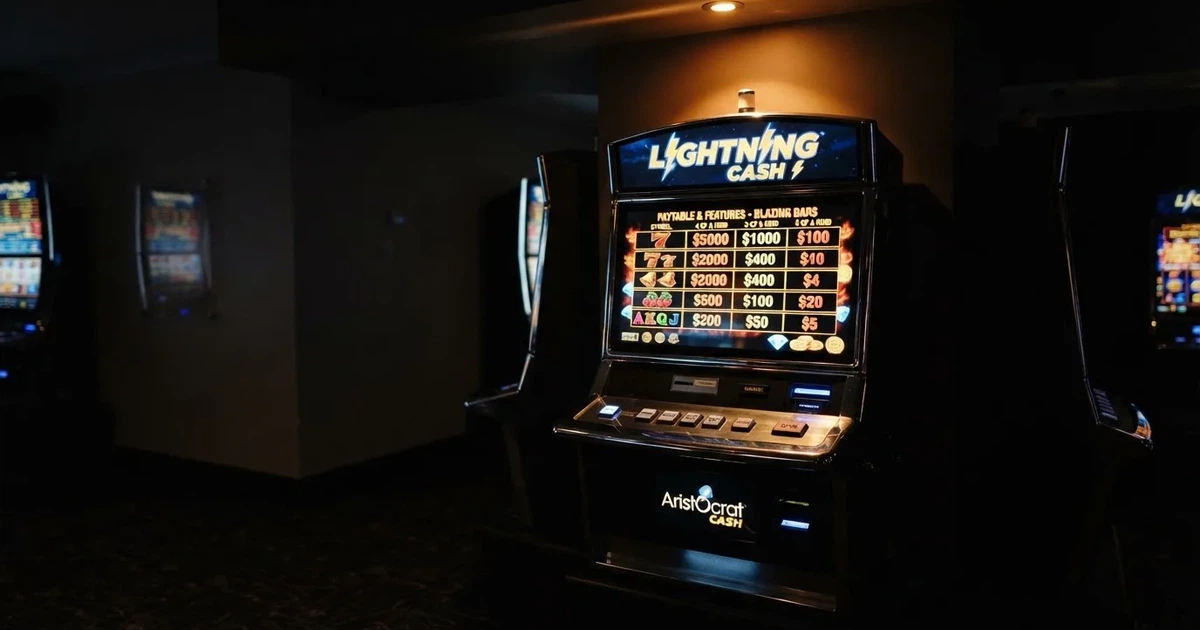
Current as of 29 October 2026, licence claims and ACMA enforcement actions cross-checked against the ACMA register.
Table of Contents
- What “Big Red” actually names, and why the online version is the issue
- The legal frame: what the IGA actually prohibits
- Why a Big Red-style theme matters more than the average theme
- How shortlists get put together, and what actually separates one option from another
- Player protection in the licensed frame, and what an offshore site cannot offer
- Where the theme can be played, in one honest summary
- The arithmetic the page actually has: the blocking rate
- Brands the ACMA has acted against
- What a player who finds one of these sites should actually do
- The math of a session, and why the licensed floor is the only honest comparison
- Reading the ACMA’s register, and what an Australian reader can and cannot check
- What the 2027 reform frame will change, and what it will not
- The reading the page stands behind
- Frequently asked questions
What “Big Red” actually names, and why the online version is the issue
Big Red is an Aristocrat Leisure Industries theme that has run on Australian gaming-machine floors for years: outback fauna, a red centre, the iconography of the dry inland. The machine itself is a five-reel video slot with a free-games feature and a high-variance math profile — exactly the kind of long, dry stretch between features that veteran Australian players recognise and that newer themes have softened.
The thing to be clear about up front: nobody searching for “Big Red pokies online” in Australia is searching for a game the law treats as ordinary. The same theme, in a browser, supplied to an Australian IP address, sits inside the prohibition the IGA writes against online casino games. The theme itself is not what’s restricted — Aristocrat titles appear on thousands of licensed floors. The act of offering them as an online casino product to Australians is what is restricted. The distinction is the entire reason a page like this one exists.

A second distinction matters just as much. Some Aristocrat content has been adapted into free-play or social-casino formats overseas; those are not real-money wagering products and the IGA’s prohibition is not aimed at them. The prohibition aims at the operator who takes a deposit from an Australian, runs the reels, and pays out a prize in cash. That is what offshore sites targeting Australia do, and that is what the ACMA has been moving against since 2017.
The Australian pokies market in plain numbers
Poker machines are a fixture of Australian gambling. About 3% of the world’s pub and club poker machines sit in Australia, with 0.3% of the global population behind them. In 2020–21 Australians bet almost A$150 billion through gaming machines and lost A$12.18 billion on them. New South Wales alone had 87,298 machines outside casinos across 2,195 venues at June 2023, with player losses of A$8.18 billion in 2022–23. Queensland had 21,122 machines across 351 venues in October 2023; Victoria had 26,380 outside Crown Casino across 488 venues in 2021–22, under a 30,000-machine statewide cap. Western Australia banned poker machines in pubs and clubs when Crown Perth opened in 1985; the casino itself now runs roughly 2,500 approved machines.
Every one of those machines is licensed state by state, and each jurisdiction sets its own minimum return-to-player. The floor sits at 85% in New South Wales, the Northern Territory, Queensland and most of Victoria, 87% at Crown Melbourne, 87% in the ACT and Tasmania, 87.5% in South Australia, and 90% in Western Australia. Those numbers are the house edge set by statute, not by the operator: a New South Wales pub machine returns at least 85 cents in the long run for every dollar it takes, and the operator cannot lawfully set a machine below that.
The legal minimums also tell you what the floor of the industry’s math looks like. A 90% return-to-player is the highest floor in the country and is concentrated at Crown Perth, which has the fewest machines and the only legal venue for pokies in Western Australia. A 85% floor in NSW, the country’s biggest machine population, is the loosest of the major east-coast regimes — looser in the sense of returning more, but still a 15-cent house edge per dollar, which is exactly the kind of margin a serious volume of play converts into the A$12 billion figure above.
The legal frame: what the IGA actually prohibits
The Interactive Gambling Act 2001, as amended in 2017, makes it an offence for an operator to provide an online casino game — including online pokies — to a person physically in Australia. The prohibition is aimed at the provider, not the individual player; an Australian who logs in is not personally liable under the Act. The provider is.
The shape of what is and is not prohibited is precise enough to be useful:
- Prohibited, online: casino games (slots, table games, live-dealer studio games), online pokies in any theme, in-play betting on sport.
- Licensable, online: wagering on races and sport placed before the event, lotteries, keno. In practice the Northern Territory Racing and Wagering Commission (NTRWC) is the regulator of record for 52 of Australia’s online bookmakers, including Sportsbet, Bet365 and Ladbrokes — a quirk of the federal structure, where the bookmaker is licensed in the Territory for tax reasons. The NTRWC has no full-time staff and meets once a month in Darwin; its small footprint has been the subject of reform debate since at least early 2026.
Minimum age is 18. Credit cards and credit-related products have been banned as payment for licensed online wagering since 11 June 2024, with penalties up to A$247,500 for operators. Crypto as a deposit route is on the same side of that line: a licensed Australian bookmaker will not ask for a credit card or for crypto. Legal deposit routes for licensed wagering are debit card, bank transfer, PayID and Osko, and BPAY. A site that does the opposite is operating outside the Australian rules.
Where offshore sites stand, and what the ACMA has been doing about it
Offshore casinos — the brands an Australian reader sees advertised through affiliate pages and SEO slots — are not licensed in Australia and cannot be. They are typically licensed in Curaçao or another small jurisdiction that does not regulate play from Australian IPs. The IGA targets them; the ACMA enforces; the enforcement tool is a regime of formal warnings followed by website blocking at the internet-service-provider level.
By June 2026 the ACMA had asked Australian ISPs to block 1,751 illegal gambling and affiliate marketing websites since the first blocking request in November 2019, and more than 230 unlicensed gambling services had left the Australian market since enforcement was strengthened in 2017. A single round reported on 26 June 2026 added 12 more sites to the block list: 7Signs, ChromaBet, Donbet, Duospin, Freshbet, Slots Gem, Jacks Club, Lucky Start, Pointsbetz, Spinrise, Vinyl Casino and Wildsino.
The pace is the headline. Over six and a half years, 1,751 blocking actions and 230 service exits point to a market the regulator is actively closing, in rounds measured in the dozens, with the pace holding rather than slowing. A reader comparing what an offshore site offers to what an Australian-licensed bookmaker offers is comparing a regulated channel that has been deliberately widened to an unregulated channel that has been deliberately narrowed.
The blocking rate over the life of the regime, on those figures, works out to roughly 269 blocks per year averaged across the period — closer to a hundred a year in the early years and well above that in the more recent rounds. The rate is what an Australian reader should hold in mind when an offshore page advertises itself as a stable destination: the address itself has a measurable half-life.
Why a Big Red-style theme matters more than the average theme
A reader who lands on a page about Big Red is, in most cases, an Australian who already knows the game from a pub or club floor and is looking for the same thing online. Two things follow from that, and both belong on the page.
First, the familiarity is what makes the prohibition sting. The IGA prohibits the online version of a game that exists in licensed form one suburb over; the gap is not between two different products, it is between two delivery channels for one product. The licensed Aristocrat machine at the local RSL and the offshore site hosting a Big Red-themed game are not two different industries. They are the same theme, one of which is lawful and one of which is not. An Australian reader who walks past the RSL on the way home from the offshore-spin page is encountering the same game in two different legal positions.
Second, the math profile is part of why this theme draws a serious audience. Big Red-style pokies are high variance — long stretches without a feature, then a hit that returns a meaningful multiple of stake. That profile suits a player with a budget large enough to absorb the dry run, and punishes a player who does not. Online versions do not change the math, but they do change the visibility of it: a pub player can see how fast a session is going, a club player can feel the time passing, and a casino player is sitting in a venue where staff will read the signs. An offshore spin in a browser at home changes that sensory feedback, and the page should say so.
How shortlists get put together, and what actually separates one option from another
A page about Big Red pokies online in Australia can sort its options along three axes, and only three matter.
The first is the regulatory axis: is the offer a licensed Australian wagering or lottery product, or is it an offshore casino product. For the Big Red pokies theme specifically, only the licensed floor is lawful; everything offshore falls on the wrong side of that line, regardless of what licence the site displays from another jurisdiction.
The second is the channel axis: is the player physically in front of a licensed machine in a pub, club or casino, or are they clicking a spin button through a browser. For online pokies in any theme, the second option is the prohibited one.
The third is the protection axis: does the player have access to BetStop, to the National Gambling Helpline (1800 858 858, free, 24/7, with chat at Gambling Help Online), to a state complaints body, and to a regulator that can compel a payout? The licensed channel does. The offshore channel does not.
A reader who holds those three axes in mind will reach the same answer regardless of which Big Red-themed site an affiliate page routes them through. The axes are why a comparison shortlist for this subject looks short, and why it should.
Player protection in the licensed frame, and what an offshore site cannot offer
BetStop, the National Self-Exclusion Register, has been live since August 2023 and binds every Australian-licensed online and phone wagering service. A player who registers is excluded across the licensed channel in one step. An offshore casino is not connected to BetStop — exclusion through the registered channel does not extend to a Curaçao-licensed site the player can still reach by typing the address. That gap is the structural reason offshore play is more dangerous to a player who is trying to step back, and it is one of the things the ACMA’s blocking regime is built around.
The same gap runs through complaints and dispute resolution. A licensed Australian bookmaker sits under state and territory regulators — the NTRWC, the Victorian Gambling and Casino Control Commission (which replaced the VCGLR on 1 July 2022), the NSW Casino Control Authority, Liquor & Gaming NSW, the Queensland Office of Liquor and Gaming Regulation, the South Australian Consumer and Business Services, the Tasmanian Liquor and Gaming Commission, and the Western Australian Department of Local Government, Sport and Cultural Industries. A dispute that cannot be resolved with the operator can be escalated to the regulator. An offshore site gives none of that — no regulator with jurisdiction over the player’s balance, no complaints body the player can call, and no enforceable route to a payout.
The 2026 reform picture adds another data point. The Interactive Gambling Amendment (Gambling Reform) Bill 2026 passed Parliament on 19 August 2026, with advertising and inducement measures commencing on 1 January 2027. The law exists with a start date; it is not yet in force. A reader looking at the 2026 picture is reading it at the moment just before those new measures bite. The 2027 frame is the one in which the offshore marketing pitch will be tightened, and the 2026 frame is the last year of the looser version.
Where the theme can be played, in one honest summary
A reader in Australia can encounter the Big Red pokies theme, as a real-money wagering product, in three settings and only three:
- A pub or club gaming floor in New South Wales, Queensland, South Australia, Tasmania, the ACT, the Northern Territory, or Victoria (outside Crown), where each venue operates under a state-level licence and the machines return at the statutory minimum for that jurisdiction.
- A licensed casino in the relevant state — Crown Melbourne, Crown Perth, The Star Sydney, The Star Gold Coast, SkyCity Adelaide — under casino-level approval.
- A licensed gaming venue in a jurisdiction that runs a different regime entirely, such as the casino-only Western Australian floor.
A reader in Australia cannot lawfully encounter the Big Red pokies theme, as a real-money wagering product, in any online setting — not through a desktop browser, not through a mobile browser, not through a downloaded app served to an Australian IP. That is what the IGA’s prohibition is aimed at, that is what the ACMA’s blocking regime is enforcing, and that is what an affiliate page routing the reader to an offshore site is offering in spite of.
The reasonable question a reader asks next is: what about the Australian-licensed online bookmakers? They are licensed to take wagers on races and sport, not to host pokies. A Big Red-themed reel game on Sportsbet, Bet365 or Ladbrokes does not exist, and any page claiming it does is wrong. The licensed bookmaker channel stops at wagering.
The arithmetic the page actually has: the blocking rate
The data point that earns the page is the blocking rate. From November 2019 through June 2026, the ACMA has asked Australian ISPs to block 1,751 illegal gambling and affiliate marketing websites. Spread across that period, the running rate sits at roughly 269 blocks per year, and the trend across the regime’s life is upward rather than downward — the recent rounds reported in 2025 and 2026 move at well above that average. The single round reported on 26 June 2026 alone added 12 sites, and earlier rounds in the same period added comparable numbers in a single announcement. A reader who treats the block list as a moving total rather than a settled figure is reading the data correctly: the regime is in operation, the totals move with it, and any “permanent offshore casino” claim is a claim against a moving floor.
The condition on the rate is the time window: 1,751 blocks over a 79-month window, which is the only honest way to state the figure as a single rate. The other way to state it — as a per-round average — runs to single-digit blocks per round in the early years and to the low double digits in 2024–26, with a trend that has been climbing. Both readings are true. A reader who cares about the trend should look at the per-round figures; a reader who cares about the cumulative scale should look at the 79-month figure. The page’s editorial position is that the cumulative figure is the more useful one for a reader deciding whether to trust an offshore address, and the per-round figures are the more useful one for a reader deciding how fast that trust decays.
Brands the ACMA has acted against
The eleven brands below are not a ranking. Each one appears because the ACMA itself issued a formal warning over it, naming it for offering prohibited online casino services to Australians. The order is the order of publication in the ACMA register; the descriptions are about what the regulator has said, not about what the brand markets itself as. Every operator write-up ends on the page’s own judgement of where the brand sits against the legal frame set out above.
RocketPlay
The ACMA issued a formal warning to Pulsup Ltd over Rocketplay in March 2026, on the standard Interactive Gambling Act 2001 footing. The brand had earlier been the subject of a formal warning to Dama N.V. in May 2022, when the ACMA’s notice covered six casino brands including Rocketplay alongside Bambet, Dazard, Level Up, Wild Tornado and Cobra Casinos. The March 2026 action is the second time the regulator has named Rocketplay for offering prohibited services to Australians. Online casino games cannot be licensed anywhere in Australia, whatever licence the site displays.
Verdict: Rocketplay is the clearest illustration in the set of a brand the regulator has come back to. Two formal warnings across a four-year window is the ACMA’s way of saying the operator did not change course after the first. For a reader, the relevant question is not whether the second warning changes the site’s offer — it does not — but whether a brand that has been warned twice in four years is a stable address to keep a balance with.
Level Up Casino
Level Up Casino sits inside the same May 2022 Dama N.V. warning as Rocketplay. The ACMA named it among six brands the regulator moved against in a single notice, on the standard IGA footing. The site’s own marketing lists the brand through affiliate channels that route Australian players.
Verdict: Level Up is one of a cluster of Dama N.V. brands the regulator warned in a single round and has not, on the public record, returned to since. That is not the same as a clean bill of health — the warning stands — but it is a different shape from a brand the regulator has had to warn twice.
Woo Casino
The ACMA issued a further formal warning to Dama N.V. over Woo Casino in March 2025, on the standard IGA footing. The “further” is doing work in that sentence: Woo Casino sits inside a warning history that runs through Dama N.V. and that began in May 2022 with the six-brand notice above.
Verdict: Woo Casino is the case of a brand that sits inside a parent company that the regulator has had to revisit. The site itself has not been named in a fresh formal warning since March 2025, but the parent operator has been warned more than once across the brands it carries. For a reader, that history is a better predictor of the next round than the current marketing.
Spirit Casino
The ACMA issued a further formal warning to Dama N.V. over Spirit Casino in May 2025, alongside the Woo Casino action in the previous paragraph. Same parent operator, same regulatory footing, same year of action.
Verdict: Spirit Casino sits inside the Dama N.V. cluster at the moment the regulator moved on that cluster a second time. The shape of the warning — same operator, two brands, two consecutive months — is the ACMA’s way of signalling that the operator’s stable of brands is being treated as one enforcement target.
National Casino
The ACMA issued a formal warning to Consolutetish S.R.L. over National Casino in July 2025. The same round of action also named Bizzo Casino, under the same operator. National Casino is the only one of the two brands that the regulator named for the first time in that July 2025 round.
Verdict: National Casino is the new entrant in a two-brand warning round, and the cleanest read is that the regulator’s July 2025 action was a Consolutetish S.R.L. action that happened to name two brands. The site’s listings do not put it on the Australian-licensed side of the line; nothing in the public record suggests it is.
Bizzo Casino
The ACMA issued a formal warning to Consolutetish S.R.L. over Bizzo Casino in July 2025. Bizzo had already been the subject of a 2022 formal warning to TechSolutions (CY) Group Limited and TechSolutions Group N.V., so the brand has moved through more than one operator and more than one regulator action.
Verdict: Bizzo is the clearest case in the set of a brand that has changed hands and been warned again under the new ownership. A reader who came to the brand via the 2022 warning and assumed the issue was the old operator will find that the same brand name has resurfaced under a different operator and the same regulatory finding.
Ignition Casino
The ACMA issued a formal warning to Bamboo Media over Ignition Casino in July 2025, in the same round as the National Casino and Bizzo Casino actions above. The regulator’s framing put Bamboo Media as the operator of record.
Verdict: Ignition Casino is the third brand in the July 2025 round, and the only one attached to Bamboo Media rather than Consolutetish S.R.L. The regulator’s pattern across the year is several operators in several rounds, and the brand-by-brand verdict is that none of them has a different legal position from the rest.
Instant Casino
The ACMA issued a formal warning to EOD Code SRL over Instant Casino in February 2025. The site was one of the earlier standalone actions before the year-long cluster of Dama N.V. and Consolutetish S.R.L. rounds.
Verdict: Instant Casino is the single-brand action of February 2025, and a useful contrast with the multi-brand rounds that followed. The regulator’s actions come in both shapes, and the shape does not change the finding: the brand sits on the prohibited side of the line.
Jackbit
The ACMA issued a formal warning to Ryker B.V. over Jackbit and CasinOK in April 2026. Two brands, one operator, one round — the same shape as the Woo/Spirit action a year earlier and the National/Bizzo/Ignition action a year before that.
Verdict: Jackbit is part of the most recent round in this set, and the only one of the eleven brands that the regulator named for the first time in 2026 alongside another brand from the same operator. A reader looking at the April 2026 round should treat the CasinOK mention as a co-finding rather than as a separate action.
Casino Intense
The ACMA issued a formal warning to Sterplay Holding Ltd over Casino Intense in April 2025. The action sits inside a year that produced several other warnings, and the brand is one of the smaller presences in the Australian-facing affiliate channel.
Verdict: Casino Intense is a single-brand April 2025 action that did not grow into a multi-brand round. The pattern across 2025 is mixed, and a single-brand warning is not weaker than a multi-brand warning — it is just narrower in the brand list it covers.
Sky Crown
The ACMA issued a formal warning to Hollycorn N.V. over Sky Crown and Blue Leo, as published in September 2022. This is the oldest action in the set by publication date, and the one with the longest gap to any subsequent regulator action over the same brand.
Verdict: Sky Crown is the brand with the longest record on the ACMA’s warning list, and the gap between the September 2022 warning and the present is the kind of gap that an affiliate page will read as a clean bill of health. It is not. A 2022 warning has not been withdrawn; the regulator has not signalled that the finding has been revised; and the brand has not been licensed in Australia since.
What a player who finds one of these sites should actually do
Five steps that follow from the legal frame above, none of which require anything more than the player’s own attention.
The first is to recognise the brand. If the site the reader has landed on sits in the list above, the ACMA has already done the regulatory work. The reader does not need to make their own finding about the operator; the regulator has already published one.
The second is to recognise the channel. If the offer is a real-money online pokies product — a Big Red-themed reel game, a deposit, a spin, a cash balance — the offer sits inside the prohibition, regardless of the brand.
The third is to recognise the protection gap. The offshore site is not connected to BetStop, the National Gambling Helpline cannot compel it to act, and the regulator with jurisdiction over Australian play cannot compel it to pay out. The reader’s recourse against a refused withdrawal runs through a Curaçao licensing regime, not through any Australian body.
The fourth is to recognise the trend. The 1,751 blocking actions since November 2019 and the 230 exits since 2017 are a moving floor, not a settled one. A site that is reachable today is reachable today; the address is not a permanent address.
The fifth is to recognise the help that exists. Gambling Help Online (1800 858 858, free, 24/7, with chat) is the national line. BetStop is the licensed-channel self-exclusion register. State and territory regulators operate the complaints bodies for licensed play. None of these reach an offshore casino. All of them are reachable from Australia.
The math of a session, and why the licensed floor is the only honest comparison
A player who wants to put a number on what a Big Red-style session costs can do so against the licensed-floor math and not against anything else, because the licensed floor is the only place the math is published and enforced. A New South Wales pub machine returns at least 85 cents on the dollar across its life; a Western Australian Crown Perth machine returns at least 90 cents; the range across the country is 85% to 90%. A spin that costs A$1 returns, on average across the machine’s life, between A$0.85 and A$0.90 depending on jurisdiction. The remainder is the house edge, and it is the only house edge the law writes down.
An offshore Big Red-themed game does not publish its return-to-player the same way. Where a figure is published at all, it is on the affiliate page that routes the player to the site, and the figure has no statutory floor behind it. The expected loss from a session at an offshore site is therefore unquantifiable from public data in the way the licensed floor is. The honest framing is that the offshore session’s cost is unknown, and the licensed session’s cost is published.
A player who wants to put a budget against the licensed floor can do so in a single sentence. A A$100 budget at a New South Wales pub machine sits against a 15% house edge across the life of the machine; the expected loss is A$15 over the long run, and the actual session outcome is whatever the variance delivers in the time the player sits. The same A$100 at a Western Australian Crown Perth machine sits against a 10% house edge; the expected loss is A$10. The state-by-state difference is the difference the licensed floor publishes.
Reading the ACMA’s register, and what an Australian reader can and cannot check
The ACMA publishes formal warnings on its own register, and the register is the only authoritative source for the actions above. A reader who wants to confirm any single warning — the operator, the brand, the date, the legislative footing — can do so by searching the ACMA’s formal-warning publications directly.
Two things the register does not do. It does not list every offshore site the regulator has investigated; a brand that is not on the warning list has not been cleared, it has simply not been the subject of a published warning. It does not adjudicate individual complaints; the ACMA’s role is enforcement against the provider, and player complaints against an offshore casino fall outside that role.
The register also has a moving character. A round of blocking actions in 2026 added 12 sites in a single announcement, and earlier rounds in 2024 and 2025 added comparable numbers. A reader who treats the register as a snapshot rather than as a running total is reading it the way the regulator does not intend it to be read.
What the 2027 reform frame will change, and what it will not
The Interactive Gambling Amendment (Gambling Reform) Bill 2026 passed Parliament on 19 August 2026 and its advertising and inducement measures commence on 1 January 2027. Two consequences follow, both worth holding.
The first is that the inducement language offshore sites use to route Australian players — bonus offers, affiliate SEO copy, the “free spins” framing that runs through the affiliate pages — will sit under a tighter Australian frame from 1 January 2027. The law is passed but not yet in force on a 2026 page, which means the reader is looking at the last year of the looser version.
The second is that the underlying prohibition does not change. The IGA’s prohibition on online casino games is unaffected by the 2026 reform, because it has been in force since 2017. The 2026 reform tightens the marketing frame around the prohibition; it does not change the prohibition itself. The Big Red pokies theme will be just as unlawful online in 2027 as it is now; the surrounding marketing will simply be tighter.
The reading the page stands behind
A reader looking for Big Red pokies online in Australia is, in the great majority of cases, a player who knows the theme from a pub or club floor and wants the same experience online. The honest answer is that the licensed floor is the only place the experience is lawful, and that the offshore sites an affiliate page routes them toward sit on the prohibited side of a line the ACMA has been enforcing for the better part of a decade.
The honest framing is also that the licensed frame is not a punishment. The state-by-state minimum returns, the venue-level licensing, the BetStop register, the regulator with jurisdiction over a refused withdrawal, the complaints body the player can call — all of that exists on the licensed side, and none of it exists on the offshore side. The reader is being asked to choose between a regulated channel with statutory player protection and an unregulated channel with a regulator actively closing it. That is the choice the page sets out, and the choice the reader should make on the basis of the facts in it.
Frequently asked questions
What style of pokies theme does ‘Big Red’ usually refer to?
Big Red is an Aristocrat Leisure Industries theme built around the Australian outback — red centre, native fauna, the iconography of the dry inland. It runs on a five-reel video slot math profile with a free-games feature and a high-variance setup: long stretches without a feature, then a hit that returns a meaningful multiple of stake. The theme has been on Australian pub and club floors for years.
Can an online version of a Big Red-style pokies game be legally played by someone in Australia?
No. The Interactive Gambling Act 2001, as tightened by the Interactive Gambling Amendment Act 2017, prohibits the supply of online casino games — including online pokies in any theme — to a person physically in Australia. The prohibition is aimed at the provider, not the player. The licensed Aristocrat machine at the local pub and the offshore site hosting a Big Red-themed game are the same theme in two different delivery channels; only the licensed channel is lawful.
Are classic Australian-themed pokies still found in licensed pubs and clubs?
Yes. Pokies operate in every Australian state and territory under separate jurisdictional regimes. New South Wales had 87,298 machines outside casinos across 2,195 venues at June 2023. Queensland had 21,122 across 351 venues in October 2023. Victoria had 26,380 outside Crown Casino across 488 venues in 2021–22. Registered clubs ran Australia’s first legal poker machines from 1956, in NSW.
Why do offshore sites keep advertising Big Red-style games to Australian visitors?
Because the affiliate marketing channel is structured to route Australian players to offshore casinos regardless of the prohibition. The IGA targets the provider, not the player, so the affiliate page sits in a regulatory grey zone and the offshore casino sits on the wrong side of the line. The ACMA has asked Australian ISPs to block 1,751 illegal sites since November 2019 and more than 230 services have left the Australian market since 2017.
Does the volatility of a Big Red-style machine differ from newer video slot themes?
Yes, in the way a player feels it rather than in a number an operator publishes. Big Red-style machines are high variance: long dry stretches without a feature, then a hit that returns a meaningful multiple of stake. Newer video slot themes often soften the variance with more frequent smaller features. The math is not published for individual machines in the way an RTP is; the feel of the session is what a player notices.
How can someone confirm whether a specific pokies theme is on a licensed Australian venue’s floor?
Through the venue itself — pubs, clubs and casinos publish their gaming-machine floors on their websites and on-site, and state regulators (Liquor & Gaming NSW, the Victorian Gambling and Casino Control Commission, the Queensland Office of Liquor and Gaming Regulation, and equivalents in each state) publish venue-level data. The ACMA’s register does not list licensed-venue machine themes; it lists formal warnings against offshore operators. Those are two different registers, and a reader who wants to confirm a licensed-floor game looks at the venue, not the ACMA.