
Playtech casinos Australia: the gap between what is advertised and what is legal
Somewhere between “Playtech casino” the marketing term and “online casino” the Australian legal term sits the question this page is built around. Playtech plc is one of the largest gambling software suppliers in the world, listed in London, headquartered on the Isle of Man, and a household name in European online casinos. The same name appears in countless offshore promotions aimed at Australian players. That is also where the gap opens: offering online casino games to a person physically in Australia is prohibited under the Interactive Gambling Act 2001, strengthened in 2017, and no state or territory licenses the product. The offshore licence Curacao or Anjouan might display is not an Australian licence. The offer is the offer; the law does not recognise it. What follows is a plain reading of what Playtech actually is, what the Australian market actually allows, and what the Australian Communications and Media Authority has formally warned against in the last four years.
Current as of 29 October 2026 · cross-checked against the ACMA’s register of formal warnings and blocking actions.
Table of Contents
- How Playtech fits into an offshore lobby
- The legal frame: what Australia prohibits, and what it does not
- Where the offshore offer falls on the rule
- What sits inside the Playtech catalogue
- Mobile play, app or browser
- Money in, money out, and the speed of a payout
- Bonuses, free spins, and what the small print actually costs
- Where a player who wants to stop can turn
- The eleven brands the ACMA has warned, and how each one reads
- What the arithmetic on blocking rates actually shows
- Where the licensed alternative actually sits
- Frequently asked questions
How Playtech fits into an offshore lobby
A software supplier, not a casino
Playtech plc was founded in 1999 and supplies the software backbone for online casinos, poker rooms, bingo networks, sportsbooks and live-dealer studios worldwide. It is listed on the London Stock Exchange as a constituent of the FTSE 250. Its headquarters sit in Douglas on the Isle of Man, a long-standing hub for gambling-software companies because of the local licensing regime and favourable tax treatment.
Playtech has grown through acquisition as much as through internal development. In 2013 it took over PokerStrategy.com from Etruvian Holdings for around $49.2 million, gaining access to a community of almost seven million poker players. May 2016 brought Swedish developer Quickspin for an initial €24 million plus a €26 million earn-out, and in July 2016 the rival Best Gaming Technology (BGT) followed at €138 million. The 2018 purchase of a 70.6% stake in Italian operator Snaitech, for €291 million, gave Playtech a regulated foothold in one of Europe’s tightly controlled betting markets.

The subsidiary brand list explains the scope. Virtue Fusion runs a bingo platform; iPoker operates one of the larger poker networks; Playtech BGT Sports supplies sportsbook software to bookmakers around the world. The company has also produced licensed slots built around DC Comics films — Batman v Superman: Dawn of Justice, The Dark Knight Trilogy, Suicide Squad and Justice League — turning recognisable film IP into five-reel features.
Playtech is therefore not a casino. It is the supplier that licenses the game catalogue and the platform to operators. Those operators, not Playtech, are the ones who choose to take Australian registrations, and that is where the legal exposure lives.
Why an Australian player sees the Playtech name
The Australian gambling market is unusual: online wagering on sport and racing is licensed and taxed through the Northern Territory, while online casino games, online pokies and in-play betting are prohibited. State and territory regulators cover lotteries, keno and the electronic gaming machines in pubs and clubs. There is no Australian licence for what the rest of the world calls an online casino.
Playtech’s Australian footprint runs through Aristocrat Leisure, not through Playtech’s own casino product. Aristocrat is the largest gambling-machine manufacturer in Australia and the second-largest slot supplier worldwide, behind International Game Technology. Its pokie cabinets sit in clubs and casinos in every state. Aristocrat is listed on the ASX under the ticker ALL, was founded in 1953 by Leonard Ainsworth, and reported 2025 revenue of A$6.30 billion on a normalised net profit after tax and amortisation of A$1.55 billion with around 7,400 staff. Its online arms — Product Madness for social casino games and Aristocrat Interactive for regulated real-money products — emerged from the 2024 combination of the Anaxi unit with the acquired NeoGames group, which brought Aspire Global, BtoBet and Pariplay under one roof.
An Australian attempt to acquire Playtech outright failed. Aristocrat’s roughly US$3.7 billion bid was rejected by Playtech shareholders in 2021. The two companies remain neighbours rather than parents and subsidiaries, and the Playtech software that Australians see in offshore lobbies is the work of a separate, separately licensed operator.
The land-based counterpart Australians can actually sit at
The mechanical and electronic gaming machine on the floor of a New South Wales club or a Melbourne casino is, more often than not, an Aristocrat cabinet. The maths underneath it, the random number generator that decides the outcome, and the published return-to-player figure are governed by state regulators: the NSW Liquor and Gaming Authority, the Victorian Commission for Gambling and Liquor Regulation, the Queensland Office of Liquor and Gaming Regulation, and their equivalents in the other states and territories. Each cabinet is registered, each game variant is approved, and each venue is bound by the responsible-gambling rules of its jurisdiction.
An Australian player who wants to play Aristocrat-branded games inside the law walks into a venue, joins a club if membership is required, sits at the machine and plays under Australian supervision. The same player who wants to play Playtech-branded online casino games sits at a laptop or a phone and plays offshore, where the only regulator is the one in the licence badge at the bottom of the page.
The legal frame: what Australia prohibits, and what it does not
The Interactive Gambling Act, in plain terms
The Interactive Gambling Act 2001 (IGA) and its 2017 amendment are the statutes that decide whether a product is legal to offer to a person physically in Australia. The 2017 changes made it an offence to provide online casino games (so the slots, blackjack, roulette and baccarat that populate offshore lobbies), online pokies, and in-play betting on sporting events. What is permitted is wagering on races and sporting events placed before the event starts, lotteries and keno.
The Act targets the provider, not the individual player. An Australian who opens an account with an offshore casino is not committing an offence. The offshore operator, the marketing affiliate and the platform that takes the bet are. That distinction matters because it explains why enforcement action in this country has the shape it does: investigations, formal warnings, blocking requests to internet service providers, and the eventual exit of services that cannot comply.
How the ACMA enforces
The Australian Communications and Media Authority is the regulator that operationalises the IGA. It receives complaints, investigates services that appear to be targeting Australians, issues formal warnings where the threshold is met, and asks Australian ISPs to block sites that continue to take Australian business after a warning. As of June 2026 the ACMA had asked ISPs to block 1,751 illegal gambling and affiliate marketing websites since the first blocking request was made in November 2019. More than 230 unlicensed gambling services had left the Australian market since enforcement was strengthened in 2017.
The blocking power is a running number. A round reported on 26 June 2026 added twelve more names to the blocked list — 7Signs, ChromaBet, Donbet, Duospin, Freshbet, Slots Gem, Jacks Club, Lucky Start, Pointsbetz.com, Spinrise, Vinyl Casino and Wildsino. Each one appeared because the ACMA had grounds to believe it was offering prohibited services to people in Australia. The blocking rate itself tells a story: it is the cumulative result of nearly seven years of enforcement, applied to a market that adapts quickly to each wave of action by spinning up new domains. In the 80 months from November 2019 to June 2026 the ACMA averaged just over 21 site blocks per month, but the pattern was uneven — slow at first while the legal tool was new, then accelerating as staff and process bedded in. The rate today is a function of how many new offshore operators enter the market in any given month, not a measure of how many remain after a sweep.
Where wagering is licensed, and why the Northern Territory matters
Online and telephone wagering on sport and racing is licensed in Australia, and most of the larger bookmakers are licensed through the Northern Territory Racing and Wagering Commission (NTRWC). Fifty-two of Australia’s online bookmakers, including Sportsbet, Bet365 and Ladbrokes, hold Northern Territory licences. The Commission has no full-time staff and meets roughly once a month in Darwin; it acts more as a licensing and tax-collection point than as a frontline supervisor. A bill to reform that arrangement was reported in April 2026.
For an Australian player, the practical effect is that legal online wagering looks like a sportsbook or a racing bookmaker, not an online casino. The Sportsbet account you open is Australian-licensed. The Bet365 account is Australian-licensed. The offshore “Playtech casino” is not. The product on offer is the dividing line, not the website design.
The 2026 reform bill
The Interactive Gambling Amendment (Gambling Reform) Bill 2026 passed Parliament on 19 August 2026. Its advertising and inducement measures commence on 1 January 2027. The Bill is therefore law with a start date, not a measure in force on a page read before that date. It tightens the rules around how licensed wagering operators can advertise and offer inducements; it does not change the underlying prohibition on online casino games. The casino side of the market remains prohibited whether or not the reform Bill is in force.
What the player actually faces offshore
The offshore licence badge at the foot of a Playtech-branded lobby is not an Australian consumer protection. There is no Australian complaints body to take a dispute to, no Australian requirement that winnings be paid on demand, and no Australian obligation on the operator to keep customer funds in a segregated account. If a withdrawal is refused, the practical options are a chargeback through the card issuer (where the deposit was by card), a complaint to the regulator named in the licence badge (usually the Curacao Gaming Authority or Anjouan’s regulator), or a court action in the operator’s jurisdiction. The first is the only one that usually has any traction, and it works only where the deposit was made by Visa or Mastercard and only within the chargeback window.
An offshore casino can also be blocked mid-session. A balance sitting in the account when the ACMA’s blocking request reaches Australian ISPs is not retrievable through any Australian channel. The site continues to exist offshore; the Australian player simply can no longer reach it. That is not a hypothetical: every name on the table later in this article has been the subject of an ACMA formal warning, and most are on, or are headed to, the blocking list.
Where the offshore offer falls on the rule
Why the marketing keeps running
Australian players see Playtech-branded casinos advertised because the offshore operators see them as a market, and because the unit economics work for the operator even when the law says they should not. The 2025 estimate from H2 Gambling Capital is that Australians lose about A$3.9 billion a year to illegal gambling sites, and that the share of gambling going through legal channels fell from 74% in 2021 to 64%. The illegal market is roughly a third of total spend, and roughly a quarter of that is dollars that, by statute, should not be flowing at all.
From the operator’s side, an Australian customer is worth acquiring because the average loss per active player on offshore sites is high and because the cost of acquiring that player — paid search, affiliate commissions, bonus offers — can be recouped inside a small number of sessions. From the regulator’s side, the economics explain why the ACMA’s blocking list grows in waves rather than tapering: each new domain opens to replace the last one blocked, and the marketing spend shifts with it.
The four-year warning ledger
The ACMA publishes a register of formal warnings on its website. The warnings are not blocking actions, but they are the regulator’s named record that a specific operator has been told, in writing, that its service is prohibited under the IGA. After a warning, the ACMA can escalate to a blocking request if the service continues to take Australian business. The register also names the parent company behind each brand, which is often more useful than the brand name itself because the same parent can run several brands.
The pattern across the last four years is striking. March 2026: Pulsup Ltd, over Rocketplay.com.au. April 2026: Ryker B.V., over Jackbit and CasinOK. May 2025: Dama N.V., over Spirit Casino. March 2025: Dama N.V., over Woo Casino. July 2025: Bamboo Media, over Ignition Casino; Consolutetish S.R.L., over National Casino and Bizzo Casino. April 2025: Sterplay Holding Ltd, over Casino Intense. February 2025: EOD Code SRL, over Instant Casino. May 2022: Dama N.V., over Bambet, Dazard, Level Up, Rocketplay, Wild Tornado and Cobra Casinos. A Hollycorn N.V. warning covers Sky Crown and Blue Leo. A 2022 warning to TechSolutions (CY) Group Limited and TechSolutions Group N.V. covered Bizzo Casino, before the 2025 Consolutetish warning covered it again.
Dama N.V. alone has been the subject of warnings covering at least eight brand names across 2022 and 2025. Hollycorn N.V. and Consolutetish S.R.L. each appear with multiple brands. The repeat operator is the rule, not the exception, because the offshore business is structured to spin up a new brand whenever one is warned off.
The Playtech-branded brands on that ledger
The brands an Australian reader meets most often in Playtech-themed promotions are not randomly distributed. They cluster around the operators who have been warned, often more than once, often across more than one brand at a time. The eleven names that recur in the ACMA’s recent register are listed in the table below with the parent company named by the ACMA and the date of the most recent action.
| Brand | ACMA action and date | Operator named by the ACMA | Subject support |
|---|---|---|---|
| RocketPlay | Formal warning, March 2026 | Pulsup Ltd | – |
| Level Up Casino | Formal warning, May 2022 | Dama N.V. | Listings-only (Wazdan) |
| Woo Casino | Formal warning, March 2025 | Dama N.V. | – |
| Spirit Casino | Formal warning, May 2025 | Dama N.V. | – |
| National Casino | Formal warning, July 2025 | Consolutetish S.R.L. | Listings-only (Betsoft, Pragmatic Play) |
| Bizzo Casino | Formal warning, July 2025 (earlier 2022) | Consolutetish S.R.L. | – |
| Ignition Casino | Formal warning, July 2025 | Bamboo Media | – |
| Instant Casino | Formal warning, February 2025 | EOD Code SRL | – |
| Jackbit | Formal warning, April 2026 | Ryker B.V. | – |
| Casino Intense | Formal warning, April 2025 | Sterplay Holding Ltd | Listings-only (1spin4win, Playtech, UK Gambling Commission) |
| Sky Crown | Formal warning (date as published) | Hollycorn N.V. | – |
The “Subject support” column is the research check on whether each brand, as listed in supplier catalogues or aggregator directories, carries Playtech content. Where the column shows a dash, the research found no listing that names the brand alongside Playtech specifically. Where it shows listings-only sources, the brand appears in catalogues run by Wazdan, Betsoft, Pragmatic Play, 1spin4win, or alongside a Playtech reference on Wikipedia and the UK Gambling Commission, but the connection is what the listings report rather than what the brand itself claims. None of these brands is an Australian licence holder; none of them is recognised by the ACMA as a lawful provider.
What sits inside the Playtech catalogue
Slot mechanics the catalogue is built around
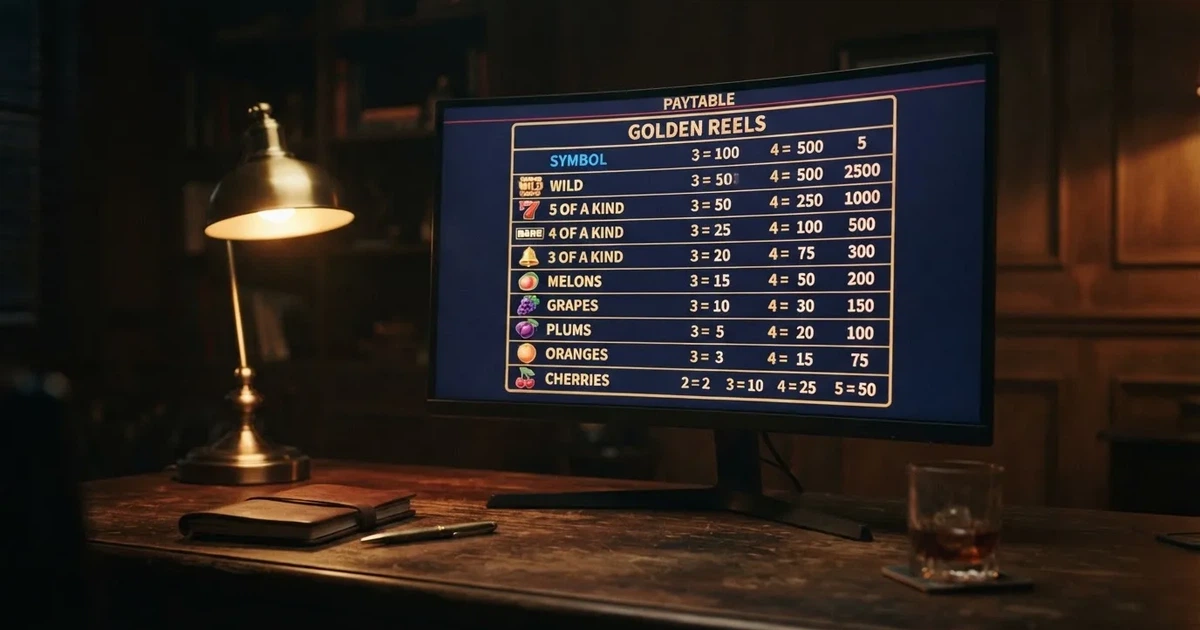
Playtech’s slot library runs to several hundred titles, with most released on the same five-reel, twenty-payline structure that has dominated online slots for two decades. The features vary: free-spin rounds, expanding wilds, multiplier trails, and the licensed DC Comics titles that build their bonus games around film-set pieces. Game-specific RTP figures are published in the paytable information inside the lobby, and they sit in the 94% to 97% range across the catalogue.
The volatility classification is what tells a player how the RTP is delivered. A high-volatility title will return most of its RTP in a small number of large wins over a long session, with long stretches of small or zero returns in between. A low-volatility title will return most of its RTP through frequent small wins. Neither delivers the RTP as an average per spin; both deliver it as a long-run statistical expectation across many spins. A session of fifty spins can swing a long way from the published figure in either direction.
Live dealer and table games
Beyond slots, Playtech supplies live dealer studios streamed from Europe and the Philippines, with blackjack, roulette, baccarat and game-show variants. The studios run around the clock, the cut of the bet taken by the operator is built into the table rules, and the live format removes the random number generator from the spin or deal in favour of a physical outcome. The streaming quality is the variable most Australian mobile players notice; the bandwidth requirement is higher than for an RNG slot, and a poor connection will degrade the experience more sharply.
The bingo, poker and sportsbook pillars
The Virtue Fusion bingo platform and the iPoker network are the parts of the catalogue that an Australian player would recognise by name if they had spent time on European sites. Virtue Fusion drives the bingo rooms; iPoker is the network that connects multiple skins into a shared player pool. Playtech BGT Sports is the supplier behind many European sportsbook backends, and the same platform architecture often sits behind a wagering operator’s racing and sport offering even where the casino product is from a different supplier.
For an Australian player, the relevance of these pillars is mostly the brand recognition. The bingo rooms are largely closed to Australian registrations on offshore sites that have been warned by the ACMA; the poker network remains accessible but is not Australian-regulated; the sportsbook product sits across the legal divide, with the Australian-licensed sportsbook licensed through the NTRWC and the offshore sportsbook offering the same markets from outside the IGA’s perimeter.
Mobile play, app or browser
What mobile play looks like on a Playtech-branded site
The catalogue is built in HTML5, which is the same technology stack that powers most modern mobile casino games. An Australian player who reaches an offshore Playtech-branded lobby through a phone browser gets the same game catalogue as a desktop player, scaled to the screen, with touch replacing the mouse. Load times depend on the connection; on a typical Australian 4G or 5G signal, the lobby renders in a few seconds and individual games open within another few.
The game catalogue on mobile is the full catalogue. There is no separate “mobile lite” version of the Playtech library; titles are designed once and deployed across desktop, mobile and tablet browsers.
The dedicated app question
Some offshore operators offer a dedicated app, downloadable as an APK from the operator’s own site rather than from Google Play or the Apple App Store, because both stores prohibit real-money casino apps in jurisdictions that have not licensed the product. An Australian player who installs one of these apps is using software that Google and Apple have declined to distribute through their official channels. The app itself is the same HTML5 catalogue inside a wrapper, and the wrapper exists mostly to deliver push notifications and a faster home-screen entry point. The functional difference between the app and the browser is small; the compliance difference is not.
Performance on a slower connection
HTML5 games are designed to load in stages, with the reels appearing before the bonus-round animation finishes downloading. A slower connection will still let a player spin, but the animation will stutter and the bonus round may pause while the rest of the asset catches up. Playtech-branded live dealer games are heavier than slots because of the video stream, and a 3G connection will struggle with them; a stable 4G connection handles them at a reasonable quality. The practical limit is the player’s connection, not the software.
Money in, money out, and the speed of a payout
How deposits reach an offshore casino
An offshore Playtech-branded casino accepts deposits through Visa and Mastercard (subject to the card issuer’s own rules, which increasingly refuse gambling transactions), bank transfer, e-wallets such as Skrill and Neteller, and a range of cryptocurrencies including Bitcoin, Ethereum and Tether. The deposit itself is usually instant; the verification step is what slows the first deposit down, because the operator runs Know Your Customer checks before clearing the first withdrawal.
For an Australian player, the deposit channel itself is the warning. Since 11 June 2024 credit cards, credit-related products and digital currency have been banned as payment for licensed online wagering in Australia, with penalties of up to $247,500 for operators that breach the rule. Legal deposit routes for Australian-licensed wagering are debit card, bank transfer, PayID/Osko and BPAY. A site asking an Australian for a credit card or a crypto deposit is operating outside the Australian rules; an offshore casino is by definition outside them, and the question is whether the player wants to be in a transaction that the Australian framework explicitly does not authorise.
How withdrawals are processed
A withdrawal request is processed first by the operator’s payments team, which checks the wagering requirements on any bonus, the source-of-funds documentation if a large amount is being withdrawn, and the identity verification that should have happened on first deposit. The clearance window on the operator’s side is typically twenty-four to seventy-two hours; the time from there to the player’s account depends on the payment method. E-wallets clear inside a day after operator approval; bank transfers take three to five business days; card withdrawals can take three to seven business days, depending on the issuer.
The limits are tighter than most Australian players expect. Offshore operators typically cap a single withdrawal at a few thousand dollars per transaction, with weekly and monthly caps on top. A player who hits a large win on a slot is usually paid in instalments. The cap is rarely advertised; it surfaces only at the withdrawal screen.
What happens when a site is mid-payout and gets blocked
A blocking request from the ACMA is delivered to Australian ISPs, and the player can no longer reach the site. If the player had a withdrawal request in progress, the operator retains the balance but loses the player. If the player had a balance sitting in the account unwithdrawn, the balance remains on the operator’s books but is no longer reachable from Australia. The offshore operator is not obliged to return it through any Australian channel, and the practical outcome depends on whether the player can reach the operator through a non-Australian ISP, a VPN, or a support email address that still works. None of those is an Australian consumer protection; all of them depend on the operator’s willingness to cooperate after the Australian end of the relationship has been severed.
Bonuses, free spins, and what the small print actually costs
What a Playtech-branded welcome bonus looks like
The standard welcome package at an offshore Playtech-branded casino is a matched first deposit, typically 100% to 200% of the deposit up to a stated ceiling, plus a bundle of free spins on a named slot. A deposit-gated package rewards the first deposit and sometimes the second and third; the free spins are credited in tranches over the first week or so. The headline figures — “200% up to A$500 plus 200 free spins” — are the marketing layer.
Below the headline sit the conditions. The matched bonus is subject to a wagering requirement, usually expressed as a multiple of the bonus amount or of the bonus plus deposit. The free-spin winnings are subject to a separate wagering requirement, often with a maximum cashout cap. A bonus that the marketing presents as A$500 typically requires the player to wager several thousand dollars through the games before any of the bonus balance converts to withdrawable cash.
Reading the small print without losing the plot
Three figures matter more than the headline bonus. The wagering multiple is the first: a 35x bonus multiple is ordinary for the offshore market; a 50x multiple is on the heavy side; multiples above 70x are the territory where the bonus is harder to clear than the headline suggests. The contribution rate is the second: slots typically contribute 100% of each spin to the wagering requirement, while table games often contribute 10% to 20%, which means a player who takes the bonus intending to play blackjack will clear it at a fraction of the speed. The maximum cashout cap on free-spin winnings is the third: a cap of A$100 on free-spin winnings is common, and a player who lands a large line-pay during the free spins will see the bonus balance cap at that figure rather than track the full payout.
The expiry window matters too. A bonus that must be cleared within seven days is a different proposition from one that gives the player thirty. A free-spin tranche that expires within twenty-four hours of issue is, in effect, a use-it-or-lose-it offer.
The arithmetic of clearing a typical bonus
Take a representative offer: a 100% match up to A$200, with a 35x wagering requirement on the bonus, free spins on a named slot, and a A$100 cap on free-spin winnings. A player who deposits A$200 and claims the full bonus carries A$400 in bonus-eligible balance to clear. The required turnover at 35x on the bonus alone is A$200 × 35 = A$7,000. At a typical slot stake of A$1 per spin, that is 7,000 spins. Each spin takes roughly five seconds, which puts the clearing time at 7,000 × 5 / 3,600 = about 9.7 hours of continuous play.
The expected loss over those 7,000 spins depends on the game’s RTP. On a slot with a 96% RTP — a common figure across the Playtech catalogue and across the wider market — the expected loss is A$7,000 × (1 − 0.96) = A$280. That is the statistical cost of clearing the bonus, calculated as an average over the full turnover. It is not what any individual player will lose; it is what a large number of players, on average, will lose. A player who lands a large win during the clearing will come out ahead of this figure; a player who runs into a cold stretch will exceed it.
The arithmetic matters because the headline bonus of A$200 has a statistical cost of A$280 to clear. The player pays to clear the bonus, in expected-value terms. The free-spin cap of A$100 means that the bonus layer above the match (the free spins) can pay out at most A$100 regardless of what the reels produce. The combined offer is a marketing headline that costs the player, on average, more than it pays out, and that is the structural position rather than a one-off bad deal.
Where a player who wants to stop can turn
BetStop and what it actually covers
BetStop, the National Self-Exclusion Register, has been live since August 2023. A player who registers with BetStop is excluded from every Australian-licensed online and phone wagering service. The exclusion periods run from a minimum of three months to a maximum of life, and the registered wagering operators are bound to refuse the player’s business for the duration.
BetStop does not bind offshore casinos. An Australian who excludes themselves from Australian wagering is still able, technically, to open an account with an offshore Playtech-branded casino, because that operator is not connected to the register. That is the structural limit of the register, and it is the reason the ACMA’s enforcement work continues to grow: a player who has self-excluded from the legal side of the market is, in some cases, pushed by the absence of an equivalent exclusion on the illegal side.
Gambling Help Online and the 24-hour helpline
The National Gambling Helpline is 1800 858 858, free, available around the clock, with online chat through Gambling Help Online. The service is funded by the Australian Government and operated by trained counsellors. It is the first port of call for a player who is worried about their own gambling, the gambling of a family member, or the gambling of a friend. The service treats the offshore side of the market as part of the problem rather than a separate category, and the counsellors are familiar with the ACMA’s enforcement picture.
State and territory services sit alongside the national helpline. Each state runs its own problem-gambling programme, with face-to-face counselling, financial counselling and peer support. The NSW Responsible Gambling Fund, the Victorian Responsible Gambling Foundation and their equivalents in the other states fund those services. An Australian player who has been playing at an offshore casino and wants to stop has the same access to these programmes as a player who has been playing at a licensed Australian venue.
The offshore operator’s own tools
Most offshore operators offer their own deposit limits, session timers and self-exclusion tools, and a serious operator will enforce them on request. The structural problem is that the offshore operator has no Australian regulatory obligation to do so, and the tools are often buried several menus deep. A player who wants a hard exclusion has to find the responsible-gambling page, identify the right form, and trust that the operator will process it without delay. None of that is impossible; none of it is enforced by an Australian regulator.
The eleven brands the ACMA has warned, and how each one reads
RocketPlay
RocketPlay sits on the ACMA’s register through two separate warnings. The earlier one came in May 2022 against Dama N.V., named across six brands including Rocketplay. The most recent action was in March 2026, when the ACMA issued a formal warning to Pulsup Ltd specifically over Rocketplay.com.au. The brand is therefore on the regulator’s books twice, under two different parent companies, within four years. The ACMA’s view is straightforward: the brand has been told twice that its service is prohibited for Australian customers, and the 2026 warning is the more recent of the two. A player who treats RocketPlay as a stable offshore option is reading past that record.
Level Up Casino
Level Up Casino was named in the May 2022 warning to Dama N.V. alongside five other brands. The brand surfaces in Wazdan’s partner list as a casino that carries Wazdan content, which is the connection the research found — the listing is a Wazdan claim about where its games are hosted, not a Level Up Casino claim about Playtech. Level Up Casino does not advertise a Playtech catalogue; if Playtech titles appear in its lobby, they are part of a multi-vendor aggregation rather than the brand’s identity. The May 2022 warning is the ACMA action that matters; the Wazdan listing is the connection that research turned up.
Woo Casino
Woo Casino was the subject of a March 2025 warning to Dama N.V., the second time the parent had been named by the ACMA that year. The brand is therefore a sibling of Spirit Casino under the same parent company, warned three months apart. The pattern is consistent with the operator’s structure: multiple brand skins, shared platform, single parent at the licence end. The 2025 warning sits on top of a 2022 warning to the same parent, which means the ACMA has now named Dama N.V. twice across three years.
Spirit Casino
Spirit Casino was named in the May 2025 warning to Dama N.V., three months after Woo Casino. The two warnings sit within the same parent company’s 2025 enforcement file. A player who sees both brands marketed in the same period is seeing the same parent company’s customer-acquisition work. The ACMA’s view is that the parent has now been warned twice in 2025 alone, having been warned in 2022 as well.
National Casino
National Casino was named in the July 2025 warning to Consolutetish S.R.L., alongside Bizzo Casino. The brand surfaces in Betsoft’s partner catalogue and alongside Pragmatic Play listings, both of which are catalogue entries rather than Playtech-specific claims. The brand’s connection to the Playtech name is what supplier aggregators show, not what the operator itself advertises. The ACMA action is the more relevant fact; the supplier listings are the research’s best read on what the lobby actually carries.
Bizzo Casino
Bizzo Casino has been warned twice. The earlier action was a 2022 warning to TechSolutions (CY) Group Limited and TechSolutions Group N.V.; the most recent was the July 2025 warning to Consolutetish S.R.L., shared with National Casino. The brand is therefore on the register under two different parent companies in three years, which is the same structural pattern as RocketPlay. Bizzo Casino lacks a specific Playtech listing in supplier catalogues, indicating its connection to the brand name is general rather than catalogue-defined.
Ignition Casino
Ignition Casino was named in the July 2025 warning to Bamboo Media. The brand is one of the older offshore names in the Australian-facing market, and the ACMA warning is the regulator’s most recent formal record against it. The brand’s catalogue is broader than Playtech; the connection to the Playtech name sits in the multi-vendor aggregation that most offshore operators use.
Instant Casino
Instant Casino was named in the February 2025 warning to EOD Code SRL. The brand is a relatively recent entrant to the ACMA’s register. No specific Playtech listing appears in the supplier directories for Instant Casino, suggesting any presence of the software is purely via general lobby aggregation.
Jackbit
Jackbit was named in the April 2026 warning to Ryker B.V., shared with CasinOK. The brand is recent to the ACMA’s register and is on the same warning as a sibling brand under the same parent. Jackbit does not feature specific Playtech listings in partner catalogues, reinforcing that the Playtech connection is part of a broad multi-vendor lobby.
Casino Intense
Casino Intense was named in the April 2025 warning to Sterplay Holding Ltd. The brand surfaces in 1spin4win’s partner catalogue and alongside Playtech references on Wikipedia and the UK Gambling Commission’s public register. The connection to Playtech is the most explicit of any brand on this list: the brand appears in supplier catalogues that include Playtech content, and the research treats this as a listings-only connection rather than a brand self-claim.
Sky Crown
Sky Crown sits on the ACMA’s register through a warning to Hollycorn N.V., which also covers Blue Leo Casino. The brand’s parent has been warned previously, and the warning is the ACMA’s record that the parent has been told its service is prohibited for Australian customers. Sky Crown is absent from the specific Playtech supplier catalogues.
What the arithmetic on blocking rates actually shows
The cumulative figure of 1,751 blocked sites since November 2019 is the regulator’s headline number, and the date of the first blocking request is the baseline. The arithmetic is straightforward: 1,751 blocks across roughly 80 months, from November 2019 to the June 2026 snapshot, gives an average of about 21.9 blocks per month across the period. That is the long-run average; the actual monthly rate has varied, and the rate in 2025 and 2026 has been higher than the early years as the regulator’s process bedded in and the volume of new offshore entrants kept pace with the blocks.
The condition that determines the rate is the supply of new offshore domains willing to take Australian customers. Each blocking request closes one front door; it does not close the parent company’s customer-acquisition budget, and the parent company will typically spin up a new brand or move to a new domain within weeks. The arithmetic therefore shows the regulator’s enforcement throughput, not the regulator’s enforcement reach. The reach — the proportion of the illegal market that is currently blocked from Australian ISPs — depends on how quickly new domains appear, how long they survive, and how quickly the ACMA’s investigative process can produce a blocking request once a new domain is identified.
The blocking rate is best read as a band rather than a single number: a low band that reflects the early enforcement years, a higher band that reflects the 2024-2026 pace, and the gap between them as the change in the regulator’s capacity. A reader who treats the cumulative figure as a measure of how much of the illegal market is currently blocked is over-reading it; a reader who treats it as a measure of how much enforcement work has happened is reading it correctly.
Where the licensed alternative actually sits
The Australian-licensed sportsbook and racing bookmaker
The Australian-licensed sportsbook and racing bookmaker is the legal alternative for an Australian player who wants to wager online. The product is sport and racing wagering placed before the event, plus lotteries and keno; the product is not online casino games, online pokies or in-play betting. The operator is licensed through the Northern Territory Racing and Wagering Commission (NTRWC) for tax and regulatory reasons, and the licence is the legal basis on which the operator takes Australian customers.
The licensed operator accepts deposits through debit card, bank transfer, PayID/Osko and BPAY. The licensed operator cannot accept credit card or crypto deposits. The licensed operator is bound by the responsible-gambling rules of its jurisdiction, including BetStop exclusion and the National Gambling Helpline routing. The licensed operator pays out winnings in Australian dollars, into an Australian bank account, under Australian consumer law.
The land-based pokie venue
The land-based pokie venue is the legal alternative for an Australian player who wants to play Aristocrat-style electronic gaming machines. The product is the same Aristocrat cabinet that populates clubs and casinos across the country; the regulatory frame is state-based, and the venue is bound by the responsible-gambling rules of its jurisdiction. The player joins a venue, plays the machine, and walks out with whatever the machine has paid out. There is no offshore operator in the loop, no offshore licence, and no offshore consumer-protection problem.
The case for staying on the licensed side
The case for staying on the licensed side is structural rather than moral. The licensed operator is bound by Australian law, the licensed operator is connected to BetStop, the licensed operator is reachable through Australian consumer law, and the licensed operator’s winnings can be withdrawn into an Australian bank account without a chargeback. The offshore operator offers none of those protections, and the offshore operator can be blocked from Australian access mid-session. The licensed side is the side that an Australian player who wants to be on the right side of the law is on.
The licensed side does not, however, offer Playtech-branded online casino games. That is the structural gap that the marketing pages try to fill, and that the Interactive Gambling Act specifically prohibits filling. The player who wants Playtech-branded online casino games has, under Australian law, no legal way to get them.
Frequently asked questions
Is Playtech legally available to players in Australia?
Playtech-branded online casino games are not legally available to players in Australia, because offering them is prohibited under the Interactive Gambling Act 2001. Playtech as a software supplier is a legitimate, listed company, but the operator that hosts the games is the party the Act targets, and no Australian state or territory licences that product. The licensed alternative is wagering on sport and racing with an Australian-licensed bookmaker, which is a different product.
What kinds of games does Playtech make?
Playtech supplies online slot games, table games, live dealer games, bingo platforms, poker networks and sportsbook software. Its slot catalogue runs to several hundred titles including licensed DC Comics-branded games. The Virtue Fusion bingo platform and the iPoker network are separately branded subsidiaries, and Playtech BGT Sports is the sportsbook side. Aristocrat Leisure, an Australian manufacturer, supplies the pokie cabinets that sit in Australian clubs and casinos, which is a different product from the Playtech online catalogue.
Are Playtech games offered at land-based venues in Australia?
No Playtech-branded electronic gaming machines operate in Australian clubs or casinos. The cabinets in those venues are typically Aristocrat Leisure machines, the largest gambling-machine manufacturer in Australia. Aristocrat and Playtech are separate companies; Aristocrat’s roughly US$3.7 billion bid to acquire Playtech was rejected by Playtech shareholders in 2021. The Aristocrat cabinets are state-regulated; the Playtech software in offshore lobbies is not.
How can Australians check whether a Playtech title is fair before ever considering play?
The honest answer is that the only fully reliable check is to play the title in a jurisdiction that regulates it, which for an Australian player means a venue or an online operator that holds an Australian licence. The Interactive Gambling Act does not give Australians a legal online casino option, so the regulated-jurisdiction test is not available in this category. The 2025 estimate from H2 Gambling Capital puts Australians’ annual losses to illegal sites at about A$3.9 billion, which is the spend that lands on products the Act specifically does not authorise.
Why do offshore sites keep advertising Playtech games to Australian visitors?
The unit economics work for the operator. The 2025 H2 Gambling Capital estimate puts the illegal market’s share of Australian gambling spend at around a third, and the offshore operator can acquire an Australian customer at a cost the operator recoups inside a small number of sessions. The marketing spend shifts to a new brand every time the ACMA blocks an old one, which is the structural pattern behind the 1,751 blocking requests since November 2019. The advertising is a function of demand, not of legality.
What should an Australian do if they see a Playtech game promoted by an unlicensed site?
The first step is to treat the promotion as evidence that the operator is offering a prohibited service. The ACMA accepts complaints through its website, and a complaint is the formal record the regulator uses to build its enforcement file. The second step is to recognise that opening an account, depositing and playing are all actions on an offshore site that the ACMA can block mid-session. The third step is the responsible-gambling frame: the National Gambling Helpline is 1800 858 858, free, 24/7, with online chat at Gambling Help Online, and the state-based services sit alongside it.