
the australian reader and the freshly launched casino site: what the search actually returns
There is a particular shape to a search result page in this market. A reader types something close to “best new online casino sites australia” and gets a polished row of names — each one with a launch date, a bonus headline and a licence badge stamped in a footer. The pages look like product reviews. They read as if a market existed. The Australian reader who clicks through the first three of them is, by that point, halfway down a road that has a hard edge at the end of it, and this page exists to show where that edge sits before any money is on it.

Current as of 29 October 2026 against the ACMA’s published register of formal warnings and its 26 June 2026 blocking-round report.
Table of Contents
- bonuses and free spins at newly launched offshore sites, and what the marketing word actually buys
- the phone-screen experience: mobile casinos and the verification step the app store hides
- the games behind the welcome screen: providers, live tables and what a “new” catalogue usually means
- what “new” actually means in this market, and why the launch date is rarely the headline
- a shortlist that can be named honestly: what the ACMA’s own record puts in front of an australian reader
- the fundamentals before anything more specific: how the prohibition is framed
- legality and regulation: the IGA, the ACMA’s tools and the 2026 reform that passed but has not started
- responsible gaming: betstop, the gambling blocks inside australian banking apps, and what is reachable from an offshore account
- crypto and anonymity: why a bitcoin casino is, structurally, a worse fit for an australian reader
- payments and payout speed: payid, osko, bpay, apple pay and the gambling blocks inside each
- the blocking-rate calculation: how fast the ACMA is removing illegal services from reach
- the operator reviews: what the ACMA record shows for each brand
- what the page has not covered, and why
- frequently asked questions
bonuses and free spins at newly launched offshore sites, and what the marketing word actually buys
The bonus headline is the first thing a freshly launched site puts in front of a reader. “Welcome package”, “deposit match”, “free spins on signup” — the language is uniform across this market, and so is the shape of the small print behind it. Every dollar of bonus credit carries a multiplier: the player wagers the bonus amount a set number of times before any of it can be withdrawn. A 100% match on a A$200 first deposit at a 40-times multiple means A$8,000 of wagering before the bonus money is unlocked. That is the unit of cost the marketing language never names.
The genuinely cost-free offer — a no-deposit bonus, or a handful of free spins granted for opening an account — looks different only at the headline. The wagering multiple is the same, the eligible games are usually the same handful of slots, and the maximum cashable winnings are typically capped low enough that a decent run still clears for less than the time it took to claim. The wagering requirement, the game weighting (slots at 100%, table games often 0% or near it) and the cap on winnings are the three clauses that decide whether an offer is worth the reader’s evening, and they are the three clauses the homepage does not show.
The legal frame, set out in full in the section on legality and regulation below, is what sharpens the picture further. None of the brands that publish these bonus terms can lawfully accept an Australian player for online casino games — the prohibition sits on the provider, not on the player, and a bonus term read in good faith still attaches to an account that has no Australian consumer protection behind it. A withdrawal refused on a bonus dispute has no Australian complaints body to appeal to, and the offshore site is also the offshore site’s own arbiter of what its bonus terms mean.
What the offer costs, then, is two things stacked on top of each other. The arithmetic cost — turnover, house edge, the hours of play the wagering requirement actually demands — and the structural cost: the absence of a regulator the reader can call if the site stops answering. The first is legible on the terms page. The second is invisible until it isn’t.
the phone-screen experience: mobile casinos and the verification step the app store hides
A “new mobile casino” in this market is almost always a responsive website rather than a downloadable app. The App Store and Google Play have, in practice, refused to host real-money casino apps aimed at Australian players for years, so what an Australian reader sees when they search is a mobile-optimised site that opens in a browser and adds itself to the home screen. The mechanics on a phone are not different from a laptop — same lobby, same payment screen, same withdrawal queue. The mobile angle is mostly a layout one.
Two things do change on a smaller screen. The verification step (uploading a driver’s licence and a recent utility bill to clear KYC) is fiddlier on a phone camera than a webcam, and the time it eats is real. And the gambling-block tools that sit inside Australian banking apps — CommBank’s gambling lock, ANZ’s gambling block, Westpac’s merchant-code block — apply just as cleanly to a phone transaction as a desktop one, which cuts the other way: a transaction blocked at the card level stops the reader regardless of how the site was reached.
The credit-card ban, set out in the legality section below, applies whether the deposit is entered on a desktop form or a phone form. So does the gambling block. A reader who wants to actually move money in this market will meet the same two walls on either device.
the games behind the welcome screen: providers, live tables and what a “new” catalogue usually means
A “new” casino in this market is, in practice, a re-skinned catalogue. The provider list is the giveaway: Pragmatic Play, Evolution, NetEnt, Play’n GO, BGaming, and a handful of crash-game studios supply the bulk of the lobbies across the offshore sites an Australian reader encounters. Live dealer tables are almost always Evolution or Pragmatic Play Live; the table limits and side-bet menus are templated from those studios’ shared backends, which is why the lobby on a site launched last quarter looks so much like the lobby on a site launched two years ago.
What is genuinely different on a freshly launched site is smaller. A new title from one of those providers — a slot released in the last few months — is more likely to be featured in the lobby. A bespoke crash game or a provably-fair mini-game is more common, because those are cheaper to license than a full slot catalogue. The site’s own “exclusive” label usually means a custom skin on someone else’s engine, not a studio the reader has never heard of.
Slot math is where the reader can check the marketing. An RTP figure is published in a slot’s information panel; a volatility class (low, medium, high, very high) is published in the same place. If the site does not publish either, that is information about the site. Game weighting inside a bonus is its own number — a slot at 100% and a table game at 10% mean the same wagering requirement clears at ten times the speed on slots, and a reader who plans to clear the bonus on blackjack is reading the wrong offer.
what “new” actually means in this market, and why the launch date is rarely the headline
A site with a “launched 2025” footer is rarely that new. The operator behind it is almost always an older company running a rebrand. The cluster of brands covered in the operator review section below — Dama N.V., Hollycorn N.V., the Consolutetish and Pulsup entries, and the rest — share a familiar pattern: a parent company incorporated in Curaçao or a similar jurisdiction runs a stable of casino brands under different domain names, and what changes between them is mostly the skin. The first ACMA action over one of those brands tends to be followed, over the next few years, by ACMA action over the same operator’s other brands under different names.
This is the part of the picture the marketing language does not show. “Newly launched” in the affiliate space is, more often than not, a positioning label rather than a founding date. The brand is new; the operator is not. The reader who only reads the launch date is missing who is actually behind it.
a shortlist that can be named honestly: what the ACMA’s own record puts in front of an australian reader
There is no honest list of new online casino sites for an Australian reader, because the product is prohibited. What can be assembled honestly is the shortlist of brands the ACMA itself has acted against for offering those prohibited services to Australians — the set this page covers in the operator review section below. Eleven brands, each tied to a formal warning the ACMA published and a date. That is the working list. None of them are places an Australian can lawfully play.
What is lawful, and what an Australian reader can do instead, sits in three places. Licensed online wagering on sport and racing before the event, licensed lotteries and keno, and licensed land-based pokies at clubs, pubs and casinos in the relevant state or territory. The Northern Territory Racing and Wagering Commission regulates 52 of Australia’s online bookmakers, including Sportsbet, Bet365 and Ladbrokes, licensed in the Territory for tax reasons; the commission itself has no full-time staff and meets once a month in Darwin, which is itself a story about how thin the regulator behind a “licensed” badge actually is.
For a reader who wants a concrete list of the brands the ACMA has warned, what they were warned for, and when, the table below is the page’s own working comparison. It is not a recommendation. It is the Australian regulator’s published record.
| brand | ACMA action and date | operator named by the ACMA | subject support |
|---|---|---|---|
| RocketPlay | formal warning, March 2026; earlier Dama N.V. action, May 2022 | Pulsup Ltd (Rocketplay.com.au) | listings-only (Gamblinginsider.com) |
| Level Up Casino | formal warning, May 2022 | Dama N.V. | listings-only (Westpac.com.au) |
| Woo Casino | formal warning, March 2025 | Dama N.V. | — |
| Spirit Casino | formal warning, May 2025 | Dama N.V. | — |
| National Casino | formal warning, July 2025 | Consolutetish S.R.L. | listings-only (acma.gov.au, austrac.gov.au, betstop.gov.au) |
| Bizzo Casino | formal warning, July 2025; earlier TechSolutions action, 2022 | Consolutetish S.R.L. | listings-only (Gamblinginsider.com) |
| Ignition Casino | formal warning, July 2025 | Bamboo Media | — |
| Instant Casino | formal warning, February 2025 | EOD Code SRL | listings-only (Ecopayz.com, Payid.com.au) |
| Jackbit | formal warning, April 2026 | Ryker B.V. | — |
| Casino Intense | formal warning, April 2025 | Sterplay Holding Ltd | listings-only (austrac.gov.au, betstop.gov.au, Gamblinginsider.com) |
| Sky Crown | formal warning, September 2022 | Hollycorn N.V. | — |
Three things the table shows that the individual rows do not. The same operator name — Dama N.V. — appears in three separate warnings across more than three years, which is what a stable of re-skinned brands looks like from the regulator’s side. The subject-support column, where research carries anything, is sparse: listings-only sources for some brands, a no-data marker for others. And every row carries the same fundamental point — the brand is a name; the prohibition sits on whoever is behind it.
the fundamentals before anything more specific: how the prohibition is framed
Online casino games and online pokies cannot be licensed in Australia. The Interactive Gambling Act 2001, strengthened by the Interactive Gambling Amendment Act 2017, makes the supply of those games to a person in Australia an offence, and no state or territory issues a licence for them. What is licensed is wagering on races and sporting events placed before the event, lotteries and keno. The minimum age for any of it is 18.

The enforcement sits with the ACMA, the Australian Communications and Media Authority. Its three tools are formal warnings, blocking requests to Australian ISPs and civil penalty proceedings in the Federal Court. The block list is the most visible measure, and it is what this page works through in its own calculation below. The warning list is what populates the table above.
Two structural caveats follow from this frame, and the page carries them once each. The first: an Australian player is not personally prosecuted. The IGA targets the provider, not the customer. The second: an offshore casino gives the player no Australian consumer protection, no local complaints body, and no recourse if a withdrawal is refused. A site can be blocked at the ISP level with a balance still sitting in the account.
legality and regulation: the IGA, the ACMA’s tools and the 2026 reform that passed but has not started
The Interactive Gambling Act 2001 is the central statute. The 2017 amendments are what turned the prohibition into an active enforcement regime, and the 2023 amendments closed the credit-card loophole for licensed wagering. The 2026 reform — the Interactive Gambling Amendment (Gambling Reform) Bill 2026, passed by Parliament on 19 August 2026 — adds advertising and inducement measures that commence on 1 January 2027. Law with a start date, not yet in force on a 2026 page.
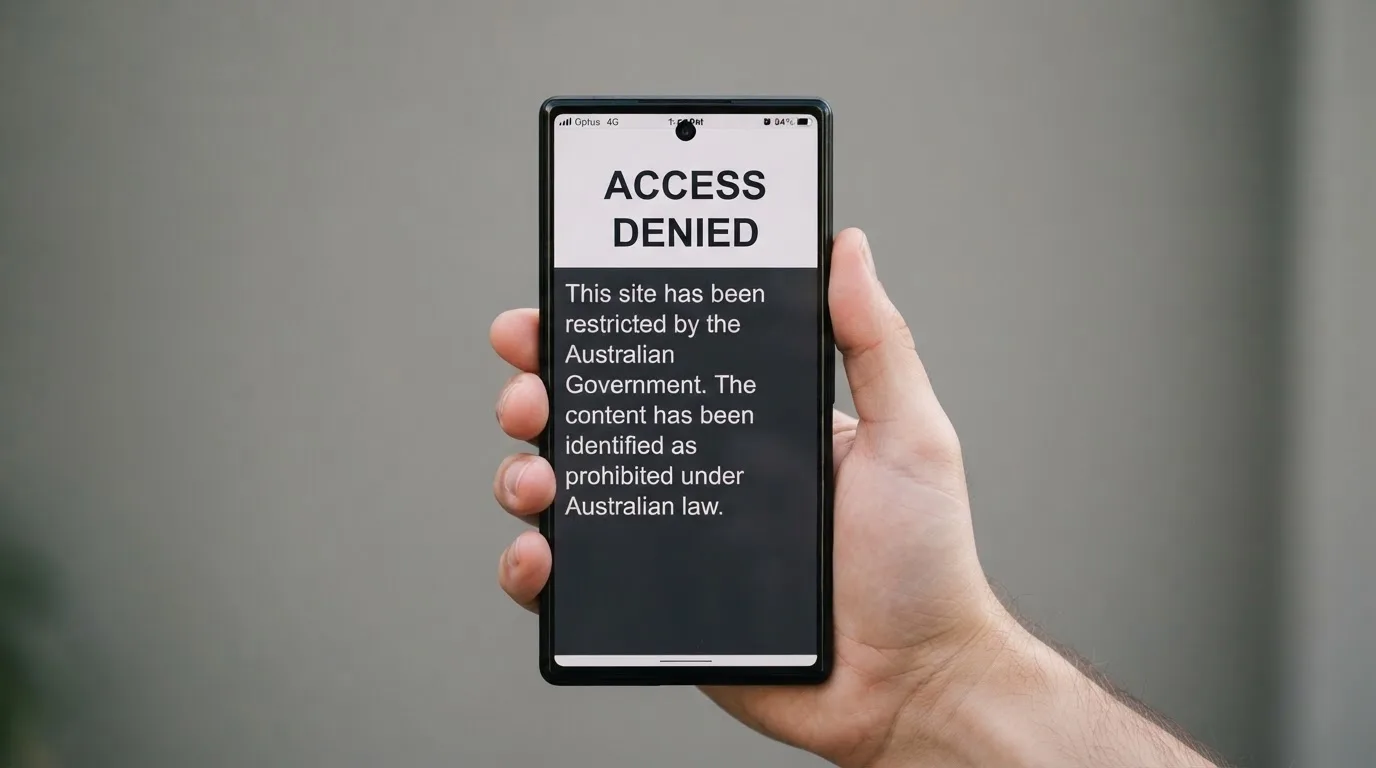
The ACMA’s enforcement record, on the figures the regulator itself has published, is the working evidence of how the prohibition is applied in practice. As reported in June 2026, the ACMA has asked Australian ISPs to block 1,751 illegal gambling and affiliate marketing websites since the first blocking request in November 2019. More than 230 unlicensed gambling services have left the Australian market since the 2017 strengthening. The June 2026 round alone added 12 more names to the block list: 7Signs, ChromaBet, Donbet, Duospin, Freshbet, Slots Gem, Jacks Club, Lucky Start, Pointsbetz.com, Spinrise, Vinyl Casino and Wildsino. Each of those domain names has an Australian ISP refusing to resolve it; the offshore operator behind each one is still serving other countries.
H2 Gambling Capital’s 2025 estimate puts Australian losses to illegal gambling sites at about A$3.9 billion a year. The same report notes the share of gambling going through legal channels fell from 74% in 2021 to 64% — a roughly ten-point drop in four years, against a backdrop of an ACMA that is, on the figures above, removing hundreds of services from the market.
The Northern Territory Racing and Wagering Commission is the regulator of 52 of Australia’s online bookmakers, including Sportsbet, Bet365 and Ladbrokes. It licenses them in the Territory for tax reasons rather than because racing and sport is a Northern Territory industry. The commission has no full-time staff and meets once a month in Darwin. That is the regulator behind every “licensed in Australia” badge on a licensed sportsbook.
responsible gaming: betstop, the gambling blocks inside australian banking apps, and what is reachable from an offshore account
BetStop, the National Self-Exclusion Register, has been live since August 2023. It binds Australian-licensed online and phone wagering services — an Australian who registers with BetStop is excluded from every licensed sportsbook and racing book in the country. An offshore casino is not connected to BetStop. A self-exclusion registered with BetStop does not stop a deposit to an offshore brand. The distinction is structural: BetStop works because the licensed operator checks the register; an unlicensed operator does not check anything.
The National Gambling Helpline — 1800 858 858 — is free, runs 24/7 and is reachable by chat through Gambling Help Online. It is the line a reader in trouble can call regardless of where they have been playing. The helpline does not fix a withdrawal refusal and does not chase an offshore operator. It does what it is funded to do: connect a person with counselling and with the local problem-gambling service in their state or territory.
The gambling-block tools inside Australian banking apps are the most direct lever a reader who already has a bank account can pull. CommBank’s gambling lock, applied through the CommBank app, blocks most gambling transactions on eligible cards — though the bank itself says it cannot guarantee all gambling-related purchases will be stopped. ANZ’s gambling block works at the card level too, including transactions routed through a digital wallet such as Apple Pay on the same card. Removing the ANZ block requires a 48-hour waiting period. Westpac’s block refuses authorisation on transactions registered under the merchant category code “Betting/Casino Gambling” on eligible credit and debit cards. Each of these is a card-level mechanism, not an account-level one: a deposit to a site that is not coded as gambling may still go through.
The credit-card ban, in force since 11 June 2024 under the 2023 IGA amendments, applies to Australian-licensed online wagering. It also constrains gambling use of linked digital wallets like Apple Pay, because the underlying funding instrument is still the credit card. Penalties for licensed operators accepting a credit-card payment run up to A$247,500.
crypto and anonymity: why a bitcoin casino is, structurally, a worse fit for an australian reader
A “new bitcoin casino” or “new crypto casino” is, in this market, the offshore brand with a deposit button that reads BTC or USDT rather than Visa or Mastercard. The marketing frame around it is anonymity. The reality, for an Australian reader, is the opposite of what the marketing suggests.
The credit-card ban does not apply to crypto. That is the genuine difference — a credit card cannot lawfully fund a licensed Australian wagering account; a Bitcoin transfer can, in principle, fund an offshore one. The cost is the consumer-protection frame that an Australian reader loses. There is no chargeback route on a Bitcoin transaction. There is no Australian regulator to appeal to if a withdrawal stalls. There is no bank willing to mediate a dispute over a transfer that left the customer’s account under a name that does not match the casino brand.
AUSTRAC’s threshold-transaction-report rule requires reporting of cash transfers of A$10,000 or more. It does not apply to ordinary electronic bank transfers, regardless of size. It does not, in itself, make crypto use in Australia illegal. It does mean the AUSTRAC register is one of the listings that surfaces in the subject-support column of the operator table — the regulator’s own published record is one of the few things research can confirm against an offshore brand.
The anonymity pitch is also narrower than it looks. A Bitcoin address is pseudonymous, not anonymous: the on-chain history is public. A site that accepts crypto and pays out in crypto is operating in a payment rail that is auditable in principle, even when it is not audited in fact.
payments and payout speed: payid, osko, bpay, apple pay and the gambling blocks inside each
Money moving in and out of an Australian bank account is fast, and the friction is mostly at the merchant’s end. The New Payments Platform, live since 13 February 2018 and owned by New Payments Platform Australia Ltd — whose 13 shareholders include the Reserve Bank of Australia and the major banks — supports two services an Australian reader will meet. Osko settles a transfer between participating Australian banks in under a minute, around the clock, addressed either to a BSB and account number or to a PayID. PayID is the addressing layer: more than 25 million PayIDs were registered as of April 2025, across more than 100 Australian financial institutions.
PayID carries a safety feature that matters in this market specifically. A transfer addressed to a PayID shows the recipient’s name before the sender confirms. The PayID service’s own warning is blunt: being asked to transfer money to a PayID on an illegal gambling site almost certainly means a scam site. The legal wagering operators in Australia accept PayID deposits; the offshore casino that lists a PayID is, on the prohibition set out above, not one of them.
BPAY is the older rail, in operation since 18 November 1997. It is a bill-payment service: the payer enters the Biller Code and the Customer Reference Number printed on the bill, and the transfer clears through the payer’s own online banking. It is available at more than 140 banks and financial institutions and used by over 95,000 businesses. BPAY is owned, via the parent Cardlink Services Limited, equally by the four major banks — ANZ, Commonwealth Bank, National Australia Bank and Westpac — and now runs under Australian Payments Plus, the merged entity formed in September 2021 when the ACCC authorised the consolidation of BPAY Group, eftpos and NPP Australia.
Apple Pay, Google Pay and Samsung Pay, taken together, accounted for around 45% of all card payments in Australia by number at the end of 2025. Apple does not charge fees to consumers for using Apple Pay; any surcharge is the merchant’s own card-processing cost. Transaction limits and PIN requirements for Apple Pay are set by the card issuer or the merchant, not by Apple. Apple Pay on a credit card is, for an Australian-licensed wagering service, still a credit-card transaction, and the ban applies. For an offshore site, the Apple Pay route runs through the card issuer’s own merchant-code logic — the ANZ gambling block applies to a digital wallet on an eligible card, the Westpac block applies to the merchant category code.
American Express sits in a different corner of the same picture. Amex is a three-party scheme: it issues cards and processes transactions itself, unlike Visa or Mastercard’s four-party open network. The Reserve Bank of Australia’s July 2025 review of merchant card costs and surcharging proposes removing surcharges on eftpos, Mastercard and Visa — and explicitly leaves American Express outside the scope of the proposed surcharge ban. A reader paying with Amex is paying on rails the RBA’s reform does not touch.
The payout-side picture, on the offshore brand, is harder to verify than the deposit side. Research carries no published payout time for any of the eleven brands in the table above. The gambling block, applied at the card level, applies to the deposit. A withdrawal to an Australian bank account is usually a bank transfer on the same rails, but the offshore operator chooses when to release it — and that is where the consumer-protection gap, set out above, is felt.
the blocking-rate calculation: how fast the ACMA is removing illegal services from reach
The arithmetic the page is built around. The ACMA’s own June 2026 report puts the cumulative block total at 1,751 illegal gambling and affiliate marketing websites, with the first blocking request in November 2019. The straightforward division is the annualised rate at which the ACMA has been removing illegal services from Australian ISP resolution since that first request.
Six years and seven months between November 2019 and June 2026 is approximately 79 months. 1,751 blocked sites divided across 79 months is roughly 22 sites per month, or about 265 sites per year. The band, stated with its condition rather than a single figure, is in the order of a few hundred sites per year — closer to 265 than to 100, on a straight average, and rising across the most recent rounds.
The condition the band carries is the one the regulator itself states. The figure is a count of blocking requests, not a count of operators: a single operator running several brand domains will be counted more than once, and the blocking of one site does not require the operator behind it to leave the market. The “more than 230 unlicensed gambling services have left the Australian market” line from the same report is the regulator’s own figure for exit, and it is roughly an order of magnitude smaller than the blocking figure, which is the gap between removing a domain and removing a service.
The reader-facing gloss. The ACMA’s blocking tool works at the speed of an ISP resolving a domain, which is fast and inexpensive. The exit of the service behind the domain is slower and rarer. A reader who meets an offshore brand that is not, at the moment they look, on the block list is not meeting a brand the ACMA has cleared; they are meeting a brand the ACMA has not yet got to.
the operator reviews: what the ACMA record shows for each brand
Eleven brands, each tied to a formal warning the ACMA published, each operating in the prohibited space. The reviews below carry the ACMA’s own wording on the action, the operator name behind the brand, the subject support that research can confirm, and a verdict on what the brand’s record actually means for the reader. None of them are places an Australian reader can lawfully play; the point of covering them is to show, by way of each one’s record, the shape of what the market looks like up close.
RocketPlay: an operator with two warnings, four years apart
RocketPlay sits behind two separate ACMA formal warnings. The earlier one, in May 2022, named Dama N.V. as the operator. The later one, in March 2026, named Pulsup Ltd over Rocketplay.com.au. The same brand, two different operators named by the regulator across a four-year gap — the kind of pattern that suggests a transfer of the brand between operators rather than a clean new launch. Research’s subject-support line for RocketPlay is listings-only: Gamblinginsider.com carries a listing, and that is what the listings report. There is no Australian licence, no BetStop binding, no local complaints body.
The verdict: a brand whose ACMA record shows two separate operator names in four years is a brand the reader cannot track cleanly, and that is itself the answer to whether a freshly launched casino is genuinely new.
Level Up Casino: the May 2022 warning and the early cluster of Dama N.V. brands
Level Up Casino was named in the ACMA’s May 2022 formal warning to Dama N.V., which covered six brands in one action — Bambet, Dazard, Level Up, Rocketplay, Wild Tornado and Cobra Casinos. That single warning is the regulator’s first published line across most of the Dama N.V. stable. Subject support is listings-only: Westpac’s gambling-block page surfaces in research as a source the brand appears in, and that is the level of confirmation the market carries.
The verdict: an early entry in the Dama N.V. cluster, with the regulator’s first published action against the parent having covered it as one of six. The reader who treats any single brand in the cluster as separate from the others is reading past the operator behind them.
Woo Casino: a single warning, no further listing
Woo Casino was warned by the ACMA in March 2025. Subject support is no-data — research carries no third-party listing for the brand beyond the warning itself. That is not unusual in this market; many of the brands the ACMA warns are not prominent enough on the affiliate pages to leave a listing trace.
The verdict: a Dama N.V. brand with one published warning and no listing trail a reader can cross-check. The bare warning is the thinnest profile in the table, and that is itself the finding.
Spirit Casino: another Dama N.V. warning, two months later
Spirit Casino received an ACMA warning in May 2025. Subject support is no-data. The two-month gap between the Woo Casino warning and the Spirit Casino warning is the regulator working through the same operator’s stable, and the pattern is consistent with the Dama N.V. cluster elsewhere in the table.
The verdict: a brand whose place in the regulator’s record is its only verifiable feature. Two warnings two months apart on the same operator name is what a sweep through one parent company’s brands looks like in the ACMA’s published actions.
National Casino: a different parent, the same shape of action
National Casino was warned in July 2025. Subject support is listings-only: the brand surfaces in listings attached to the ACMA’s own register, the AUSTRAC register and BetStop’s records — three Australian institutional sources. That is a slightly firmer trace than most of the brands in the table carry, though none of those three institutions is endorsing the brand; each is a register the brand has intersected with in some way.
The verdict: a brand with a more visible Australian institutional trace than most, but with the same prohibition behind it. The Consolutetish name here is also attached to Bizzo Casino in the same warning, which is the same operator-stable pattern seen elsewhere.
Bizzo Casino: two warnings, two operators, four years apart
Bizzo Casino appeared in a July 2025 warning. The brand had already been warned in 2022 under TechSolutions (CY) Group Limited and TechSolutions Group N.V. Subject support is listings-only: Gamblinginsider.com carries a listing.
The verdict: a brand the regulator has had to name twice under two different operators. The pattern is consistent with what the RocketPlay record shows, and it is the strongest argument on the page for treating any single brand name as a thin wrapper around whoever is currently behind it.
Ignition Casino: a different parent again
Ignition Casino was warned in July 2025. Subject support is no-data. Bamboo Media is a parent name that does not appear elsewhere in the table, which is itself useful — the cluster pattern of one operator running several brands is not the only shape this market takes, and Ignition is a single-brand instance within the warning record.
The verdict: a brand whose operator name does not connect to other entries in the table. The single warning is the record. The reader cannot infer a stable from a single brand, but the absence of a stable is also worth noting.
Instant Casino: a PayID listing on a prohibited brand
Instant Casino was warned in February 2025. Subject support is listings-only: Ecopayz.com and Payid.com.au both surface in research as sources carrying the brand. The PayID listing in particular matters, because PayID’s own operator warns that a PayID deposit on an illegal gambling site is almost certainly a scam site. A PayID listing on a brand the ACMA has warned under the IGA is exactly that case.
The verdict: a brand whose payment listings put it directly against the Australian Payments Plus warning. The PayID listing is the clearest payment-side mismatch in the table, and it is the one most worth a reader noticing before they reach for a deposit button.
Jackbit: a single April 2026 warning
Jackbit was the subject of an ACMA formal warning to Ryker B.V. in April 2026. Subject support is no-data. The April 2026 date is the most recent warning in the table outside the RocketPlay March 2026 entry, and the brand sits in the cluster of recent single-operator warnings that do not connect to the larger Dama N.V. or Consolutetish stables.
The verdict: a recent warning on a brand with no listing trail beyond the regulator’s own record. The freshness of the warning is not, in itself, a softer signal — it is the regulator acting against a brand that was, at the time of the warning, actively serving Australian customers.
Casino Intense: the most institutionally visible brand in the table
Casino Intense was the subject of an ACMA formal warning to Sterplay Holding Ltd in April 2025. Subject support is listings-only, and the listings are the most institutionally visible in the table: the AUSTRAC register, the BetStop register and Gamblinginsider.com all surface in research. Each is a register or listing the brand has intersected with, not an endorsement.
The verdict: the brand with the most visible Australian institutional trace on the listings side. None of those three institutions endorses the brand, and the prohibition sits regardless. The breadth of the trace does, however, give a reader the most cross-checkable signal that the brand exists and that the regulator has acted against it.
Sky Crown: a Hollycorn N.V. brand with no further listing
Sky Crown was the subject of an ACMA formal warning to Hollycorn N.V., published in September 2022. Subject support is no-data. Hollycorn N.V. is also the operator named in a separate ACMA warning over Blue Leo, which means the warning here covers one of at least two Hollycorn brands.
The verdict: the brand is part of a Hollycorn N.V. stable of at least two, with one warning dated to 2022 — the oldest warning in the table. The four-year gap between this warning and the more recent entries is the regulator’s own timeline, and the brand sits as the longest-published action in the working set.
what the page has not covered, and why
The shelf set out in the plan covers bonuses, mobile, games, the “new” question, the comparison block, the fundamentals, legality, responsible gaming, crypto and payments. The FAQ block at the foot of the page answers the questions the plan listed, in the page’s own wording. What the page does not have is a recommendation — and that absence is the answer the page is built around. The product is prohibited. The honest thing a page can say, after working through the ACMA record and the legal frame, is what the product is, who has been warned for offering it, and what is lawfully available instead. That is the page, finished.
frequently asked questions
How can someone tell how new an online casino site actually is?
The launch date in a footer is rarely the whole story. The ACMA’s published register of formal warnings is the working cross-check — a brand whose operator name has appeared in a warning before is rarely genuinely new, even when the brand itself is. The cluster patterns shown in the table above, where one operator name runs several brands across several years, are the actual shape of the market.
Do brand-new casino sites carry more risk than established ones?
The risk sits in the operator behind the brand, not in the brand’s age. A “new” brand from a known operator stable carries the same prohibition, the same absence of Australian consumer protection and the same credit-card and gambling-block friction at the deposit step. The brand being new is the marketing frame; the operator’s record is the substantive one.
Is it legal for a newly launched online casino to accept Australian players?
No. The Interactive Gambling Act 2001 prohibits the supply of online casino games to a person in Australia, and no state or territory issues a licence for them. The ACMA’s enforcement record, with more than 230 services having left the Australian market since 2017 and 1,751 sites blocked since November 2019, is the regulator’s own working evidence of how the prohibition is applied. An offshore site is not a workaround; it is what the prohibition is aimed at.
What should someone check before trusting a casino site that only just launched?
Three things, in order. The ACMA’s register of formal warnings — any brand named there is not a place to play from Australia. The licence claim in the site footer — if it is not an Australian state or territory licence for wagering on sport or racing, it is not a relevant licence. The payment method it accepts — a credit card is unlawful for licensed wagering and a crypto deposit puts the transaction outside any Australian consumer-protection route.
Do new casino sites typically offer a welcome bonus to attract players?
Yes, and the headline is the cheapest part of the offer. The wagering multiplier, the game weighting inside the bonus and the cap on winnings are the three clauses that decide what the bonus actually costs, and they are the three clauses the homepage does not show. The legality frame above is what sharpens the picture further: a bonus read in good faith still attaches to an account with no Australian regulator behind it.
Can a new mobile casino app be verified as genuine before downloading it?
Real-money casino apps aimed at Australian players are not generally available on the App Store or Google Play. What an Australian reader meets in practice is a mobile-optimised website, not a downloadable app. The verification step that matters is at the bank level — CommBank’s gambling lock, ANZ’s gambling block and Westpac’s merchant-code block each apply to phone transactions on the underlying card, and that is the strongest cross-check a reader has before any money moves.