
Offshore Casinos for Australian Players in 2026: The Picture the Marketing Leaves Out
A working shortlist of offshore casinos for Australian players is the thing this page cannot honestly deliver. Offering online casino games, online pokies or in-play betting to anyone in Australia is prohibited under the Interactive Gambling Act 2001, and no state or territory issues a licence for it. What a reader searching for that shortlist actually gets, on this page, is the legal frame around the gap, the enforcement record that shows how seriously that frame is applied, and the lawful alternatives that sit on the other side of it: licensed wagering, land-based venues and the BetStop self-exclusion register.
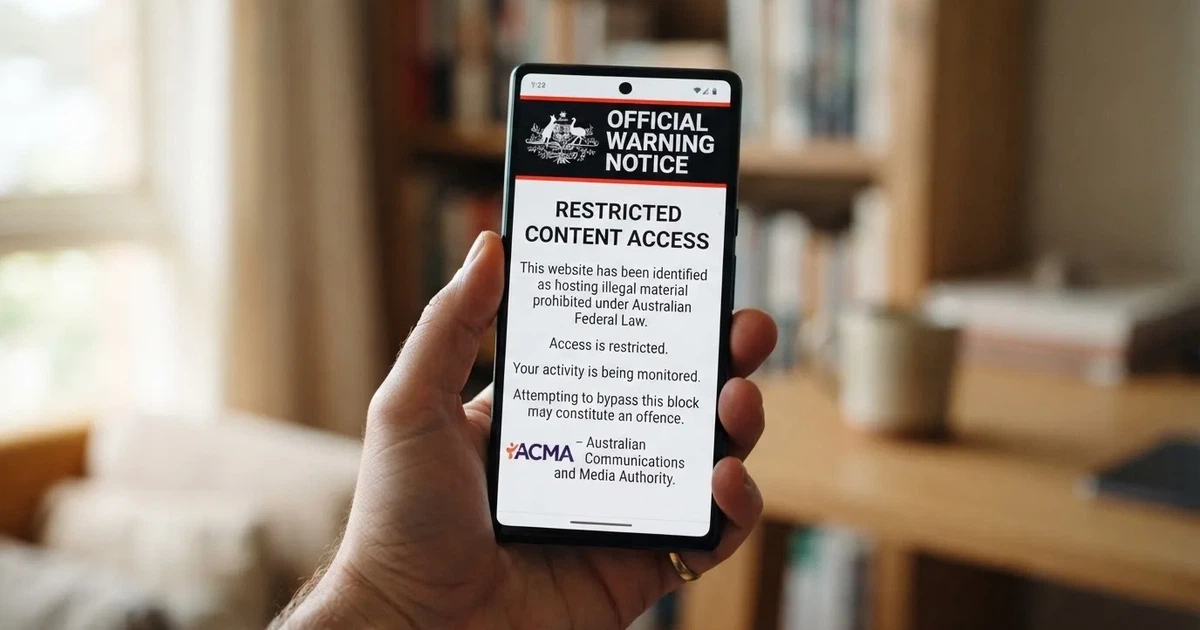
Data current as of 29 October 2026 and checked against the ACMA’s published blocking notices and formal warnings register.
Table of Contents
- What the Interactive Gambling Act 2001 Actually Prohibits
- Why the Picture Matters in Dollars
- The ACMA’s Enforcement Record: What Has Actually Happened
- The Offshore Brands the ACMA Has Acted Against
- What the Blocking Rate Actually Means for a Reader
- Where BetStop Fits, and Where It Does Not
- The Payment Channels an Australian Reader Will Be Asked to Use
- What to Do Instead of Chasing a New Offshore Casino After a Bad Experience
- A Comparison of the Featured Set
- The Choice the Reader Actually Has
- Frequently Asked Questions
What the Interactive Gambling Act 2001 Actually Prohibits
The Interactive Gambling Act 2001, strengthened by the Interactive Gambling Amendment Act 2017, makes it an offence for a provider to supply online casino games, online pokies or in-play wagering to a person physically in Australia. The prohibition targets the provider, not the individual player — no Australian has been prosecuted for placing a bet — but the consequences for the person playing are real. An offshore site sits outside every Australian consumer-protection regime. There is no complaints body to write to, no local regulator to escalate a refused withdrawal to, and no guarantee that the site will not be blocked while a balance is still sitting in the account.

What is licensable sits in a narrower band. Wagering on races and sporting events placed before the event, lotteries and keno all sit within the licensed perimeter. In practice, online bookmakers — Sportsbet, Bet365, Ladbrokes among them — operate under Northern Territory licences, regulated by the Northern Territory Racing and Wagering Commission. The commission has no full-time staff and meets once a month in Darwin, which is one reason the ACMA’s enforcement role matters so much for the part of the market the IGA does not cover.
The 2026 reform sits in a particular spot. The Interactive Gambling Amendment (Gambling Reform) Bill 2026 passed Parliament on 19 August 2026; its advertising and inducement measures commence 1 January 2027. That is law with a start date, not yet in force on a 2026 page. The shape of the rules a reader will meet in licensed wagering channels changes from the start of next year. The prohibition on the offshore casino side does not.
Why the Picture Matters in Dollars
H2 Gambling Capital’s 2025 report estimates that Australians lose about A$3.9 billion a year to illegal gambling sites. The same report records the share of gambling going through legal channels falling from 74% in 2021 to 64% — a ten-point slide in four years. The picture is not that Australians have started gambling more. It is that more of what they spend has migrated outside the licensed perimeter, where the consumer protections and the complaints pathways stop applying.

That is the frame around any offshore brand that shows up in a search result. The brand can hold a Curaçao or Kahnawàke licence and run a real money operation. It cannot hold an Australian one, because none exists for the products it offers. Every “licensed” claim on an offshore site refers to a jurisdiction the ACMA does not recognise as a valid authorising body for Australian customers.
The ACMA’s Enforcement Record: What Has Actually Happened
The Australian Communications and Media Authority is the body that investigates, issues formal warnings and directs Australian internet service providers to block illegal sites. Two numbers anchor how that enforcement has actually run.
According to the ACMA as reported in June 2026, a total of 1,751 illegal gambling and affiliate marketing websites had been blocked since the first blocking request in November 2019, and more than 230 unlicensed gambling services had left the Australian market since enforcement was strengthened in 2017. The cumulative total is the number that matters here. The first blocking request dates to November 2019; the cumulative blocked count six-and-a-half years later is 1,751. Stated as a rate against the full window, the ACMA’s blocking rate works out to roughly 268 sites blocked per year on average, or about 22 sites a month — though the work runs in bursts tied to each formal-warning round rather than evenly across the calendar.
The shape of that rate, put plainly: the ACMA does not chase sites one at a time. It works in rounds, identifies a cohort of operators, and asks ISPs to block them together. The June 2026 round alone added 12 more names: 7Signs, ChromaBet, Donbet, Duospin, Freshbet, Slots Gem, Jacks Club, Lucky Start, Pointsbetz.com, Spinrise, Vinyl Casino and Wildsino. The reader searching today for a brand that was operating freely last month will meet a connection error tomorrow. That is the operational reality behind the marketing.
The formal warnings, year by year
The formal warnings tell the same story from a different angle. They name the operator behind a brand, which means a reader who knows the operator’s name can trace the warning through the ACMA register even when the brand on the front of the site changes.
In March 2026 the ACMA issued a formal warning to Pulsup Ltd over Rocketplay.com.au. In April 2026 the ACMA issued a formal warning to Ryker B.V. over Jackbit and CasinOK. Earlier, in April 2025, the ACMA issued a formal warning to Sterplay Holding Ltd over Casino Intense. In February 2025 the ACMA issued a formal warning to EOD Code SRL over Instant Casino.
In July 2025 the ACMA issued formal warnings to Bamboo Media over Ignition Casino and to Consolutetish S.R.L. over National Casino and Bizzo Casino. Bizzo Casino had already been the subject of a 2022 formal warning to TechSolutions (CY) Group Limited and TechSolutions Group N.V. — the same brand, a different corporate wrapper, a second warning two and a half years later.
The ACMA issued further formal warnings to Dama N.V. over Woo Casino (March 2025) and Spirit Casino (May 2025). Dama N.V. had already been warned in May 2022 over six casino brands: Bambet, Dazard, Level Up, Rocketplay, Wild Tornado and Cobra Casinos. The corporate names recur. The brand names rotate. A reader who watches the register will see the same handful of operators cycling through new skins.
The Offshore Brands the ACMA Has Acted Against
The eleven brands below are not a ranking and not a recommendation. They appear because the ACMA itself issued a formal warning over each of them for offering prohibited services to Australians. No bonus terms are given — the only sources for those terms are affiliate marketing pages, and the page describes what an offer is worth, not how one is claimed. The other product detail that does not appear is any licence the brand displays: online casino games cannot be licensed anywhere in Australia, whatever licence the site shows.
RocketPlay
The ACMA issued a formal warning over Rocketplay.com.au to Pulsup Ltd in March 2026. Dama N.V., the same operator family that runs Level Up, Wild Tornado and several others, was warned over Rocketplay earlier in May 2022. The brand re-emerged under a different corporate owner; the formal warning followed it across the change. Third-party listings describe the brand’s payment-method set, but the ACMA’s published warnings are the only authoritative record a reader in Australia has to go on, and they say the site is prohibited.
Level Up Casino
Dama N.V. was issued a formal warning by the ACMA in May 2022, covering Level Up alongside five other casino brands run by the same operator. The brand sits inside the cluster of Dama N.V. properties that has attracted repeated attention — Woo Casino and Spirit Casino were also flagged in 2025. The pattern is the same operator cycling through new skins, not new operators entering the market.
Woo Casino
The ACMA issued a formal warning to Dama N.V. over Woo Casino in March 2025. Woo sits inside the same Dama N.V. cluster as Level Up and Spirit Casino — three separate brand names, three separate warnings, one operator family. Marketing pages describe Woo’s bonus structure; the ACMA’s register describes the warning.
Spirit Casino
Dama N.V. was issued a further formal warning by the ACMA over Spirit Casino in May 2025, two months after the Woo Casino warning. The pattern across the Dama N.V. cluster is the operational tell: an operator that takes a formal warning for one brand and rebrands into another does not change what the ACMA already knows about it.
National Casino
The ACMA issued a formal warning to Consolutetish S.R.L. over National Casino in July 2025. National Casino sits alongside Bizzo Casino under the same operator warning — two brands, one corporate name on the ACMA’s register.
Bizzo Casino
Consolutetish S.R.L. was issued a formal warning by the ACMA over Bizzo Casino in July 2025. Bizzo had already been the subject of a 2022 formal warning to TechSolutions (CY) Group Limited and TechSolutions Group N.V. The brand survived the change of corporate wrapper. The warning caught up with it under the new name two and a half years later.
Ignition Casino
The ACMA issued a formal warning to Bamboo Media over Ignition Casino in July 2025. The brand targets Australian-facing traffic through a Curaçao-licensed operation. The ACMA register is the only Australian-side record.
Instant Casino
The ACMA issued a formal warning to EOD Code SRL over Instant Casino in February 2025. Third-party listings describe Instant Casino’s payment-method set, including PayID — a payment channel that, in licensed Australian wagering, lets the payer see the recipient’s name before the transfer is sent, and is the kind of channel an offshore site asking for an instant bank transfer would normally not legitimately use.
Jackbit
The ACMA issued a formal warning to Ryker B.V. over Jackbit in April 2026, alongside CasinOK. Jackbit operates as a crypto-heavy casino brand; the ACMA register treats it the same as any other site offering prohibited interactive gambling services to Australians.
Casino Intense
The ACMA issued a formal warning to Sterplay Holding Ltd over Casino Intense in April 2025. Casino Intense sits inside the cluster of brands that have been named in ACMA enforcement and also appear in third-party listings — the ACMA record is the authoritative one.
Sky Crown
The ACMA issued a formal warning to Hollycorn N.V. over its Sky Crown and Blue Leo casino services. The warning was published as a formal-warning PDF on the ACMA site in September 2022, making Sky Crown one of the longer-running cases on the register.
What the Blocking Rate Actually Means for a Reader
The arithmetic above — roughly 268 sites blocked per year on average since November 2019, or about 22 a month, worked out across the full window from the first blocking request to the June 2026 reporting date — helps clarify the pattern of enforcement. The figure has to be stated as a band, not as a single number. Monthly blocking volume varies sharply round to round: the June 2026 round added 12 sites in a single announcement, while other months see nothing blocked at all. Read as a long-run average, the rate describes the steady state of enforcement: more than two hundred sites a year, for six and a half years, with no sign of slowing. Read as a monthly rate, it overstates the pace at which any individual site will be blocked in any given month.
The condition that drives the rate is what a reader needs to take away. The ACMA does not act on every complaint. It acts in coordinated rounds, often triggered by formal warnings that name an operator and pull in every brand that operator runs. A reader who picks an offshore brand today is picking from a cohort the ACMA has not yet reached. That cohort is smaller than the marketing makes it look, and it shrinks every round.
Where BetStop Fits, and Where It Does Not
BetStop, the National Self-Exclusion Register, has been live since August 2023. It binds Australian-licensed online and phone wagering services — the perimeter the IGA permits. An offshore casino is not connected to it. A person who has registered with BetStop and then opens an account with an offshore brand has not extended their self-exclusion to that brand. The exclusion is exactly as wide as the licensed market and exactly as narrow.
That gap is the reason responsible-gaming advice for anyone reading this from Australia lands on a different set of tools. The National Gambling Helpline is 1800 858 858 — free, 24/7, with chat available at Gambling Help Online. Financial-side controls sit on the bank account rather than the betting account. Westpac’s gambling block works at card level: it refuses authorisation of transactions registered under the merchant category code “Betting/Casino Gambling” on eligible personal credit and debit cards. ANZ’s gambling transaction block, activated in the ANZ app, also blocks gambling transactions made through a digital wallet such as Apple Pay on an eligible card — not just the physical card. Once turned on, removing ANZ’s block requires a 48-hour waiting period; the bank warns that not all gambling transactions will be blocked and that some non-gambling transactions might be blocked in error. Commonwealth Bank lets customers apply a gambling lock to eligible cards via the CommBank app, with the same caveat that not every gambling-related purchase can be stopped.
The bank-side controls and BetStop together close most of the licensed perimeter. They do not close the offshore perimeter. A card block stops the deposit; it does not stop someone who has found another funding route from playing. That residual gap is the reason the ACMA’s blocking work, and the formal-warning record that drives it, sits at the centre of any honest account of what offshore casinos targeting Australian players actually look like.
The Payment Channels an Australian Reader Will Be Asked to Use
The licensed and unlicensed sides ask for different payment channels, and the difference is one of the clearer tells.
Under the Interactive Gambling Act 2001 as amended in 2023, Australian-licensed online wagering services cannot accept payment by credit card or other credit-related products. That restriction also constrains gambling use of linked digital wallets like Apple Pay — a transaction funded by credit through Apple Pay is still a credit-funded gambling transaction. The legal deposit routes for licensed wagering are debit card, bank transfer, PayID and Osko, and BPAY.
An offshore site will routinely ask for credit card or cryptocurrency. Both sit outside the Australian rules. Crypto in particular is untraceable once it leaves the licensed perimeter — there is no Australian regulator to write to if a withdrawal is refused, no AUSTRAC threshold-transaction report to file for an ordinary electronic bank transfer regardless of amount (the AUSTRAC threshold-transaction-report rule, which requires reporting of transfers of A$10,000 or more, applies only to physical cash), and no chargeback route through a card issuer the way a debit card payment can sometimes offer.
PayID itself is worth understanding, because it is one of the few payment channels where the payer sees the recipient’s name before the transfer is sent. AP+ warns that being asked to transfer money to a PayID on an illegal gambling site almost certainly means a scam site. With Osko, a bank transfer between participating Australian banks arrives in under a minute, 24/7 including weekends, whether it is addressed to a BSB and account number or to a PayID. More than 25 million PayID identifiers had been registered on Australia’s New Payments Platform as of April 2025; PayID-based instant transfers are available at over 100 Australian financial institutions. The speed that makes Osko useful for legitimate payments is the same speed that makes it dangerous in the hands of an unlicensed operator — and the recipient-name check is the safeguard the licensed side gets to use.
What to Do Instead of Chasing a New Offshore Casino After a Bad Experience
The sequence a reader in Australia actually has, when a bet lands badly on an offshore site, runs in a particular order. The first stop is the bank’s card block — Westpac, ANZ, Commonwealth Bank — which stops further deposits to any gambling merchant category-coded transaction, including through Apple Pay on an eligible ANZ card. The second stop is BetStop, which extends self-exclusion across every Australian-licensed online and phone wagering service the operator runs. The third stop is the National Gambling Helpline on 1800 858 858 or the chat at Gambling Help Online, which is free, 24/7 and confidential.
What that sequence does not do is recover a lost balance from an offshore site. The ACMA can block the site. The bank can stop the next deposit. BetStop can keep the licensed perimeter closed. None of those three opens a complaints pathway into a Curaçao-licensed operation that has decided not to pay out. That gap is the gap the marketing never mentions, and it is the reason the lawful alternatives — licensed bookmakers for racing and sport, licensed lotteries, land-based casinos and pokies venues — sit on the only side of the IGA that actually carries recourse.
A Comparison of the Featured Set
| Brand | ACMA action and date | Operator named by the ACMA |
|---|---|---|
| RocketPlay | Formal warning — March 2026 | Pulsup Ltd (Rocketplay.com.au) |
| Level Up Casino | Formal warning — May 2022 | Dama N.V. |
| Woo Casino | Formal warning — March 2025 | Dama N.V. |
| Spirit Casino | Formal warning — May 2025 | Dama N.V. |
| National Casino | Formal warning — July 2025 | Consolutetish S.R.L. |
| Bizzo Casino | Formal warning — July 2025 (earlier 2022) | Consolutetish S.R.L. |
| Ignition Casino | Formal warning — July 2025 | Bamboo Media |
| Instant Casino | Formal warning — February 2025 | EOD Code SRL |
| Jackbit | Formal warning — April 2026 | Ryker B.V. |
| Casino Intense | Formal warning — April 2025 | Sterplay Holding Ltd |
| Sky Crown | Formal warning — September 2022 | Hollycorn N.V. |
The table’s two columns name what the ACMA’s register actually carries: the date of the formal warning, and the corporate operator the warning was issued to. They do not carry bonus terms, licence claims or game counts — those fields are sourced only from affiliate marketing pages, and the marketing is the reason this page exists. The pattern the table makes visible is the one the prose above describes: the same handful of corporate operators recur across the brand names. Dama N.V. appears three times across the eleven brands. Consolutetish S.R.L. appears twice. The brands rotate; the operators cycle through.
The Choice the Reader Actually Has
Three paths sit in front of a reader who arrived at this page looking for an offshore casino shortlist.
The first path is the licensed wagering perimeter. Racing and sport before the event, lotteries and keno, all licensed in Australia — most online bookmakers under Northern Territory licences — with credit cards banned as a funding route, with BetStop available as a self-exclusion tool, and with the bank-side card blocks available to add another layer. The IGA permits this perimeter; the consumer protections apply inside it; the complaints pathways run through Australian regulators.
The second path is the offshore casino perimeter. The marketing is loud. The brand names rotate. The ACMA’s enforcement record against that perimeter is six and a half years long, more than 1,750 sites blocked, more than 230 services pushed out of the Australian market, and a continuing series of formal warnings that name the corporate operators behind the brand names. A reader who walks into this perimeter walks in without Australian consumer protection, without an Australian complaints body, and without a guarantee that the site will not be blocked with a balance still in the account.
The third path is to step away from the search. A reader who arrived at this page after a bad experience on an offshore site has a clearer next step than another offshore site has to offer. The National Gambling Helpline on 1800 858 858 is the starting point. The bank-side card blocks are the financial guardrail. BetStop is the licensed-side self-exclusion. None of those three tools closes the offshore perimeter; together they close most of what a reader in Australia can actually close.
The honest shortlist, then, is not a list of offshore casinos. It is a list of what the law actually permits, what the ACMA actually enforces, and what the reader can actually use if the offshore side has gone wrong.
Frequently Asked Questions
What makes a casino offshore rather than Australian-licensed?
A casino is offshore when it holds a licence from a jurisdiction outside Australia — Curaçao, Kahnawàke, Malta and similar — and offers online casino games or online pokies to customers in Australia. No Australian state or territory issues a licence for online casino games or pokies; the Interactive Gambling Act 2001 prohibits offering them to anyone in Australia, so the only licences an online casino can hold are foreign ones.
Does the ACMA block offshore casino websites for Australian users?
Yes. According to the ACMA as reported in June 2026, a total of 1,751 illegal gambling and affiliate marketing websites had been blocked since the first blocking request in November 2019. The ACMA works in rounds — the June 2026 round alone asked Australian ISPs to block 12 more sites, including 7Signs, Donbet, Freshbet and Wildsino.
Is it legal for an offshore online casino to accept Australian players?
No. The Interactive Gambling Act 2001, strengthened by the Interactive Gambling Amendment Act 2017, makes it an offence for a provider to supply online casino games, online pokies or in-play betting to a person in Australia. The IGA targets the provider rather than the individual player, but a customer playing on an offshore site has no Australian consumer protection and no Australian complaints pathway if a withdrawal is refused.
What enforcement action has the ACMA taken against offshore casino operators?
The ACMA’s enforcement record runs along two tracks. The blocking track: more than 1,750 sites blocked since November 2019, with new rounds added regularly. The formal-warning track: warnings naming the corporate operators behind specific brands, including Dama N.V. (Woo Casino in March 2025, Spirit Casino in May 2025, Level Up and others in May 2022), Consolutetish S.R.L. (National Casino and Bizzo Casino in July 2025), Bamboo Media (Ignition Casino in July 2025), EOD Code SRL (Instant Casino in February 2025), Ryker B.V. (Jackbit in April 2026), Pulsup Ltd (Rocketplay.com.au in March 2026), Sterplay Holding Ltd (Casino Intense in April 2025) and Hollycorn N.V. (Sky Crown in September 2022).
Why doesn’t BetStop cover offshore online casino sites?
BetStop, the National Self-Exclusion Register, has been live since August 2023 and binds Australian-licensed online and phone wagering services. An offshore casino is not connected to it — the register is exactly as wide as the licensed perimeter and no wider. A person who registers with BetStop and then opens an account with an offshore brand has not extended their self-exclusion to that brand.
What should someone do instead of chasing a new offshore casino after a bad experience?
Three tools, in order. First, the bank-side card block — Westpac, ANZ or Commonwealth Bank — which stops further deposits to gambling merchant category-coded transactions, including through Apple Pay on an eligible ANZ card. Second, BetStop, which extends self-exclusion across every Australian-licensed online and phone wagering service. Third, the National Gambling Helpline on 1800 858 858 or the chat at Gambling Help Online, which is free, 24/7 and confidential. None of those three recovers a lost balance from an offshore site, but together they close most of what a reader in Australia can actually close.