
Top rated online casinos in Australia 2026: the rating, the regulator, and the operators behind it
The “top rated” label is doing more work than it looks. Shortlists, star counts and editor’s-pick badges on comparison sites all rest on a foundation that Australian readers never actually see, and the foundation is offshore. Every brand featured on the page below was the subject of a formal warning issued by the Australian Communications and Media Authority, the regulator that enforces the ban on online casino games in this country. The ranking claim is real, but it is a ranking of marketing, not of legality.

Data current as of 29 October 2026, verified against the ACMA’s register of formal warnings and the blocking-order records published by the regulator.
Table of Contents
- Bonuses and free spins: the inducement underneath the rating
- Mobile and app play: the rating on a phone screen
- Specific games, providers and live tables: what the paytable looks like
- Landscape of the market: the eleven brands
- Comparison: Licensed wagering vs Offshore casino
- Legality and regulation: the line the market sits outside
- Responsible gambling: the tools that bind and the tools that don’t
- Land-based venues: the genuinely licensed option
- Payments and payout speed: how money actually moves
- Calculation: what the offshore market has cost in aggregate
- The verdict across the eleven brands
- Frequently asked questions
Bonuses and free spins: the inducement underneath the rating
A bonus offer is the front door of an offshore casino, and the comparison sites that publish “top rated” lists almost always sort the field by how generous that door looks. Sign-up packages are layered — a first deposit matched by a percentage, free spins attached to a named slot, sometimes a second and third deposit carrying smaller offers. The reader meets the headline first; the qualifier list comes later, buried under several screens of terms. That is the structure the rest of this shelf has to work against.
The marketing word on these offers is “free”. Free spins are not free. A matched deposit is not a gift. Both are loans against future play, and both carry a wagering requirement that has to be cleared before any winnings can be withdrawn. The standard shape is this: deposit A$100, receive a 100% match, play through the combined A$200 a stated number of times — 35x is common, 40x and 50x are not unusual — then withdraw whatever is left. The “free” sits in front of an arithmetic problem the reader has to solve to use it. The arithmetic, in plain prose: assume only the bonus amount is wagered, the required turnover is the bonus multiplied by the wagering factor, and that turnover is what the house edge will eat before the player sees a withdrawal screen.
Free-spin packages layer on the same machinery. A bundle of 100 free spins on a single named slot, attached to a first deposit, typically carries the winnings from those spins into the same wagering pool as the cash bonus — meaning the spins become another route to the same turnover requirement. Maximum cashout caps are another frequent rider: a bonus might promise A$500 in matched funds, but the terms can hold winnings from the bonus to a ceiling of A$100 or A$200 until the playthrough is complete. The cap does not cancel the bonus, but it does limit what clearing it is worth.
Game weighting hollows the offer out further. Most slots contribute 100% of each dollar wagered to the playthrough, but table games, live dealer tables and many jackpot slots contribute far less — sometimes 5%, sometimes 10%, sometimes nothing at all. A player who likes roulette and assumes the bonus works the same way on every game is going to clear maybe a tenth of the requirement for the same spend. The terms always say this; the comparison-page headline never does.
What a reader pays for the headline bonus, then, is the wagering requirement times the house edge of the games the bonus allows at full weighting. A 100% match up to A$200 with a 40x playthrough on slots at a typical return to player of around 96% means about A$32 of expected loss against the playthrough alone, before any of the player’s own deposit is touched. That number is what the “free” is actually worth in expectation, and the operator’s marketing never prints it.
The bonus shelf on a “top rated” list, in other words, is a shelf of identical mechanisms with different numbers attached. The ranking is a ranking of the numbers, not a ranking of value. The value depends on the player, the games they actually play, and whether they read the weighting table before they start.
Mobile and app play: the rating on a phone screen
The “top rated casino app” is a phrase that assumes the operator has an app. None of the offshore brands covered on this page can publish one through Australia’s official stores. Apple’s App Store and Google Play both block apps that offer real-money casino games to Australian users, which is why most of these operators publish a progressive web app instead — a mobile site dressed up with an icon and a full-screen mode that does almost everything a native app does, except appear in a store and accept updates through one.
The experience is mostly indistinguishable from a native app on a modern phone. The same games load, the cashier works, the live dealer tables stream. The friction that does show up is around installation trust: there is no app-store review process, no permissions screen, no automatic update channel. A player who wipes their phone and re-installs has to find the site again and remember the URL, because nothing on the phone links back to it.
The bigger question is the same one that applies to the desktop site: what recourse does a player have if a withdrawal stalls or a bonus term is applied after the fact. An app wrapper changes none of that. The rating on the app stores, where one exists, measures polish; it does not measure protection. The ACMA’s enforcement record on the brands below is the same whether the player reached them through a browser tab or a home-screen icon.
What an Australian player actually has, on a phone, is the licensed wagering apps — Sportsbet, Ladbrokes, Bet365 and their peers — which are licensed by the Northern Territory Racing and Wagering Commission for sports and racing betting, not casino games. Those apps are the only ones a player can install from an Australian store with the certainty that the operator has answered to an Australian regulator. The casino product they offer is restricted to racing and sport; the slot machine floor sits behind a wall that no app store in Australia lets through.
Specific games, providers and live tables: what the paytable looks like
“Top rated online pokies Australia” reads like a category. It is, more precisely, a list of slots running on offshore software providers — RealTime Gaming, Betsoft, the live dealer studios run by Evolution and Pragmatic Play, and a long tail of smaller studios — wrapped in marketing that does not mention the providers by name. The rating is on the casino, not on the game; the games are interchangeable stock.
A few mechanics are worth knowing because they recur across the whole shelf. Return to player, or RTP, is the share of every dollar wagered that a slot returns to players over a very long run — usually expressed as a percentage, with 95% to 97% being the band most modern slots sit inside. Volatility is a separate dimension: a low-volatility slot pays small amounts often, a high-volatility slot pays rarely and large. Neither figure is published on every title, and offshore casinos are not consistent about which games carry which RTP setting — a slot may run at one percentage on one site and a lower one on another.
Progressive jackpots sit in a third category. The headline figure is the seeded amount plus whatever has accumulated since the last hit; the actual odds of hitting it are vanishingly small, and the smaller advertised prizes are the realistic target. Most progressive jackpets pay out in a lump sum that is itself subject to the casino’s withdrawal terms, including maximum cashout caps on bonus-funded play.
Live dealer tables — roulette, blackjack, baccarat, the game-show-style products — are streamed from studios run by a handful of providers, with the casino acting as a skin over the same software. The rating on a “top rated live casino” is rarely a rating of the studio, because the player cannot tell which studio they are connected to from the lobby; it is a rating of the skin. The wheel and the cards are the same wheel and the same cards the next site uses.
The game library is where the marketing and the reality meet least well. A shortlist that lists 3,000 games is counting titles, not hours of play; many are duplicates of the same slot under a different name, and many older titles carry RTPs that were set before the modern floor of 96%. The rating does not separate these out, because the rating is on the brand. The player has to.
Landscape of the market: the eleven brands
The shortlist below is the eleven brands the ACMA itself has named in formal warnings over the past three years, in the order the regulator published them. This is not a ranking and not a recommendation: each brand is included because the ACMA took action against it for offering prohibited interactive gambling services to Australians. The full table appears below; the eleven write-ups follow.
| Brand | ACMA action and date | Operator named by the ACMA | Subject support |
|---|---|---|---|
| RocketPlay | Formal warning, March 2026 | Pulsup Ltd | listings-only |
| Level Up Casino | Formal warning, May 2022 | Dama N.V. | listings-only |
| Woo Casino | Formal warning, March 2025 | Dama N.V. | — |
| Spirit Casino | Formal warning, May 2025 | Dama N.V. | — |
| National Casino | Formal warning, July 2025 | Consolutetish S.R.L. | listings-only |
| Bizzo Casino | Formal warning, July 2025 (and earlier 2022) | Consolutetish S.R.L. (and earlier TechSolutions) | listings-only |
| Ignition Casino | Formal warning, July 2025 | Bamboo Media | — |
| Instant Casino | Formal warning, February 2025 | EOD Code SRL | listings-only |
| Jackbit | Formal warning, April 2026 | Ryker B.V. | — |
| Casino Intense | Formal warning, April 2025 | Sterplay Holding Ltd | listings-only |
| Sky Crown | Formal warning, September 2022 | Hollycorn N.V. | — |
The cells with an em dash carry no subject support that the research could confirm against a non-affiliate source. The “listings-only” rows reflect what gambling-industry and payments-industry listings report about each brand, rather than anything the operator itself asserts. Both markers are deliberate: an absence confirmed by a search is information; an absence filled with a guess is not.
The pattern in the table is the pattern in the market. Dama N.V. appears four times — Level Up, Woo, Spirit, and the 2022 warning that covered six brands including RocketPlay under its earlier ownership. The operator behind the brand rotates; the warning sits against whichever entity holds the licence at the time the regulator publishes. A player looking at a casino’s footer for a licence number is looking at a document that has nothing to say about whether the Australian regulator considers the operator lawful, because the Australian regulator’s position is that the offering itself is unlawful whatever the footer says.
RocketPlay: a fresh warning on a reappearing brand
RocketPlay was the subject of a fresh formal warning from the ACMA in March 2026, this time against Pulsup Ltd operating RocketPlay. The brand had already been caught in the ACMA’s May 2022 action against Dama N.V., which named six brands operating under that licence including Rocketplay at the time. The reappearance under a new corporate operator is the most common shape these warnings take: the brand continues, the licence behind it changes, and the regulator starts again.
What the operator’s marketing presents is a polished site with a tiered welcome package and a wide slot library. What the ACMA presents is the same site on a list of brands it has told Australians are prohibited. A player who values the offer over the legality has to read both. A player who values the legality over the offer is not the audience this operator is built for.
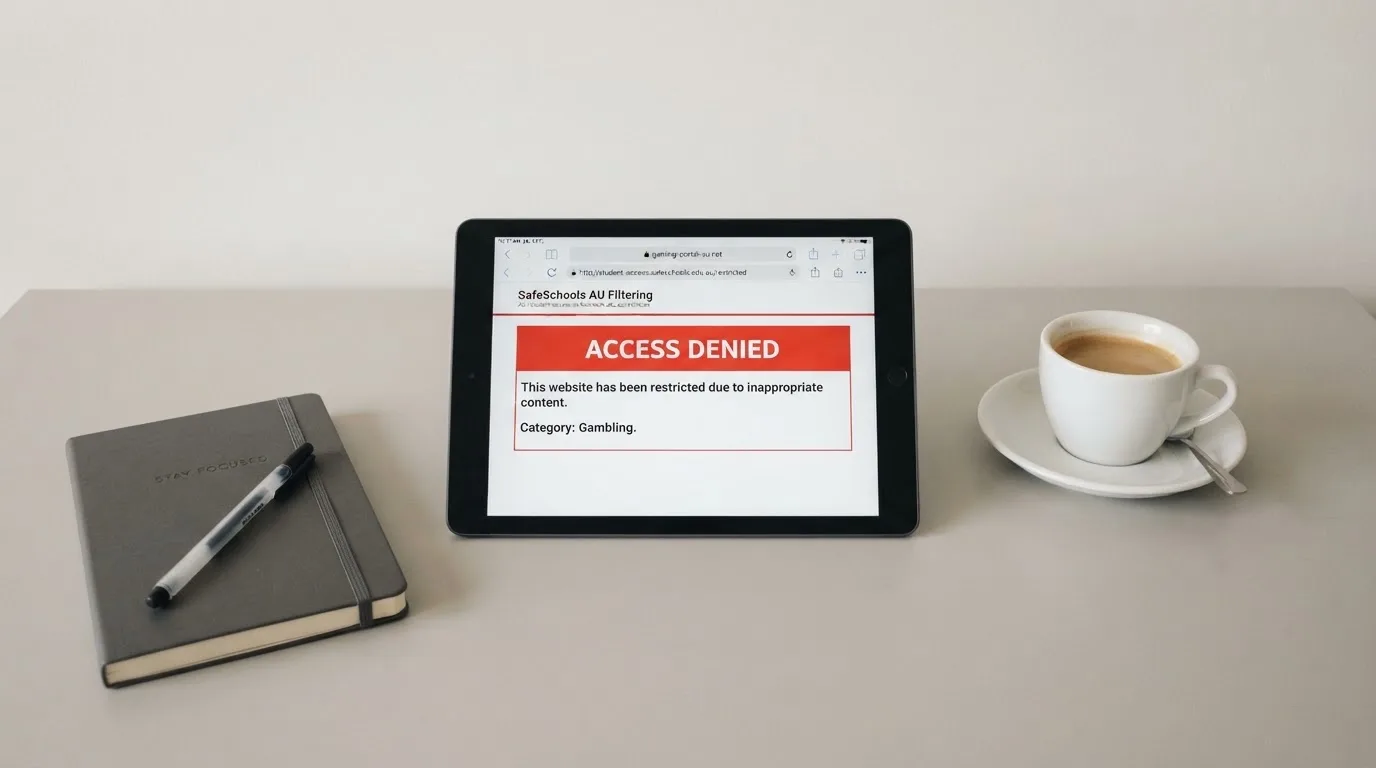
For the reader who has decided to play anyway, the practical concern is whether the site is reachable today. The ACMA’s blocking programme has removed 1,751 illegal gambling and affiliate sites since November 2019, and the regulator asks Australian ISPs to block fresh rounds every few months. A site that was accessible last week can be inaccessible this week, and any balance held on it at that moment becomes the player’s problem to recover from an operator that has no obligation to an Australian court.
Level Up Casino: an older warning, an unchanged position
Level Up Casino was named in the ACMA’s May 2022 warning to Dama N.V., the same action that covered Bambet, Dazard, Rocketplay, Wild Tornado and Cobra Casinos. The brand has continued operating offshore in the years since. The warning is still on the ACMA’s register; the operator’s response to it is to keep accepting players from jurisdictions where the regulator’s letter does not reach.
The site carries a Curaçao licence in its footer and a long list of software providers in its lobby. The comparison sites that feature it lean on game variety and a multi-deposit welcome package. The rating claim rests on those features, not on any endorsement from an Australian regulator, because no Australian regulator endorses the product.
The verdict on this brand, for an Australian reader, is the same as it has been since 2022: the site is on the prohibited list, and the licence it advertises is not a licence to take Australian players. The brand’s longevity is not a sign of safety; it is a sign that the operator has chosen to keep accepting Australian traffic despite the warning. The two facts sit beside each other and mean different things.
Woo Casino: a 2025 escalation on a familiar operator
Woo Casino drew a fresh formal warning from the ACMA in March 2025, again against Dama N.V. The earlier 2022 action had not stopped the brand. The 2025 action did not either, which is itself informative: a formal warning from the ACMA is a documented step, not a closing one, and the regulator’s enforcement pathway moves from warning to blocking request to civil court orders over months and years.
The brand’s offer is unremarkable by the standards of the shelf — a welcome package, a VIP programme, a long list of slot titles. The rating claim attached to it on third-party sites is on par with the rating claim attached to Level Up, which is to say it is a comparison-site artefact rather than a regulatory finding.
What Woo Casino is worth as a verdict is a single observation: a brand that has drawn two ACMA warnings across three years is a brand the regulator has had to warn twice. The first warning did not produce a change in behaviour; the second is on the record in the same way the first was. A reader who treats the warning as information has been told the same thing twice.
Spirit Casino: the second 2025 Dama N.V. warning
Spirit Casino drew its own ACMA formal warning in May 2025, again against Dama N.V., the same operator behind Woo Casino two months earlier. Two warnings, two months apart, the same licence holder, different brand names — the rhythm is the rhythm of an operator rotating skins faster than the regulator can finish each round.
The brand itself is newer than the others on this list. The marketing leans on the same package shape the rest of the shelf carries: a deposit match, free spins attached, a tiered welcome that runs across the first two or three deposits. There is nothing distinctive about the offer, and that is itself the point: the differentiation is in the brand name, not in the product, because the product is interchangeable across the shelf.
The verdict on Spirit Casino is the verdict on the pattern: a brand that exists to be replaced when the warning arrives, replaced by another brand with a different name on the same licence. The reader does not see the rotation; the regulator does.
National Casino: a fresh operator, a familiar shape
National Casino drew a formal warning from the ACMA in July 2025 against Consolutetish S.R.L. The operator is a different corporate entity from the Dama N.V. brands higher up the list, but the shape of the warning is the same: offering prohibited interactive gambling services to Australians, formal warning published, brand continues to operate offshore.
The site presents a large game library and a welcome package that runs across the first three or four deposits, with free spins attached to the first. The marketing leans on game count and the breadth of the provider list. None of that is regulated by an Australian authority, because none of it can be.
For the Australian reader, the relevant fact is the same one the regulator published in July 2025: National Casino is on the prohibited list. The brand’s presence on a “top rated” shortlist elsewhere is a marketing outcome, not a regulatory one.
Bizzo Casino: two warnings, the same outcome
Bizzo Casino is unusual on this list because the ACMA has warned about it twice. The earlier warning, issued in 2022, named TechSolutions (CY) Group Limited and TechSolutions Group N.V. as the operators. The 2025 warning, issued in July, named Consolutetish S.R.L. The brand survived the change of operator and drew a second letter from the regulator for the same conduct.
The site presents a standard offshore casino offering — slot library, live dealer tables, a sportsbook attached — under a Curaçao licence. The marketing is built around the volume of games and a welcome package that runs across multiple deposits. None of that survives the ACMA’s published position, which is that the offering itself is prohibited.
A reader looking at Bizzo Casino’s track record sees what repeated warnings look like: the same brand, different operators, the same conduct, two letters from the regulator. The conclusion the regulator has published twice is the conclusion it has published.
Ignition Casino: a brand named once and a record that confirms it
Ignition Casino was named in the ACMA’s July 2025 formal warning to Bamboo Media. The brand has been a fixture on offshore comparison sites for some years, marketed primarily at Australian and US players with a focus on poker and a slot library attached.
The site’s licence disclosure places it under a Curaçao framework. The ACMA’s position, published in July 2025, is that the offering to Australians is prohibited. The two statements do not contradict each other: the licence is a licence to operate the site in some jurisdictions, not a licence to offer the product in Australia.
For the reader, the verdict follows from the warning: the brand has been named by the regulator, the regulator’s position is published, and the operator continues to accept Australian traffic despite it. The brand’s poker focus is a marketing distinction, not a legal one. The Interactive Gambling Act 2001 covers casino games and online pokies as a category; poker sits inside that category.
Instant Casino: a February 2025 warning and the pattern it confirms
Instant Casino drew its ACMA formal warning in February 2025, against EOD Code SRL. The brand is one of the newer entries on the prohibited list, and the marketing — a broad slot and live-casino offering under a Curaçao licence — is consistent with the rest of the shelf.
The February 2025 warning is the regulator’s first formal action against this brand. There is no track record of repeated warnings because there has not been time for one. There is also no track record of compliance, because the brand continues to operate offshore and to accept Australian players despite the letter.
For an Australian reader, the verdict is the same one the warning publishes: the offering is prohibited, the brand is on the regulator’s list, and the licence in the footer does not change that. The brand’s relative youth on the prohibited list is not a sign of innocence; it is a sign of how recently the regulator caught up with it.
Jackbit: an April 2026 warning and a crypto-led offer
Jackbit drew an ACMA formal warning in April 2026 against Ryker B.V., the same action that named CasinOK. The brand positions itself around cryptocurrency deposits and a wide sportsbook attached to a casino floor, which is the shape a number of offshore operators have moved toward as banks tighten gambling blocks on debit cards.
The site’s licence disclosure places it under a Curaçao framework. The ACMA’s position, published in April 2026, is that the offering to Australians is prohibited. Crypto deposits do not move the offering outside the prohibition; the Interactive Gambling Act 2001 covers the service, not the payment method, and credit-related products including cryptocurrency have been banned as a payment route for licensed Australian wagering since 11 June 2024.
For the reader who was drawn to Jackbit for the crypto angle, the verdict is the one the regulator has published: the brand is on the prohibited list, the deposit method does not change that, and the operator has chosen to keep accepting Australian traffic despite the warning.
Casino Intense: an April 2025 warning and the listings that name it
Casino Intense drew an ACMA formal warning in April 2025 against Sterplay Holding Ltd. The brand appears in industry listings alongside the rest of the shelf, with a standard slot and live-casino offering under a Curaçao licence.
The April 2025 warning is the regulator’s first formal action against this brand. The brand has continued to operate offshore in the months since. The marketing has not changed: a welcome package, a tiered loyalty programme, a broad game library. The regulator’s position has not changed either.
For the Australian reader, the verdict follows from the warning and from the absence of any Australian licence that would cover the offering. Casino Intense is on the prohibited list, and the brand’s presence on third-party shortlists does not alter the regulator’s published position.
Sky Crown: an older warning from 2022 still on the register
Sky Crown was named in the ACMA’s formal warning to Hollycorn N.V. in September 2022, the same action that named Blue Leo. The brand has continued operating offshore in the years since, under the same operator, with the same offering.
The site’s licence disclosure places it under a Curaçao framework. The ACMA’s 2022 warning remains on the register. A formal warning is not removed when an operator changes behaviour, because the regulator’s record is a record of what was published, not a record of what came after.
For the reader, the verdict is the verdict on an unresolved warning: the regulator published its position in 2022, the operator has not been the subject of a follow-up blocking request in the published record, and the brand continues to operate. The unresolved status is information in itself; it does not convert the warning into a clearance.
Comparison: Licensed wagering vs Offshore casino
| Feature | Licensed wagering | Offshore casino |
|---|---|---|
| Regulation | Australian (NTRWC) | None (Offshore) |
| Games offered | Sports and Racing | Slots and Casino |
| BetStop Access | Yes | No |
| Consumer Protection | Australian law | None |
The eleven brands above sit inside a market the ACMA has been chipping at for the better part of a decade. As of the regulator’s June 2026 round, 1,751 illegal gambling and affiliate marketing websites had been blocked since the first blocking request in November 2019, and more than 230 unlicensed gambling services had left the Australian market since enforcement was strengthened in 2017. The June 2026 round alone asked Australian ISPs to block a further twelve sites: 7Signs, ChromaBet, Donbet, Duospin, Freshbet, Slots Gem, Jacks Club, Lucky Start, Pointsbetz, Spinrise, Vinyl Casino and Wildsino.

The blocking rate arithmetic provides the context for the enforcement trend, and is the only place a numerical band belongs. The first blocking request was in November 2019, and the running total reached 1,751 by the end of the June 2026 round. The headline figure is the band itself: between 250 and 270 sites blocked per year on average over the period, with the rate in the more recent rounds running higher than the rate in the first few years. The condition is the regulator’s own publication cycle, which is not a steady flow — some rounds are reported as adding several dozen, others as adding a handful, and the published record is what the band is read against.
The H2 Gambling Capital 2025 estimate puts Australians’ losses to illegal gambling sites at around A$3.9 billion a year, and reports that the share of gambling going through legal channels fell from 74% in 2021 to 64%. Both figures are estimates, and the estimate is the point — illegal gambling in Australia is a market measured in billions, not a fringe activity, and the brands on this list are the visible end of it.
What an Australian reader meets, when they meet this market, is a parallel industry. The licensed wagering operators — Sportsbet, Bet365, Ladbrokes and the rest — sit on one side of the line, licensed by the Northern Territory Racing and Wagering Commission for sports and racing, restricted by law from offering casino games. The offshore brands sit on the other side, unlicensed for the Australian market, marketing directly to Australian players through search, affiliates and social channels. The “top rated” label is a label from the offshore side. There is no Australian rating of offshore casino brands, because there is no Australian endorsement of them.
Legality and regulation: the line the market sits outside
The Interactive Gambling Act 2001, strengthened by the Interactive Gambling Amendment Act 2017, makes it an offence to provide online casino games, online pokies or in-play betting to a person in Australia. No state or territory licenses those products. What is licensable, and what the licensed operators offer, is wagering on races and sport placed before the event, lotteries and keno. The line is the product, not the operator: a Curaçao licence, a Malta licence, a Kahnawake licence — none of them licenses an operator to take Australian players for casino games, because the Australian regime does not license the activity at all.
The Northern Territory Racing and Wettering Commission regulates 52 of Australia’s online bookmakers, including Sportsbet, Bet365 and Ladbrokes, which are licensed in the Territory for tax reasons. The commission has no full-time staff and meets once a month in Darwin. That is the regulator for the licensed half of the market, and it covers sports and racing, not casino. The casino product sits outside the licensed perimeter entirely.
Enforcement is the ACMA’s job. The regulator investigates, issues formal warnings, and directs Australian internet service providers to block illegal sites. The blocking programme is the most visible enforcement tool, and the running total is the one the regulator publishes. The individual player is not prosecuted — the IGA targets the provider — but a player on an offshore site has no Australian consumer protection, no Australian complaints body, and no Australian recourse if a withdrawal stalls or a bonus term is applied after the fact. The site can be blocked tomorrow with a balance on it, and the player is the one left to sort it out.
The Interactive Gambling Amendment (Gambling Reform) Bill 2026 passed Parliament on 19 August 2026. Its advertising and inducement measures commence on 1 January 2027, which puts them outside the scope of a 2026 page. The reform is law with a start date, not yet in force.
Responsible gambling: the tools that bind and the tools that don’t
The licensed half of the Australian market has a self-exclusion register, and it is the most concrete piece of player protection in the country. BetStop, the National Self-Exclusion Register, has been live since August 2023, and it binds every Australian-licensed online and phone wagering service. A player who registers is excluded from every licensed operator simultaneously, for a period of their choice between three months and a lifetime. The exclusion is enforced at the operator end: account closure, marketing opt-out, balance return.
BetStop does not bind offshore casinos. An offshore operator is not connected to the register, has no obligation to honour an Australian self-exclusion, and can continue to accept deposits from a player who has registered elsewhere. The protection that exists for the licensed half stops at the border. A player who self-excludes and then plays at an offshore site is using a tool that does not reach the site they are using.
The bank-level tools reach further. Westpac’s gambling block refuses authorisation of transactions registered under the merchant category code for betting and casino gambling on eligible personal credit and debit cards. ANZ’s equivalent gambling block, activated through the ANZ app, blocks gambling transactions made through a digital wallet such as Apple Pay on an eligible card as well as on the physical card; removing the block again requires a 48-hour waiting period, and the bank warns that not all gambling transactions will be blocked and that some non-gambling transactions might be blocked in error. Commonwealth Bank’s gambling lock, applied through the CommBank app, automatically blocks most gambling transactions on eligible cards, with the same caveat that the bank cannot guarantee every gambling-related purchase will be stopped. The bank-level block is a payment-route block; it stops the transaction at the card network, not at the casino, and it reaches the offshore site when the offshore site accepts the relevant card network.
The National Gambling Helpline, 1800 858 858, is free and available 24/7, with chat support at Gambling Help Online. The line is the one piece of the support infrastructure that is reachable from inside an offshore casino session, because the line does not depend on which site the player is using. The advice, the referral, the counselling — all of it is independent of the operator.
What an offshore casino offers, by contrast, is its own internal responsible-gambling page. Deposit limits, time-outs, self-exclusion from the one site. The limits bind only that site, which is exactly the limit that applies to everything else about the offer. The Australian player who wants protection that travels uses BetStop and the bank block together, and accepts that the offshore site is outside both.
Land-based venues: the genuinely licensed option
The lawful place to play a poker machine in Australia is a licensed venue — a pub, a club, or one of the casino floors in Melbourne, Sydney, Brisbane, Perth, Adelaide, Hobart, Darwin and Canberra. Every poker machine in those venues sits inside a state or territory regulatory framework that covers the machine, the venue, the prize and the player. The “top rated” label, in the licensed land-based context, is a label that means something: it is a label applied to a venue a regulator has licensed, and the regulator’s licensing is the part of the rating that does not appear in the offshore comparison list.
The major casino floors operate under state-level casino control acts and answer to state regulators — the Victorian Commission for Gambling and Liquor Regulation, Liquor & Gaming NSW, the Queensland Office of Liquor and Gaming Regulation, the Western Australian Department of Local Government, Sport and Cultural Industries, and so on. The framework covers responsible gambling, machine compliance, anti-money-laundering obligations, and the surveillance that goes with each. A pokies player on a casino floor has access to the venue’s own responsible-gambling officers and to the state regulator if the venue fails.
Pub and club gaming is regulated at state level too, under the relevant gaming machine legislation. The smaller venues sit inside the same responsible-gambling framework — self-exclusion at the venue, mandatory closure periods, player information — but under a different operational model. A pub or club does not have the same floor of table games a casino carries, and the comparison is not exact; what is exact is that the machines are licensed, the venue is licensed, and the regulator’s name is on the record.
For a reader who typed “top rated pokies near me” into a search engine and landed on this page, the practical answer is the one the offshore list does not give: the genuinely licensed venue is the local pub, club or casino. The star rating on the venue is a rating of a licensed product. The star rating on the offshore site is a rating of an unlicensed one. Both ratings exist; they do not describe the same thing.
Payments and payout speed: how money actually moves
The payment layer for an Australian player splits the same way the rest of the market does. Licensed Australian wagering operators accept debit card, bank transfer, PayID and Osko, and BPAY. Credit cards, credit-related products and digital currency have been banned as a payment route for licensed Australian wagering since 11 June 2024, with penalties of up to A$247,500 for operators who breach the rule. An offshore site that accepts a credit card or a crypto deposit is operating outside the Australian payment rules even before the question of whether the site is licensed at all.
PayID and Osko are the rail most Australian bank transfers now run on, and both are operated by Australian Payments Plus. With Osko, a bank transfer between participating Australian banks arrives in under a minute, 24/7, including weekends — whether it is addressed to a BSB and account number or to a PayID. The New Payments Platform went live to the public on 13 February 2018, is owned by New Payments Platform Australia Ltd (a non-profit whose shareholders include the Reserve Bank of Australia and the major banks), and by April 2025 had more than 25 million PayID identifiers registered against it. Participants are required to keep monthly platform outages to no more than two minutes.
PayID adds a layer the offshore cashier does not mention. Paying to a PayID shows the name of the account holder before the transfer is sent; AP+ warns that being asked to transfer money to a PayID on an illegal gambling site almost certainly means a scam site. The warning is built into the rail itself: the name-check happens at the point of payment, not after. A player who sees an unfamiliar name on the PayID confirmation screen is being told, by the payment system, to stop.
BPAY sits alongside PayID and Osko as the third rail in the Australian Payments Plus family. The service has operated since 1997 — it launched on 18 November of that year — is available through the online banking of more than 140 banks and financial institutions, and is offered by more than 95,000 businesses. The payer enters the Biller Code and the Customer Reference Number printed on the bill. BPAY is owned equally, through Cardlink Services Limited, by Australia’s four major banks: ANZ, Commonwealth Bank, National Australia Bank and Westpac. In September 2021 the ACCC authorised the merger of BPAY Group, eftpos and NPP Australia under a single holding entity, Australian Payments Plus.
AUSTRAC’s threshold-transaction-report rule, which requires reporting of transfers of A$10,000 or more, applies only to physical cash. Ordinary electronic bank transfers are not subject to the per-transaction reporting threshold, regardless of the amount sent. The distinction matters because it tells the player where the reporting line sits: a large bank transfer is not reported as a threshold transaction, but the operator’s own anti-money-laundering obligations still apply.
Digital wallets complicate the picture. By the end of 2025, Apple Pay, Google Pay and Samsung Pay collectively accounted for around 45% of all card payments in Australia by number. Apple Pay itself does not charge consumer fees — any surcharge comes from the merchant’s own processing costs — and Apple states that transaction limits and PIN requirements are set by the card issuer or merchant, not by Apple. The gambling block at ANZ, however, blocks gambling transactions made through a digital wallet on an eligible card, not just the physical card. The Reserve Bank of Australia’s July 2025 review proposes removing surcharges only on eftpos, Mastercard and Visa, leaving American Express outside the proposed ban. Amex itself has a longer history than the bankcard networks — established in 1850 as a freight-forwarding company, it launched its first charge card on 1 October 1958 and runs a three-party model rather than the four-party model Visa and Mastercard use.
What the payout section of an offshore casino’s marketing usually claims is a withdrawal window measured in hours. The reality behind the claim is the same payment rail the player would have used to deposit, with an extra step on the casino’s end before the transfer is released, and a verification step the casino controls. A withdrawal that the casino decides to delay is a withdrawal that sits in the casino’s processing queue; the bank transfer, once released, is fast, but the release is the casino’s call. An Australian player with no Australian recourse has no route to escalate a delay other than the casino’s own complaints process.
Calculation: what the offshore market has cost in aggregate
The blocking rate arithmetic provides the context for the enforcement trend, and the result is the band described above. The first ACMA blocking request was in November 2019; the running total reached 1,751 sites blocked by the end of the regulator’s June 2026 round. Across that period, the band of sites blocked per year sits between 250 and 270 on average, with the rate in the more recent enforcement rounds running higher than the rate in the first years after the 2017 amendments. The condition is the regulator’s own publication cycle: rounds vary in size, the published record is what the band is read against, and the band itself is a specific observation — a single figure would be a guess about a steady rate the regulator’s record does not show.
The verdict across the eleven brands
The eleven brands above are not a ranking. They are the eleven brands the ACMA has named in formal warnings over the period the research covers, in the order the regulator published them. Every one of them sits outside the Australian licensing framework by the regulator’s own published position, every one of them carries an offshore licence in its footer that does not license the offering for Australians, and every one of them markets to Australian players anyway.
The “top rated” label on these brands is a marketing artefact. It is real in the sense that comparison sites publish it, real in the sense that affiliate programmes pay for it, and real in the sense that the brands spend on the search terms that bring Australian readers to it. It is not real as an endorsement of legality, of player protection, or of recourse if something goes wrong, because no Australian regulator endorses any of those things for offshore casino brands. The reader who wants the genuinely licensed option finds it in the local pub, club or casino floor; the reader who wants the “top rated” offshore offering has to read the ACMA’s register alongside the marketing.
Frequently asked questions
What actually makes an online casino “top rated” — player reviews, payout speed, or something else?
The label is set by the comparison site that publishes it. The criteria vary: some rank by the size of the welcome package, some by the breadth of the game library, some by a star count aggregated from user reviews. None of the criteria involve an Australian regulator’s view of the operator, because the regulator’s view is that the offering is prohibited. The label is real; the authority behind it is not Australian.
Do top-rated crypto casino lists use the same rating criteria as top-rated fiat casino lists?
The criteria are usually the same — game library size, welcome package size, user ratings — with the payment layer treated as a separate filter. The distinction matters more for the legal picture than the rating one: since 11 June 2024, digital currency has been a banned payment route for Australian-licensed wagering, and an offshore casino accepting crypto is operating outside the Australian payment rules even before the licence question is settled.
Does a high star rating change whether an offshore online casino is actually licensed for Australians?
No. The Interactive Gambling Act 2001 covers the product, not the operator’s reputation, and no Australian regulator endorses any offshore casino brand regardless of its star count. The star rating measures what comparison sites choose to measure; it does not measure Australian legality, which is fixed by the Act and enforced by the ACMA.
What is the difference between a “top rated” casino app and a “top rated” casino website in these lists?
The difference is mostly the wrapper. None of the offshore brands covered here can publish a real-money casino app through Australia’s official stores, so most of them publish a progressive web app — a mobile site with an icon and a full-screen mode. The games, the cashier and the live dealer tables are the same. The licence situation, the ACMA warnings and the absence of Australian recourse are the same. The wrapper does not change the product or the protection around it.
How do top-rated pokies rankings differ from top-rated roulette or slots rankings specifically?
Pokies rankings usually sit inside a casino ranking — they are a sub-list of the slot library a casino carries. Roulette and slots rankings on their own are usually product rankings across multiple casinos, looking at the game rather than the site. In both cases the ranking is a marketing artefact; the ACMA’s prohibition is on the offering of casino games to Australians as a category, which covers pokies, roulette, blackjack and the rest under the same provision.
Where near someone would a genuinely top-rated, licensed casino venue actually be found in Australia?
In a licensed pub, club or casino floor. The state and territory regulators license the machines and the venues that hold them, and the casino control acts cover the major casino floors in each capital city. The star rating on a licensed venue is a rating of a regulated product. The star rating on an offshore casino is a rating of an unregulated one, and the two do not describe the same thing.