
Best pokies in Sydney in 2026: what is licensed, what is not, and what the ACMA’s blocking record looks like
Currency stamp: Current as of 29 October 2026, checked against the Australian Communications and Media Authority (ACMA) register of formal warnings and blocking requests.
Anyone typing “best pokies in Sydney” into a search bar in 2026 is looking for one of three things: a real venue to walk into, an online substitute that calls itself pokies, or a sense of which machines actually pay out. Sydney does have a real answer to the first, a hard answer to the second, and a measured answer to the third. The rest of this page works through all three, in that order.
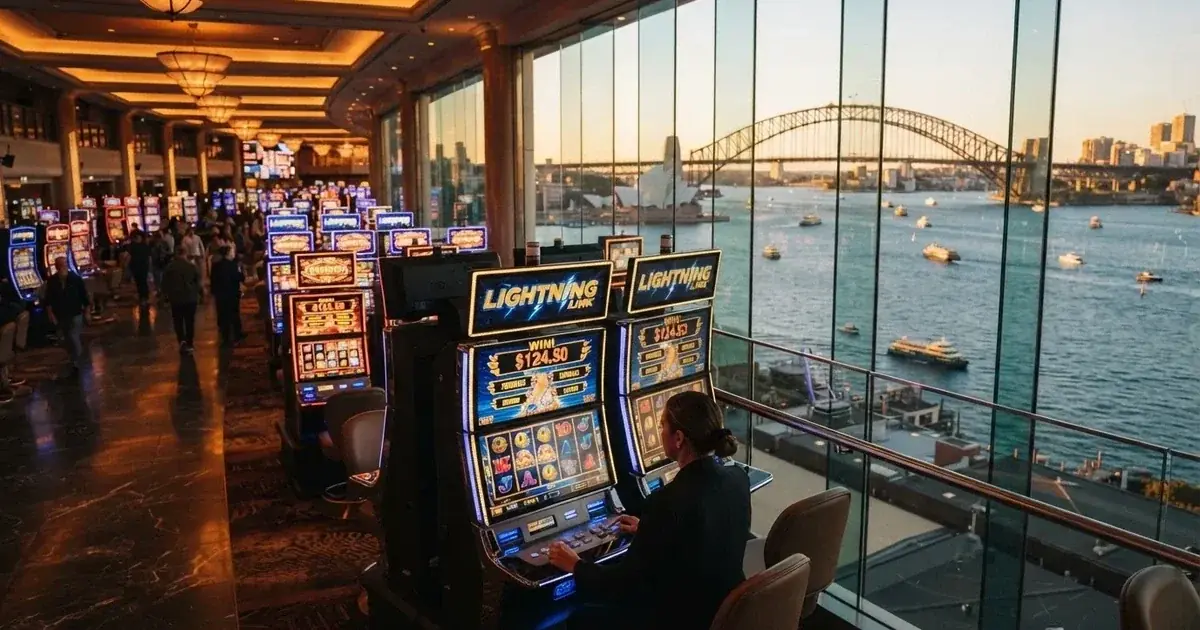
New South Wales runs roughly 87,298 poker machines outside its casinos across 2,195 venues as of June 2023, more than any other Australian state, and the activity around those machines recorded about A$8.18 billion in player losses in FY22-23, around A$986 per capita. That volume sits on top of two large licensed casino floors in Sydney itself: The Star Sydney in Pyrmont, Australia’s second-largest casino after Crown Melbourne, and Crown Sydney at Barangaroo, the 271.3 metre tower that opened to the public in December 2020. Every one of those machines, pub or casino, is regulated by Liquor and Gaming NSW. None of them lives online.
The offshore “pokies” sites that fill Australian Google results are a different thing. They are not licensed in Australia, they cannot be — the Interactive Gambling Act 2001 makes the provision of online casino games and online pokies to a person in Australia an offence — and the ACMA’s enforcement record against them is now long enough to be worth walking through. The two halves of this page are kept separate on purpose. One is a guide to where the activity is legal; the other is a description of what is being policed and why.
Table of Contents
- How a Sydney pokies shortlist actually gets put together
- The paytable side of a Sydney pokie
- The top 11 ACMA-warned offshore brands: what the regulator’s record actually says
- How the law treats online pokies in Australia
- Responsible gambling supports that work for a Sydney player
- Where the machines physically are: Sydney venues and NSW context
- Payments and payout speeds at Sydney venues
- What a Sydney player actually needs to know to play
- Closing the page: where the legal product is, and what the offshore end actually is
- Frequently asked questions about Sydney pokies
How a Sydney pokies shortlist actually gets put together
Shortlists of Sydney pokies tend to fall apart on the same first question — what does “best” mean? The most useful ranking criteria for Sydney venues are not the ones an offshore comparison site uses. No bonus terms, no wagering multipliers, no spin-and-win counts; the law forbids them here. A workable ranking runs on the criteria below, in roughly the order of how much they change the experience on the floor.
The first criterion is licence type. A Crown Sydney or Star Sydney EGMs (electronic gaming machines, the industry term for a pokie) is part of a casino floor, licensed under state casino control and subject to the Independent Casino Commission’s oversight. A pub or club machine is licensed by Liquor and Gaming NSW under the hospitality framework, with different operating hours, different harm-minimisation settings, and a different complaint path. Mixing them up as if they were interchangeable is the most common error on these pages.
The second criterion is opening hours and access. NSW pubs and clubs cannot run gaming machines continuously through the night in the way the two casino floors can. A venue in Sydney’s CBD that closes its gaming room at midnight is not a competitor to a casino floor with a 20-hour day.
The third is harm-minimisation features. NSW has progressively tightened these: mandatory pre-commitment, lower default bet sizes on newer machines, mandatory closing times in some venue categories, and the YourPlay card system. A shortlist that ignores these — or treats them as marketing boilerplate — ranks machines on the wrong axis.
The fourth is the venue mix. Sydney is unusual in Australian terms because the two casinos and the pub/club base are both very large; the comparison most people actually want is “which venue is closest to me, with the hours and limit I want”. A ranking criterion, in other words, has to do some of the work a map would do.
The fifth is RTP and volatility, and here the data runs thin. Sydney pubs and clubs do not publish a return-to-player number on individual machines; the state sets a regulatory minimum (87.5% in South Australia for comparison, with NSW operating its own minimum framework), but real-world machine RTPs vary by title and denomination. A shortlist that quotes a specific RTP for a pub machine is either guessing or quoting a manufacturer’s spec sheet. Either way, the reader should know that.
A workable shortlist has to weight these criteria differently depending on the reader’s purpose. For a visitor wanting a single night at a casino floor, licence type and hours matter more than RTP. For a local deciding which pub to walk into on a Tuesday, hours and harm-minimisation settings matter more than floor size. Most comparison pages online flatten this to one ranking, and most readers end up on the wrong venue as a result.
The paytable side of a Sydney pokie
The pokies themselves, the physical machines on Sydney pub and club floors, are overwhelmingly Australian-style EGMs with the standard features: five reels, configurable denominations, multiple lines, and a feature game triggered by scatter symbols. They are not the bonus-heavy online slots that fill offshore “pokies” pages; there is no wagering requirement, no free-spin tally, no max-cashout cap. The win is paid in cash, by the machine, less the A$1,000 cap that applies to a single-note payout on most NSW pub machines above that threshold — though that limit varies by jurisdiction and venue category, and the two casino floors run on different settlement rules.
The differences between titles on a Sydney pub floor are real but small. Manufacturers (Aristocrat, IGT, Konami) supply a catalogue that is largely common across NSW and other states, with house edge typically set within a narrow band above the regulatory floor. Players who chase specific titles — Dragon Link, Buffalo, Queen of the Nile — are chasing the feature-game volatility rather than a different RTP, and the same title on the same denomination will behave similarly venue to venue, though local machine settings are not always identical.
Crown Sydney and The Star Sydney run a different catalogue, partly because the casino floor licences allow a wider range of denominations and partly because the floor mixes table games and EGMs under one licence. The Star’s two gaming floors sit in the Pyrmont complex alongside 351 hotel rooms, the Sydney Lyric theatre and a 3,000-seat Event Centre. Crown’s gaming sits inside the 75-floor Barangaroo tower, with its casino opening to the public in December 2020. Both floors take bets the pub floor cannot, and that is a licensing distinction rather than a marketing one.
Players comparing one pub to another in Sydney on the basis of “which has the best paying pokies” are mostly comparing things the venue itself does not control. The denomination, the title, and the machine’s own configuration matter more than the venue’s name on the front. A high-turnover pub in the CBD with a freshly installed machine will play differently from a suburban club with an older model on the floor, but the difference is one of game selection rather than venue honesty. Claims that one Sydney venue pays out better than another should be treated accordingly.
The top 11 ACMA-warned offshore brands: what the regulator’s record actually says
The eleven brands below are not a ranking. They are listed because the ACMA itself has, in formal published action, told each one that offering online casino games or online pokies to a person in Australia is unlawful. Each entry pairs the brand with the operator name the ACMA named in the warning and the date the warning was issued. None of these brands is licensed in Australia; the offshore licence some of them display is irrelevant to Australian players, because the Interactive Gambling Act 2001 targets the act of providing the service to an Australian, not the licence under which it is provided.
RocketPlay
Operator named by the ACMA: Pulsup Ltd (Rocketplay), March 2026. Dama N.V. was also warned over the same brand in May 2022. The ACMA’s action followed the standard course under the Interactive Gambling Act 2001: a formal warning, then the matter is logged against the operator for further enforcement, including blocking requests to Australian internet service providers if the service does not withdraw. Subject support: no-data.
Level Up Casino
Operator named by the ACMA: Dama N.V., May 2022. The 2022 warning covered six Dama N.V. brands in a single published action — Bambet, Dazard, Level Up, Rocketplay, Wild Tornado and Cobra Casinos. Subject support: listings-only. References include entries on Wikipedia and the VGCCC website.
Woo Casino
Operator named by the ACMA: Dama N.V., March 2025. A separate Dama N.V. warning to the 2022 round, this time for the Woo Casino brand specifically. Subject support: listings-only — listed in en.wikipedia.org as an example of an offshore brand operating against the IGA.
Spirit Casino
Operator named by the ACMA: Dama N.V., May 2025. The third Dama N.V. warning across a three-year span, for the Spirit Casino brand. Subject support: no-data.
National Casino
Operator named by the ACMA: Consolutetish S.R.L., July 2025. The 2025 warning covered two Consolutetish brands — National Casino and Bizzo Casino — in a single published action. Subject support: listings-only; coverage in ABC and Infrastructure.gov.au reports notes the brand’s lack of Australian licence.
Bizzo Casino
Operator named by the ACMA: Consolutetish S.R.L., July 2025, with a prior 2022 formal warning to TechSolutions (CY) Group Limited and TechSolutions Group N.V. over the same brand. Subject support: no-data.
Ignition Casino
Operator named by the ACMA: Bamboo Media, July 2025. The 2025 warning paired Ignition Casino with a separate action over National Casino and Bizzo Casino. Subject support: no-data.
Instant Casino
Operator named by the ACMA: EOD Code SRL, February 2025. Subject support: no-data.
Jackbit
Operator named by the ACMA: Ryker B.V., April 2026, in a warning that also named CasinOK. Subject support: no-data.
Casino Intense
Operator named by the ACMA: Sterplay Holding Ltd, April 2025. Subject support: listings-only. Media coverage from the ABC, Asgam and the CBS regulatory portal confirms the brand’s profile.
Sky Crown
Operator named by the ACMA: Hollycorn N.V. The warning covered Hollycorn’s Sky Crown and Blue Leo casino services. Subject support: listings-only — the brand appears in en.wikipedia.org.
The table below records these warnings in the form the ACMA published them. Where research carries only the operator name and date, no other specification is attached. Where two warnings cover the same brand, both are shown.
| Brand | ACMA action and date | Operator named by the ACMA | Subject support |
|---|---|---|---|
| RocketPlay | Formal warning — March 2026 (Pulsup Ltd); prior — May 2022 (Dama N.V.) | Pulsup Ltd / Dama N.V. | — |
| Level Up Casino | Formal warning — May 2022 | Dama N.V. | listings-only |
| Woo Casino | Formal warning — March 2025 | Dama N.V. | listings-only |
| Spirit Casino | Formal warning — May 2025 | Dama N.V. | — |
| National Casino | Formal warning — July 2025 | Consolutetish S.R.L. | listings-only |
| Bizzo Casino | Formal warning — July 2025 (Consolutetish); prior — 2022 (TechSolutions) | Consolutetish S.R.L. / TechSolutions | — |
| Ignition Casino | Formal warning — July 2025 | Bamboo Media | — |
| Instant Casino | Formal warning — February 2025 | EOD Code SRL | — |
| Jackbit | Formal warning — April 2026 | Ryker B.V. | — |
| Casino Intense | Formal warning — April 2025 | Sterplay Holding Ltd | listings-only |
| Sky Crown | Formal warning — published September 2022 | Hollycorn N.V. | listings-only |
A reader comparing these brands should note what the table does not show. No bonus terms are quoted, because the only sources for them were affiliate marketing pages, and an affiliate page quoting a bonus cannot itself make the bonus lawful to claim in Australia. No RTP is quoted, because RTPs published on the brands’ own pages are not Australian regulatory figures. No payment time is quoted, because payment times advertised by an offshore brand are not enforceable under Australian consumer law.
How the law treats online pokies in Australia
The Interactive Gambling Act 2001 (IGA), strengthened by the Interactive Gambling Amendment Act 2017, makes the provision of online casino games, online pokies or in-play betting to a person in Australia an offence. No state or territory licenses online casino games or online pokies. What the licensing framework does cover is wagering on races and sport placed before the event, lotteries and keno — in practice, online bookmakers licensed in the Northern Territory (Sportsbet, Bet365 and Ladbrokes among them, totalling 52 brands under the Northern Territory Racing and Wagering Commission).
The NTRWC’s structure is worth a sentence in this context. It regulates 52 of Australia’s online bookmakers for tax reasons, has no full-time staff, and meets once a month in Darwin — a small regulator with a large role, and one whose position has been the subject of recent reform calls. The April 2026 ABC report on a bill to reform this de facto gambling regulator ran in that context.
The ACMA is the enforcement body. Its powers include investigating complaints, issuing formal warnings to offshore operators, and directing Australian internet service providers to block illegal services. The individual player is not prosecuted — the IGA targets the provider, not the customer — but the consequences of using an offshore site are not zero. There is no Australian consumer protection if a withdrawal is refused; there is no complaints body an Australian can approach; and the site can be blocked with a balance still on it. H2 Gambling Capital’s 2025 report estimates that Australians lose about A$3.9 billion a year to illegal gambling sites, with the share of gambling going through legal channels falling from 74% in 2021 to 64%.
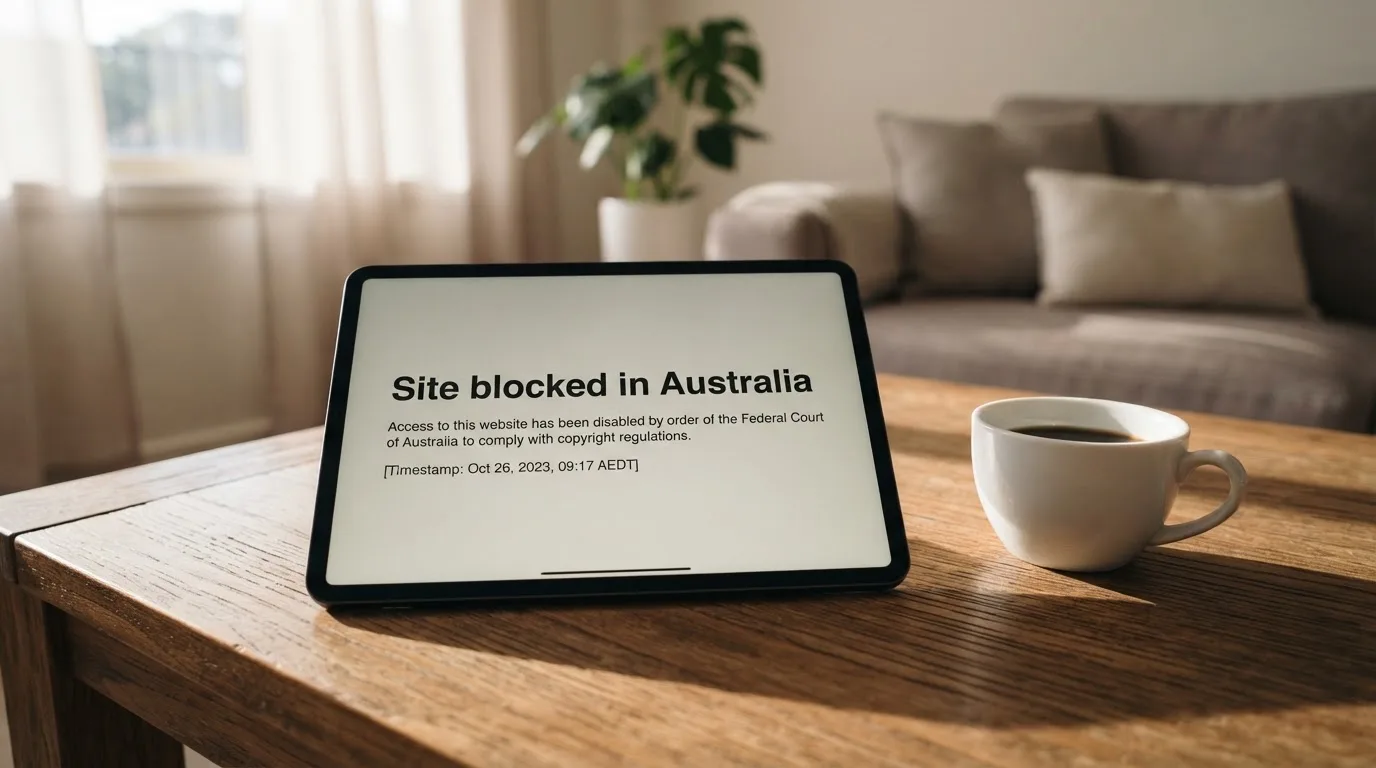
The ACMA’s enforcement record is the most concrete answer to how seriously the prohibition is taken. The June 2026 blocking round, the most recent reported, took the running total of blocked illegal gambling and affiliate marketing websites to 1,751 since the first blocking request in November 2019. The June 2026 round alone asked Australian ISPs to block 12 more websites: 7Signs, ChromaBet, Donbet, Duospin, Freshbet, Slots Gem, Jacks Club, Lucky Start, Pointsbetz, Spinrise, Vinyl Casino and Wildsino. More than 230 unlicensed gambling services have left the Australian market since enforcement was strengthened in 2017.
The blocking rate as the ACMA’s own record
The blocking record is the ACMA’s most measurable output, and it is also the one the agency publishes in figures. The cumulative total reached 1,751 blocked sites by the end of June 2026, starting from a first blocking request in November 2019. That is just over six and a half years of enforcement, and the rate at which sites have been added is the closest thing the prohibition has to a steady-state measure.
A working band: somewhere between roughly 240 and 290 sites per year have been added across the period reported, with the 2026 round alone taking out twelve more in a single action. The exact annual figure varies year to year — the early enforcement period was quieter, the post-2017 strengthened regime is faster — and the band is the right way to read the data, because a single year’s count is too thin a sample to support a rate on its own. The relevant fact for a reader is not the precise annual figure but the trend: the ACMA is adding to the block list at a pace that has not visibly slowed since 2017, and the total has more than doubled in the period since the strengthened regime took effect.
A reader who treats the block list as a snapshot will see 12 sites in a recent round and read it as a one-off. A reader who treats it as a running total sees something else: a regulator that has been quietly, consistently, removing access to illegal services from Australian ISP customers for years, with the total growing every quarter. The pace is the message, not the latest count.
The reform direction in 2026 is the Interactive Gambling Amendment (Gambling Reform) Bill 2026, which passed Parliament on 19 August 2026 and whose advertising and inducement measures commence on 1 January 2027. That is law with a start date, not yet in force on a 2026 page, and it sits beside the existing IGA framework rather than replacing it. The start date matters because a 2026 page that describes the new measures as live would mislead a reader acting on the description; the framework that is actually in force on a 2026 page is the one the ACMA has been enforcing since 2017.
Responsible gambling supports that work for a Sydney player
Responsible-gambling supports for Sydney pokies venues sit across two distinct systems. The first is the venue-side framework that Liquor and Gaming NSW administers — the pre-commitment settings, the YourPlay card system, the mandatory closing times in some venue categories, and the gambling-related signage that every licensed venue must display. The second is the external support network a player can reach independently of any venue: Gambling Help Online, the National Gambling Helpline (1800 858 858, free, 24/7), and BetStop, the National Self-Exclusion Register.
BetStop is live since August 2023, but its scope is narrower than its name suggests. It binds Australian-licensed online and phone wagering services — which is to say, online bookmakers licensed in the Northern Territory and equivalent arrangements elsewhere. An offshore casino is not connected to it. A player who has self-excluded through BetStop and then opens an account with one of the offshore brands in the table above is not protected by the same register, because the offshore brand has no integration with the Australian system. This is the gap most often missed in descriptions of Australian self-exclusion.
Visitors to Sydney who want to use a self-exclusion scheme at a local pokies venue have a venue-side path, not a national one. Each NSW pub, club and casino maintains its own exclusion register — a player who self-excludes at one venue is excluded at that venue, and the venues share exclusion data through Liquor and Gaming NSW’s centralised system so that a player who has self-excluded at one Sydney pub cannot simply walk into another and start again. This is the path a visitor should use, and it is the one a 24/7 helpline can route a person to.
The National Gambling Helpline (1800 858 858) is free, available around the clock, and connects to Gambling Help Online’s chat service. It is the single point of contact a player can use from anywhere in Sydney, and it is the place to start for someone who wants to talk before deciding what kind of self-exclusion they need. The helpline operates independently of any venue and is not bound by the offshore-brand gap.
NSW’s harm-minimisation settings on pokies themselves are not optional for venues. Mandatory pre-commitment, the YourPlay card, and venue-level closing times are part of the licensing conditions; a venue that fails to enforce them faces regulatory action. The point of those settings is to give a player a tool to set a limit before play, not after — the moment when a limit is still useful rather than the moment when the loss has already happened. For a Sydney player, the practical use of these settings is at the machine: a player who walks in with a card already configured has set the limit they want before the first spin.
Where the machines physically are: Sydney venues and NSW context
Sydney has two licensed casino floors. The Star Sydney sits in Pyrmont, overlooking Darling Harbour, and is owned by Star Entertainment Group. Its two gaming floors, 351 hotel rooms, the 2,000-seat Sydney Lyric theatre and a 3,000-seat Event Centre are the building’s main public assets, and it is Australia’s second-largest casino after Crown Melbourne. Crown Sydney is the 271.3 metre, 75-floor tower at Barangaroo, the tallest building in Sydney, with a casino that opened to the public in December 2020 among its hotel and residential floors.
The Star Sydney’s licence is currently under a cloud. The NSW Independent Casino Commission found The Star Sydney unsuitable to hold its casino licence on 13 September 2022 over conduct relating to money-laundering risks, and the operator was fined A$100 million in October 2022. Following the fine, the licence was suspended and operations placed under a government-appointed special manager, Nicholas Weeks, with supervision expected to continue through at least September 2025. On 10 February 2025, ASIC sued members of The Star’s former board over failures to track money-laundering risks at the venue. A visitor in 2026 is playing at a casino whose operator’s fitness to hold the licence has been formally contested and is still under supervisory oversight.
The pub and club base is where most NSW pokies play actually happens. The 87,298 gaming machines outside casinos across 2,195 venues as of June 2023 is the headline figure, and A$8.18 billion in player losses in FY22-23 is the activity that sits behind it. These machines are licensed by Liquor and Gaming NSW under the hospitality framework, not the casino framework — and that distinction is what changes the closing times, the bet-size limits and the harm-minimisation settings a player meets.
For comparison outside Sydney, Adelaide Casino (commercially SkyCity Adelaide) sits in the heritage-listed Adelaide railway station building on North Terrace, with 90 gaming tables and 950 gaming machines; it is the sole licensed casino in South Australia under the Casino Act 1997, and South Australia had 11,672 gaming machines outside Adelaide Casino in 471 venues in September 2023. Adelaide Casino’s table-game monopoly in South Australia was extended to 30 June 2035 under a licence formalised on 11 October 2013, which also allows the casino to expand to up to 200 gaming tables and 1,500 gaming machines subject to redevelopment. South Australian gaming-machine losses outside Adelaide Casino totalled about A$0.92 billion in 2022-23, equivalent to about A$497 per adult, against NSW’s A$8.18 billion and A$986 per capita — a striking per-capita gap between the two states’ pub/club activity.
Brisbane’s Treasury Casino, also operated by Star Entertainment Group, closed on 25 August 2024 to make way for the new Star casino at Queen’s Wharf. The Star Brisbane began a staged opening at the A$3.6 billion Queen’s Wharf Brisbane precinct on 29 August 2024, with the main casino floor and premium gaming rooms opening first, amid concerns about the licence position of its lead partner, Star Entertainment Group. In late 2022 the Queensland Government, acting on an independent review by former Court of Appeal judge Robert Gotterson, found Star Entertainment unsuitable to hold its Queensland casino licences after concluding it had misled regulators and failed its anti-money-laundering duties; Star was fined $100 million on 9 December 2022, with a 90-day suspension of the Treasury Brisbane and Star Gold Coast licences deferred to 1 December 2023 to allow remediation. Queensland had 21,122 gaming machines operating in 351 venues in October 2023.
The Sydney CBD does not have a single best pokies venue in the sense the search term suggests — it has a casino floor (Crown Sydney at Barangaroo) and a large pub/club base with machines in many of the inner-city hotels. The “best” framing depends entirely on what the reader means by it. A venue search by opening hours, by location, by machine denomination, or by harm-minimisation settings will produce different lists; the search term itself is doing too much work.
Payments and payout speeds at Sydney venues
Sydney pub and club pokies do not have a deposit or withdrawal system in the way an online casino does. A player walks in, inserts cash or a ticket, and plays. A win is paid in cash, by the machine, less the venue’s payout-cap rules. There is no processing time, no third-party payment processor, no KYC step beyond the venue’s entry requirements, and no balance sitting in a system that can be blocked by an external regulator.
The payment story changes for an offshore site that claims to take Australian customers. The Australian rules that came into force on 11 June 2024 — credit cards, credit-related products and digital currency banned as payment for licensed online wagering, with penalties up to $247,500 for operators — apply only to Australian-licensed wagering services. Legal deposit routes for licensed wagering are debit card, bank transfer, PayID/Osko and BPAY. A site asking an Australian for a credit card or a crypto deposit is operating outside the Australian rules.
The payout-speed conversation for online pokies in Australia is a conversation that almost does not need to happen, because the legal product is onshore-only. Where it does need to happen is at the offshore end, and it is the conversation the affiliate pages around these brands are most interested in starting — payment times quoted by an offshore brand are not enforceable under Australian consumer law, and a withdrawal refusal has no Australian complaints body to approach. A site that quotes a fast payout time and is then blocked by an ISP leaves the player with the timing and the absence of recourse.
For the pub and club side, the practical settlement consideration is the venue’s own payout-cap rules and the A$1,000 ticket ceiling that applies on most NSW pub machines above that threshold (the cap varies by venue category). A player who hits a large feature win on a pub machine takes the payout in cash up to the cap, and any amount above the cap is settled by the venue under its own procedures. The two casino floors run on different settlement rules, with no A$1,000 ceiling binding the casino floor in the same way.
Payout percentage at the pub/club level is set within a narrow band above the regulatory minimum, with the actual figure varying by title and denomination. NSW operates its own minimum framework; South Australia sets a minimum gaming-machine return-to-player rate of 87.5% and a general maximum bet of A$5.00 outside the casino, while Adelaide Casino itself has no maximum-bet limit. The NSW figures sit in the same regulatory neighbourhood but are not identical. A reader who treats “the payout percentage on Sydney pokies” as a single number is collapsing variation that the regulatory framework actually leaves in place.
What a Sydney player actually needs to know to play
The minimum age for entry to any NSW pokies venue, pub, club or casino, is 18. Identification requirements vary by venue: the two casino floors require photo ID at entry under their casino-control conditions; pub and club venues may require ID for sign-in, for Responsible Gambling Officer contact, or for the issuing of a player card, but not necessarily for entry to the gaming room itself.
Operating hours differ between the two halves of the Sydney market. The casino floors run long hours, with The Star Sydney and Crown Sydney each operating well past midnight; NSW pubs and clubs cannot run gaming machines continuously through the night in the same way, and their gaming rooms close at hours set by the venue’s licence category. A visitor expecting 24/7 access to pokies from a Sydney CBD pub will not find it; a visitor expecting 24/7 access from one of the two casino floors will.
Identification for self-exclusion is the same as for entry: photo ID at the casino floor, the venue’s own procedures at the pub or club. A player who wants to use BetStop needs to be using an Australian-licensed online or phone wagering service — and a player who is only playing at Sydney venues does not need BetStop at all, because the venue-level exclusion register covers them through Liquor and Gaming NSW’s centralised system.
A first-time Sydney visitor playing pokies for the first time should know three things. The first is that the machine pays in cash, less the venue’s payout cap, and there is no online balance to manage. The second is that the venue is licensed by Liquor and Gaming NSW, and the rules around closing times and bet sizes are not venue policy but regulatory conditions. The third is that harm-minimisation settings — pre-commitment, the YourPlay card, the closing times — are part of the licence, not a courtesy; they exist because the regulator decided they should, and they apply uniformly across NSW venues in their category.
Closing the page: where the legal product is, and what the offshore end actually is
The legal product for someone searching “best pokies in Sydney” in 2026 is straightforward in its shape and large in its volume. The two casino floors in Sydney — Crown Sydney at Barangaroo and The Star Sydney in Pyrmont — are licensed and operating, with The Star under supervisory oversight that has been in place since late 2022. The 87,298 pub and club machines across 2,195 NSW venues are licensed by Liquor and Gaming NSW and represent the bulk of the activity. A$8.18 billion in NSW poker-machine losses in FY22-23 is the scale of that activity, and A$986 per capita is the per-head figure.
The offshore end is a separate page in itself, but it sits on the same market. The eleven brands in the warning table are not licensed in Australia; the ACMA has told each one, in a published formal warning, that what they are offering to Australians is unlawful under the Interactive Gambling Act 2001. The blocking record — 1,751 sites since November 2019, more than 230 services having left the market since 2017 — is the ACMA’s own measure of how seriously that prohibition is enforced. The estimated A$3.9 billion a year Australians lose to illegal gambling sites is H2 Gambling Capital’s measure of how much sits outside the legal channels.
A reader who came to this page looking for a ranked top 10 of Sydney pokies venues has found something else: the legal product does not have a ranking in the sense an offshore casino review produces a ranking. It has licensed venues, opening hours, regulatory settings, and a complaint path through Liquor and Gaming NSW or the NSW Independent Casino Commission. A reader who came looking for an offshore substitute has found the regulator’s record instead, because that is the honest answer to that question on a Sydney page in 2026.
The reform direction is set: the Interactive Gambling Amendment (Gambling Reform) Bill 2026 passed Parliament on 19 August 2026, with advertising and inducement measures commencing on 1 January 2027. A page written in 2026 should describe that as law passed and not yet in force; a reader acting on the description in early 2027 will be reading a 2026 page and should know where the boundary sits.
Frequently asked questions about Sydney pokies
Which venues in Sydney are licensed to operate pokies?
Sydney has two licensed casino floors — Crown Sydney at Barangaroo and The Star Sydney in Pyrmont — plus thousands of pub and club machines licensed by Liquor and Gaming NSW. In June 2023 NSW had 87,298 gaming machines outside casinos across 2,195 venues, the bulk of the activity. None of these machines can be played online from Australia; the IGA prohibits the provision of online casino games and online pokies to Australians.
Are pokies in Sydney available around the clock?
The casino floors run long hours, with Crown Sydney and The Star Sydney each operating well past midnight. NSW pubs and clubs cannot run gaming machines continuously through the night in the same way; their gaming rooms close at hours set by the venue’s licence category. A visitor expecting 24-hour access from a CBD pub will not find it; the two casino floors are the round-the-clock option.
What identification do venues in Sydney require before letting someone play pokies?
The minimum age for any NSW pokies venue is 18. The two casino floors require photo ID at entry under casino-control conditions. Pub and club venues may require ID for sign-in, for Responsible Gambling Officer contact, or for issuing a player card, but not necessarily for entry to the gaming room itself. Identification is also the entry point for venue-level self-exclusion, which Liquor and Gaming NSW’s centralised system makes venue-portable across NSW.
Can visitors to Sydney use self-exclusion schemes at local pokies venues?
Visitors can use the venue-level exclusion system at any NSW pub, club or casino, and Liquor and Gaming NSW’s centralised register makes the exclusion portable across NSW venues. BetStop, the National Self-Exclusion Register, binds Australian-licensed online and phone wagering services but does not cover offshore casinos; an offshore site is not connected to it. The National Gambling Helpline (1800 858 858) is free, 24/7, and routes a caller to Gambling Help Online’s chat service.
How does the payout percentage on Sydney pokies compare with other Australian cities?
NSW operates its own minimum framework for return-to-player on pub and club machines; South Australia sets a minimum of 87.5% on its non-casino machines. NSW per-capita pub/club losses in FY22-23 were about A$986, against South Australia’s A$497 per adult in the same period — a striking gap that reflects both machine numbers and the per-adult activity level. Real-world RTPs vary by title and denomination, and specific RTP figures for individual Sydney pub machines are not published by venues.
Is it legal for an online casino to advertise ‘pokies’ in Sydney the same way a pub or club does?
No. The Interactive Gambling Act 2001 makes the provision of online casino games and online pokies to a person in Australia an offence; no state or territory licenses online casino games. The ACMA has issued formal warnings to eleven offshore brands over their Australian-facing “pokies” offerings and has directed Australian ISPs to block 1,751 illegal sites since November 2019. The Interactive Gambling Amendment (Gambling Reform) Bill 2026, passed 19 August 2026, brings further advertising and inducement measures into force from 1 January 2027.